
In Plain Sight: a celebration of Black cowboys
Joseph Graves Jr.: In Plain Sight: a celebration of Black cowboys
SeeSaw Art Gallery
5 W. Radcliff Avenue, Englewood, CO 80110
November 15, 2025–January 18, 2026
Admission: free
Review by Kamden Hilliard
Joseph Graves Jr., a teacher and multidisciplinary artist, is currently showcasing a collection of his acrylic, oil, and watercolor paintings at Englewood's Seesaw Gallery. On view through January 18, the exhibition is titled In Plain Sight: a celebration of Black cowboys.
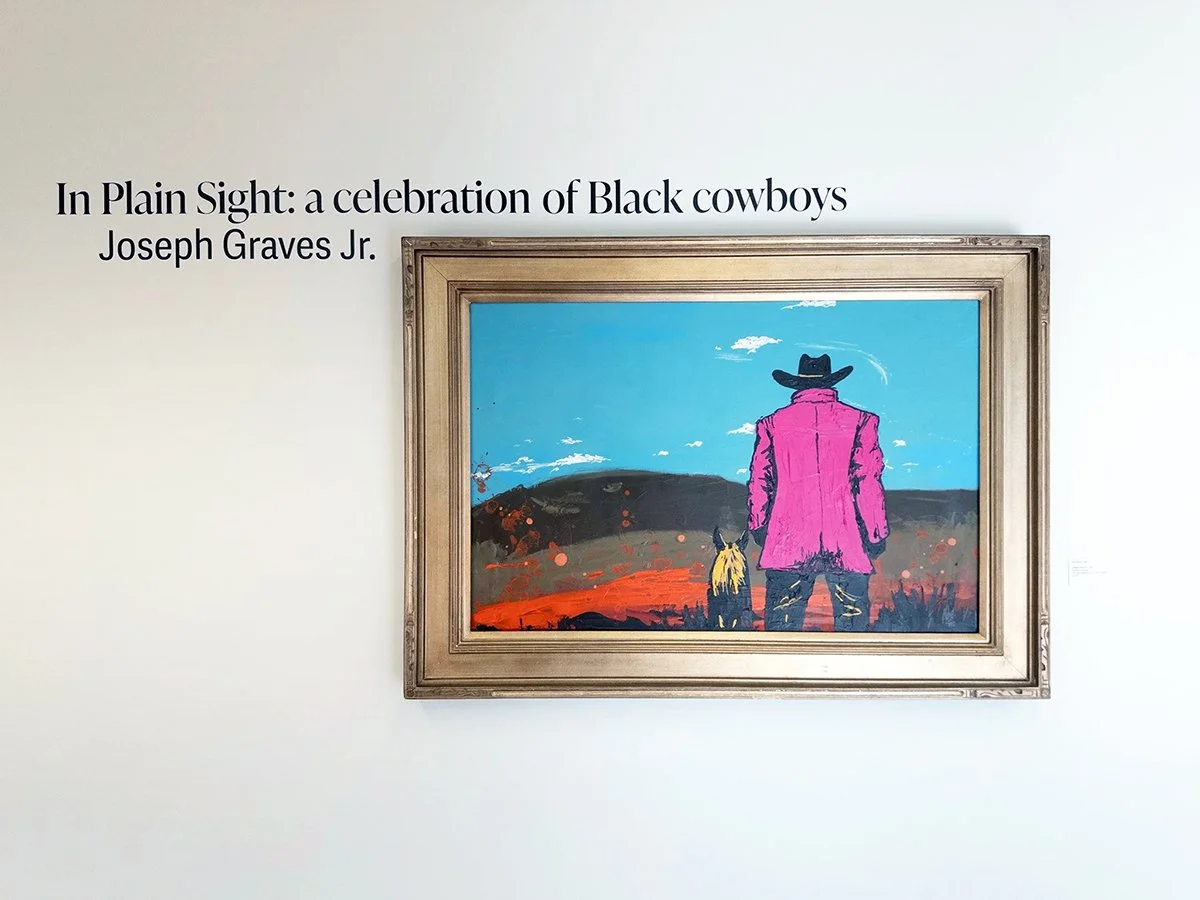
The title wall of Joseph Graves Jr.’s exhibition In Plain Sight: a celebration of Black cowboys at SeeSaw Gallery with the work Me and My Dog, 2025, acrylic on canvas, 24 x 36 inches. Image courtesy of SeeSaw Gallery.
Graves has transformed the gallery into a physical and digital exploration of the American Frontier. While the space, imagined and real, of the ever-expanding West has been populated by (white) figures like the Marlboro Man, school marm, outlaw, and saloon girl, Graves rectifies this landscape with bombastic, beautiful, and Black figures of vision and excellence.
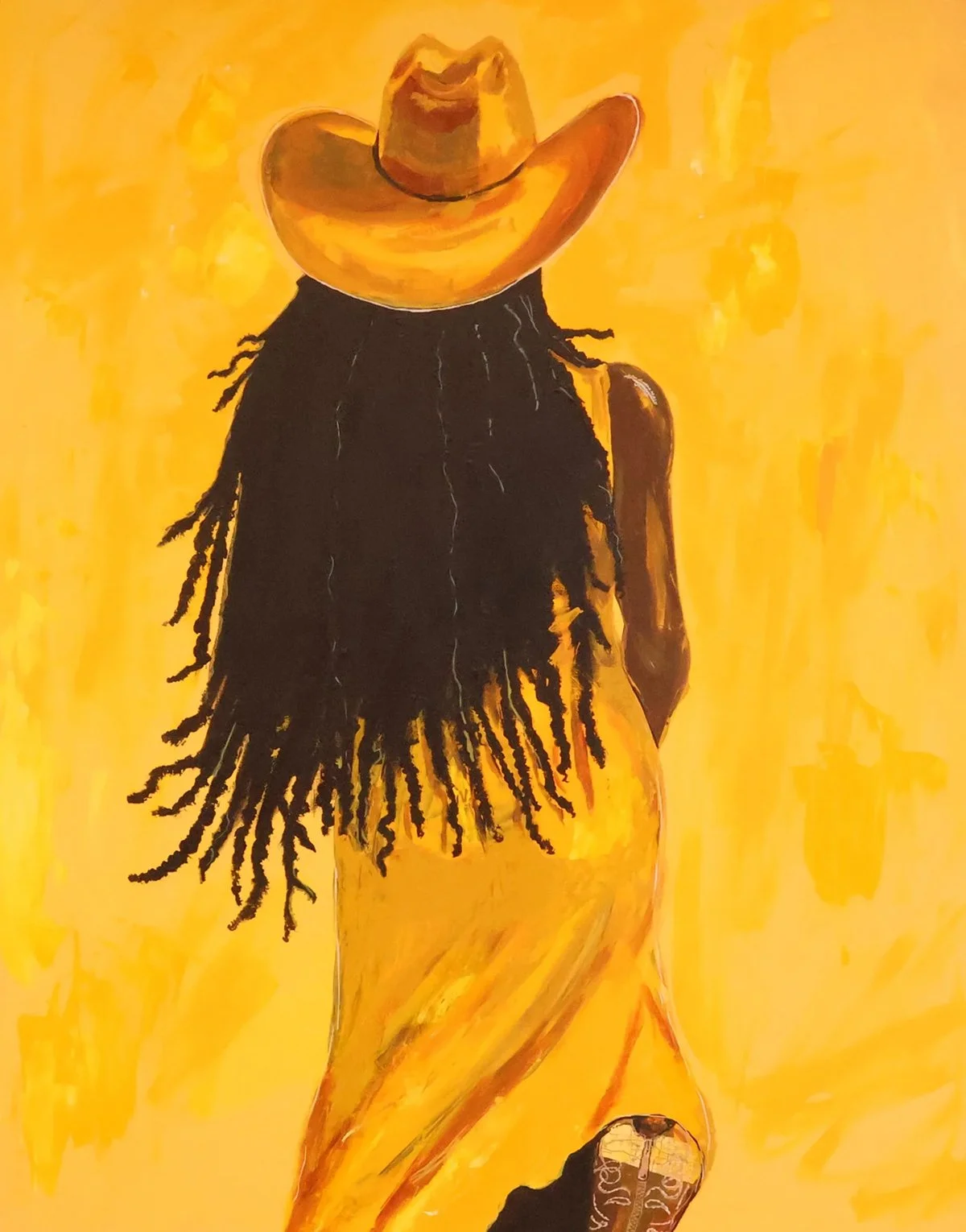
Joseph Graves, Jr., Chocolate Honey, 2025, acrylic, aerosol, and map on canvas, 60 x 48 inches. Image courtesy of SeeSaw Gallery.
In this show, the "cowboy” is a monument to the hard work, cunning, and aplomb endemic to the Black cattle hands, ranchers, and breeders who made the places and legends of the "American West" as we know them today. Aside from Graves' theoretical goals (which he surpasses with grace), the exhibition is also funny, evoking the resilience and humor required to make one's way when the way is actively being dismantled. Graves renders the past to make space for its echoes into the present and future of art and life in the American West.
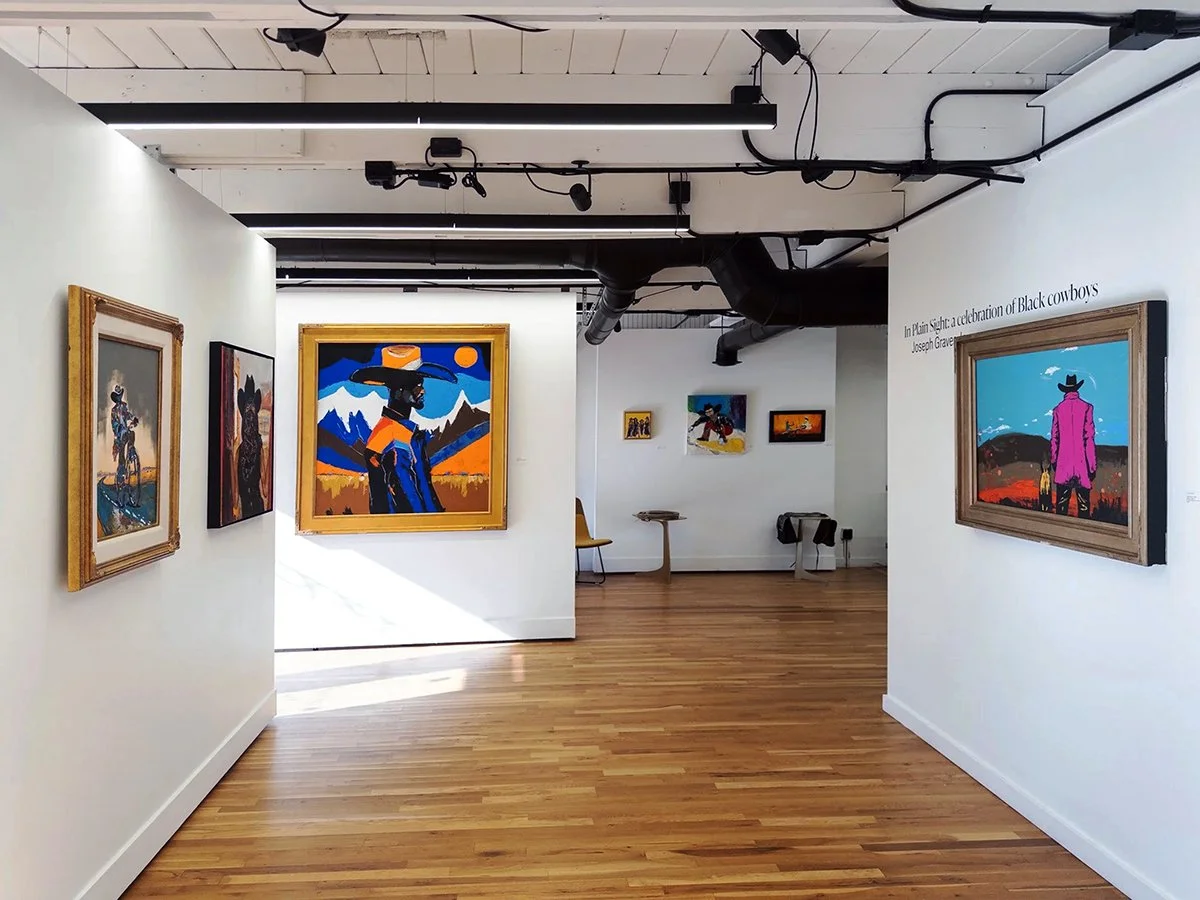
An installation view of Joseph Graves Jr.’s exhibition In Plain Sight: a celebration of Black cowboys at SeeSaw Gallery. Image courtesy of SeeSaw Gallery.
A note in the exhibition on the social history of cowboys is essential to understanding the project: "The term 'cowboy' itself was born out of racism. White men were called cattlemen, while Black men, no matter their age or expertise, were called boys [...] The phrase stuck; but the people it described were gradually erased from the photographs, stories, and legends of the West."
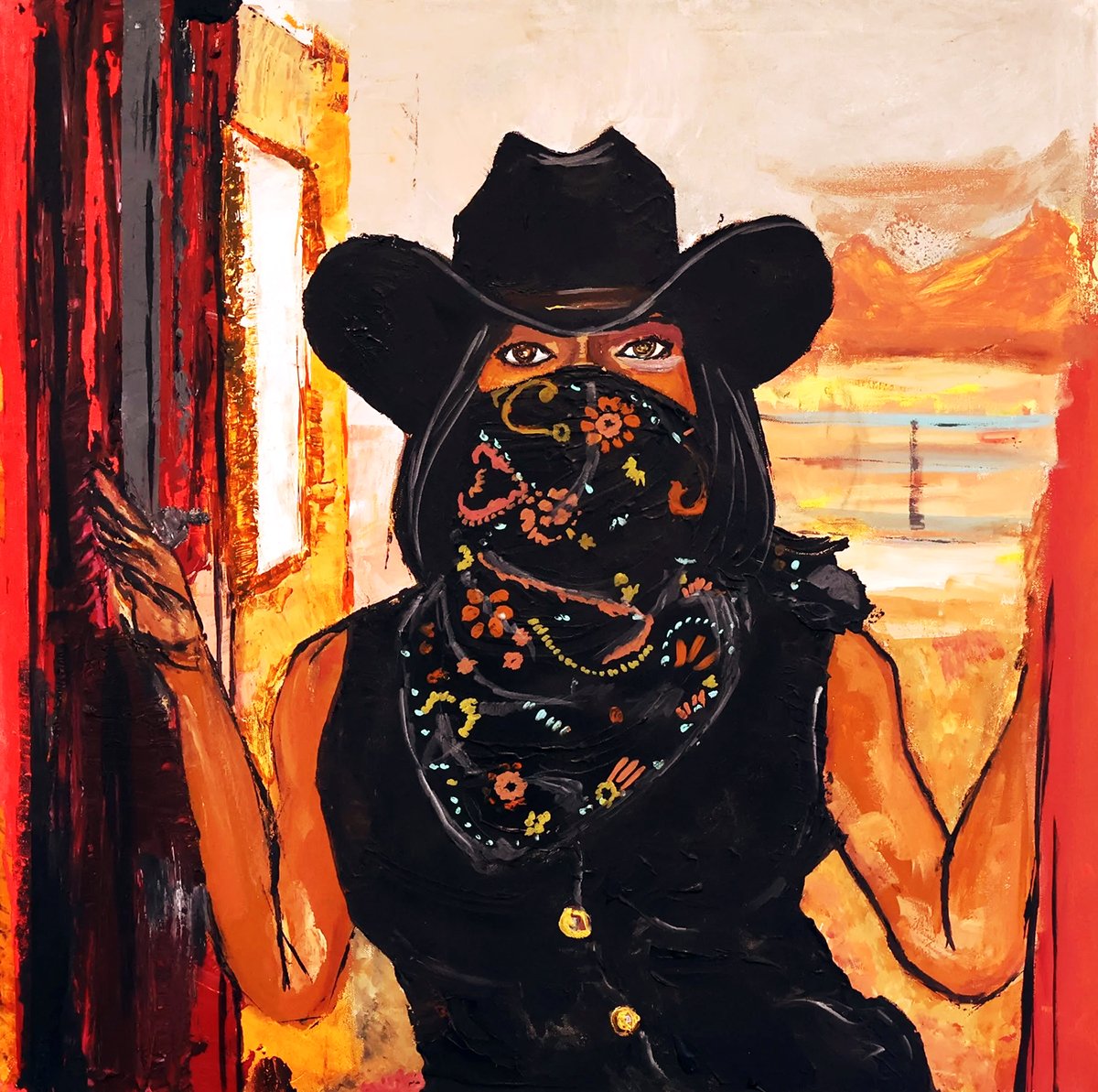
Joseph Graves Jr., Made U Look, 2025, acrylic and oil pastel on canvas, 29.975 × 29.975 inches. Image courtesy of SeeSaw Gallery.
Graves' teacherly intelligence presents a set of problems—of memory, race, and labor—that he explores. All who visit Graves' exploration will benefit from his beauty, humor, and radical retellings. This revolutionary pedagogy is especially evident in Made U Look and Frida in a Cowboy Hat, both portraits. Made U Look centers a woman from the waist up, occupying the doorway of a saloon, staring down the viewer with impenetrable eyes.
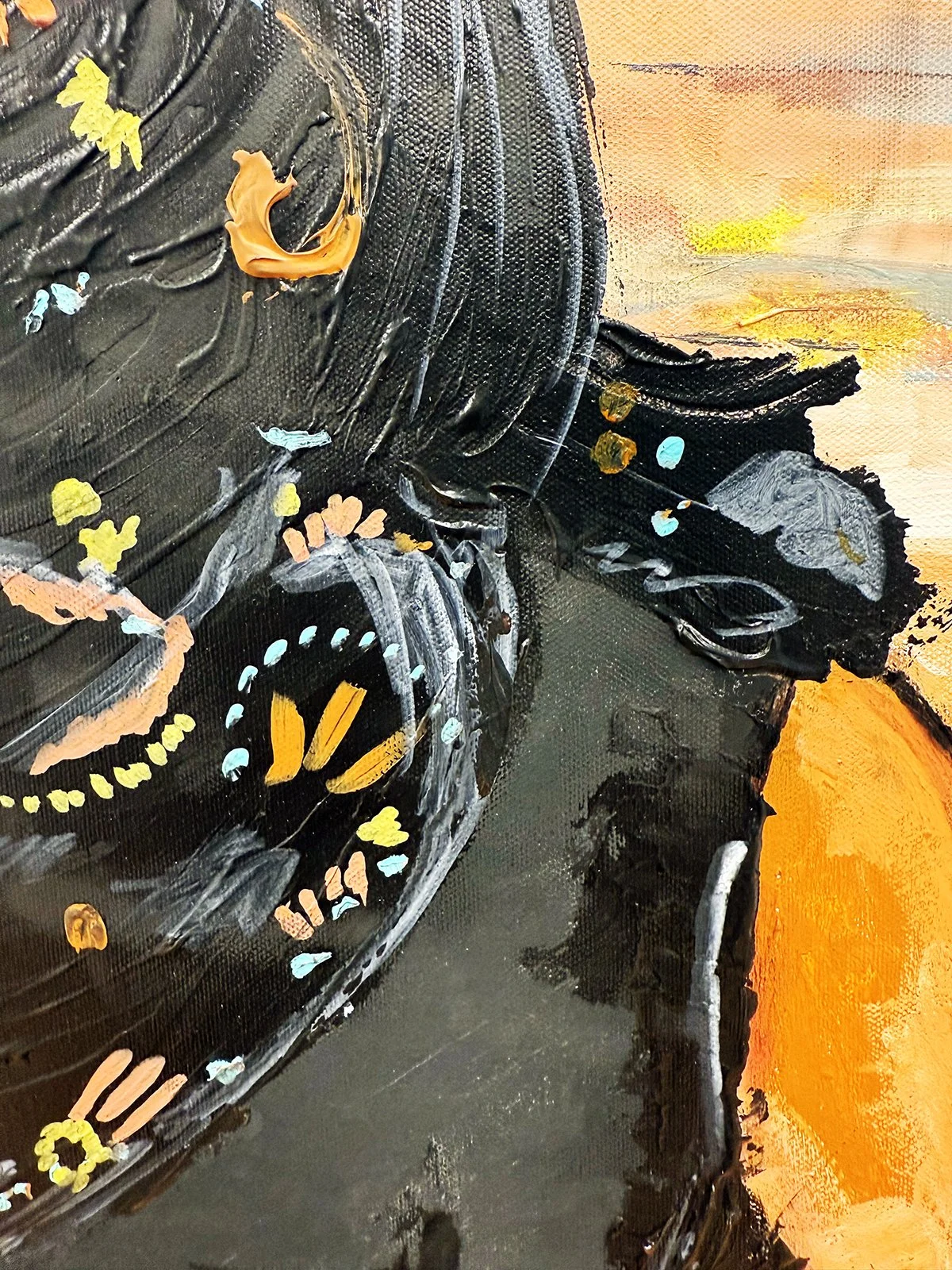
A detail view of Joseph Graves Jr.’s Made U Look, 2025, acrylic and oil pastel on canvas, 29.975 × 29.975 inches. Image by Kamden Hilliard.
Frida in a Cowboy Hat features Kahlo herself from the shoulders up, where her characteristic gaze lovingly holds the viewer's attention. Both works invert the traditional male gaze. In the case of Made U Look, the subject is sultry and sexy, with a provocative twist of the torso and long black hair that melts into her black vest, black bandana, and black cowboy hat. Graves' brushstrokes complicate these sensuous blacks, which make the image restless and animated, always pulling the viewer into the scene.
Who is this woman? A western siren? A famous female outlaw? Or perhaps the barmaid one ought not to play with? Regardless of who she is, her appearance is an imaginative remembering of the past which has been discarded by narratives of white supremacy in the West.
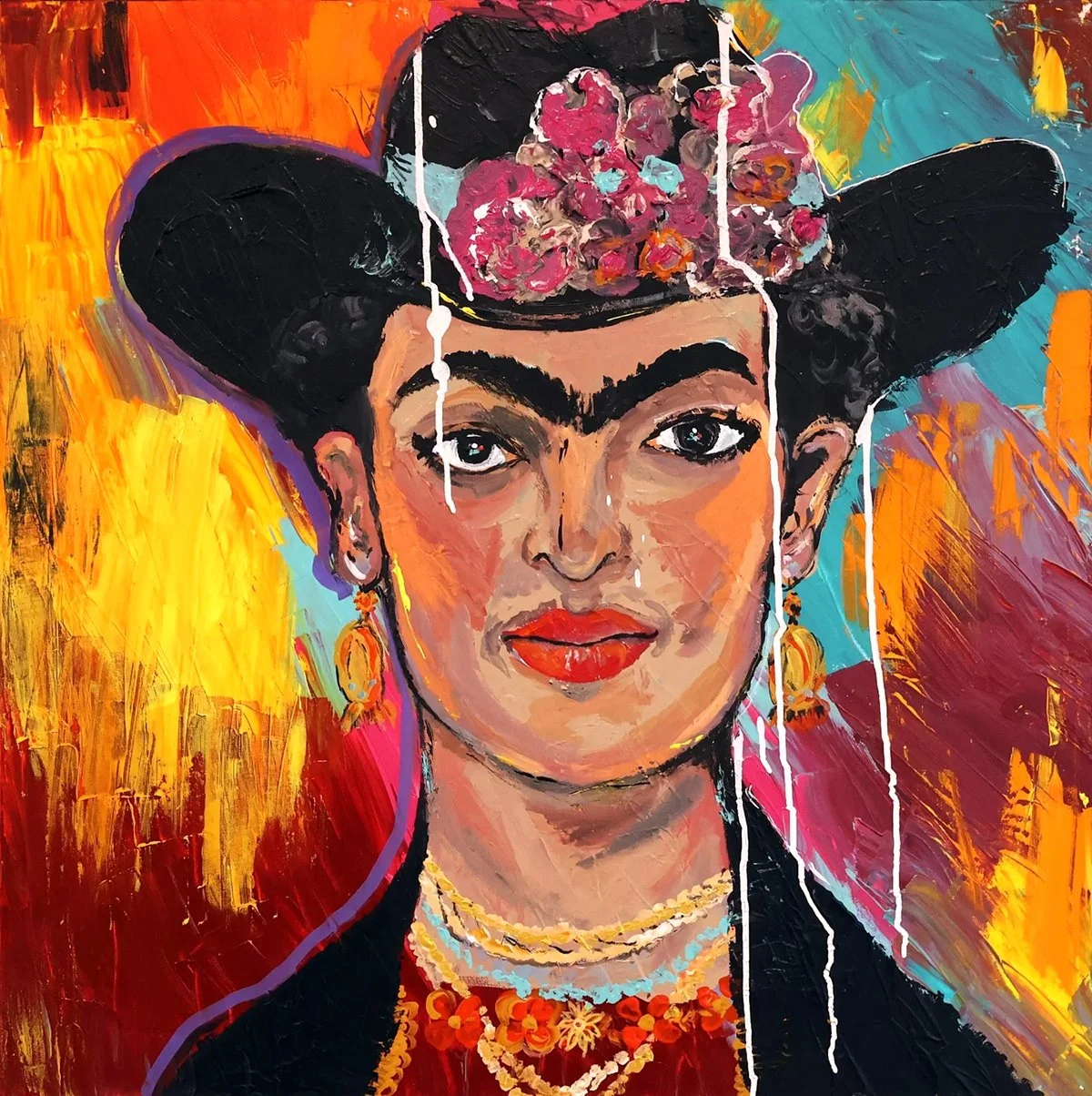
Joseph Graves Jr., Frida in a Cowboy Hat, 2025, acrylic on canvas, 30 x 30 inches. Image courtesy of SeeSaw Gallery.
Frida in a Cowboy Hat reimagines the iconic self-portraits of Kahlo and casts her in a cowboy hat. While Kahlo tends to be understood as a Mexican artist, here Graves reminds us that the traditions, cultures, and histories of the "American" Southwest face artificial nation-state boundaries, and that the cultures of the cowboy and their attire freely migrate across national boundaries. The work also features Graves' engaged and intentional layering of paint.
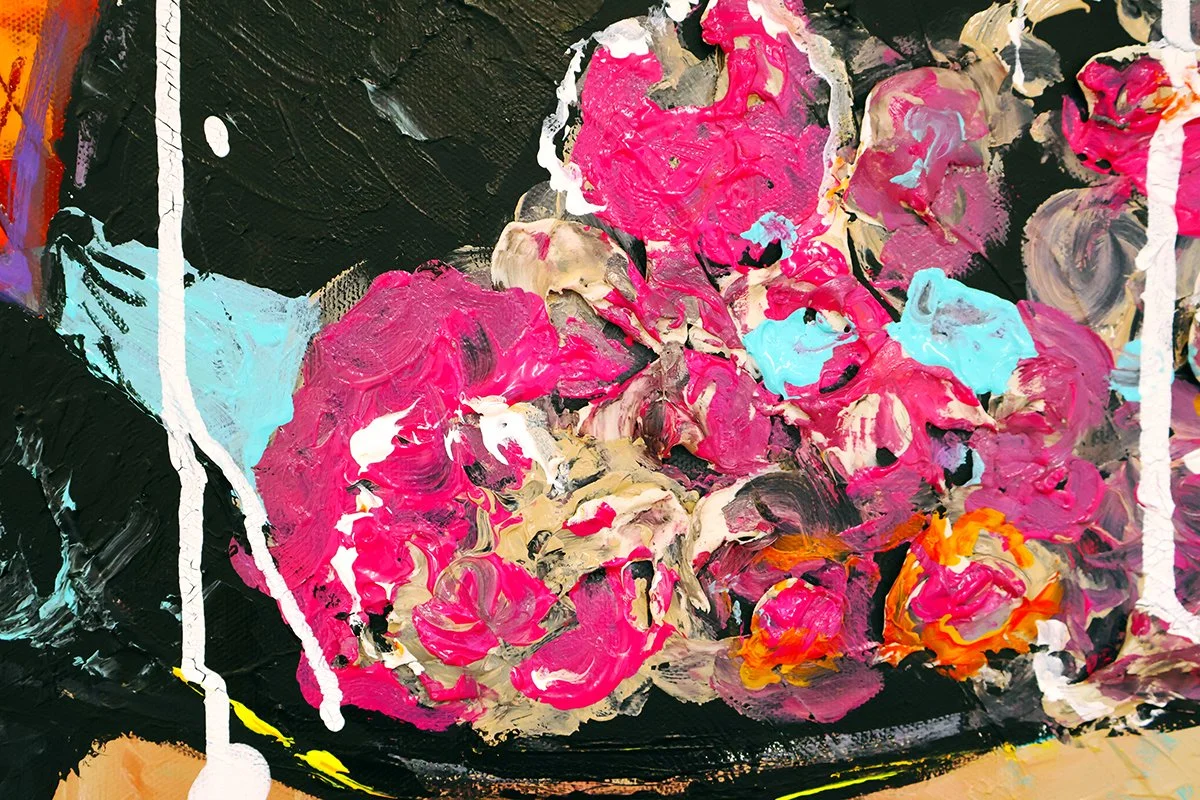
A detail view of Joseph Graves Jr.’s Frida in a Cowboy Hat, 2025, acrylic on canvas, 30 x 30 inches. Image by Kamden Hilliard.
The flowers on her hat are built up with acrylic so that if, nay, when viewed in person, one sees that the flowers bear a unique physicality and texture. Graves, as the saying goes, "gave her her flowers," lovingly, and with great detail. In both portraits, Graves brings recorded history into contact with a misremembered past, and in other paintings, such as No Laughing Matter and Giddy Up, he brings the present into contact with the past that lives beyond the recorded narrative.
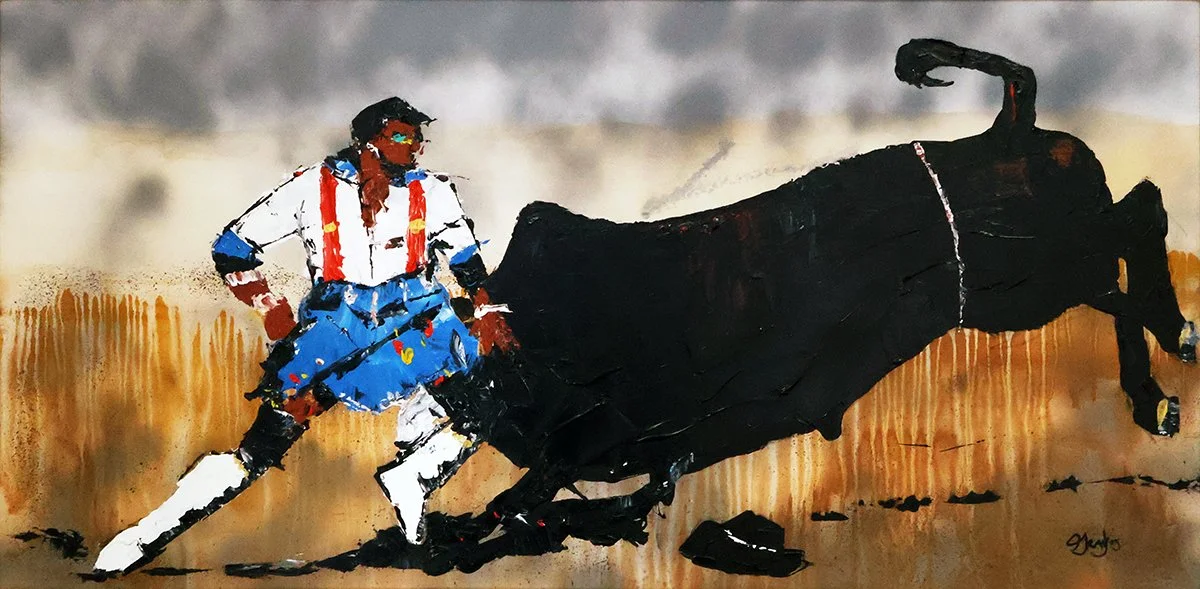
Joseph Graves Jr., No Laughing Matter, 2025, acrylic, aerosol, and map on canvas, 24 x 48 inches. Image courtesy of SeeSaw Gallery.
In No Laughing Matter, Graves depicts a Black cattleman managing a large bull with grace, power, and knowledge. He renders the sky in this image, and many others, with an aerosol spray paint. Other materials included are found maps and acrylic; this multimedia approach speaks to the creativity and resourcefulness required to represent figures which have been intentionally left outside of the record.
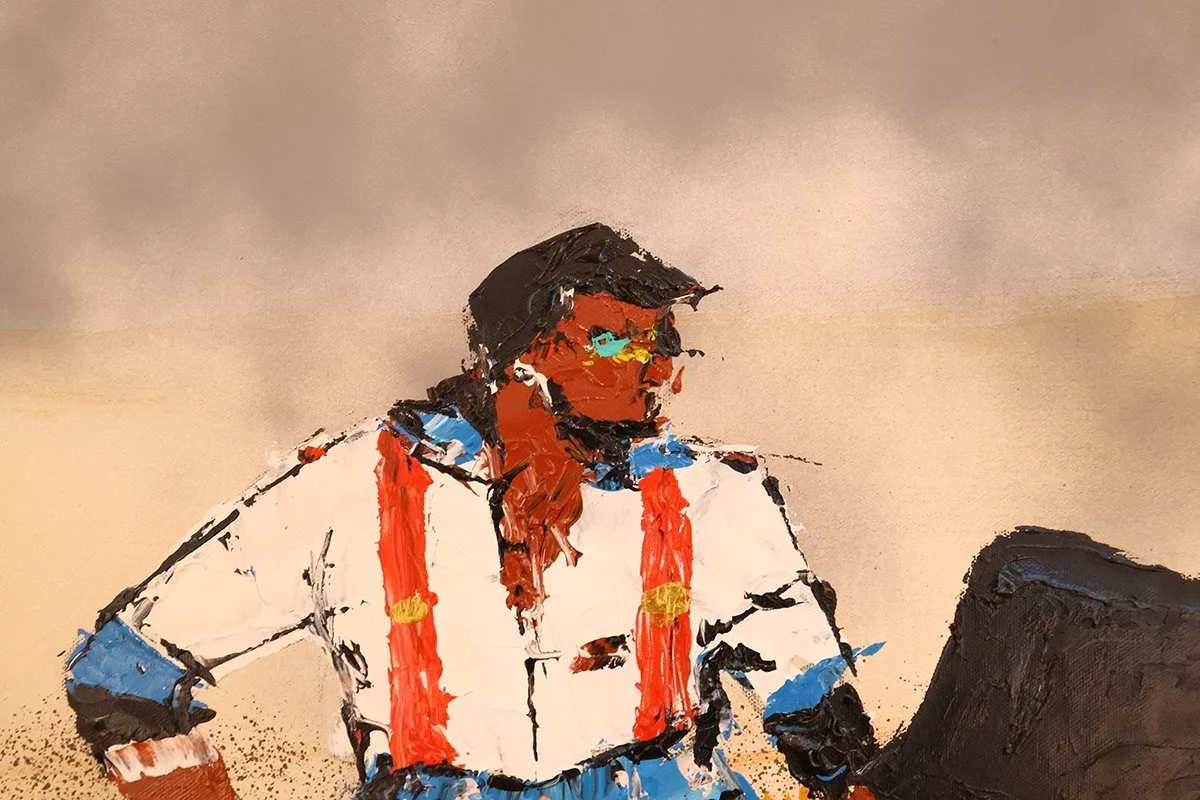
A detail view of Joseph Graves Jr.’s No Laughing Matter, 2025, acrylic, aerosol, and map on canvas, 24 x 48 inches. Image by Kamden Hilliard.
Graves' brushstrokes—heavily textured, quick, and artful—provide movement to the static image. This abstract landscape pushes the eye back to the Black cattleman and bull, which dominate the painting. Additionally, the cattleman's clothes are an eye-catching combination of red, white, and blue, which evokes the American flag, posing the question: whose country is this, really?
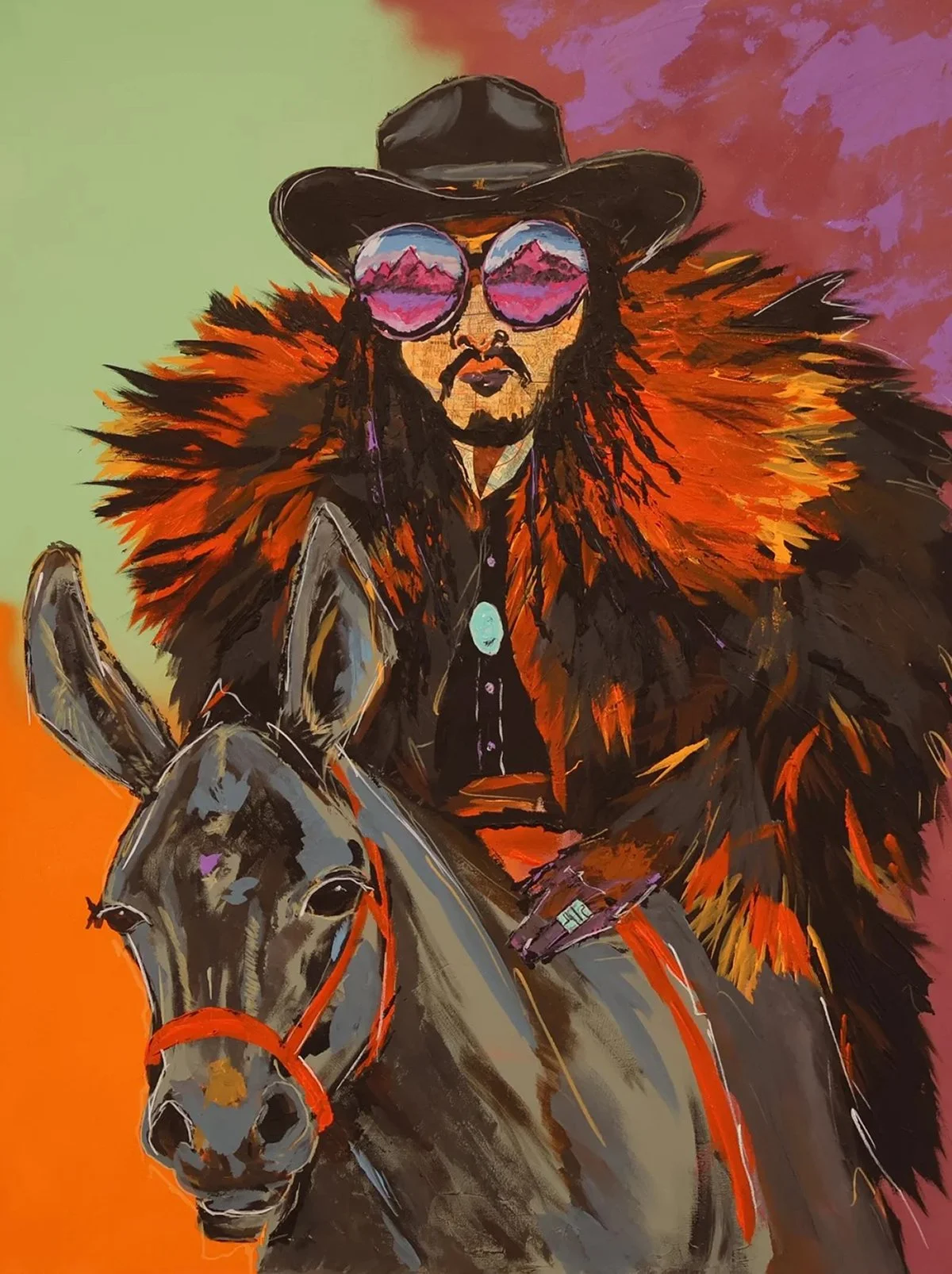
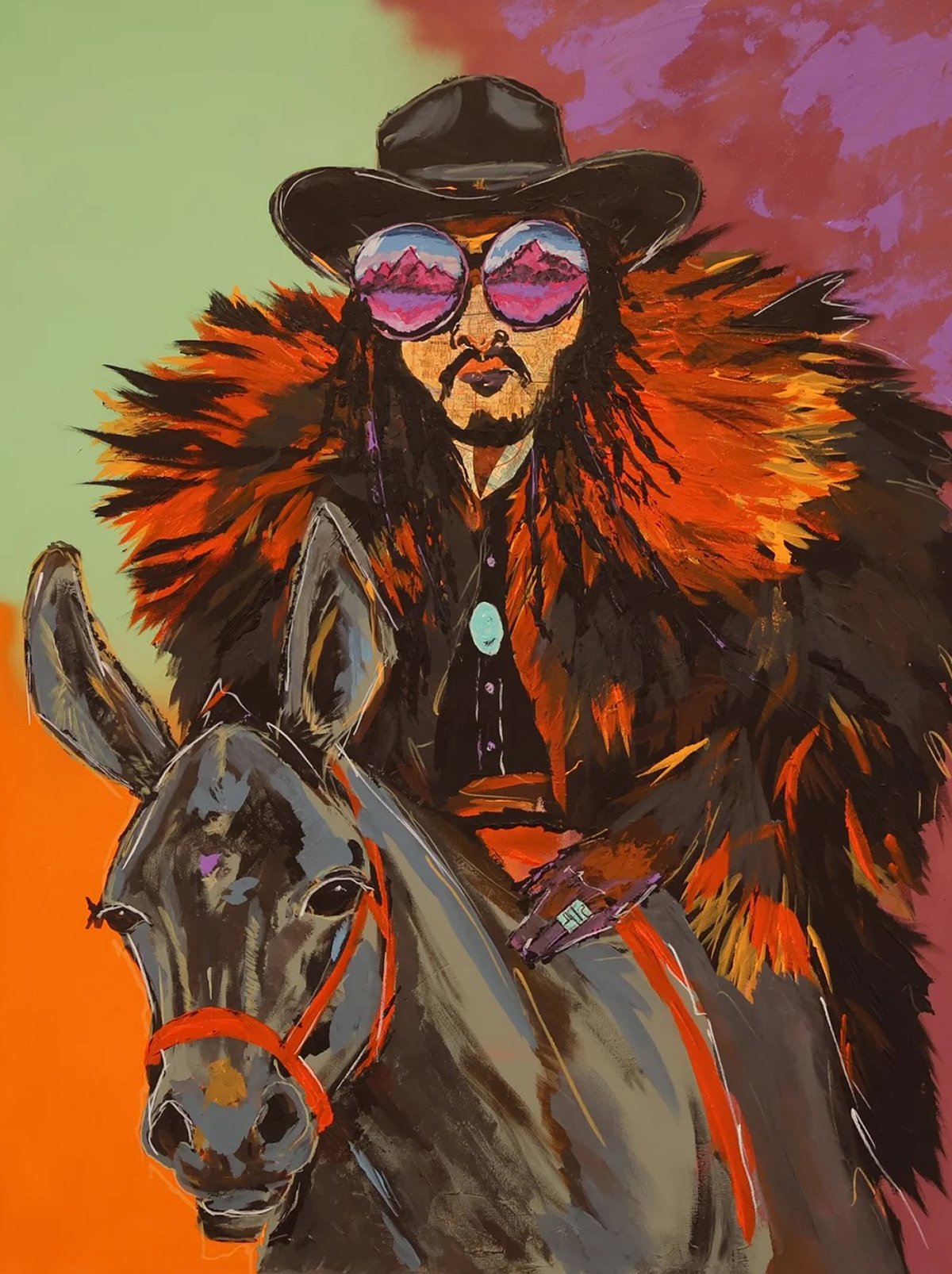
Joseph Graves Jr., Giddy Up, 2025, mixed media, acrylic, aerosol, and map on canvas, 40 x 30 inches. Image courtesy of SeeSaw Gallery.
Alternatively, Giddy Up lovingly and humorously depicts an imagined Black dandy character who looks a lot like the artist formerly known as Prince. Black Dandyism is an aesthetic form of resistance to degradation. In this portrait, the shades of turquoise, the large ring the dandy wears, and his incredible plumage-like outerwear sing like fire. The decadence, drama, and decorum are juxtaposed with the mountain landscape reflected in his glasses. This man of irreputable flair is going "out there," going "up," and is completely confident in his ability to arrive. The face, composed of maps, becomes a map of where he's going and where he might have been, and a commentary on how we all wear our travels on our bodies; but this commentary is most evident in Graves' Mile High Maverick.
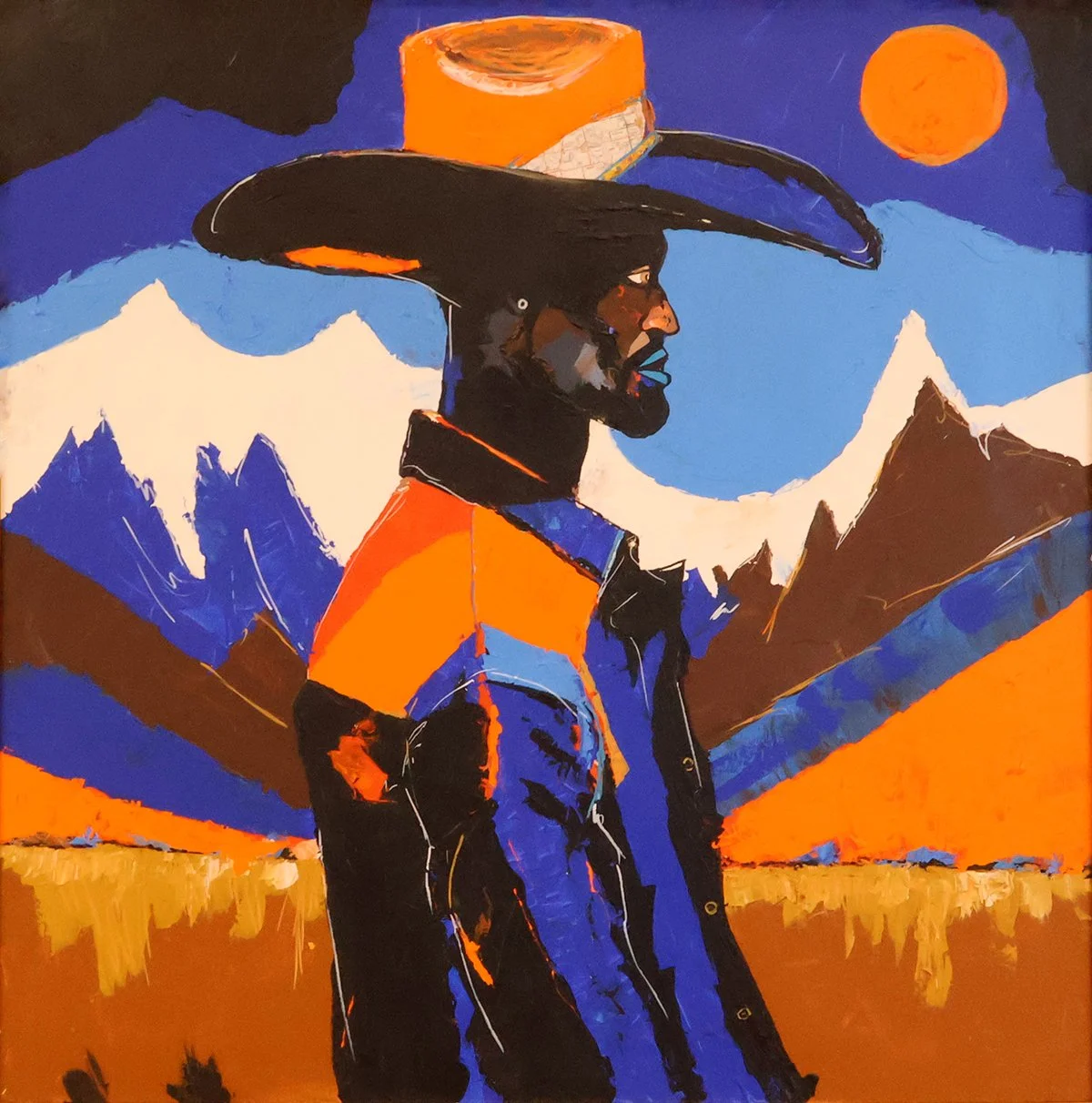
Joseph Graves Jr., Mile High Maverick, 2025, acrylic, aerosol, and map on canvas, 48 x 48 inches. Image courtesy of SeeSaw Gallery.
Like the subject of Made U Look, the cowboy at the center of Mile High Maverick appears as straightforward portraiture. His clothing and face reflect the vibrant landscape of our colorful Colorado. Graves constructs the figure's hat from the characteristic maps, and the garment he wears is a traditionally cut, button-down flannel. All of these wonderful details invite one to recon with questions of race.
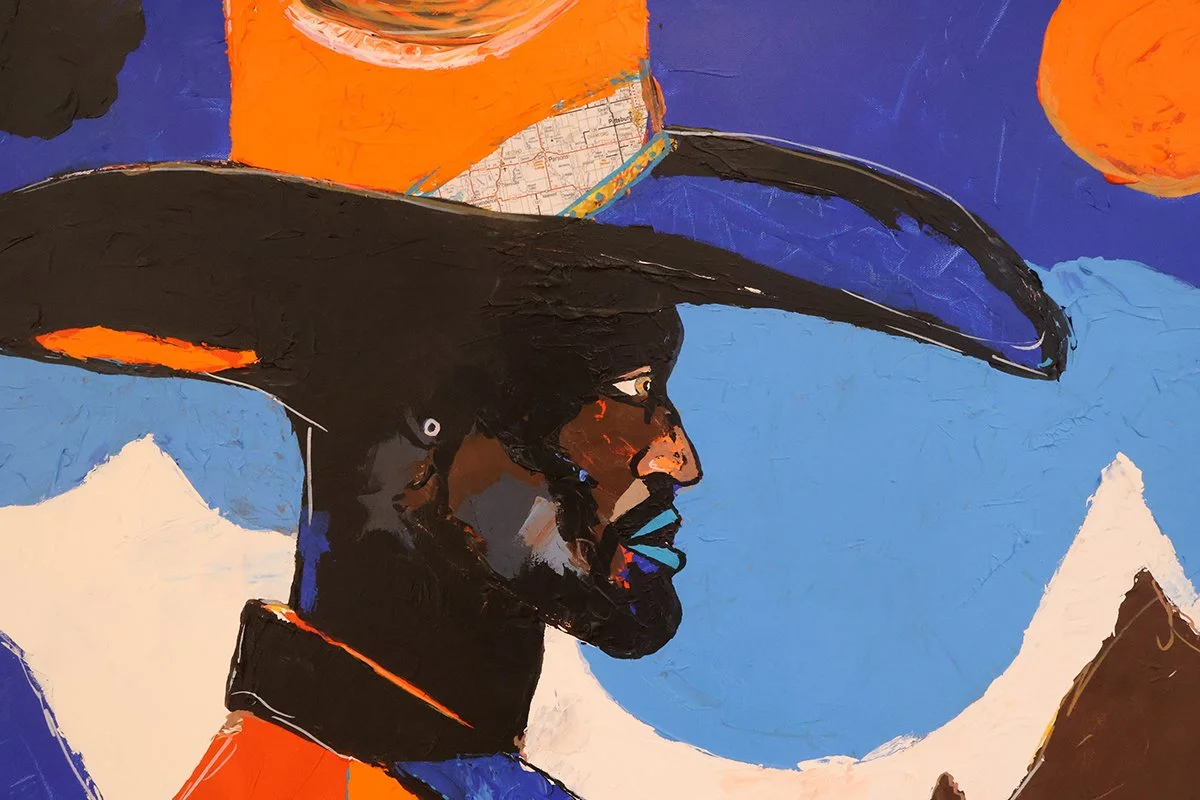
A detail view of Joseph Graves Jr.’s Mile High Maverick, 2025, acrylic, aerosol, and map on canvas, 48 x 48 inches. Image by Kamden Hilliard.
Who represents the West, or rather, who has been chosen to represent the West? Here, it is the Black man rendered in a relaxed but upright posture riding a horse. Further, this man's body and clothing reflect the landscape of Colorado itself (and its Broncos), with its beautiful oranges, blues, tans, and whites, highlighting the ways in which Black people have been central to the construction of the Denverite and Coloradan experience.
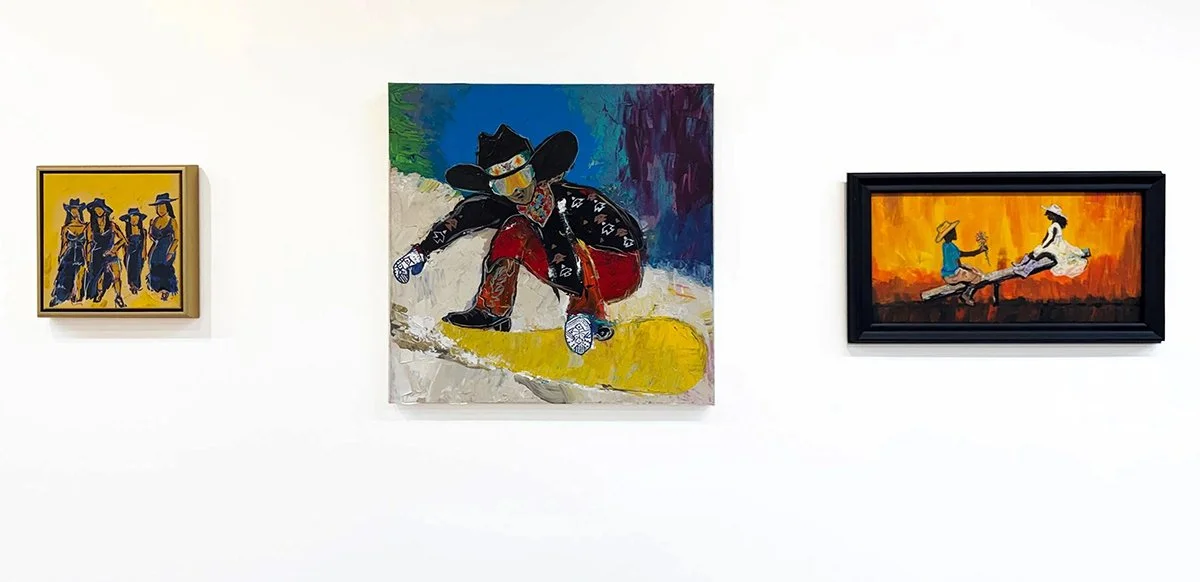
Three works by Joseph Graves Jr., from left to right: Coven, 2025, acrylic on canvas, 9 x 9 inches; Let’s Ride, 2023, acrylic on canvas, 24 x 24 inches; and Teeter Totter, 2025, mixed media, acrylic, map, and aerosol on canvas, 10 x 20 inches. Image courtesy of SeeSaw Gallery.
Like "cowboy," "maverick" has undergone its own etymological transformation. Originally, this word referred to a large, unbranded range animal; however, in its modern iteration, it means "an independent individual who does not go along with a group or party" (according to Merriam-Webster). The maverick, then, becomes an incredibly appropriate monicker for this figure as he, literally, faces, looks, and moves into the future.
This future is his own, and while we might not remember where he is coming from—this now mythic place undescribed by western history but certainly remembered at family reunions and campfires across the American West—Graves has taught us about a West full of legends, tall tales, beautiful horses, and beautiful Black people alike. And in Graves' work, there is someone to follow over there, into the future.
Kamden Hilliard (they/them) is a trans poet, educator, and fish keeper based in Colorado. You can find them online at kamdenihilliard.com.