
MediaLive: Data Rich, Dirt Poor
MediaLive: Data Rich, Dirt Poor
Boulder Museum of Contemporary Art
1750 13th Street, Boulder, CO 80302
September 11, 2025–January 11, 2026
Admission: Pay From Your Heart
Review by Felicity Wong
The exhibition Data Rich, Dirt Poor at the Boulder Museum of Contemporary Art (BMoCA) exudes a sense of exhaustion, serving a spectacle of ghostly screens alongside nondescript noises from multiple video channels in various rooms. The show is part of BMoCA’s MediaLive biennial, which originally began as a festival that brought artists together to discuss and explore the ever-evolving media arts landscape.
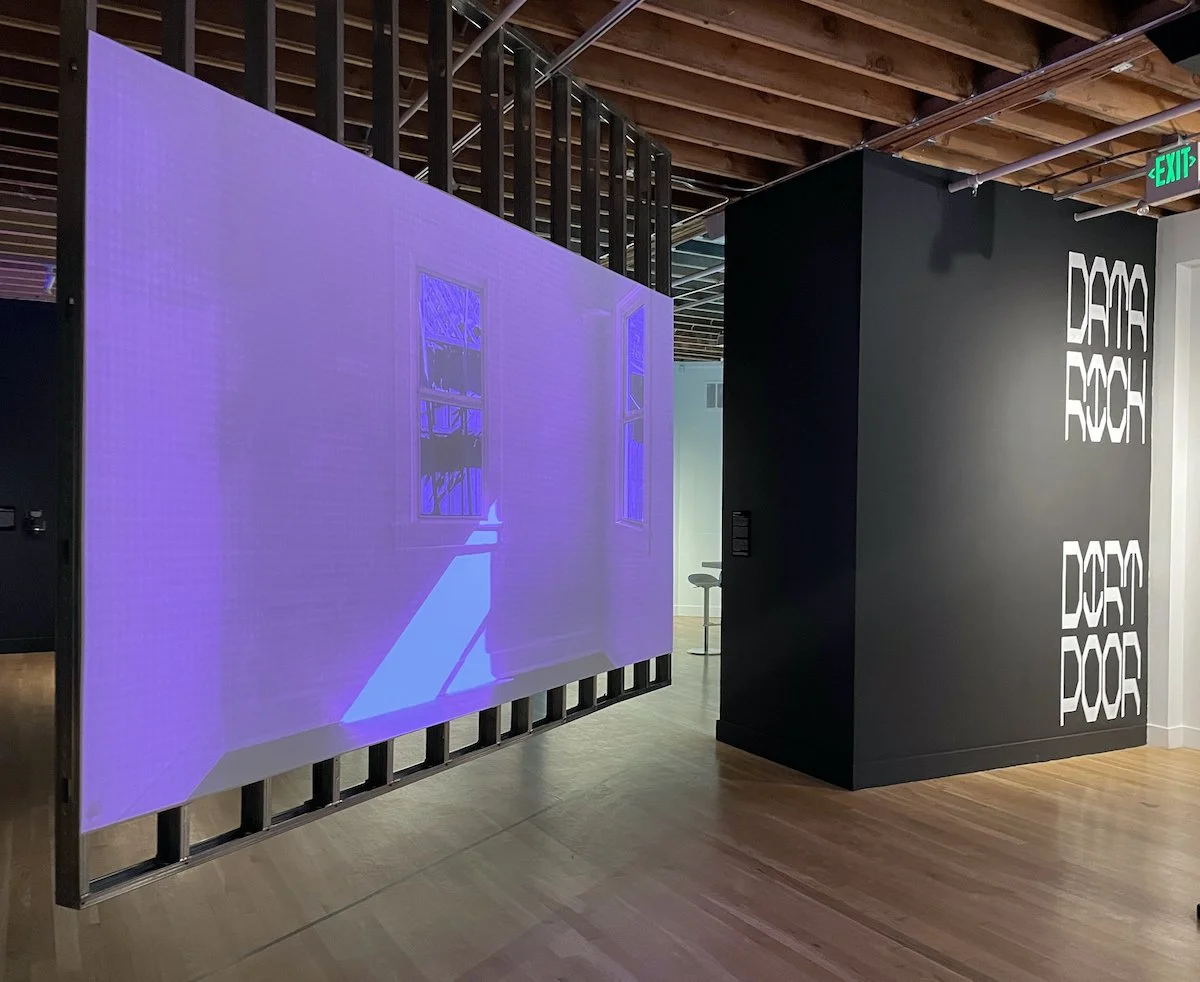
Sarah Rara, Lavender House, 2021, 4k color video with sound. Image courtesy of BMoCA.
Admittedly, I felt relieved by this exhaustion, fatigued myself by the spectacle of “technological advancement” saturated with never-ending streams of updates about artificial intelligence, machine learning, chatbots, ad nauseum, et cetera. But the show’s pervading emotion of exhaustion, grounded in the witness of crises like the rapid depletion of water in Chile, the privatization of weather data in the United States, and the gentrification of Los Angeles neighborhoods, is not stagnant nor pessimistic. The featured works move beyond mere critique of the governments and corporations that dictate value construction to also generate possible solutions.
Guest curated by Maya Livio, an artist, writer, and assistant professor in the School of Communication at American University, Data Rich, Dirt Poor interrogates the notion of “new” implicit in the MediaLive series. Livio asks, “what would a show that doesn’t foreground the latest technology look like?” The question highlights our cultural obsession with and investment in newness that comes at a gargantuan yet immeasurable cost. Livio turns to experimentation with old and slow technologies, and even reorientations of the very newest, for answers.
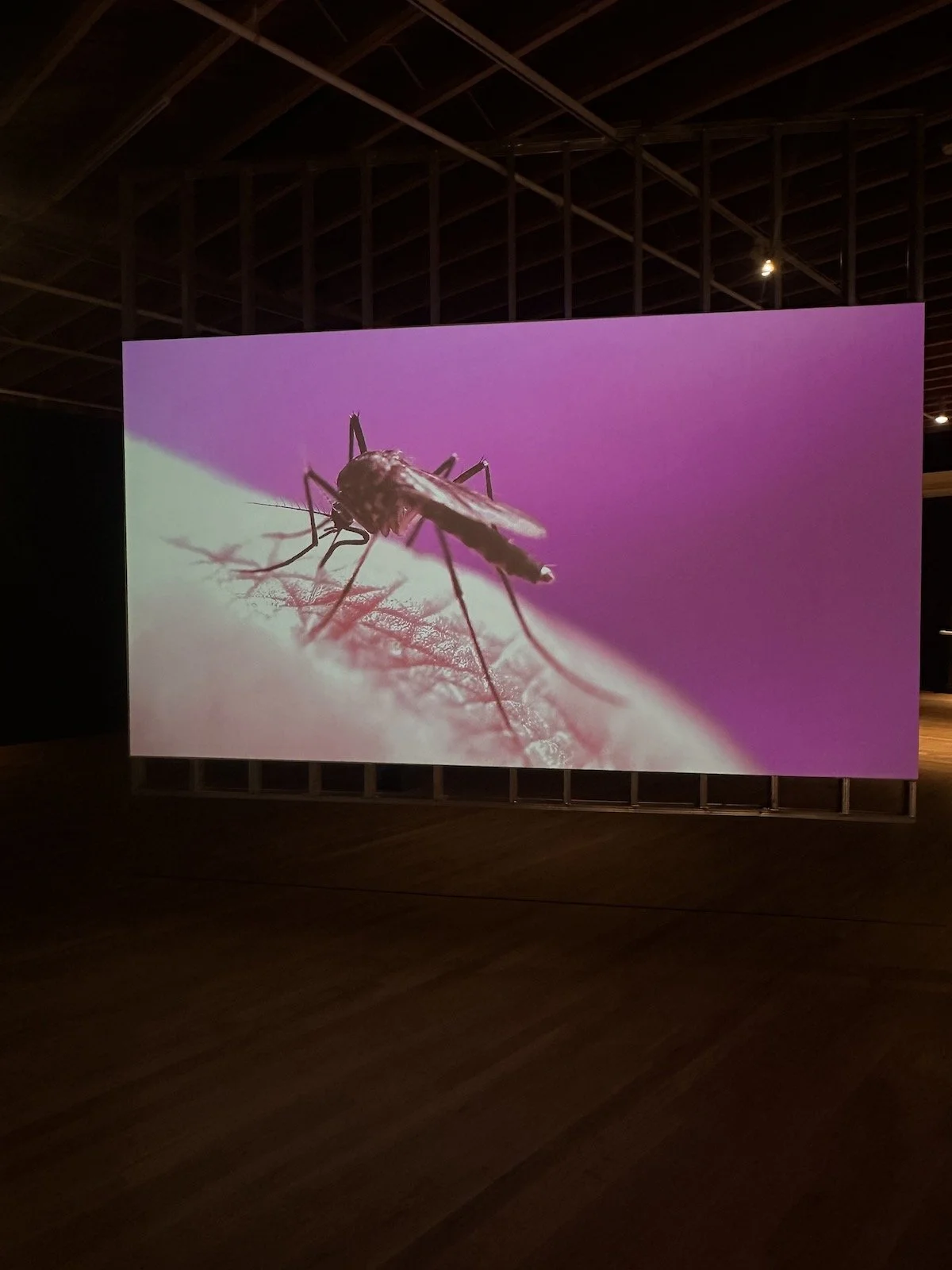
Sarah Rara, Lavender House, 2021, 4k color video with sound. Image courtesy of BMoCA.
The voice of an anonymous woman cuts through the first darkened gallery, where Sarah Rara’s Lavender House plays close-up shots of an empty purple house and its surrounding bushes and birds. Enhanced purple colors imbue the footage with an especially spectral quality. From the woman, we learn that the house is empty because it is rent-controlled and held from the market.
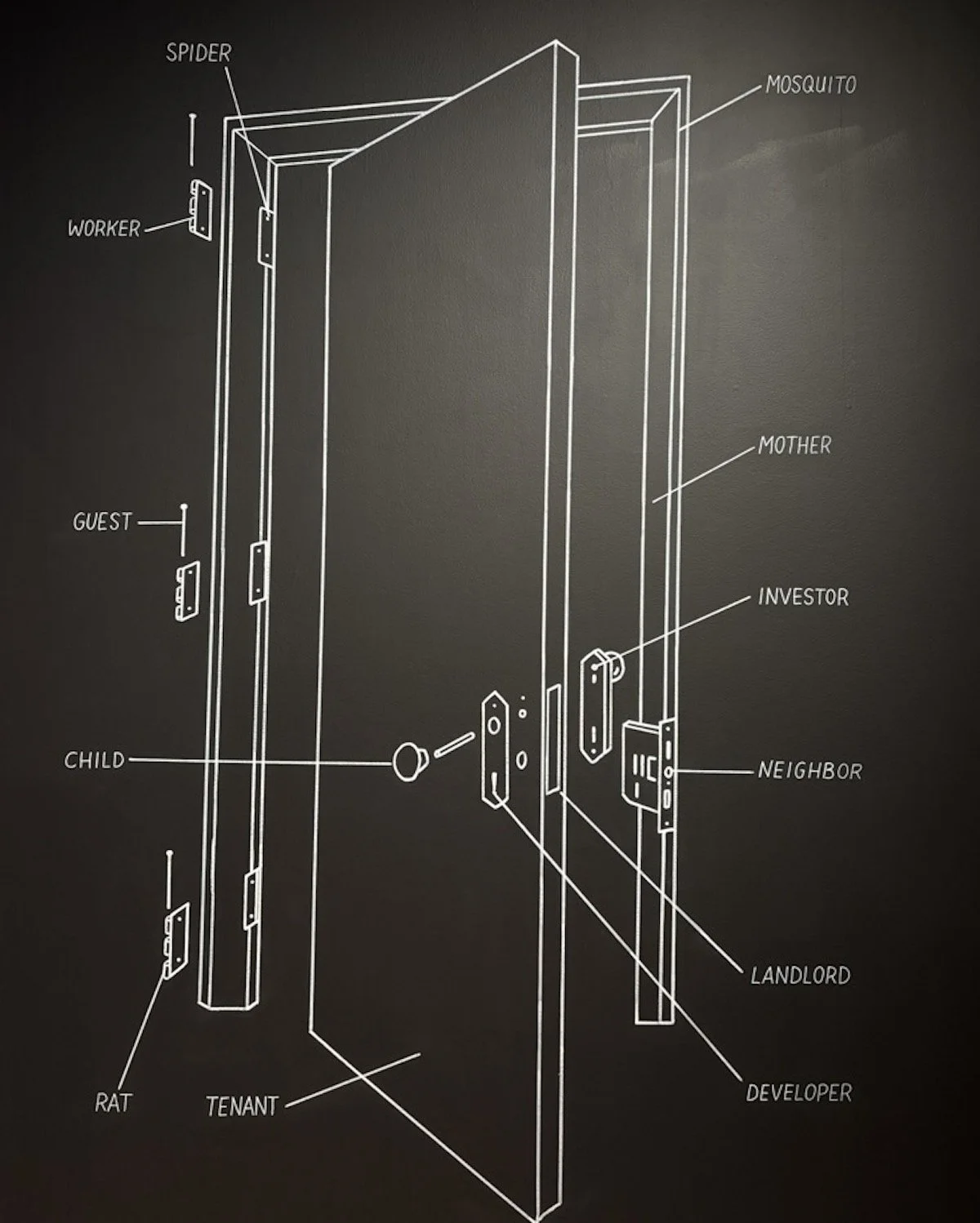
Sarah Rara, Door to Lavender House, 2021, wall drawing. Image by Felicity Wong.
Yet it is through this woman that Rara offers a response to the housing injustices driven by real estate investors, filling the emptiness with rich, fragmented narrations about her experiences as a mother and in conversation with the house. A diagram of the house’s door on the opposite wall illustrates the dynamic web of relationships between the human and non-human: its jamb, hinges, casing, knob, and other components are labeled with words like “developer,” “child,” “neighbor,” and even “mosquito.”

An installation view of Xiaowei R. Wang’s An Archive of Witch Fever, 2023, fabric, clay, stainless steel thread, reeds, human hair, fermenting indigo, beeswax, raspberry seed oil, mulberry paper, and mixed media. Image courtesy of BMoCA.
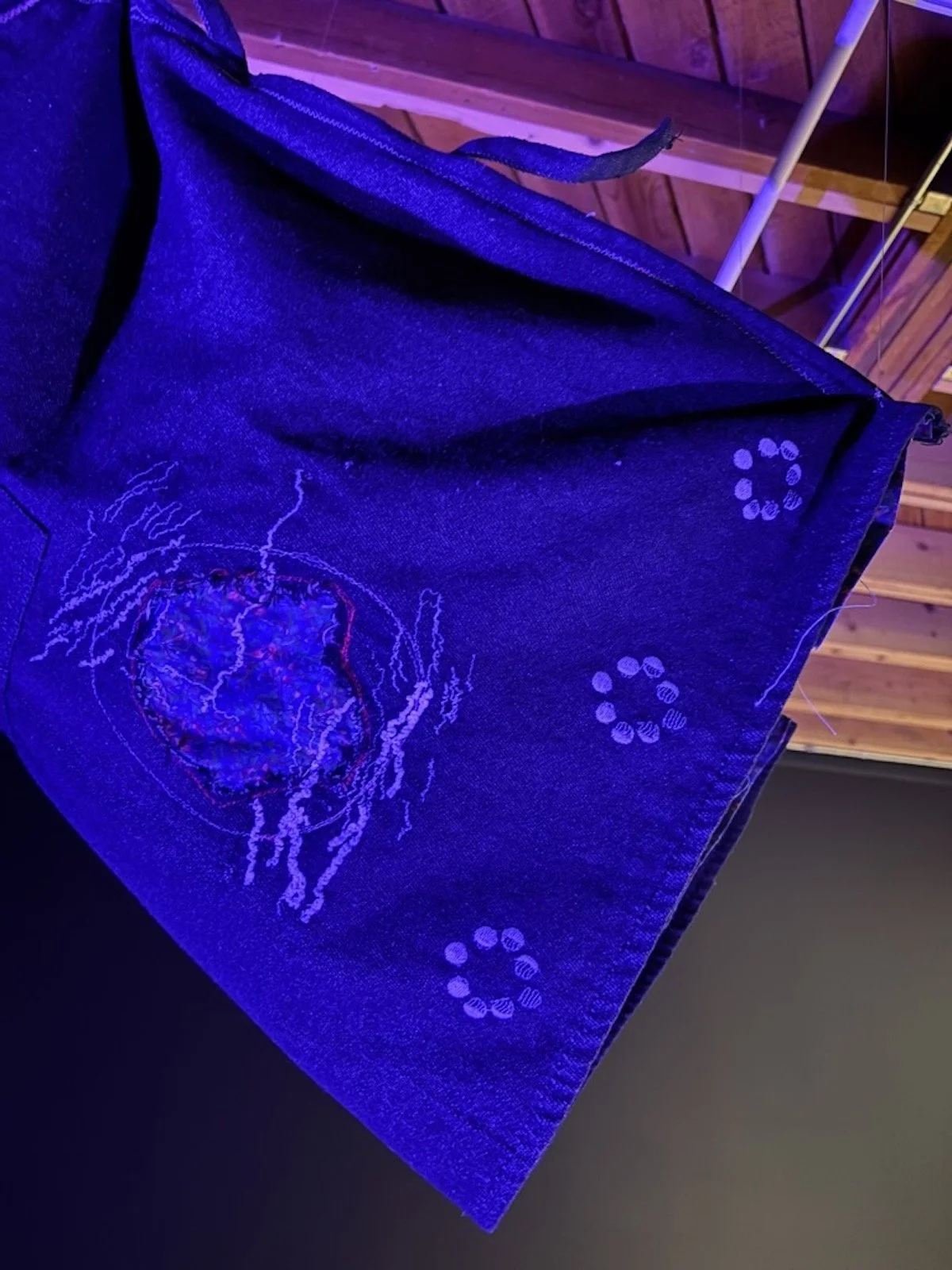
A detail view of Xiaowei R. Wang’s An Archive of Witch Fever, 2023, fabric, clay, stainless steel thread, reeds, human hair, fermenting indigo, beeswax, raspberry seed oil, mulberry paper, and mixed media. Image by Felicity Wong.
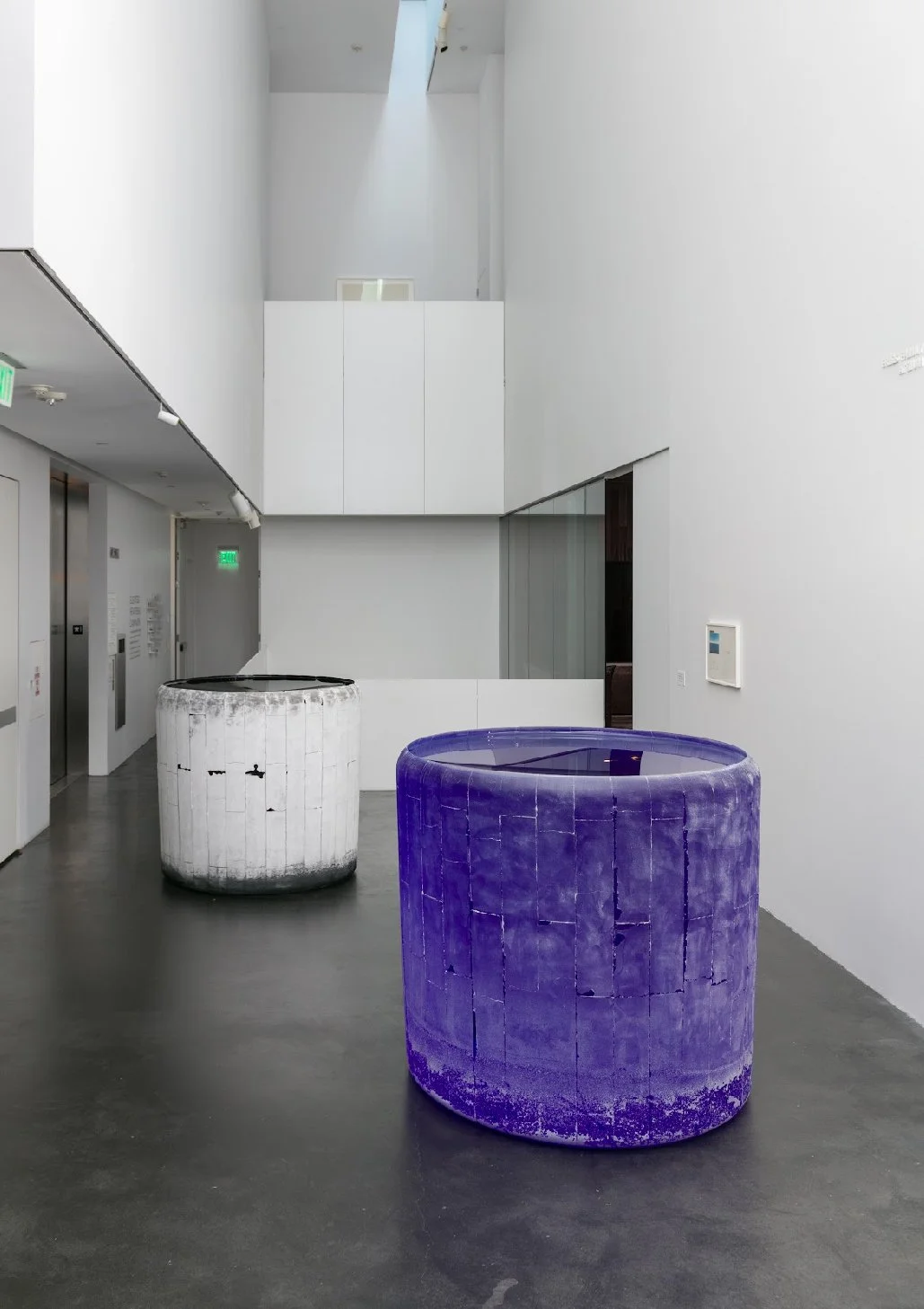
Xiaowei R. Wang narrates a story of imperial power in An Archive of Witch Fever. Cast under an eerie blue light, two warped apron-esque cloths hang high in the air. Using magnetized conductive thread that can encode binary information, Wang embroidered these cloths with images derived from archives of British botanical illustrations and twentieth-century trans-Pacific plantations. On the floor sits a chest, and on top of it, an assortment of objects, including miniature vases filled with plants, a textile, and a shell dome.
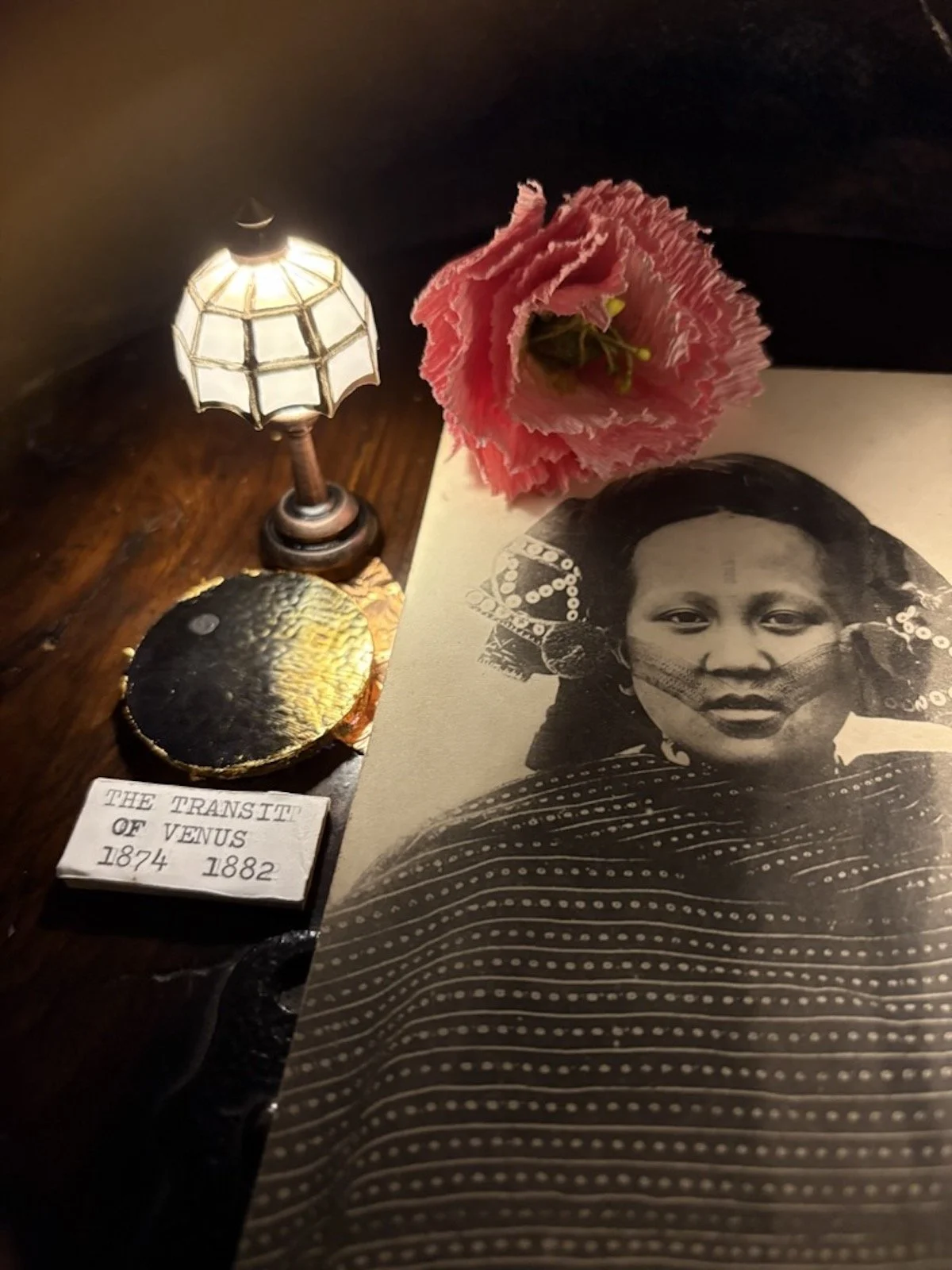
An installation view of Xiaowei R. Wang’s An Archive of Witch Fever, 2023, fabric, clay, stainless steel thread, reeds, human hair, fermenting indigo, beeswax, raspberry seed oil, mulberry paper, and mixed media. Image by Felicity Wong.
A peephole into the dome reveals a hidden lamp, a coral-toned flower, a slip of paper that reads “THE TRANSIT OF VENUS 1874 1882,” and a black-and-white photograph of another anonymous woman. Connecting the two planes of this installation is a contraption made of conductive fishing net wire and human hair, which Wang has engineered into an AM radio. This embodied archive disturbs the logics of Western science based in categorization, knowledge extraction, and colonization. Unorthodox intergenerational materials are literally woven to create out-of-fashion devices of communication and storage, while secret assemblages give way to mysterious characters whose stories remain unknown.
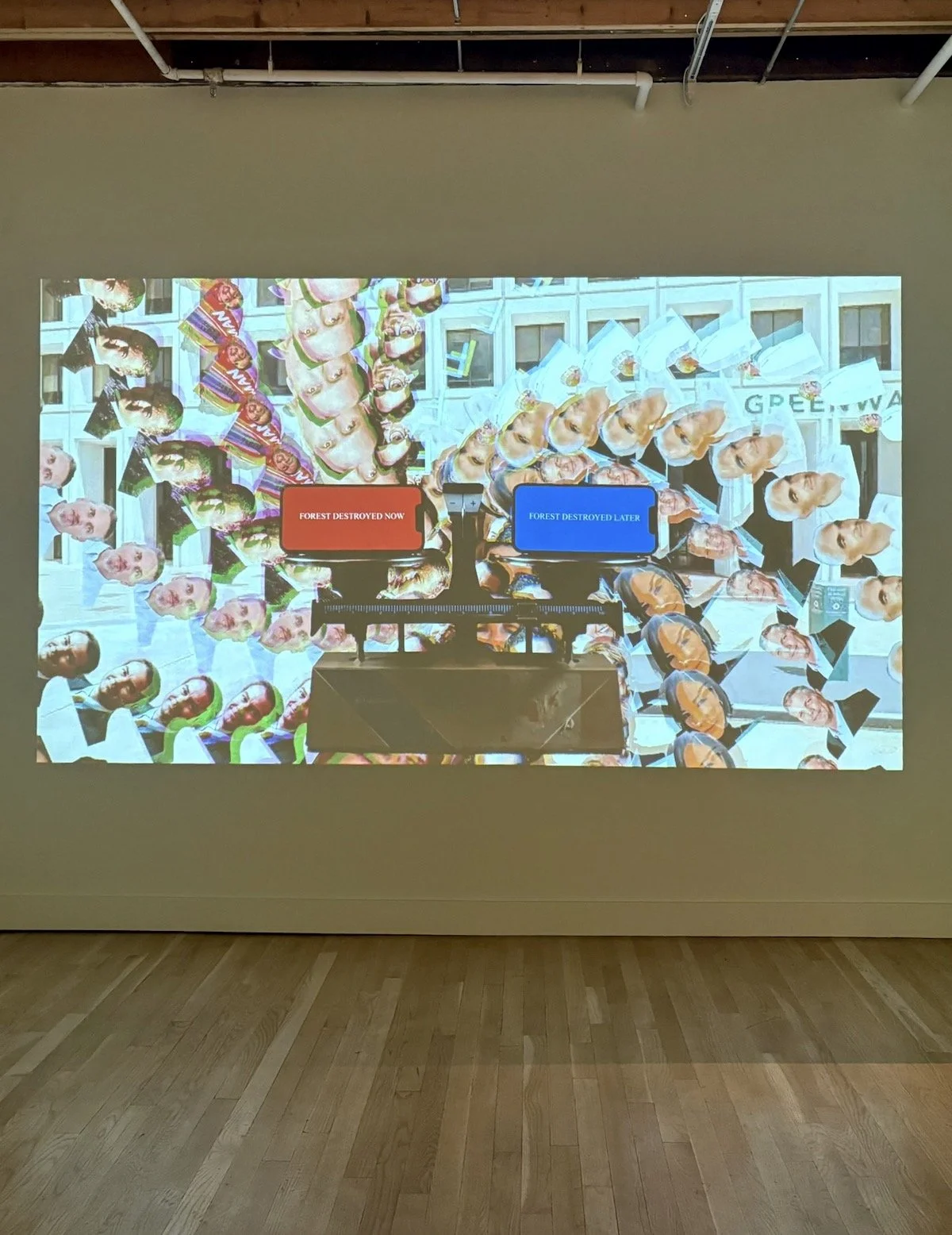
A video channel view of Tega Brain and Sam Lavigne’s Offset, 2023-present, video, website viewing salon, and framed certificates. Image by Felicity Wong.
In another selection of video installations, Livio concretizes redresses to the often-abstracted term “climate crisis” by situating them within the museum. Tega Brain and Sam Lavigne’s Offset challenges the marketization of energy in the current carbon offset system, where each credit represents a claim to one metric ton of emissions that has been eliminated from the atmosphere. Instead, they propose an offset market where credit value is shaped by the industrial sabotage of fossil fuel infrastructures, such as disruptions to the building of the Dakota Access Pipeline, Lafarge Cement Plant, and Newcastle Port.
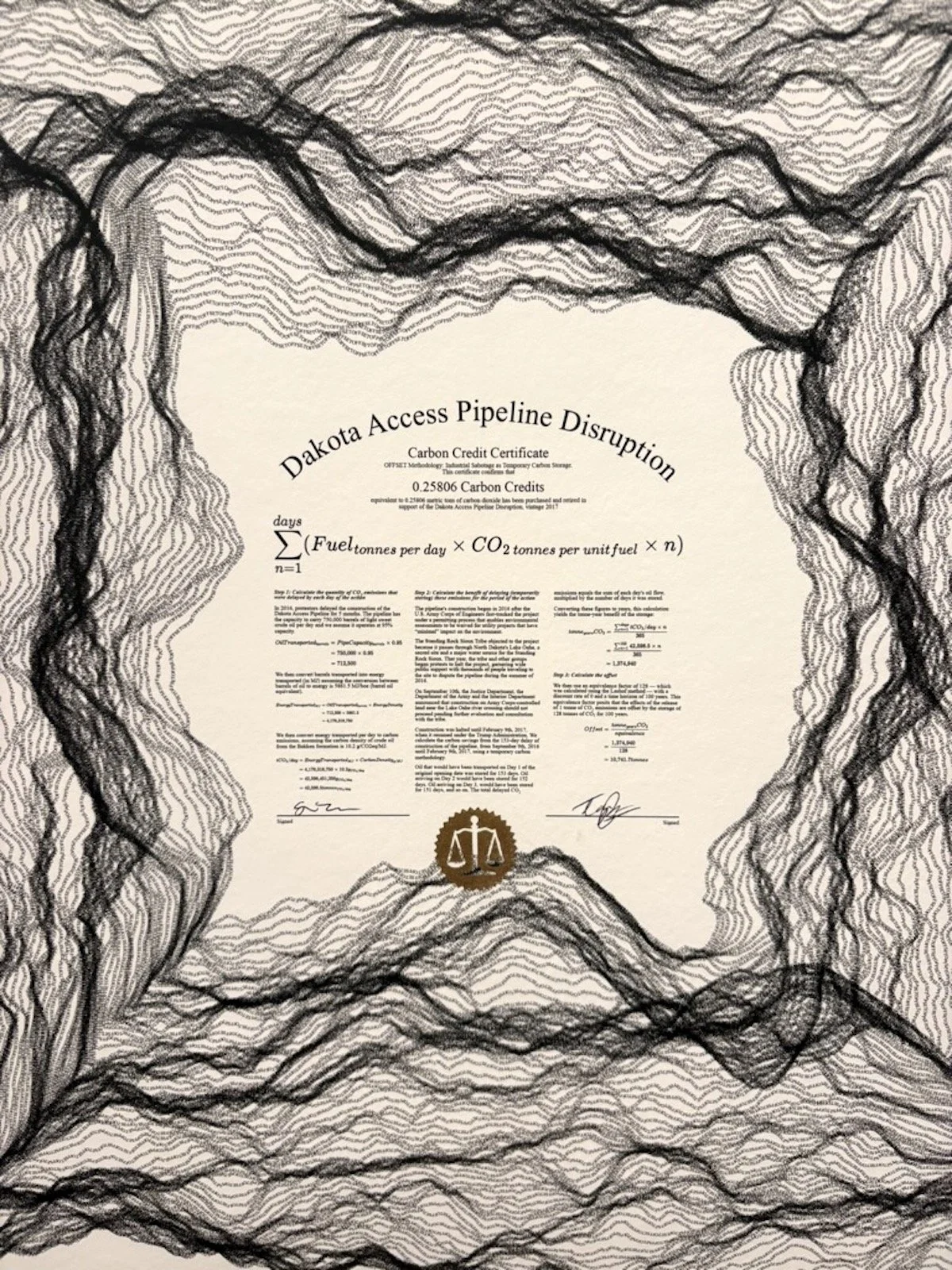
A view of one certificate in Tega Brain and Sam Lavigne’s Offset, 2023-present, video, website viewing salon, and framed certificates. Image by Felicity Wong.
A table with touchscreen pads in front of the video channel extends the option to purchase these alternative offsets, and certificates of different sizes on the facing wall details the calculation of the carbon credits’ costs.
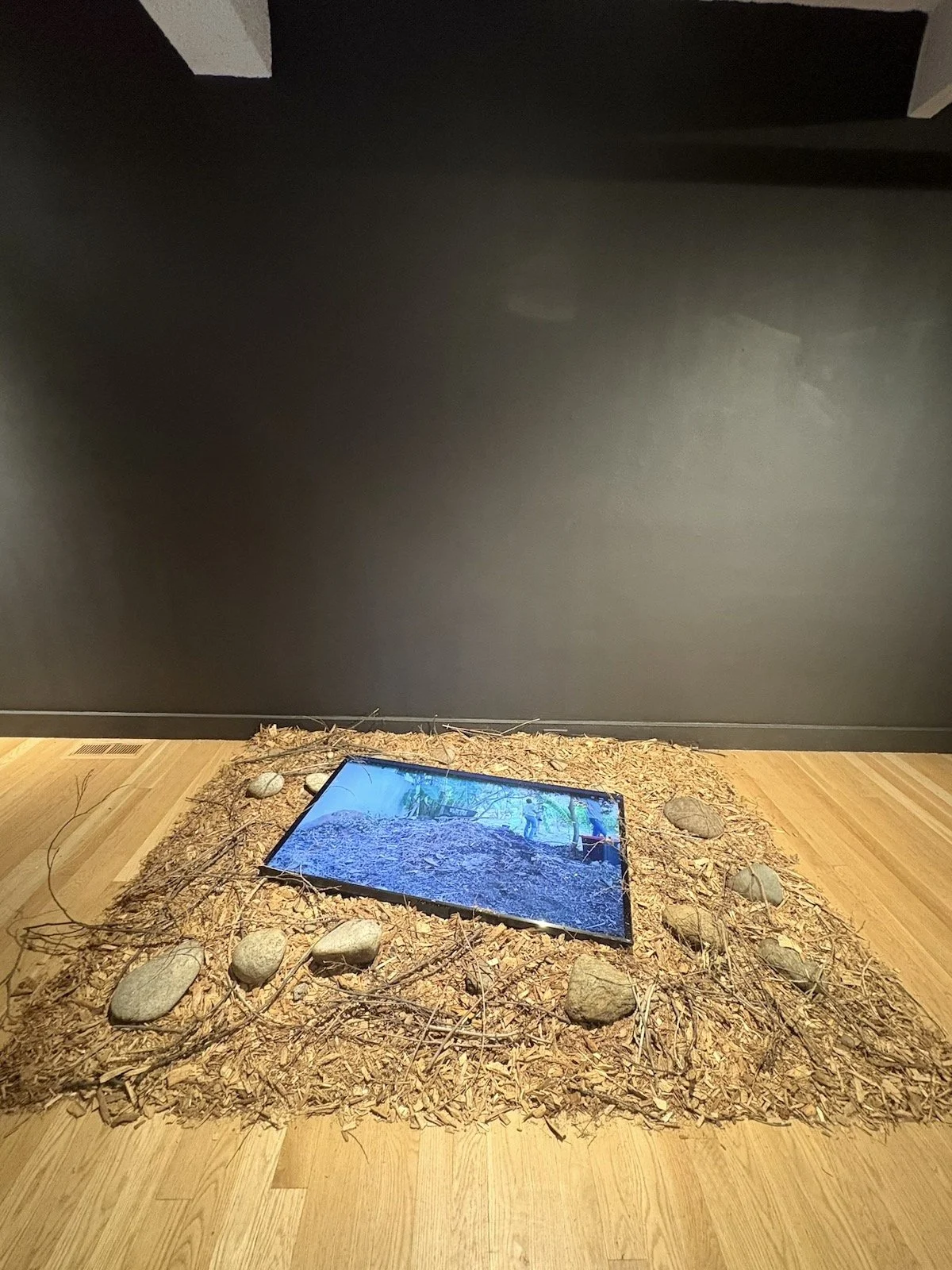
Cass Marketos and @the.rot.squad, 2025, livestream and natural materials from the Boulder Creek. Image by Felicity Wong.
Taking a more local focus, the artist Cass Marketos and @the.rot.squad broadcast a livestream of the maintenance of a community compost heap on top of a makeshift pile of sticks, rocks, and debris from the Boulder Creek. Reducing waste and improving soil health are not merely matters of the “outside,” however. Marketos recalls Rara’s emphasis on the importance of multispecies relationships by spotlighting the collaborations between microbes, insects, humans, and institutions necessary to sustain a compost initiative.
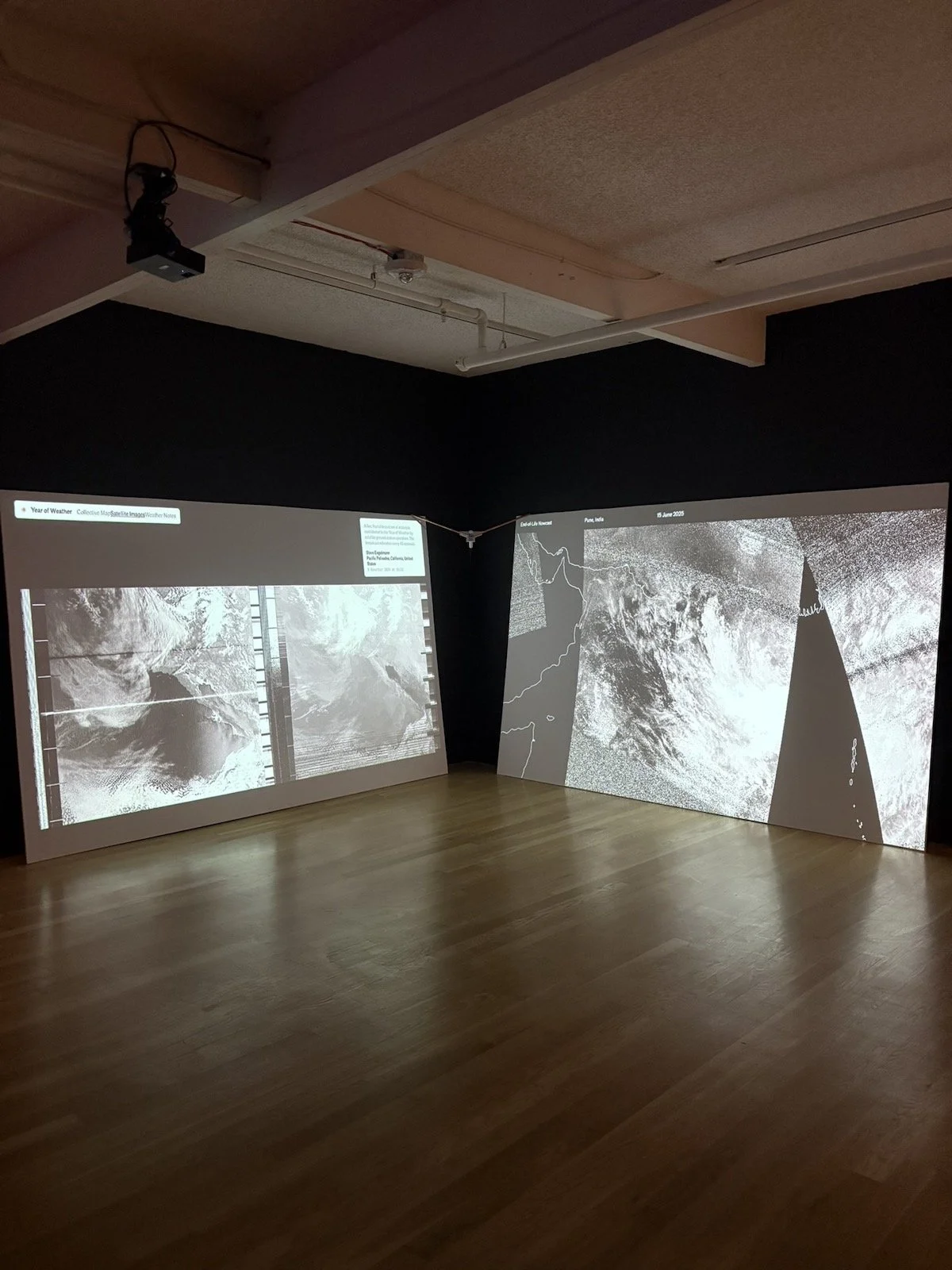
open-weather, in collaboration with Rectangle (Lizzie Malcolm and Daniel Powers) and co-created with the open-weather network of more than 100 DIY satellite ground station operators, Year of Weather: Transmission Archive, September 2024-September 2025, two channel projection and copper v-dipole antenna. Image by Felicity Wong.
Just around the corner, two enormous, slanted screens appear, displaying black-and-white weather satellite footage. Created by “open-weather,” a collective of over a hundred DIY Satellite Ground Station operators, Year of Weather: Transmission Archive produces a map of planetary weather data within the last year based on the last transmissions of three weather satellites run by the National Oceanic and Atmospheric Administration. A volunteer-based, grassroots intervention, this project disseminates crucial information in the face of defunded environmental research, increasingly inaccessible weather data, and decommissioned satellites in the United States, not to mention rising planetary temperatures.

Josefina Buschmann, produced by Mimbre Films, video still from Las nubes caídas, 2023, video (S16mm digitized to 2K). Image courtesy of BMoCA.
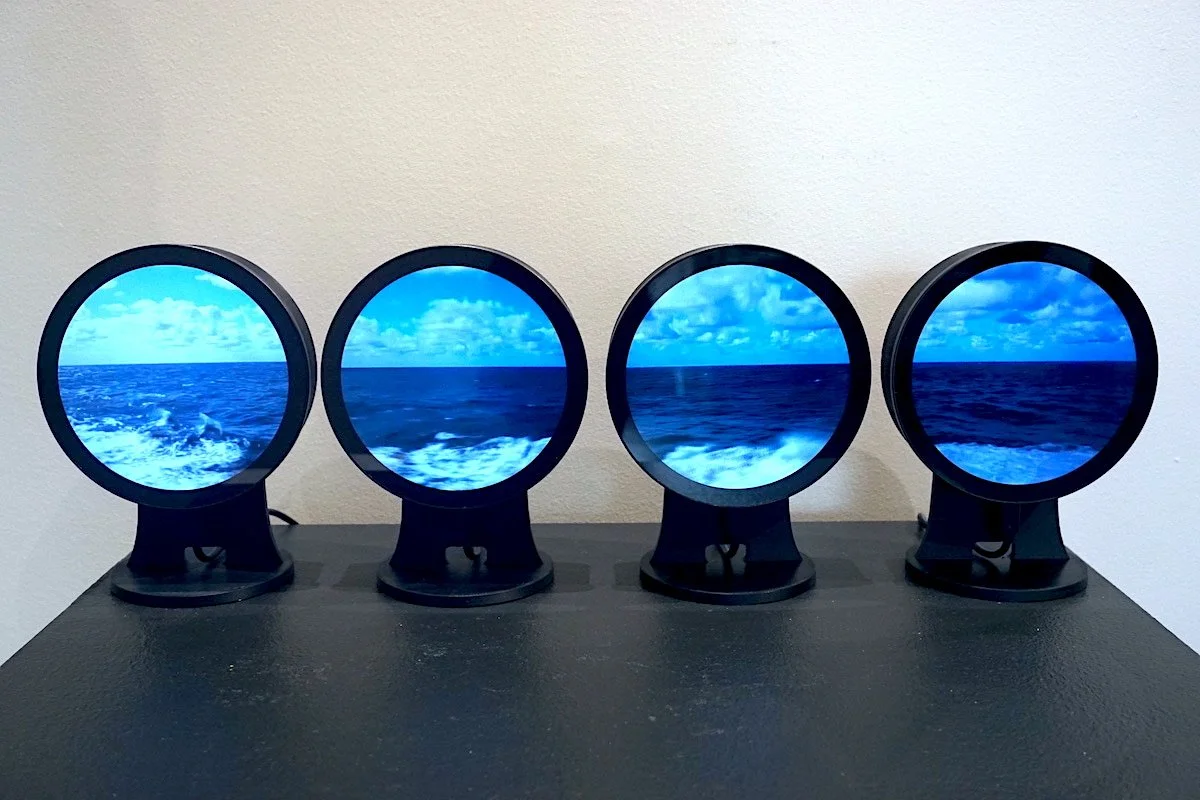
Josefina Buschmann’s Las nubes caídas (The Fallen Clouds) centers yet another narration: this time, from the perspective of a generative AI chatbot who seeks to track its origins and process of development. The video charts a journey from the internet fiber-optic cables in the depths of the Pacific Ocean to Salar de Atacama (the Atacama Salt Flats) in Chile, home to the lithium from which batteries are made, and then to Santiago, where the ecofeminist collective MOSACAT protested against plans to build a new Google data center that would drain the city of its water resources and worsen the ongoing drought.
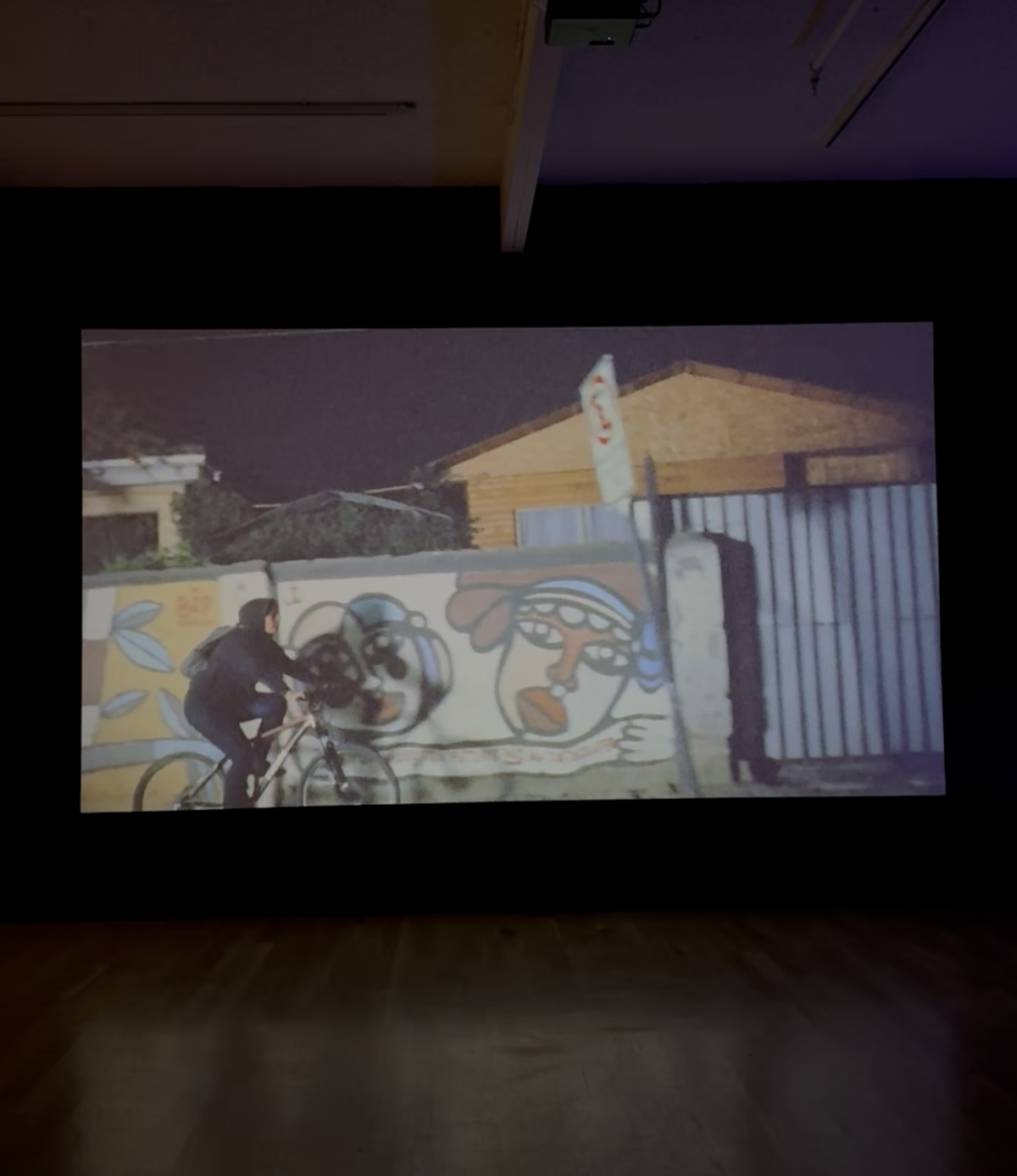
Josefina Buschmann, produced by Mimbre Films, video still from Las nubes caídas, 2023, video (S16mm digitized to 2K). Image by Felicity Wong.
Like the other artists, Buschmann amalgamates the old with the new, combining 16mm film with 2K video, and stitches together scenes of the human and non-human: pink flamingos, pink rocks, archival photographs of miners, scintillating iPhones, activists on bikes, and the chatbot itself. In doing so, she calls upon her audience to consider the implications of these interrelations. What can the anthropomorphization of the chatbot say about the commoditization of human life, and vice versa?
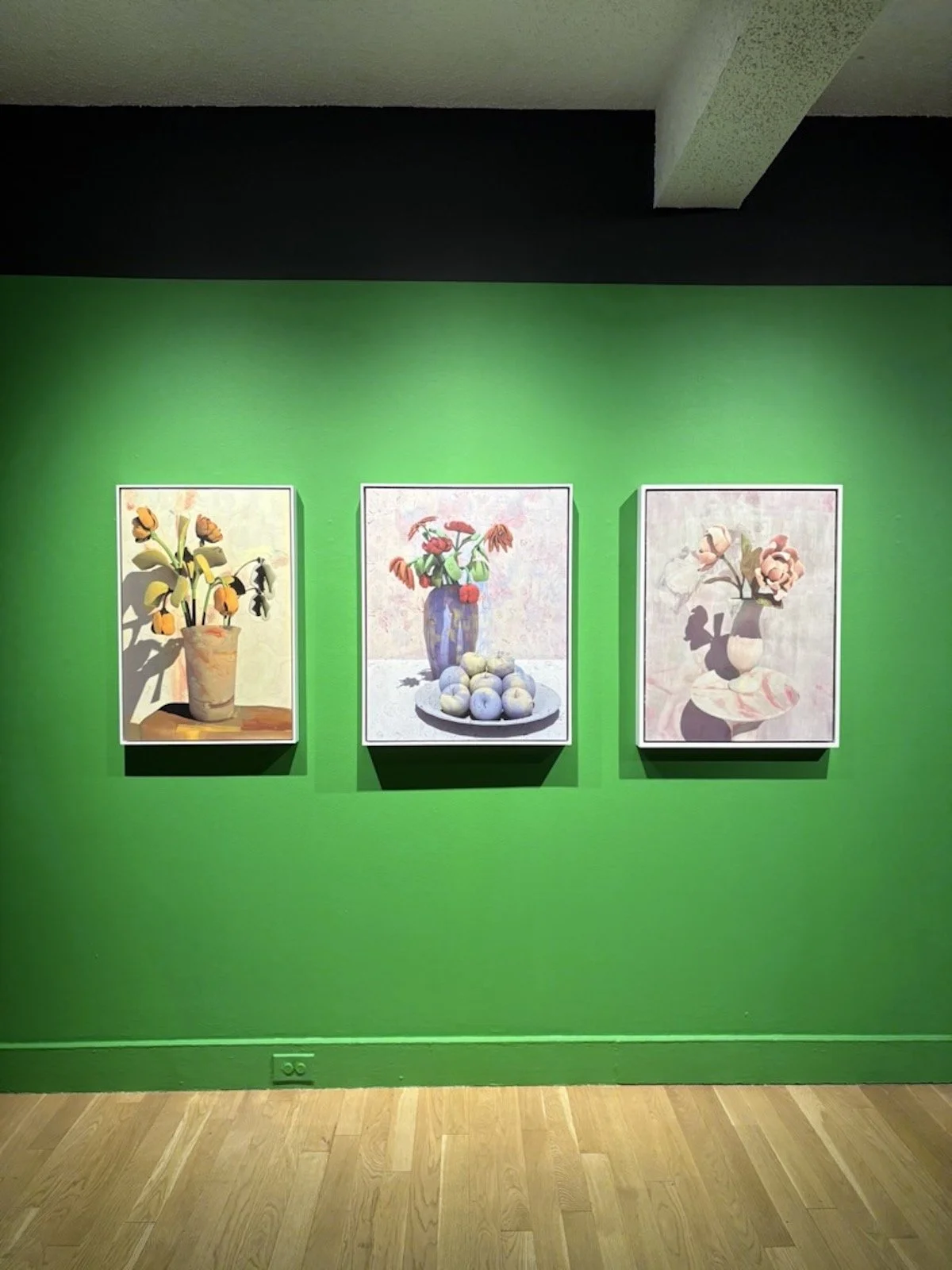
Left to right: Claudia Hart, The Armory Women, Jacqueline Marval 1.0, 2024, acrylic gouache, pigment in resin, watercolor, sanded painting of the same, oak wood panel, and oak frame; Claudia Hart, The Armory Women, Emilie Charmy 1.0, 2024, acrylic gouache, pigment in resin, sanded paintings, chalk, ash wood panel, and pine frame; Claudia Hart, The Armory Women, Study for Emilie Charmy 2.0, 2024, acrylic gouache, pigment in resin, 2 sanded paintings, chalk, ash wood panel, and oak frame. Image by Felicity Wong.
The final third of the exhibition reimagines technologies intended for 3-D games and animation. Claudia Hart’s series of The Armory Women recreates paintings by underrepresented Fauve and Post-Impressionist women artists with simulation software and hand-painting techniques. The result—a depiction of fruits on plates, flowers in vases, and their harsh shadows—seamlessly blends those techniques to the point of uncanniness.
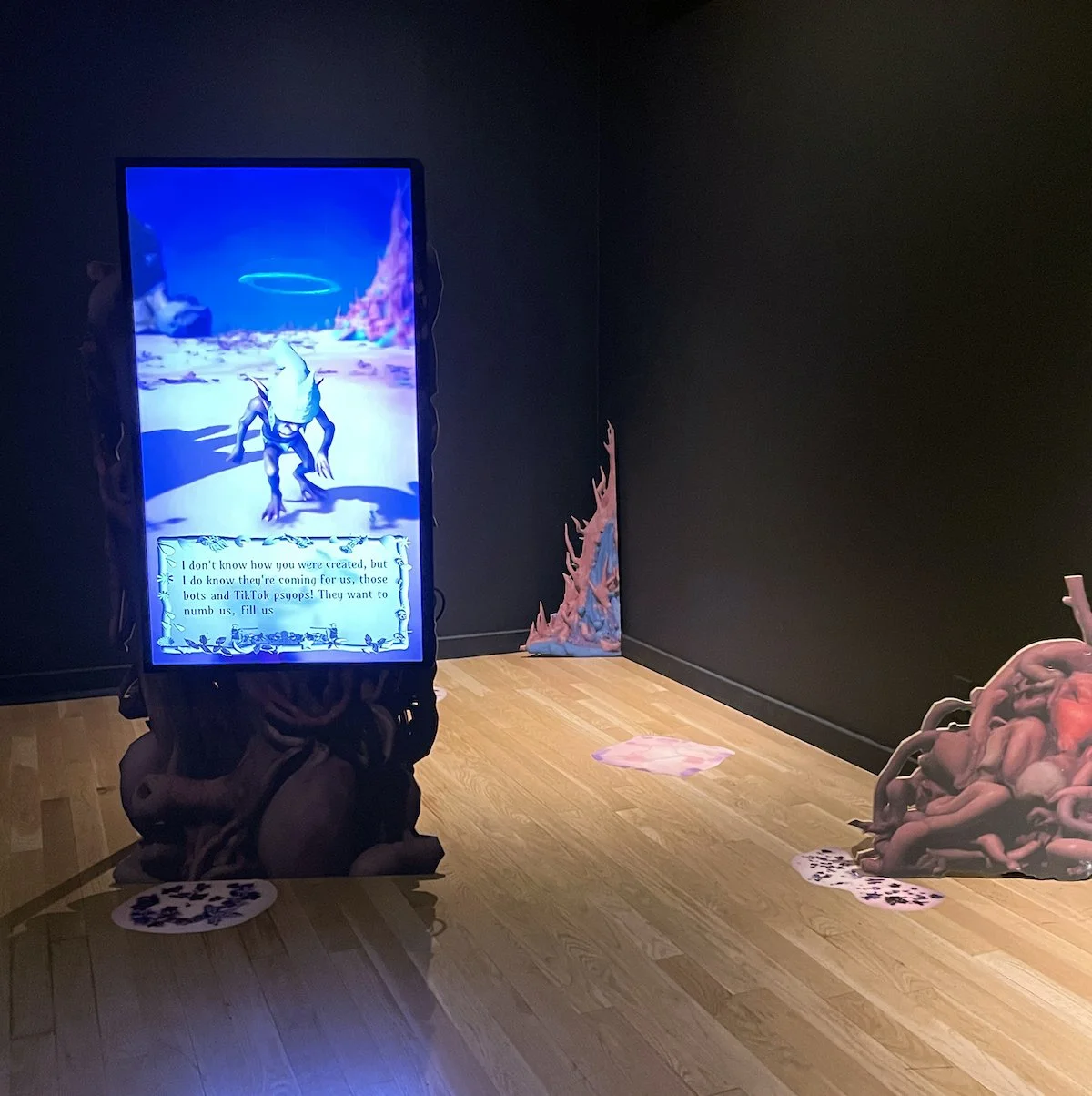
An installation view of Andy DiLallo, Jacob Riddle, and Ian Anderson’s Unplayable, 2025, 2-channel video installation, unity simulation, particle board cutouts, digital prints, and adhesive floor graphics. Image courtesy of BMoCA.
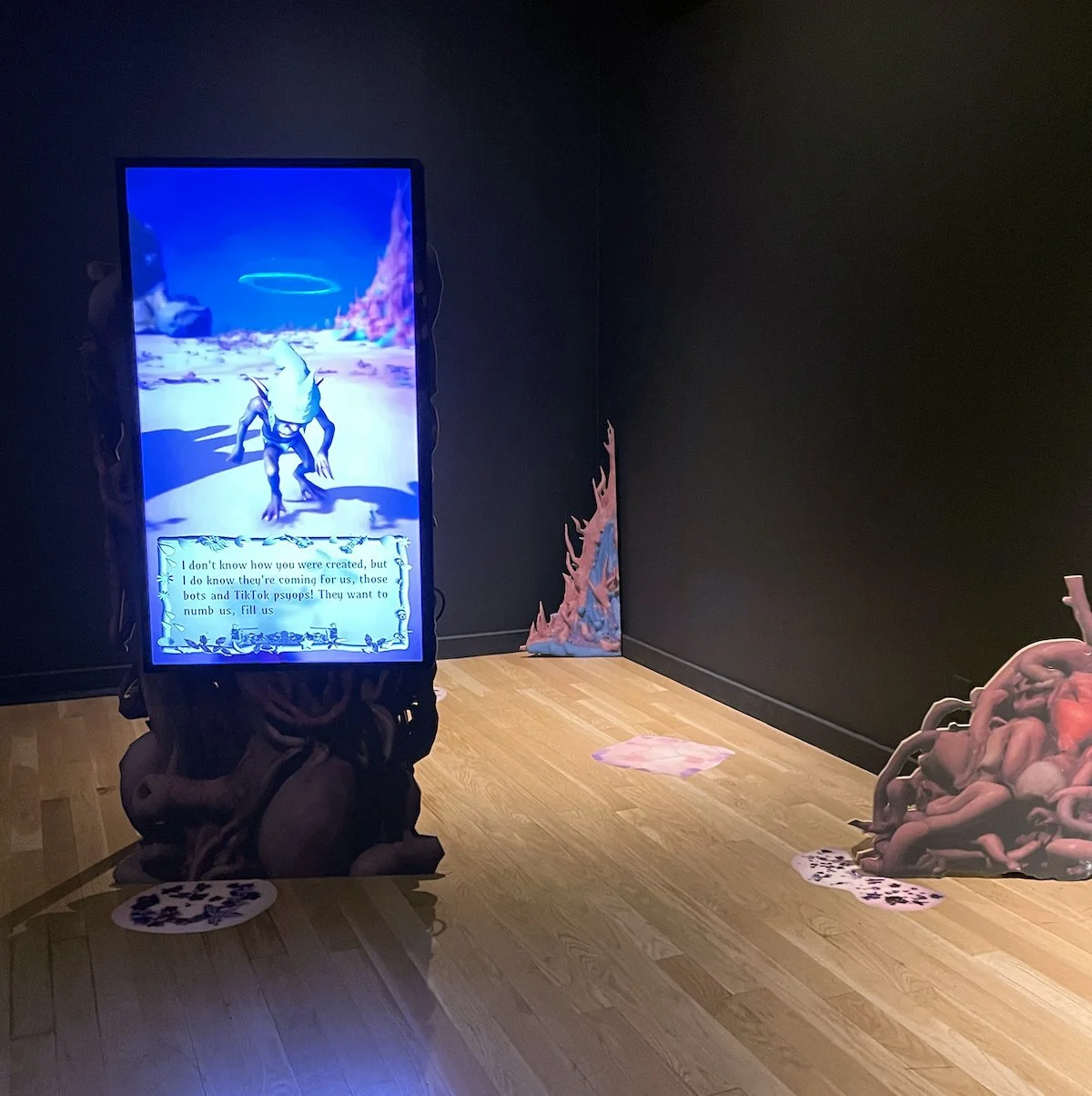
Amidst mounds and columns of sculpted, worm-like curls on the second floor, two video channels present a simulated video game with goblin-like creatures. In Andy DiLallo, Jacob Riddle, and Ian Anderson’s Unplayable, (unplayable) characters chase an elusive goal to no avail, exemplifying French psychoanalyst Jacques Lacan’s concept of objet petit a.
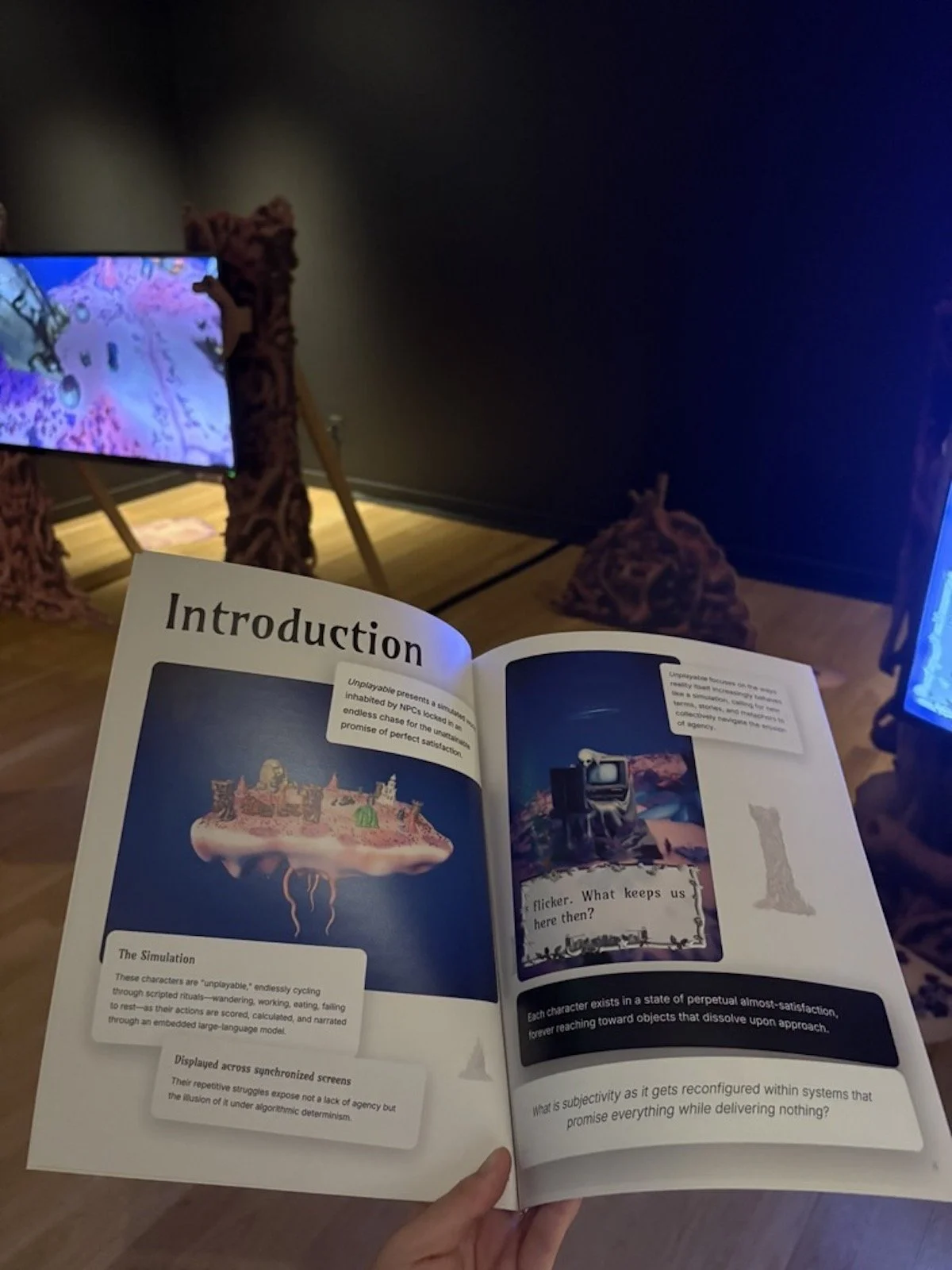
A view of the booklet in Andy DiLallo, Jacob Riddle, and Ian Anderson’s Unplayable, 2025, 2-channel video installation, unity simulation, particle board cutouts, digital prints, and adhesive floor graphics. Image by Felicity Wong.
An accompanying booklet explains how each player’s actions are scored, ultimately concluding that their failures to achieve the aforementioned goal demonstrate a rejection of the illusion of agency and freedom within a capitalist system. As spectators of this game, we, the viewers, slowly realize we are also part of a universe governed by this illusion—where we are creatures unable to play ourselves.

Isabel Beavers, Tomb Keeper, 2023, 3-D animation, projection mapping, and stained glass. Image courtesy of BMoCA.
Animated fluorescent lights on slivers of stained glass, arranged to imitate the shape of ctenophores (comb jellies), brighten the last corner of the exhibition. These slivers are layered in front of a backdrop of flickering spotted lights, transforming the narrow recess on the floor into a meditative shrine. The ctenophores in Isabelle Beaver’s Tomb Keeper are underwater deities who strive to protect rare metals like manganese, copper, cobalt, and nickel in polymetallic nodules on the deep ocean seafloor. These metals are usually mined for the manufacture of mobile devices and renewable energy systems. Along with DiLallo, Riddle, Anderson, and Hart, Beaver pushes the boundaries of 3-D animation through the act of repurposing—a sort of composting of the medium.

An installation view of Tega Brain and Sam Lavigne’s Offset, 2023-present, video, website viewing salon, and framed certificates. Image courtesy of BMoCA.
Livio’s acute self-awareness, made evident in her curatorial voice, remains one of the strongest aspects of Data Rich, Dirt Poor. “As I write,” she reflects in the exhibition’s introductory text, “the calculus is unbearable.” Here, calculus refers to the value construction that prioritizes the accumulation of social and material capital over the preservation of community, social services, Indigenous land, and the health of humans and the more-than-human. Surely, museums, just like any other governmental or corporate institution, must also be guilty of the power dynamics of this unbearable calculus.
The curator acknowledges the financial support Data Rich, Dirt Poor received from the National Endowment for the Arts—it emerged magically unscathed by the Trump administration’s funding cuts this past fall. “An exhibition is woefully insufficient for addressing any of these miscalculations; it cannot even adequately represent them,” she continues. But like the artists, Livio practices a kind of diversion herself by donating a portion of her curator fee to The Gaza Children’s Village. To slip through the cracks of that calculus, then, is to further redefine possibilities of resistance—despite, and sometimes because of, our exhaustion.
Felicity Wong (she/her) is a graduate student at the University of Colorado Boulder. Her research interests, which seem to change every month, are currently focused on the garment production industry, politics of everyday materiality, and Afro Asian labor histories. She received her BA in English at the University of Notre Dame.