
Curas: Males del Corazón / Remedies: Ailments of the Heart
Juan Carlos Escobedo: Curas: Males del Corazón / Remedies: Ailments of the Heart
Art Students League of Denver
200 Grant Street, Denver, CO 80203
June 12–July 26, 2026
Admission: free
Review by Dani/elle Cunningham
Stepping into Juan Carlos Escobedo’s exhibition Curas: Males del Corazón / Remedies: Ailments of the Heart at the Art Students League of Denver (ASLD) is both whimsical and deeply reflective—a journey through the artist’s residency at ASLD that balances conceptual rigor with Escobedo's subjective experience. As a residency exhibition should, the work embraces experimentation, transforming the ASLD’s building—a late nineteenth century former school—into an immersive and collaborative environment for Escobedo’s ideas and historic architecture. [1]
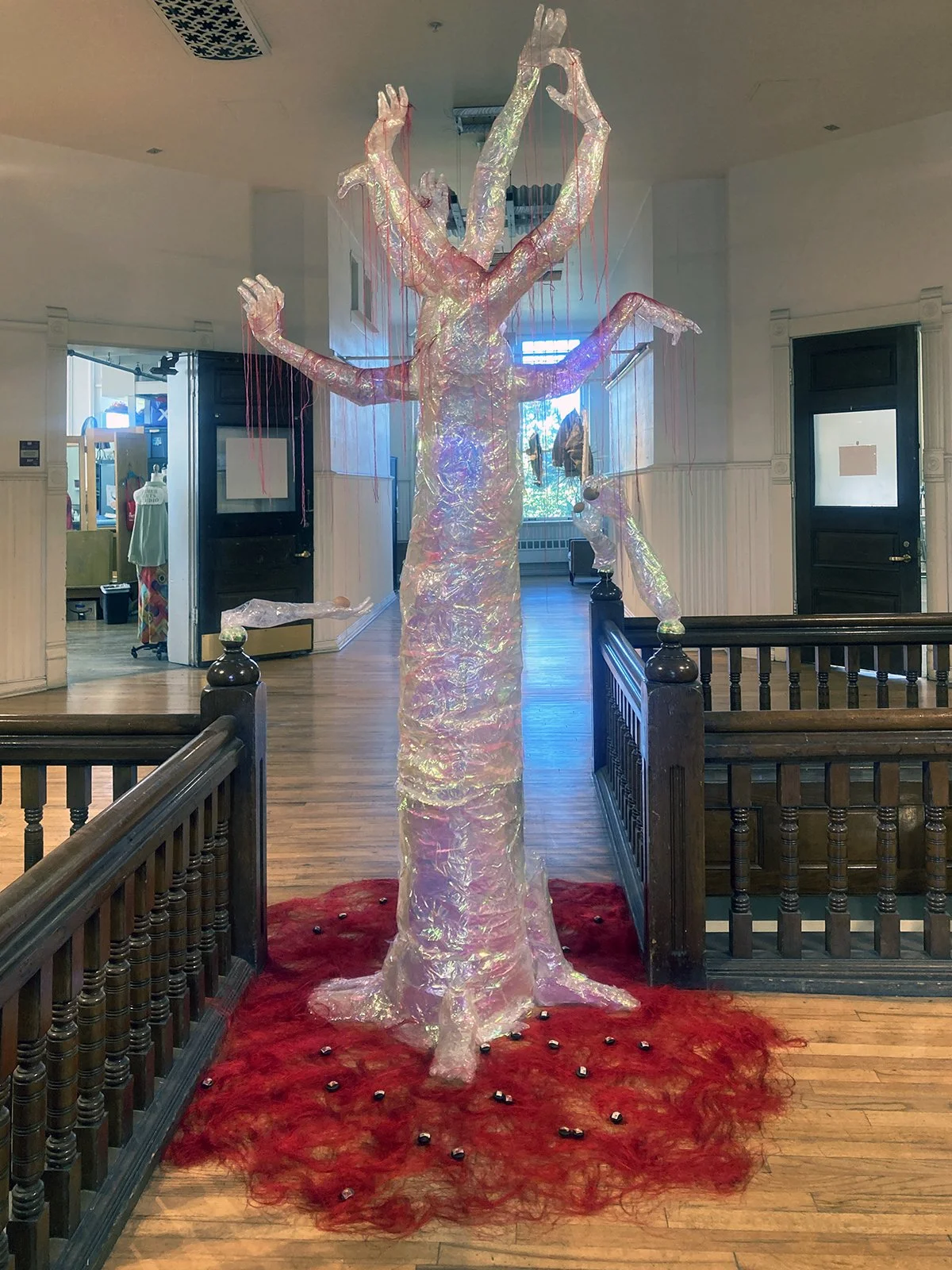
Juan Carlos Escobedo, Árbol de Brazos, 2026, mixed media. Image by Dani/elle Cunningham.
Perched atop the upper floor landing, a tree heals sadness, sculpted arms replace tree branches, delicate miniature sculptures balance on banister posts, and flashes of iridescent cellophane punctuate the predominantly white paper constructions that fill the space. These materials recall the artist’s time working in a dry-cleaning business, where he spent countless hours starching garments. They also reference his queerness, working class background, and cultural identity, offering a subtle but pointed meditation on labor, class distinctions, and the invisible work that sustains social hierarchies in the United States.
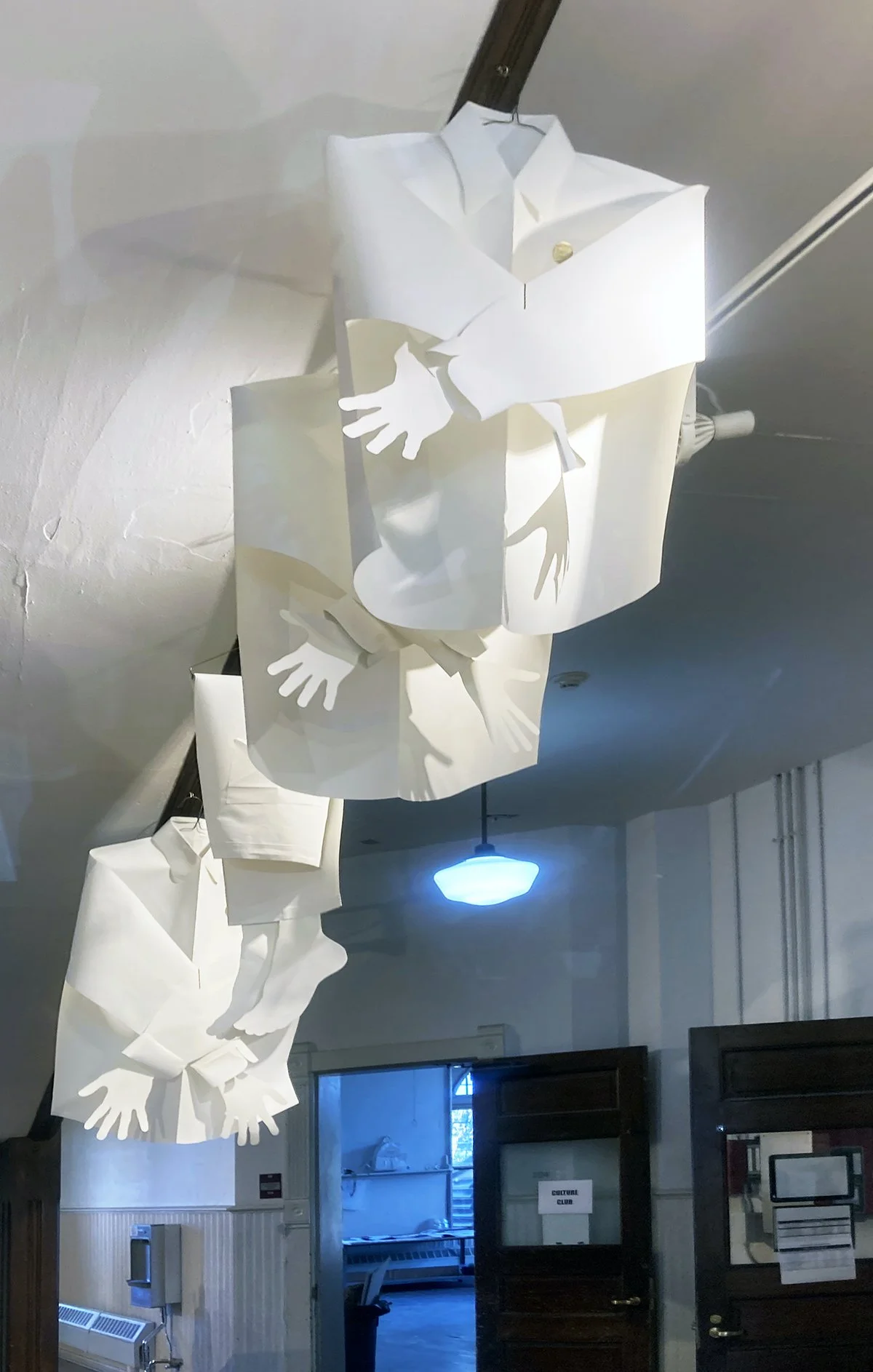
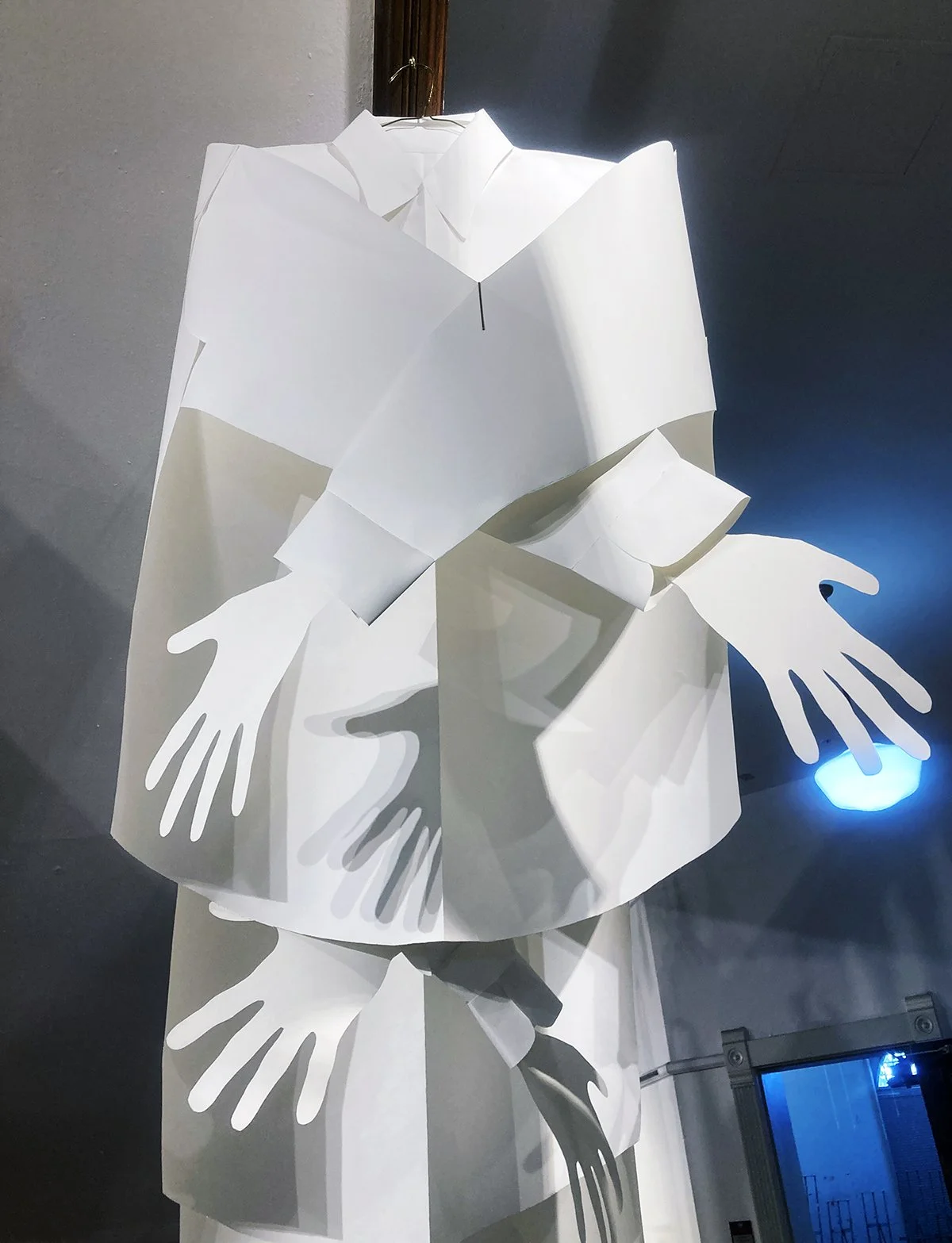
Juan Carlos Escobedo, Dry Cleaned Shirts, 2026, paper. Image by Dani/elle Cunningham.
The first floor of the exhibition is punctuated by stark white paper constructions—Dry Cleaned Shirts, Dry Cleaned Pants—that allude to Escobedo’s past occupation. Here, humble materials are transformed into powerful symbols of resilience, identity, and memory. Precisely folded paper cutouts of pants and shirts hang overhead at the entrance and exit of the building, suggesting an experience that surrounds the artist and informs both his practice and lived reality. Subtly, the whiteness of these forms also speaks to Escobedo’s exploration of racial dynamics in America, particularly his experience of being Brown in a predominantly white country.
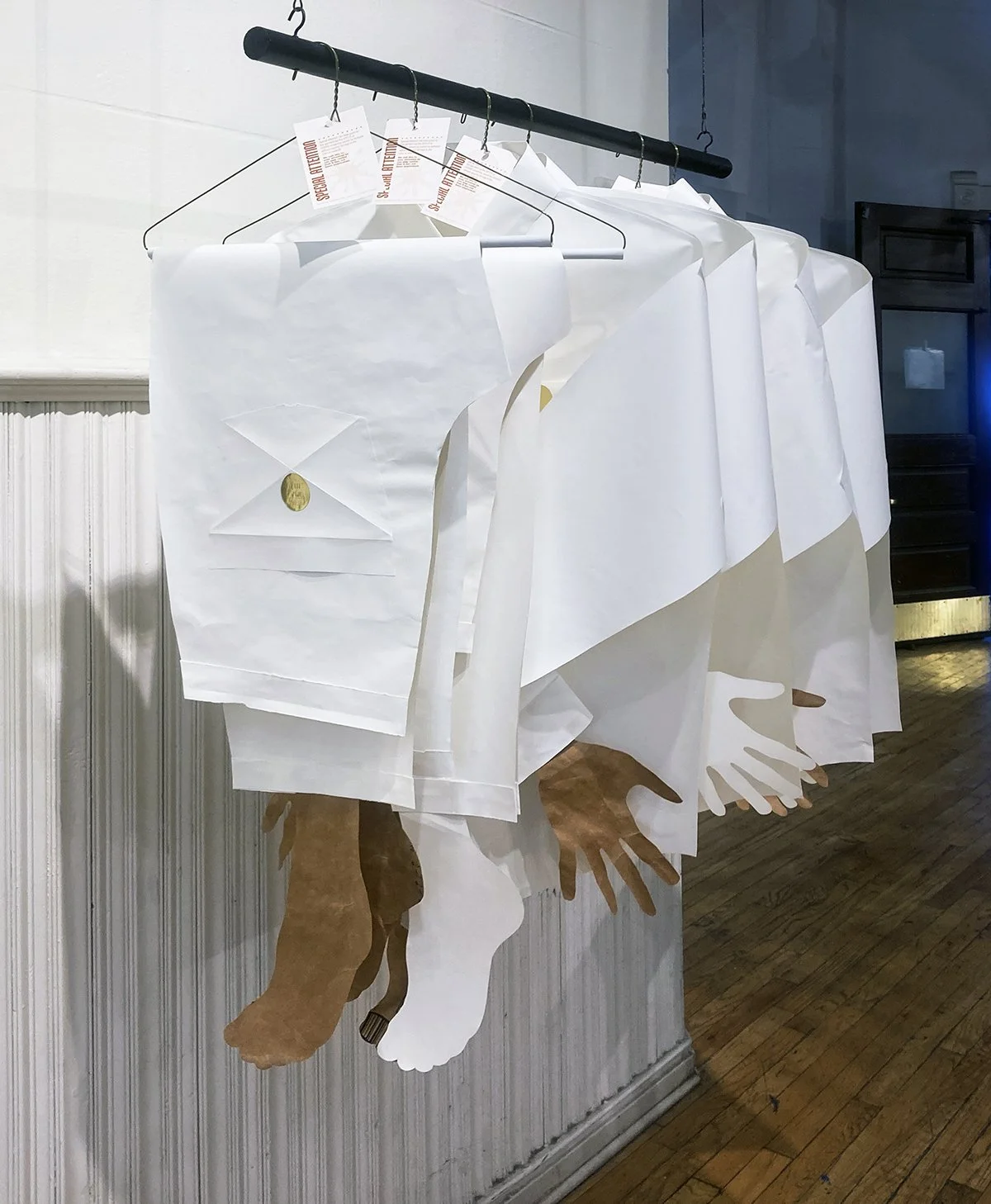
Juan Carlos Escobedo, Dry Cleaned J.ESC Pants, 2026, paper. Image by Dani/elle Cunningham.
His paid labor once involved cleansing garments of stains—a charge that resonates metaphorically with broader associations in the United States today, where immigrants are often framed as a blemish on the nation, even as political rhetoric increasingly calls for their exclusion despite the essential roles they occupy within the workforce, culture, and wider society. By translating this experience into forms and suspending them overhead, the artist elevates the lived realities of immigrants and working-class communities, even as those positions are frequently diminished or rendered invisible.
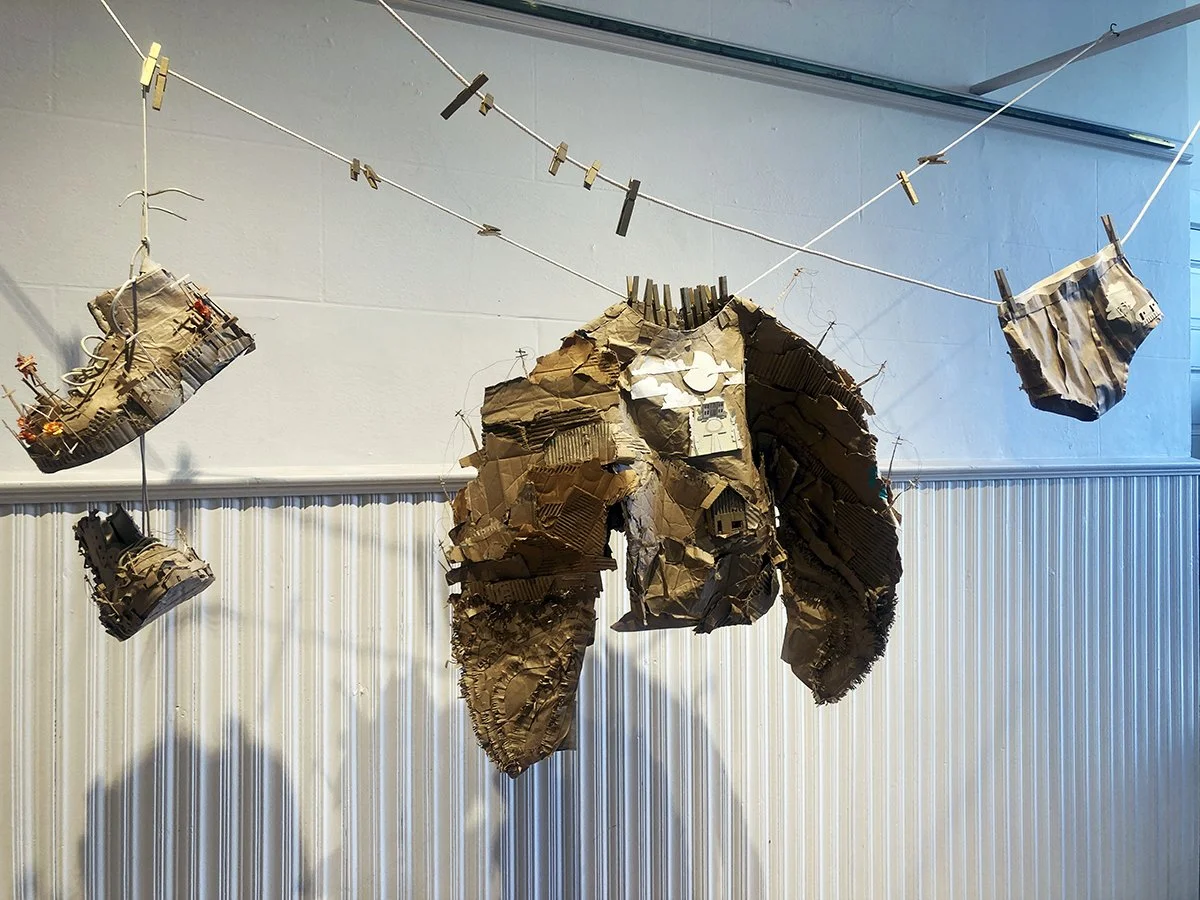
Left to right: Juan Carlos Escobedo, Hanging High Tops x J.ESC, 2026, cardboard; Brownscape Bomber, 2026, cardboard and paper; Brownscape Calzon x J.ESC, 2026, cardboard. Image by Dani/elle Cunningham.
Similarly to his white paper works, Escobedo constructs additional wearable sculptures from raw brown cardboard, presenting a color palette that subtly echoes the artist’s self-identification as Brown. This series, suspended from clotheslines on the second floor, includes two jackets, pants, shoes, and underwear titled Brownscape Bomber x J.ESC, Line Dried Brown Pants x J.ESC, Hanging High Tops x J.ESC, and Brownscape Calzon x J.ESC. Their messy, unpainted surfaces reinforce their resemblance to garments shaped by daily wear, contrasting with the meticulously folded, stark white shirts and pants of the other garment series.
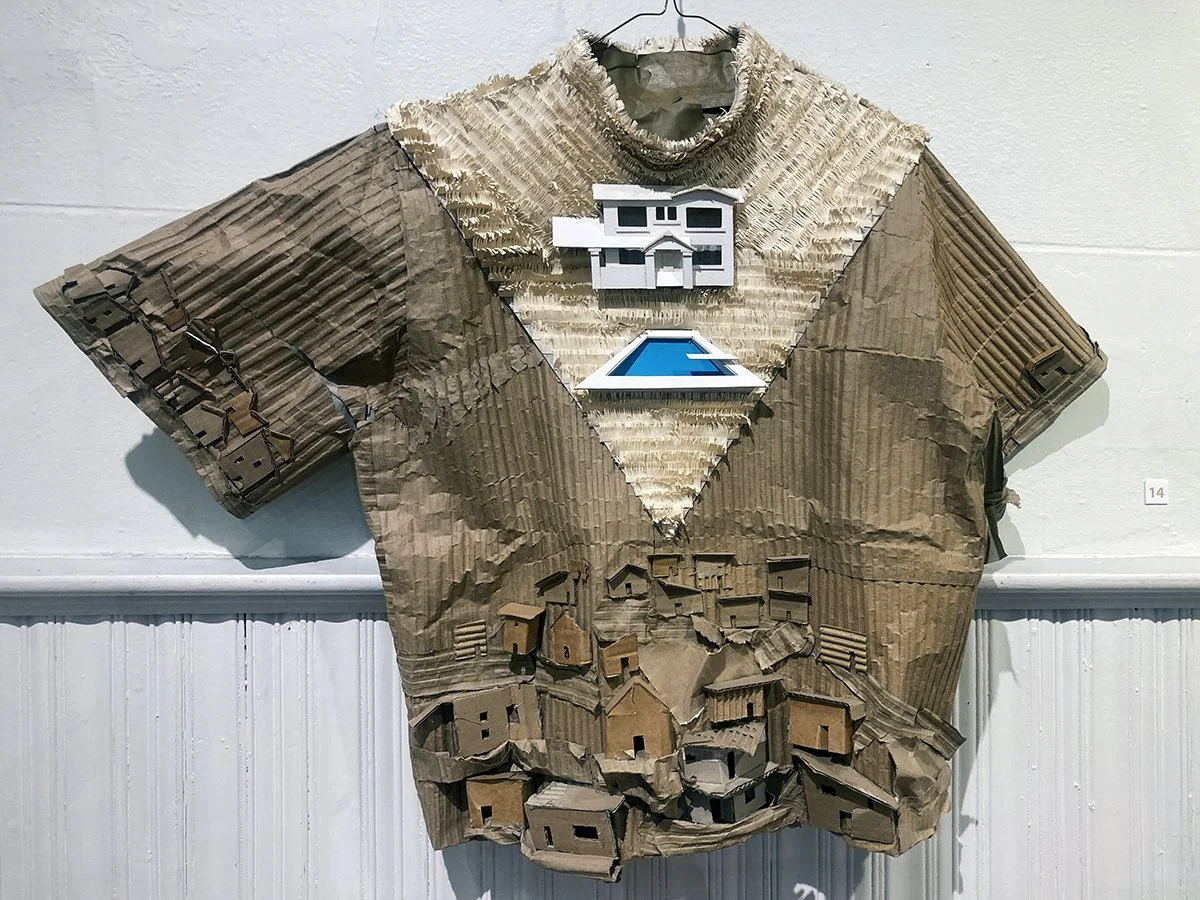
Juan Carlos Escobedo, Mock Neck x J.ESC, 2026, mixed media. Image by Dani/elle Cunningham.
These sculptures feel rooted in the artist’s everyday experience—reading as streetwear—and possess an approachable quality, as though they represent garments from his own wardrobe, not to mention every title is branded with a shortened version of the artist’s name “J.ESC.” The antithesis to the pristine, dry-cleaned facsimiles that recall the years he spent laundering and caring for the garments of others, these cardboard clothes are more human—imperfect, personal, and self-referential.
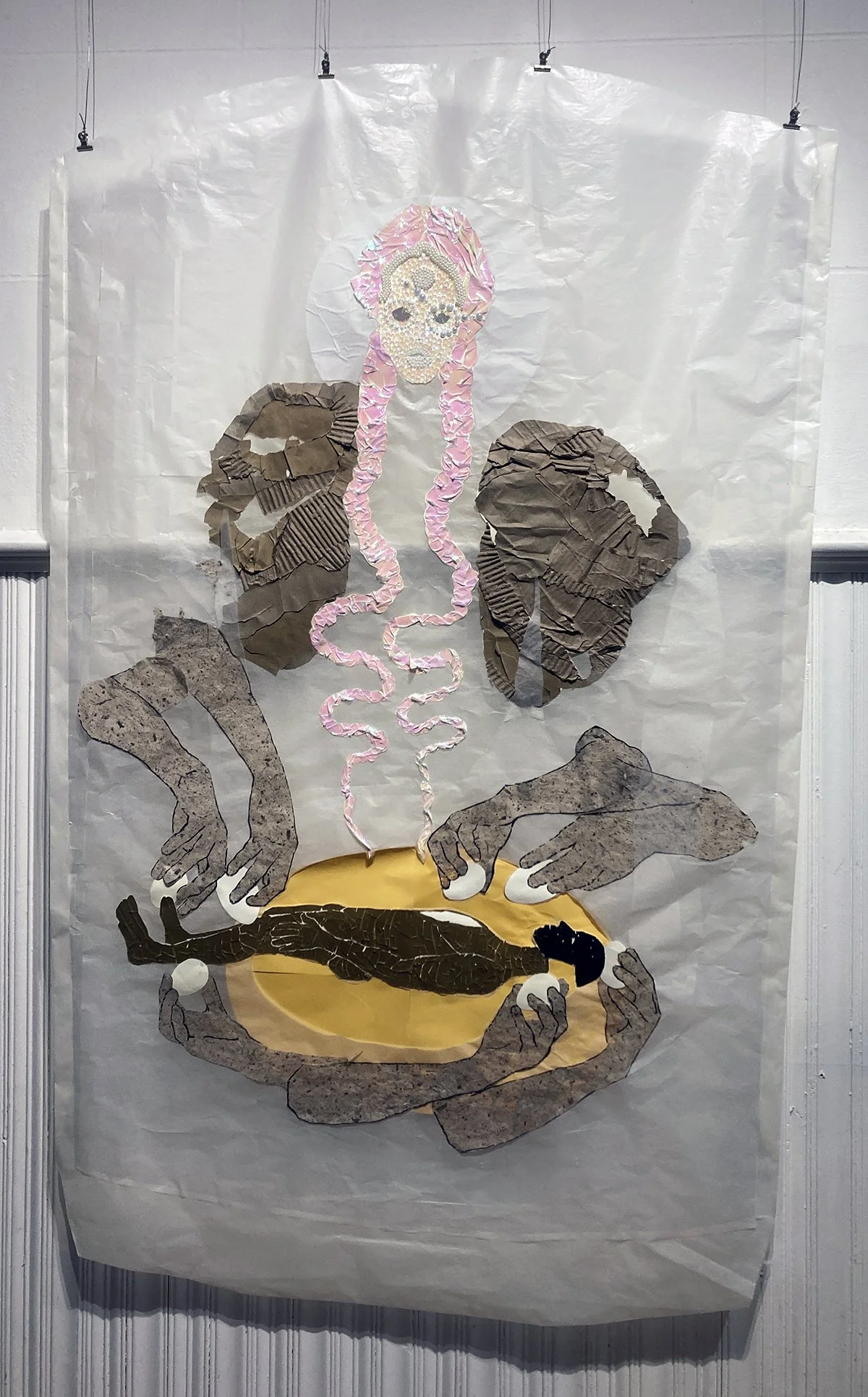
Juan Carlos Escobedo, Cura para Mal de Hojo, 2026, mixed media. Image by Dani/elle Cunningham.
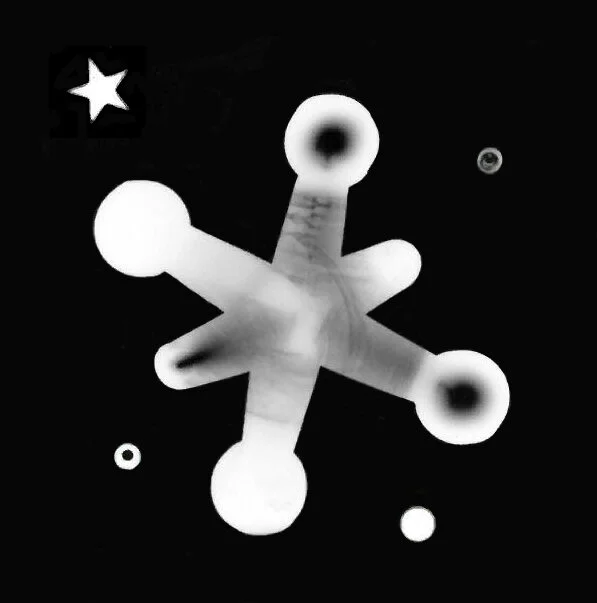
Transitioning from the minimalism and class commentary of his garment works, Escobedo’s celestial mixed media collage Cura para Mal de Ojo references the belief in the “evil eye”—the idea that a gaze can transmit misfortune—alongside practices for warding it off, while foregrounding folk healing traditions rooted in the artist’s family and community. Like much of Escobedo’s work in the exhibition, this large artwork is suspended in mid-air, combining pink cellophane, cardboard, and other paper-based materials mounted on a translucent substrate, coalescing in a visually pleasurable, luminous presence.
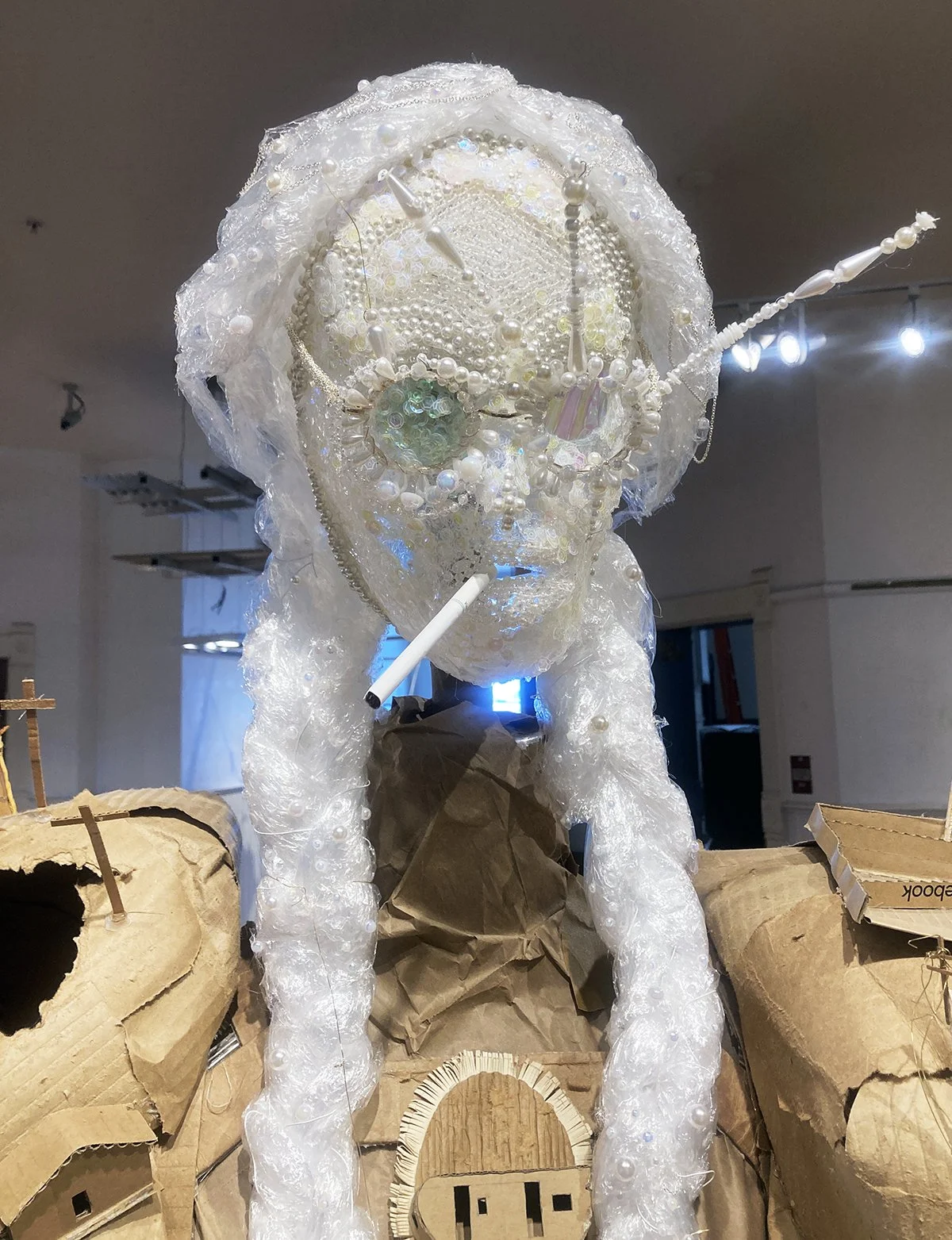
Juan Carlos Escobedo, Moon Mask, 2026, mixed media. Image by Dani/elle Cunningham.
At its center is a feminine figure whose faux pearl-covered face echoes the mask featured in a full body sculpture elsewhere in the exhibition, her long pink braids cascading down the surface toward several pairs of disembodied hands. The hands hold eggs above a reclining body, evoking the limpia con huevo, a traditional cleansing ritual in which a raw egg is passed over the body to absorb negative energy and remove el mal de ojo.
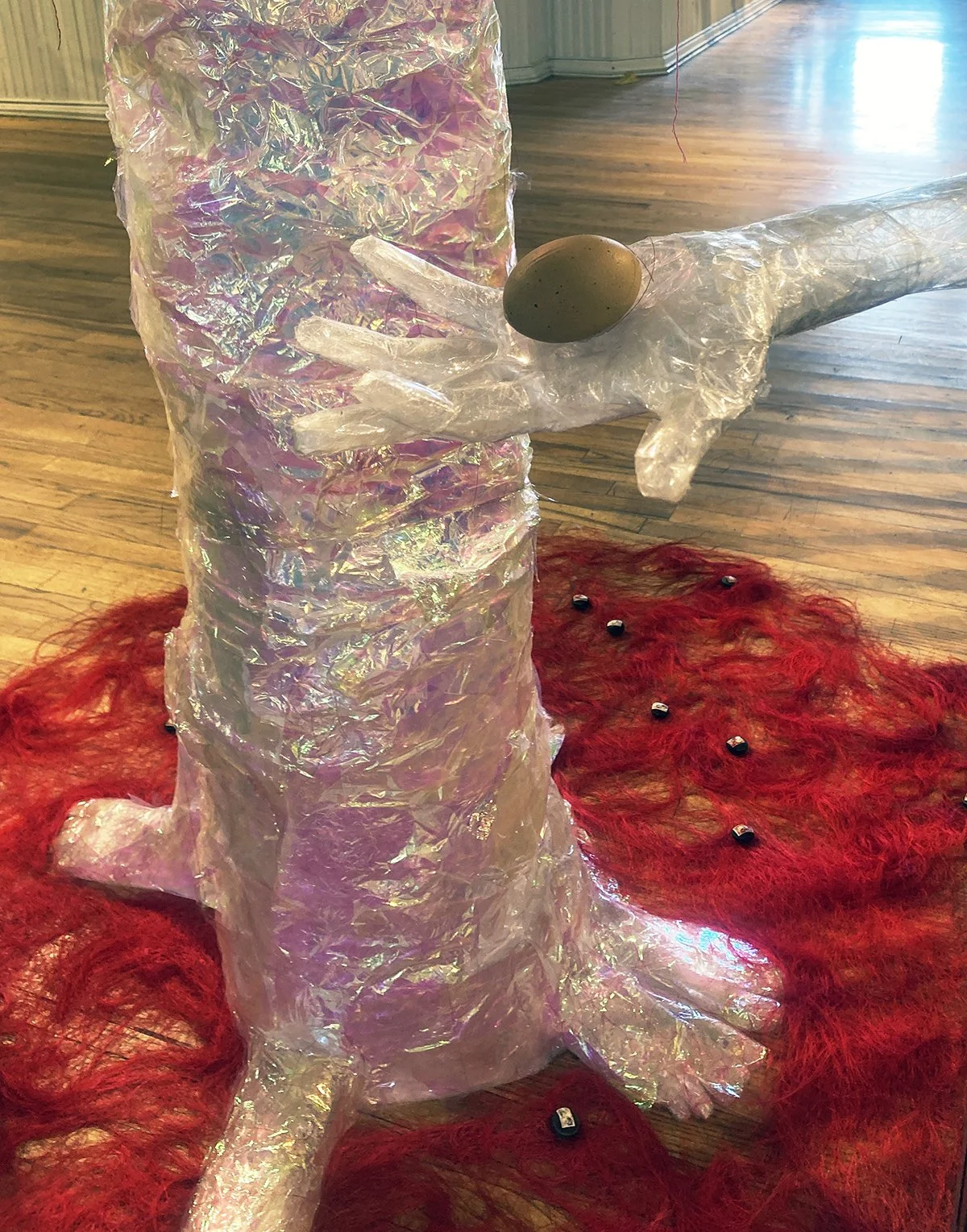
Juan Carlos Escobedo, Limpia con Huevo Post Sculptures, 2026, mixed media. Image by Dani/elle Cunningham.
This practice is referenced again in the exhibition’s recurring Limpia con Huevo sculptures—pink cellophane hands clutching eggs and resting throughout the space atop banister posts—creating a visual thread that connects healing, protection, and ancestral knowledge across the exhibition. They also suggest that the installation itself enacts a kind of cleansing of the 125-year-old building itself.
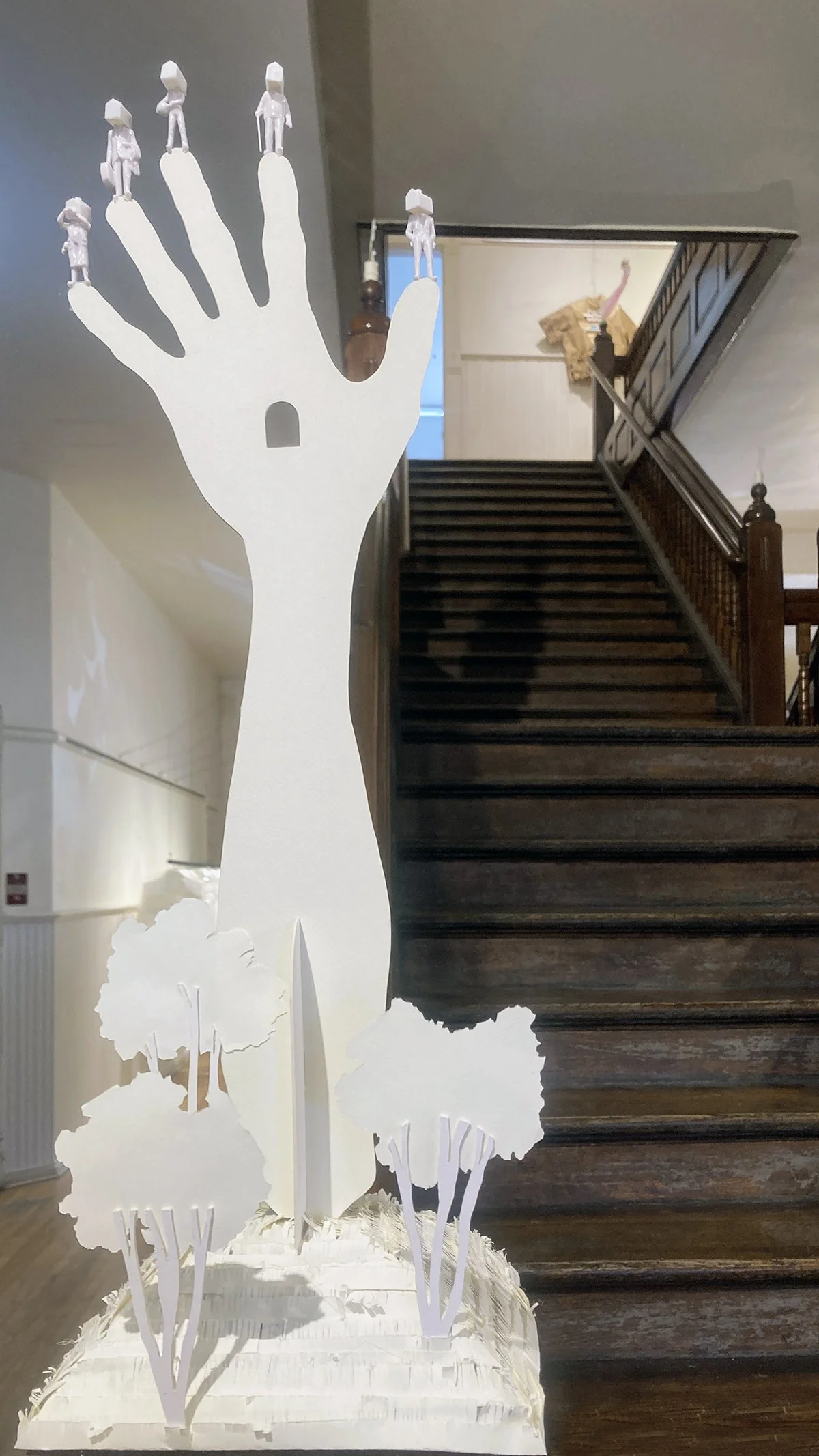
Juan Carlos Escobedo, White Fetish Post Sculptures, 2026, mixed media. Image by Dani/elle Cunningham.
Ultimately, Escobedo’s residency exhibition refuses the possibility of a narrow reading and instead builds a complex atmosphere—though there are many moments of simplicity—mirroring his experience and identity. What begins as a meditation on labor and the class divisions around cleanliness ascends physically and metaphorically into a negotiation: ritual merges with architecture and memory is not hidden or stagnant but hovering above viewpoints and in motion. The exhibition does not present identity as singular but as multifaceted and interwoven like the branches of a tree.
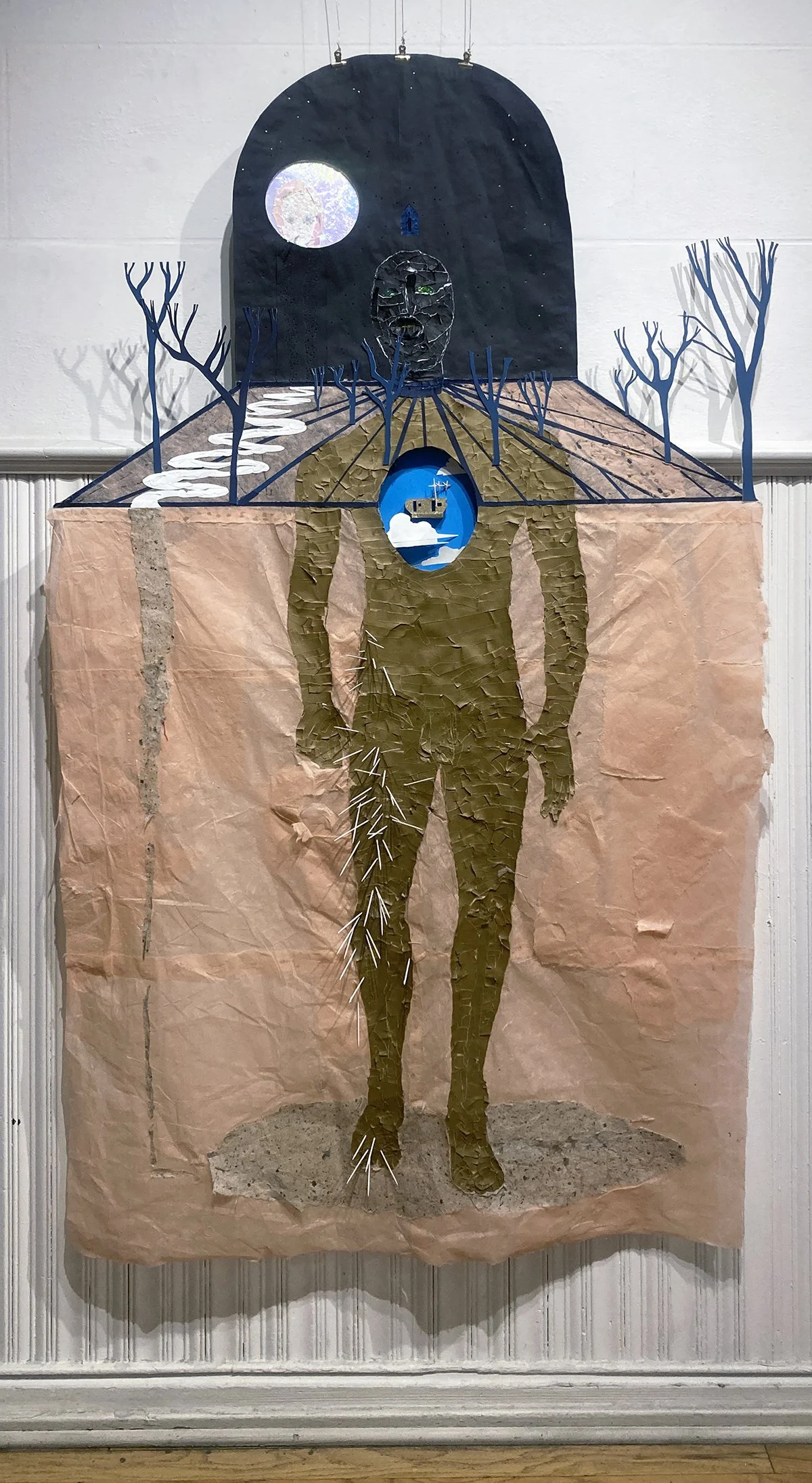
Juan Carlos Escobedo, Cura para el Desgarro, 2026, mixed media. Image by Dani/elle Cunningham.
By the time the viewer exits, there is no clean escape—only the thought that each of the systems Escobedo identifies result in multi-layered expressions of identity, interconnected like the wavy, corrugated insides of cardboard and reflective like a wrinkled clump of cellophane. Somehow, it all comes together.
Dani/elle Cunningham (she/her) is an artist, scholar, and independent curator. She writes about science fiction, gender, sexuality, and disability, with an emphasis on mental illness. The co-founder of chant cooperative, an artist co-op, she holds a master’s degree in art history and museum studies from the University of Denver.
[1] Denver Architecture Foundation, https://denverarchitecture.org/site/art-student-league-of-denver/.