
Shared Journey
Jann Vail and Tom Vail: Shared Journey
Museum of Friends
109 East 6th Street, Walsenburg, CO 81089
October 18, 2025–April 30, 2026
Admission: free
Review by Dani/elle Cunningham
Shared Journey by husband-and-wife artists Jann and Tom Vail cannot be fully described without acknowledging the gallery in which it resides. The Museum of Friends in Walsenburg is a site worthy of artistic pilgrimage, stewarded since 2006 by East Coast art elders Maria Cocchiarelli-Berger and Brendt Berger, whose devotion to collecting and supporting artists is remarkable. They have cultivated an archive of more than 4,000 works—mostly gifts—within a spacious, rotating gallery that nurtures emerging and established artists and honors artistic legacies, as this exhibition demonstrates.
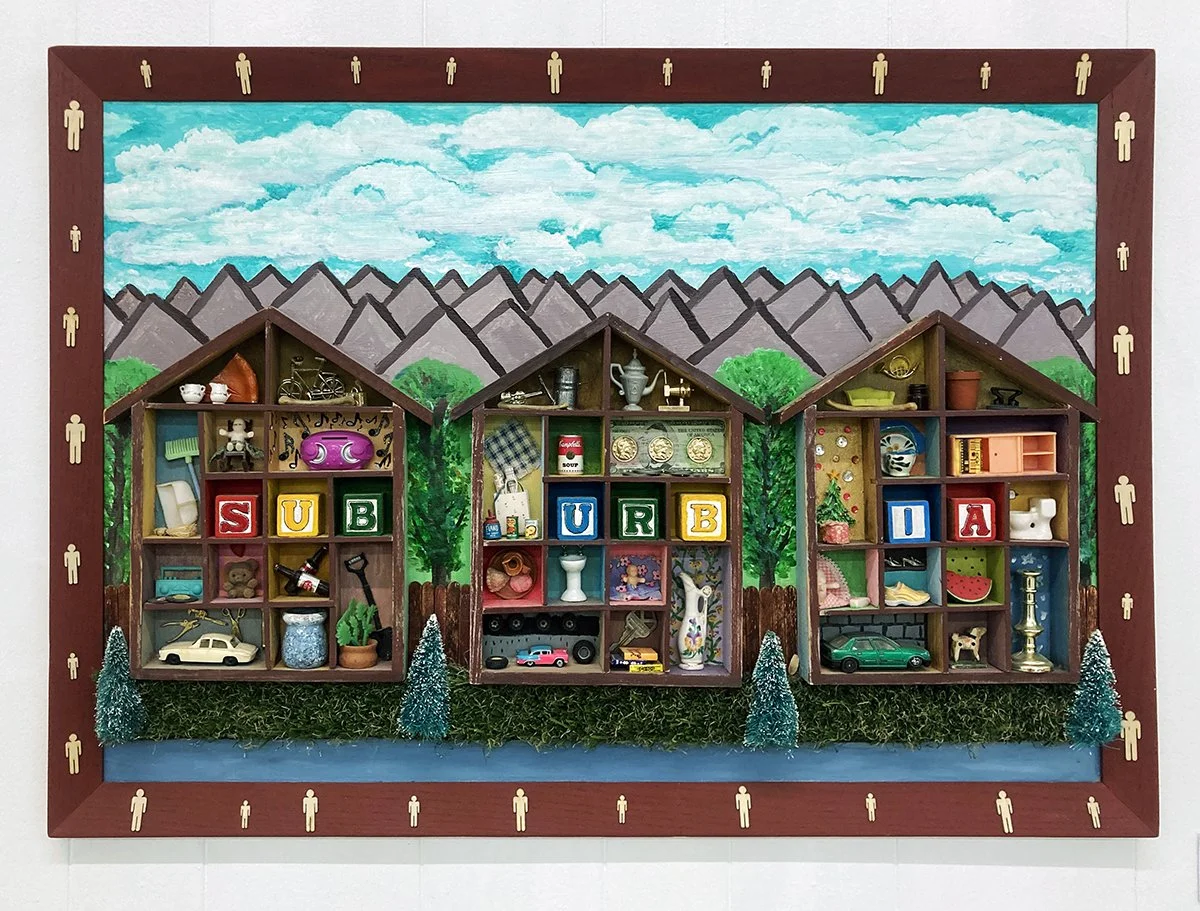
Jann Vail, Suburbia, 2024, mixed media. Image by Dani/elle Cunningham.
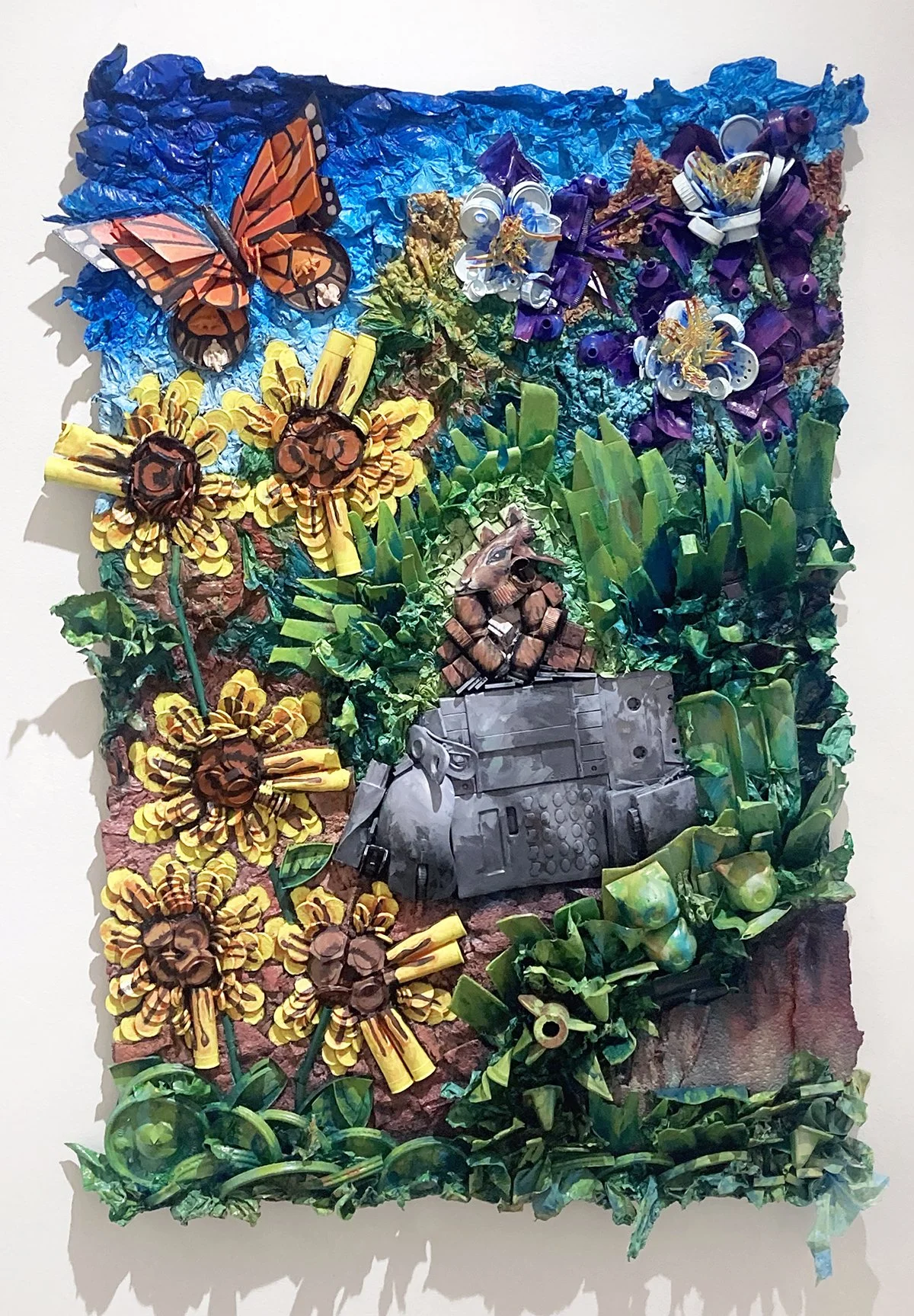
Living up to its name, Shared Journey is a glimpse into a shared artistic life, poignantly marked by Jann’s passing in April last year. Well-known in Huerfano County, the Vails’ work is visually distinct yet united by a sense of purpose and an undercurrent of resistance. Tom’s digital collages, monumental hand-cut wood paintings, and satirical sculptures lean toward surrealism and abstraction, while Jann’s whimsical menageries and repurposed figurines in cigar boxes create intimate, playful vignettes. Despite differences, both practices reflect attentiveness to power structures and the quiet poetry of defiance.
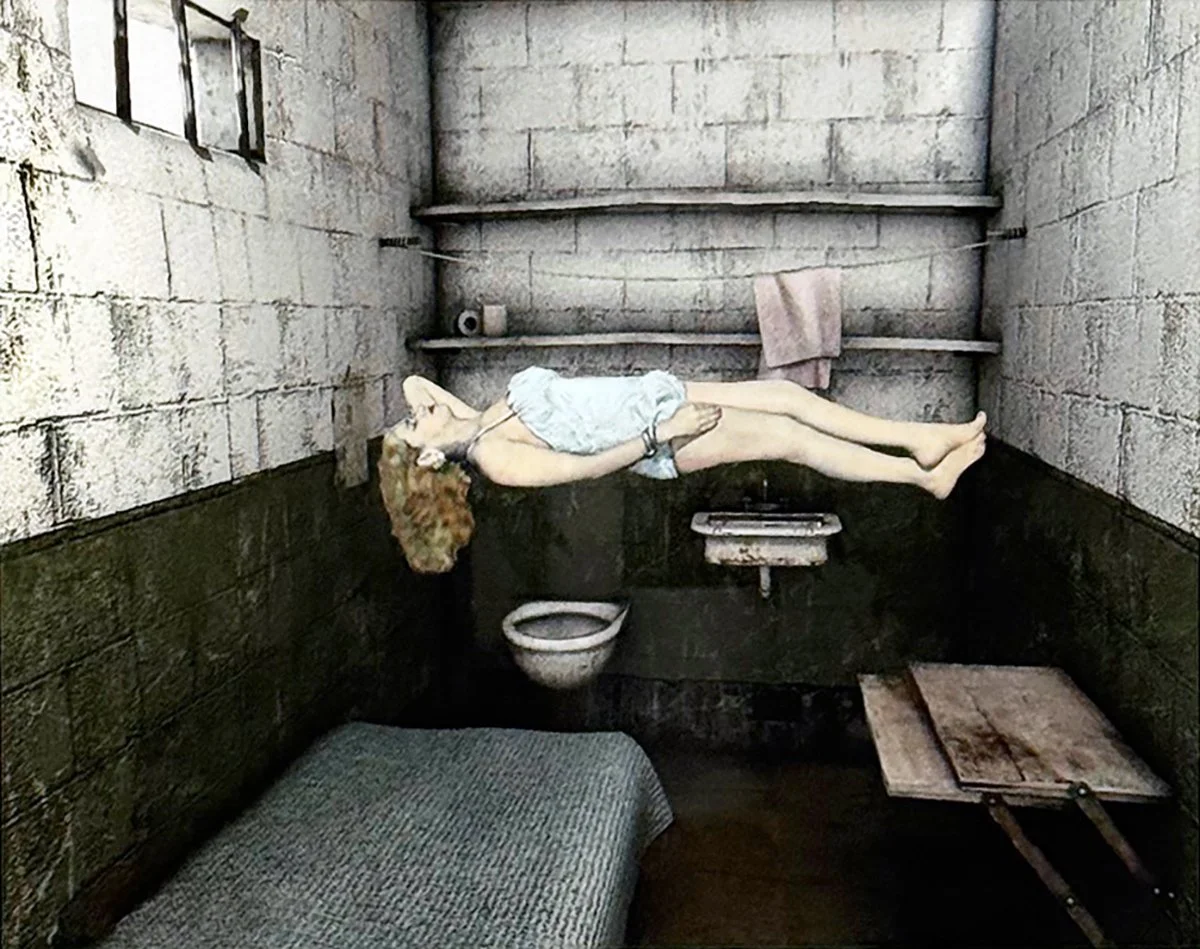
Tom Vail, Levitation, 2016, archival digital collage. Image courtesy of the Museum of Friends.
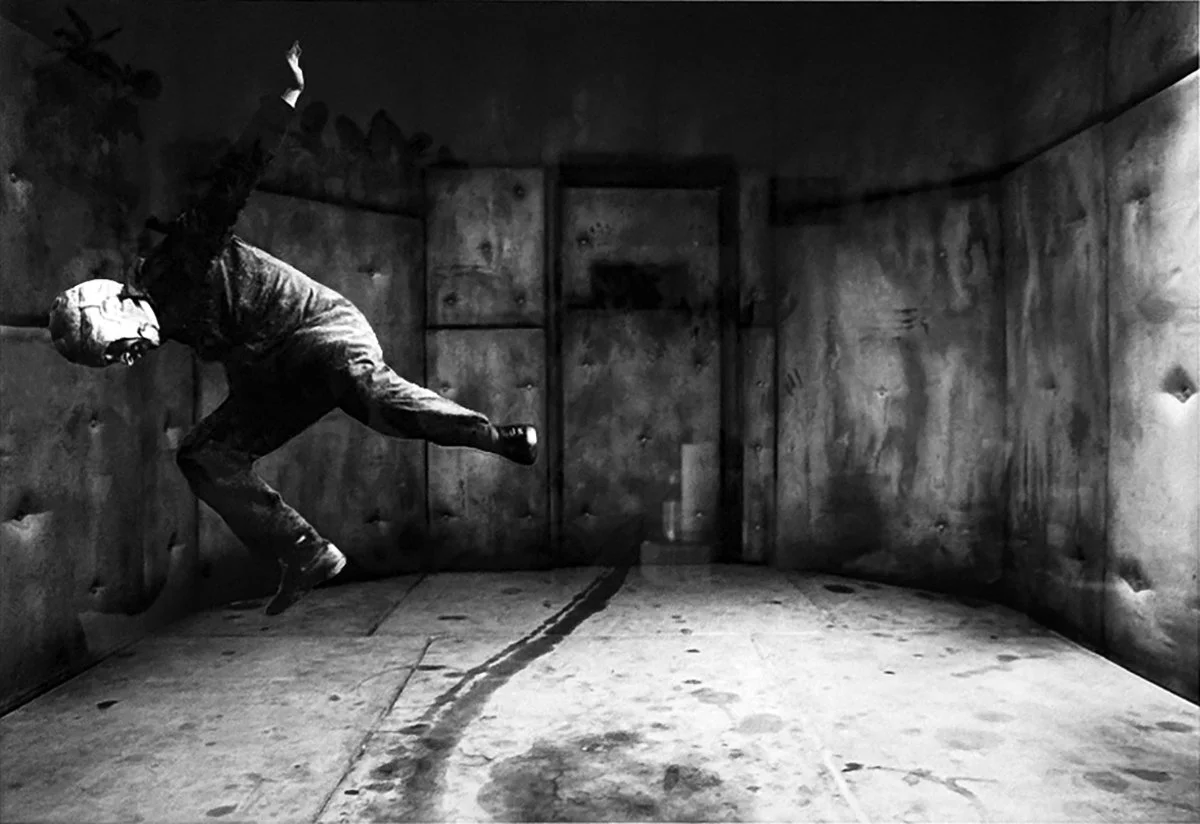
Tom Vail, Human Condition, 2016, archival digital collage. Image courtesy of the Museum of Friends.
The exhibition opens with five of Tom’s surrealist digital collages: Levitation, Working the Probes, Human Condition, Cones of Enchantment, and Rapture Rejects. Recontextualizing historical images, he creates a dialogue between past motifs and contemporary perception. Each composition features archival interiors, cityscapes, and figures in nightmarish motion: a woman floats above a bed in Levitation, recalling the Spiritualist Movement in an apparent prison cell; 1950s stock figures soar above Manhattan in Rapture Rejects, evoking urban claustrophobia; and a contorted, masked figure in Human Condition challenges notions of normal behavior.
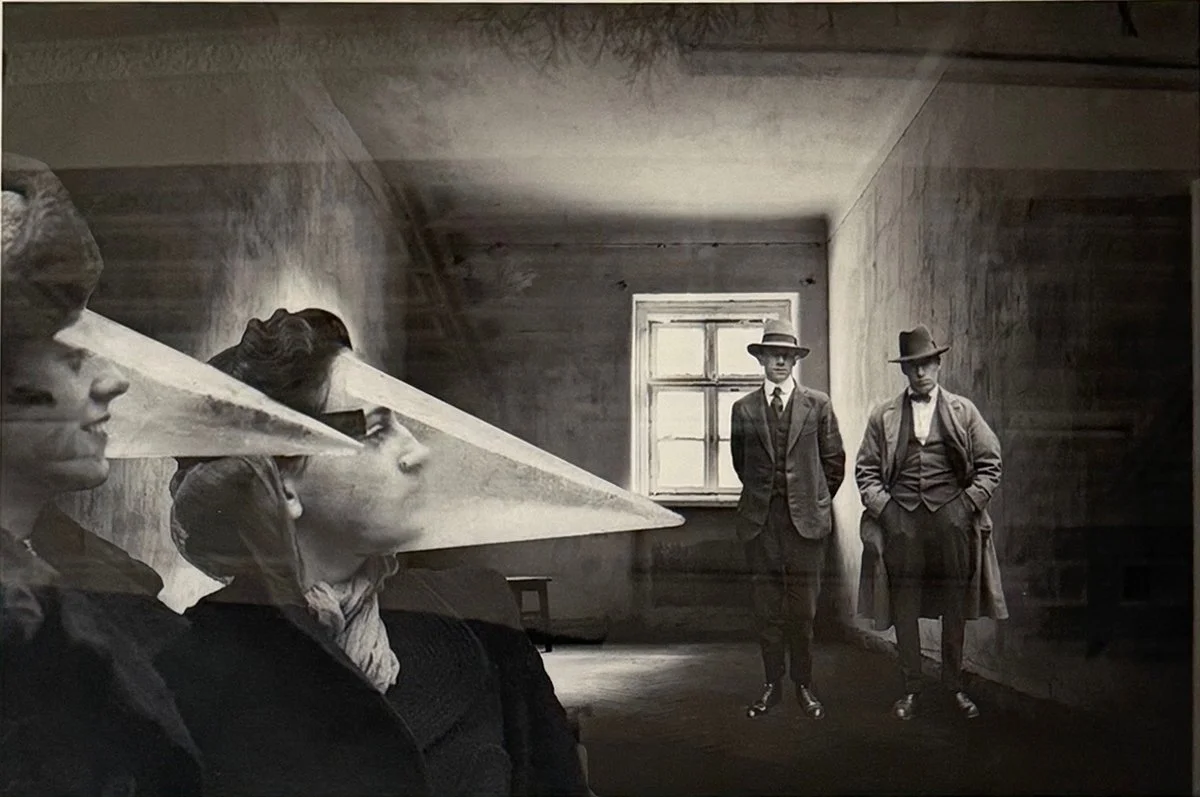
Tom Vail, Cones of Enchantment, 2016, archival digital collage. Image courtesy of the Museum of Friends.
In Cones of Enchantment, historical imagery collides with contemporary perception, shattering linear narrative and flipping power. The black-and-white room and two suited men suggest surveillance and institutional order, while two female profiles erupt with sharp, translucent cones—megaphones, ectoplasmic thoughts, or bursts of resistance—projecting outward, refusing containment, and, in a way, protecting the figures.
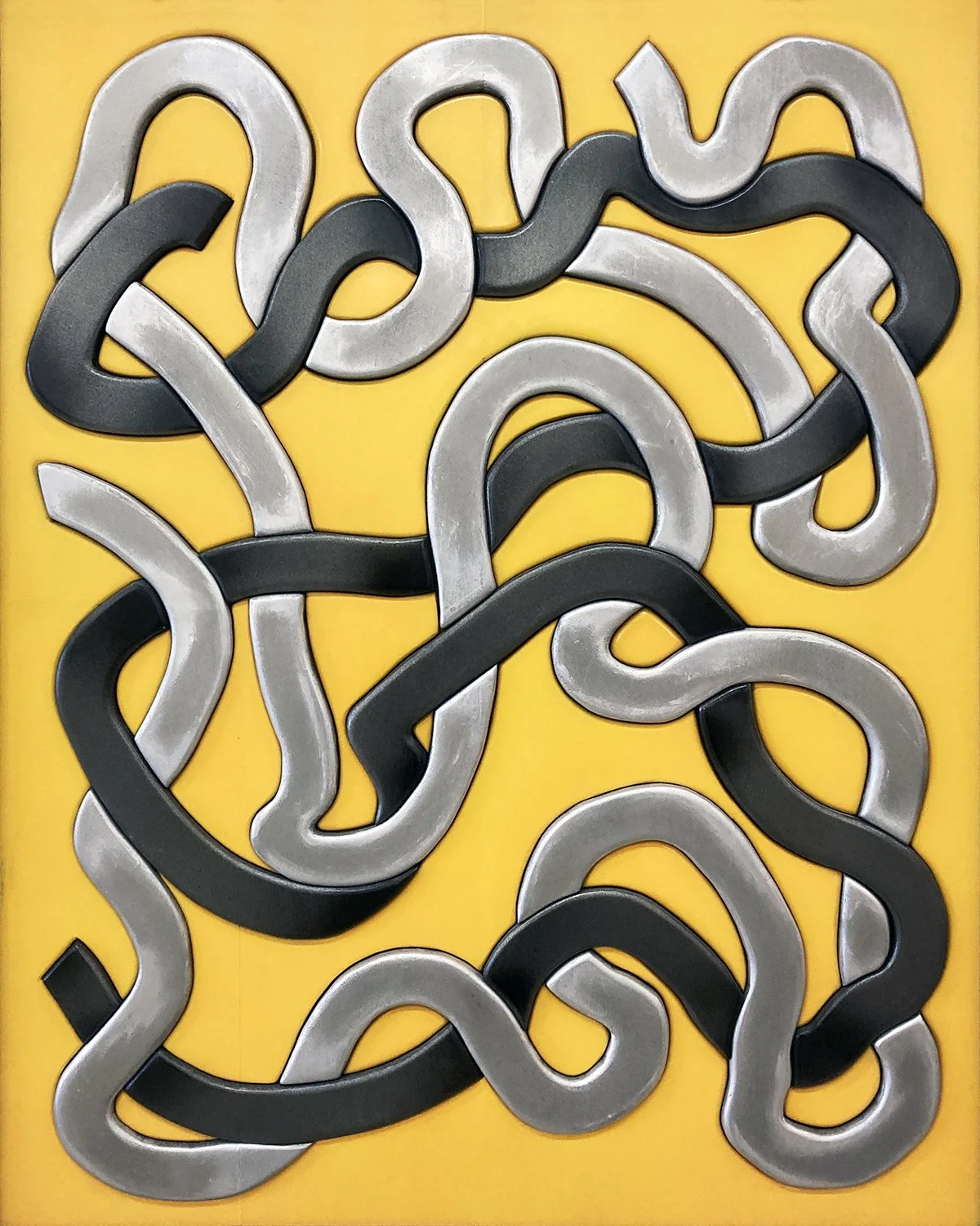
Tom Vail, Loose Weave II, 2020, puzzle painting. Image by Dani/elle Cunningham.
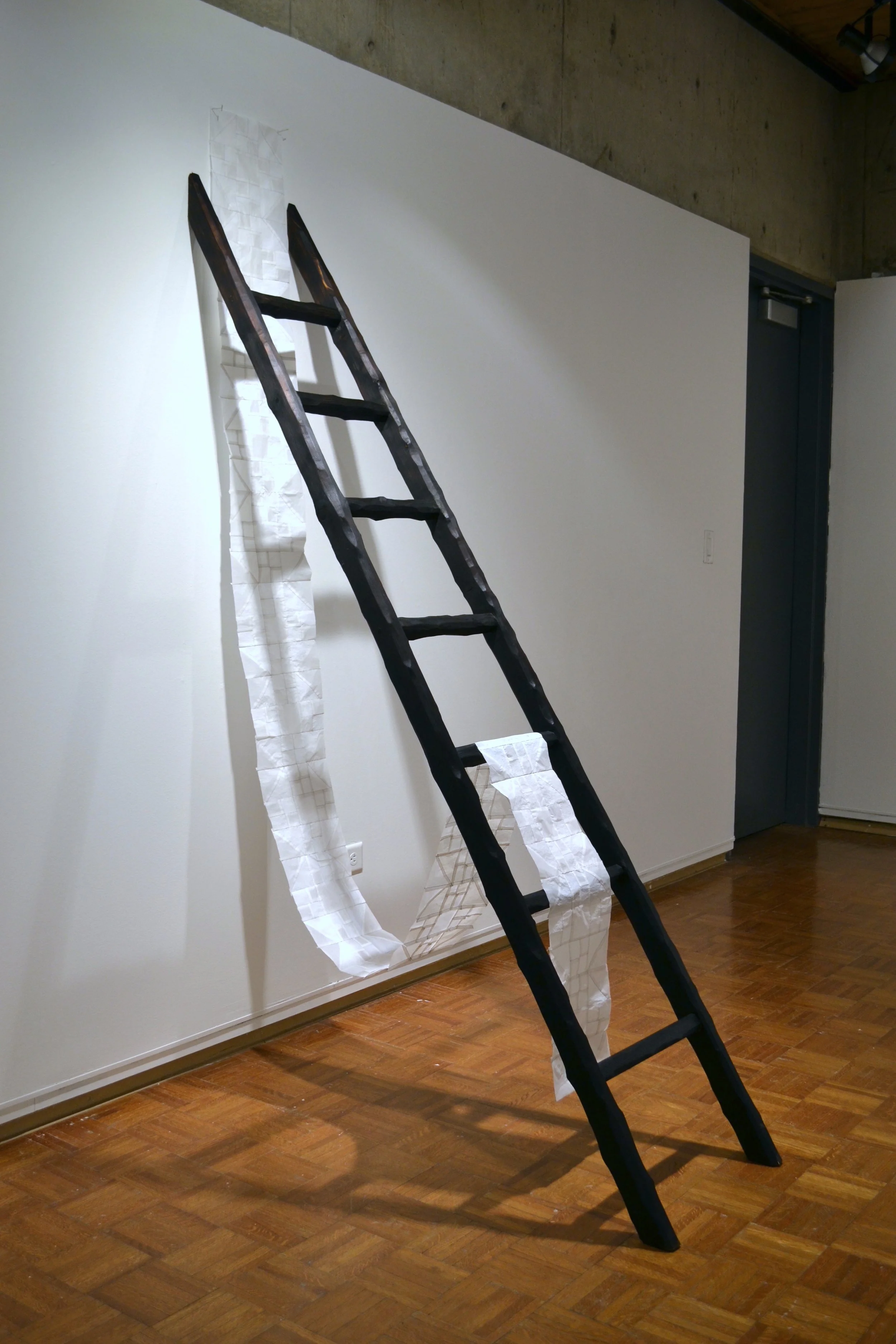
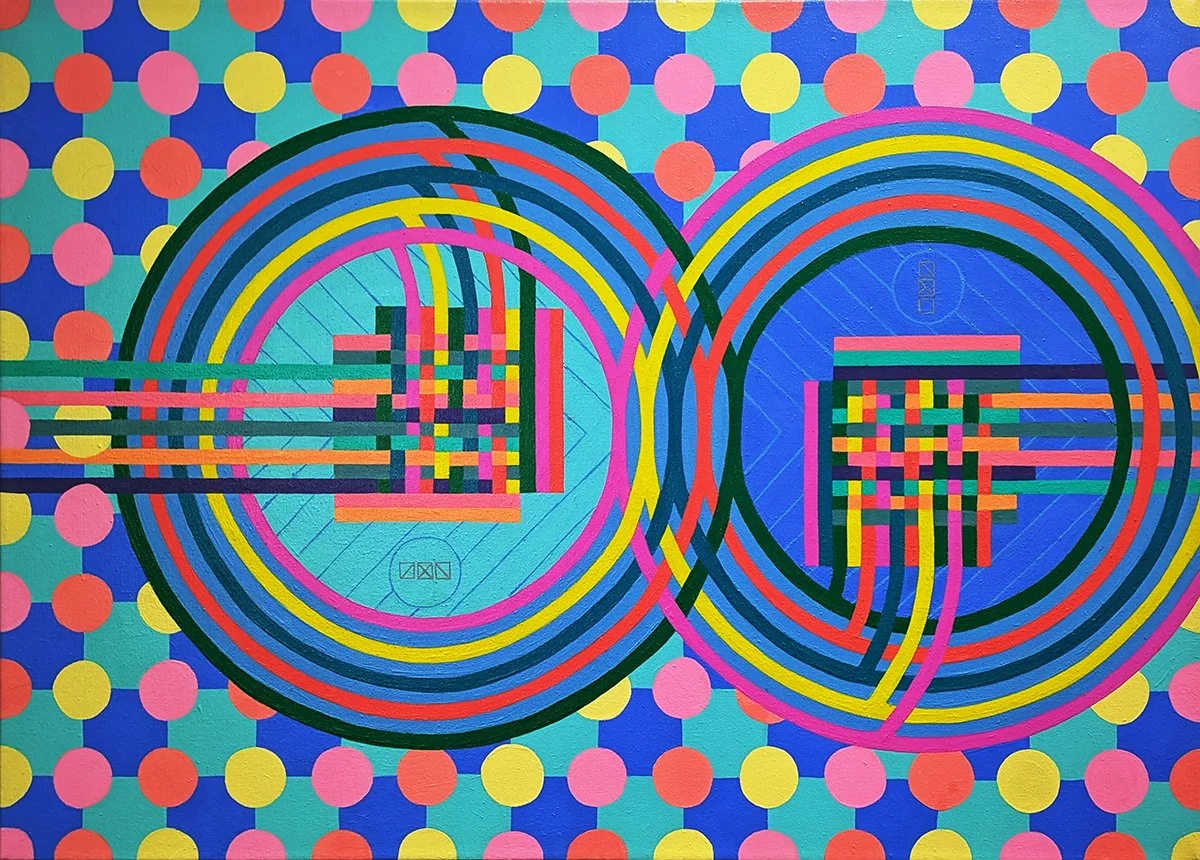
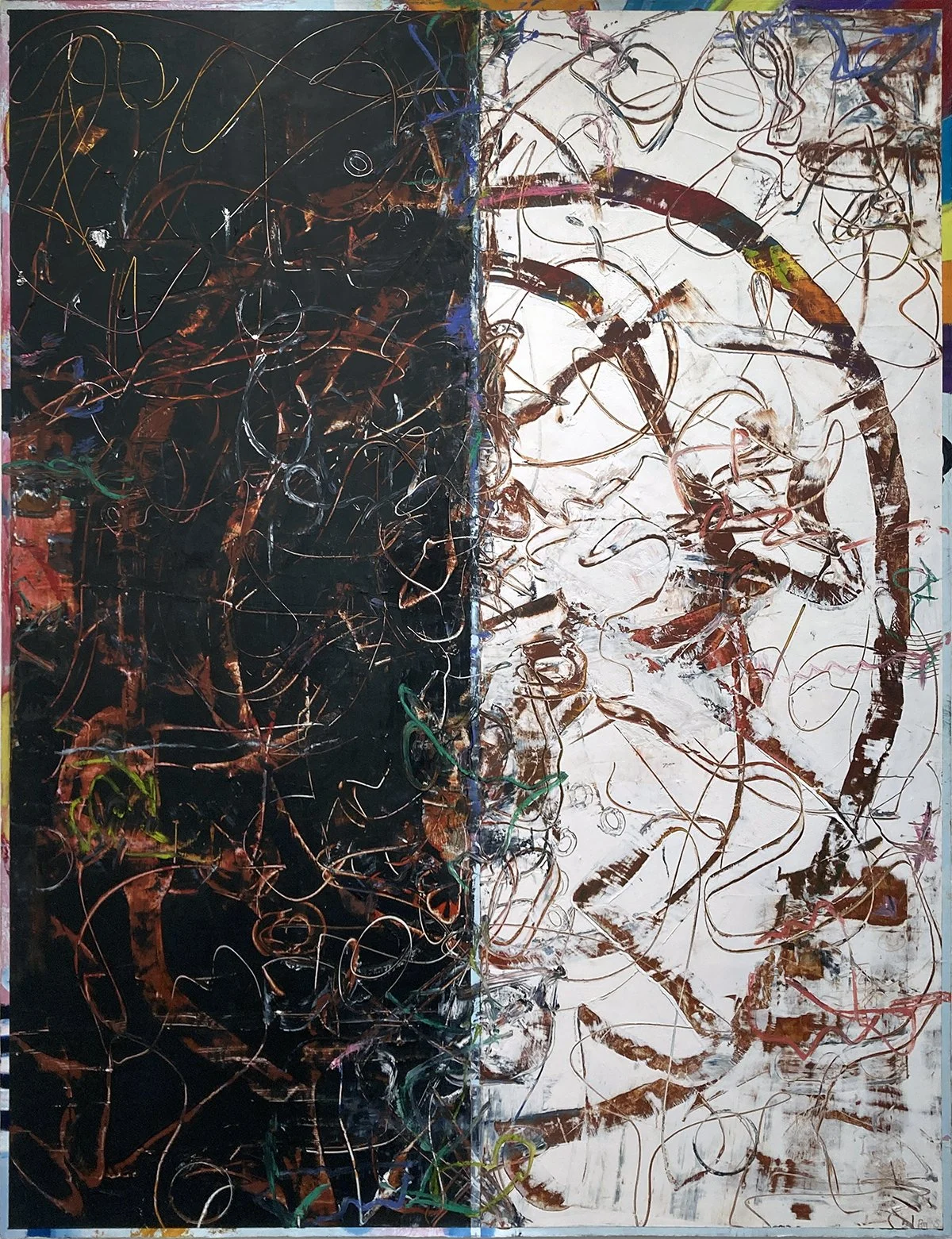
Radiating a subtle insurgent energy, Tom’s work meditates on the inversion of expression, perception, and authority, a drive that pulses through his sculptural “puzzle paintings.” These medium-sized to monumental wood panels unfold as intricate networks of intersecting lines—sometimes soft and wavy, sometimes sharply angled. These lines are embedded within flat surfaces with no discernible beginning, end, foreground, or background, asserting an atemporal, aspatial presence and resisting categorization. Painted in hues ranging from red, yellow, and orange to silver and black against contrasting backgrounds, the lines form a central element of Tom’s visual lexicon, boldly defying social order and the color wheel.
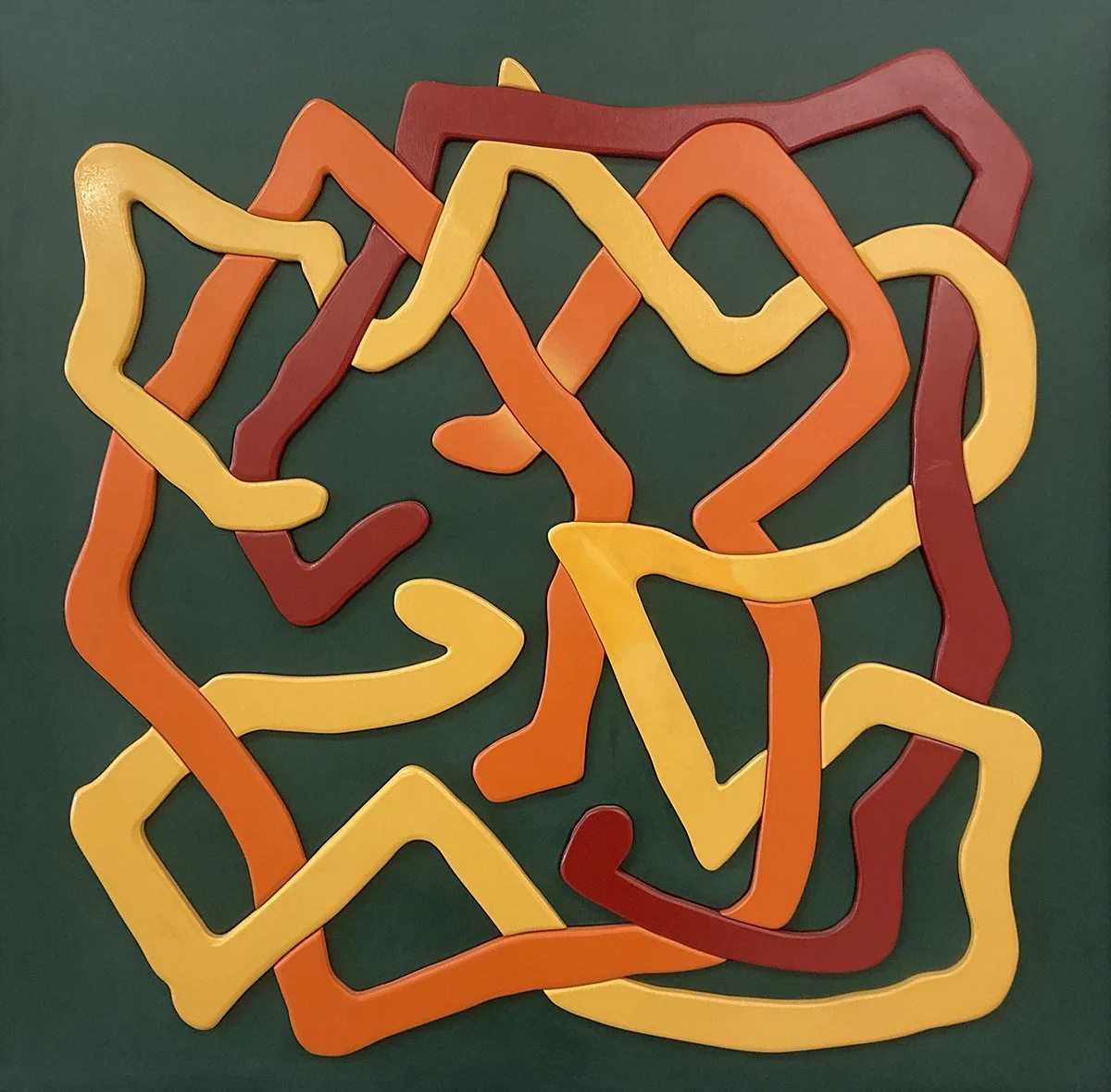
Tom Vail, Chaos Weave I, 2021, puzzle painting. Image by Dani/elle Cunningham.
Tom’s puzzle paintings reflect the disorientation of contemporary reality, where information arrives simultaneously and chaotically, yet within this turbulence lies a strange familiarity. Viewers can lose themselves in the labyrinthine pathways, surrendering to the rhythm and logic of the visual chaos.
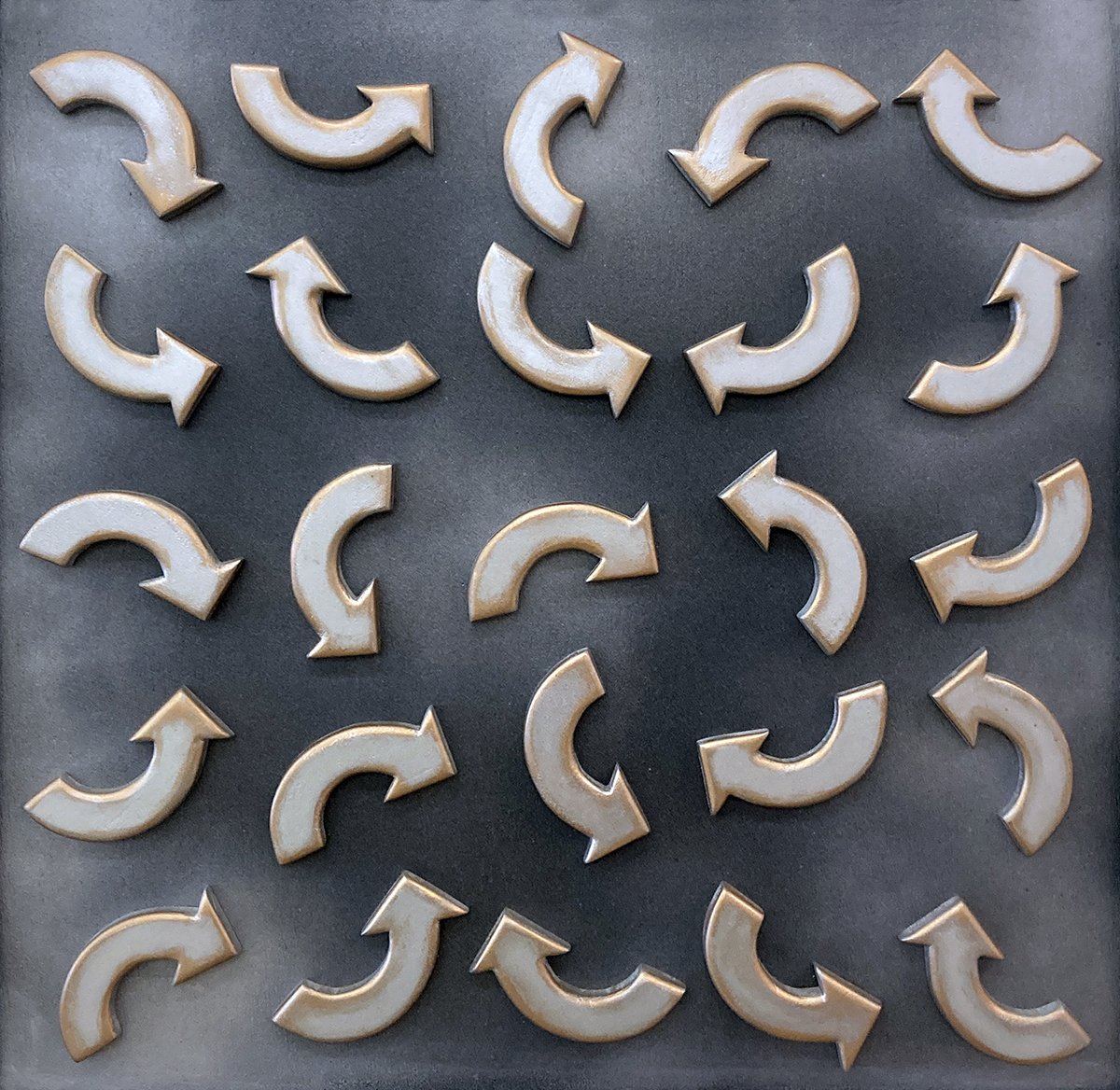
Tom Vail, That-A-Way, 2020, puzzle painting. Image by Dani/elle Cunningham.
Many works share this approach—Loose Weave II with wavy silver lines on yellow, Chaos Weave I with more angular yellow and red lines on green—but That-a-way exemplifies multidirectionality, introducing arrows pointing in different directions. Painted to appear tarnished, these arrows lend historical resonance while preserving the series’ tension between dimensionality and flatness.

Tom Vail, Nationalist Wedge Corp, 2019, wood painted sculpture. Image by Dani/elle Cunningham.
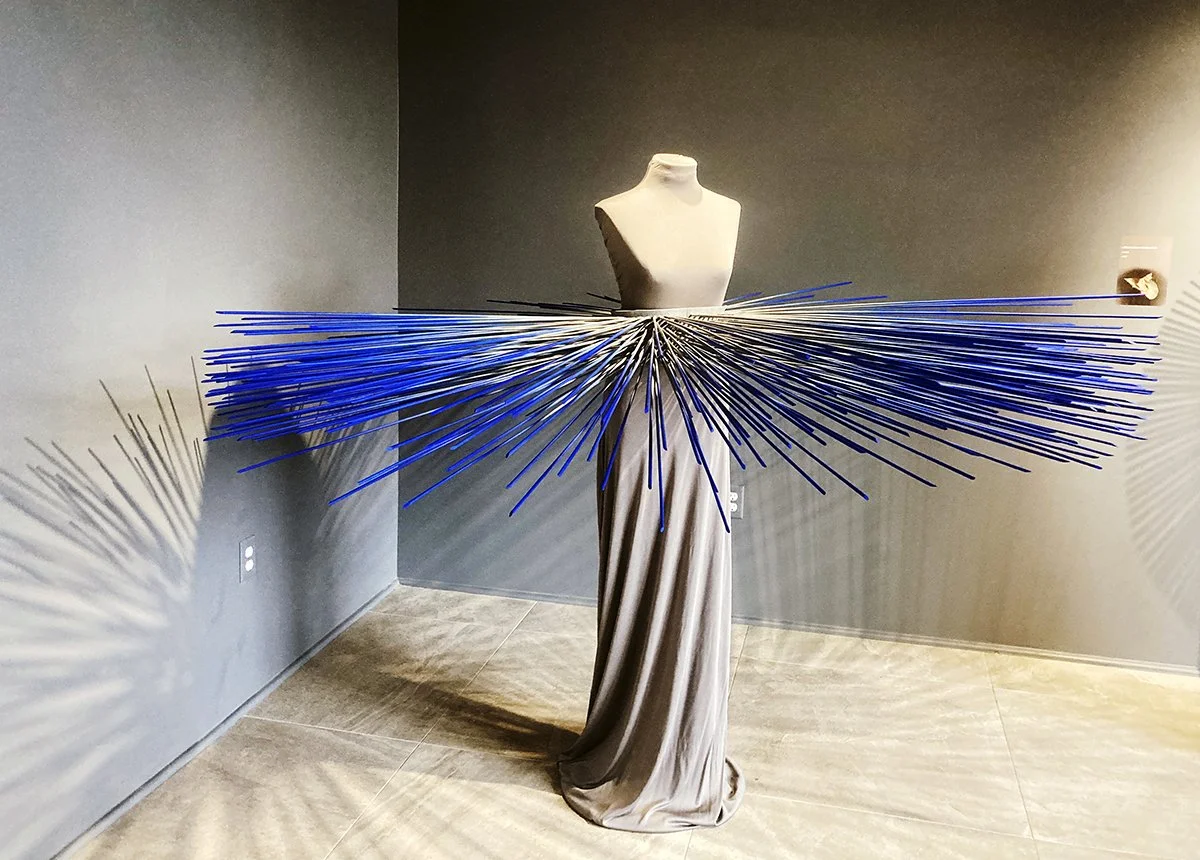
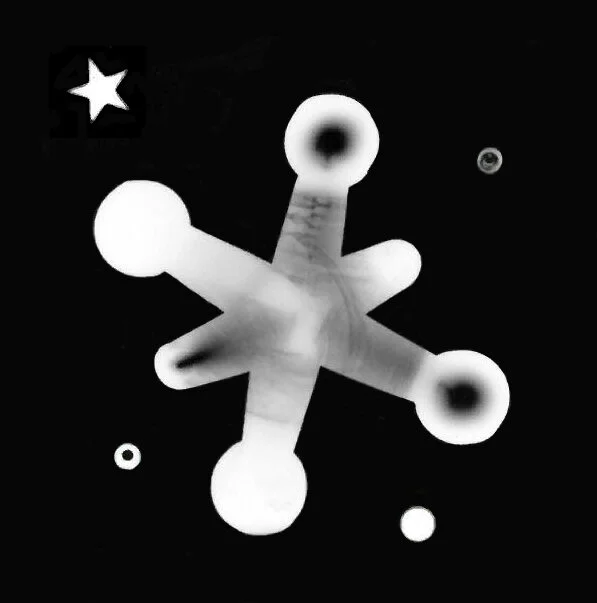
Shifting from subtle satire to overt social critique, Tom’s painted wood sculptures reveal his ease in moving between abstraction and representation, as well as his ability to transform materials through paint. Nationalist Wedge Corp takes the form of a wedge or doorstop, also resembling an oversized metal nail, its title scrolled in all capitals to evoke institutional authority.
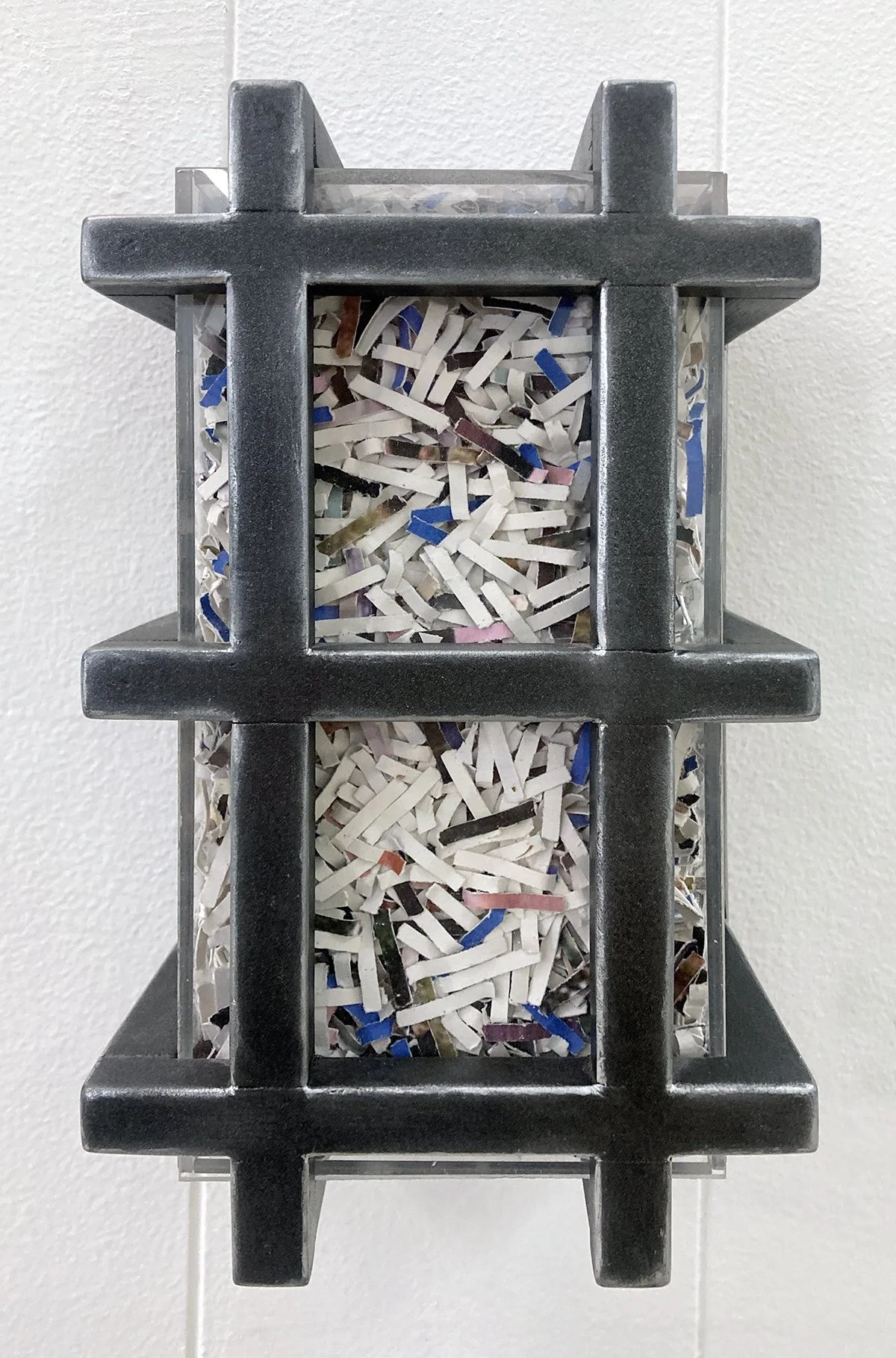
Tom Vail, Fair Use, 2018, acrylic panels, shredded paper, and painted wood sculpture. Image by Dani/elle Cunningham.
Similarly explicit, Fair Use responds to Tom’s use of another artist’s photograph without permission; the cease-and-desist letter is shredded and encased in a metal-like cage, materializing his frustration and defiance.
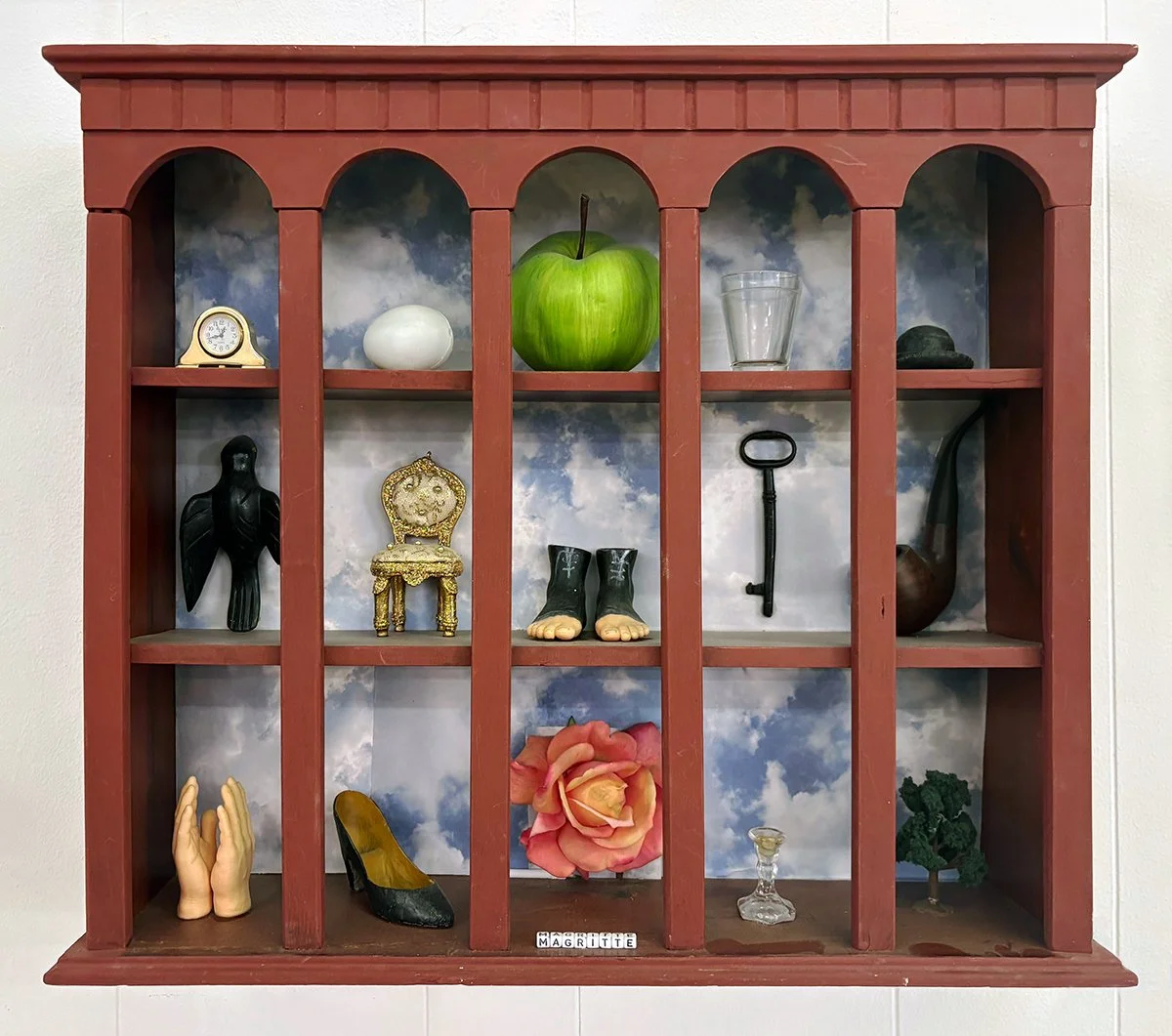
Jann Vail, Magritte, mixed media, 2020. Image by DARIA.
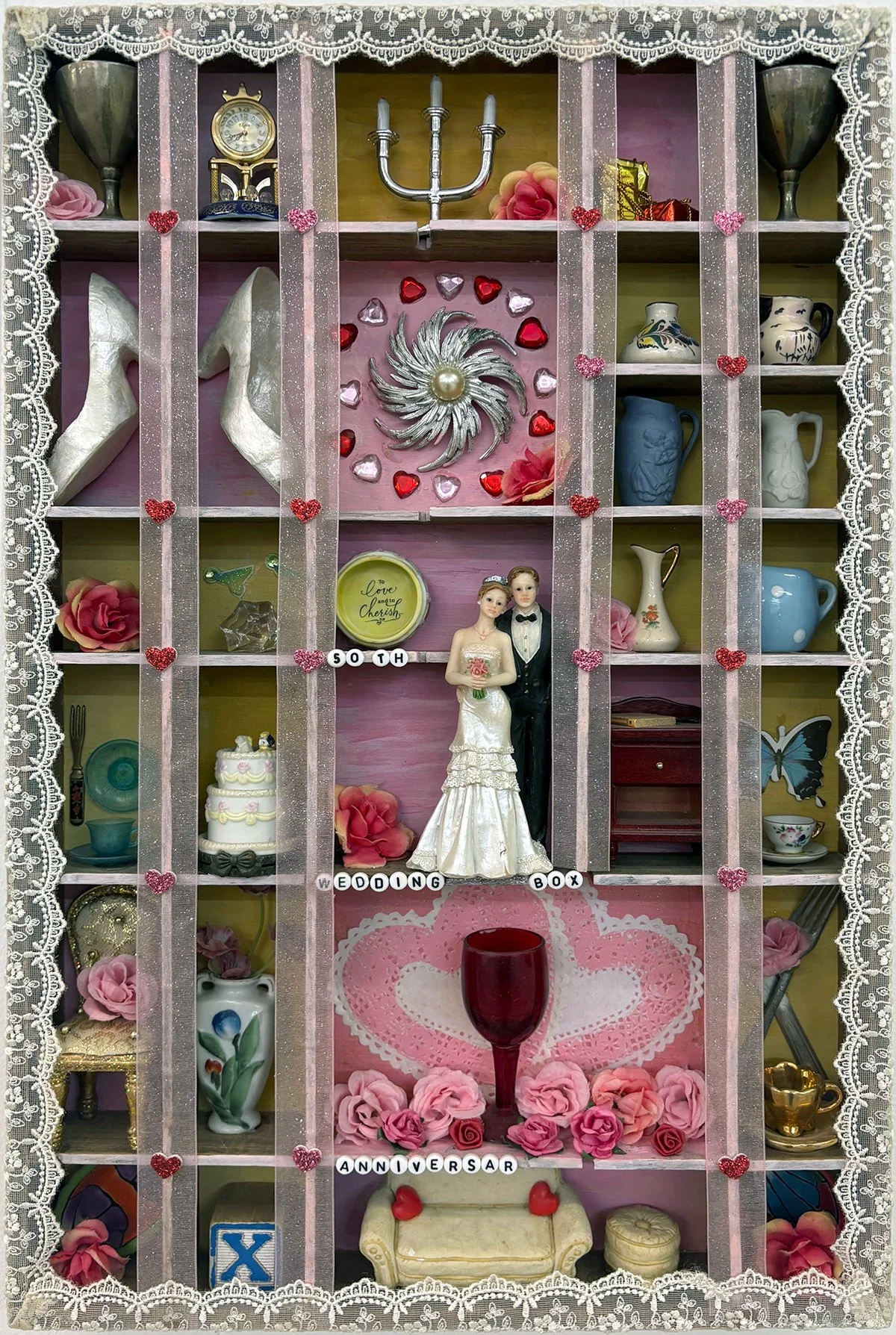
Like her husband, Jann’s reconfiguration of historical imagery through a contemporary lens sparks a dialogue about waste, obsession, and desire—qualities absent from the objects’ original context but prominent in critiques of today’s culture of planned obsolescence. Opposite of Tom’s obsessive manipulations of wood, Jann favored diverse materials with a clear proclivity for unmodified kitsch, recontextualizing 1950s-era miniature dogs, doll-sized vacuum cleaners, porcelain teapots, and ceramic Santas.
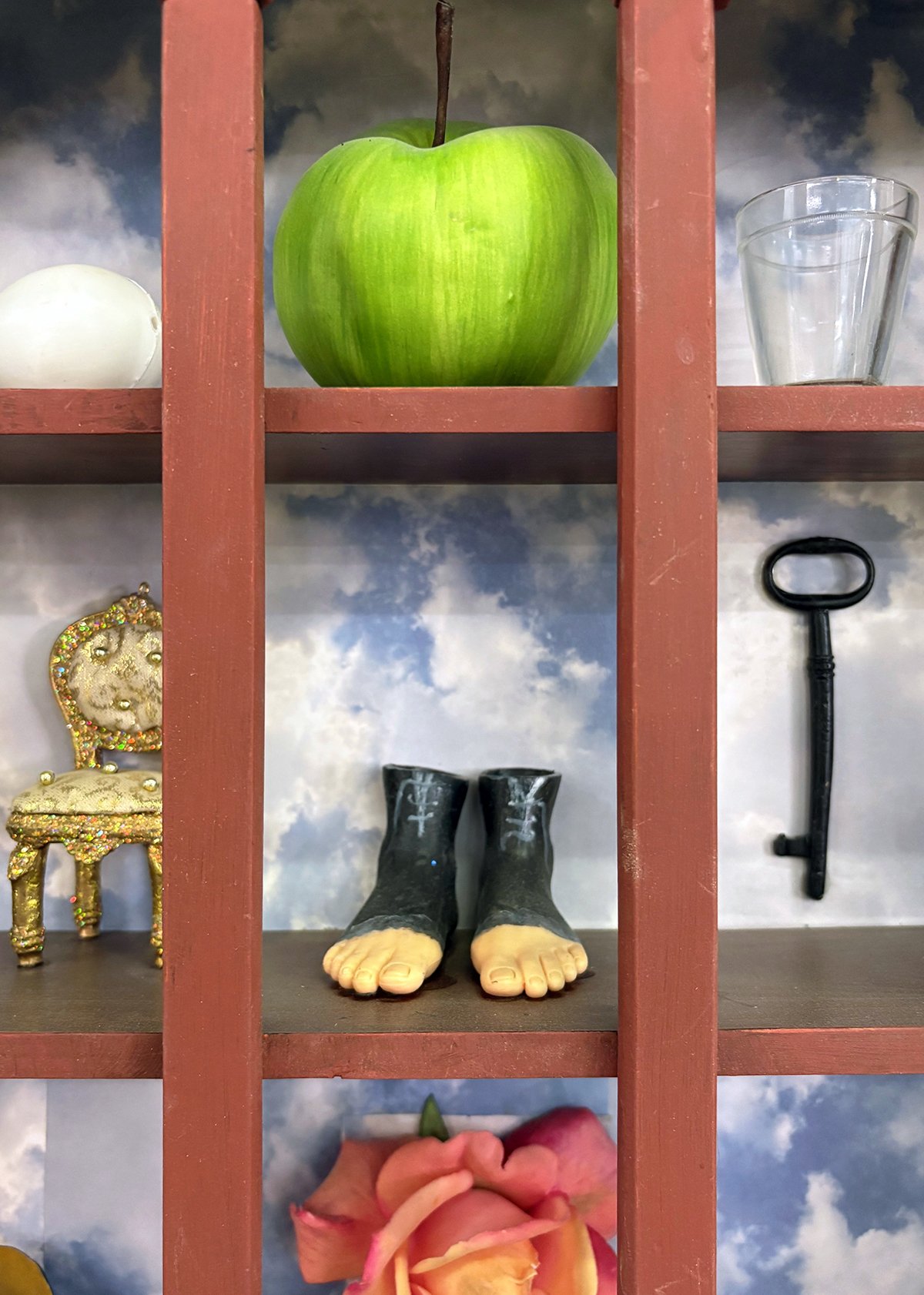
A detail view of Jann Vail’s Magritte, mixed media, 2020 Image by DARIA.
Not a tribute to materialism, her work alludes to a sensitive collector whose subtle defiance of order and consumption emerges in meticulous, adoring arrangements, some achieving a reverential quality, including Magritte, which nods to René Magritte’s The Son of Man and other works featuring green apples.
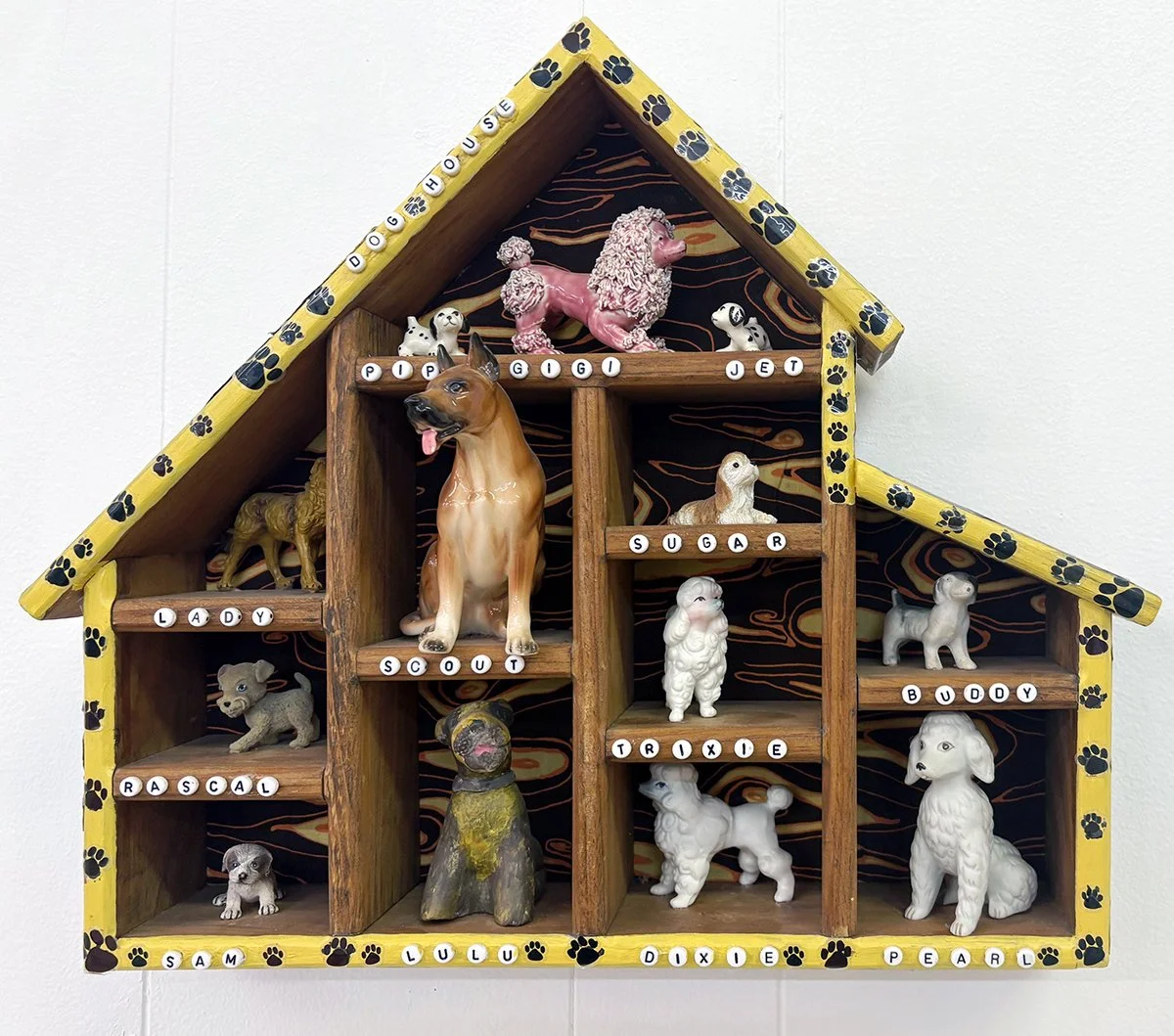
Jann Vail, Dog House, 2019, mixed media. Image by DARIA.
If the artist was anything like her boxes, she must have been a vivid character—eccentric in her interests, much like the idiosyncratic worlds she constructed. Dogs are prevalent, suggesting a particular affection, while her imaginative range leaps effortlessly from 1950s gender roles to a nineteenth-century brothel scene. Each of Jann’s boxes is embellished by a title spelled out in plastic black and white letters, elevating the discarded objects she displays. Every tiny piece has its place, with figurines arranged into cubicles and painted backdrops completing many scenes.
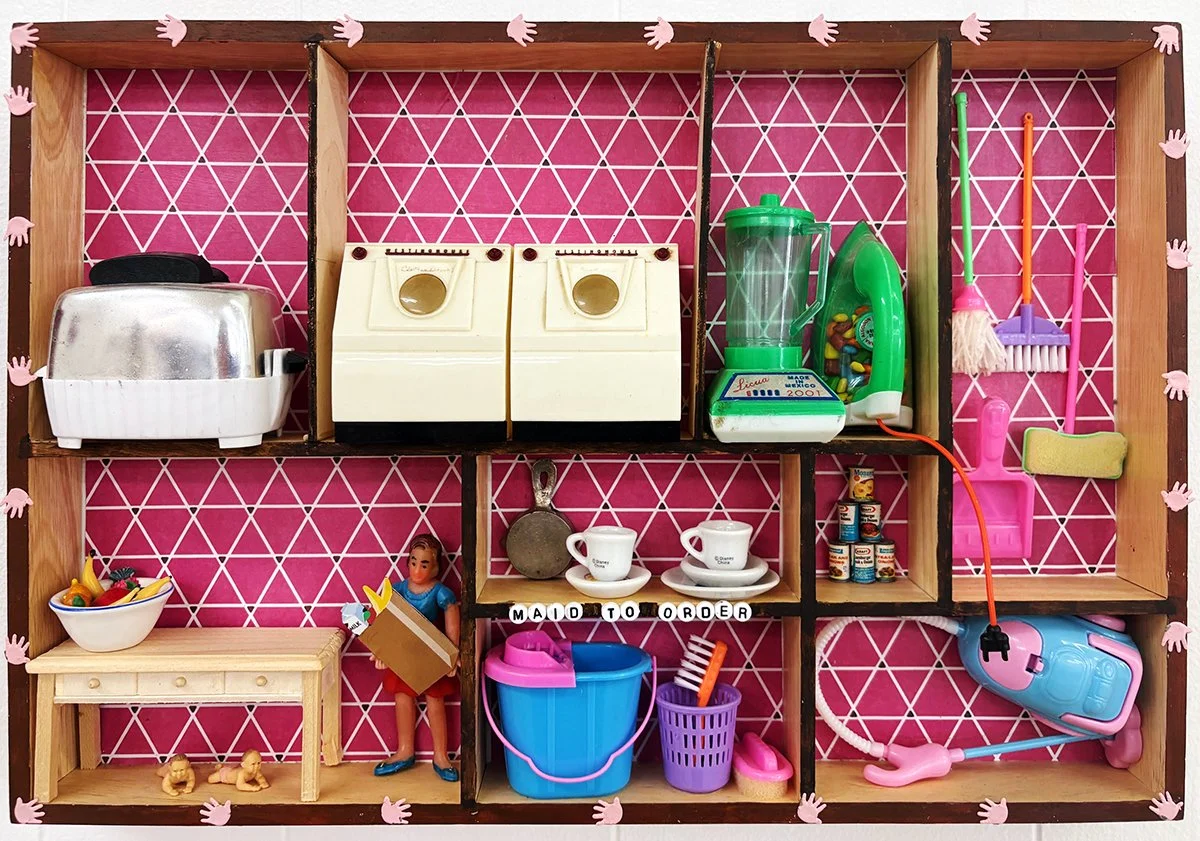
Jann Vail, Maid to Order, 2023, mixed media. Image by DARIA.
In Maid to Order, a solitary female figure is encircled by the trappings of domestic labor: a tiny vacuum cleaner, washer and dryer, and a shiny silver toaster. Through Jann’s segmentation of the cigar-box environment, the figure remains in dialogue with these symbols of domesticity without being fully subsumed by them. That these pieces seem to have originated in the mid-century—an era marked by rigid gendered divisions of labor—renders the box all the more resonant.
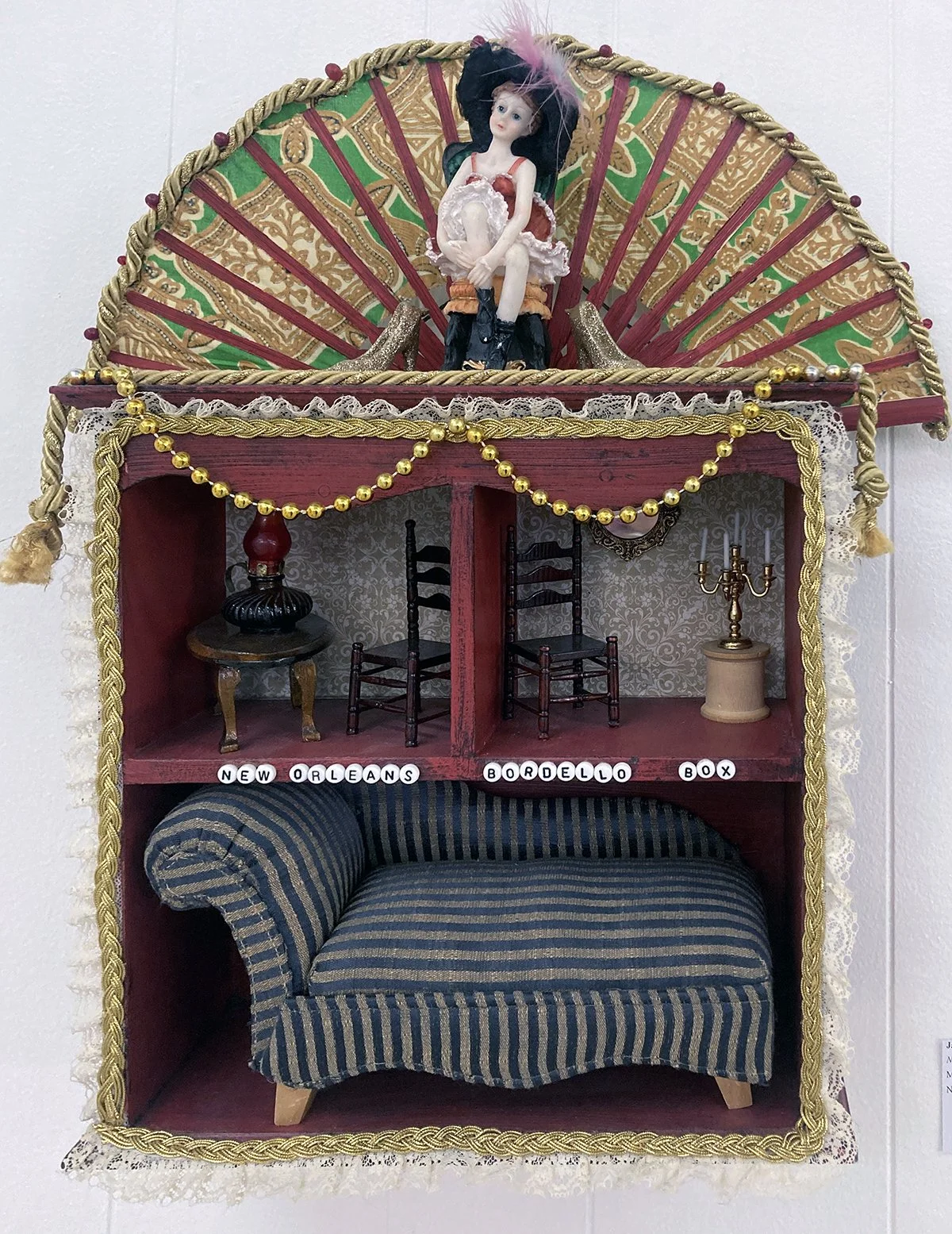
Jann Vail, New Orleans Bordello Box, 2022, mixed media. Image by Dani/elle Cunningham.
Similarly, New Orleans Bordello features a solitary character, this time a feather-hatted, possible sex worker who perches casually at the top of the composition, legs crossed and head tilted, her tiny form radiating outsized expression. The box unfolds in richly saturated reds, golds, and greens, complete with patterned wallpaper, a candelabra, and a striped chaise lounge worn soft with age. Small yet enigmatic, the scene is both intimate and striking, inviting prolonged looking despite—or because of—its scale. Again, the artist suggests her spirit of resistance, which in Bordello is perhaps resistance to the moral authority and a nod to New Orleans’ storied red-light district.

Tom Vail, Puzzle in Ether II, 2021, spray paint on foam core. Image by Dani/elle Cunningham.
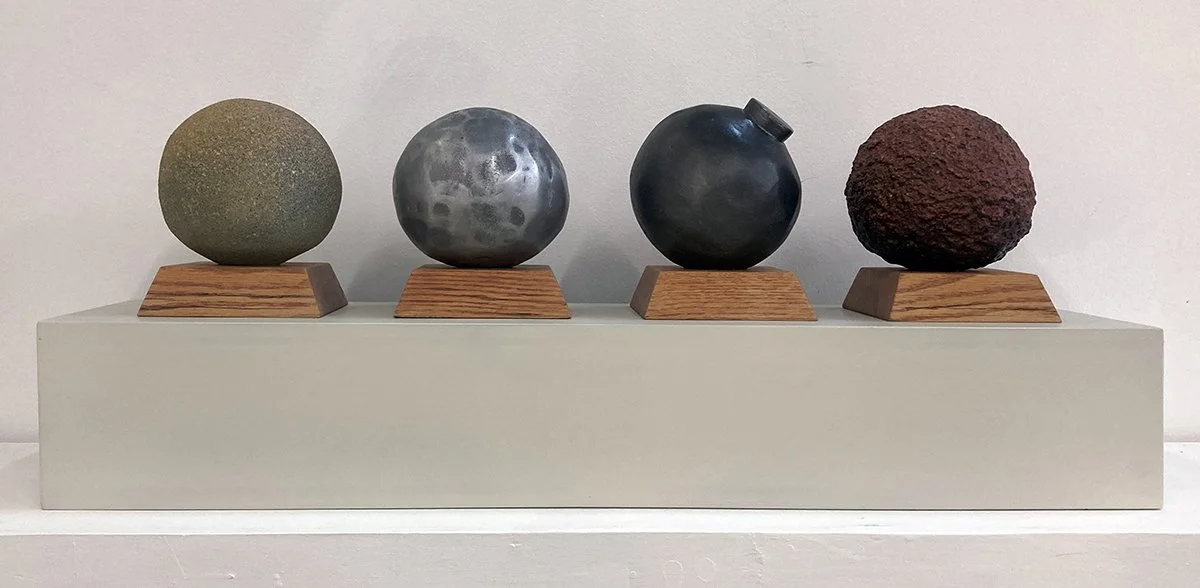
Tom Vail, Evolution of the Meatball, 2022, mixed media and wood painted sculpture. Image by Dani/elle Cunningham.
Concluding the exhibition, a section of Tom’s spray-painted works on foam core features drifting clouds of color, sharply outlined puzzle forms, and squiggly doodles reminiscent of his puzzle paintings. This is accompanied by a baffling yet cheeky sculptural sequence: a series of painted wooden objects—a rock, a cannonball, a bomb, and a meatball—collectively titled Evolution of the Meatball. It feels fitting that Tom’s work physically surrounds Jann’s, as if quietly guarding her memory and the life they shared. His more overtly action-oriented pieces seem to enshrine her intimate, narrative boxes, preserving their backstory and, in a subtle way, keeping that story just between the two of them.

Tom Vail, Dueling Doodles II, 2021, spray paint on foam core. Image by Dani/elle Cunningham.
Shared Journey bridges the gap between two artists’ individual practices and the ways in which their intimate relationship bled into their collective experience. Within the thoughtful walls of the Museum of Friends, Jann and Tom’s distinct voices traverse media, time, and approach, creating a dialogue that is both deeply personal and broadly resonant. The Museum itself stands as an art object in its own right—a Colorado gem with two art stewards at its helm whose atmosphere elevates every exhibition it hosts.
Dani/elle Cunningham (she/her) is an artist, scholar, and independent curator. She writes about science fiction, gender, sexuality, and disability, with an emphasis on mental illness. The co-founder of chant cooperative, an artist co-op, she holds a master’s degree in art history and museum studies from the University of Denver.