
Meticulous
Meticulous
Gregory Allicar Museum of Art
Colorado State University
1400 Remington Street, Fort Collins, CO 80524
February 18–August 9, 2026
Curated by Ella Rupp
Admission: free
Review by Dani/elle Cunningham
Contained within a small hallway gallery at Colorado State University’s Gregory Allicar Museum, Meticulous packs in a maximalist array of artworks spanning multiple media and multiple decades from the museum’s permanent collection.
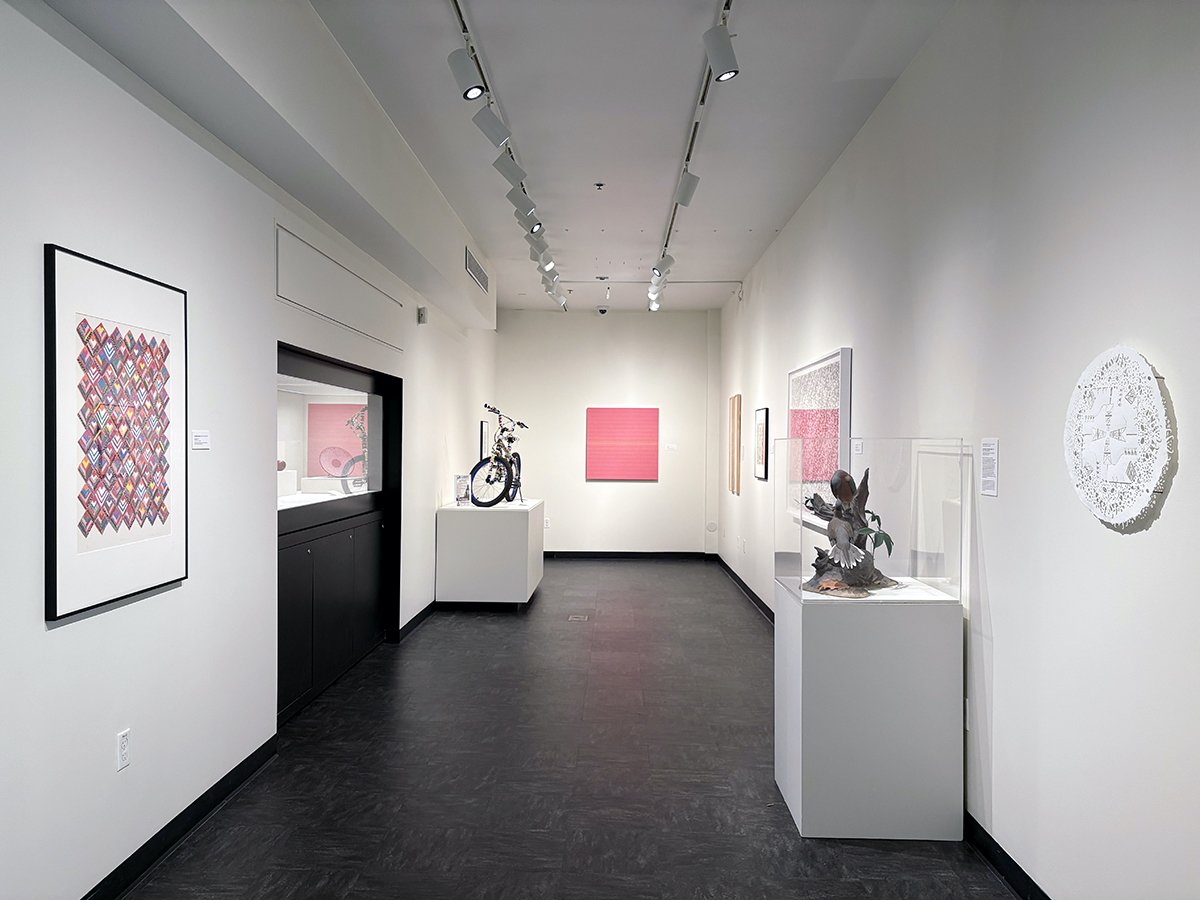
An installation view of the exhibition Meticulous at the Gregory Allicar Museum of Art. Image by DARIA.
The exhibition demonstrates both the breadth of the collection and a shared commitment among the artists to detail, ornamentation, and visual intensity. From photographs of free-ranging tigers to a brightly beaded bicycle, the works create a sense of visual frenzy in a tight space, rewarding close looking.
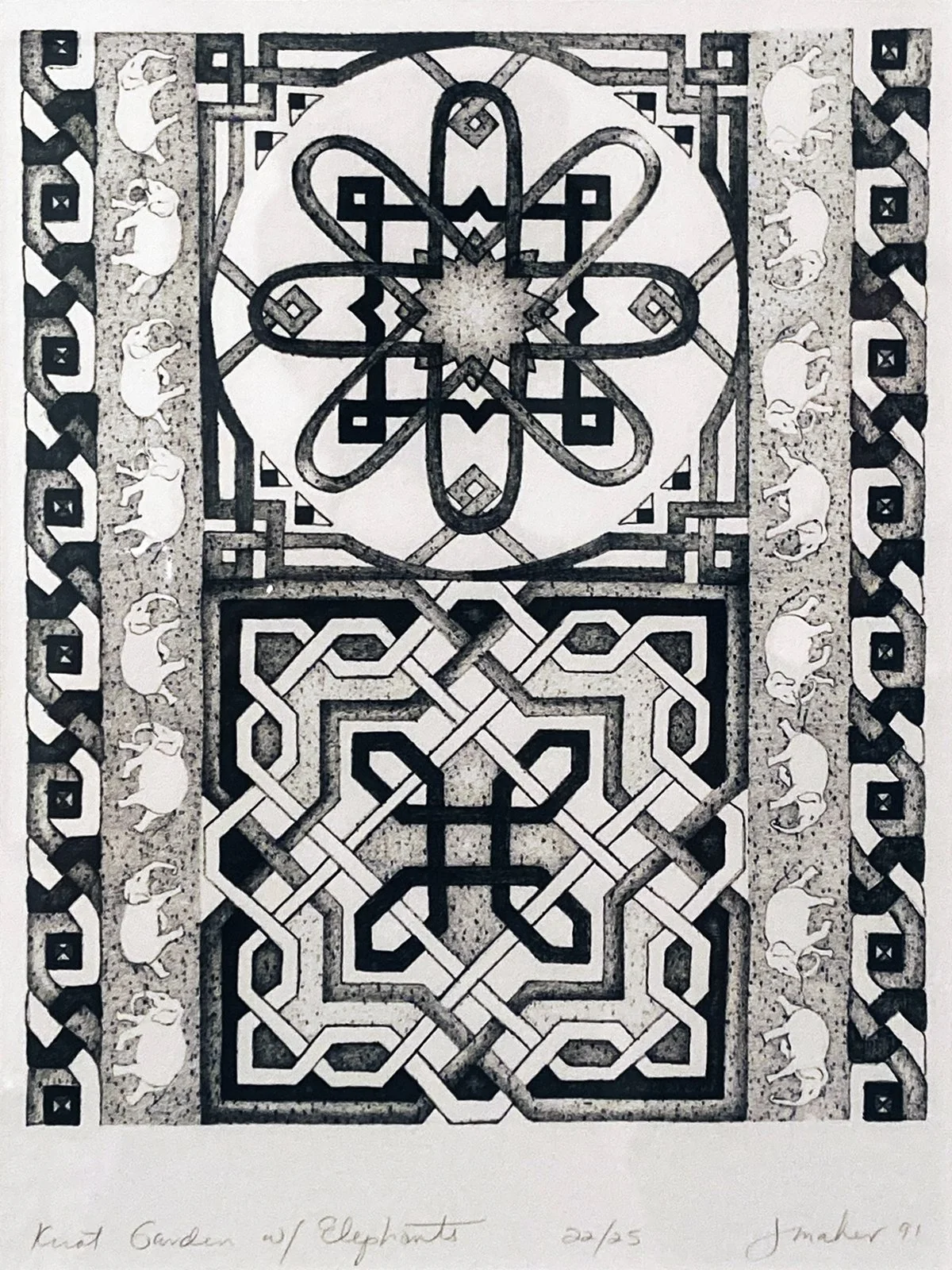
Janet Maher, Knot Garden with Elephants, 1991, lithograph on paper. Image by Dani/elle Cunningham.
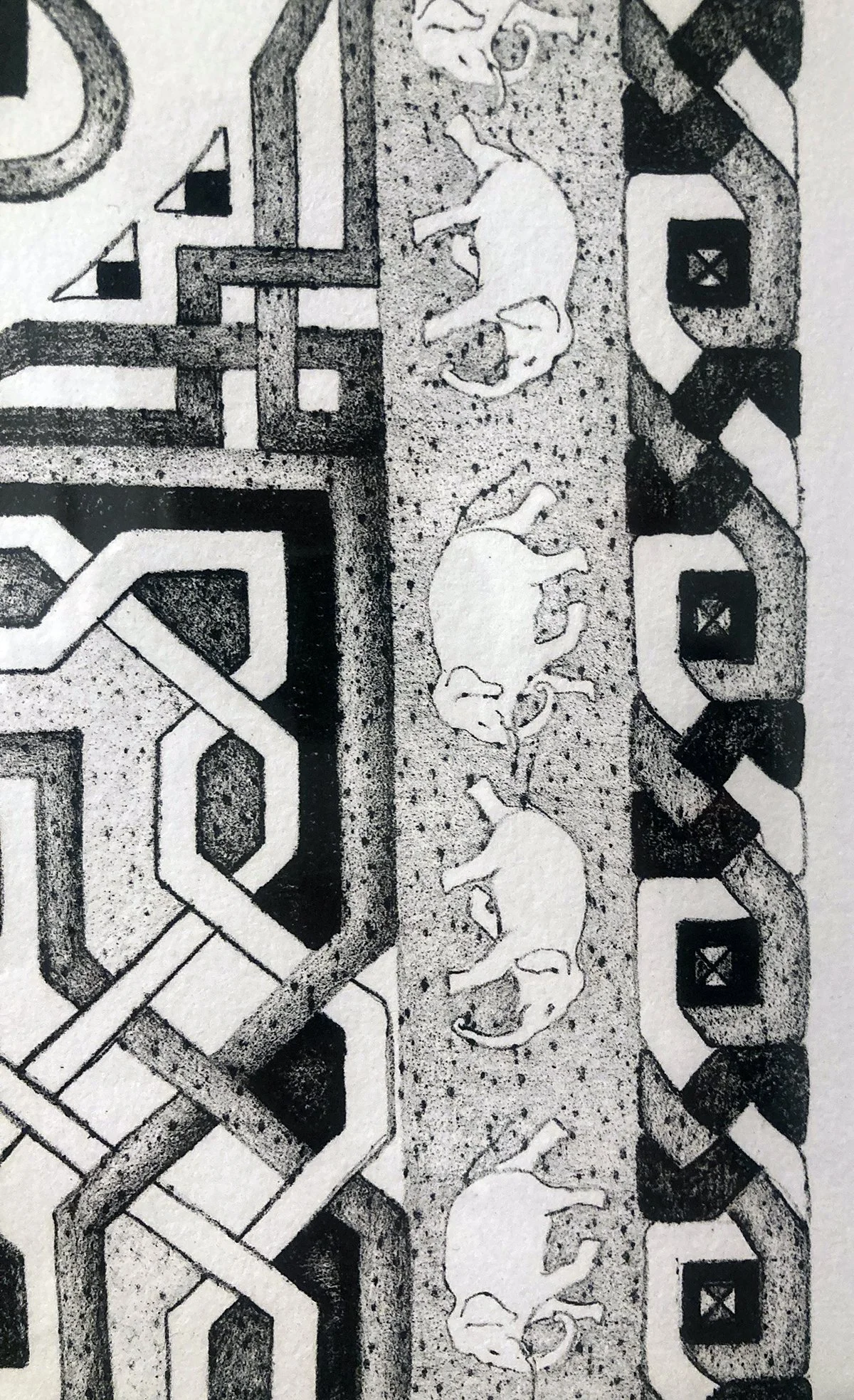
A detail view of Janet Maher’s Knot Garden with Elephants, 1991, lithograph on paper. Image by Dani/elle Cunningham.
Janet Maher’s lithographs on paper feature intricately rendered patterns incorporating Celtic knots that appear inspired by historic patterns, yet are strikingly modern in composition. One lithograph, Knot Garden with Elephants, includes a border of elephants surrounding a dense field of interwoven knots, resulting in a quirky and mesmerizing work.
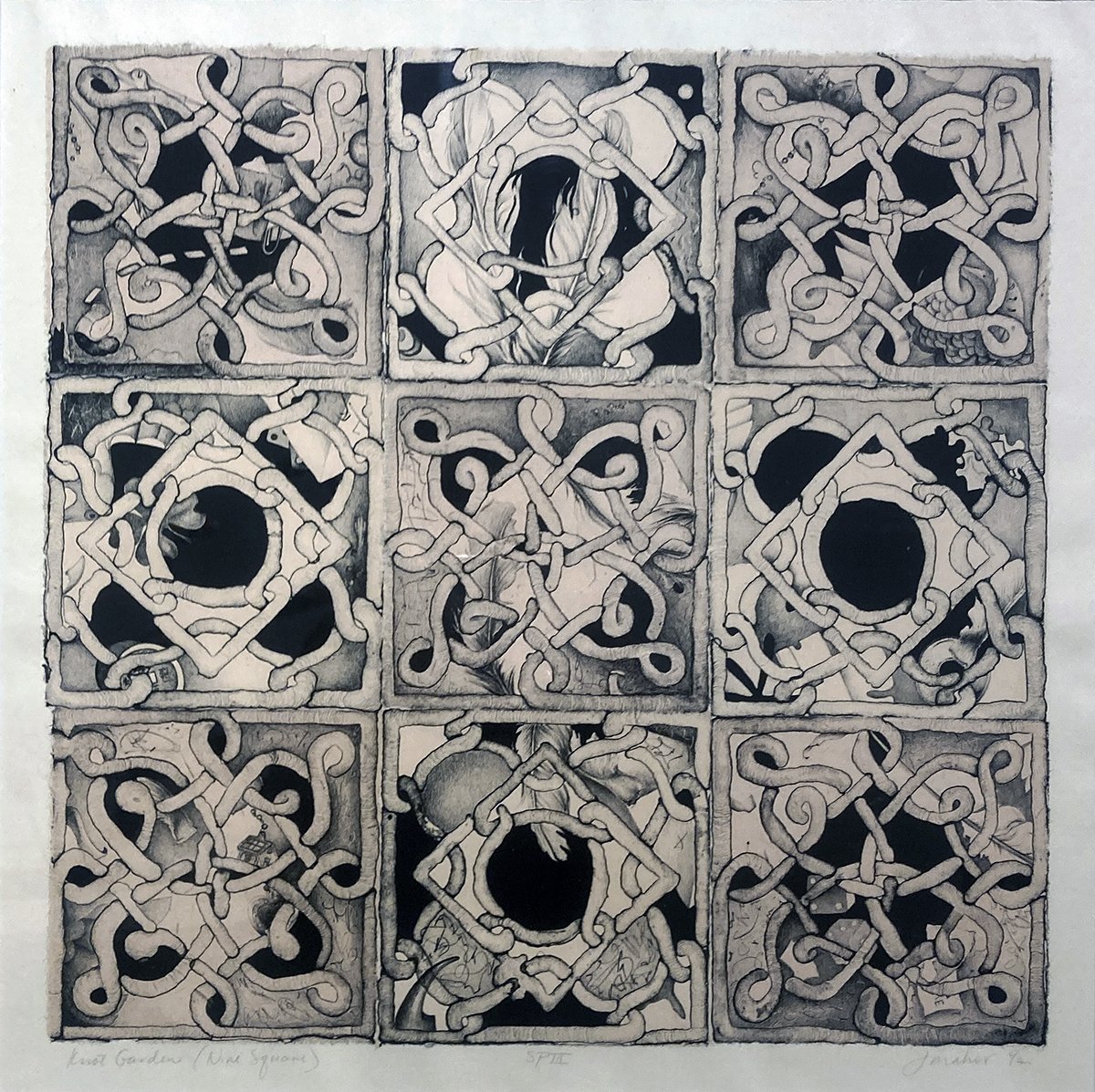
Janet Maher, Knot Garden (Nine Squares), 1992, lithograph on chine collé. Image by Dani/elle Cunningham.
Another lithographic chine collé, titled Knot Garden (Nine Square), reinforces the artist’s fascination with knot imagery by dividing the composition into nine sections of sumptuous decoration, contrasting between precise linework and darkened interior forms.
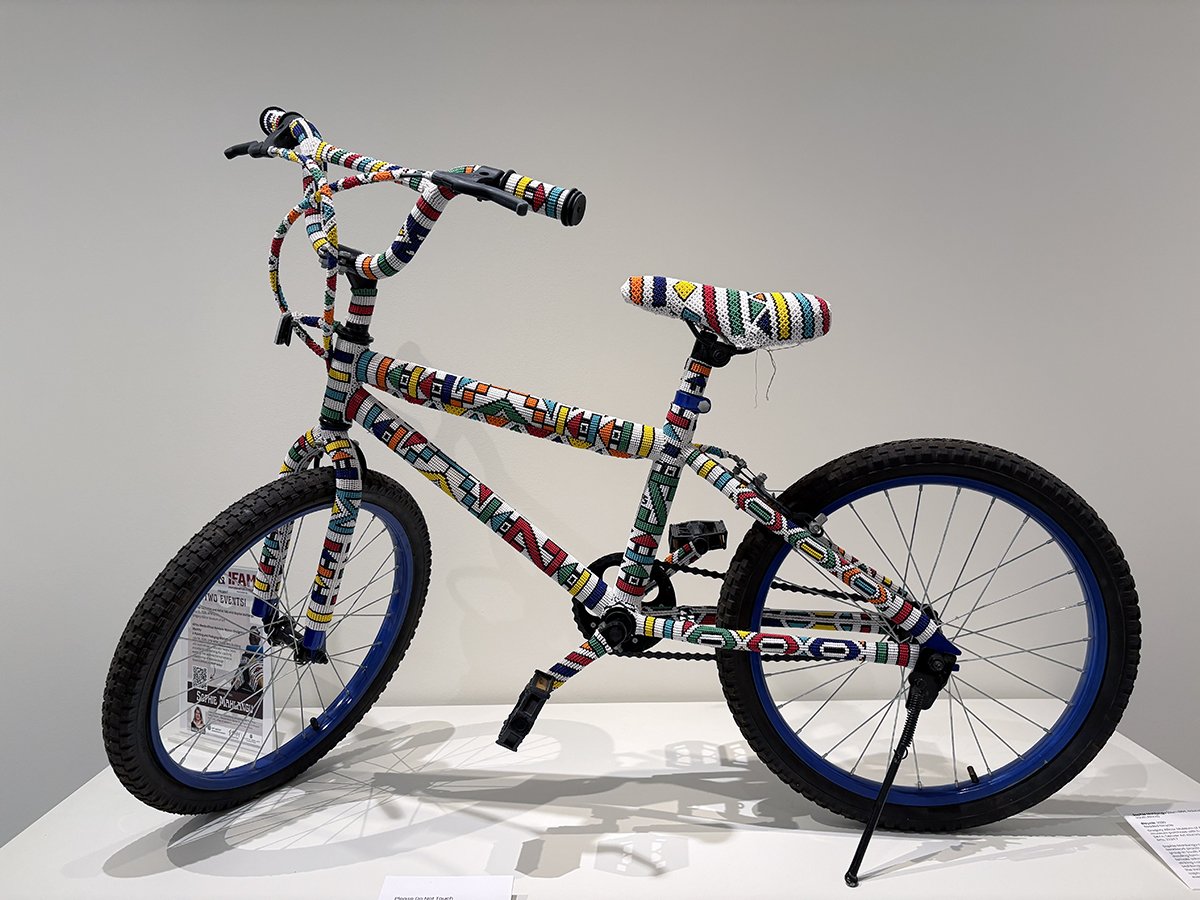
Sophia Mahlangu, Bicycle, 2000, beaded bicycle. Image by DARIA.
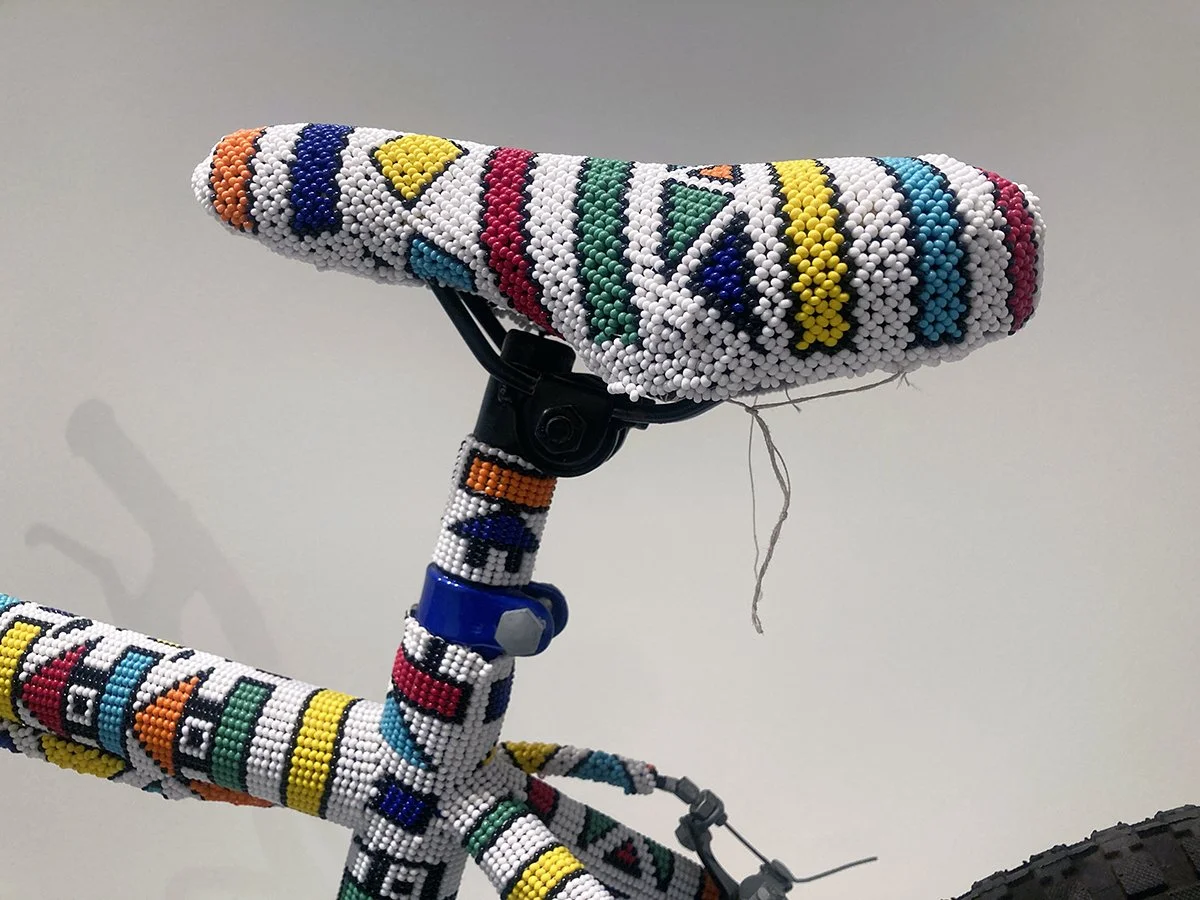
A detail view of Sophia Mahlangu’s Bicycle, 2000, beaded bicycle. Image by Dani/elle Cunningham.
Moving into three dimensions, Sophia Mahlangu draws from Ndebele beadwork traditions, covering a child-sized bicycle in bright primary colors and geometric patterns. Through this transformation of an everyday object, the artist merges abstraction with functionality, though the bicycle itself becomes ironically unusable through the artistic process. The result is both playful and committed to formalism.
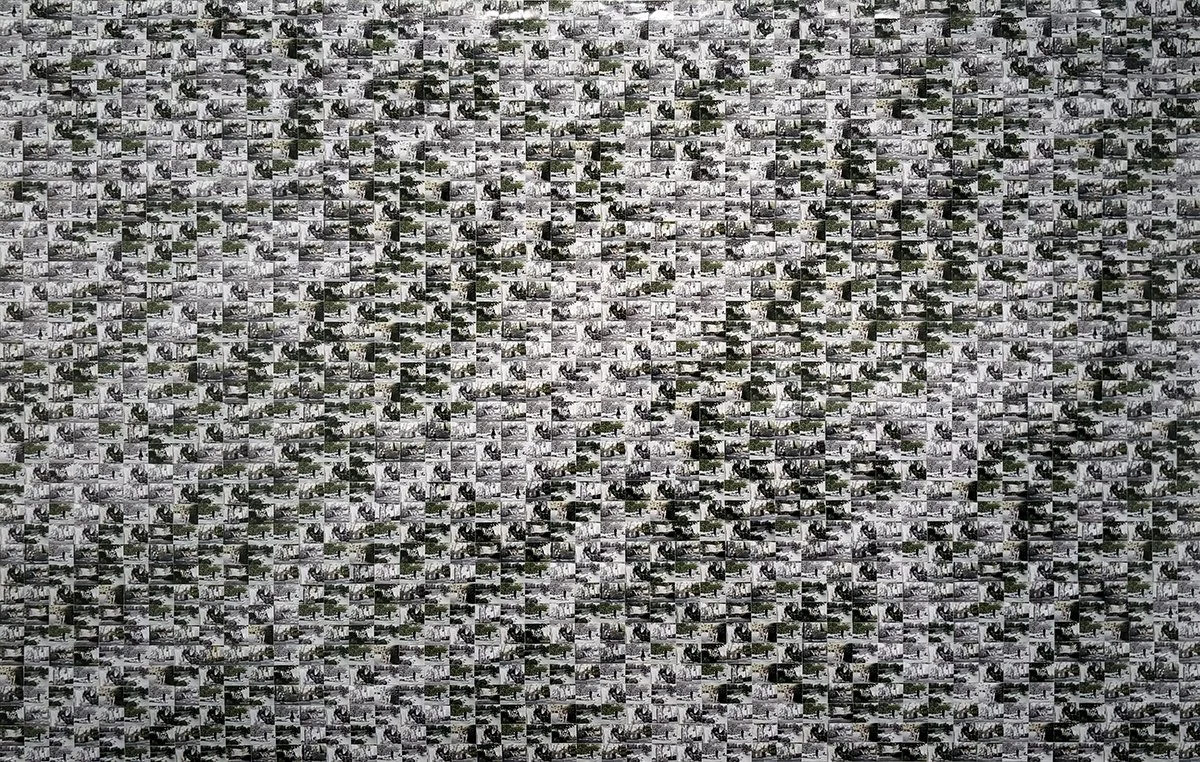
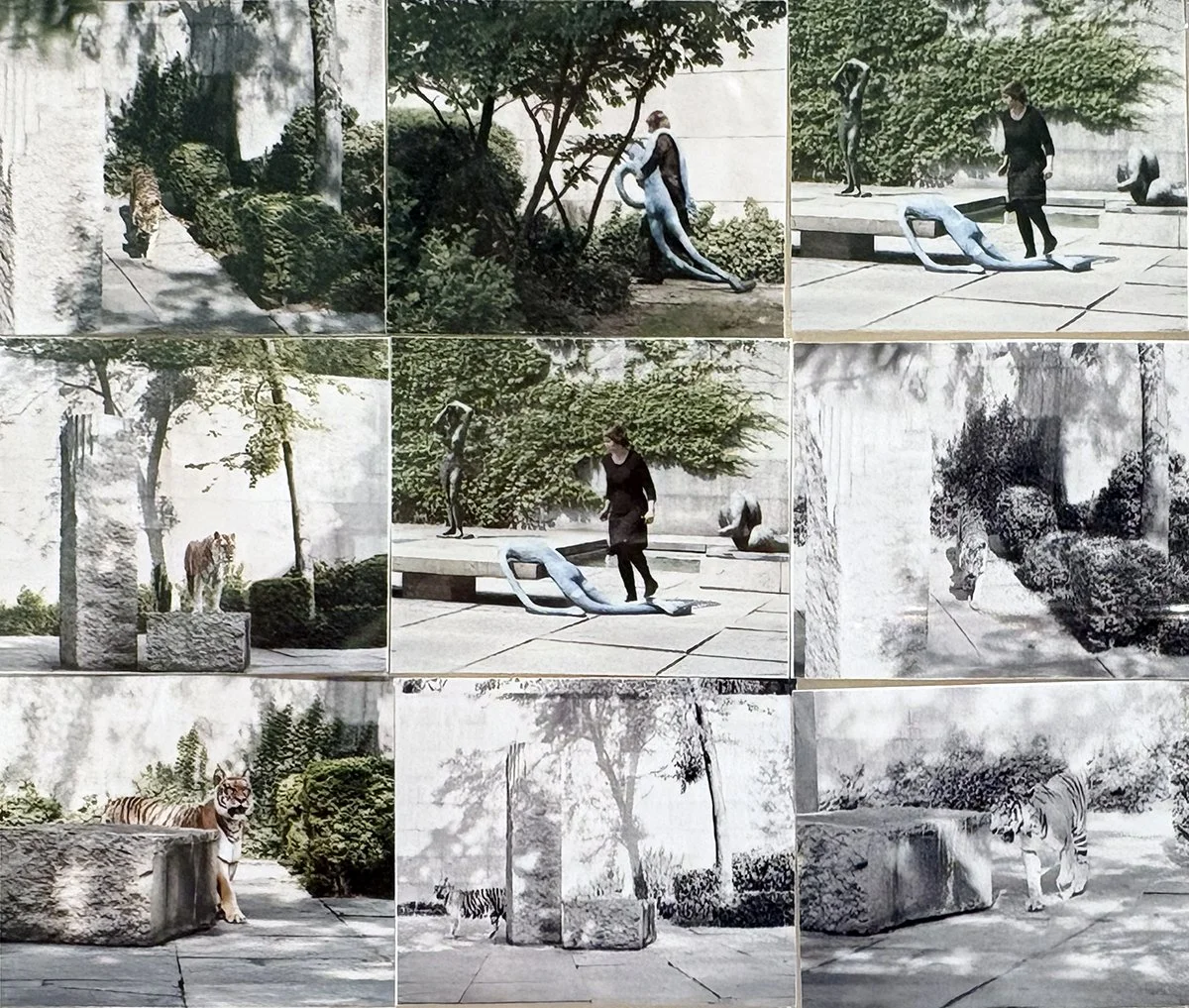
Holly Zausner, Title unknown, 20th century, photo collage. Image by DARIA.
A striking work, Holly Zausner’s photographic collage of a tiger roaming through space alongside a female figure generates a palpable tension. The tightly compressed composition, constructed from many small photographic fragments woven into a larger pattern, creates both visual and psychological unease.
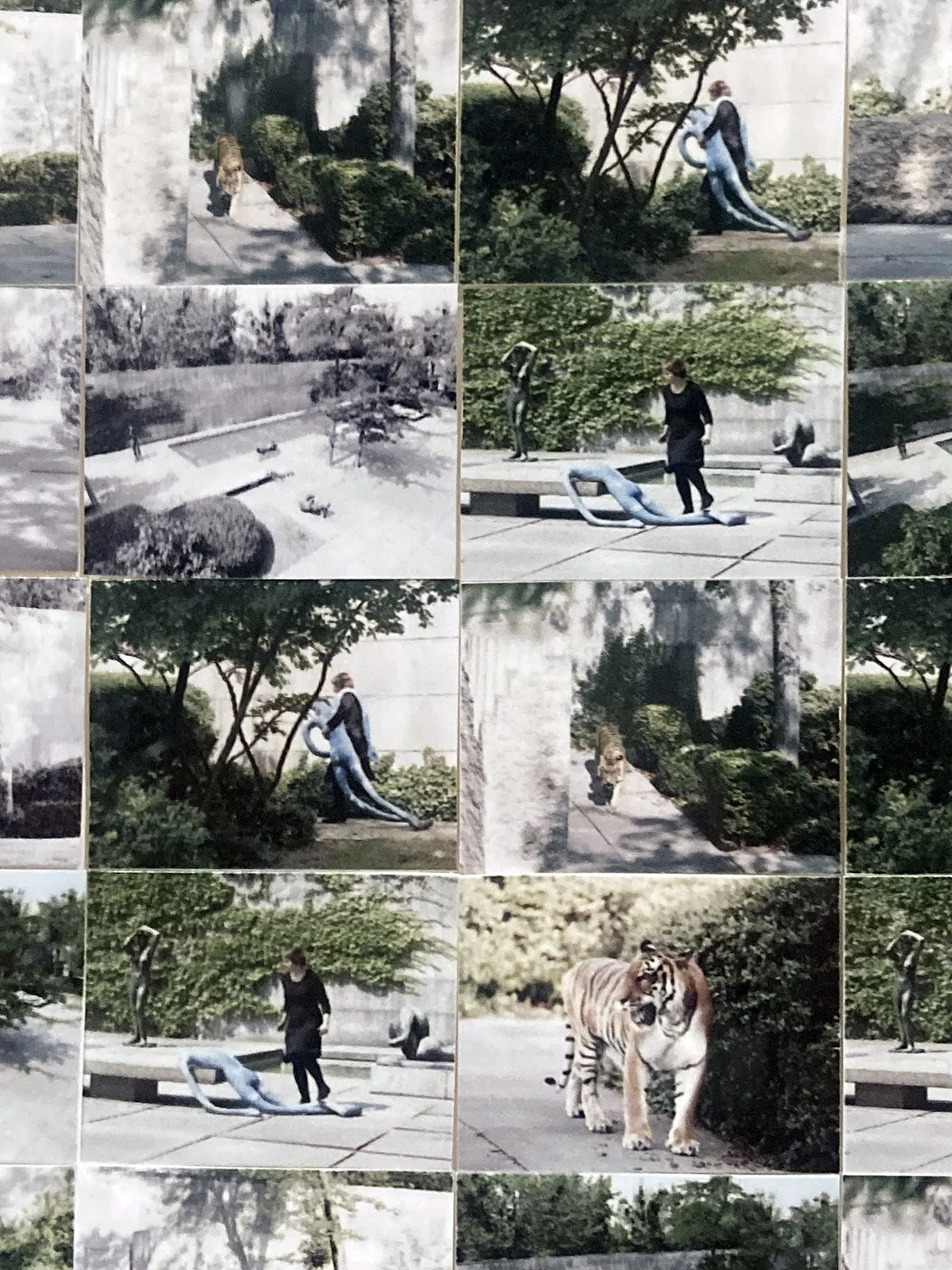
A detail view of Holly Zausner’s Title unknown work, 20th century, photo collage. Image by Dani/elle Cunningham.
The tiger appears either to stalk or cautiously retreat from the figure, suggesting an ambiguous passage of time and questions about power. An additional limp and noodle-like figure resembling a mannequin or dummy occasionally appears in the composition, carried by the upright female figure, perhaps as bait or as a test of the tiger’s restraint.
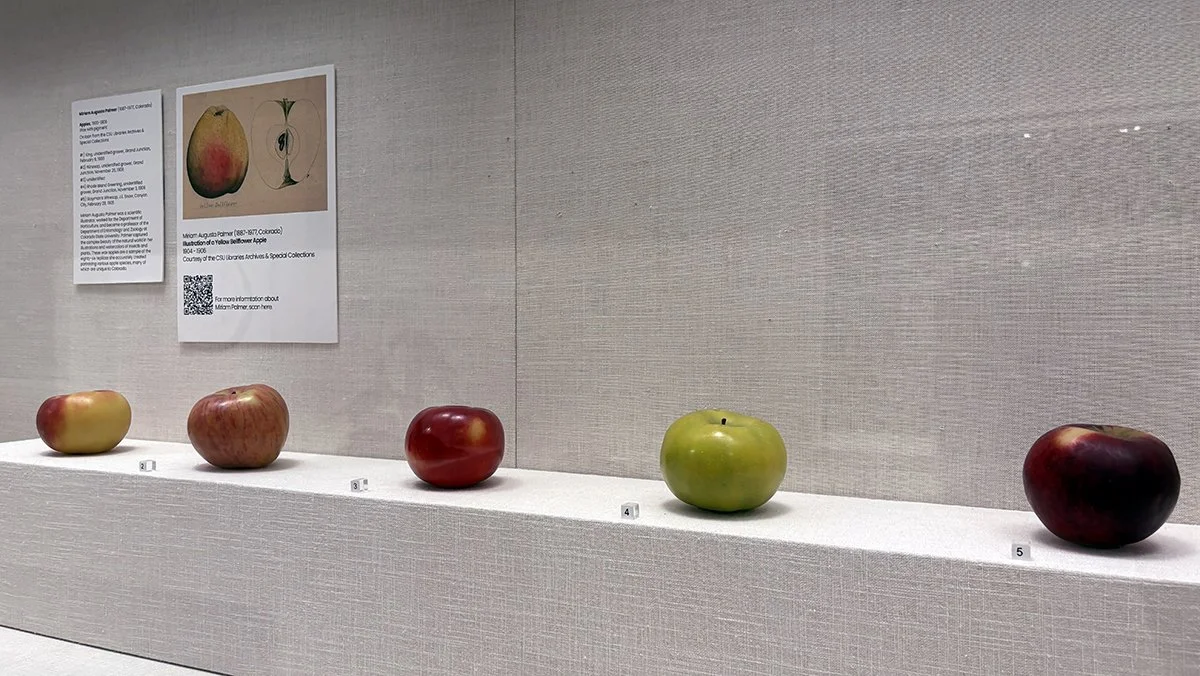
Miriam Augusta Palmer, Apples, 1905-1906, wax with pigment. Image by DARIA.
Miriam Augusta Palmer’s Apples are an unusual inclusion in the exhibition due to their extraordinary devotion to realism and botanical observation, unlike the other exhibited artworks. These sculptures resemble exact replicas of apple varieties, carefully modeled in wax with remarkable attention to color and shading. Achieving this level of naturalism in a three-dimensional medium is especially challenging, and even though they are displayed behind glass, the works maintain a strikingly lifelike presence.
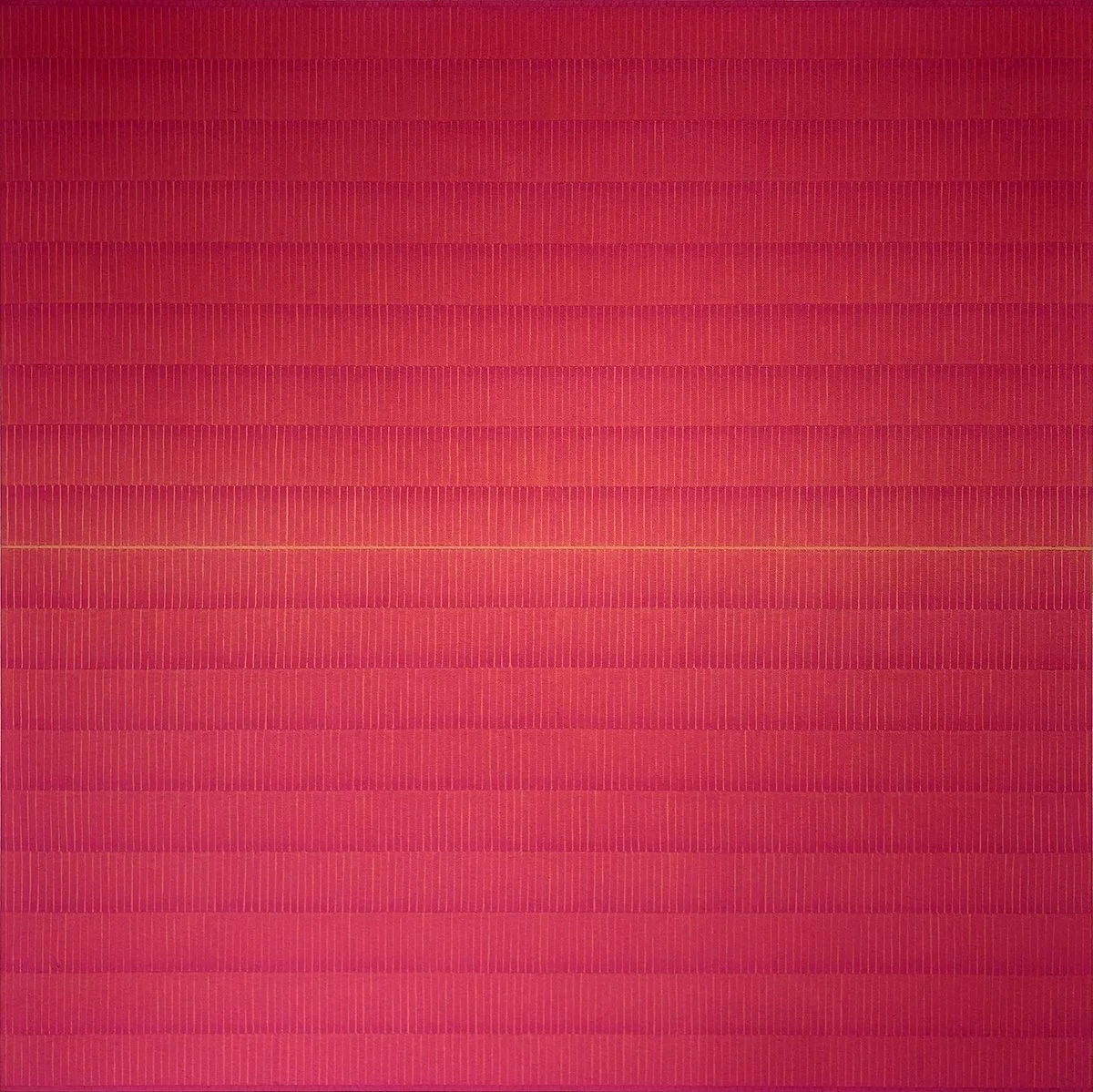
Anna Bogatin, Juliet, 2017, acrylic on canvas. Image by DARIA.
Anna Bogatin’s acrylic on canvas work titled Juliet is immediately striking for its vivid red segments divided by closely rendered vertical lines organized into horizontal bands. At the center of the composition, a dominant yellow outline radiates outward, creating a psychedelic sense of light and movement within the painting. The piece invites close inspection, rewarding viewers with intricate linework and carefully structured detail.

A detail view of Anna Bogatin’s Juliet, 2017, acrylic on canvas. Image by DARIA.
As the only painting included in Meticulous, Juliet provides a compelling contrast to the surrounding prints, sculptures, and collages while standing out as a subtle articulation of the exhibition’s overarching emphasis on meticulous craftsmanship and visual intensity.
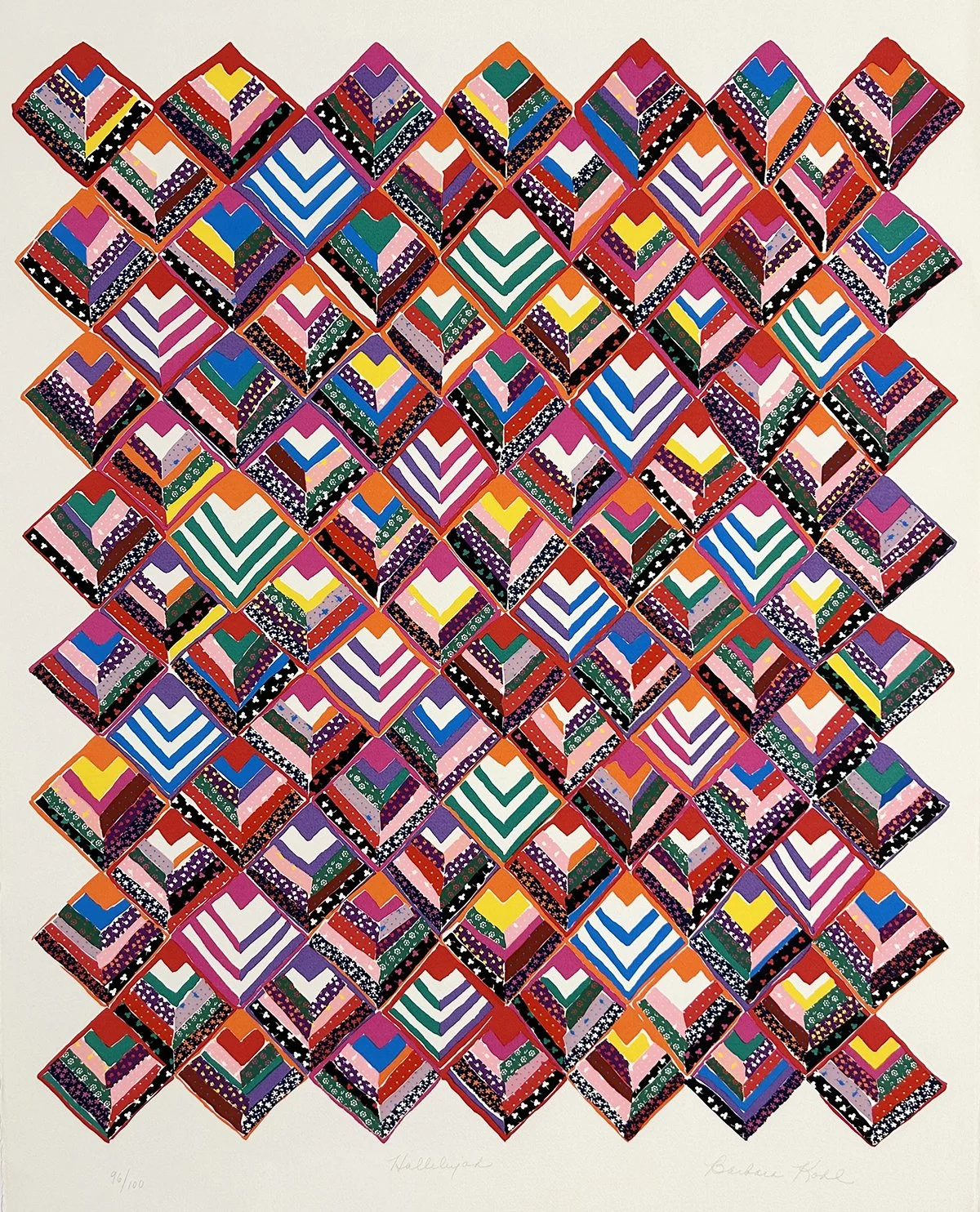
Barbara Kohl-Spiro, Hallelujah, 1980, screenprint on paper. Image courtesy of the Gregory Allicar Museum of Art.
Finally, Barbara Kohl-Spiro’s Hallelujah, a screenprint on paper, features intricately layered rectangles colored and patterned in a dazzling display. The artist’s dedication to the craft of screen printing is evident in the precision of the overlapping forms and the richness of the textures. Despite the work’s relatively modest size, its dense visual energy and dominant use of red gives it a commanding presence within the exhibition.
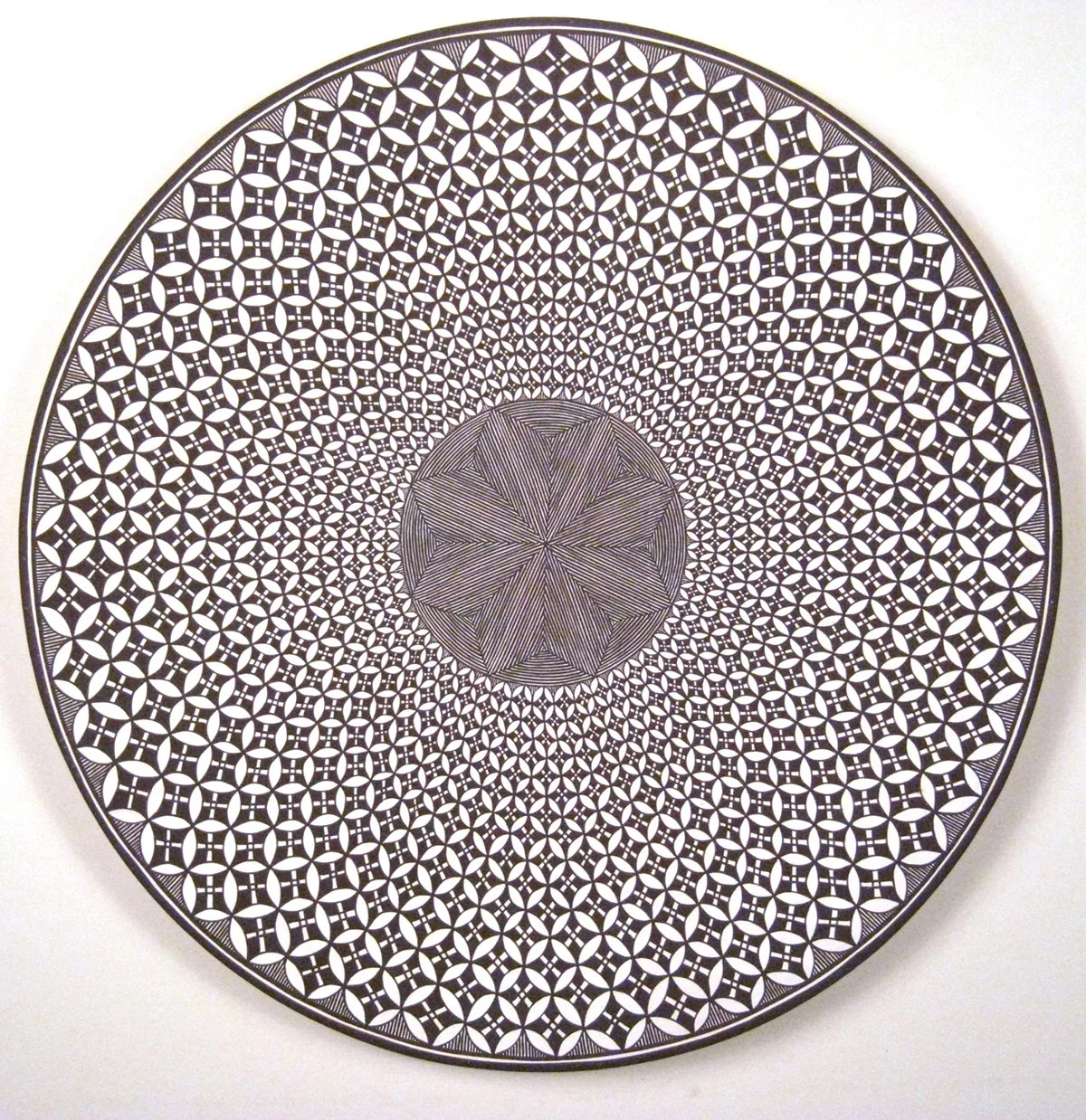
Rebecca Lucario, Black and white plate, 2003, clay with pigment. Image courtesy of the Gregory Allicar Museum of Art.
Taken together, the works in Meticulous celebrate the Gregory Allicar collection’s hidden gems, as well as the possibilities for art to demonstrate excess, ornamentation, and meticulous craftsmanship across a wide range of media. Though the artists approach detail from vastly different perspectives—traditional pattern, collage, painting, sculpture, or printmaking—the exhibition is unified by an insistence on careful looking. In the confined hallway space of the museum, the concentration of such visually dense works becomes all the more immersive, transforming the corridor into a vibrant meditation on texture, labor, and the hand-crafted pleasures of maximalism.
Dani/elle Cunningham (she/her) is an artist, scholar, and independent curator. She writes about science fiction, gender, sexuality, and disability, with an emphasis on mental illness. The co-founder of chant cooperative, an artist co-op, she holds a master’s degree in art history and museum studies from the University of Denver.