
Los Seis de Boulder Community Sculpture Project
Los Seis de Boulder Community Sculpture Project
Albert & Vera Ramirez Temporary Building 1 (TB01), University of Colorado, Boulder Campus and the City of Boulder
1715 Pleasant Street, Boulder, CO 80309
17th Street and Pearl Street, Boulder, CO, 80302
Permanent installations
Admission: free
Review by Madeleine Boyson
We are haunted by all the stories we should have been told. So too was Jasmine Baetz who, upon arriving at University of Colorado (CU) Boulder in 2017, found that there was no official memorial for Los Seis de Boulder—The Boulder Six—on campus.
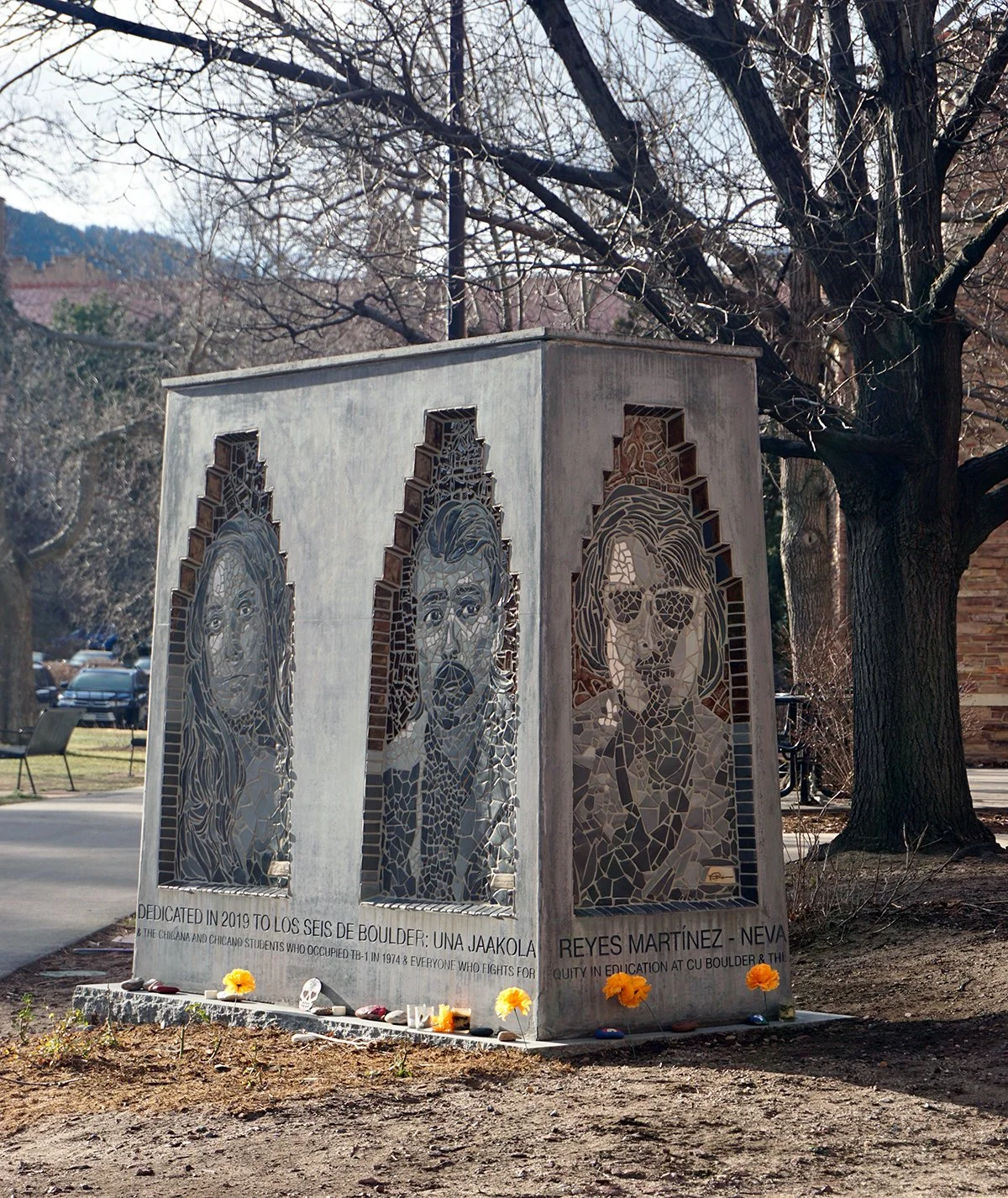
Jasmine Baetz, Los Seis de Boulder Community Sculpture Project (located at Temporary Building 1 (TB-01) on the campus of the University of Colorado Boulder, 1715 Pleasant Street), 2019, concrete and ceramic. Image by Madeleine Boyson.
On May 27, 1974, CU junior Neva Romero, law graduate Reyes Martínez, and alumna Una Jaakola were killed in a car bombing at Chautauqua Park. Fellow alumnus Florencio Granado spoke out about the attack only to be killed in another bombing a day later alongside graduate Heriberto Terán and transferring student Francisco Dougherty. [1]
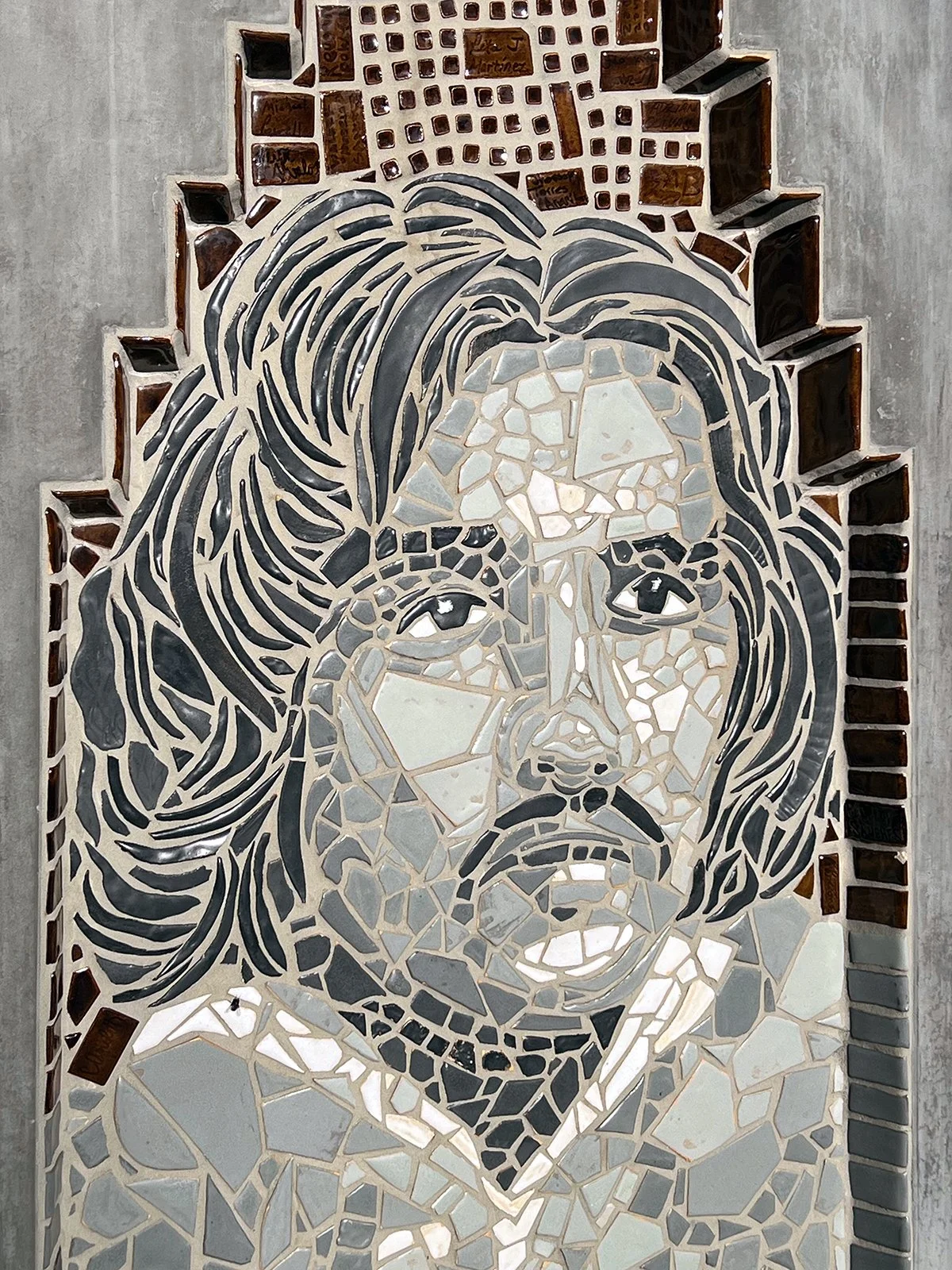
Reyes Martínez
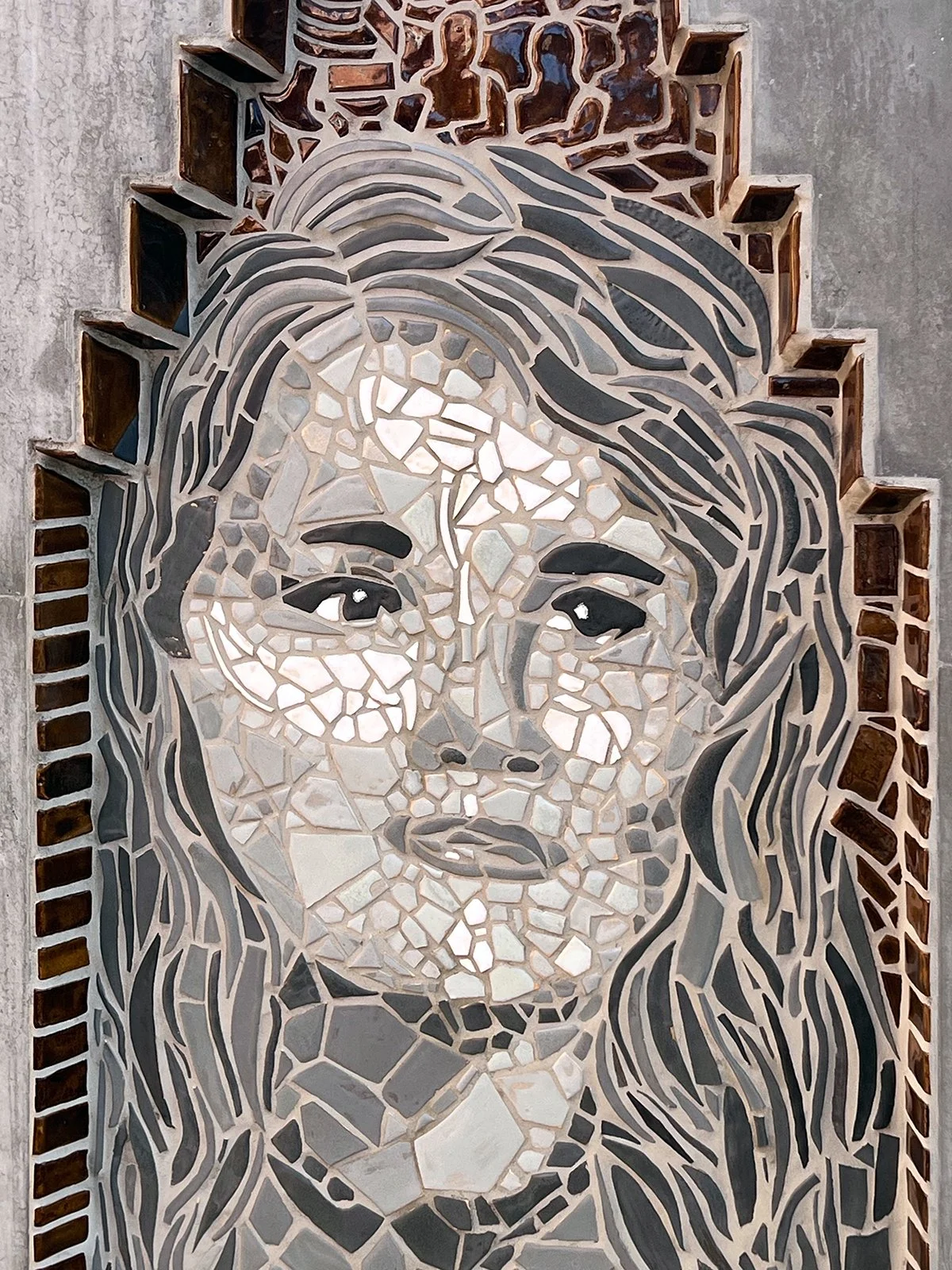
Una Jaakola
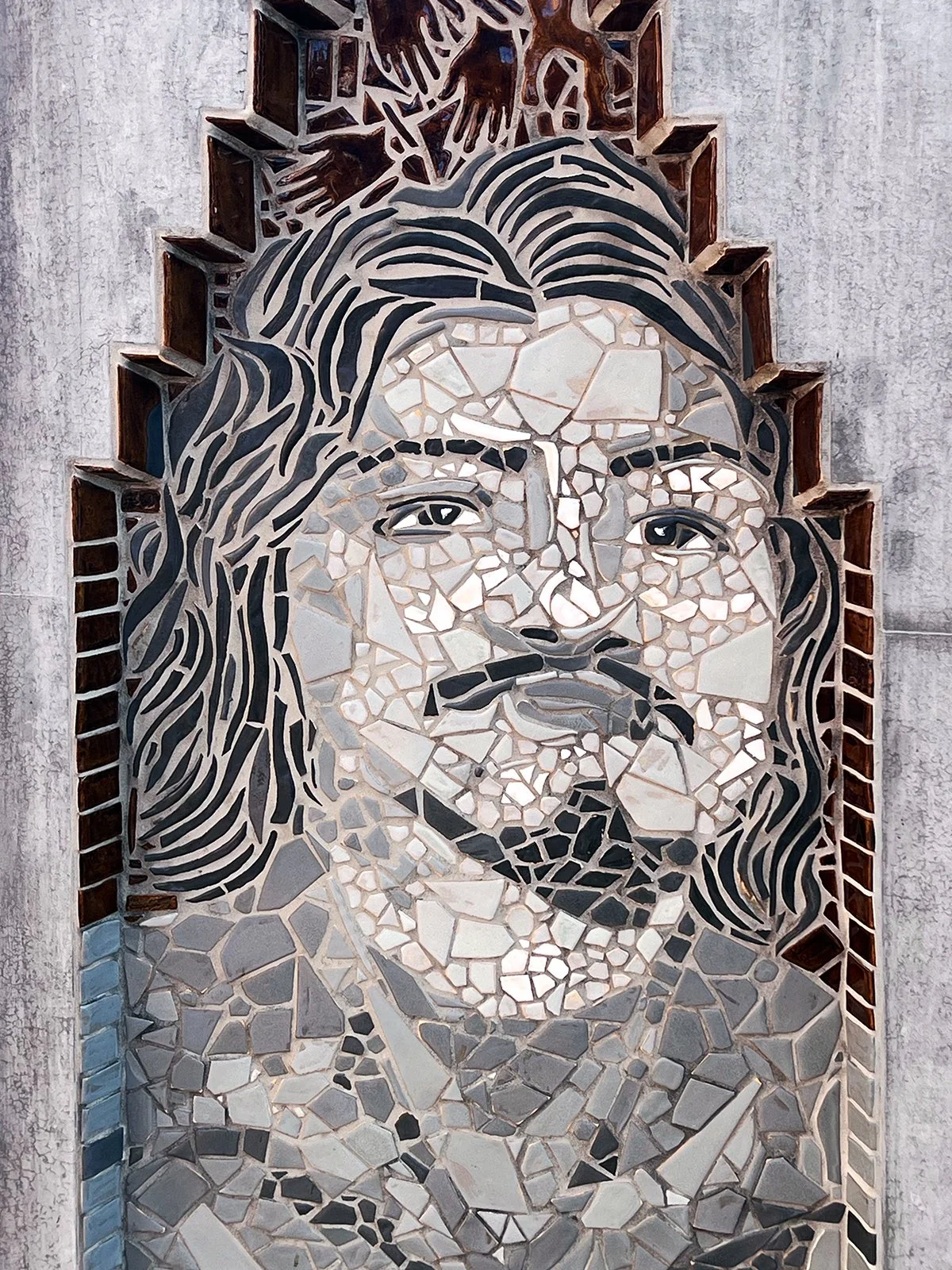
Francisco Dougherty
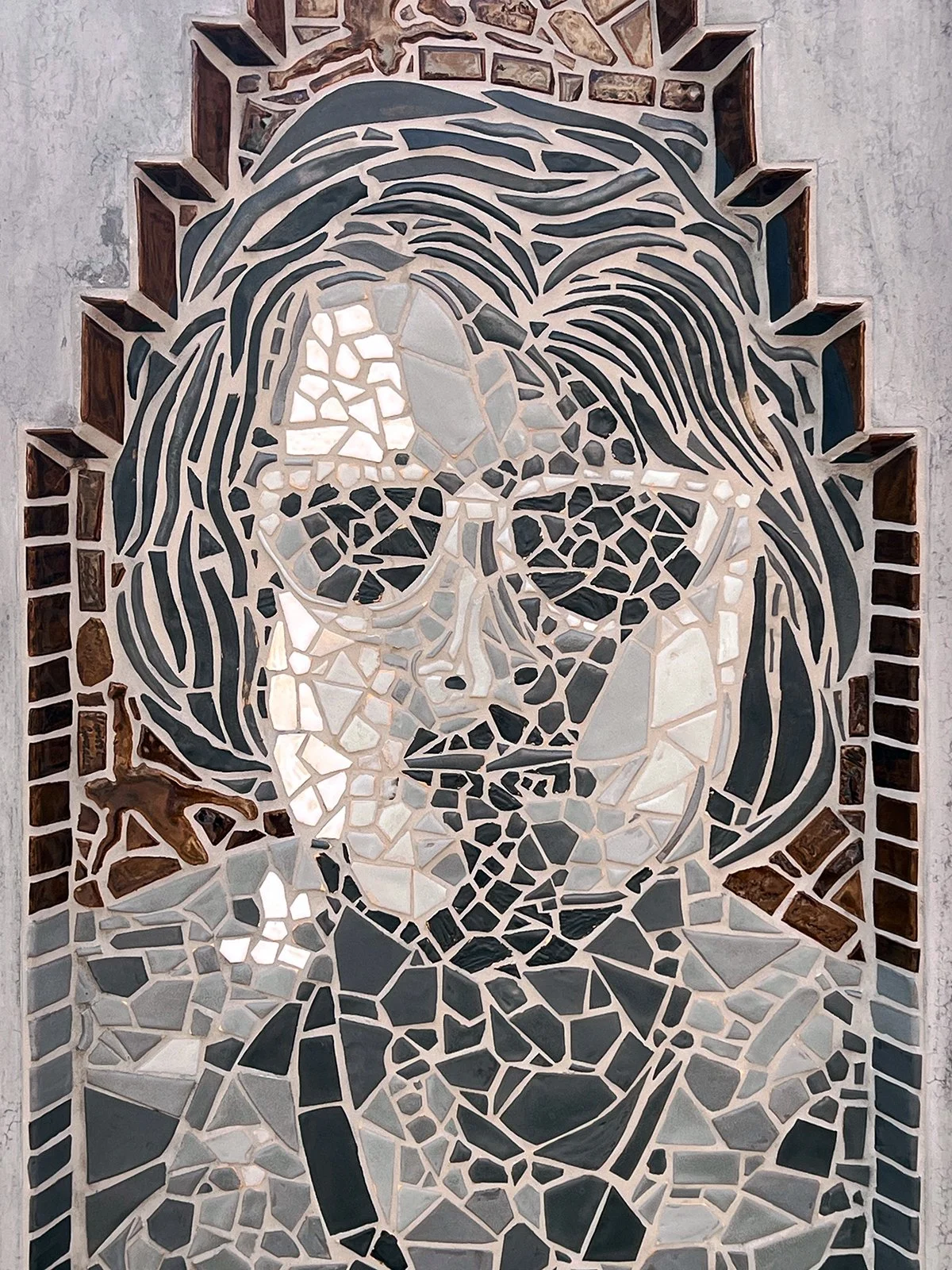
Heriberto Teran
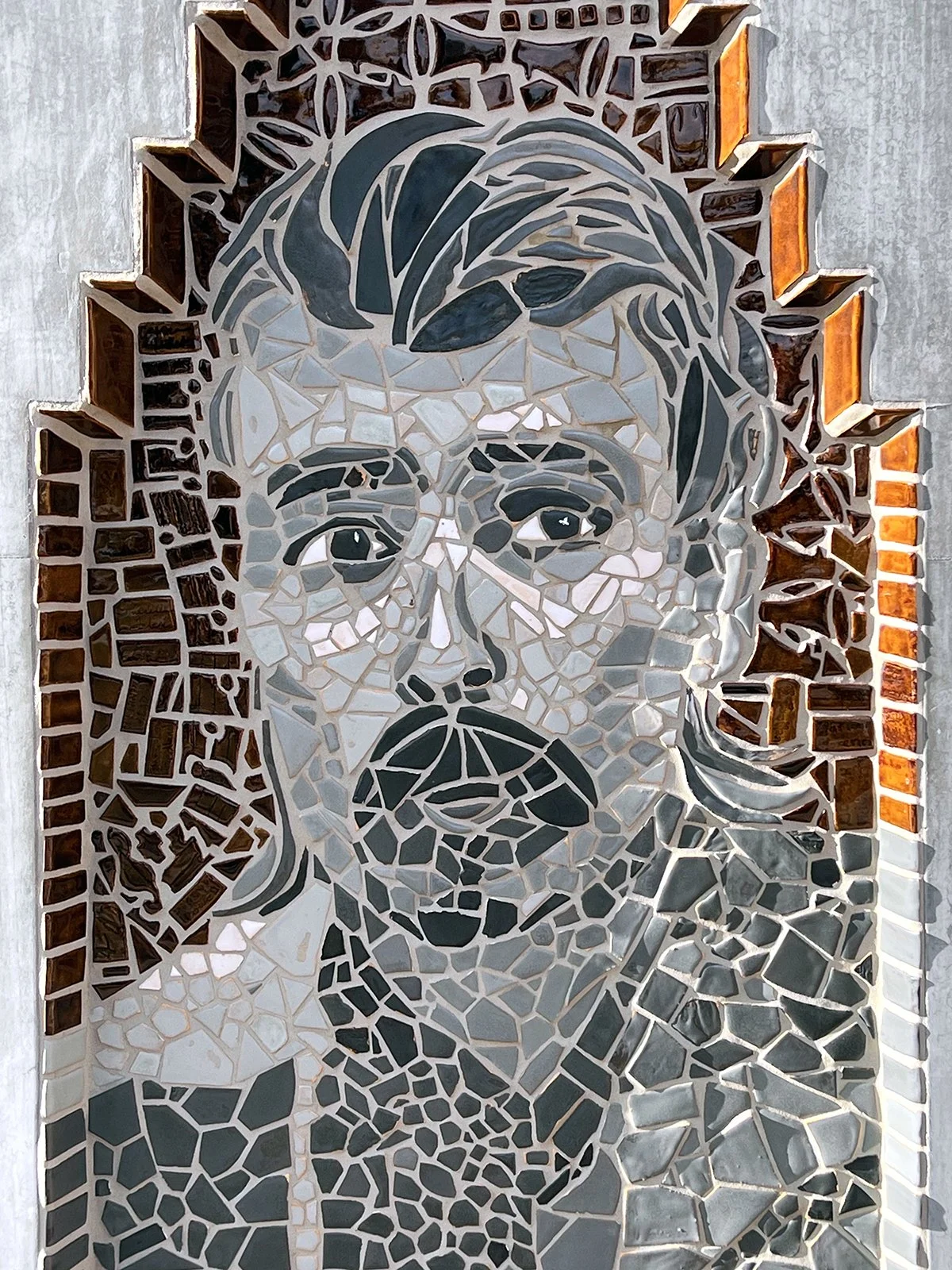
Florencio Granado
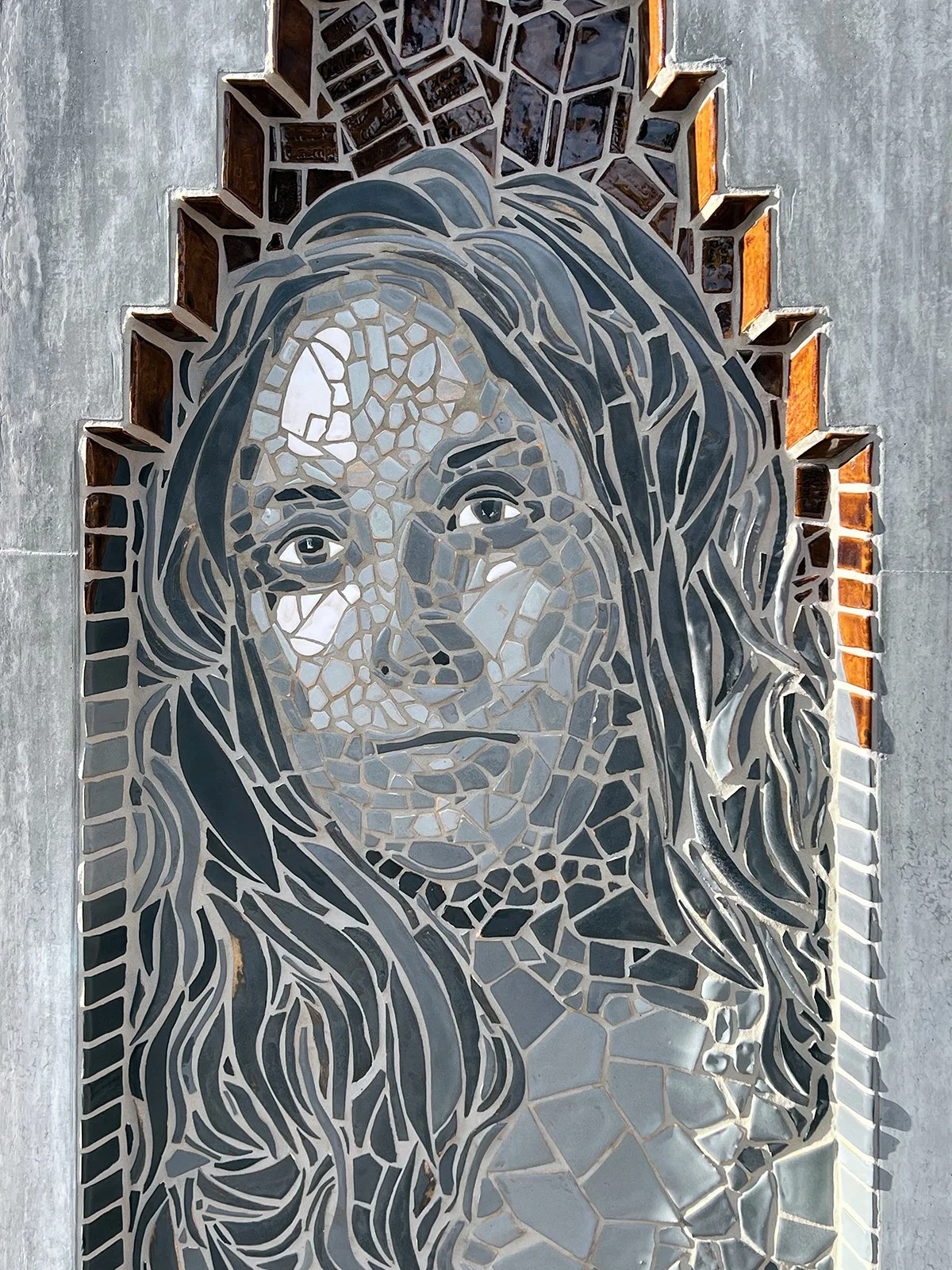
Neva Romero
The six activists, posthumously remembered as Los Seis de Boulder, were involved in United Mexican American Students (UMAS), a group concurrently sitting-in at Temporary Building 1 that May to protest treatment by the university. Yet no one was charged with their deaths, and the FBI case files burned in a fire. [2]
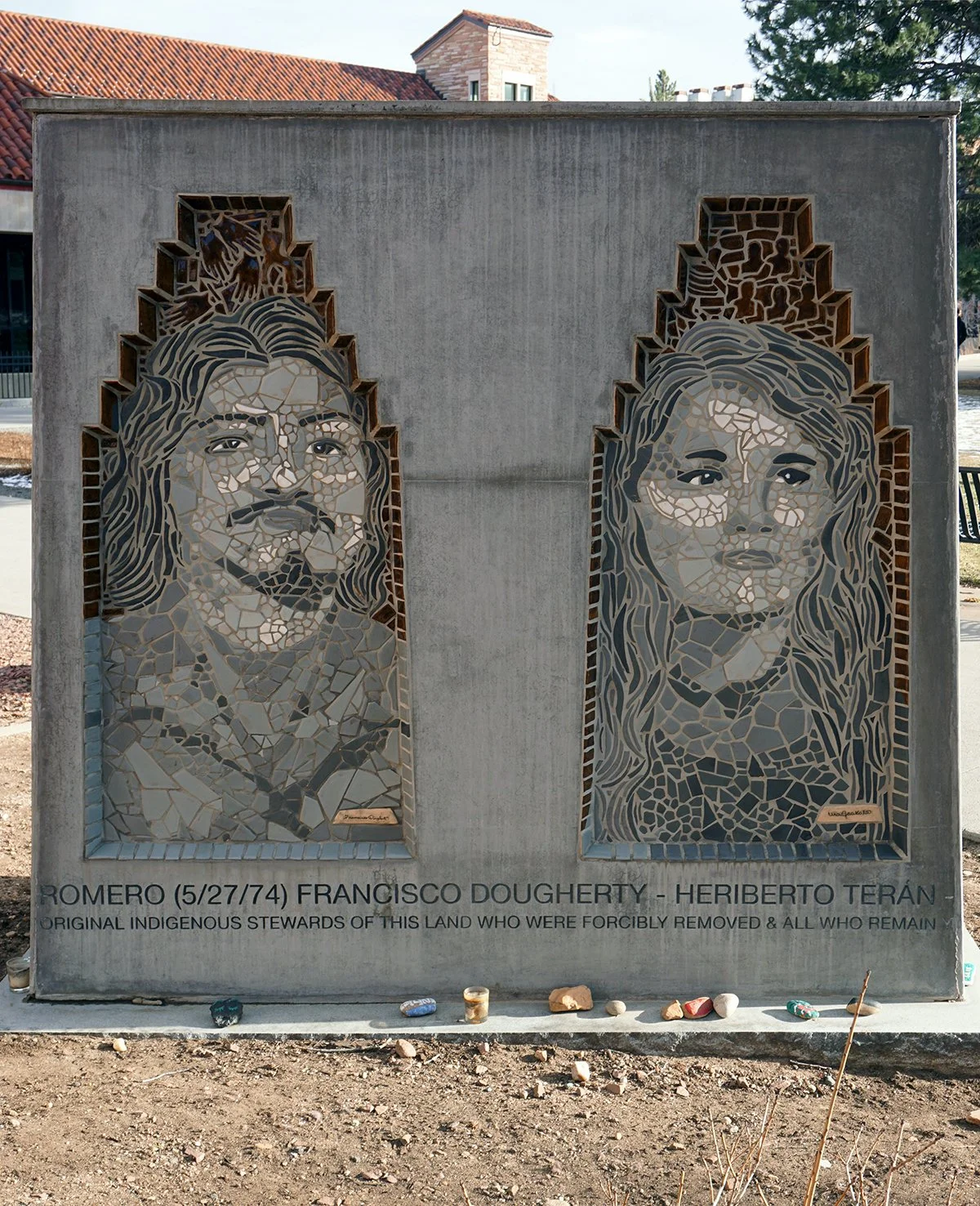
Jasmine Baetz, Los Seis de Boulder Community Sculpture Project (located at Temporary Building 1 (TB-01) on the campus of the University of Colorado Boulder, 1715 Pleasant Street), 2019, concrete and ceramic. Image by Madeleine Boyson.
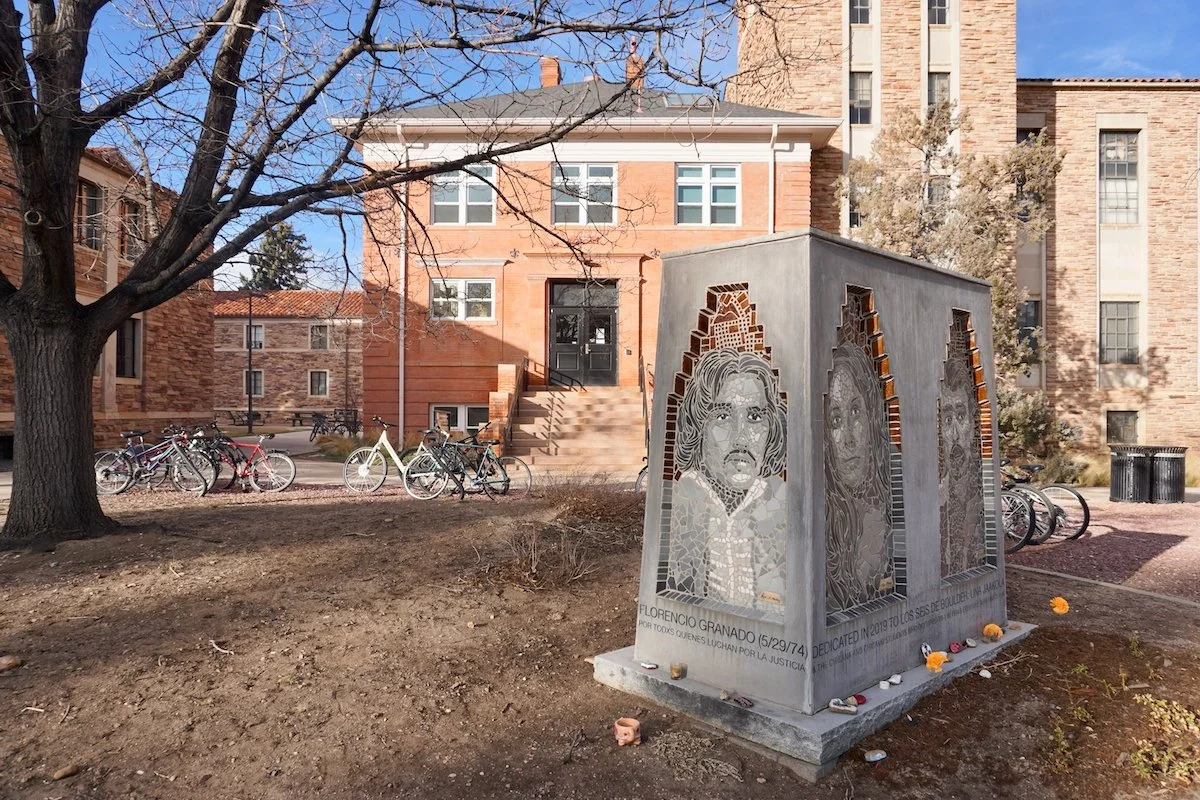
Forty-three years later, then-MFA student Baetz began a socially engaged and community-focused sculpture project after watching the documentary Symbols of Resistance: Martyrs of the Chican@ Movement in Colorado (2017). Created with over 100 community members, the memorial stands six feet tall on a barren patch outside Temporary Building 1—a deliberate and charged location.
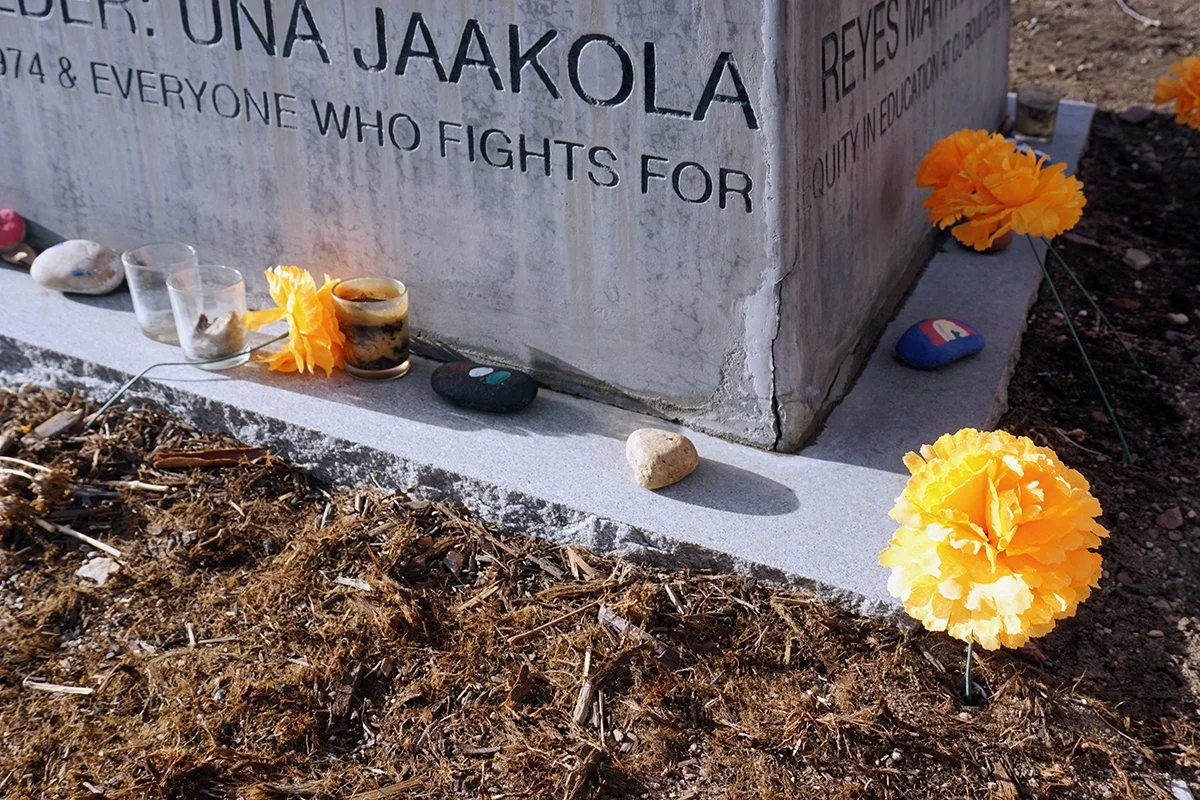
A detail view of the Los Seis de Boulder Community Sculpture Project (located at 17th and Pearl Streets in Boulder), 2020, concrete and ceramic. Image by Madeleine Boyson.
The trapezoidal sculpture displays kiln-fired mosaic retablos positioned in the direction that each activist died. Each face emerges ghost-like from a nicho, much like the shadow boxes of an altar. [3] “POR TODXS QUIENES LUCHAN POR LA JUSTICIA,” the memorial reads. “For all those who fight for justice.” [4]
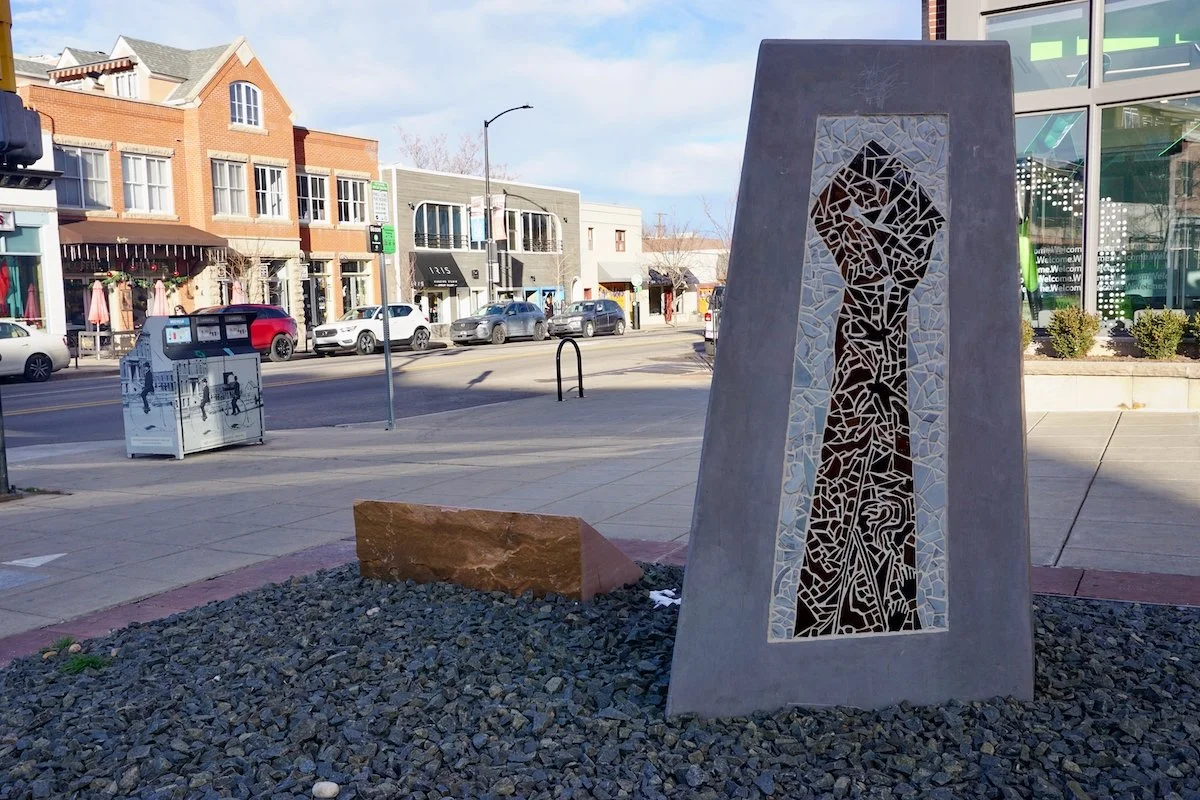
Jasmine Baetz, Los Seis de Boulder Community Sculpture Project (located at 17th and Pearl Streets in Boulder), 2020, concrete and ceramic. Image by Madeleine Boyson.
Baetz’s community-made sculpture was initially approved for temporary display, but the artist was later granted permanent installation in September 2020. That same year, Baetz and the original participants created a second sculpture that now sits at the corner of 17th and Pearl Streets in downtown Boulder.
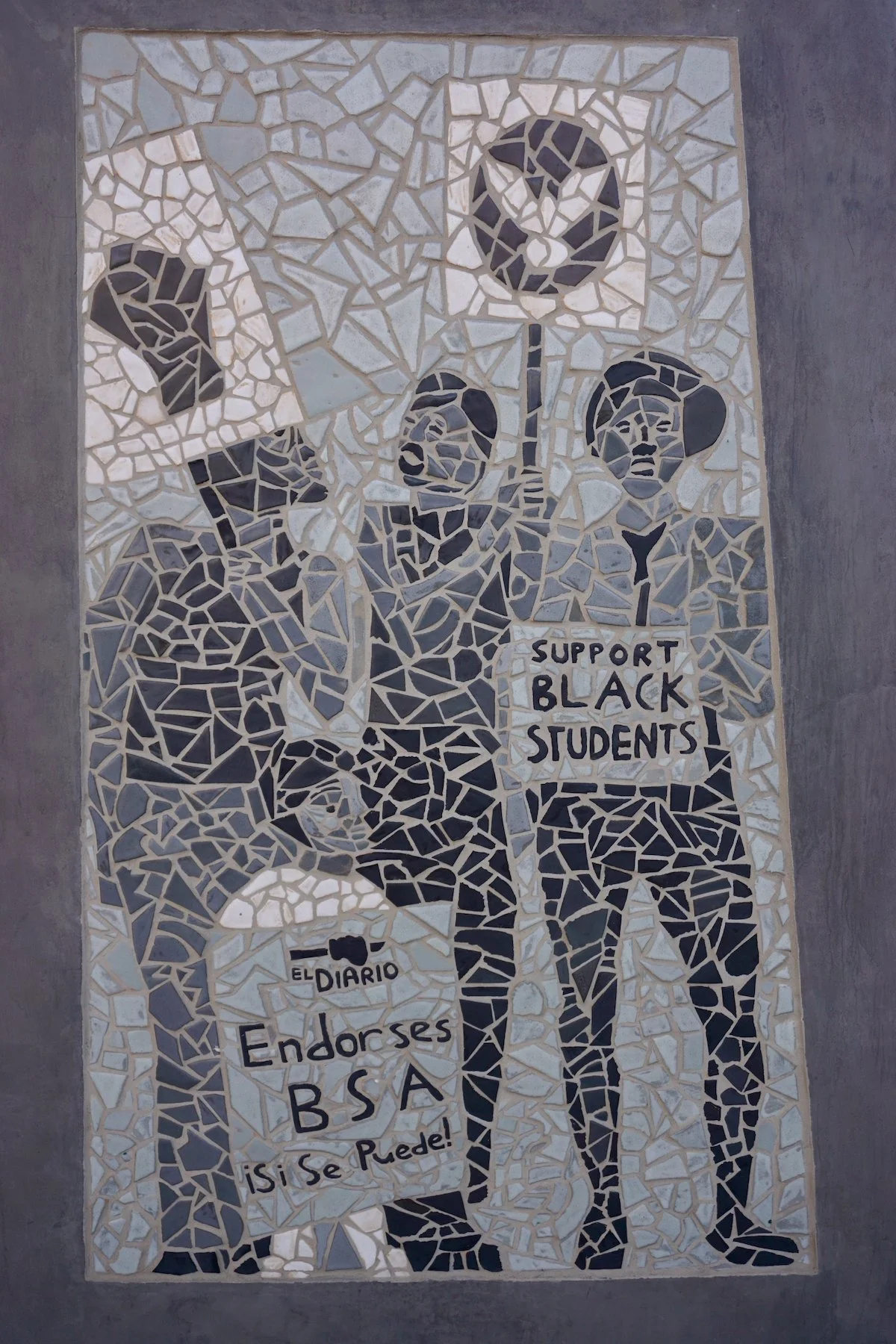
Jasmine Baetz, Los Seis de Boulder Community Sculpture Project (located at 17th and Pearl Streets in Boulder), 2020, concrete and ceramic. Image by Madeleine Boyson.
On it, figures fall and reach towards each other within a clenched fist. On the far side, a three-person protest expresses solidarity between Chicanx and Black student movements.
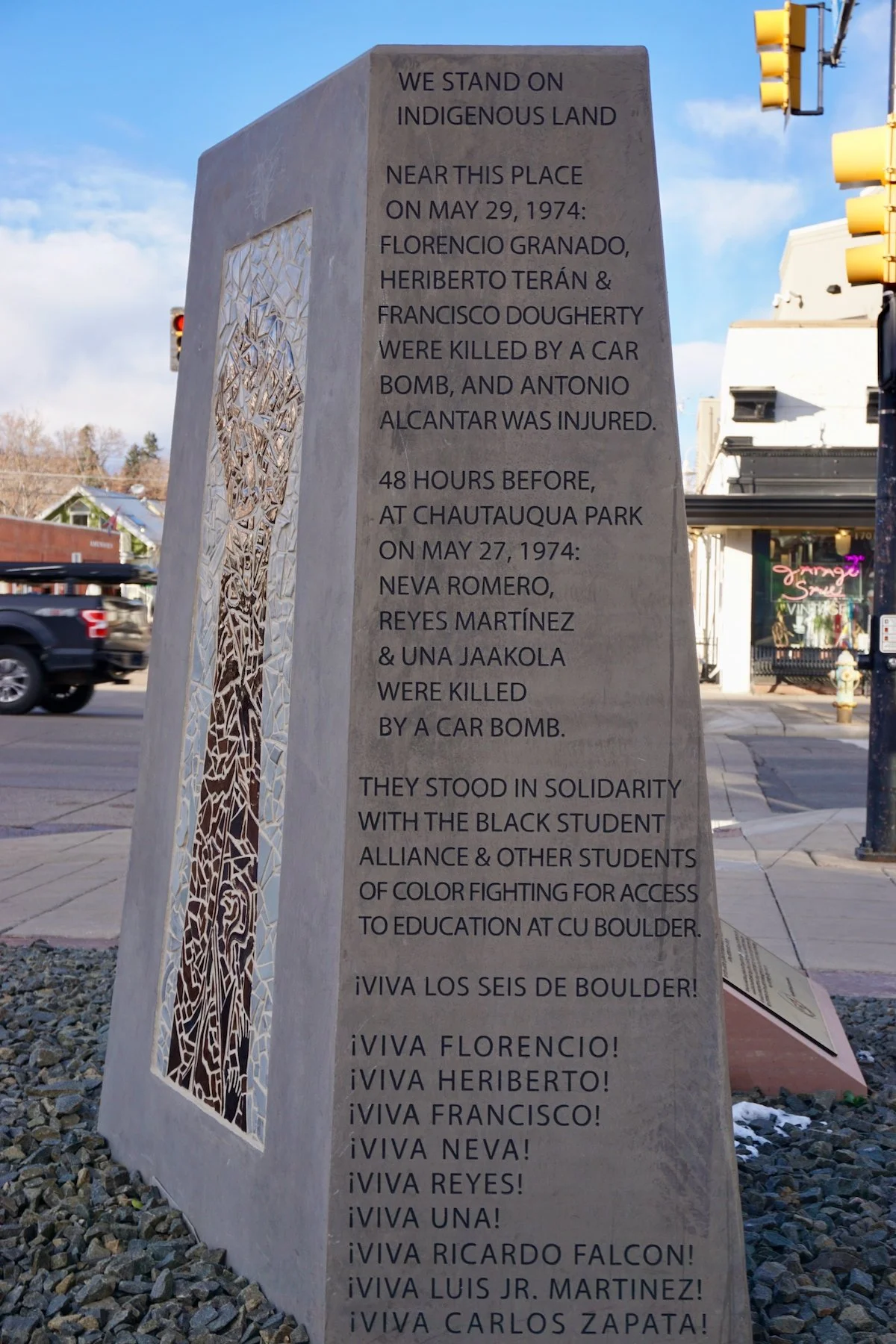
Jasmine Baetz, Los Seis de Boulder Community Sculpture Project (located at 17th and Pearl Streets in Boulder), 2020, concrete and ceramic. Image by Madeleine Boyson.
Public memorials are necessary, if fickle things. They acknowledge those horrors we cannot look at directly, or they speak in the language that art provides when speech is not enough. But with time comes the muddied waters of forgetfulness or grief, or the pat on the back that says “surely, we have done enough.” Fifty-one years later and it feels that we are no closer to the equity for which Los Seis died.
“Look around you,” their gazes seem to say. Are you paying attention yet?
Madeleine Boyson (she/her) is an Editorial Coordinator at DARIA and a Denver-based writer, poet, and artist. She holds a BA in art history and history from the University of Denver.
[1] Antonio Alcantar was in the second car as well but survived with severe injuries resulting in amputation.
[2] See www.cuindependent.com/2019/09/03/lives-of-six-chicano-students-are-remembered-with-new-memorial/.
[4] The text continues: “[And for] the Chicana and Chicano students who occupied TB-1 in 1974 & everyone who fights for equity in education at CU Boulder & original Indigenous stewards of this land who were forcibly removed & all who remain.”