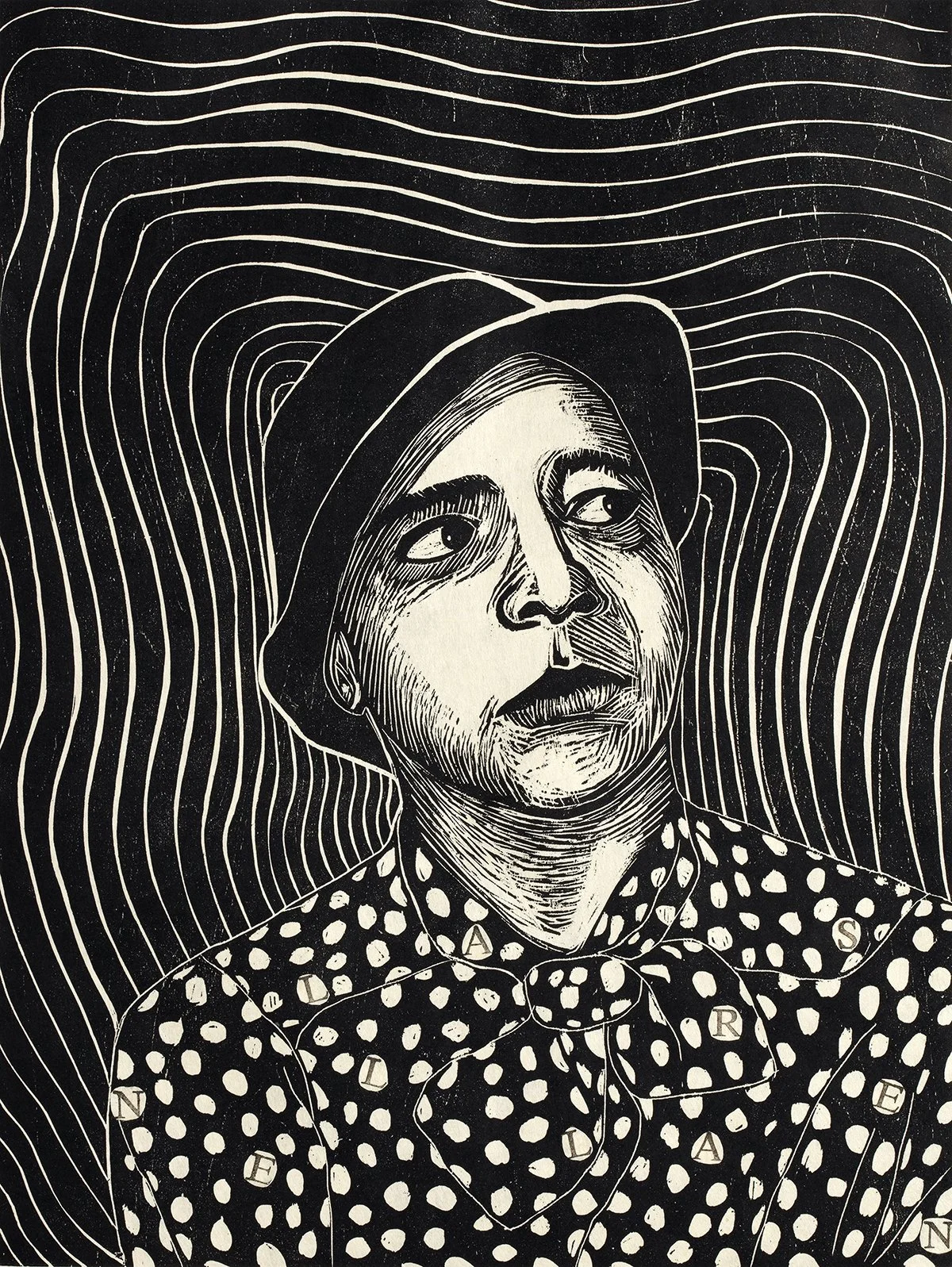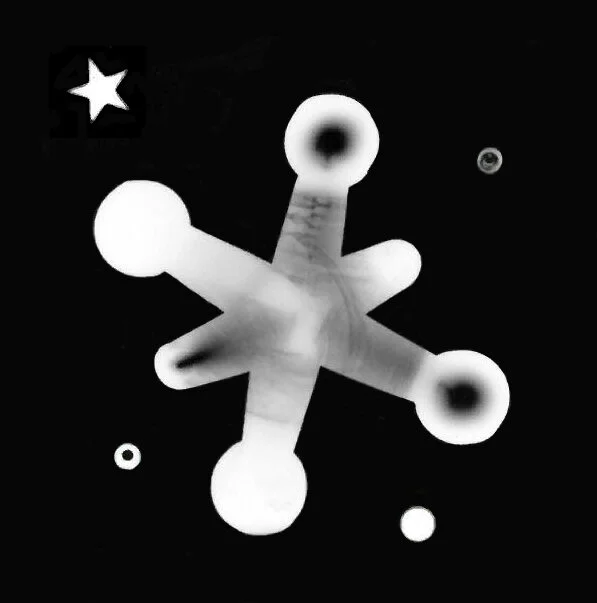

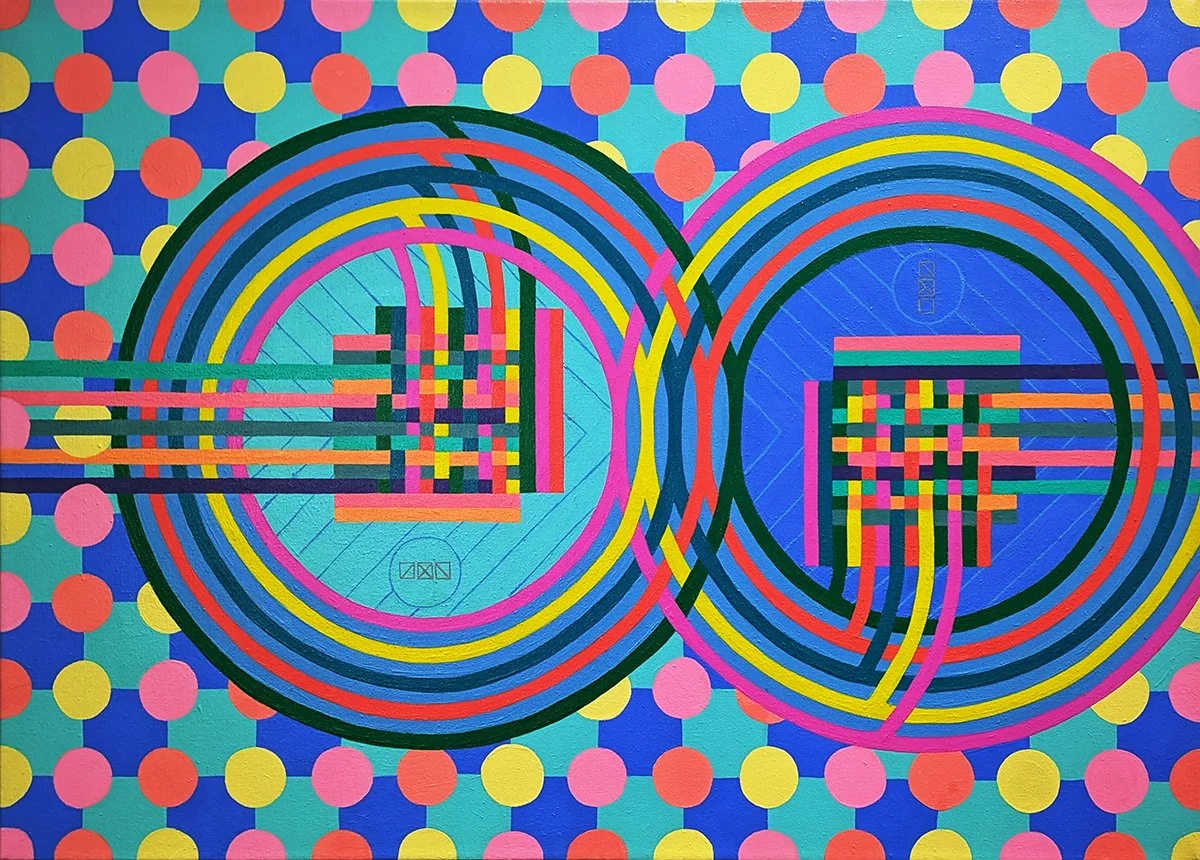
Time and Materials
Tim McKay: Time and Materials
Pirate: Contemporary Art
7130 W. 16th Avenue, Lakewood, CO 80214
March 6–22, 2026
Admission: free
Review by Maggie Sava
When was the last time you thought about how long you looked at a painting in a gallery, or considered how many labels you read as you moved through an exhibition? Have you reflected on whether the interpretive information helps you understand a painting or if you resonate more when you see with it fresh eyes? Do you ever look at an art object and wonder what tangible and intangible resources were involved in creating it?
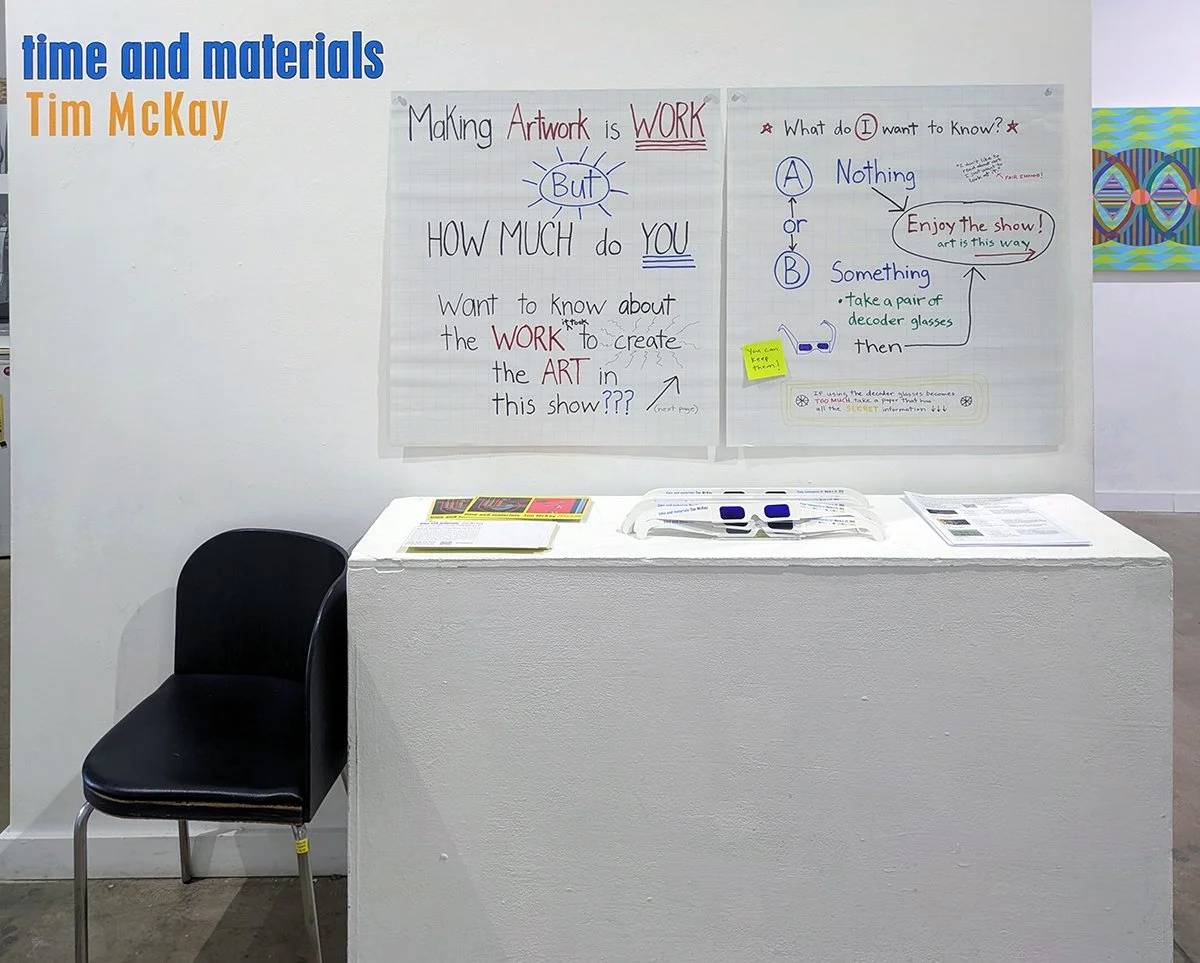
An view of the title wall and instructions in Tim McKay’s exhibition Time and Materials at Pirate: Contemporary Art in Lakewood, Colorado. Image by Maggie Sava.
Tim McKay’s solo exhibition, Time and Materials, invites viewers to engage in these meta considerations by playfully utilizing obscured labels that become legible with the use of blue lens glasses provided by the gallery. With this “opt-in” system, McKay makes the audience choose how they experience the show and how much information they are given about the art on display.
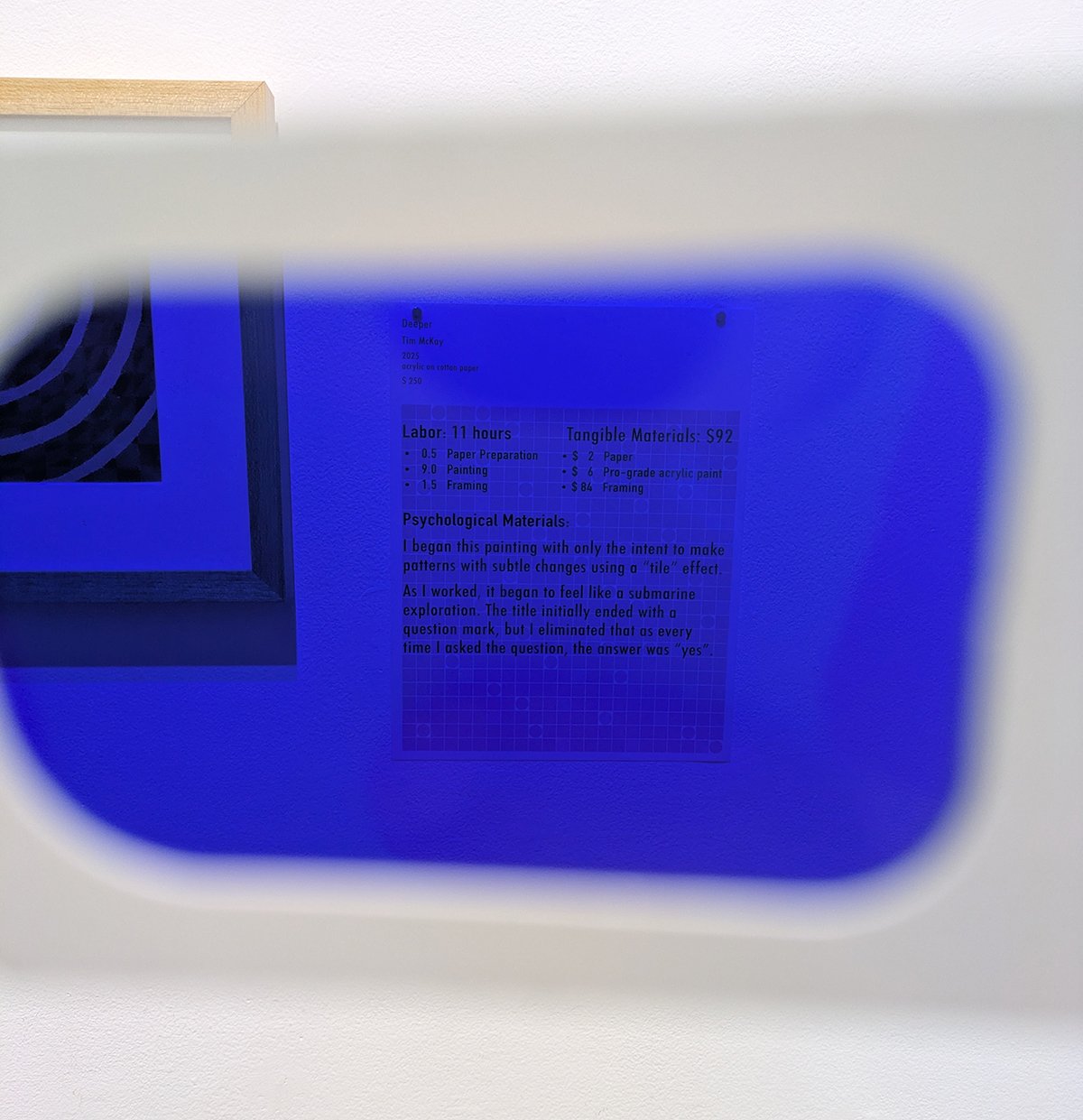
A view of an obscured label through the blue lens glasses in Tim McKay’s exhibition Time and Materials. Image by Maggie Sava.
When worn, the glasses reveal information about the hours, materials, and psychological input that went into each of the canvases. By logging these different costs, McKay deconstructs the mythology that artists seamlessly create art from some form of divine inspiration and instead emphasizes that art is labor, both physical and emotional. In a conversation I had with McKay when visiting the exhibition, he shared some of the central questions of Time and Materials: does this added context help or hinder the viewers? Does it forge stronger connections with the canvas or does it put constraints around their understanding of what they see? [1]
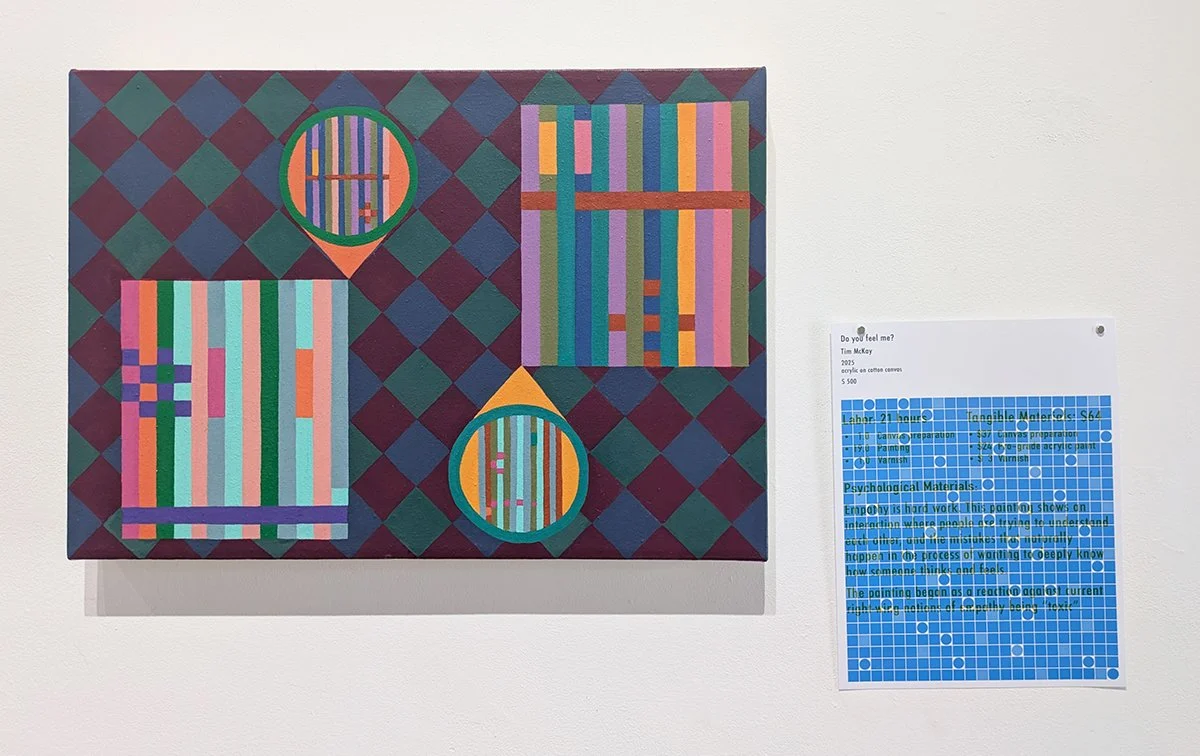
Tim McKay, Do you feel me?, 2025, acrylic on cotton canvas, 14 x 20 inches, with obscured wall label. Image by Maggie Sava.
For example, Do you feel me? shows an abstract, geometric composition of two squares in opposite corners of the foreground, portrayed against a magenta, blue, and cool green checkerboard background. The squares have distinctive patterns of colors and lines and each one appears to have a circle of emphasis—not unlike the focus of a microscope—coming off of it containing lines and patterns resembling those found in the alternate square.
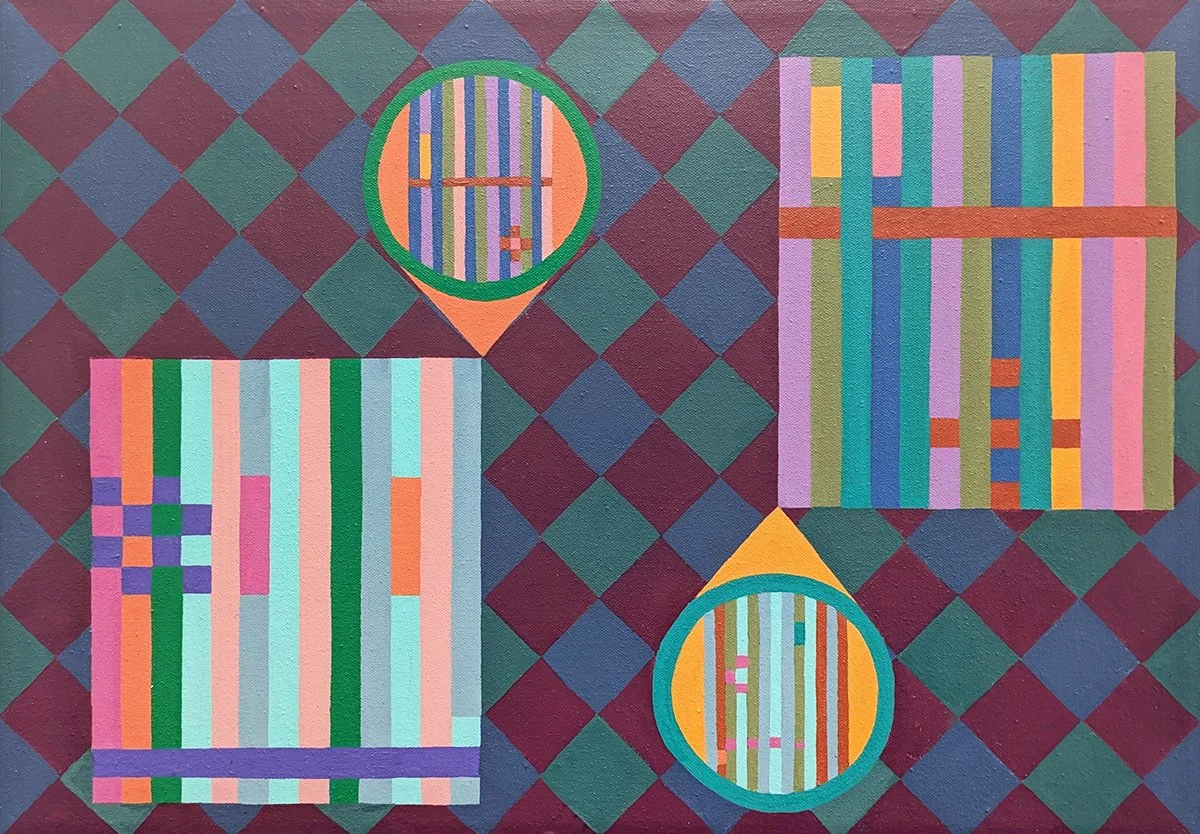
Tim McKay, Do you feel me?, 2025, acrylic on cotton canvas, 14 x 20 inches. Image by Maggie Sava.
This work could have many possible interpretations, from a depiction of computer-processing hardware to an image of protozoa-like creatures communicating to an abstract aesthetic exploration of the interplay between the psychological effects of color and pattern. With the special blue glasses, the viewer can see that this painting took 21 hours to complete, required $64 worth of materials, and was made with the notion of empathy as a difficult but worthy process of effort and error, specifically, as McKay states, in spite of “current right-wing notions of empathy being ‘toxic.’” [2]
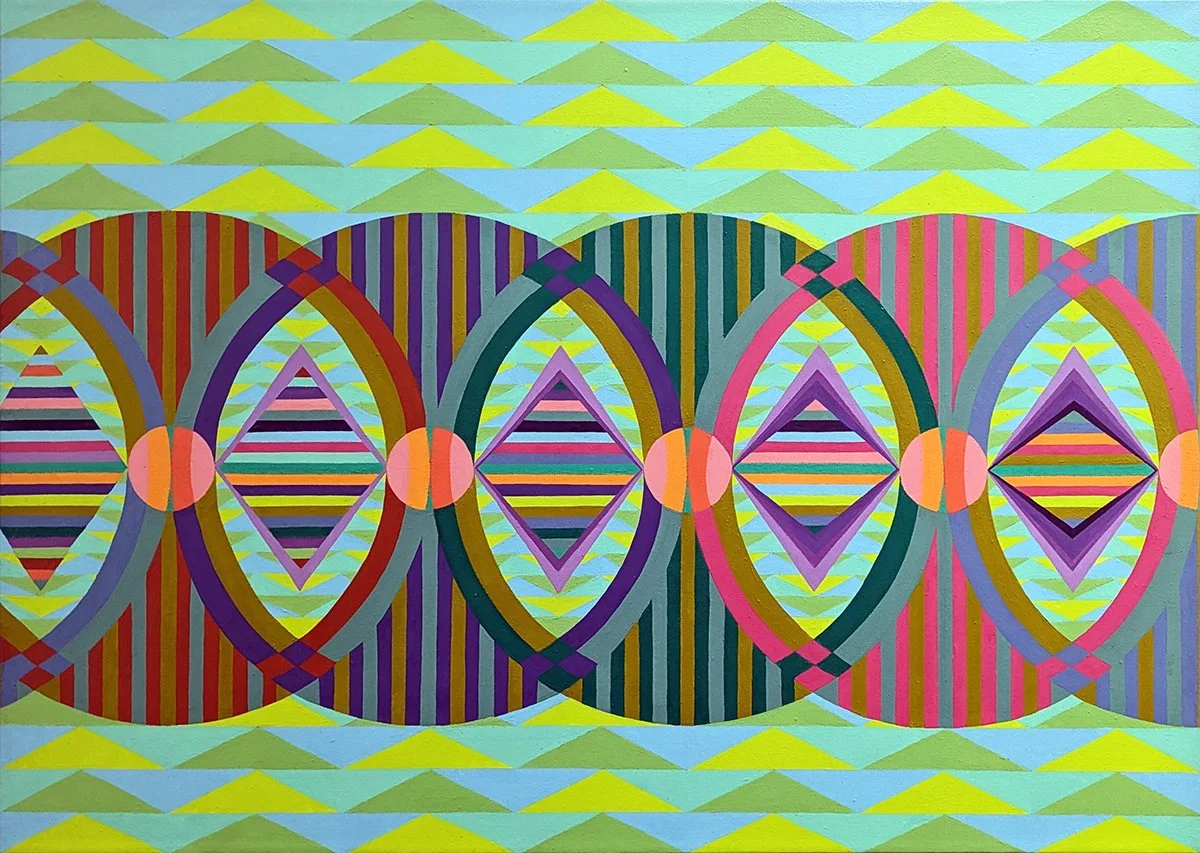
Tim McKay, Passage, 2025, acrylic on cotton canvas, 30 x 42 inches. Image by Maggie Sava.
By bringing attention to art as a construct and act of construction, an exhibition can run the risk of seeming gimmicky and can distract viewers from the thematic intricacy in order to break the fourth wall. However, McKay’s show avoids these pitfalls because of the artist's genuine personal approach to the themes and creation of his paintings. Instead of making it seem like the audience is part of some larger experiment, he invites viewers back to a sincere engagement through the emotional honesty he imbues in his canvases. Similarly to how Do you feel me? explores empathy as complicated work to see and be seen, Time and Materials straddles the line of art interpretation as both a personal projection onto objects and an attempt to better understand another person, who in this case is the artist.
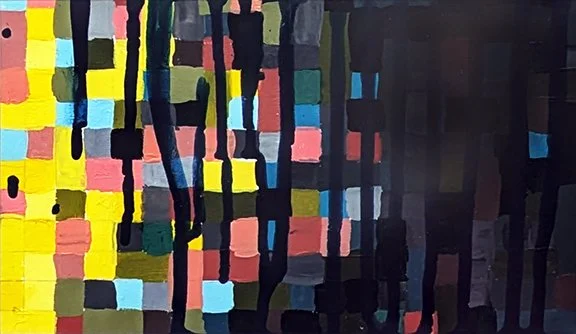
Tim McKay, Flood, 2025, acrylic on cotton paper, 6 x 10 inches. Image by Maggie Sava.
Flood is one of the first anchors of McKay’s vulnerability in this exhibition. The smaller painting on cotton paper shows a gradient of colorful squares obscured by drips of dark blue paint. Flood is distinct from the other works in the show due to its scale and degree of precision. The ghosts of pencil lines show that McKay built out this painting from the foundation of a basic grid, as he does with his other canvases. However, a closer examination reveals that some of the squares’ edges bleed into other shapes and that there are gaps where the paint does not meet. The strokes are looser than McKay’s other compositions that are made from tight, clean lines and intricate details. This softening is accentuated in the melting effect created by the overlay of paint drips.
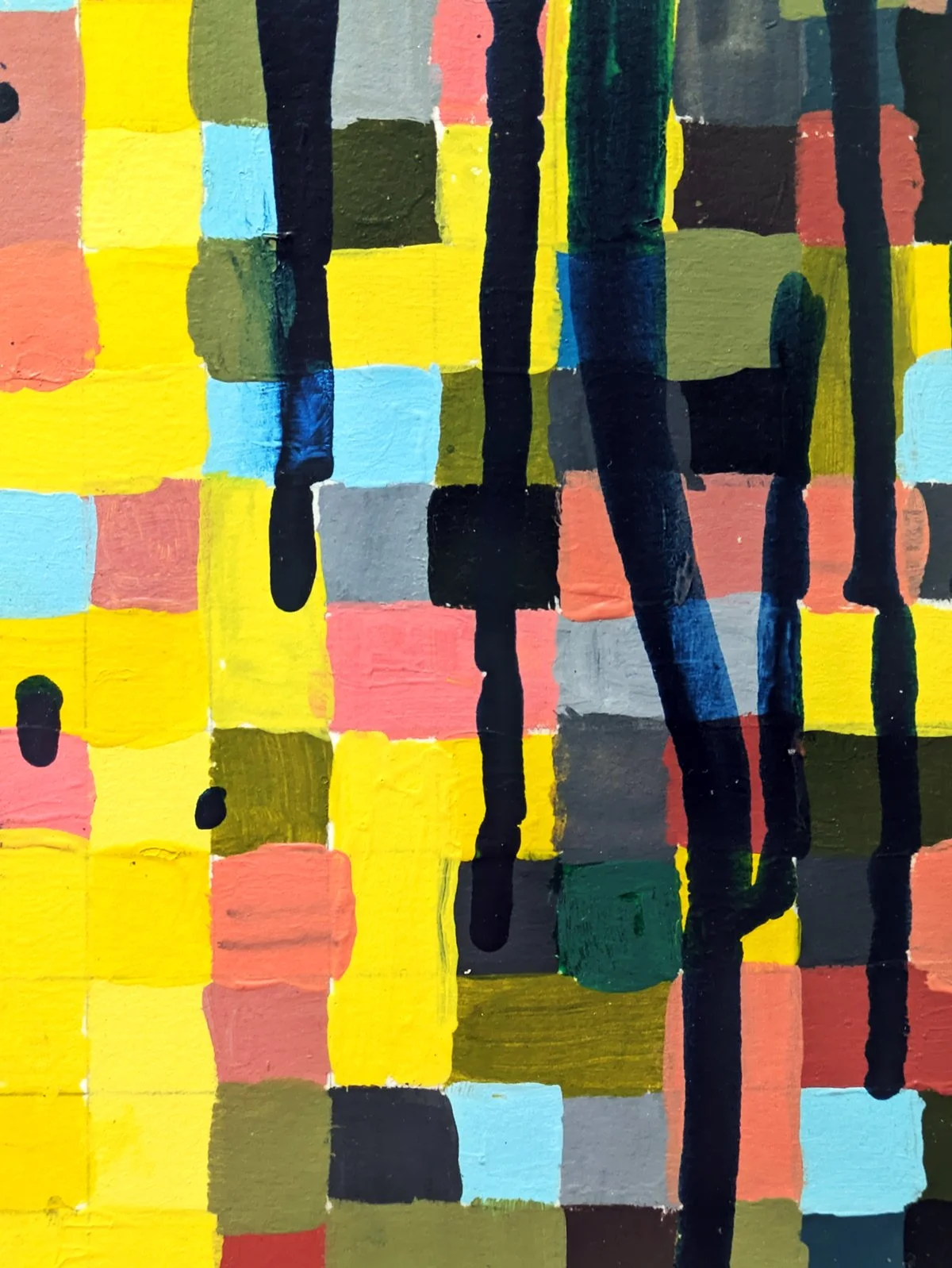
A detail view of Tim McKay’s Flood, 2025, acrylic on cotton paper, 6 x 10 inches. Image by Maggie Sava.
The context-curious viewer could learn, after putting the special blue glasses on, that this painting took seven hours, $85 of materials, and that McKay created it to capture a sensation of rapid “emotional flooding” that he experienced while starting treatment for Parkinson’s disease. As a neurological disorder that affects movement, Parkinson’s has impacted McKay’s life and artmaking process, necessitating changes to technique and greater amounts of time to complete canvases. Because Time and Materials reveals the resources required to make a painting, it also emphasizes the centrality of physical labor. In staying true to this transparency, the artist does not shy away from sharing how living with a chronic illness has impacted his embodied experience, particularly as it relates to his art.
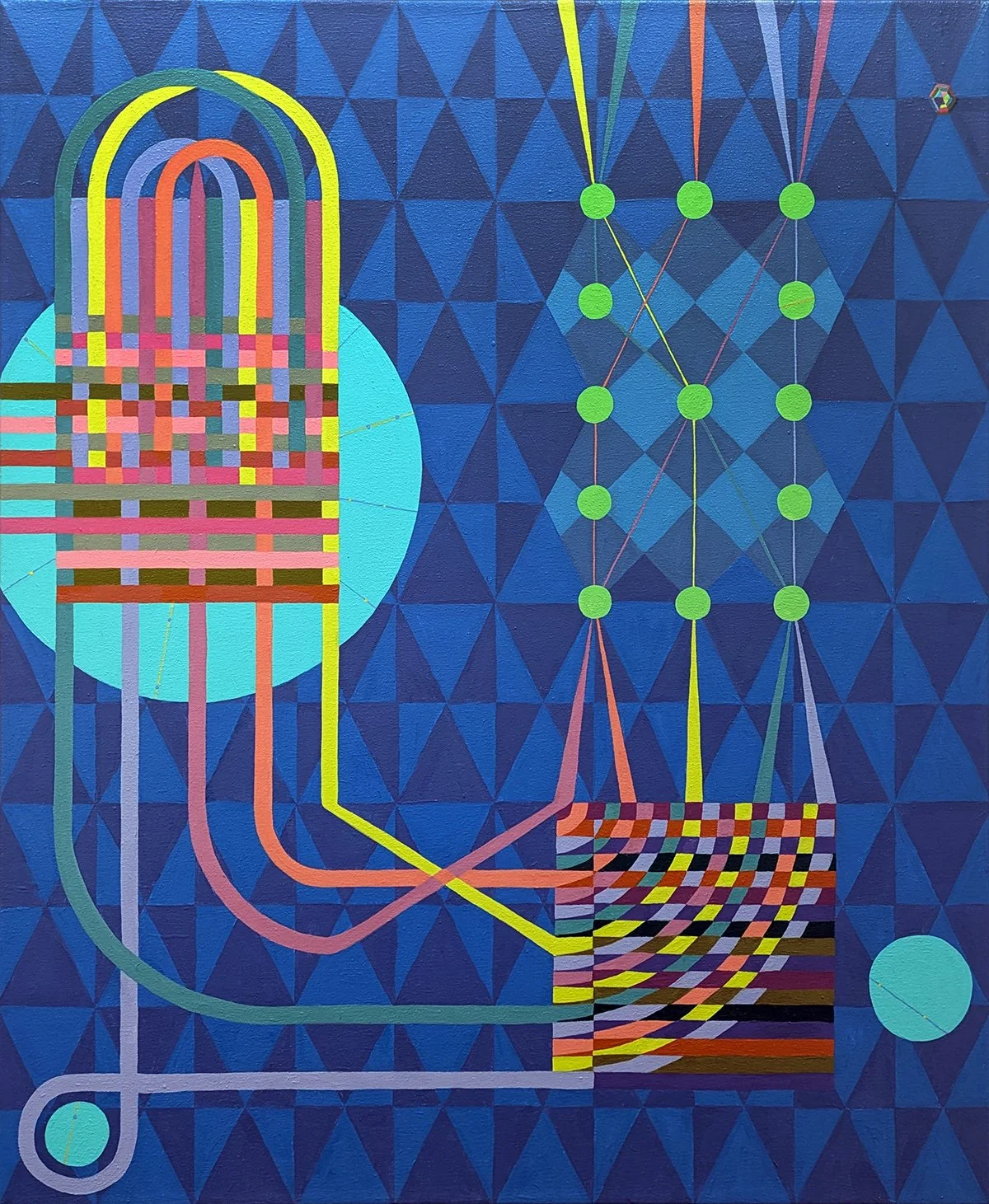
Tim McKay, Semifinals (Round Six, Homecoming), 2026, acrylic on cotton canvas, 36 x 30 inches. Image by Maggie Sava.
McKay expresses his day-to-day approach to life in his Semifinals series—four canvases that show the different ways that McKay handles personal ups and downs using the metaphor of a game. While talking with me, McKay shared that he likes to mentally prepare himself by imagining that he is in the semifinals of an undefined competition, a stage in which presence and attitude is important but in which the stakes are not so dire or final.
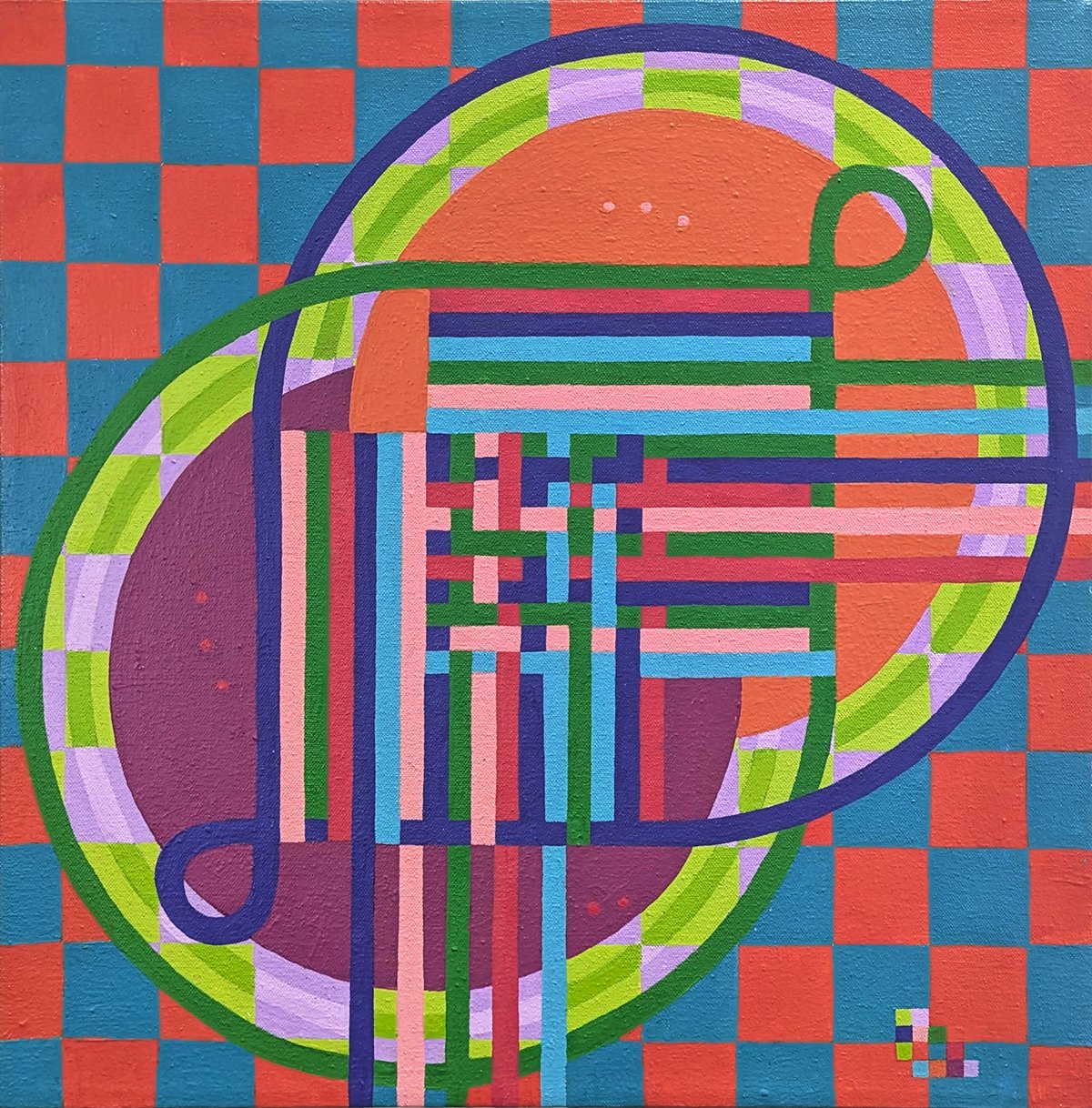
Tim McKay, Semifinals (Round Four, Face-off), 2025, acrylic on cotton canvas, 17 x 17 inches. Image by Maggie Sava.
Each painting focuses on different types of scenarios McKay moves through, such as personal confrontation in Semifinals (Round Four, Face-off) or feeling like his Parkinson’s symptoms prevent him from showing up in his life the same way as he did before in Semifinals (Round Five, Delay of Game).
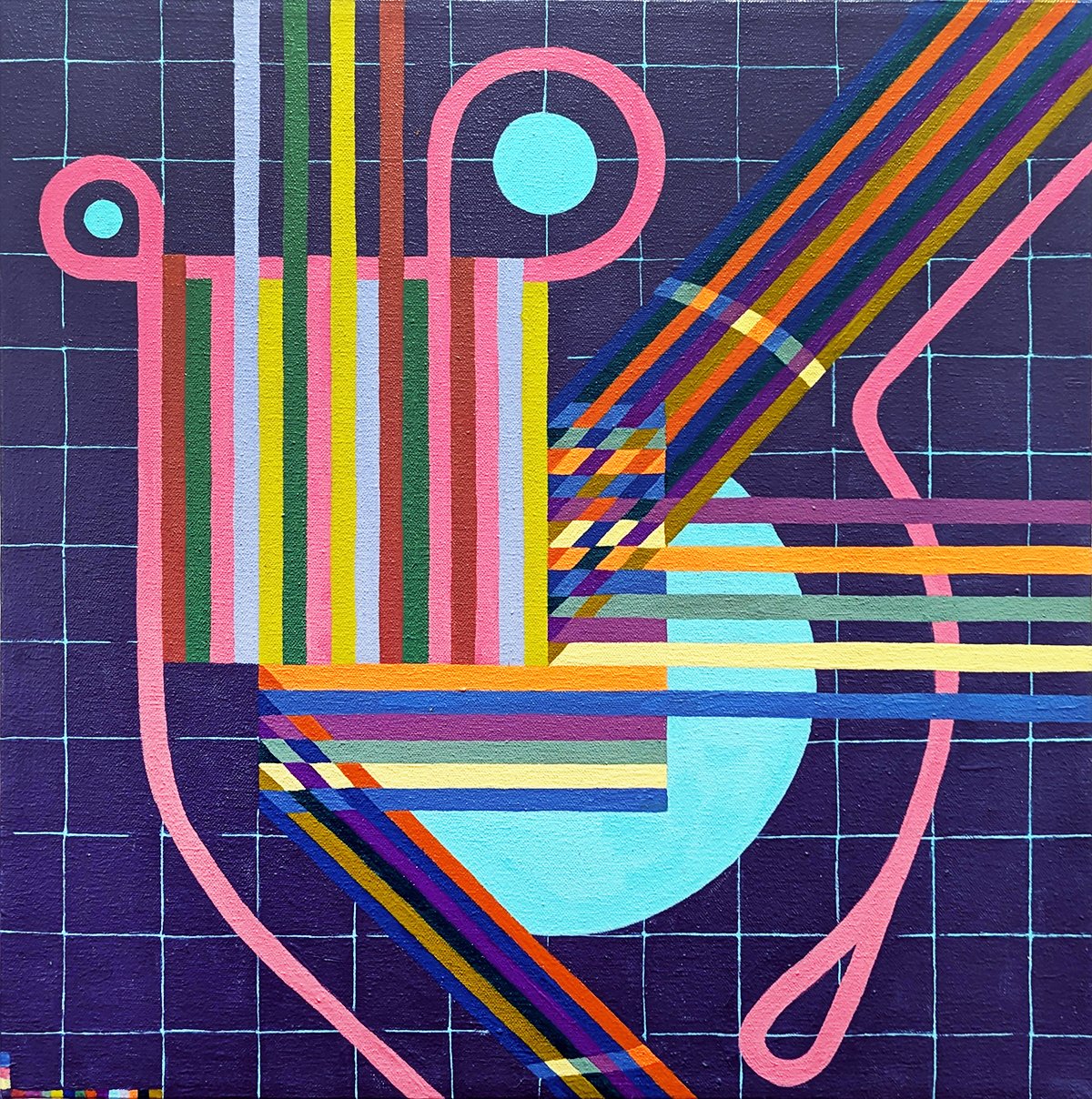
Tim McKay, Semifinals (Round Five, Delay of Game), 2025, acrylic on cotton canvas, 17 x 17 inches. Image by Maggie Sava.
In spite of offering some interpretive frameworks for his art, it is clear that McKay does not want to deliver all of the answers to the viewer. His canvases maintain a great deal of open-endedness, and his abstract compositions express ambiguity differently than figurative paintings might.
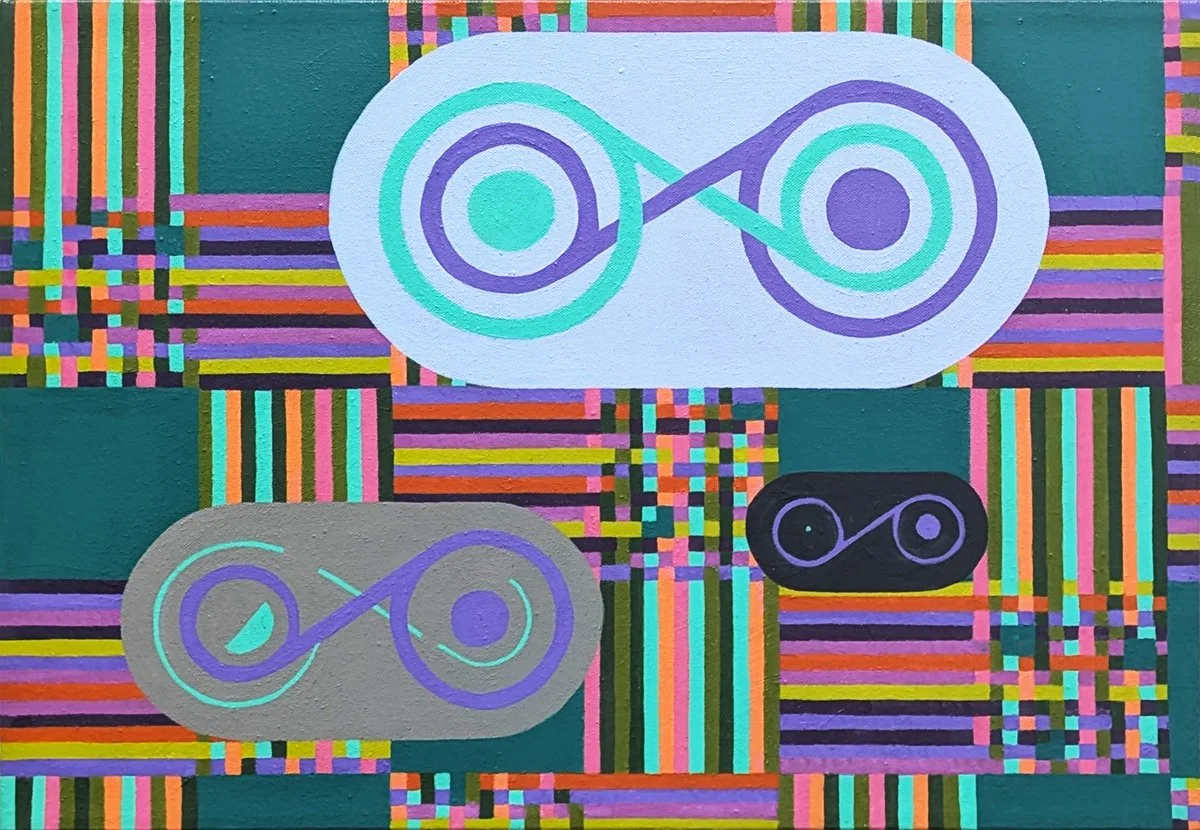
Tim McKay, Loss, 2025, acrylic on cotton canvas, 14 x 20 inches. Image by Maggie Sava.
In Loss, three varying, interlocking forms that resemble reels, or, as McKay describes, “old VHS tapes,” sit on top of colorful lines that weave together when they intersect. When I first looked at this canvas, I thought the shapes resembled eyes, or even masks. The lines reminded me of both cloth and visual static.
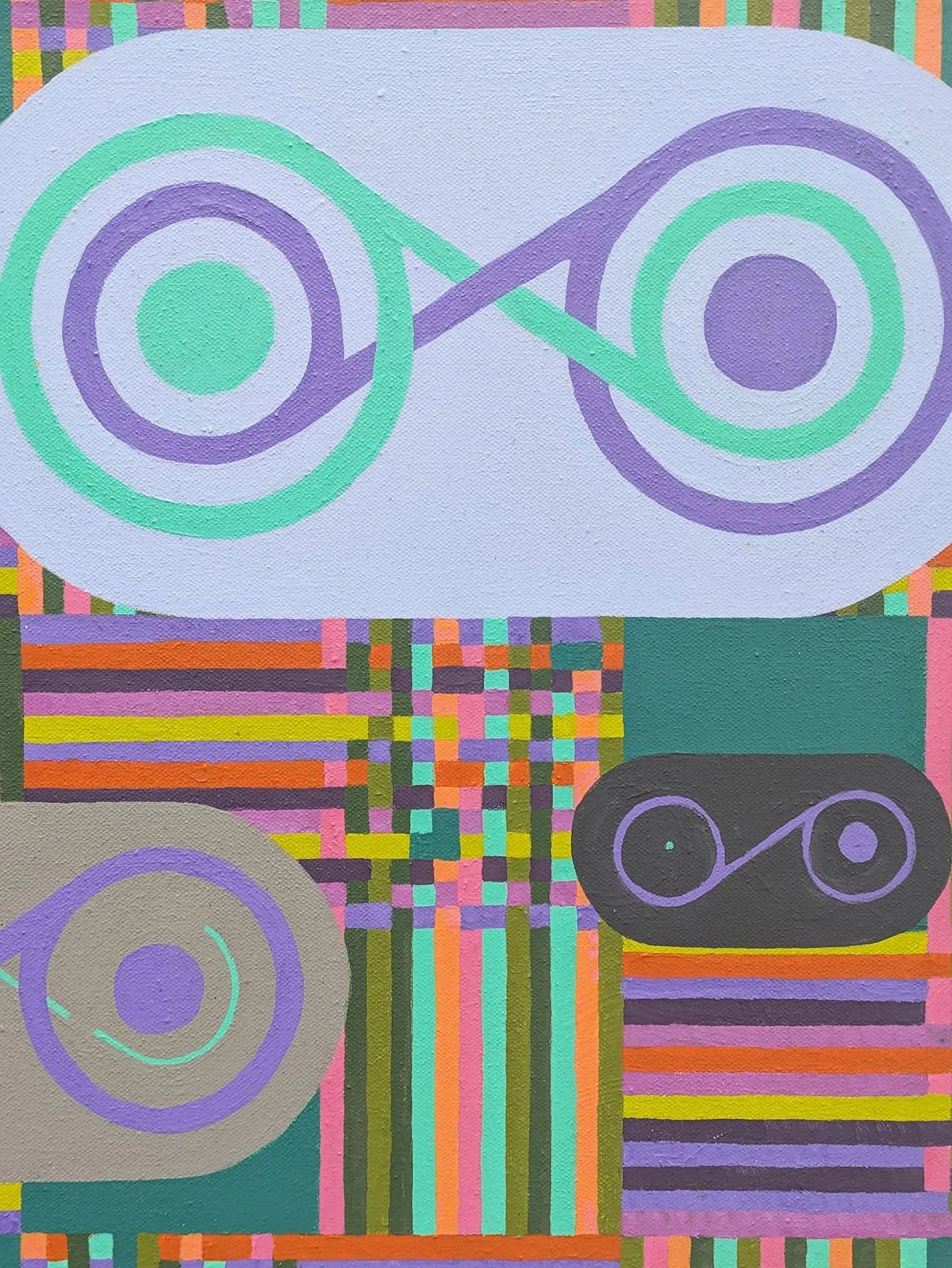
A detail view of Tim McKay’s Loss, 2025, acrylic on cotton canvas, 14 x 20 inches. Image by Maggie Sava.
Wanting to merge this visual information into a story, I looked at the label to discover that in this canvas McKay approaches the fraught, non-linear experience of loss. Loss is identified here as a broader notion, not tied to a particular experience. It could relate to a loss or losses related to McKay’s Parkinson’s diagnosis, although such an interpretation without direct indication could stem from the desire for a specific narrative. Loss is something that most, if not all, people have experienced, making it shared, and yet it is hyper-personal—no two experiences are the same. Loss exists within this oxymoronic space, attempting to create a non-specific visualization of the complexities of an experience that is always in-flux, and thus cannot be reified into a set symbolism or representation.
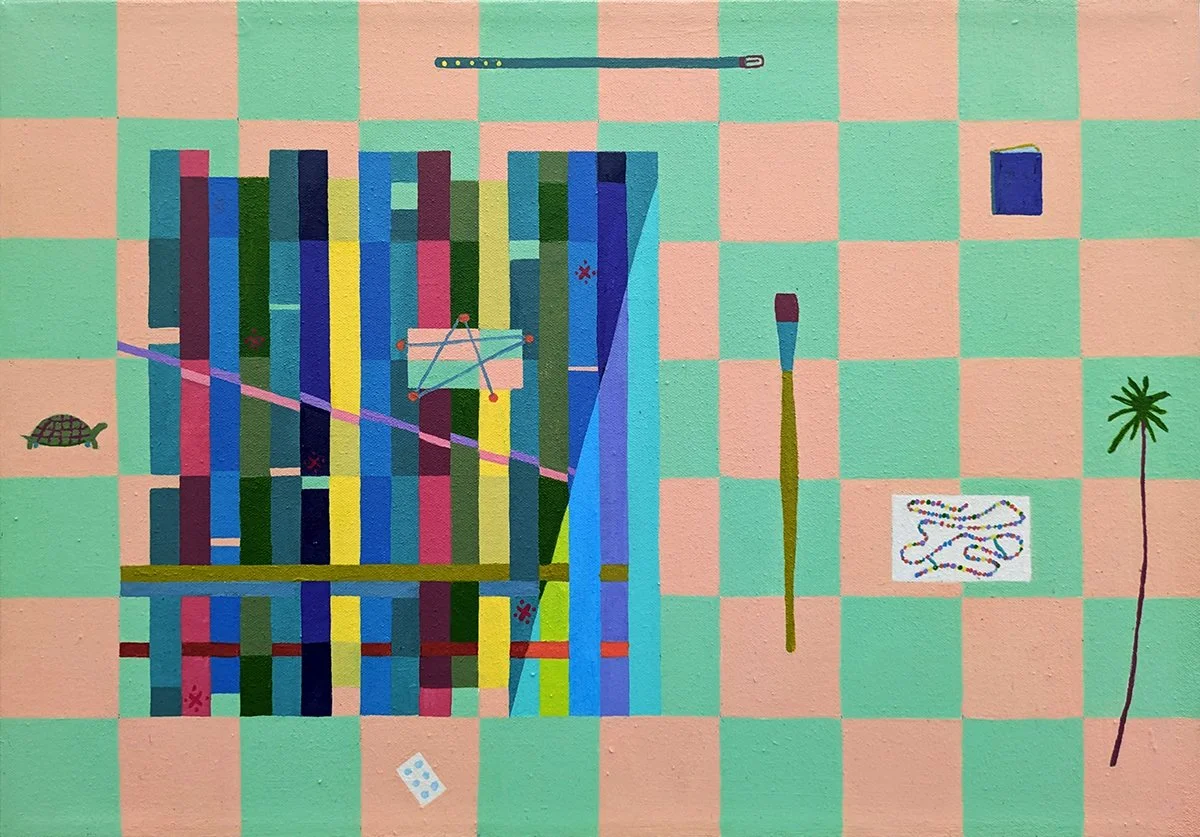
Tim McKay, Self Portrait (with Artifacts), 2025, acrylic on cotton canvas, 14 x 20 inches. Image by Maggie Sava.
As Loss shows, McKay toys with being both earnest and vague, offering a personal touch without complete divulsion. Even his more figurative paintings refuse singular, easy readings. Self Portrait (with Artifacts) is not, as you might expect, a depiction of McKay’s visage or physical form. Instead, as with his other paintings, he maps interiority along a grid and field of color to indicate that “some traits are private, some public.” [3] While the image of a paintbrush seems like an obvious connection to his art practice and the palm tree could evoke the years he lived in Southern California, the other artifacts, like the strand of beads and the blue book, do not lend themselves to such clear interpretations.
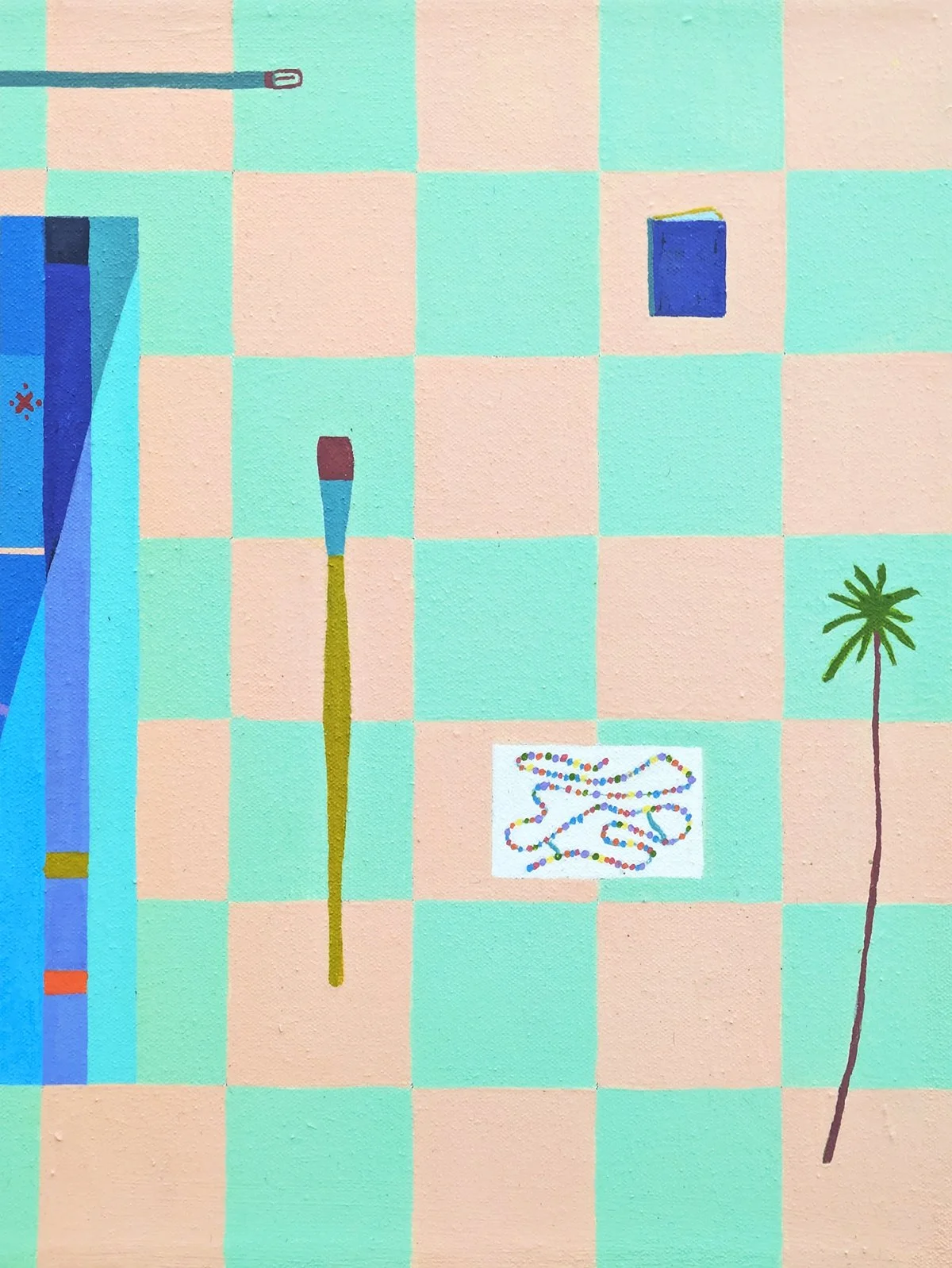
A detail view of Tim McKay’s Self Portrait (with Artifacts), 2025, acrylic on cotton canvas, 14 x 20 inches. Image by Maggie Sava.
Despite only taking up only half of Pirate: Contemporary Art’s gallery space, Time and Materials is a hefty show. McKay expands its breadth by engaging with playfulness as well as handling heavier topics. The exhibition honors materials as much as it does emotional and psychological experience, and it divulges the labor of the artist while asking viewers to engage in their own interpretative work.
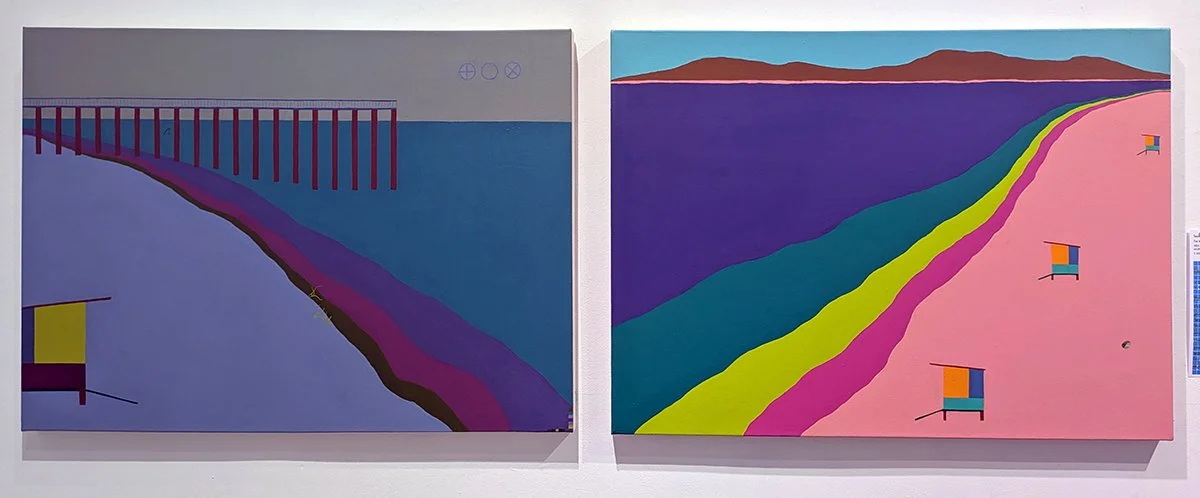
Left: Tim McKay, Santa Monica (South, Pier), 2025, acrylic on cotton canvas, 30 x 42 inches. Right: Tim McKay, Santa Monica (North), 2025, acrylic on cotton canvas, 30 x 42 inches Image by Maggie Sava.
McKay identifies with art historical inspiration, such as from color field artists who focused on the meditative potential created by different combinations of hues. He also draws on his professional history as a software designer, evidenced in his experimentation with information networks both visually and thematically. This choose-your-own-adventure exhibition is one that can be seen twice in a row, with each experience being distinct from the other. However, do not wait too long to visit, because it will wrap up on March 22.
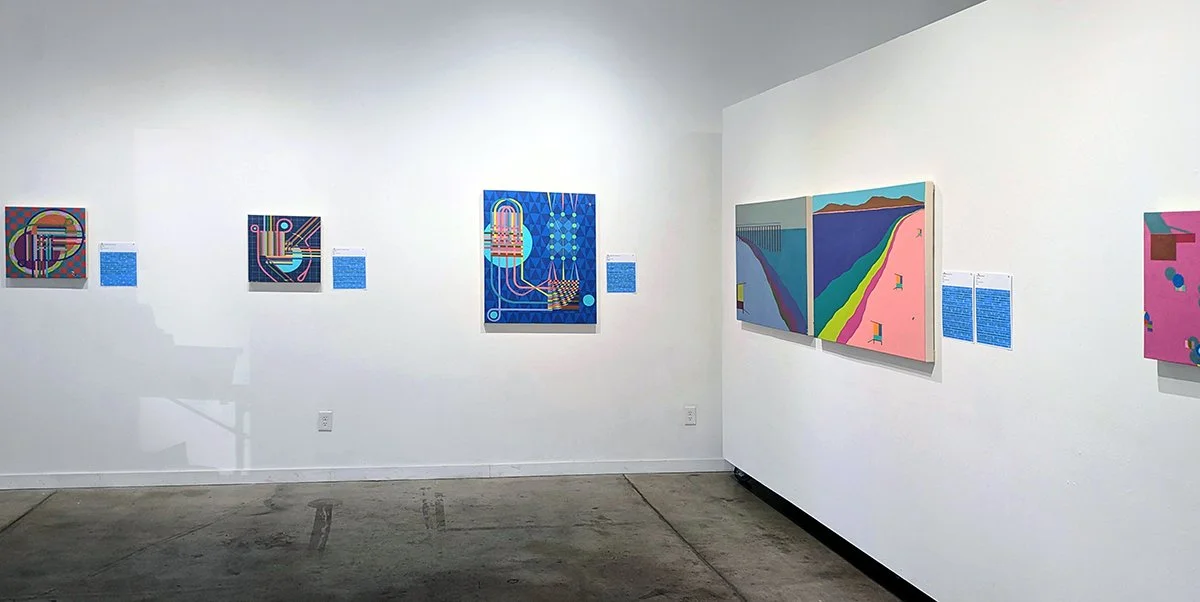
An installation view of Tim McKay’s exhibition Time and Materials at Pirate: Contemporary Art in Lakewood. Image by Maggie Sava.
For those interested in hearing directly from the artist, McKay is hosting a Zoom session on Wednesday, March 18 at 7:00pm, where he will be doing a studio tour and answering questions about the art in Time and Materials. More information on the event can be found at https://mckayfineart.com/time-and-materials-at-pirate-contemporary-art-march-6-22/.
Maggie Sava (she/her) is an art historian and writer based in Denver. She holds a BA in art history and English, creative writing from the University of Denver and an MA in contemporary art theory from Goldsmiths, University of London.
[1] From my conversation with the artist, March 12, 2026, and Tim McKay, artist’s statement, Time and Materials at Pirate: Contemporary Art in Lakewood, CO, March 6-22, 2026.
[2] Object label for Do you feel me?, 2025 by Tim McKay in the exhibition Time and Materials at Pirate: Contemporary Art in Lakewood, CO, March 6-22, 2026.
[3] Object label for Self Portrait (with Artifacts), 2025 by Tim McKay in the exhibition Time and Materials at Pirate: Contemporary Art in Lakewood, CO, seen on March 8, 2026.