
Look Again: Portraits of Daring Women
Julie Lapping Rivera: Look Again: Portraits of Daring Women
Loveland Museum
503 N. Lincoln Avenue, Loveland, CO 80537
December 6, 2025–April 4, 2026
Admission: Loveland resident: $7, non-resident: $10, children 12 and under: free
Artist Talk: Friday, March 20, 6pm
Woodcut Class: Saturday, March 21, 10am–4pm
Review by Raymundo Muñoz
On display at the Loveland Museum and overlapping with Colorado’s Month of Printmaking, is an exhibition by Massachusetts-based printmaker Julie Lapping Rivera. The show invites us to reacquaint ourselves with accomplished women in history that deserve a little more consideration. Inspired by the New York Times obituary series “Overlooked,” Look Again: Portraits of Daring Women consists of woodcut and collage portraits of an international selection of past female trailblazers: artists, writers, scientists, activists, and beyond.
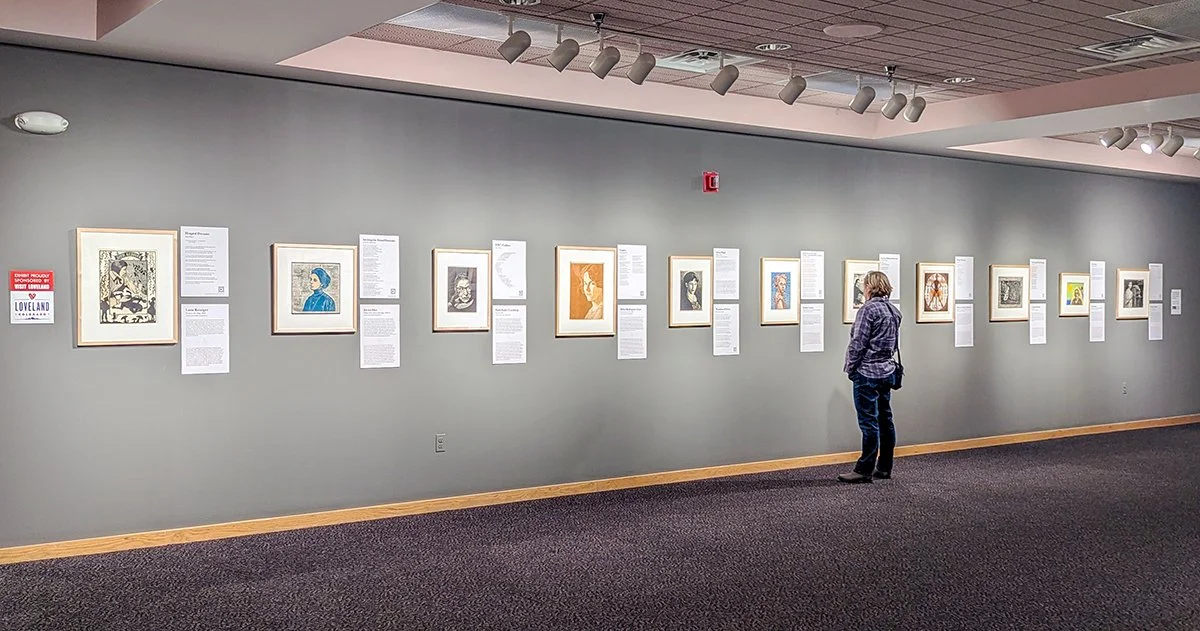
An installation view of Julie Lapping Rivera’s exhibition Look Again: Portraits of Daring Women at the Loveland Museum. Image by Raymundo Muñoz.
Along with short bios on the subjects, the exhibition presents Rivera’s detailed works with portrait poems by female poets. It’s a content-rich and inspired series that developed from anger initially, but blossomed into an ongoing and evolving meditation on truth, bravery, diversity, and positivity in a dark world. In addition to drawing information from the curatorial copy, I spoke with Rivera by phone to gain more insight into the project.
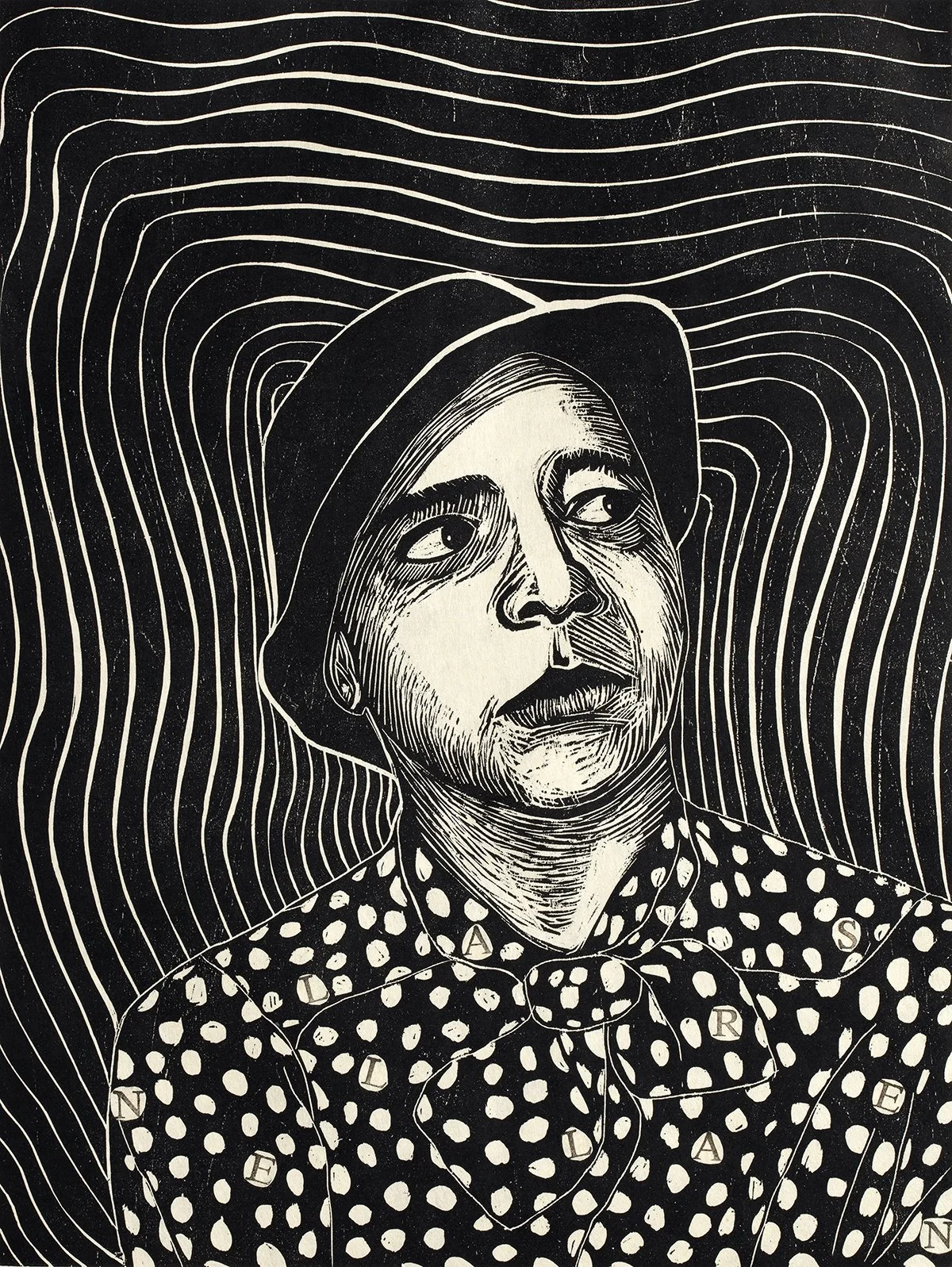
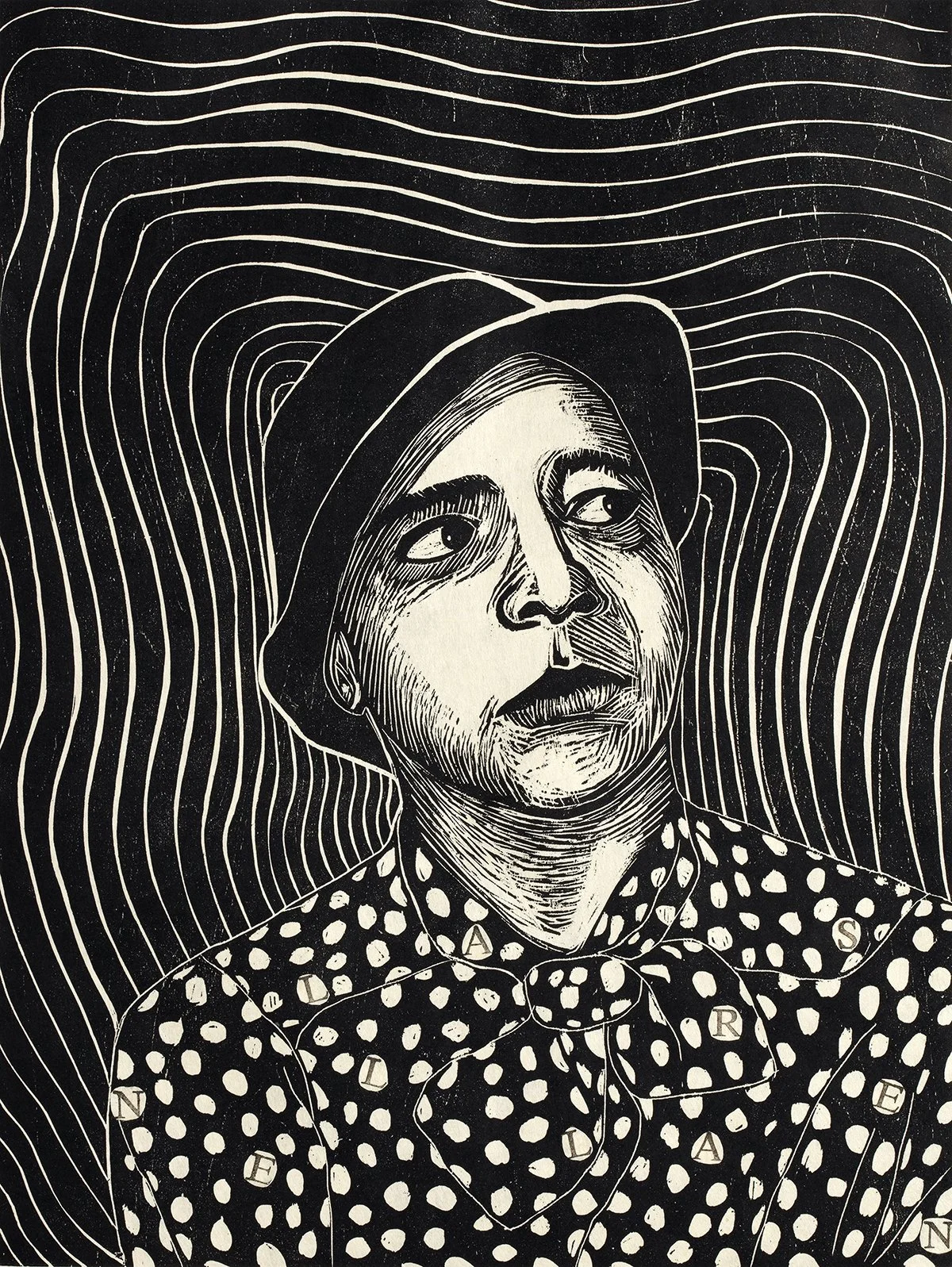
Julie Lapping Rivera, Nella Larsen, 2018, woodcut. Image courtesy of artist.
The key to the impact of Rivera’s works is, well, her keys. That is, the primary carved blocks that give structure to the compositions. It’s the deep, dark seduction of a black and white print that a single block makes possible, and it’s easy to want to stop there. Nella Larsen, the first work in the series, is a punchy piece—rich with wavy lines and polka dots that frame the subject’s face, further enhanced by the wood grain peeking through.
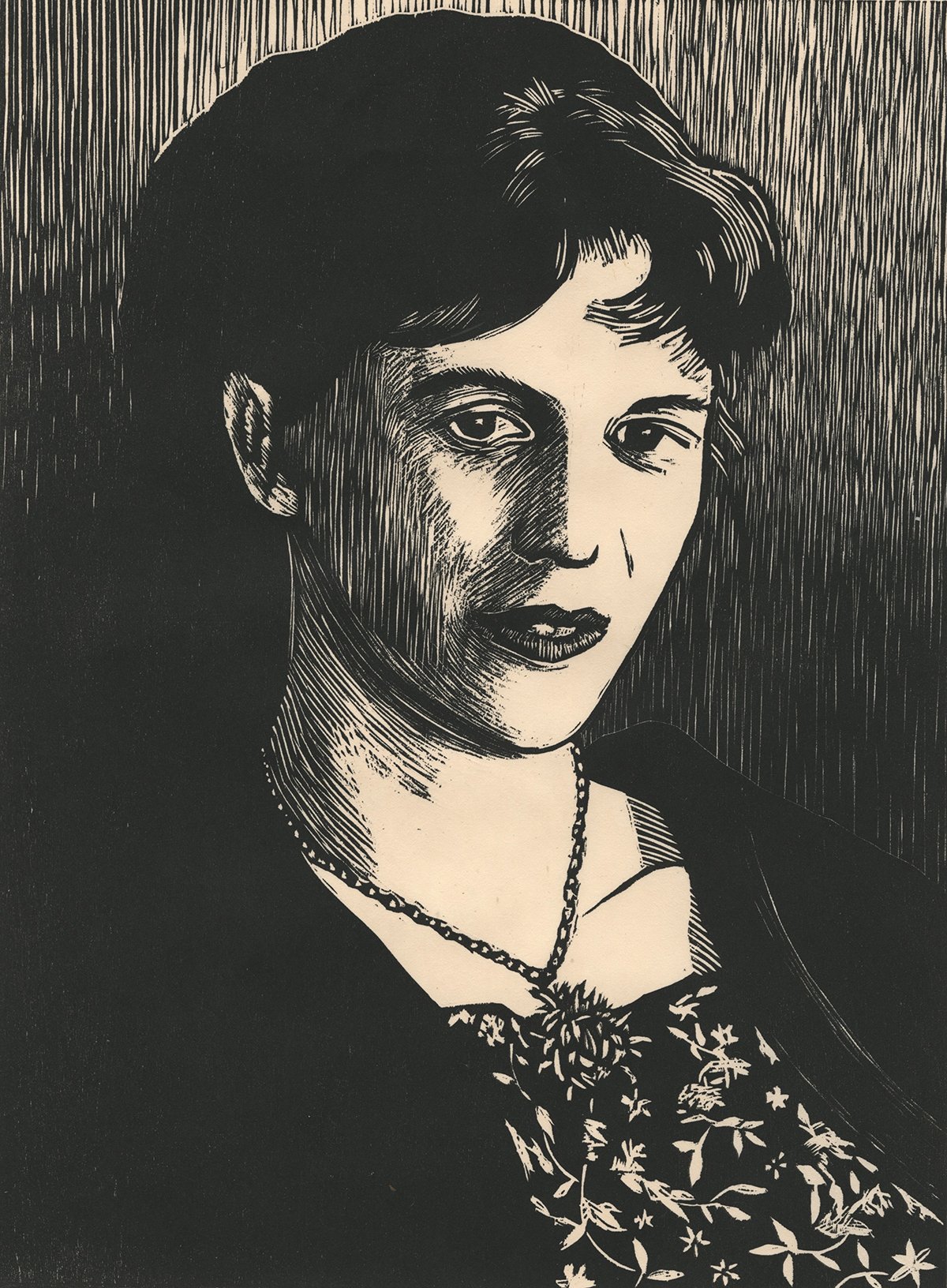
Julie Lapping Rivera, Sylvia Plath, 2021, woodcut. Image courtesy of artist.
Or, consider the artist’s Sylvia Plath portrait, specifically the tiny highlight under the author's nose, cutting the shadow and tying the eyes and mouth together. It’s a beautiful detail among many in the exhibition, revealing the artist’s expert carving and drafting skills.
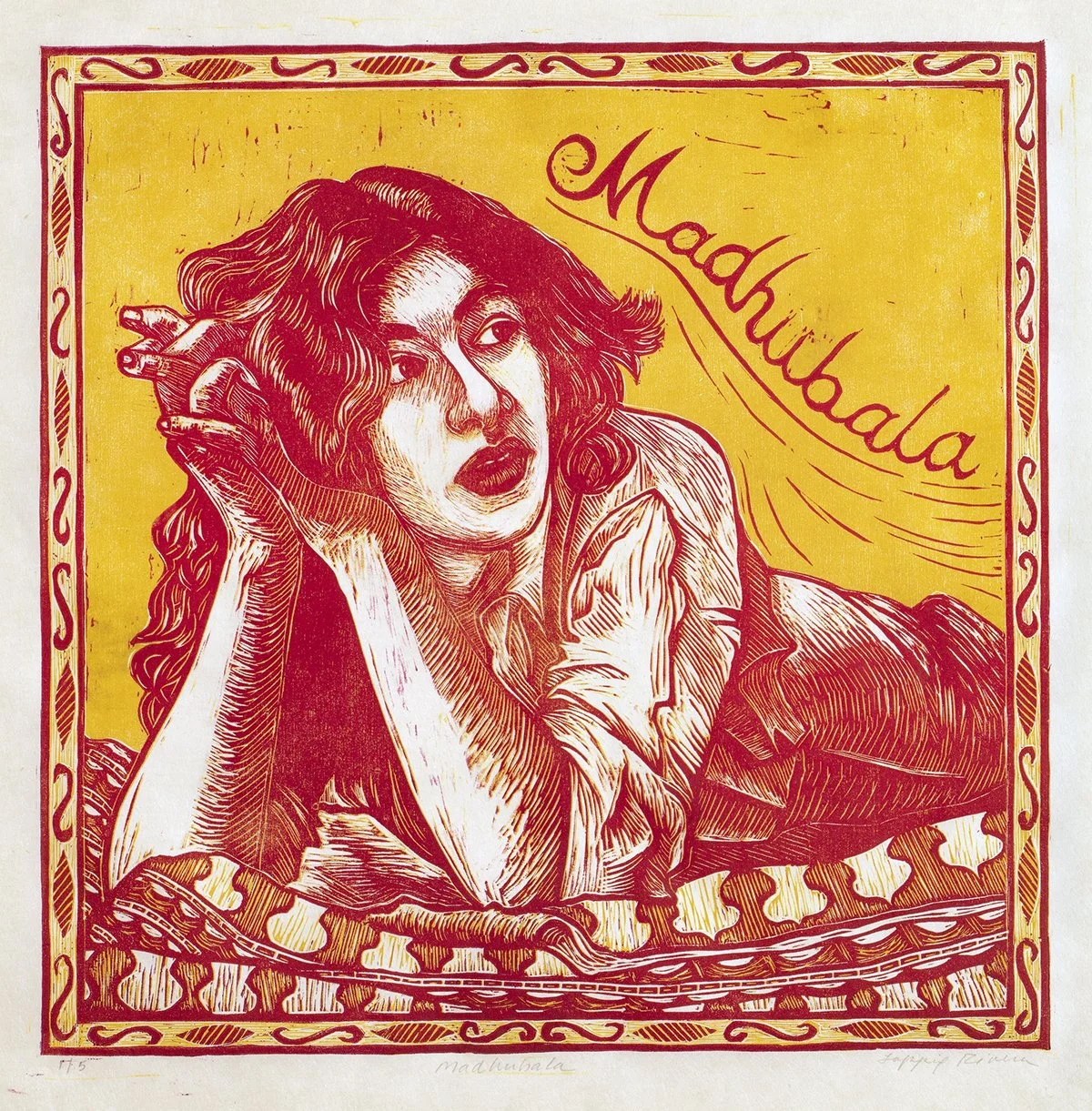
Julie Lapping Rivera, Madhubala, 2019, color reduction woodcut. Image courtesy of artist.
Woodcut relief printmaking is a great medium for producing high contrast images, but it can also be a little too graphic—like taking someone’s picture with a spotlight. Rivera coaxes softness out of the bold images with deftly carved linework and smart color choices. A black key print of Indian actress Madhubala would be gorgeous enough, but ultimately going with warm tones on a cream paper imbues the print with a quality that reminds me of saffron and turmeric.
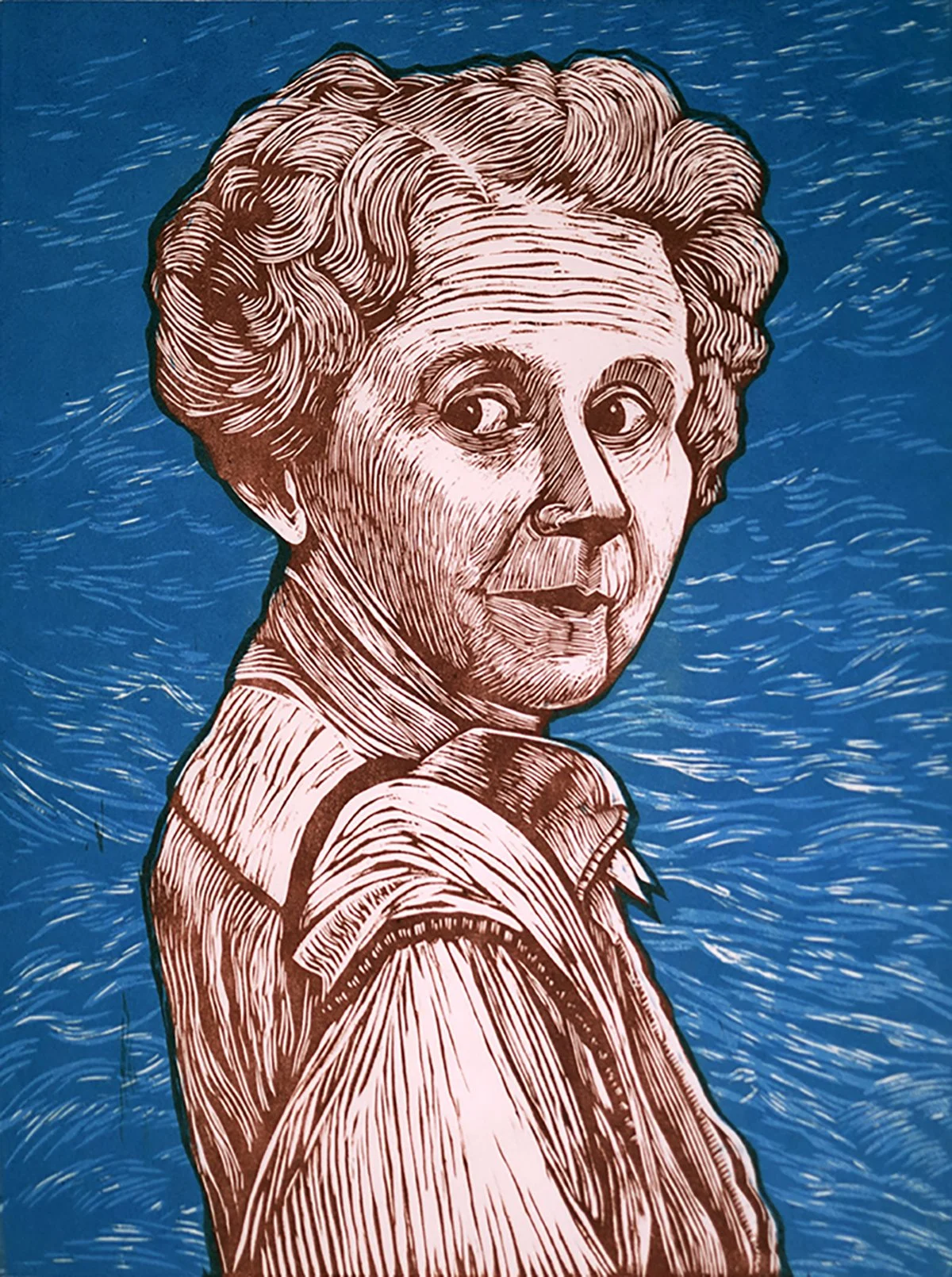
Julie Lapping Rivera, Rachel Carson, 2020–2021, multiple block and color reduction woodcut. Image courtesy of artist.
Her multiblock portrait of ecological activist and marine biologist Rachel Carson absolutely pops with brownish red and light blue on cream paper, softened a bit with a color reduction in the water background. Note the slight overlap of layers, creating a darker border that emphasizes the subject.
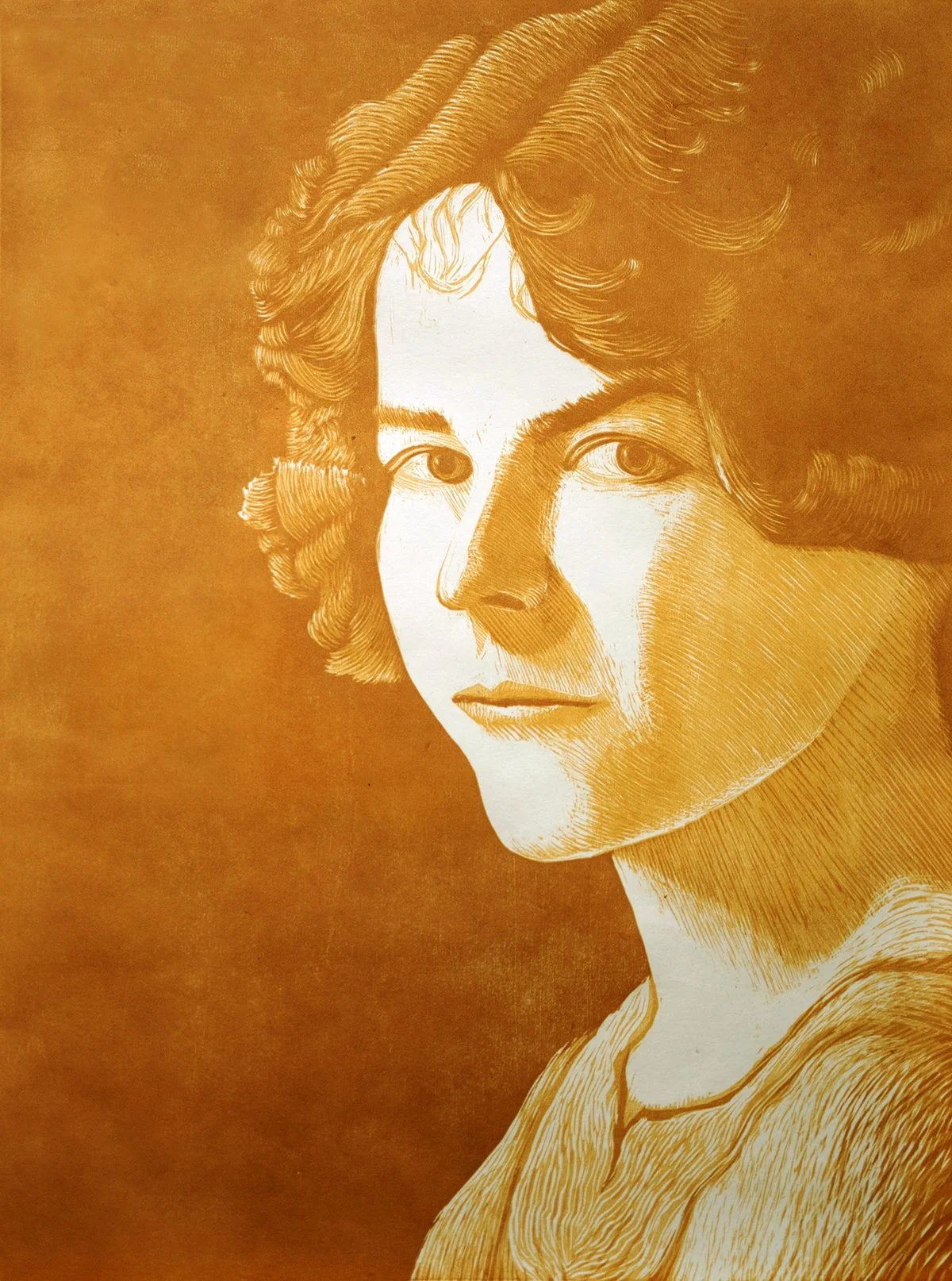
Julie Lapping Rivera, Helen Rodriguez-Trias, 2024, color reduction woodcut. Image courtesy of artist.
In contrast, her portrait of public health advocate Helen Rodgriguez-Trias feels like an antique photo, amazingly soft and delicate for a medium that tends to be the opposite. Rivera achieved this effect by printing successive tonal layers of the same color with only subtle and fine changes each time, in effect building smooth midtones. She describes discovering this technique as a “breakthrough moment.”
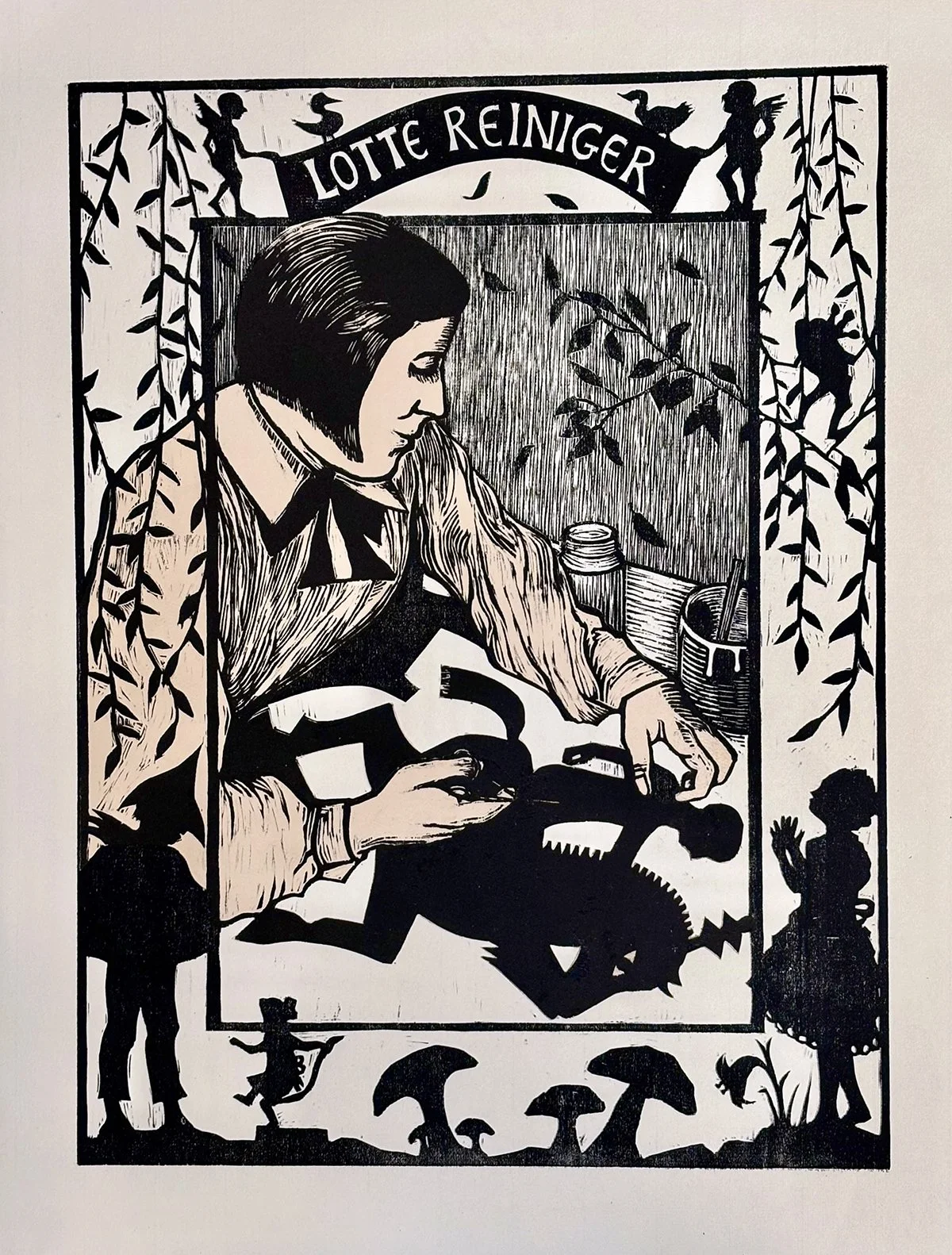
Julie Lapping Rivera, Lotte Reiniger, 2023, woodcut with collage. Image courtesy of artist.
Along with refining her basic craft, Rivera used the series as a way to experiment, employing different design approaches and “lots of trial and error” to better “channel the energy of the subject.” Consider her Lotte Reiniger portrait with its playful silhouette border depicting fairy tale characters, mushrooms, and vines. Combined with the central image of Reiniger creating a character for one of her animations, it’s a fun design choice that works particularly well.
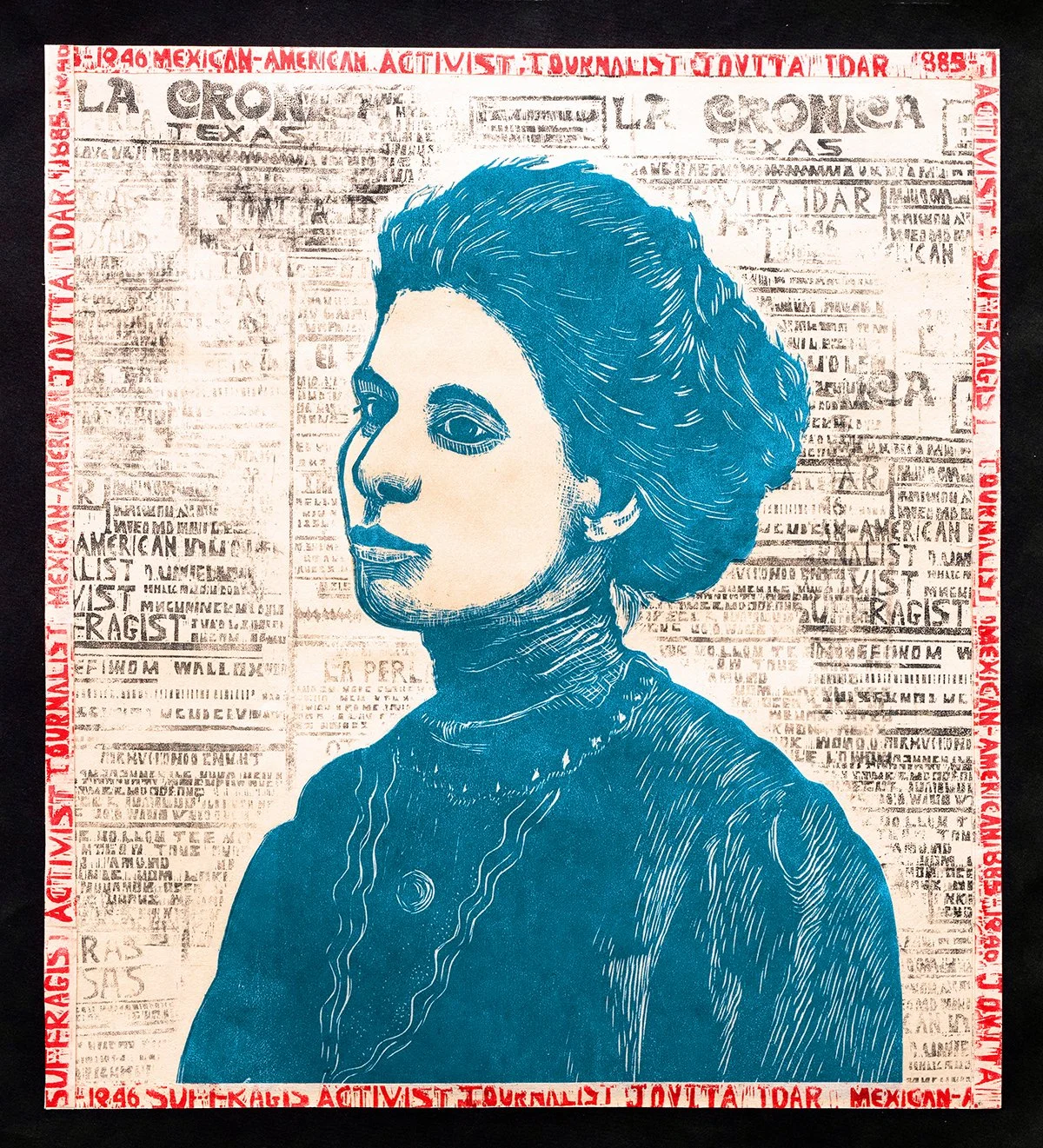
Julie Lapping Rivera, Jovita Idar, 2022–2024, multiple block woodcut with collage. Image courtesy of artist.
Her multiblock woodcut portrait of Jovita Idar, meanwhile, employs collage and a newspaper-like background that underscores the subject’s progressive story as a Mexican activist and newspaper editor.
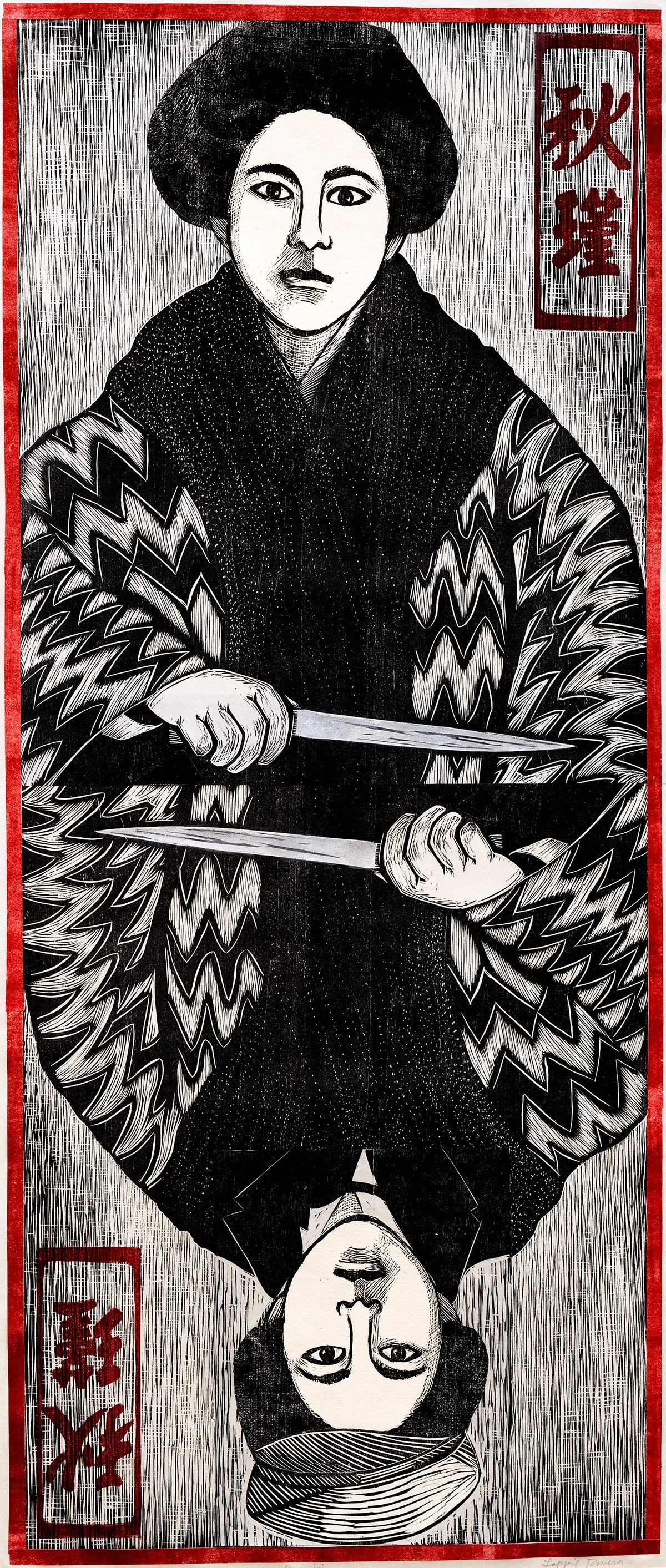
Julie Lapping Rivera, Qiu Jin, 2019, multiple block woodcut with collage. Image courtesy of artist.
Rivera’s multiblock woodcut of China’s “Joan of Arc,” Qiu Jin, is enhanced with collage elements like a doubled, upsidedown composition, an added hat on the bottom image, and a blood-red border and calligraphy. Considering Jin’s larger-than-life story of abandoning gender norms, reinventing her life in Japan, fighting against China’s Imperial forces, and her eventual public beheading, Rivera’s daring design choices help suggest the spirit of a life that was larger than most.
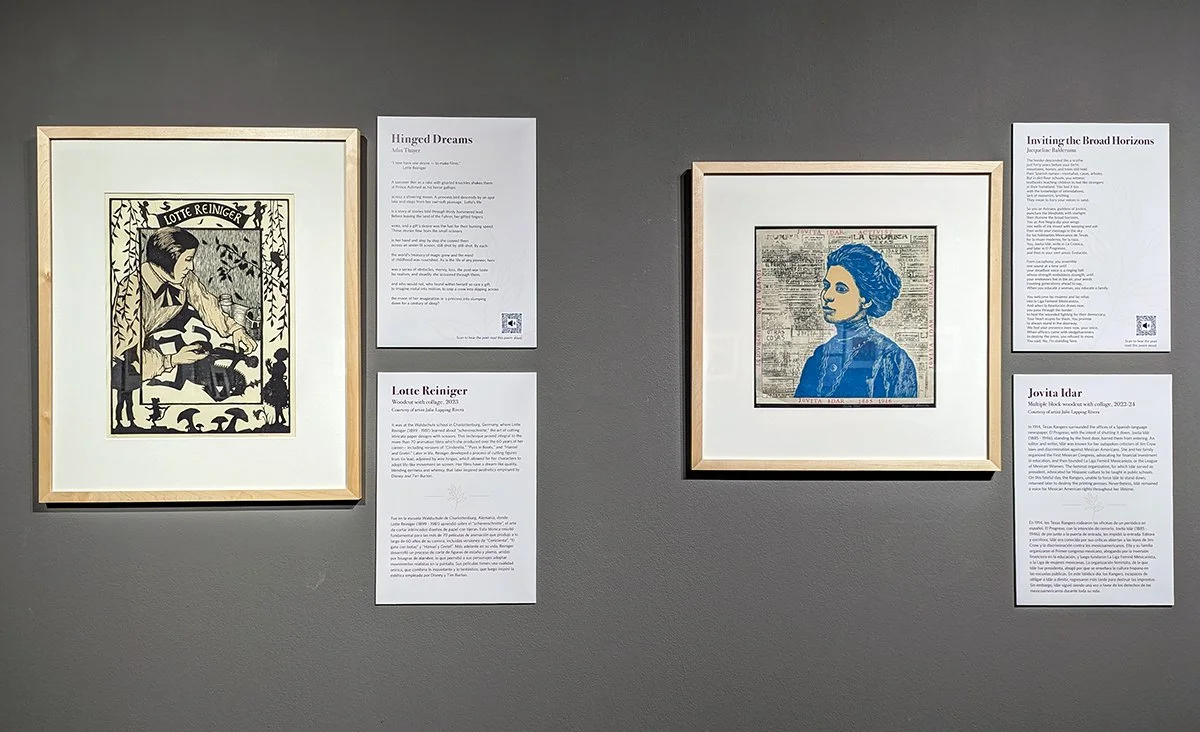
A view of works by Julie Lapping Rivera and the accompanying poems. On the left: Lotte Reiniger; on the right: Jovita Idar. Image by Raymundo Muñoz.
Further enhancing the printmaker’s imaginative yet respectful works are poems from, appropriately, women poets. She regards the poems as “another piece of the diversity of this project,” and has collaborated with about twenty poets so far. Rivera initially reached out to poets she met at past international residencies, but later expanded her literary collaborators to include a Massachusetts-based collective of women poets. Each poet is usually given the portrait first, and the resulting poem is a combination of responses to the portrait and their own research into the subject’s personal history.
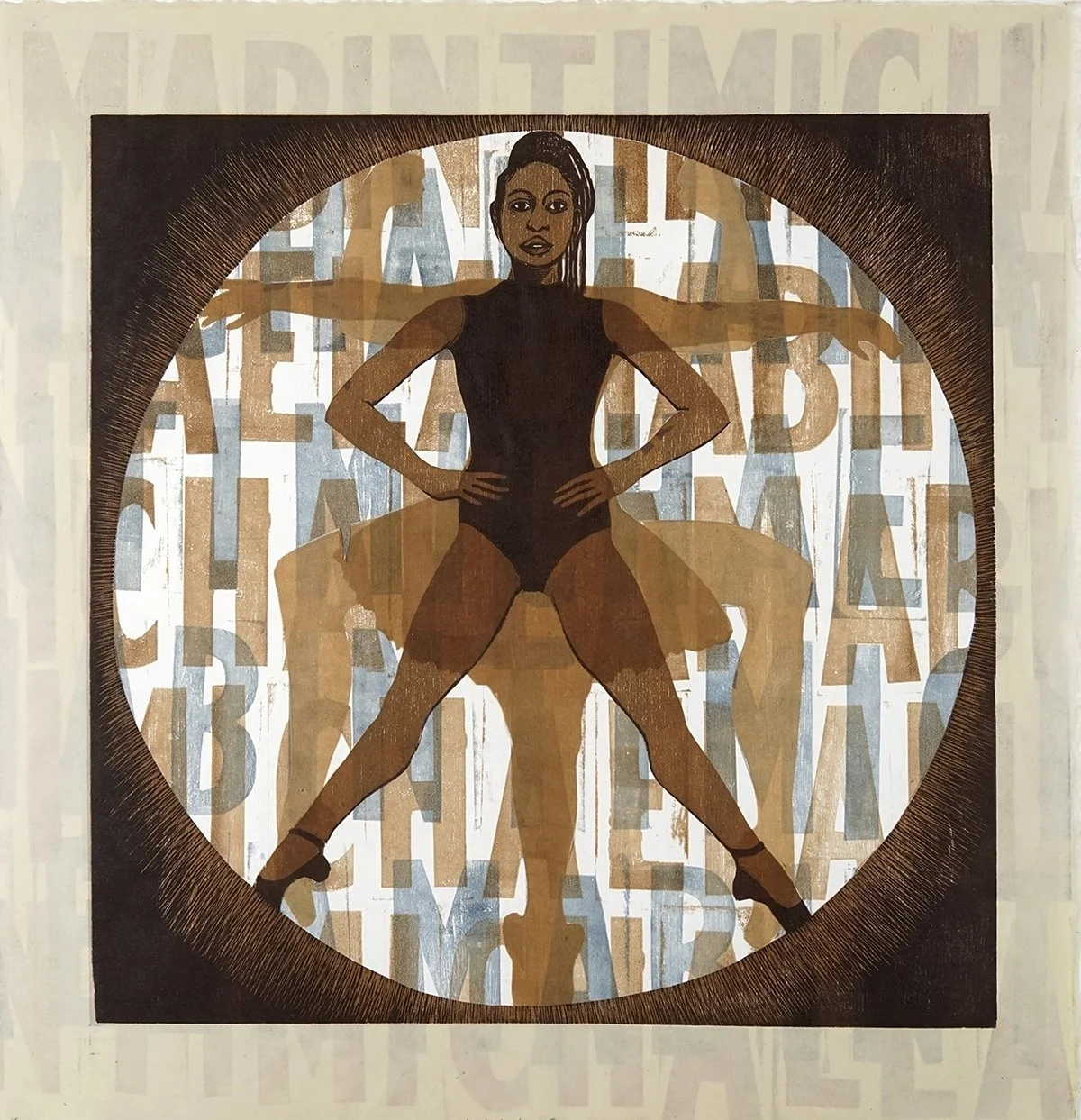
Julie Lapping Rivera, Michaela Mabinty DePrince, 2025, multiple block woodcut with collagraph with collage. Image courtesy of artist.
While some poems are dense, informative, and read more like prose, others are spare and evocative. Lisbeth White writes in her poem “When I danced”: “always I was free/d / let me dance again / for miracles / let my body be the body / that summons them.” The poem is based on the short yet inspirational life of Michaela Mabinty DePrince, a young ballet dancer and humanitarian that survived the loss of her parents in war-torn Sierra Leone, a bombing at an orphanage, and racial barriers to realize her dream of becoming a professional dancer. Rivera’s colorful portrait presents the dancer in various ballet poses against a letterpress-like text background that repeats her name, summoning her memory and art again and again.
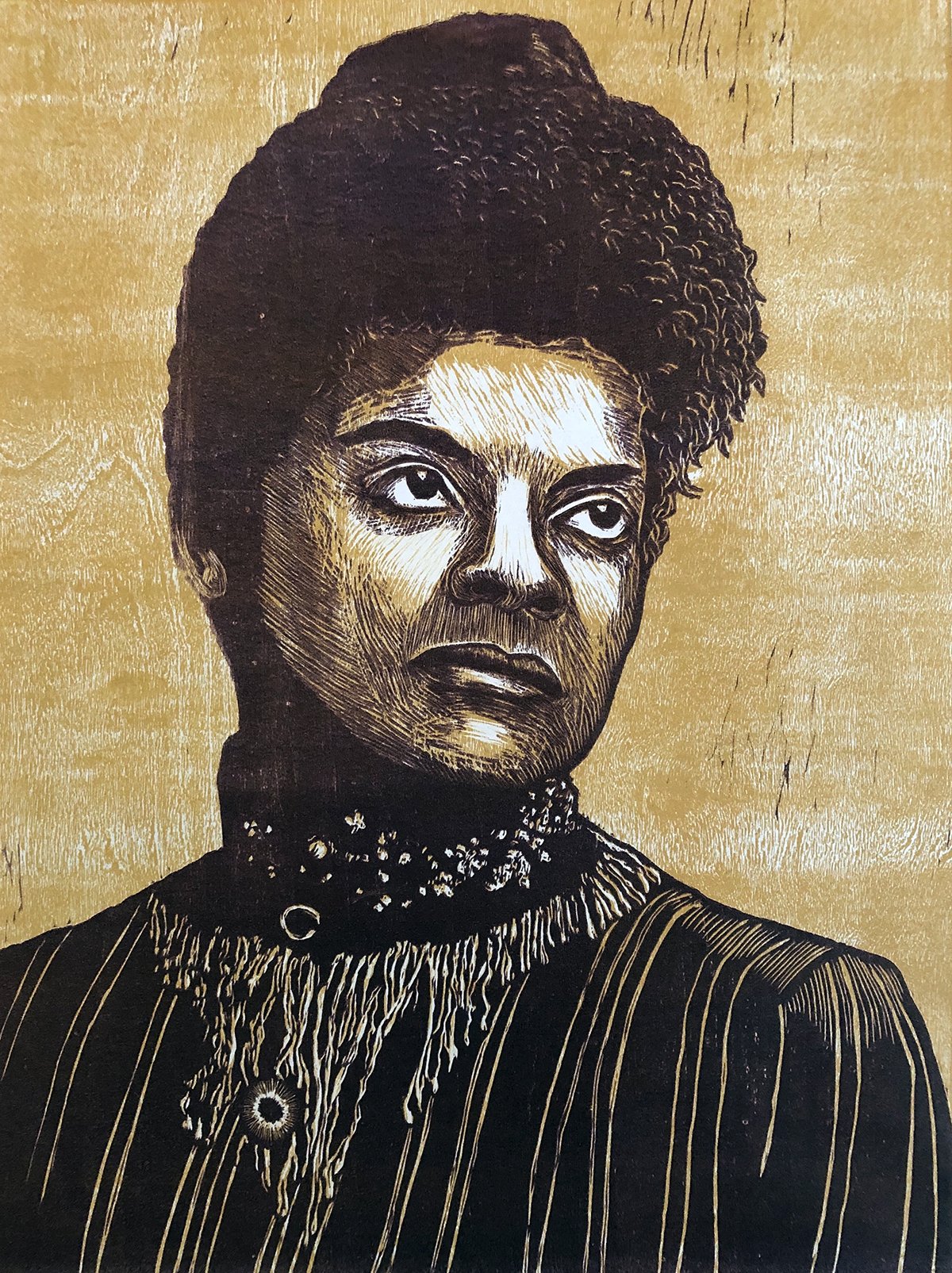
Julie Lapping Rivera, Ida B. Wells, 2019, multiple block woodcut. Image courtesy of artist.
Peppered with details of a hardwon life of struggle, loss, liberation, and accomplishment, Ida by Rage Hezekiah relates the remarkable story of Ida B. Wells, a former enslaved woman, activist, and journalist. Hezekiah writes, “You fought as only a woman / can fight, thread of tenderness / pulled taut through every violence.” It’s a powerful line that matches perfectly with Rivera’s multiblock portrait, which depicts Wells with an upward gaze, stone-cold and piercing. It’s a beautifully balanced counterpoint to the rich woodgrain textures and warm tones that suggest a rising anger and burning flames.
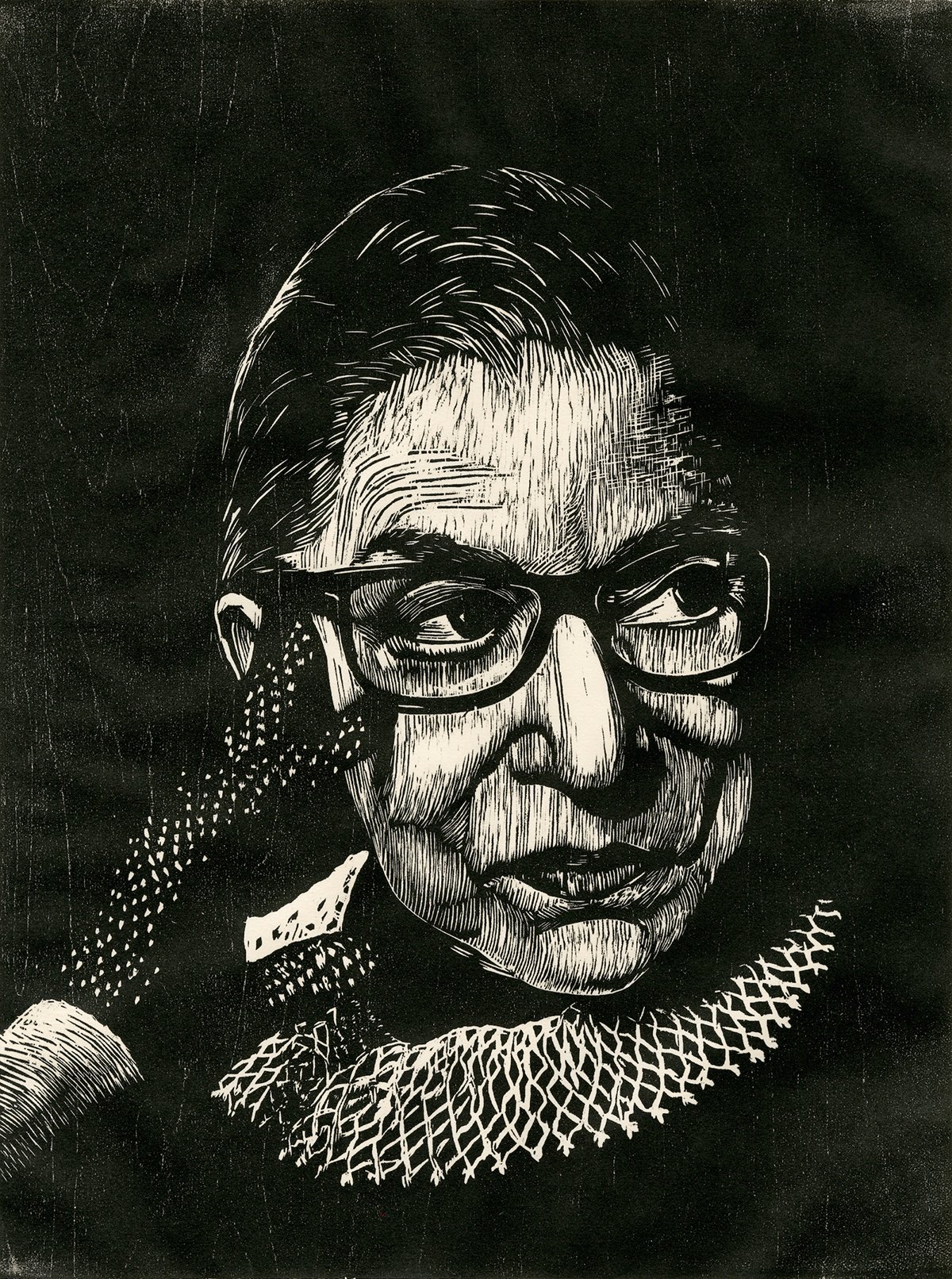
Julie Lapping Rivera, Ruth Bader Ginsberg, 2021, woodcut. Image courtesy of Loveland Museum.
Indeed many of the stories told recount the hideous struggles women have endured throughout the world. Anger over the 2018 Brett Kavanaugh Supreme Court nomination hearings—which were marked by controversy over sexual assault and misconduct allegations—is what first sparked Rivera’s creative flame for the portrait project. Wondering how she could address the way women were “discounted,” she found inspiration in the “Overlooked” series, going on to expand her scope to include current and concerning issues. The death of Ruth Bader Ginsberg (“hit me hard,” she notes) and the overturning of Roe v. Wade, for instance, prompted her bold woodcut of the well-known and well-regarded Supreme Court Justice.
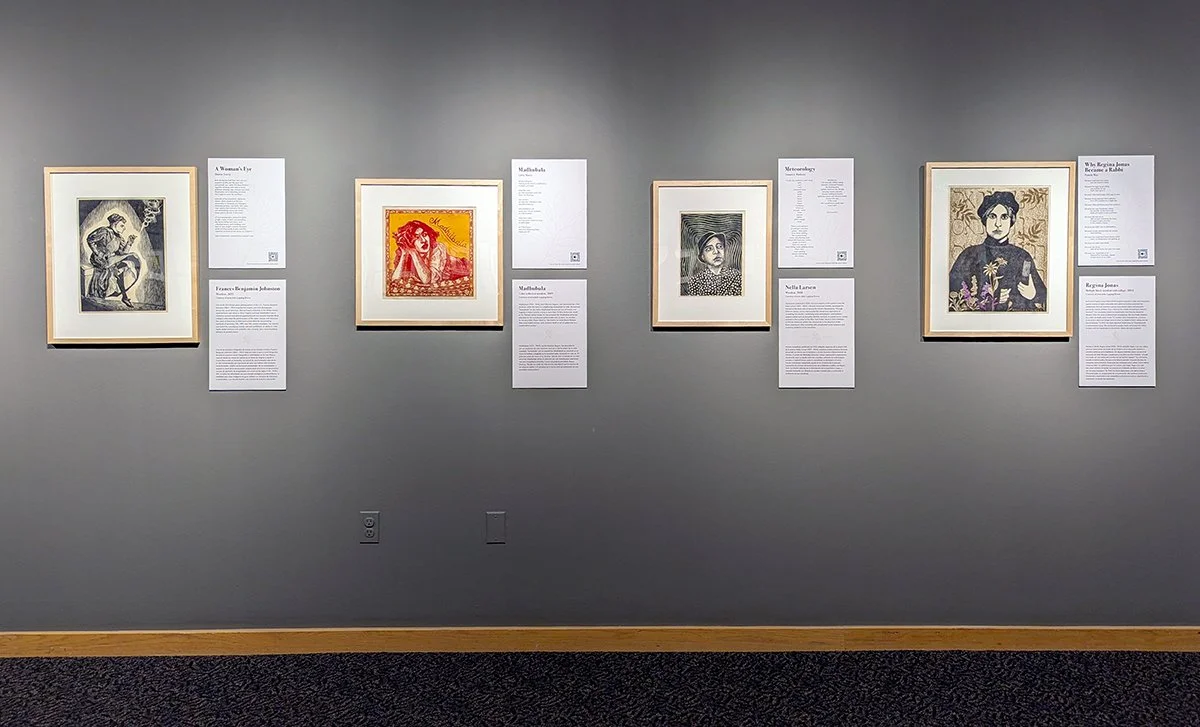
An installation view of works by Julie Lapping Rivera, from left to right: Frances Benjamin Johnson, Madhubala, Nella Larsen, and Regina Jonas. Image by Raymundo Muñoz.
I asked the artist what “daring” means to her, and her response was in reverence to the women in her project: “These women have lived so true to who they are, taking risks, being brave.” And ultimately, Rivera wants to “help people feel good in a world that’s being overshadowed these days.”
Julie Lapping Rivera’s Look Again: Portraits of Daring Women features more stories, artworks, and poems than I can mention here (some of them are pretty wild!), so check out the exhibition for yourself. You might get inspired to be your bravest self.
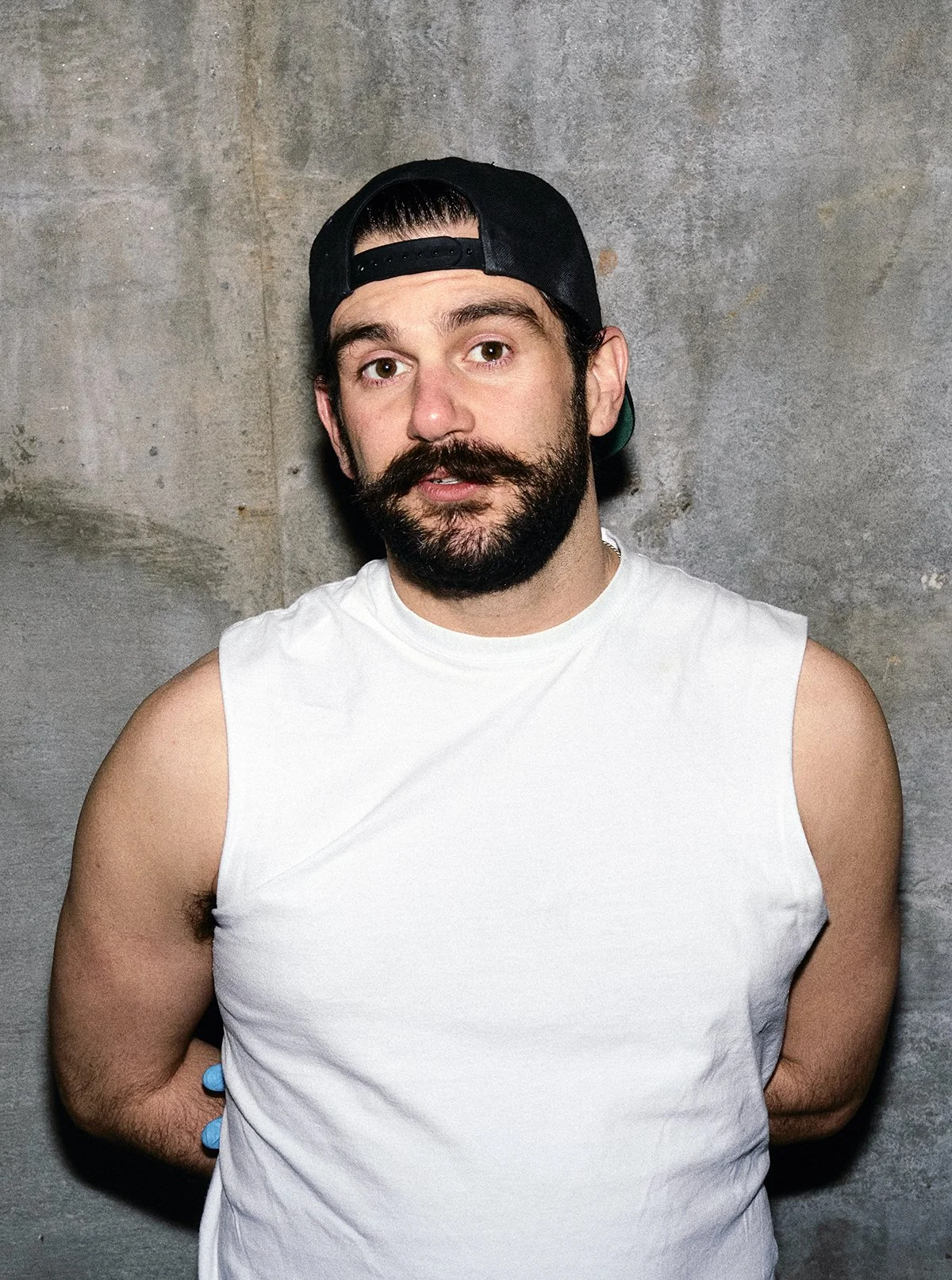
Raymundo Muñoz (he/him) is a Denver-based printmaker and photographer. He is the director/co-curator of Alto Gallery and board president of 501(c)(3) non-profit Birdseed Collective. Ray is guided by the principle that art is a bridge, and it connects us to ourselves and each other across time and space.