
RUINS III: PERFORMING QUEER HISTORY
RUINS III: PERFORMING QUEER HISTORY
East Window
4550 Broadway, Suite C-3B2, Boulder, 80304
August 6–October 21, 2026
Curated by Nathan Storey
Admission: free
Review by Madeleine Boyson
Once more and not for the last time, artist and curator Nathan Storey brings RUINS: PERFORMING QUEER HISTORY to the public. [1] The exhibition draws from a wellspring first tapped for Union Hall’s 2025 Rough Gems Curatorial Program and revisited at San Diego’s BEST PRACTICE earlier this year. In the series’s third installment, Storey assembles seven artists with “strong ties to Colorado” at Boulder’s East Window through October 21, 2026. Possessing a spirit much larger than the space in which it appears, RUINS III activates queer history in contemporary art so as to affirm collective futures.
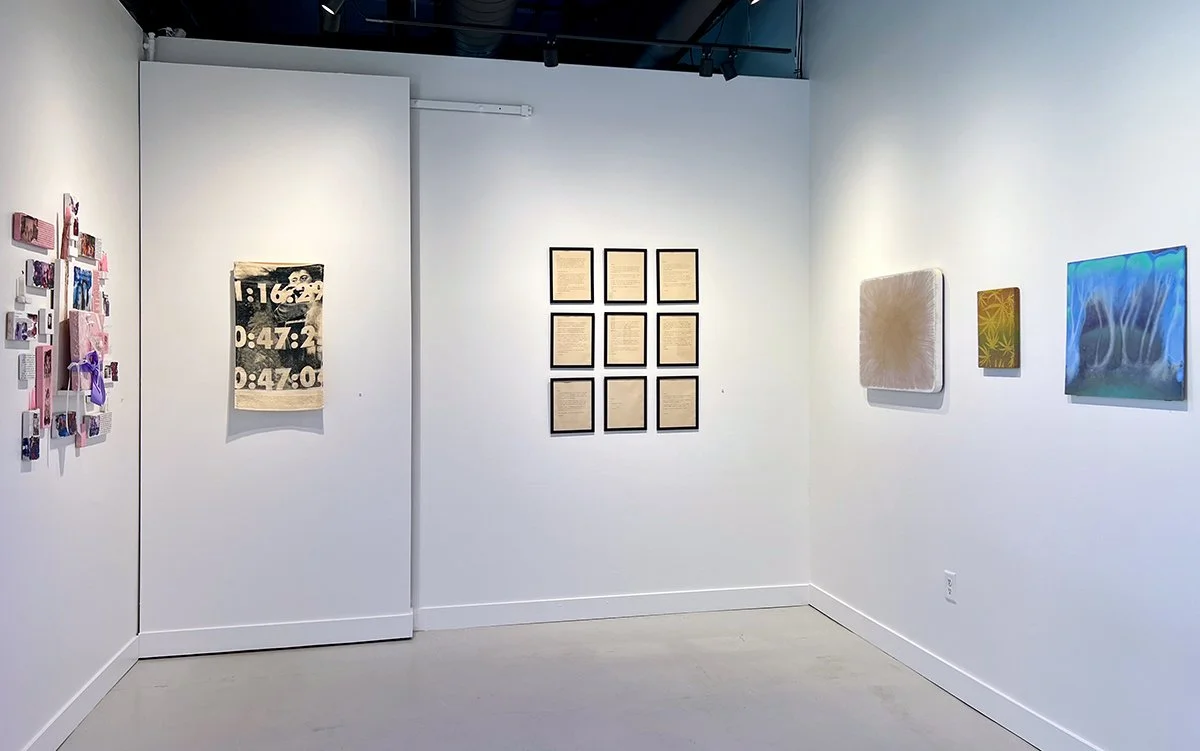
An installation view of RUINS III: Performing Queer History at East Window. Left to right: works by Apple Hultz, Steven Frost, Cody Norton, and Ethan Cherry. Image by Madeleine Boyson.
Conceptually, RUINS is an iterative, perpetual, and spaceless archival practice. The show collects LGBTQ+ work while contending with the loss inherent in tracing shared histories. Each exhibition batches works that consider queerness, memory, and the “fragmentary evidence” of both in dominant culture. [2] Archives bridge and rupture, especially when their remnants are fraught with scarcity and desire, and RUINS embodies this perfectly imperfect negotiation by dropping visitors into an ongoing conversation. In the absence of a perfectly preserved, brick-and-mortar library of queerness, Storey asks, how and where do we (want to) find ourselves?
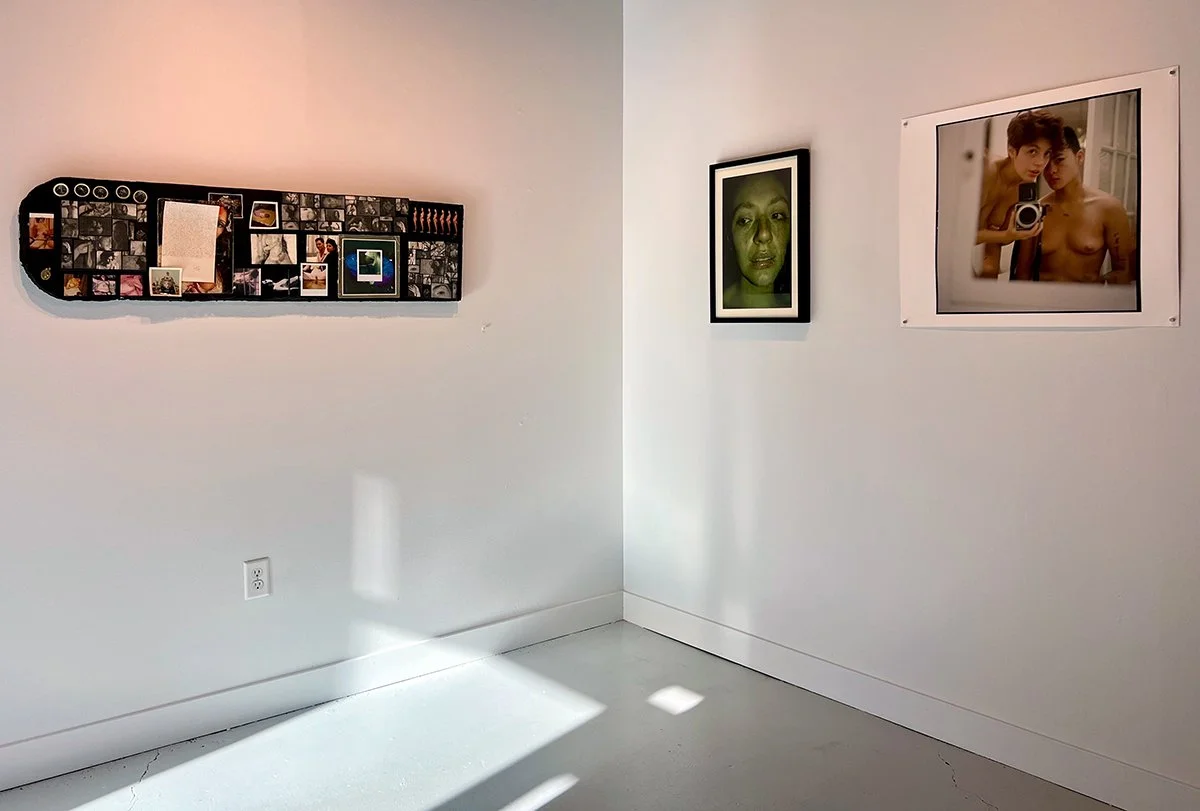
A suite of works by MaryV in RUINS III: Performing Queer History. Left to right: Perfect Stranger, 2026, mixed media, 48 x 24 inches; MaryV Crying After An Argument In Car, 2024, Epson print, 13 x 20 inches; and MaryV & Chella in Apartment Bathroom, 2018, Epson print, 34 x 34 inches. Image by Madeleine Boyson.
East Window’s white-drenched cube and the show’s flow—dictated by artist, not theme—belie the complexities in RUINS III. The exhibition is predicated on polysemy: “ruin,” “archive," “performing,” “queer,” and other words in the curatorial text carry multiple meanings and Storey leaves their interpretations to the artists, allowing for electric connections of “queer lives across time.” [3]
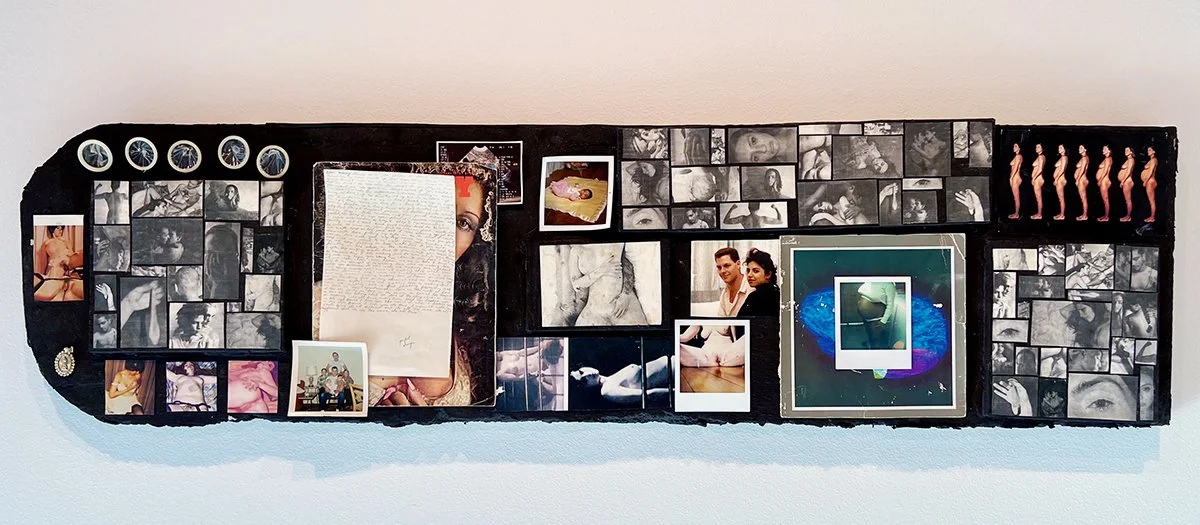
MaryV, Perfect Stranger, 2026, mixed media, 48 x 24 inches. Image by Madeleine Boyson.
Contributing artists exhibit mini archives-within-archives, collecting curiosa from manifold sources. Some works embody this literally; Perfect Stranger (2026), a striking collage by MaryV assembles family photographs, erotic stills from retro and contemporary films, condoms, ultrasounds, Playboy covers, and a hand-written letter bearing the work’s title. Fullness and loss punctuate MaryV’s darkened pasteboard, complicating sexual performance with the uncertain, mutable states of love, family, and being.
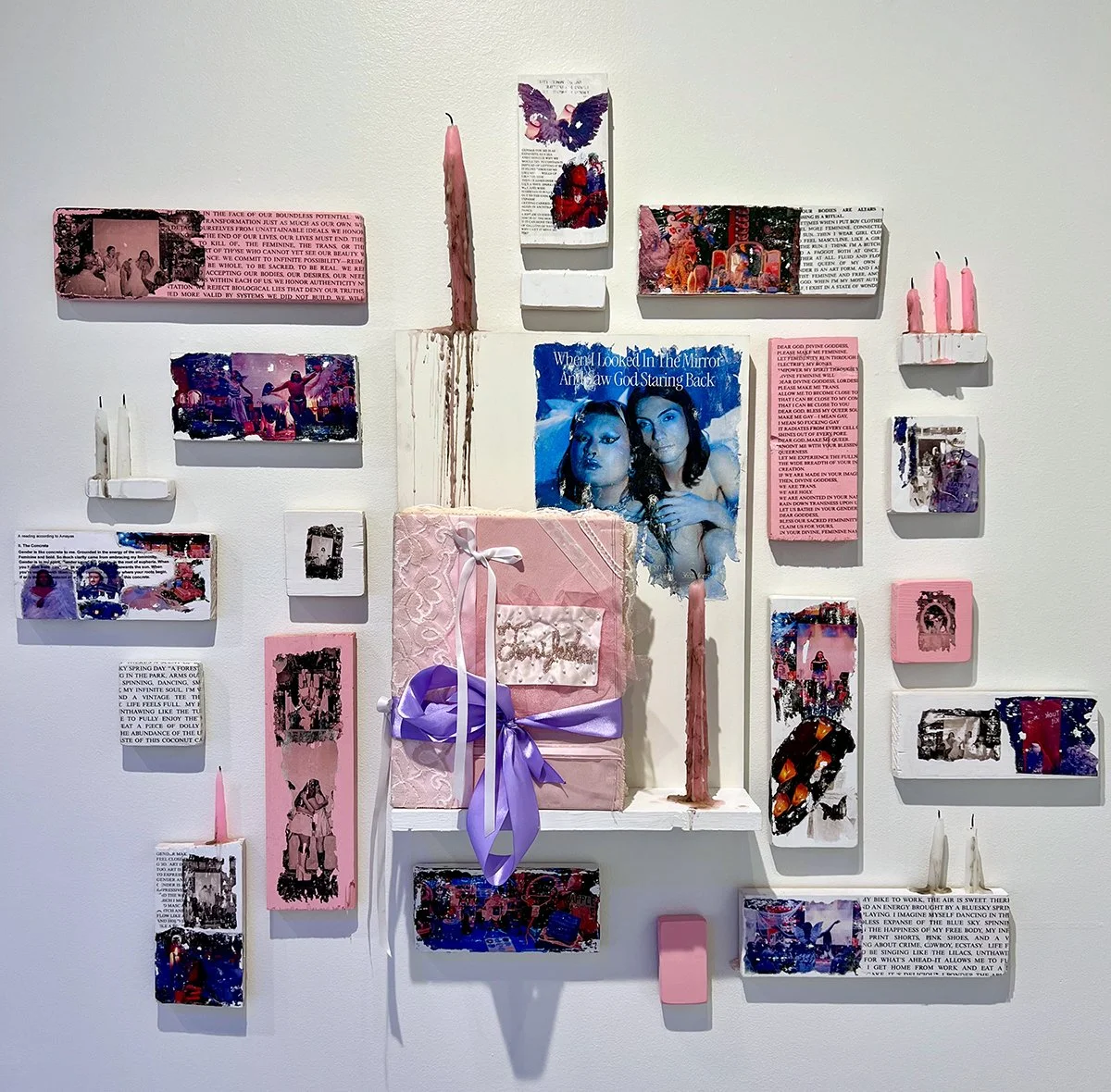
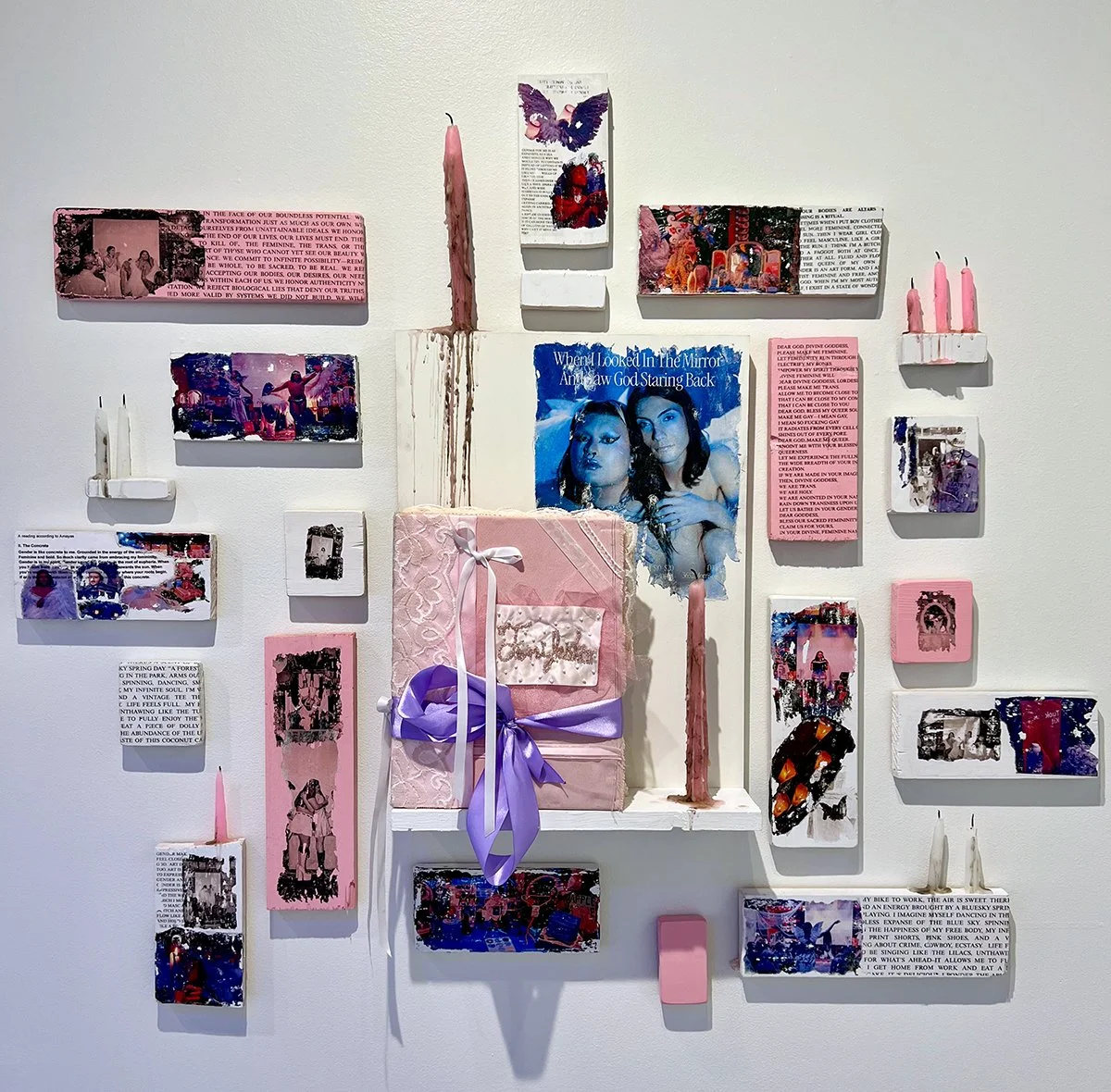
Apple Hultz, When I Looked in the Mirror and Saw God Staring Back: Archive, 2026, scrap wood, spray paint, acrylic, and paper, performance by Apple Hultz and Amayas Gonzalez, photographic documentation by Em Warnock, Femifesto prop by Katie Maloney. Image by Madeleine Boyson.
Similarly documentary, Apple Hultz’s When I Looked in the Mirror and Saw God Staring Back: Archive (2026) curates ephemera from the artist’s theater work of the same name, performed alongside Amayas Gonzalez at the Denver Fringe Festival in 2025.
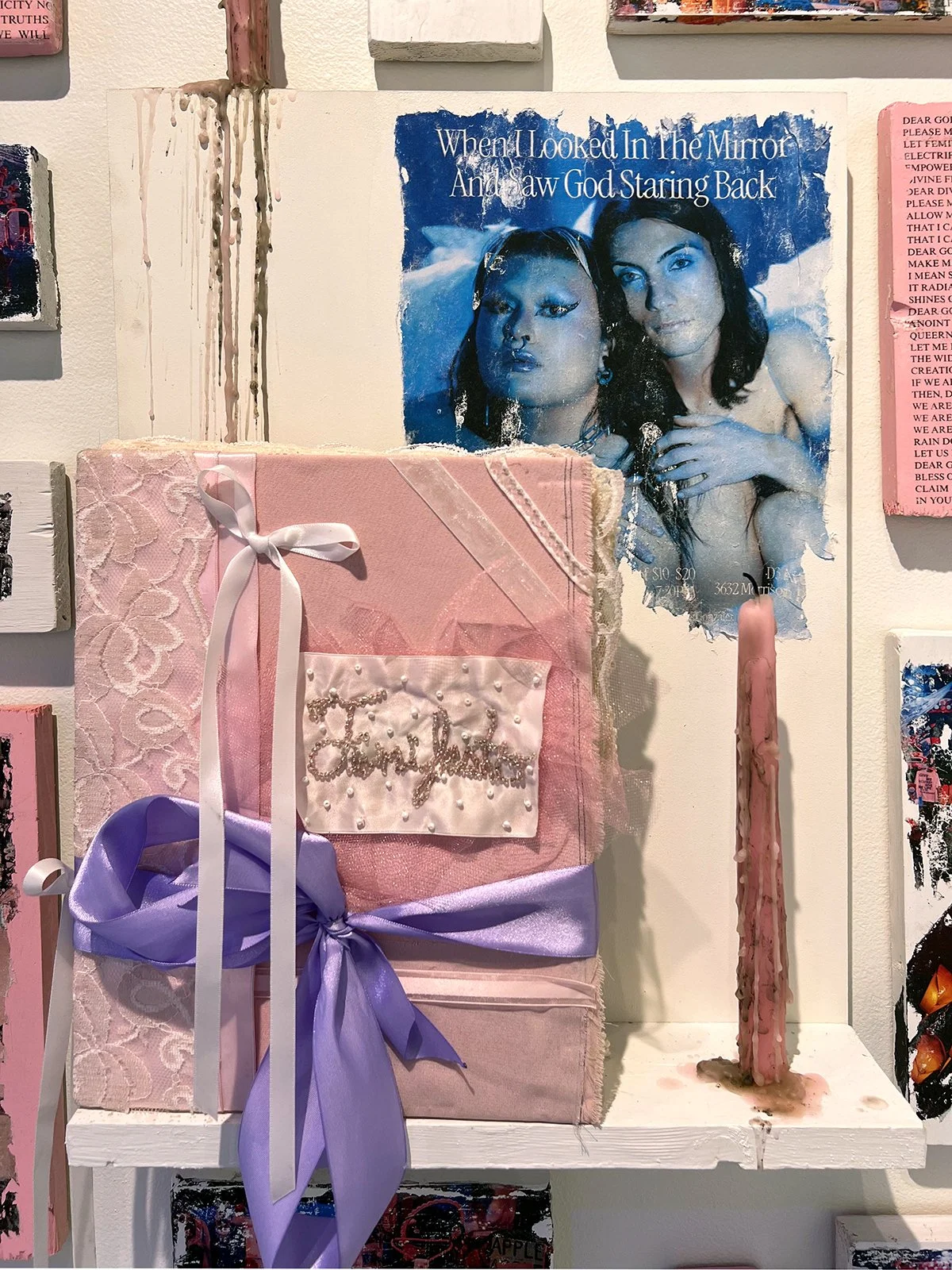
A detail view of Apple Hultz, When I Looked in the Mirror and Saw God Staring Back: Archive, 2026, scrap wood, spray paint, acrylic, and paper, performance by Apple Hultz and Amayas Gonzalez, photographic documentation by Em Warnock, Femifesto prop by Katie Maloney. Image by Madeleine Boyson.
Hultz presents half-burned candles, crumbling wheat-paste posters and photographs, a ribboned Femifesto, and a half-dozen sacred readings for trans and queer bodies, souls, euphorias, and femininities. Visitors may glimpse the original performance but must grapple with a happening that is now accessible only in memory.
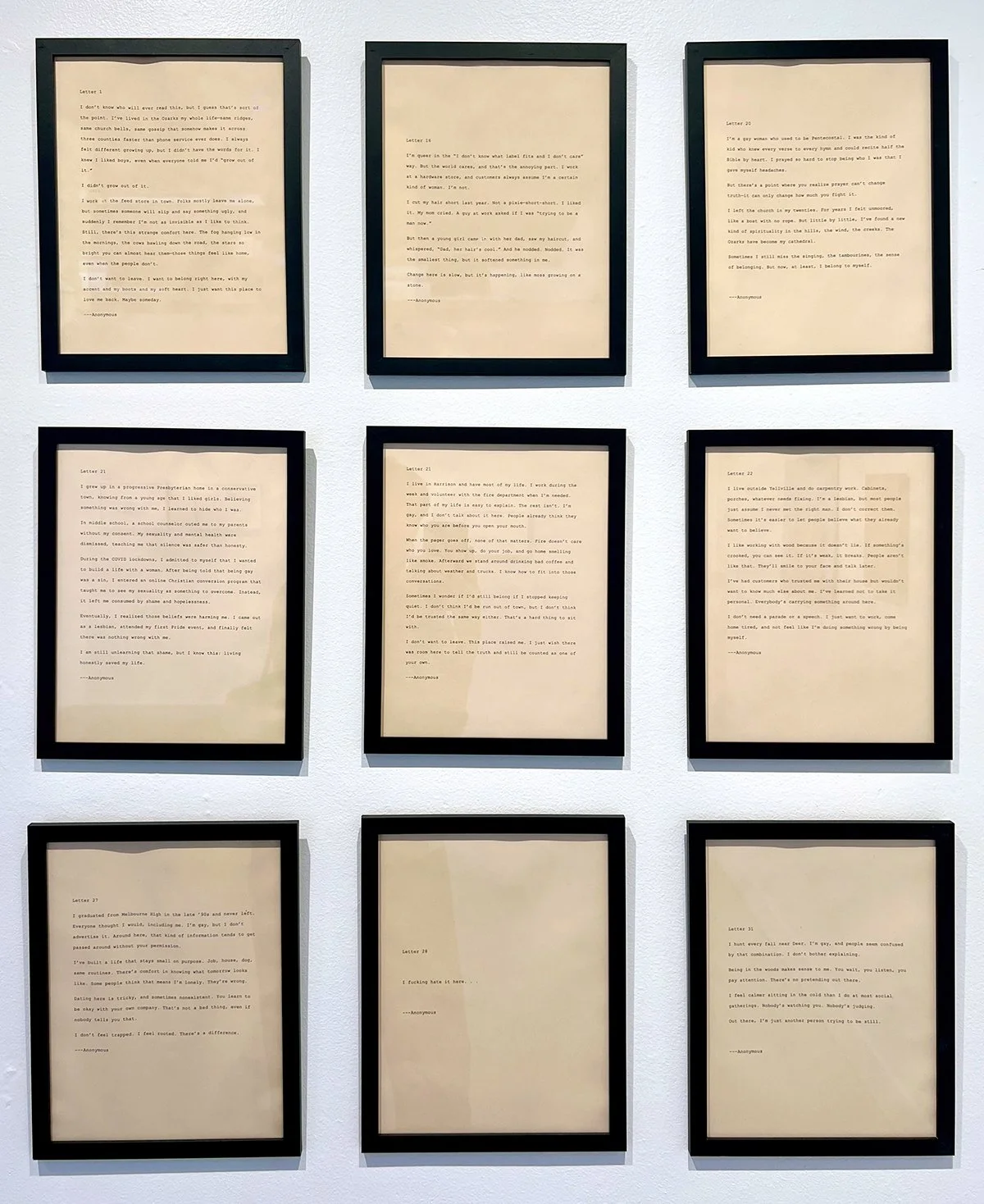
Cody Norton, In Care Of: Cord, Arkansas, 2026, typewritten letters, 11 x 14 inches each. Image by Madeleine Boyson.
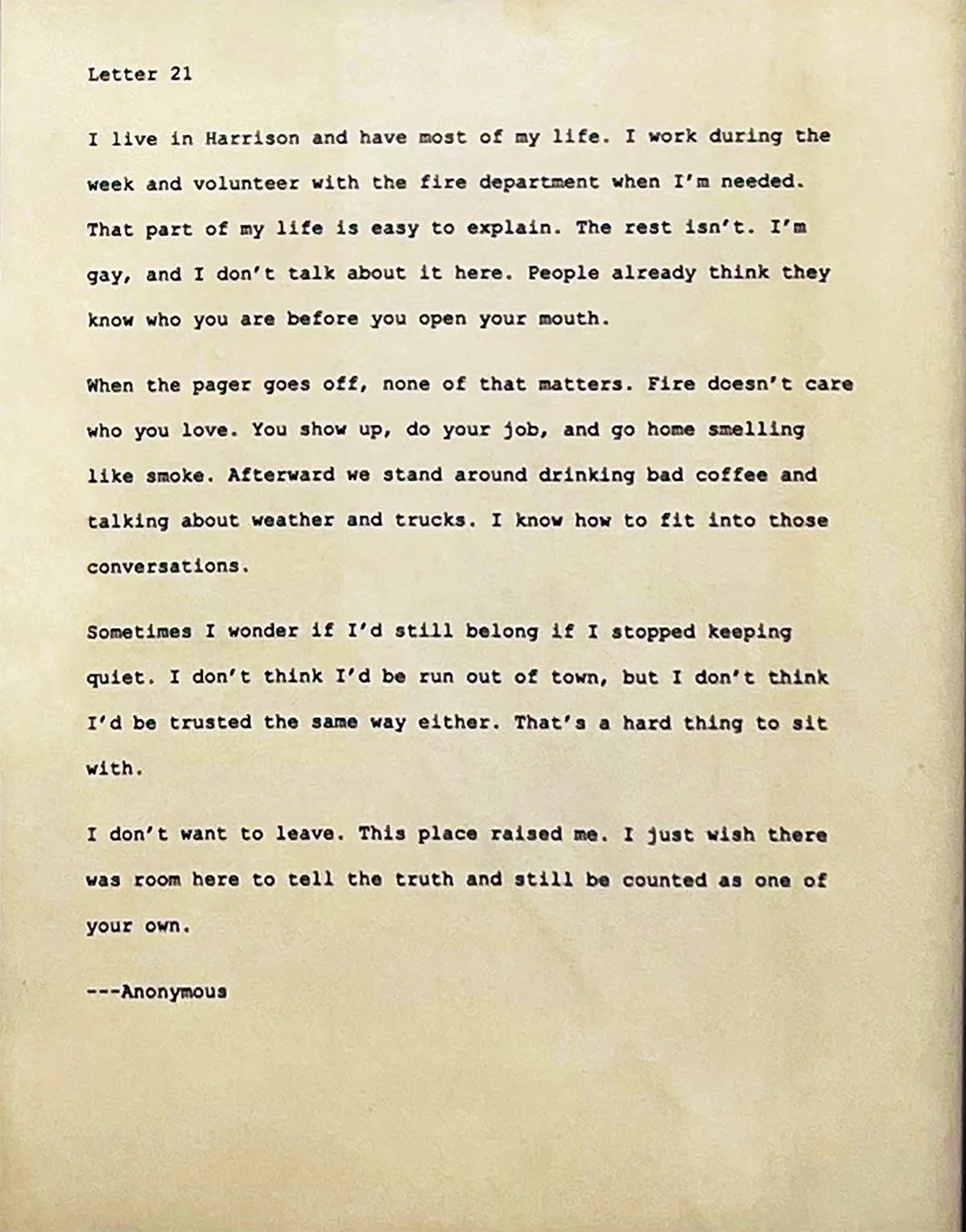
A detail view of Cody Norton’s In Care Of: Cord, Arkansas, 2026, typewritten letters, 11 x 14 inches each. Image by Madeleine Boyson.
Cody Norton’s collection, by contrast, is less visually stimulating yet no less thoughtful. In Care Of: Cord, Arkansas (2026) compiles nine typed and framed letters sent anonymously to a post office box in the Ozarks. Each focuses on individual experiences of queerness in rural America, mapping desires to be left alone, to be oneself honestly, to belong, to be “just another person trying to be still.” Norton’s project provides a safety deposit box wherein queer voices can speak, echo, and bounce off one another.
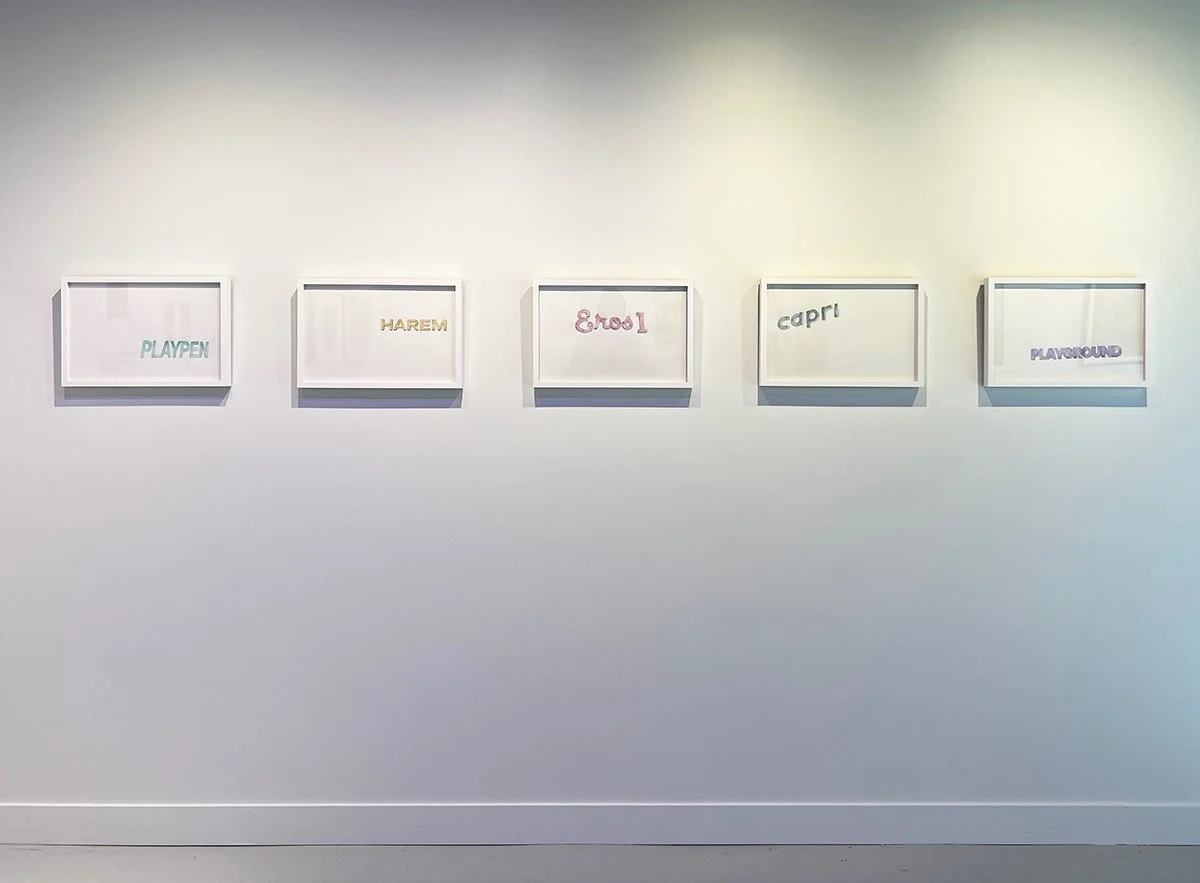
Joel Swanson, Sign Paintings: PLAYPEN, HAREM, Eros 1, capri, PLAYGROUND, 2025, watercolors of gay adult theater marquee signs from Samuel Delany’s Times Square Red, Times Square Blue (1999), 12 x 18 x 2 inches each. Image by Madeleine Boyson.
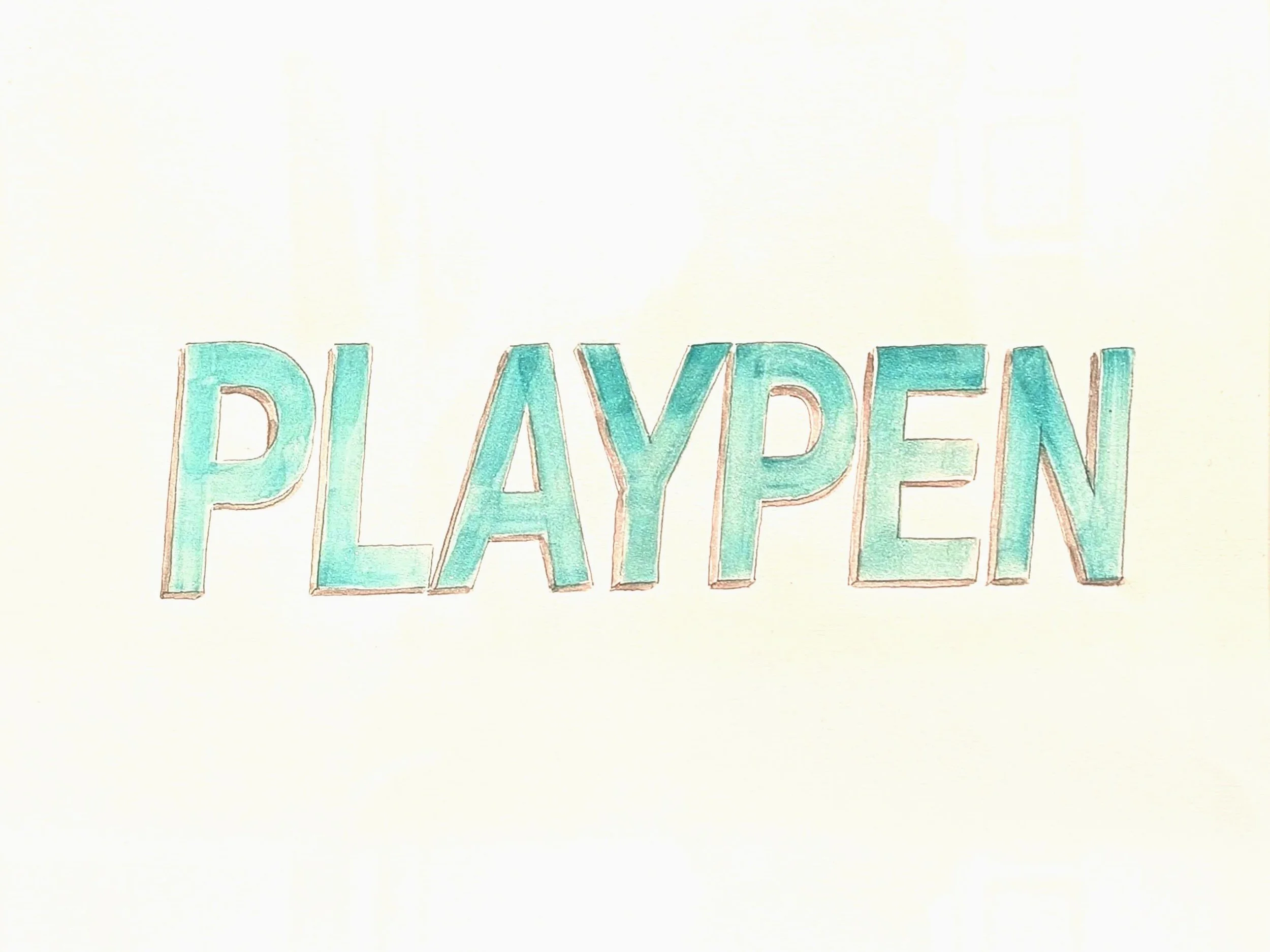
Joel Swanson, Sign Paintings: PLAYPEN, 2025, watercolor of gay adult theater marquee sign from Samuel Delany’s Times Square Red, Times Square Blue (1999), 12 x 18 x 2 inches. Image courtesy of East Window.
Other artists further the exhibition’s dialogue using historical sources, as in Joel Swanson’s Sign Paintings: PLAYPEN, HAREM, Eros 1, capri, PLAYGROUND (2025). Pale scripts on groundless backdrops reimagine the marquees found in the book Times Square Red, Times Square Blue (1999) by Samuel R. Delany, which details the author's experiences in New York City’s gay adult theaters from the 1960s to the 1990s. Swanson’s glittering watercolor further extracts these signs from their original contexts, rendering them delicate, laconic, even cryptic, and encourages viewers to learn more about gay history to appreciate the series at its own level.
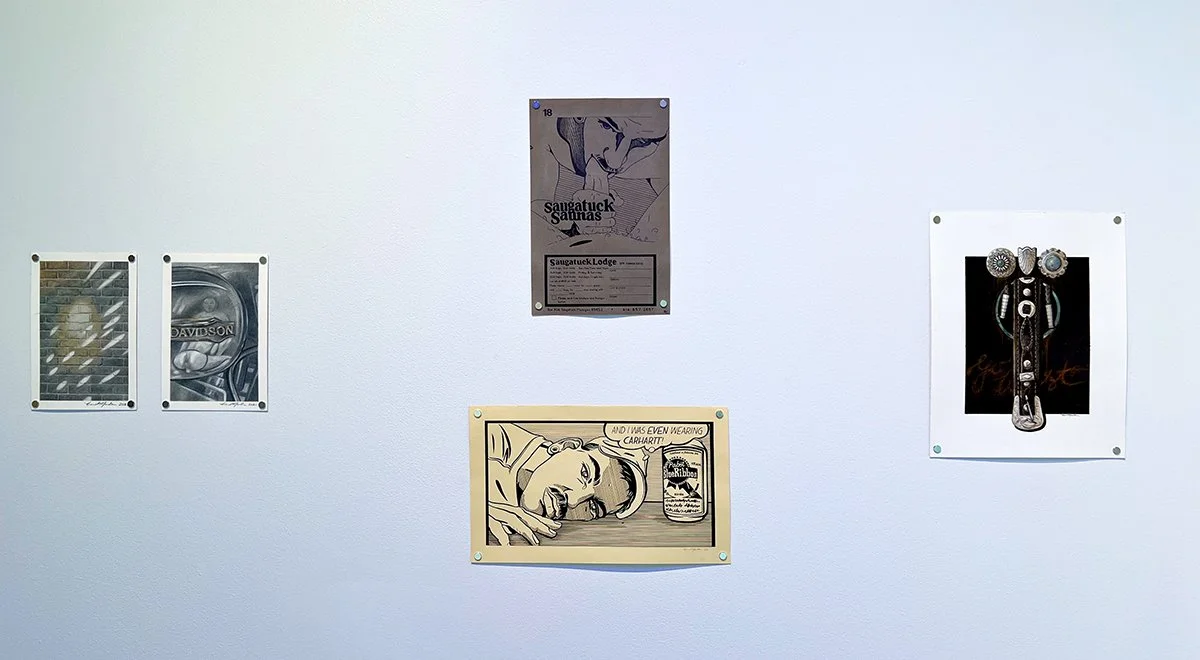
A suite of works by Robert Martin in RUINS III: Performing Queer History. Far left: Dive Bar (Interior), 2021, pigmented charcoal on paper, 9 x 6 inches. Middle left: Dive Bar (Harley), 2021, pigmented charcoal on paper, 9 x 6 inches. Upper middle: Summer Rates: Saugatuck Lodge, 2022, ink on aged paper, 12.5 x 8 inches. Lower middle: Pansy (after LIchtenstein’s Hopeless), 2022, ink on aged paper, 9 x 14.75 inches. Far right: Glory (Go West), 2021, colored pencil, ink, watercolor, and gouache on paper, 5.5 x 4.375 inches. Image by Madeleine Boyson.
Robert Martin’s works also draw from cultural references. Like Norton, Martin considers rural queer life in drawings ranging from explicit to implicit, sobering to humorous, so as to distill “complex stories into essential vignettes.” [4]
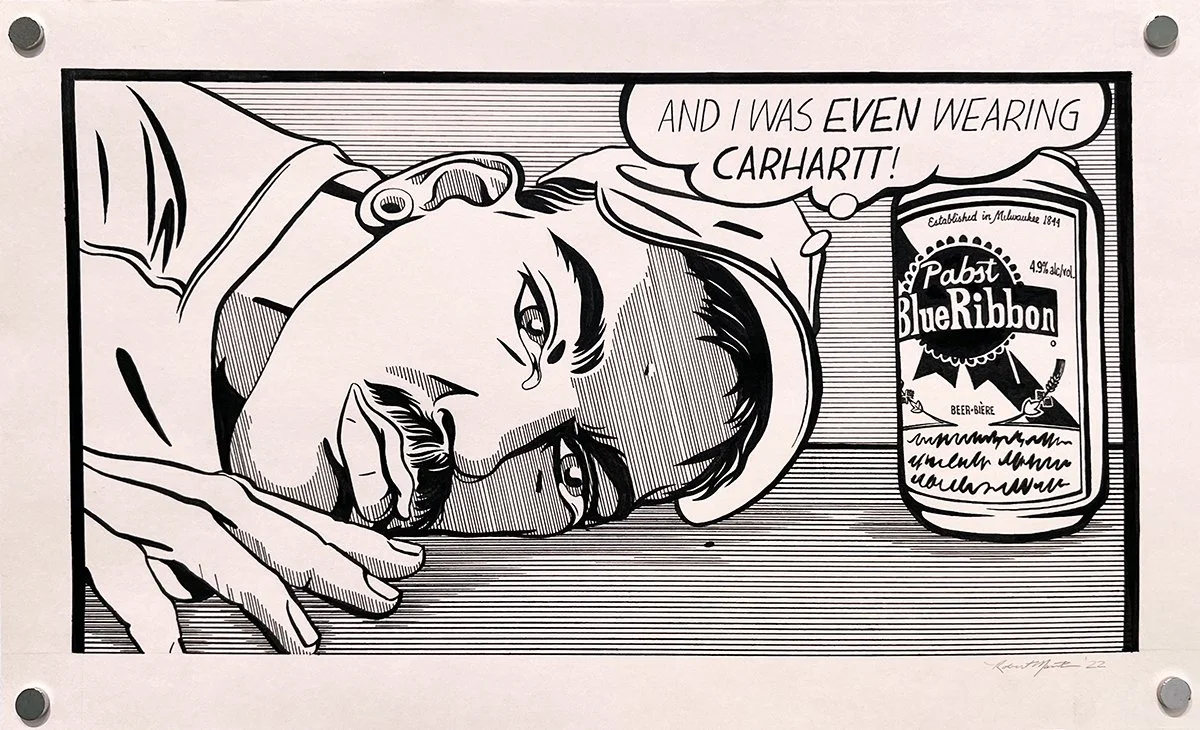
Robert Martin, Pansy (after LIchtenstein’s Hopeless), 2022, ink on aged paper, 9 x 14.75 inches. Image by Madeleine Boyson.
While Glory (Go West) (2021) directly connotes the colonial mythos of Manifest Destiny with a hardened patriarchy, Pansy (after Lichtenstein’s Hopeless) (2022) draws on artistic legacy and reinvents Roy Lichtenstein’s 1963 painting as queer longing, complete with contemporary signifiers.
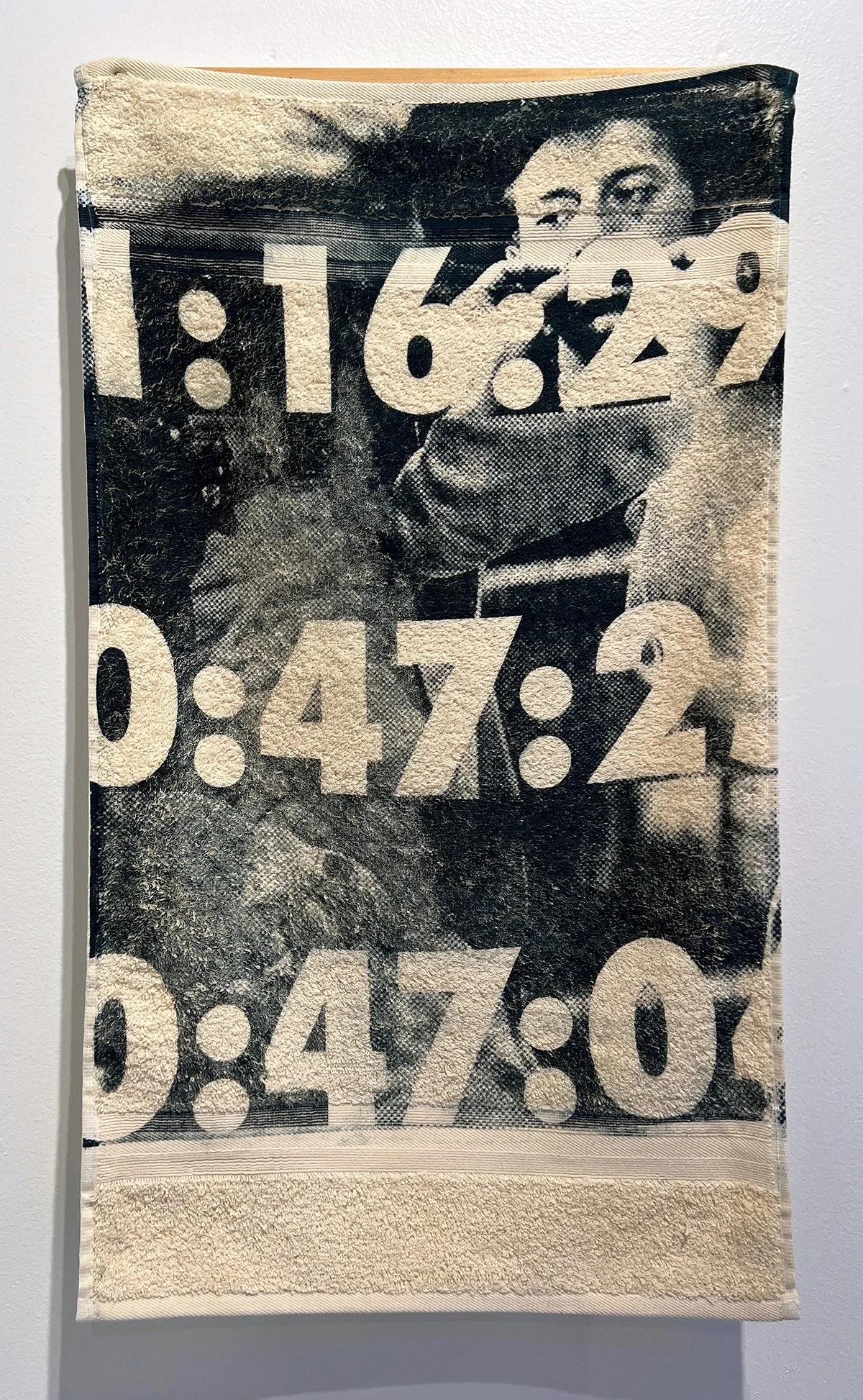
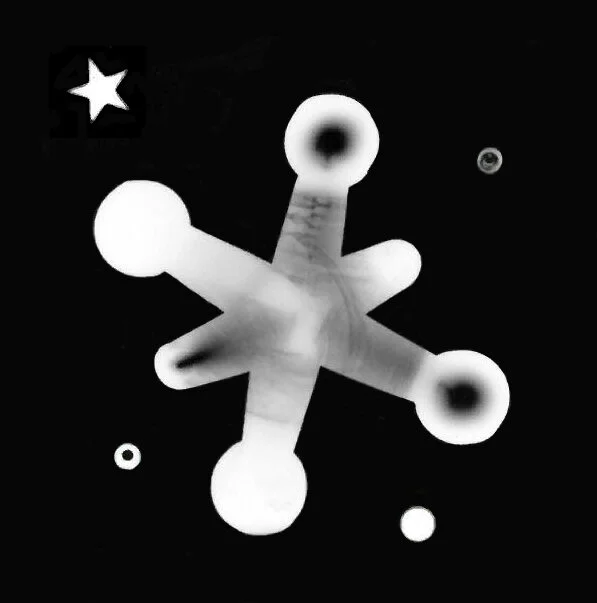
Steven Frost, Guide to the Three Best Moments to Ejaculate While Watching Rainer Werner Fassbinder’s 1982 Film Querelle, 2010, screenprint on hand towel, 16 x 28 inches. Image by Madeleine Boyson.
Rotating around the gallery’s centered blue light, RUINS III incorporates Steven Frost’s homage to New German Cinema in Guide to the Three Best Moments to Ejaculate While Watching Rainer Werner Fassbinder’s 1982 Film Querelle (2010). Unlike Swanson’s clandestine watercolors detailing “lost queer gathering spaces,” Frost’s onanistic, screen-printed towel—rife with entendre—leaves it all out in the open. Intentionally confusing public “erotic spectatorship” (or even fetishization) with the increasing privacy (or lack thereof) in our own homes, Frost leaves viewers to the queer legacy of synchronic desire and loneliness. [5]
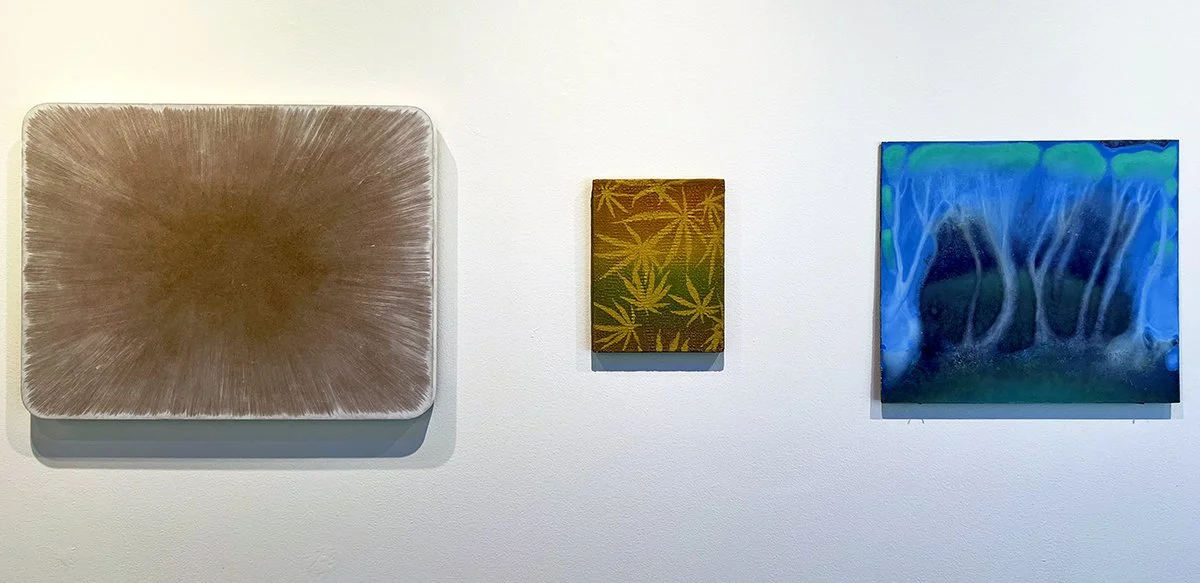
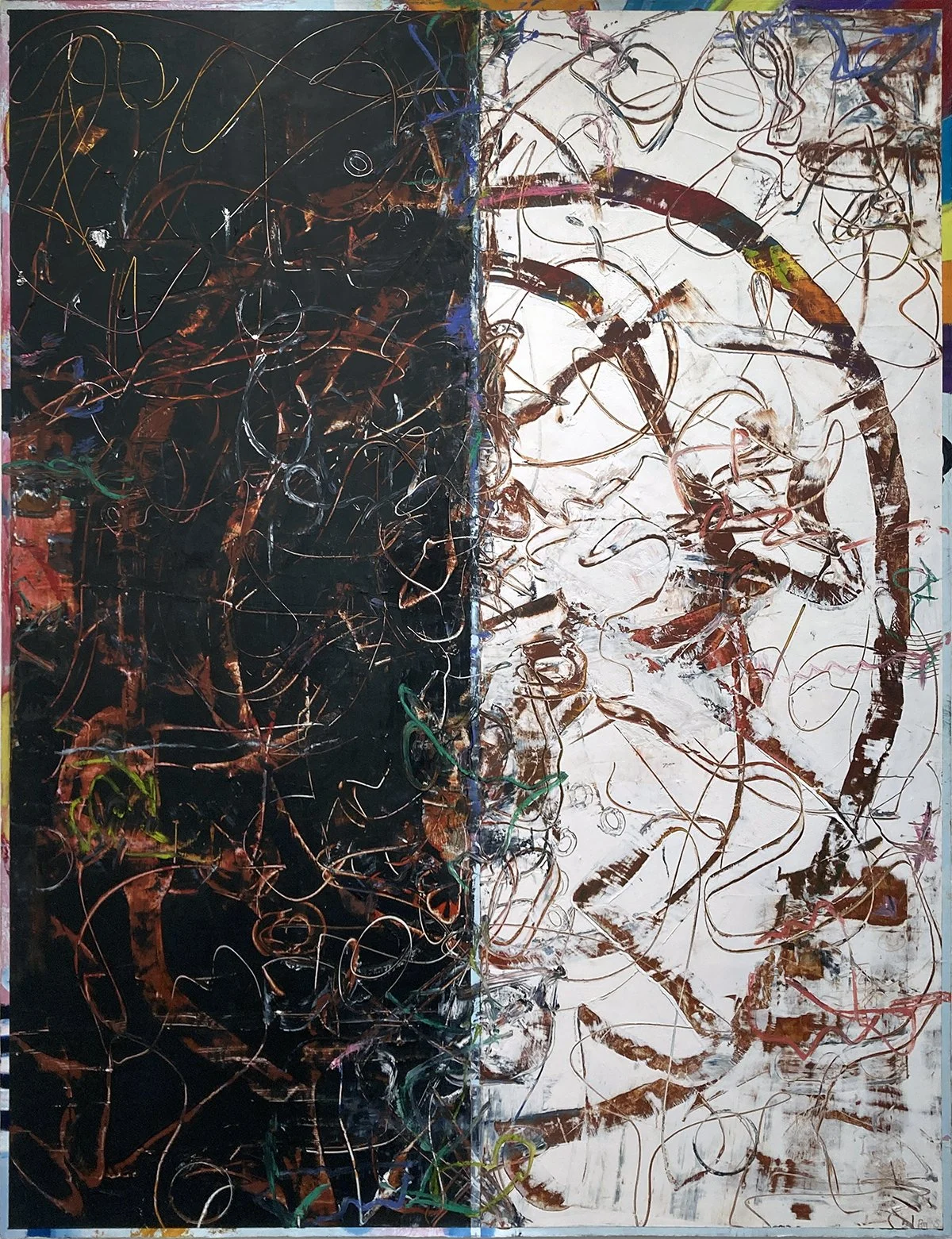
Three works by Ethan Cherry in RUINS III: Performing Queer History. Left to right: Void Study, 2026, oil on cradled panel, 21 x 27 inches; Stoner Study, 2023–2026, oil on stretched burlap, 9 x 12 inches; and Twilight Meadow, 2018–2024, oil on panel, 18 x 20 inches. Image by Madeleine Boyson.
Yet not everything in RUINS III is so distinct. On their face, Ethan Cherry’s works are the most perplexing inclusion, with sticky forms in Twilight Meadow (2018-2024), Stoner Study (2023-2026) negative spaces, and a sober blast in Void Study (2026) accentuating process rather than content. Even so, Cherry’s subtlety situates queerness in the distinctly visceral, reminding viewers that we ourselves are porous, mutable, and temporary.
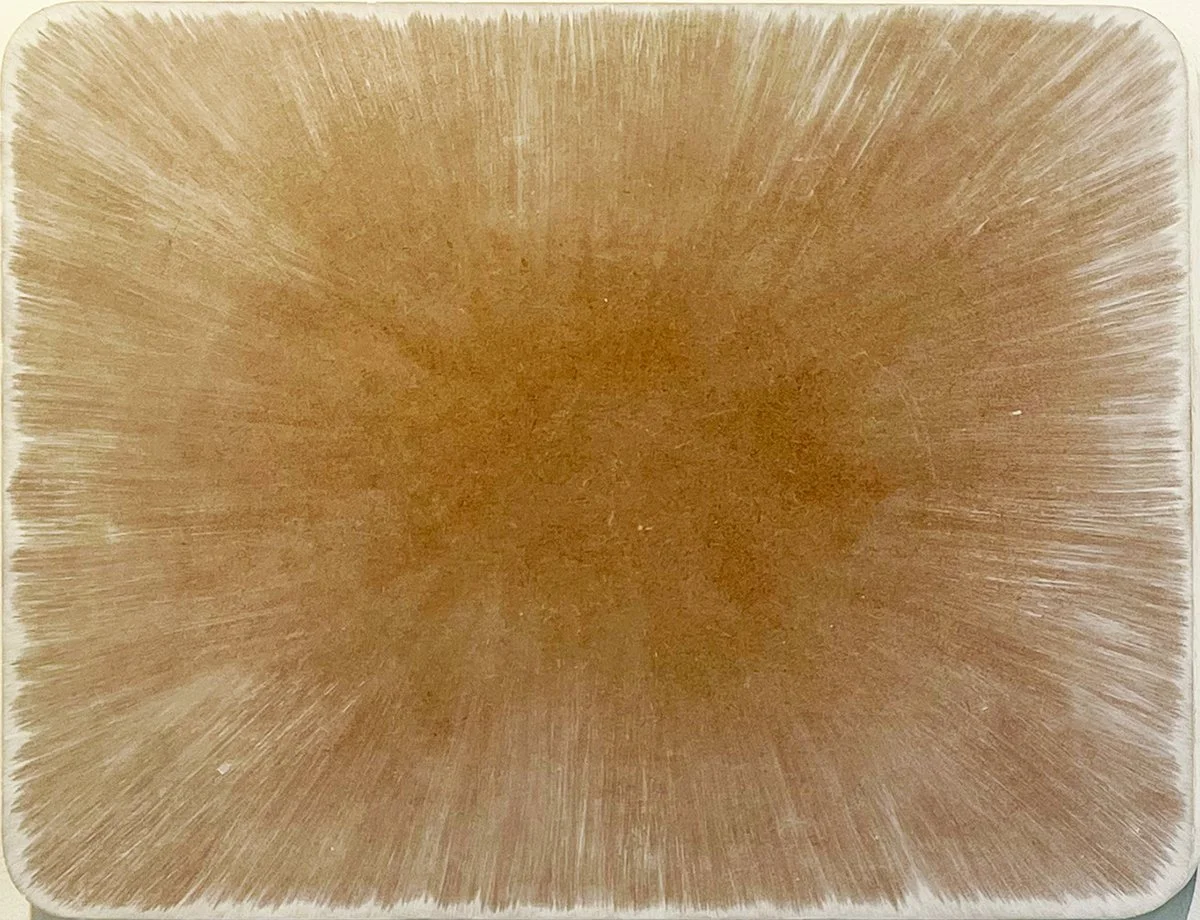
Ethan Cherry, Void Study, 2026, oil on cradled panel, 21 x 27 inches. Image by Madeleine Boyson.
It is this mess of sources and spirits that imbues RUINS III with a foretaste of queer futurity. Rather than use the past as a means to declare our destiny—if we were here before, then we will be here tomorrow—Storey and his artists affirm the opposite, using contemporary art to insist on queer history. If we are here now, RUINS III asserts, then we were always here.
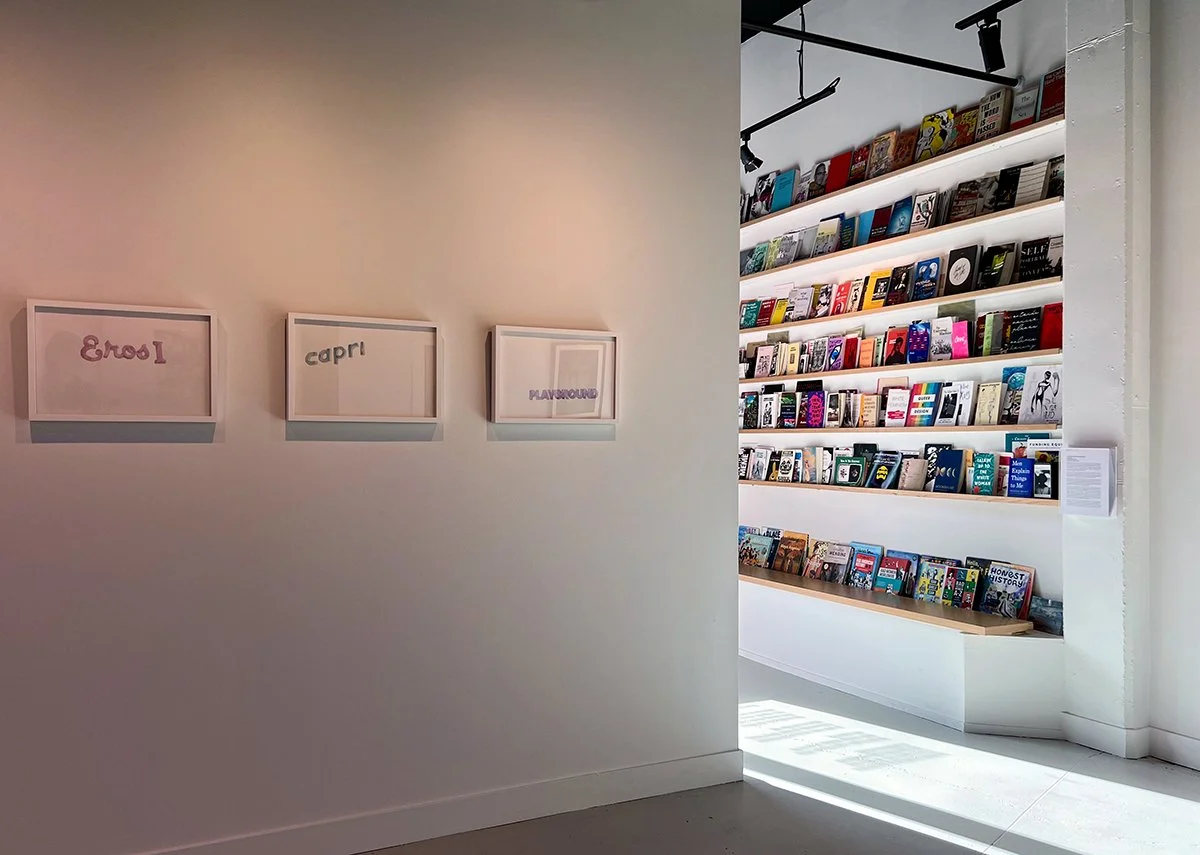
An installation view of RUINS III: Performing Queer History, with Joel Swanson’s Sign Paintings: Eros 1, capri, PLAYGROUND, 2025, to the left and East Window’s library wall to the right. Image by Madeleine Boyson.
Archives are notoriously slippery creatures, antipodean monsters that defy singular classification, but they are mostly influenced by their caretakers. The success of the RUINS series lies in Storey’s understanding that there is no universal answer to what it means to be queer, and that though our pasts come to us salted and ruined, messy and incomplete, we are, simply, what we keep in motion. As Storey’s own work asserts, what we perform is what we touch is what we reactivate is what we circulate is what we move, and queerness is always moving towards the future. [6]
Madeleine Boyson (she/her) is an Editorial Coordinator at DARIA and a Denver-based writer, poet, and artist. She holds a BA in art history and history from the University of Denver.
[1] The exhibition will move on to the curator’s own Storey Gallery near the Bowery, in New York City, in June 2027.
[2] From the curatorial text.
[3] Ibid.
[4] From the artist’s statement.
[5] From the curatorial text.
[6] From Nathan Storey, Notes on the Queer Archive, undated, two-color risograph, 5 x 7 inches, http://undertoweditions.com/they-disappeared-toward-the-water-risographs.