
In Transition | Intrasection
Carol Bivins: In Transition | Jodie Roth Cooper: Intrasection
Blo Back Gallery
131 Spring Street, Pueblo, CO 81003
September 4–26, 2026
Admission: free
Review by Dani/elle Cunningham
Carol Bivins’s and Jodie Roth Cooper’s concurrent exhibitions at Blo Back Gallery illustrate the ways in which materials impact an exhibition's overtones and can often inform an artist stylistically. Bivins’s colorful paintings are visual comfort food: immediately appealing and easy to digest. Cooper’s monumental steel sculptures are heavy and demanding, calling attention to process, materiality, and the passage of time.
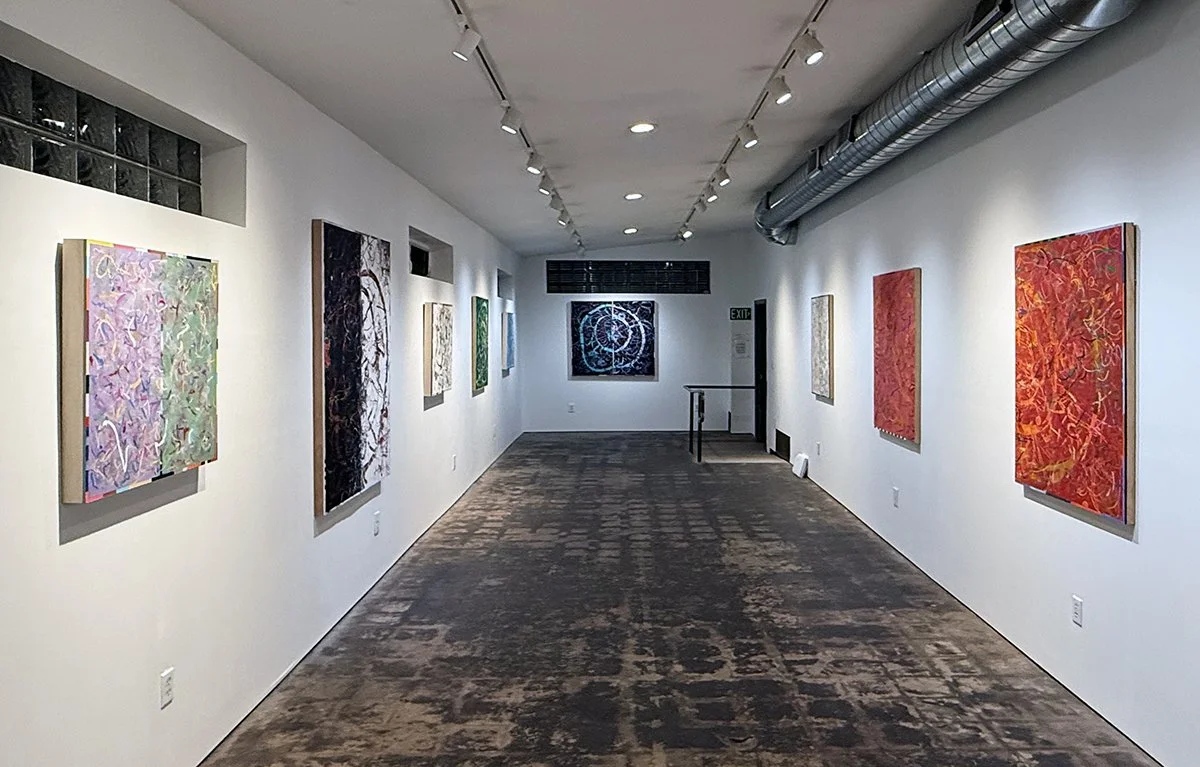
An installation view of Carol Bivins’s In Transition exhibition at Blo Back Gallery in Pueblo. Image courtesy of Blo Back Gallery.
Bivins’s exhibition In Transition in the OG Gallery features large abstract paintings that are a mix of oil paint, oil stick, and cold wax executed on panels. Spirals, symbols of growth and transition, appear in almost every painting, aptly pointing to the exhibition’s title. Each painting possesses a channeled quality, as though the artist is a vehicle for transmission rather than a deliberate actor.
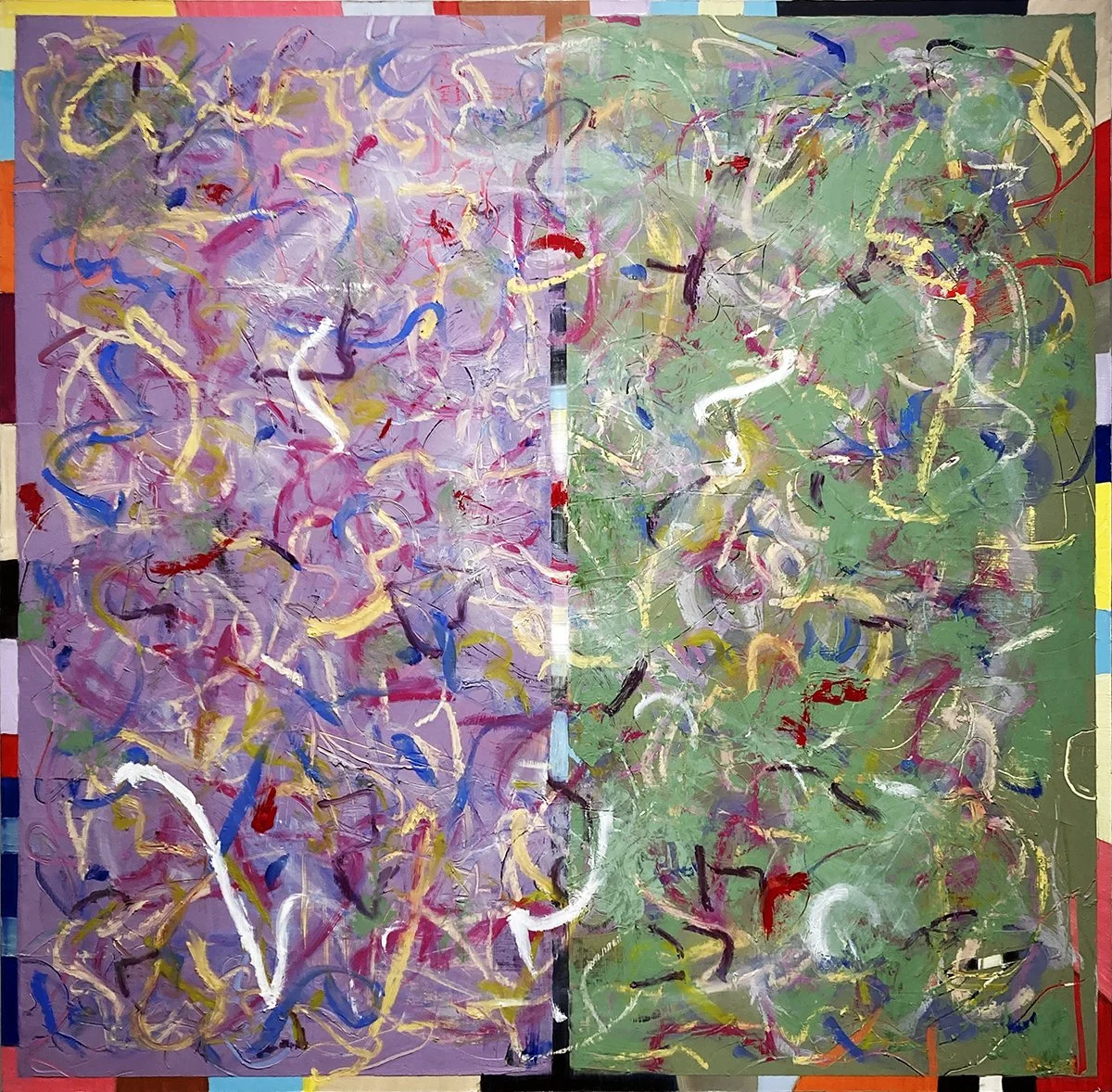
Carol Bivins, Holding the Divide, oil paint, oil stick, and cold wax on panel. Image by Dani/elle Cunningham.
Process-driven, Bivins’s technique of layering paint and applying marks, results in a tremendous build-up of texture and color while maintaining a careful compositional balance. Not only that, but she seems to recognize precisely when to stop, resisting the temptation to push the paintings into unnecessary excess. At times, her multilayered brushstrokes signify her intelligence, resembling an invented written language whose meaning resides not in literal interpretation but somewhere within the collective consciousness.
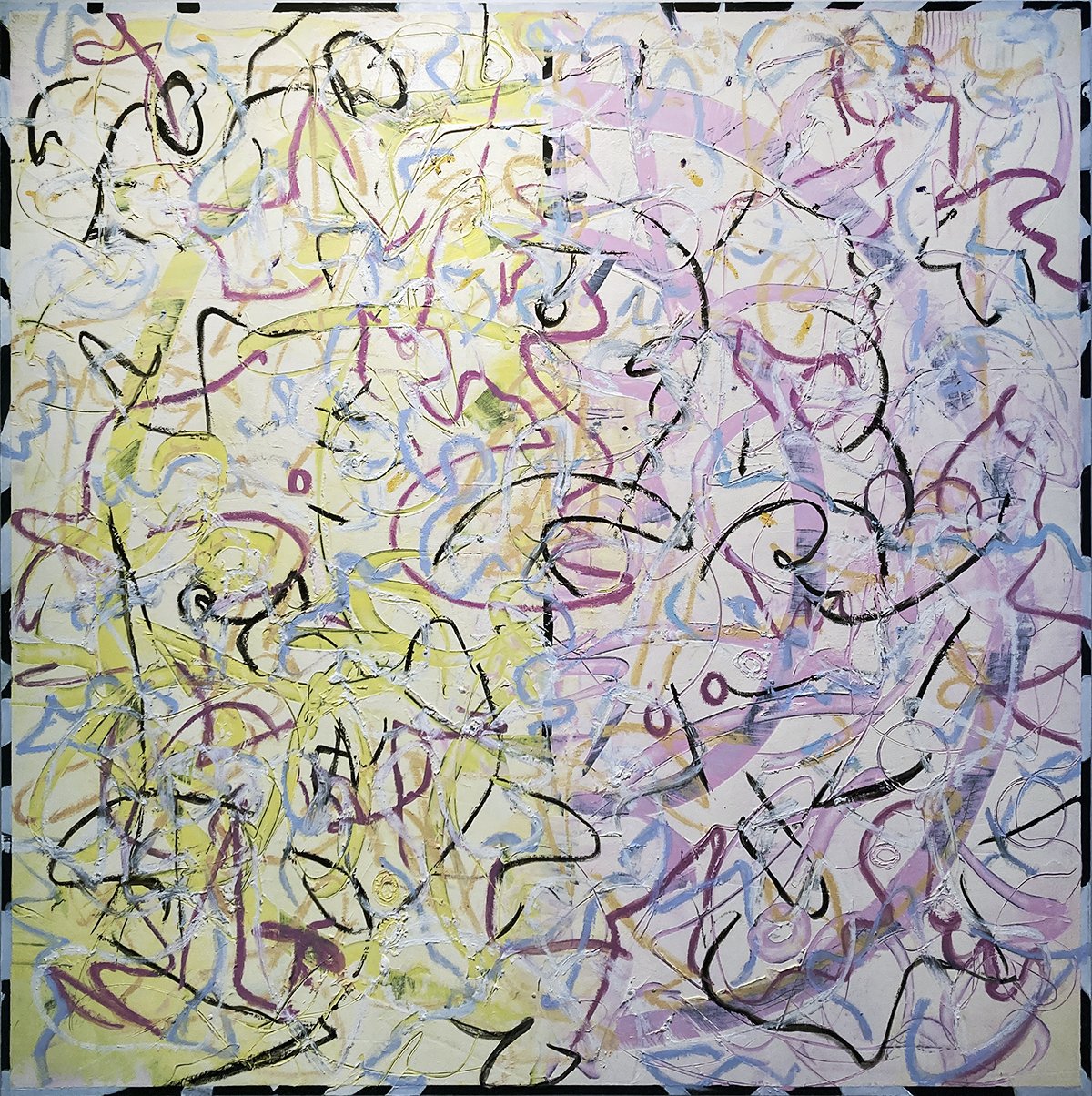
Carol Bivins, Mulling it Over, oil paint, oil stick, and cold wax on panel. Image by Dani/elle Cunningham.
In Mulling It Over, the allusion to semiotics is pronounced. The artist’s layered marks weave over, under, and through one another, dancing like elongated glyphs across the surface in muted shades of yellow, pink, and blue.
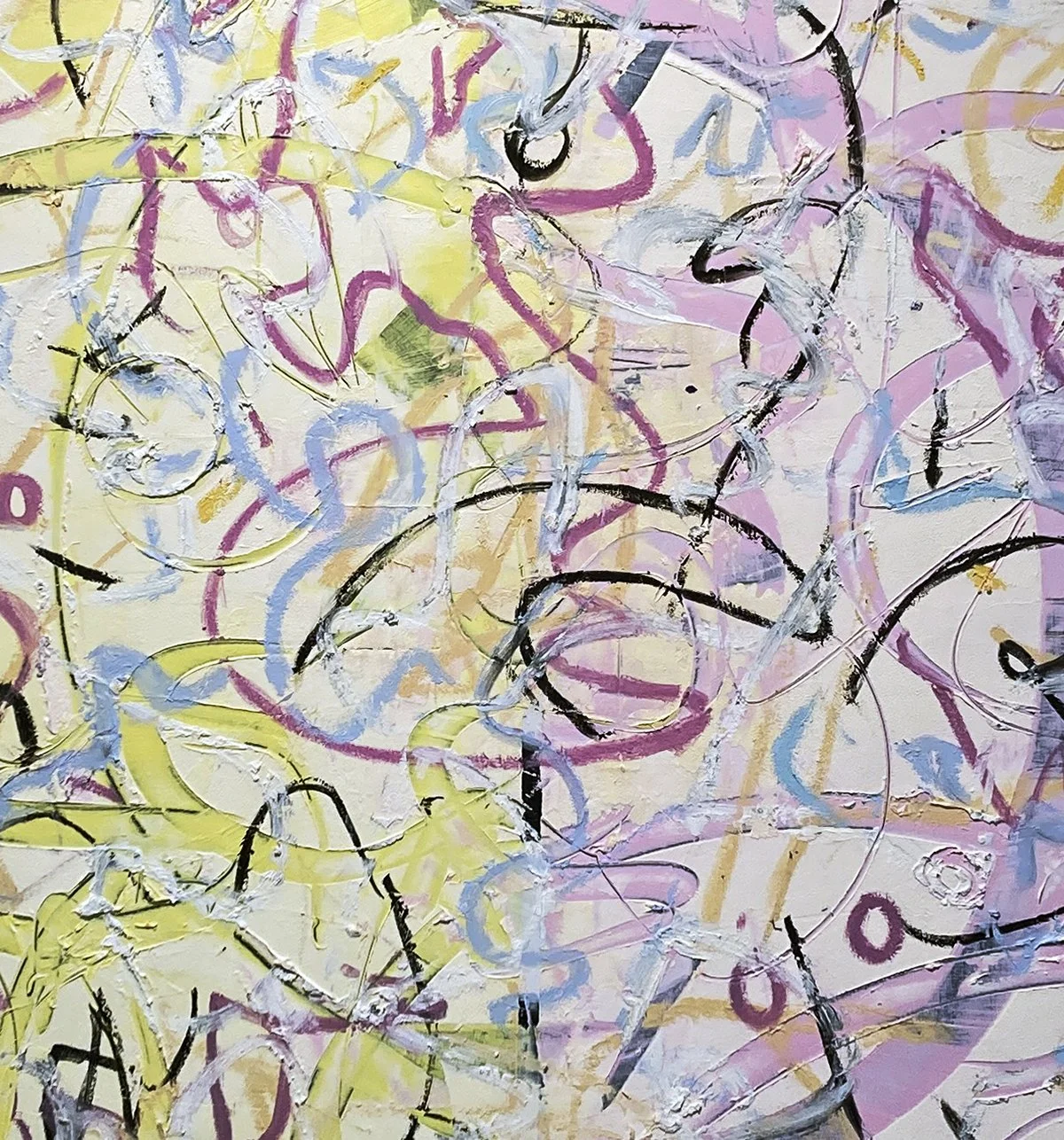
A detail view of Carol Bivins’s Mulling it Over, oil paint, oil stick, and cold wax on panel. Image by Dani/elle Cunningham.
The depth of this painting is enhanced by heavy black squiggles in the foreground as well as marks placed deep in the background and partially obscured beneath translucent layers of paint. There is also a ghostly spiral, barely discernable as such, adding to the painting’s esoteric character and energy.
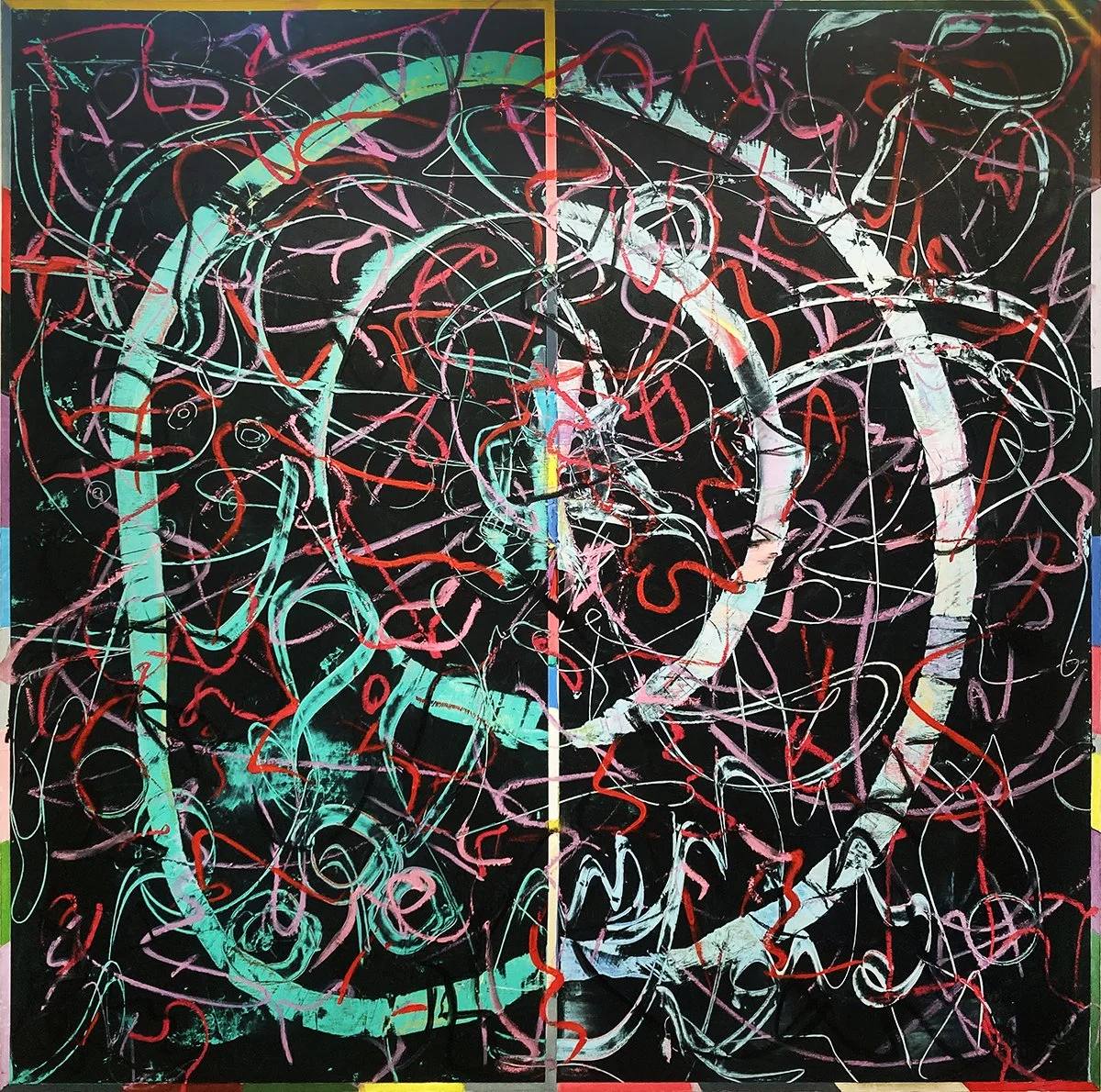
Carol Bivins, The Irregular Orbit of the Heart, oil paint, oil stick, and cold wax on panel. Image by Dani/elle Cunningham.
Not shy at all, Bivins places a spiral prominently within the dark, frenetic painting The Irregular Orbit of the Heart, anchoring a composition that might otherwise dissolve into a tangled mass of multicolored lines. A thick, prismatic line runs down the center and another traces the perimeter of the painting, framing the internal chaos while providing a visual grounding that echoes the stabilizing presence of the spiral.
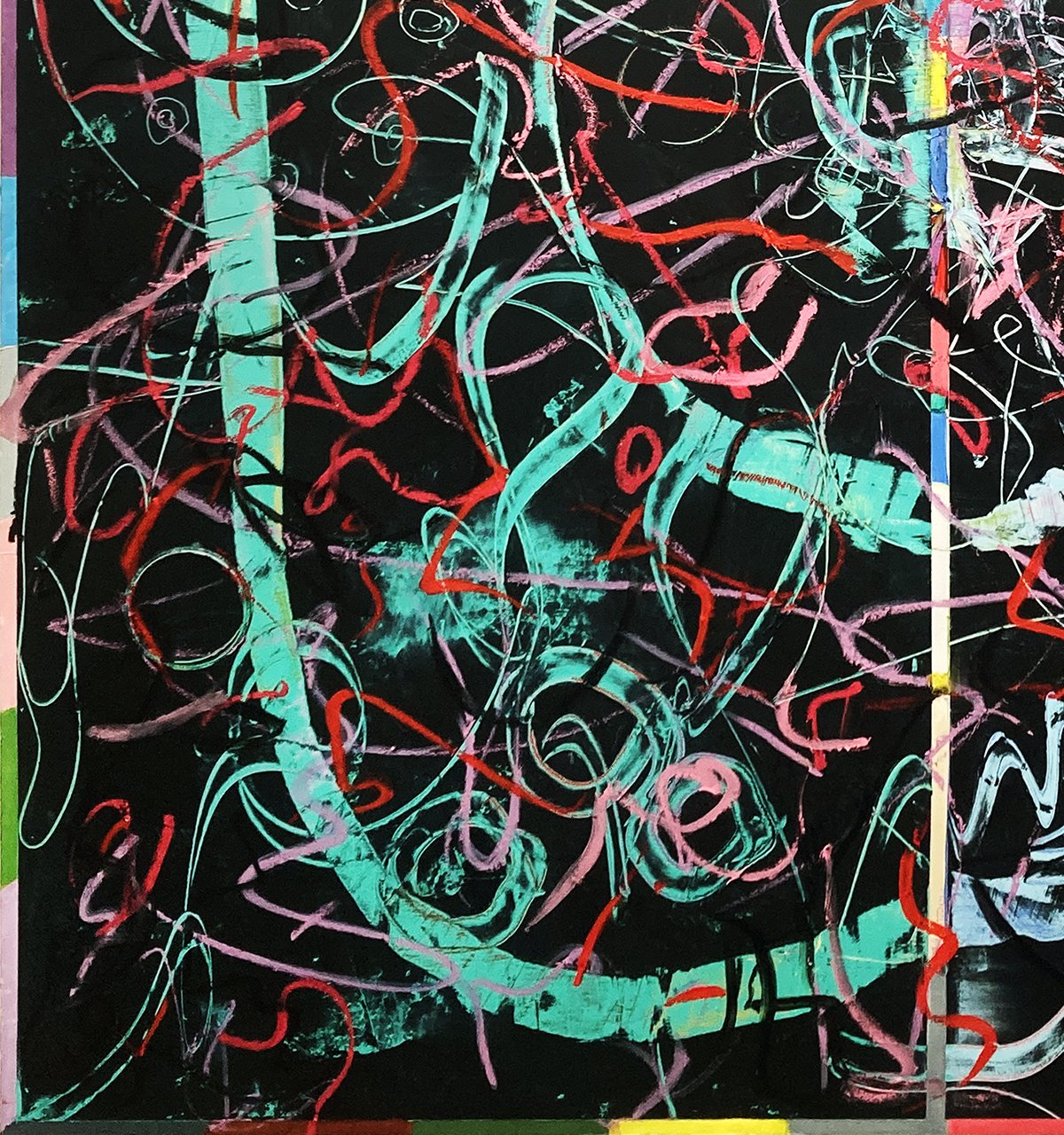
A detail view of Carol Bivins’s The Irregular Orbit of the Heart, oil paint, oil stick, and cold wax on panel. Image by Dani/elle Cunningham.
These themes of opposition extend into the artist’s title: the spiral has historically represented transformation and evolution, while an orbit suggests repetition and consistency. To call that orbit “irregular” introduces an idiosyncratic tension between order and disruption, stability and change.
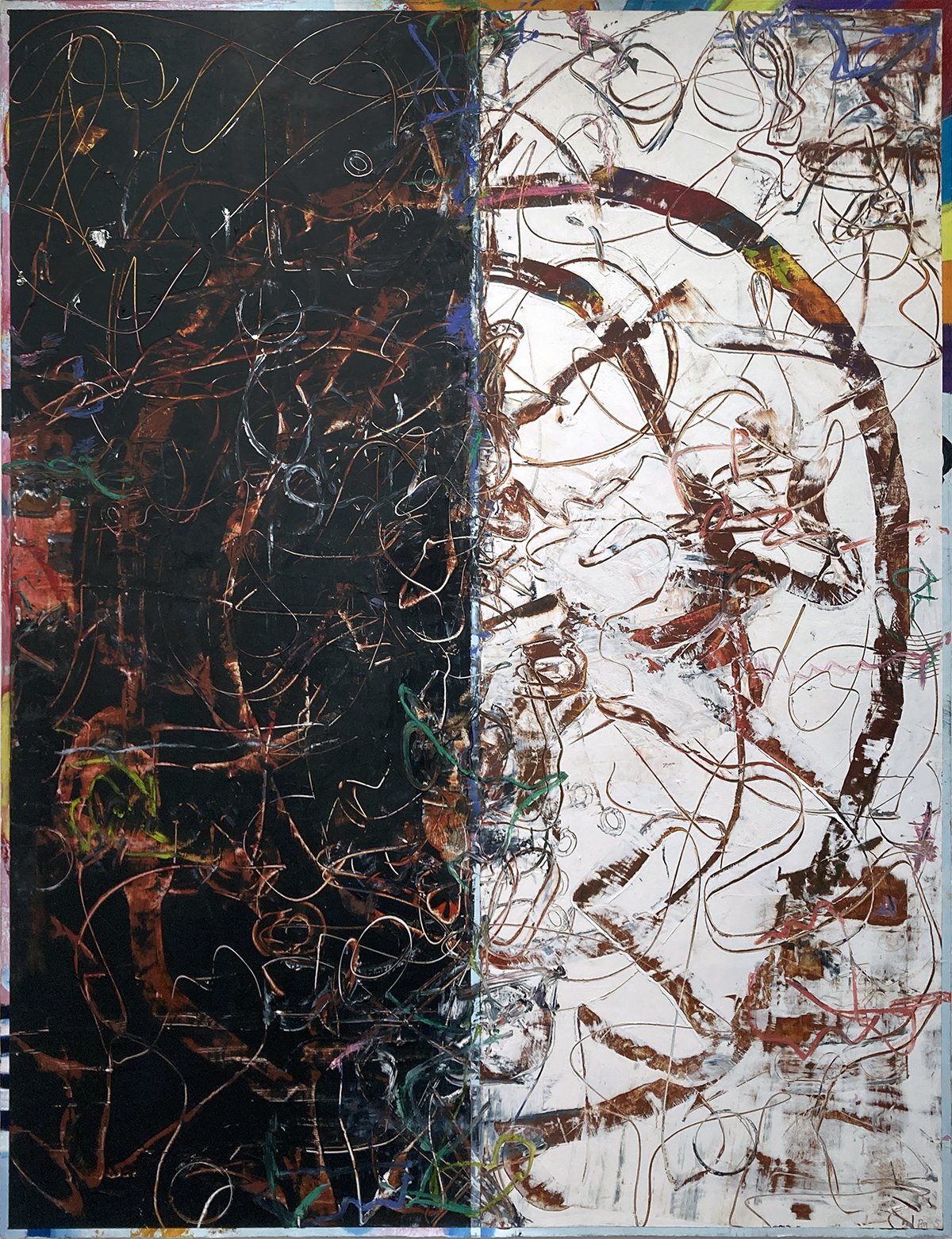
Carol Bivins, Living in America, oil paint, oil stick, and cold wax on panel. Image by Dani/elle Cunningham.
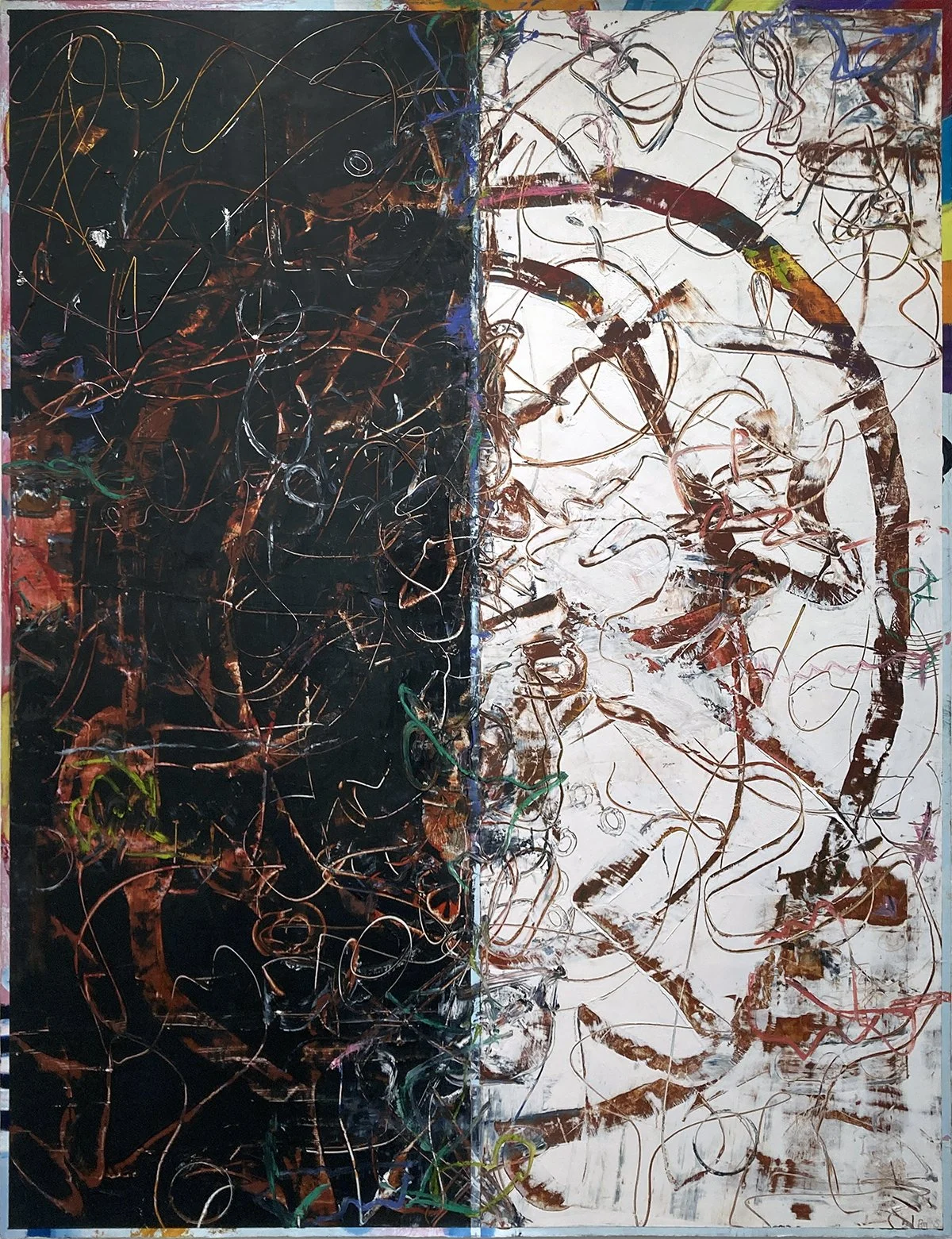
Bivins repeats her use of lines as visual borders, dividing the composition in Living in America into opposing fields of dark and light. At the center, a loosely rendered, partially broken spiral crosses the boundary between the two sides, its irregularity contrasting with the more deliberate lines that structure the painting. As the title suggests, there is no resolution in this painting. Although the spiral mediates between the sides, its allusion to transformation is an unsettled process.
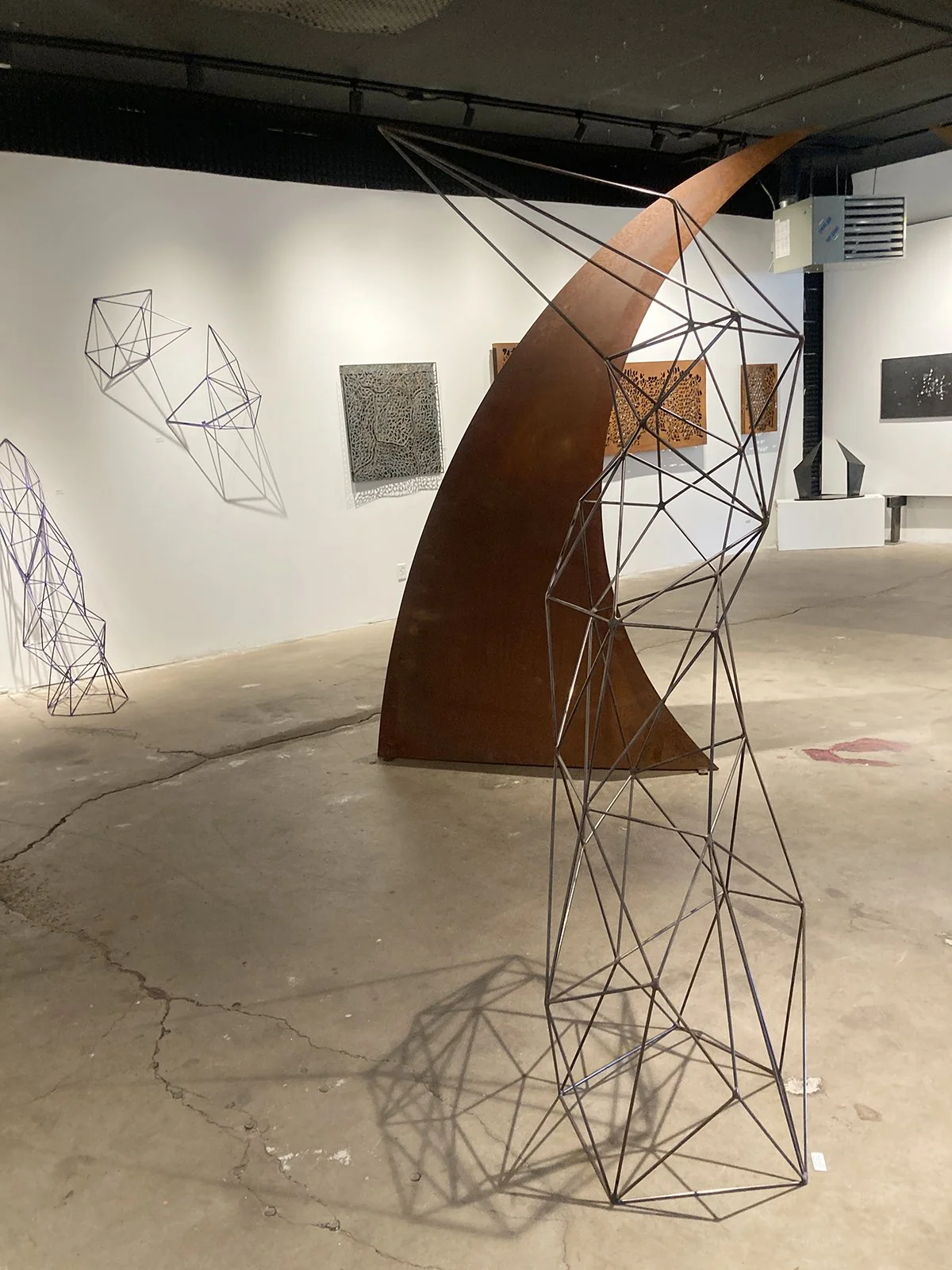
Jodie Roth Cooper, Curved Gateway, Corten steel rust patina, and Procession Series, stained stainless steel series. Image by Dani/elle Cunningham.
Contrasting with the spiritual tone and freedom of Bivins’s paintings, the hulking sculptures in Jodie Roth Cooper’s exhibition Intrasection in the Big Blo Gallery are as intellectual as they are constrained and meticulously constructed. They range stylistically from twisted, geometric beams to laser-cut wall hangings to a curved portal resembling oversized horn—all rendered in varying grades of steel. In a blue collar town like Pueblo, where steel once was a major income source for its citizens, Cooper’s work has symbolic as well as tangible meaning.
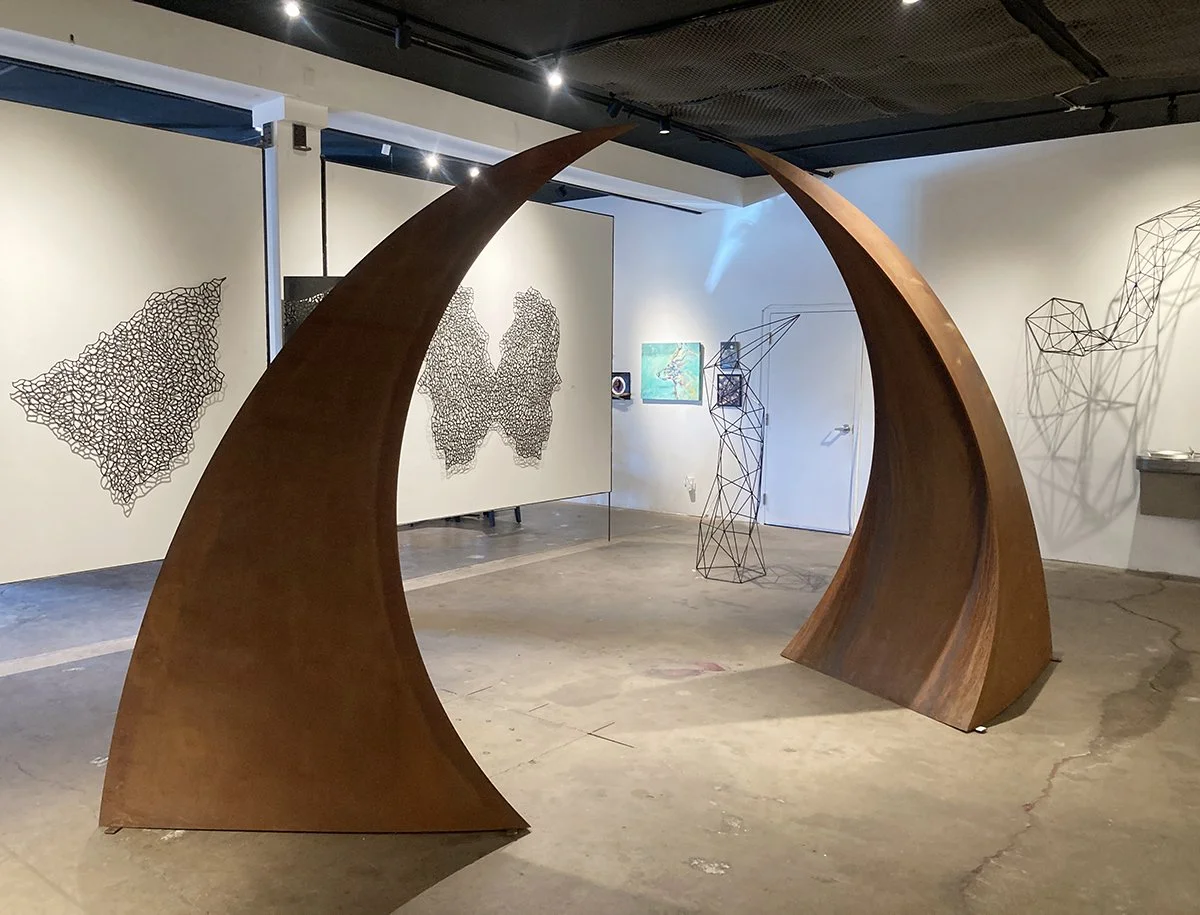
Jodie Roth Cooper, Curved Gateway, Corten steel with rust patina. Image by Dani/elle Cunningham.
Shooting upward from the middle of the gallery floor, the massive sculpture Curved Gateway occupies space with its twin arching components and richly patinated surface, bringing visibility to the invisible labor of steelworkers past and present. Made from Corten steel, the sculpture wears the passage of time on its surface. Its deterioration is an intentional part of the work—quite literally, what makes it art. [1]
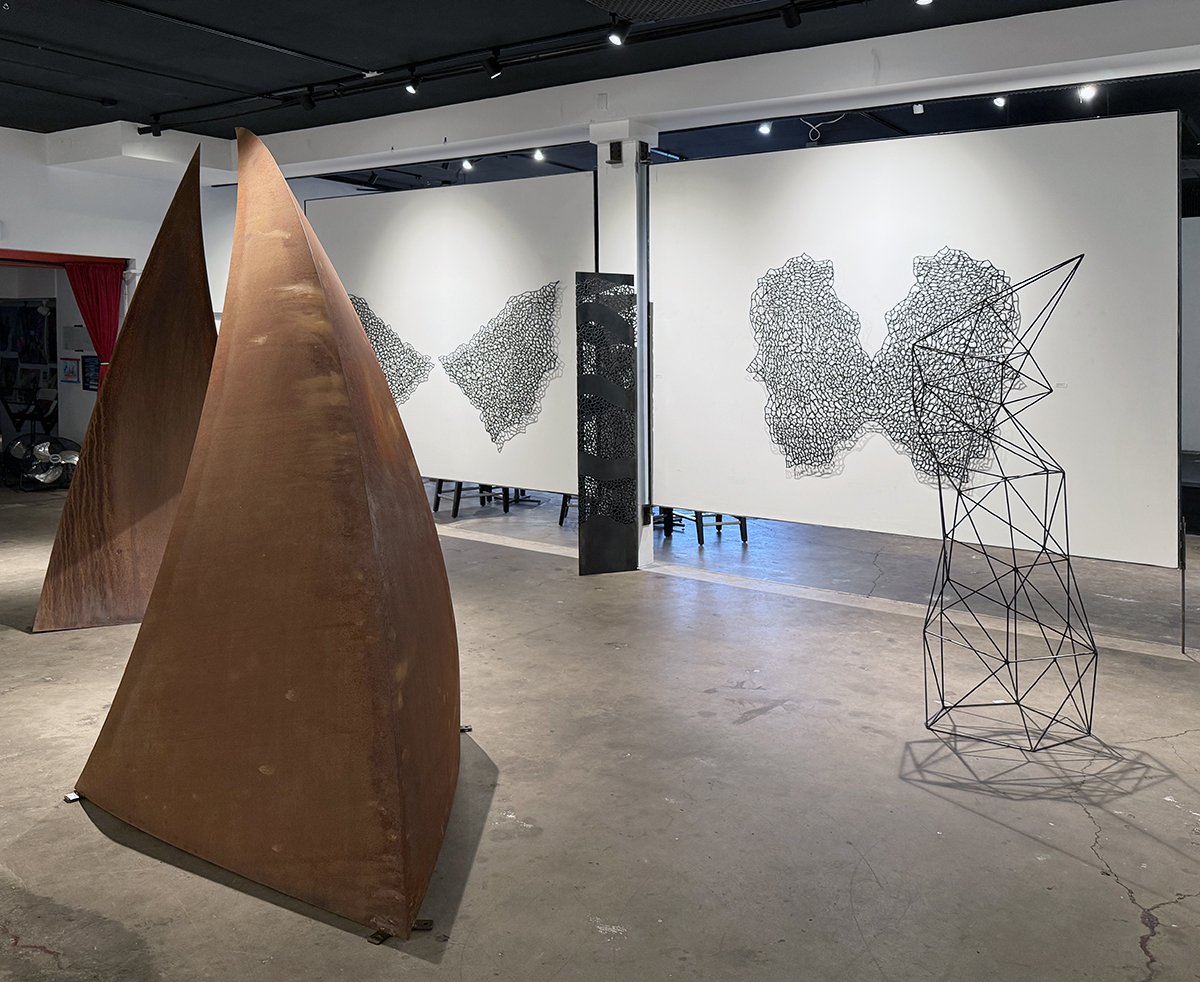
An installation view of Jodie Roth Cooper’s Curved Gateway, Corten steel with rust patina. Image courtesy of Blo Back Gallery.
Walking around Gateway is challenging—its scale palpable—while walking under it provides spatial relief afforded by its height. This tension between discomfort and release, coupled with the sculpture’s inwardly leaning parts that terminate sharply at the top, makes for a weighted, contemplative presence.
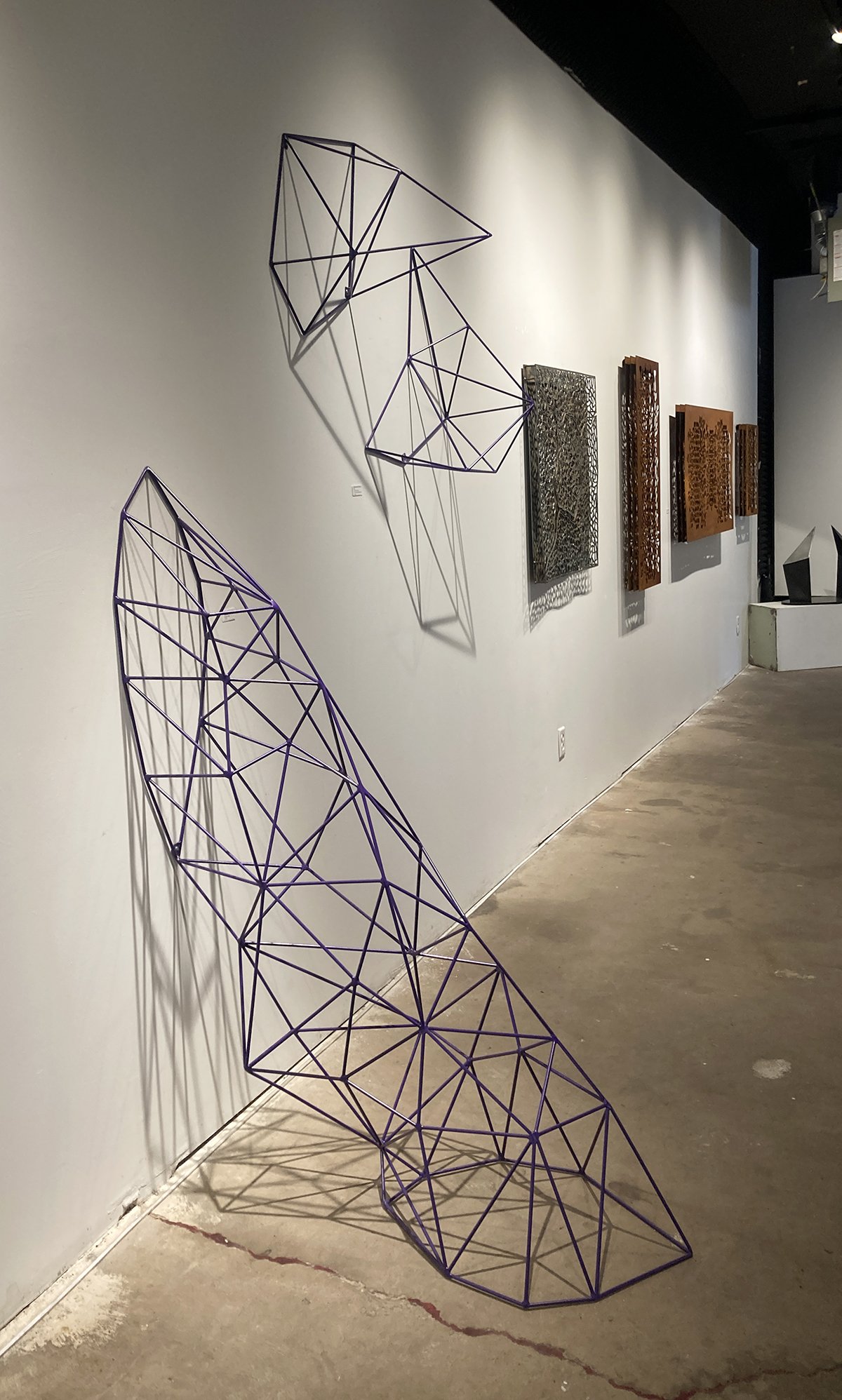
Jodie Roth Cooper, Wireframe Wall Series Pair, purple powder-coated steel. Image by Dani/elle Cunningham.
Cooper’s lighter Wire Frame Wall Series Pair, powder-coated in purple, offers a welcome moment of whimsy amid the monumental dominance of much of the exhibition. Possessing a web-like quality, the pair are composed of individual rods joined at dozens of varying angles, resulting in an illogical mass cascading across the wall. The works function less as finished art objects than as demonstrations of the artist’s fabrication process, their open-ended construction suggesting that they could, in theory, continue expanding indefinitely. With no clear point of completion, the passage of time again emerges as a theme in Cooper’s work, though not through physical deterioration as in Gateway but the possibility of perpetual growth.
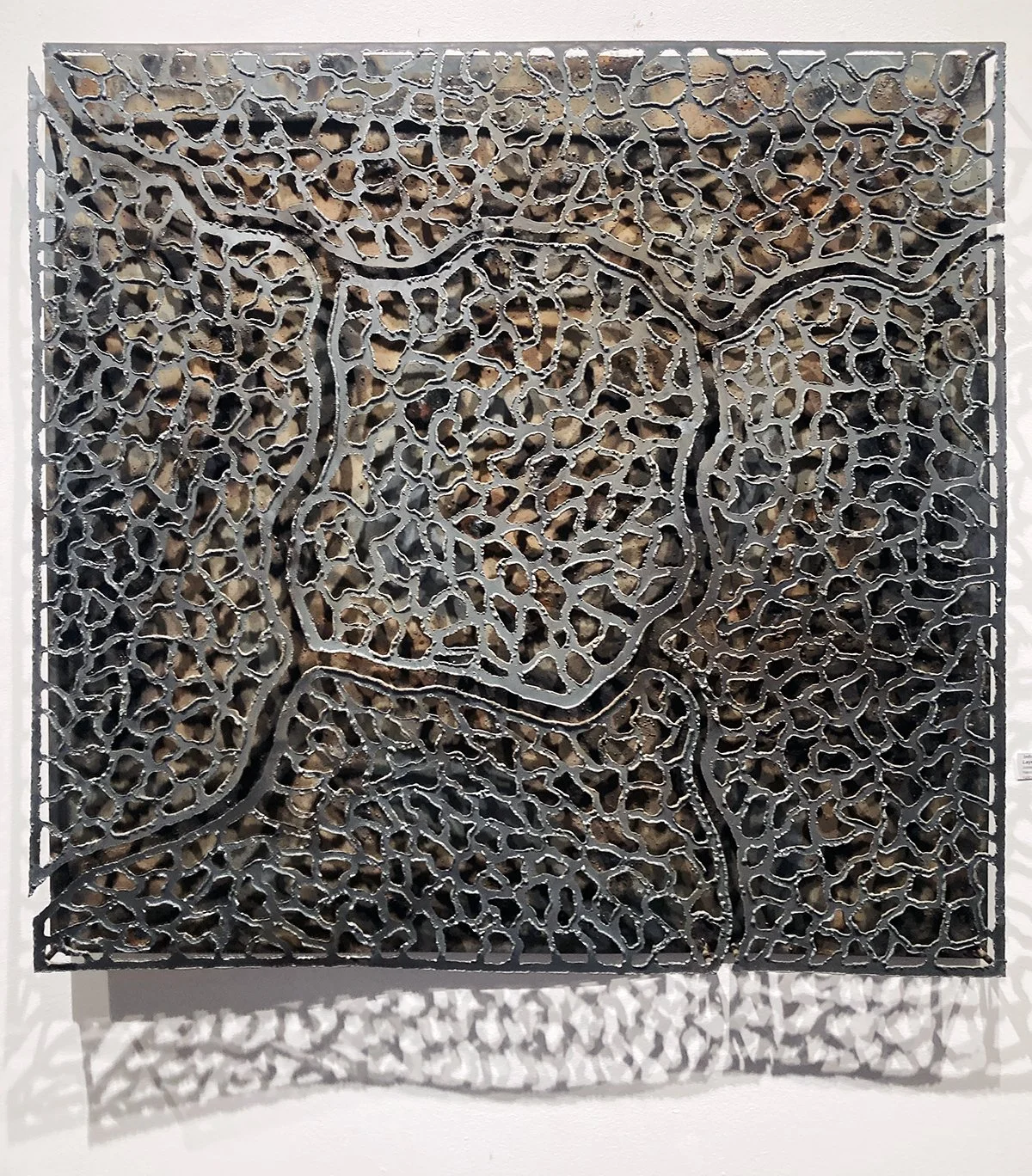
Jodie Roth Cooper, Infinite Pattern Layered Box, hand-cut mild steel. Image by Dani/elle Cunningham.
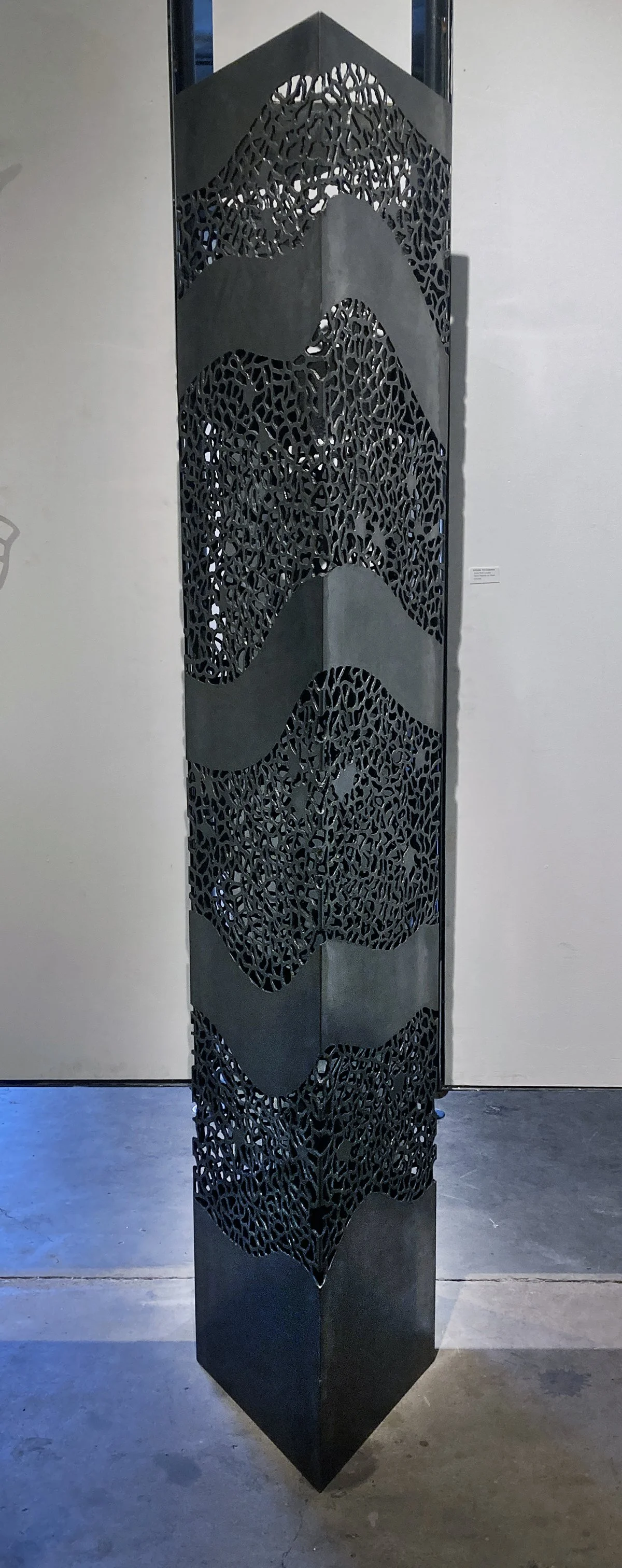
Multiple other series of sculptures also demonstrate Cooper’s interest in a range of metalsmithing and fabrication processes. In Infinite Pattern Layered Box, for example, Cooper constructs the work from hand-cut steel, its jagged perforations visibly registering the intense labor required to produce it. Each cutout is framed by irregular edges, emphasizing the physical process of removing the material.
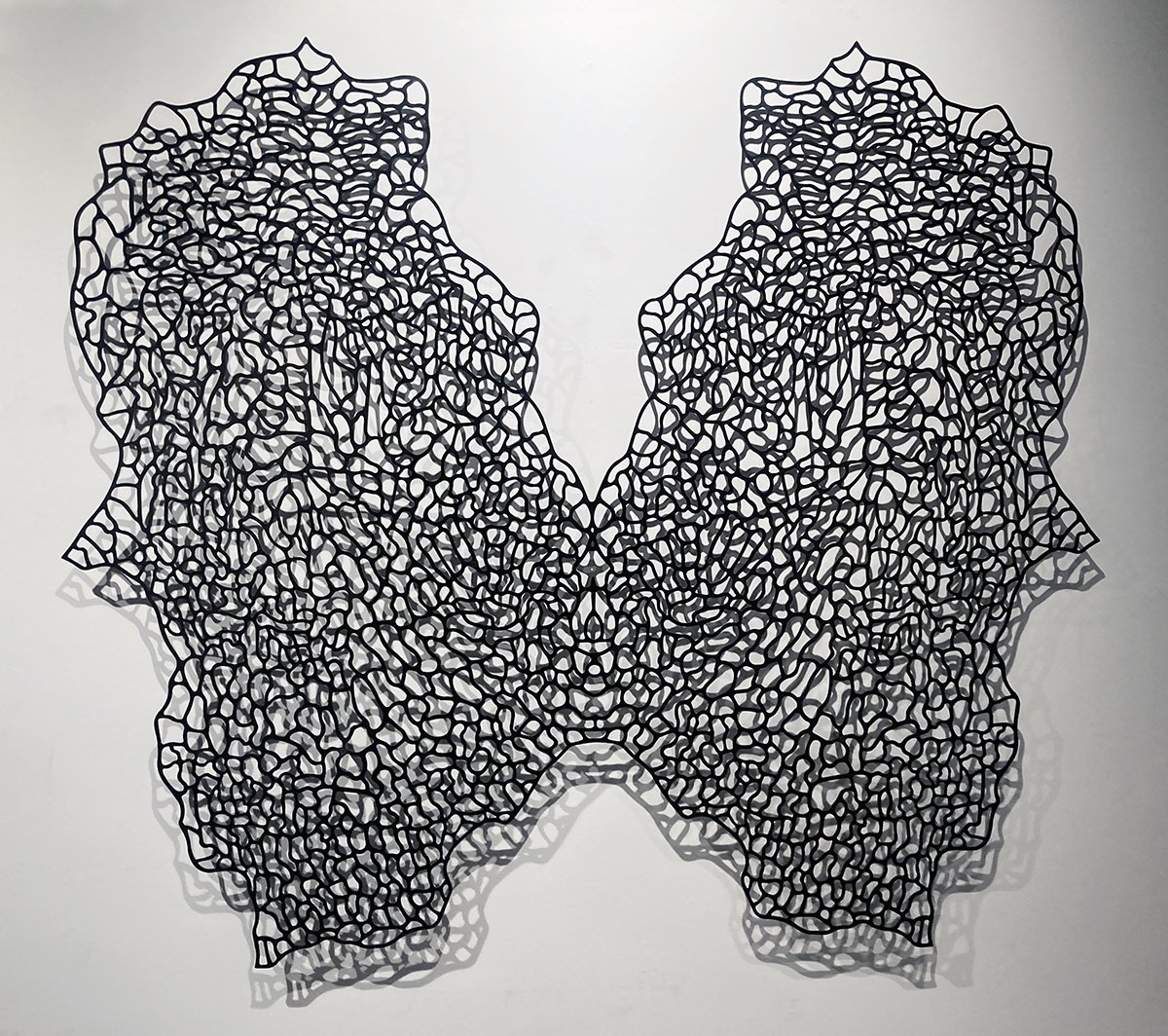
Jodie Roth Cooper, Infinite Rorschach #1, laser-cut blackened steel. Image by Dani/elle Cunningham.
By contrast, Infinite Rorschach #1, a wall-mounted sculpture resembling a pair of lacey butterfly wings, is laser-cut from blackened steel. [2] The dialogue between these works highlights Cooper’s ability to move between physically demanding and meticulous hand fabrication and technologically precise processes while consistently investigating steel’s expansive material possibilities.
Jodie Roth Cooper, Infinite Pattern Layered Divide, hand-cut mild steel. Image by Dani/elle Cunningham.
Taken together, In Transition and Intrasection demonstrate opposing material possibilities and artistic processes, influencing the artists’ respective emotional intelligence and strategic thinking. While Bivins uses layered paint, intuitive mark-making, and symbols to externalize her inner life and experiment with process, Cooper employs the surprising malleability of steel to examine intention and temporal progression. Despite their differences, both artists demonstrate the transformative influence of materials on artistic expression and the viewer’s experience; in their hands, paint and steel become portals, flooding the viewer with new ways to perceive.
Dani/elle Cunningham (she/her) is an artist, scholar, and independent curator. She writes about science fiction, gender, sexuality, and disability, with an emphasis on mental illness. The co-founder of chant cooperative, an artist co-op, she holds a master’s degree in art history and museum studies from the University of Denver.
[1] Corten steel is designed to develop a protective rust-like surface when exposed to weather. This protective layer slows further corrosion in certain conditions.
[2] Blackened steel is steel that is treated with dark black charcoal.