
Future Archives
Erica Rawson: Future Archives
PlatteForum
910 Galapago Street Suite C, Denver, CO 80204
July 31–August 28, 2026
Admission: free
Review by José Antonio Arellano
This has been a year of transitions for the nonprofit arts and youth-development organization PlatteForum in Denver. In March, Melissa Monforti became its new executive director, and in May, PlatteForum moved to the historic Smith’s Chapel building. This move consolidates its ArtLab, previously located in Curtis Park, and its gallery, previously in RiNo, under one roof in Denver’s La Alma-Lincoln Park neighborhood. This new location is more accessible via public transportation and closer to Denver’s Art District on Santa Fe.
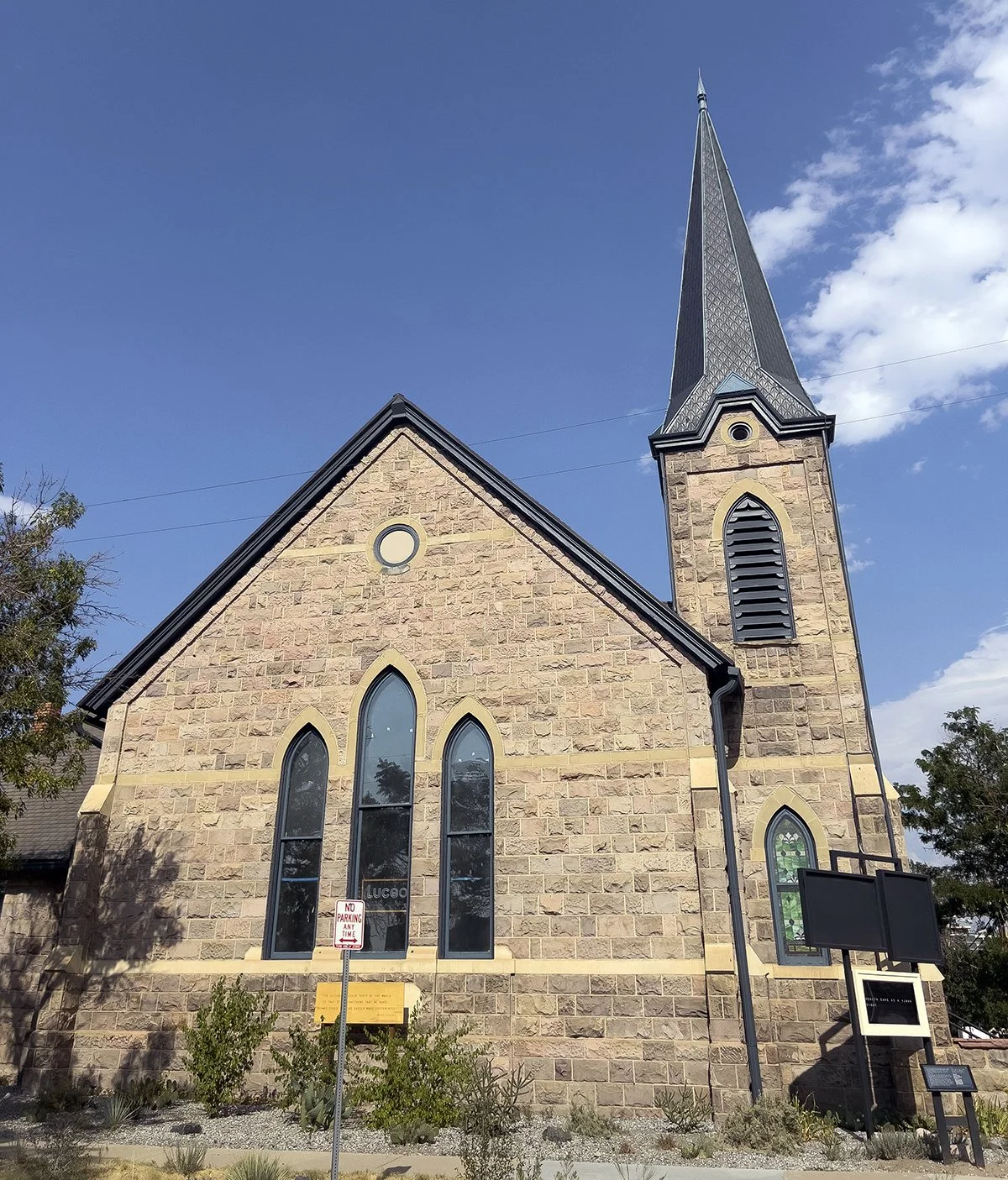
PlatteForum’s new location at 910 Galapago Street in Denver’s Art District on Santa Fe. Image by José Antonio Arellano.
PlatteForum offers high school students paid internships that include access to artist workshops, mental health services, and leadership opportunities. For artists, PlatteForum offers eight-week-long residencies, during which they can develop their practice while working with students.
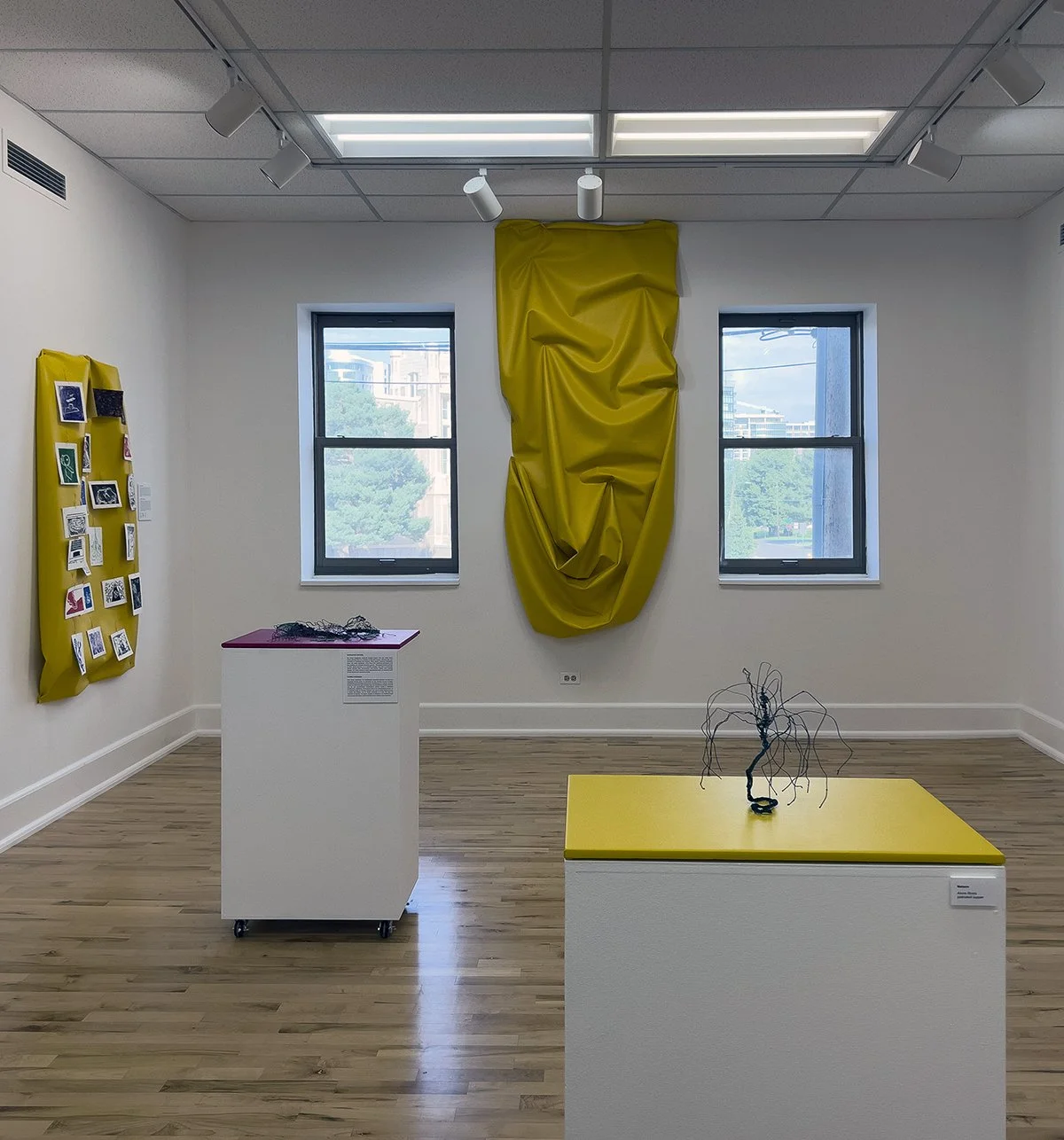
An installation view of Erica Rawson’s exhibition Future Archives at PlatteForum. Image by José Antonio Arellano.
PlatteForum opened its inaugural exhibition, Future Archives, in its new space on July 31. On view through August 28, the exhibition features the work of its most recent resident artist, Erica Rawson, along with some work created by the high school interns.
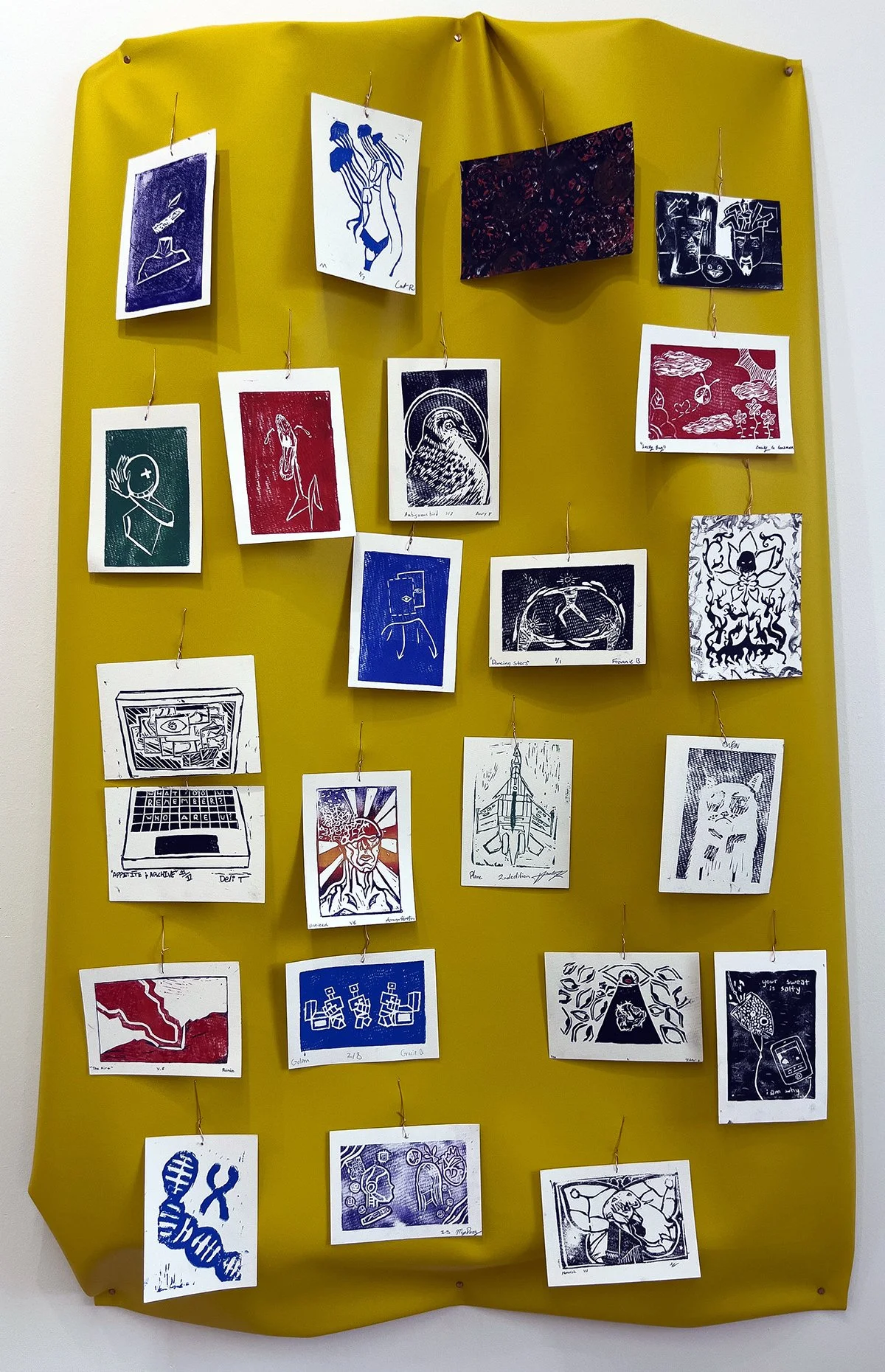
Marine vinyl shaped to hold linocut prints by Avery, Deli, AJ, Gracie, Amelia, Mya, Rónán, Owen, Valentino, Frannie, Kayla, Emily, Leti, Cat, Akira, and Eder. Image by José Antonio Arellano.
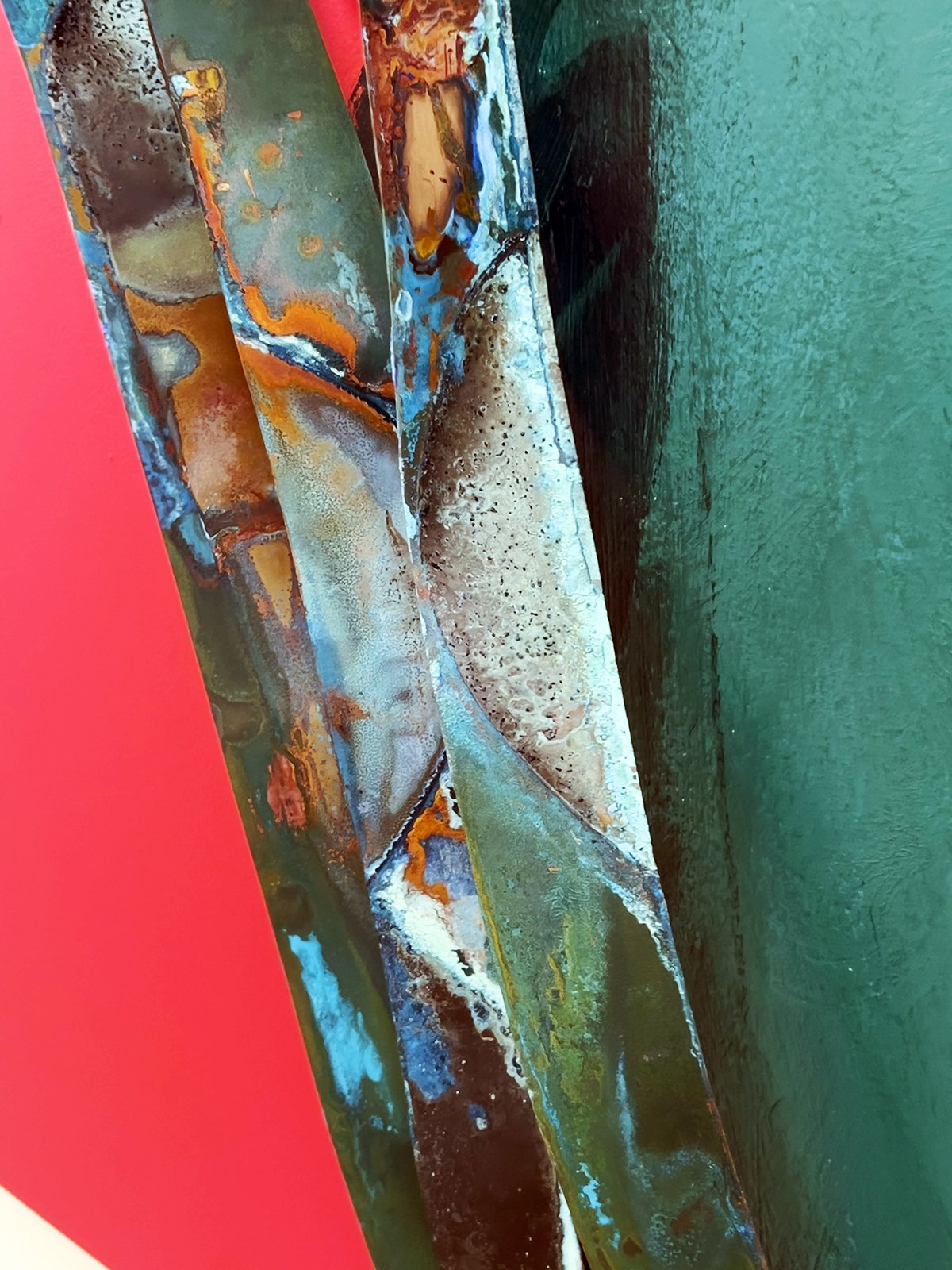
Rawson taught students how to create linocut prints and experiment with copper, using vinegar and salt to corrode the metal. The process renders crystallized structures and patinas of varying blues and verdigris greens. Some of the small forms the students shaped out of copper wire and nails disintegrated entirely. This transformative process suggested metaphors of alchemy and identity. Rawson asked the students to think about how they hold the stories that constitute their evolving identities and what material archives they invoke beyond the digital networks that structure their lives.
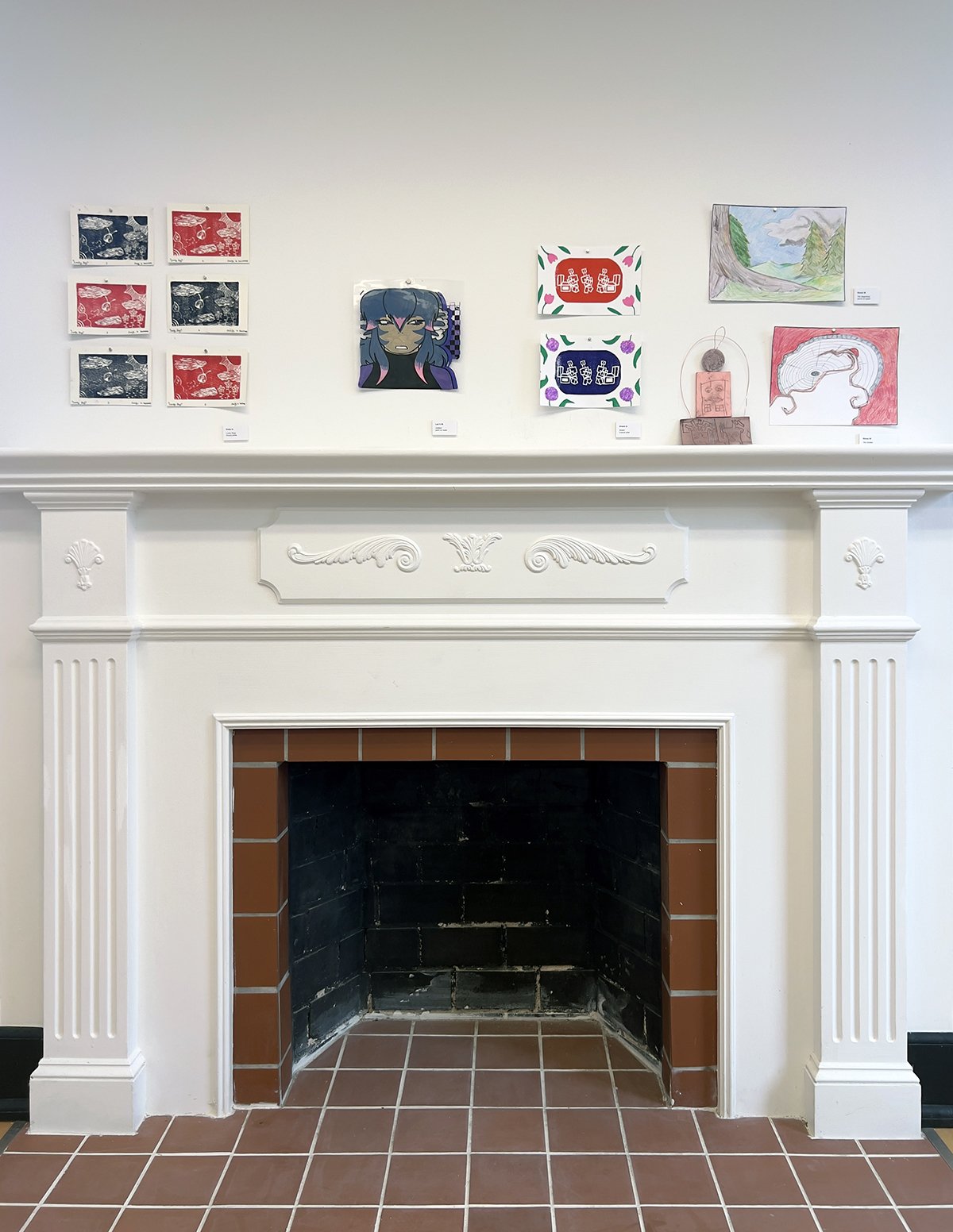
An installation view of works by the PlatteForum student interns on display in the exhibition Future Archives. Image by José Antonio Arellano.
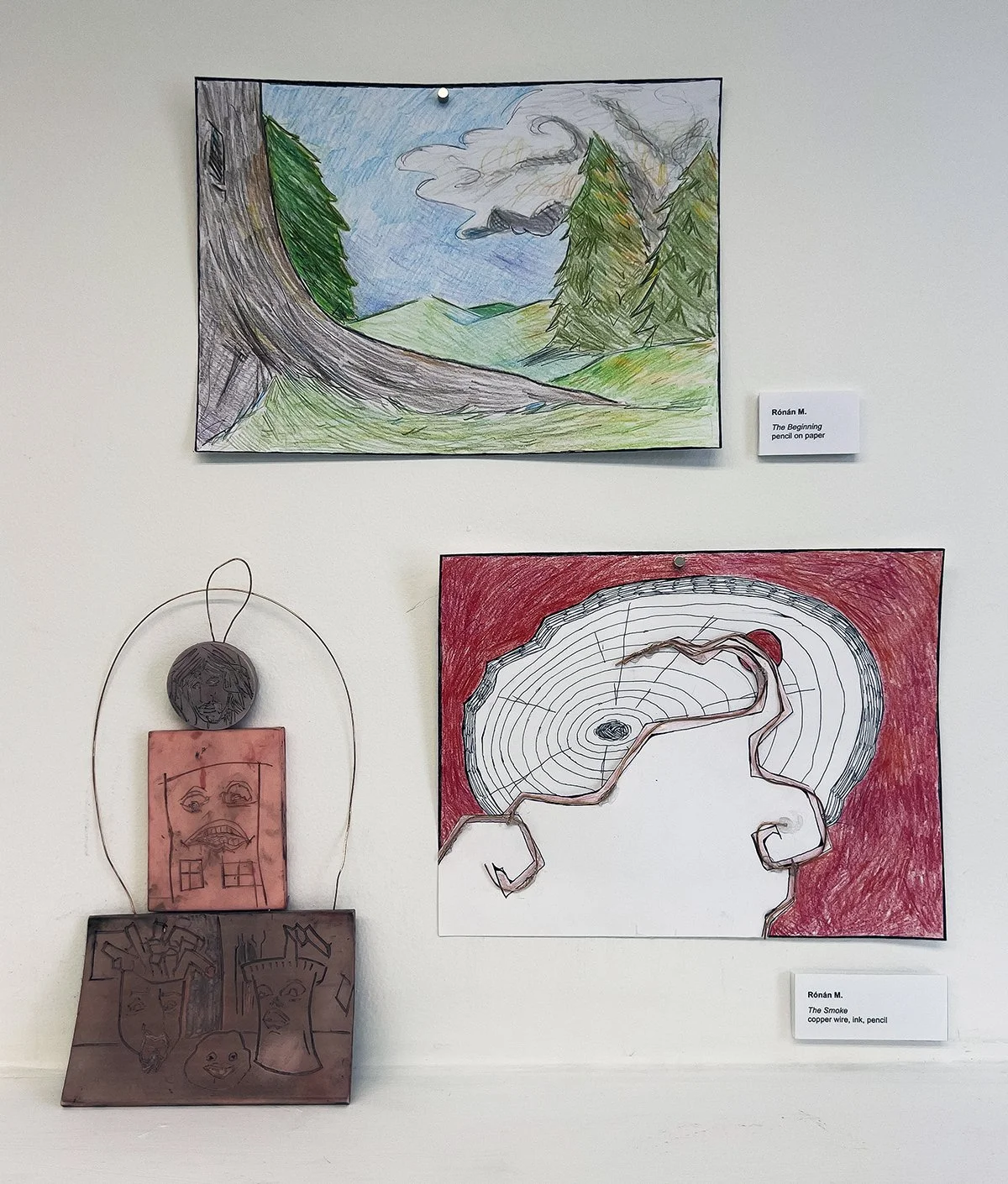
Works by Rónán in the Future Archives exhibition. Image by José Antonio Arellano.
Visible in the students’ linocuts are themes of nature: flowers and insects, birds and bees. Fast food is personified, and technology abounds in the figures of cell phones and laptops. Two forms that look to me like a strand of DNA and a chromosome raise questions about the stories biologists tell. The students appear to be asking: “What makes the I who addresses you distinctly ‘me’?”
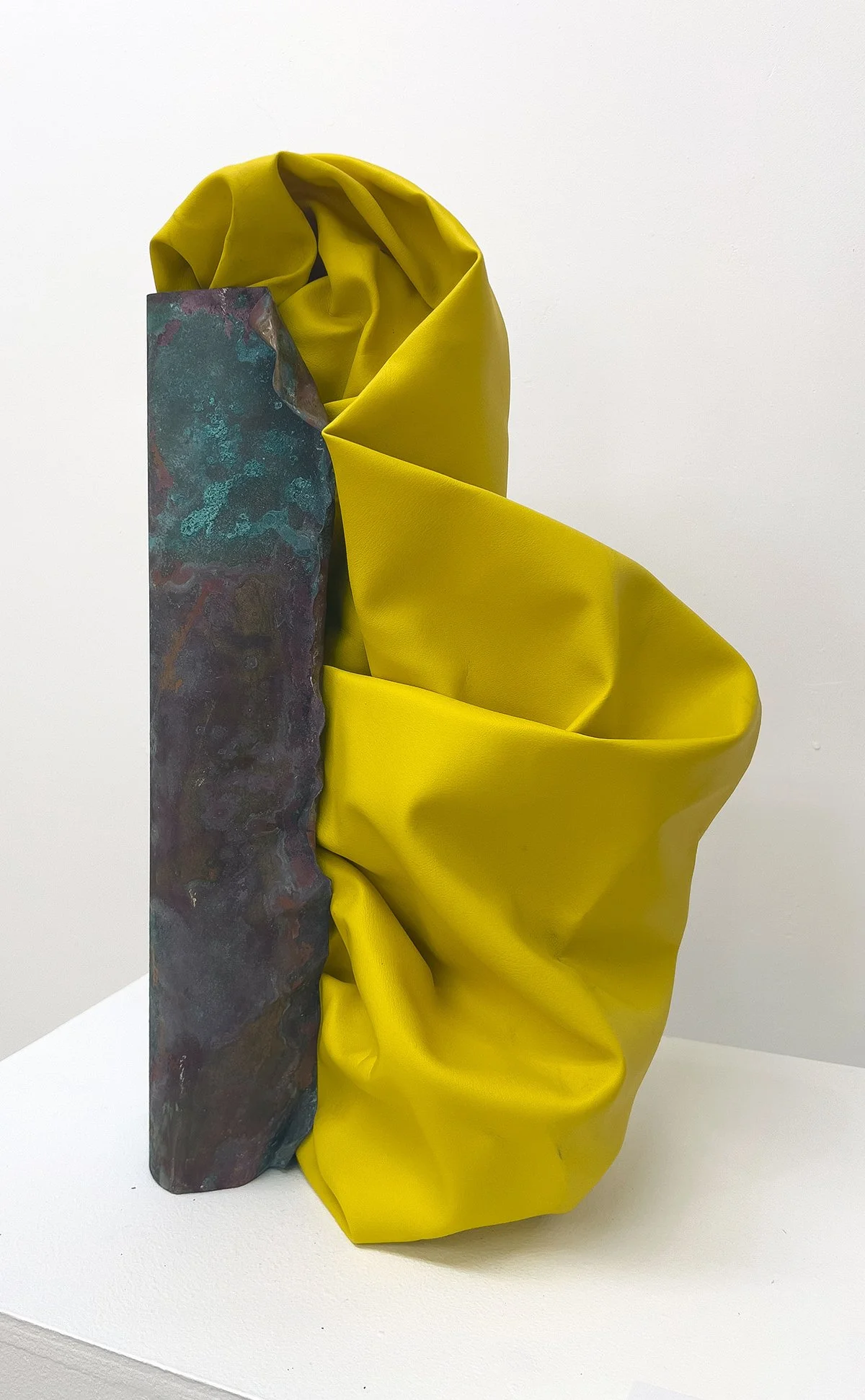
Erica Rawson, Two Ways of Remembering, 2026, patinated copper and marine vinyl, 7 x 12 x 22 inches. Image by José Antonio Arellano.
For Rawson’s own pieces in this exhibition, copper and folded marine vinyl lead the way, with her acrylic paintings following their contours. She describes marine vinyl as a kind of physical archive. Unlike other materials, whose “shape memory” can return them to their original shape when triggered by heat, marine vinyl inverts this capacity to “remember.” As a plasticized PVC, marine vinyl cannot recover once folded; it appears unable to release—to “forget”—the folds that crease it.
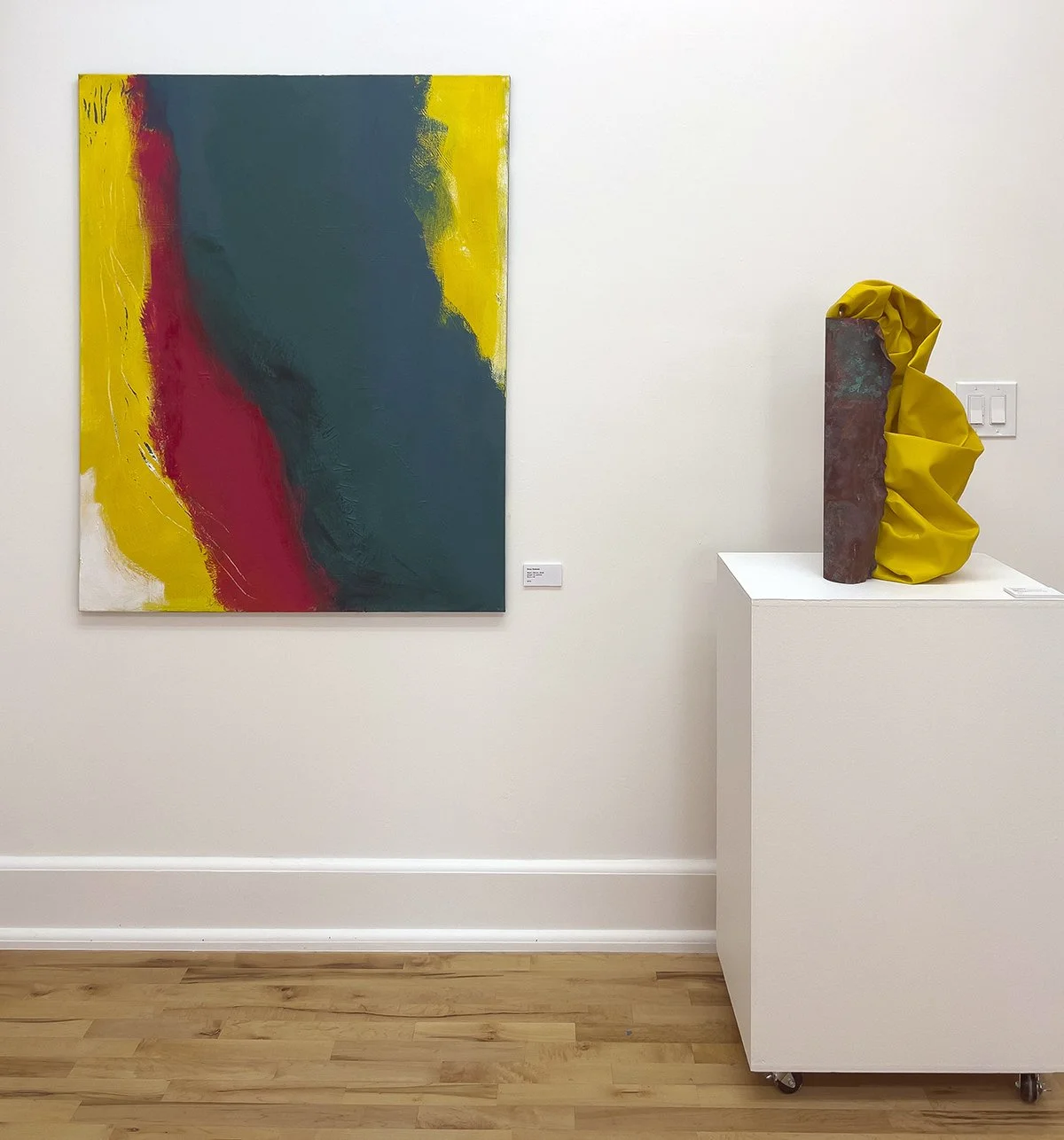
A view of two works by Erica Rawson. On the left: Mark | Bloom, 2026, acrylic on canvas, 35.5 x 48 inches. On the right: Two Ways of Remembering, 2026, patinated copper and marine vinyl, 7 x 12 x 22 inches. Image by José Antonio Arellano.
Rawson’s canvases invoke postwar American color field and gestural paintings. From farther away, a painting appears to include rivulets of paint similar to those in a Morris Louis Unfurled, but upon closer inspection, the rivulets are oxidized copper strips overlain on the canvas. The oxidation creates turquoise and pale blue-greens, while the rust-orange and coppery brown patches of a pitted, frothy variegation are characteristic both of vinegar applied directly and of vapor exposure. The acrylic paints echo the colors of copper corrosion, creating a field that visually merges the copper and paint.
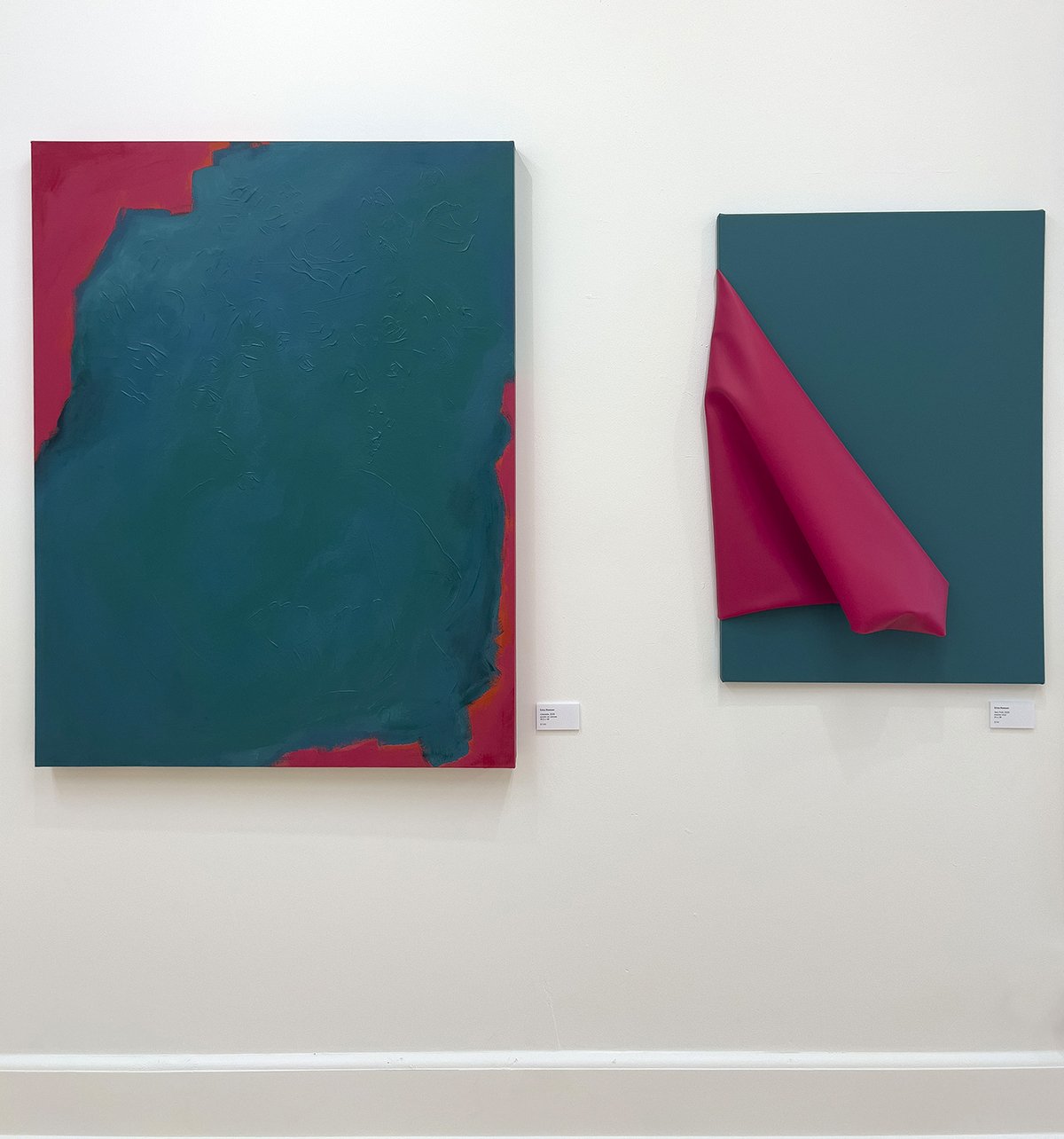
Two works by Erica Rawson. On the left: Cascade, 2026, acrylic on canvas, 35.5 x 48 inches. On the right: Sea Fold, 2026, marine vinyl, 24 x 36 inches. Image by José Antonio Arellano.
I want to say that this approach offers a statement on painting’s relationship to metals we extract from the earth. This relationship is partly mimetic, because visually resonant, but mostly abstract and conceptual, as if painting can frame the human interventions that lead to corrosion.
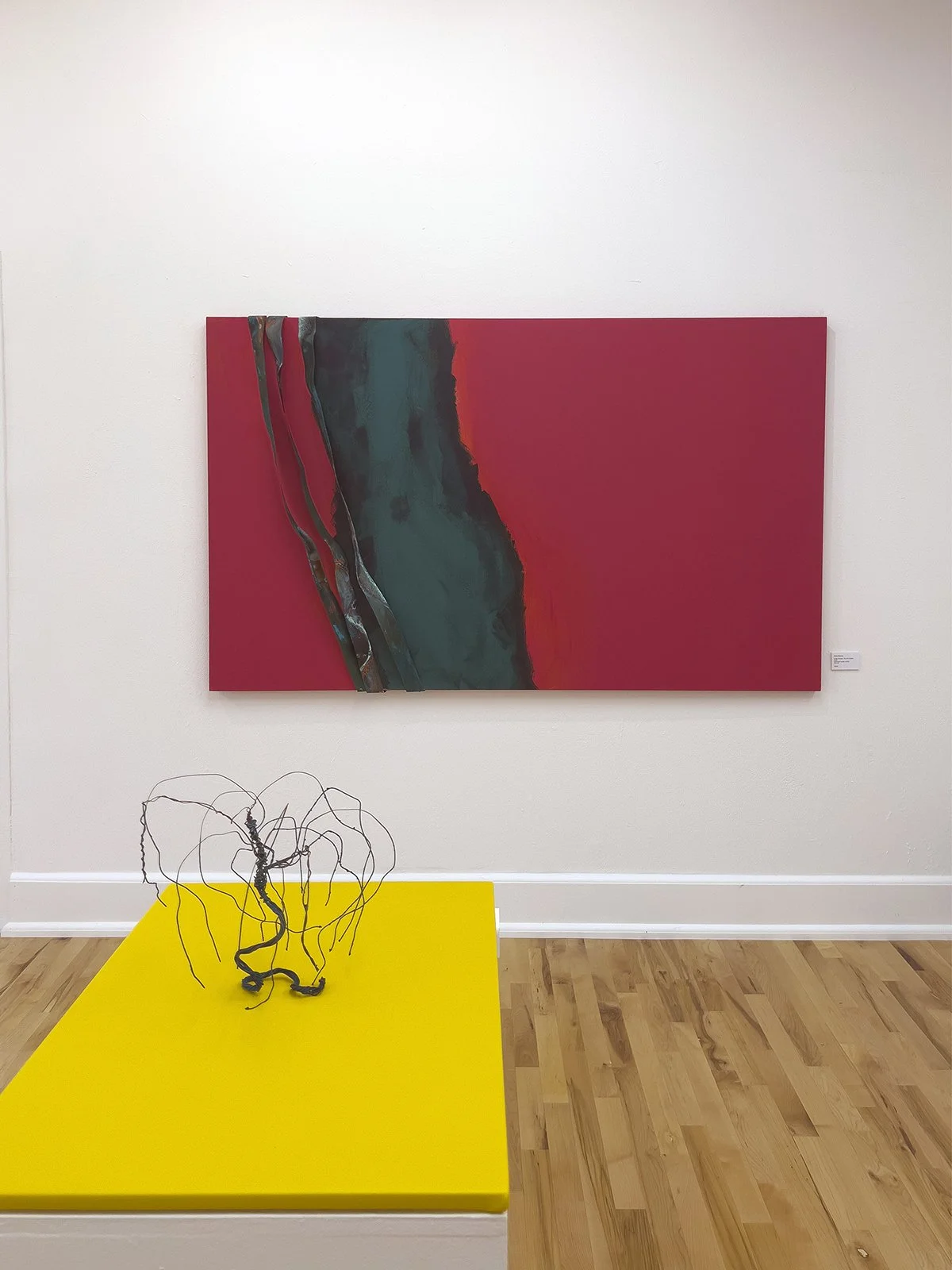
A view of two works in the Future Archives exhibition. In the foreground: Nelson, Azure Roots, patinated copper. In the background: Erica Rawson, In My Dreams, You Are Awake, 2026, patinated copper and acrylic, 72 x 48 inches. Image by José Antonio Arellano.
But perhaps such a reading overstates the case. The setting that produced this work is pedagogical, the result of classrooms filled with conversation and the craft of art. The walls needed art to fill them to create a sense of culmination—a record of time well spent together in reflective thought and productive activity.
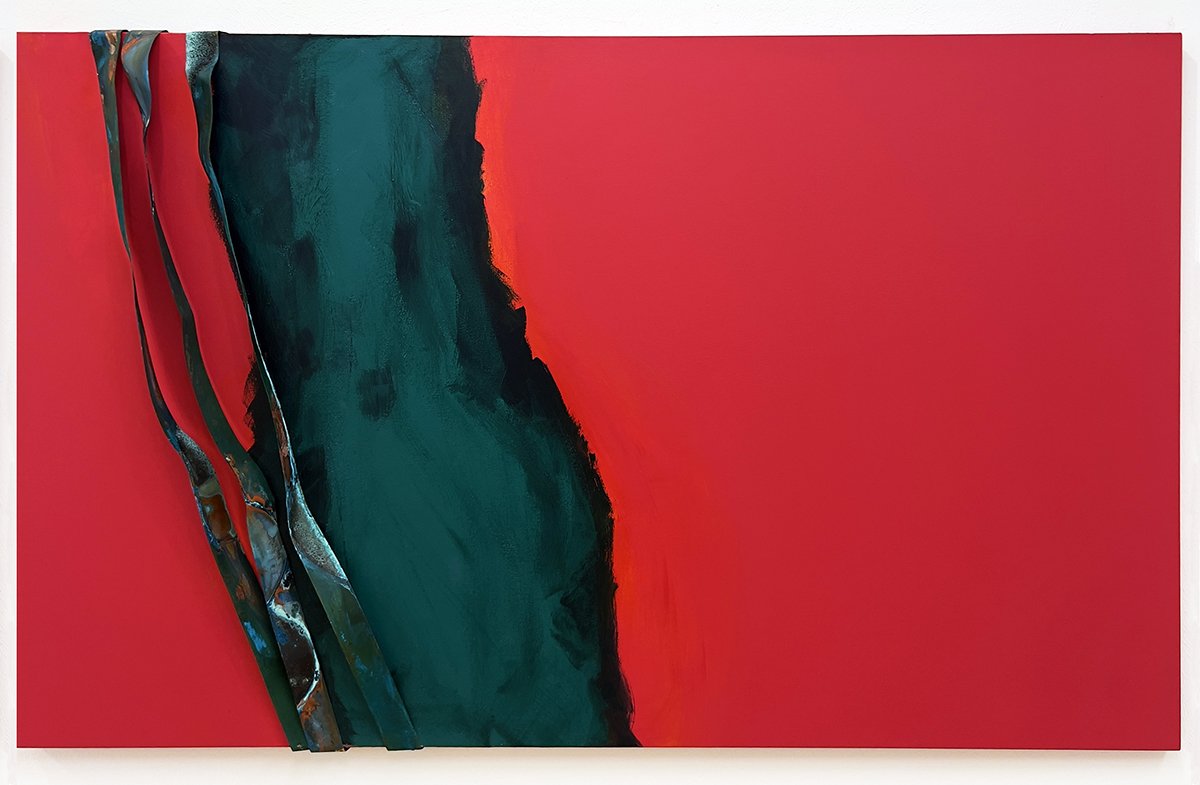
Erica Rawson, In My Dreams, You Are Awake, 2026, patinated copper and acrylic, 72 x 48 inches. Image by José Antonio Arellano.
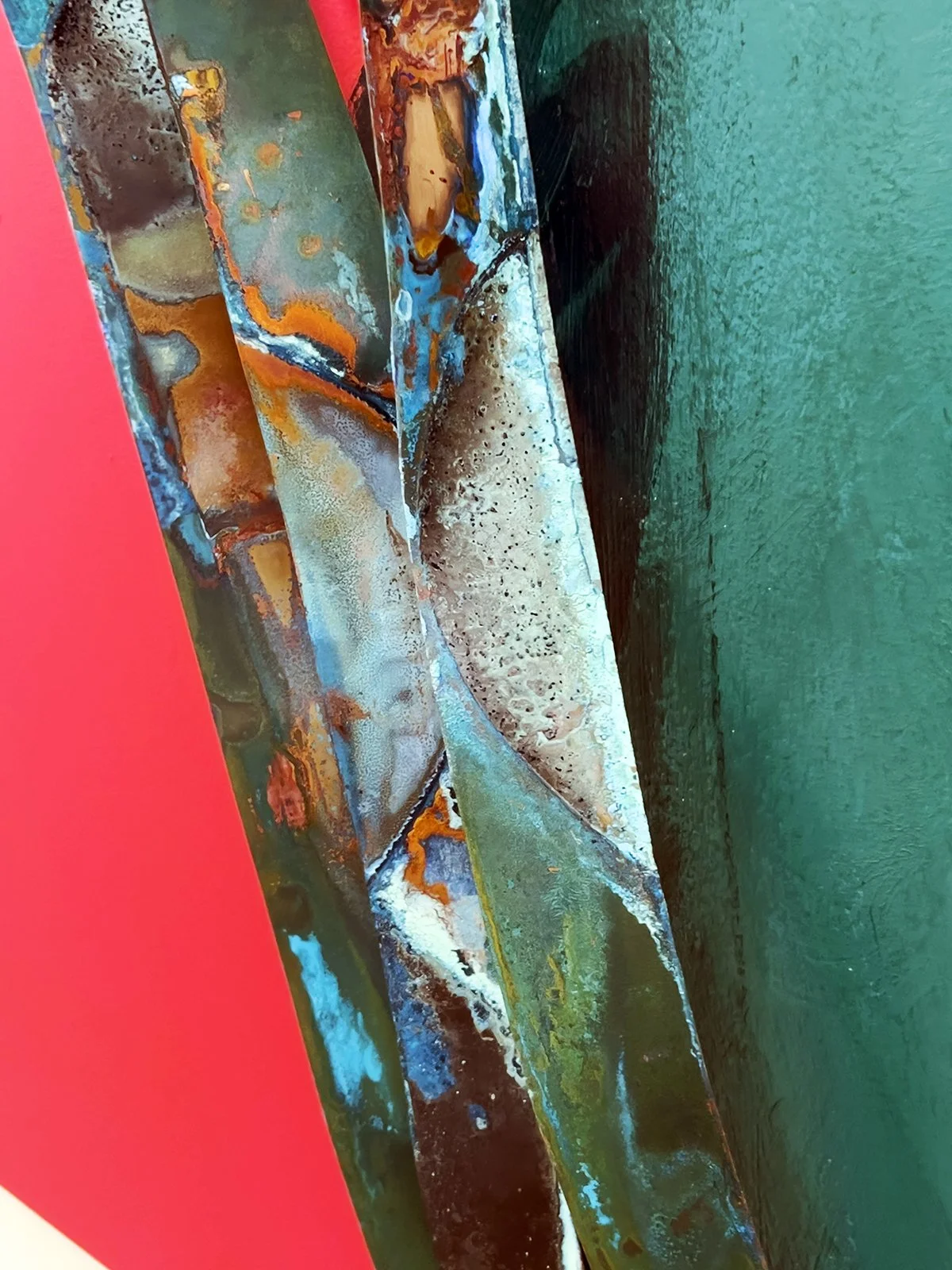
A detail view of Erica Rawson’s In My Dreams, You Are Awake, 2026, patinated copper and acrylic 72 x 48 inches. Image by José Antonio Arellano.
I learned from Rawson that the copper she used in In My Dreams, You Are Awake was given to her by one of her art teachers. Such a gift highlights a value that a material’s commodity status can never approximate. A local scrap yard, I am told, would pay at least $3 a pound for the copper. A teacher’s gift to her student, and now this teacher’s gift to her own, and so on, in the best-case scenario, as long as we have spaces that value an arts-based education. Insofar as we continue to extract materials that will outlast us all—marine vinyl is effectively non-biodegradable—we should fight for the aphoristic truth that vita may be brevis, but ars is longa.
José Antonio Arellano (he/him) is an Associate Professor of English and fine arts at the United States Air Force Academy. He holds a Ph.D. in English language and literature from the University of Chicago. He is the author of Race Class: Reading Mexican American Literature in the Era of Neoliberalism, 1981-1984, published by Cambridge University Press in 2025.