
Set the Table: The Art of Nourishment
Set the Table: The Art of Nourishment
Dairy Arts Center
2590 Walnut Street, Boulder Colorado 80302
May 15–August 2, 2026
Admission: $5 requested donation
Review by Maggie Sava
The table where we eat is a place of convergence, where the influences and dynamics of the outside world intersect our private rituals. As such, it is anything but a neutral space. The dinner table has been an important focal point and thematic mechanism in modern art, bridging the personal and domestic with the public and systemic. Judy Chicago’s famous The Dinner Party from 1970, a much-discussed artwork from the second-wave feminist movement, celebrates historically influential women through individual table settings arranged for a banquet. Carrie Mae Weems’ Kitchen Table series from 1990 stages intimate snapshots of household scenes to explore Black womanhood, motherhood, and the blurring between the domestic and the political.
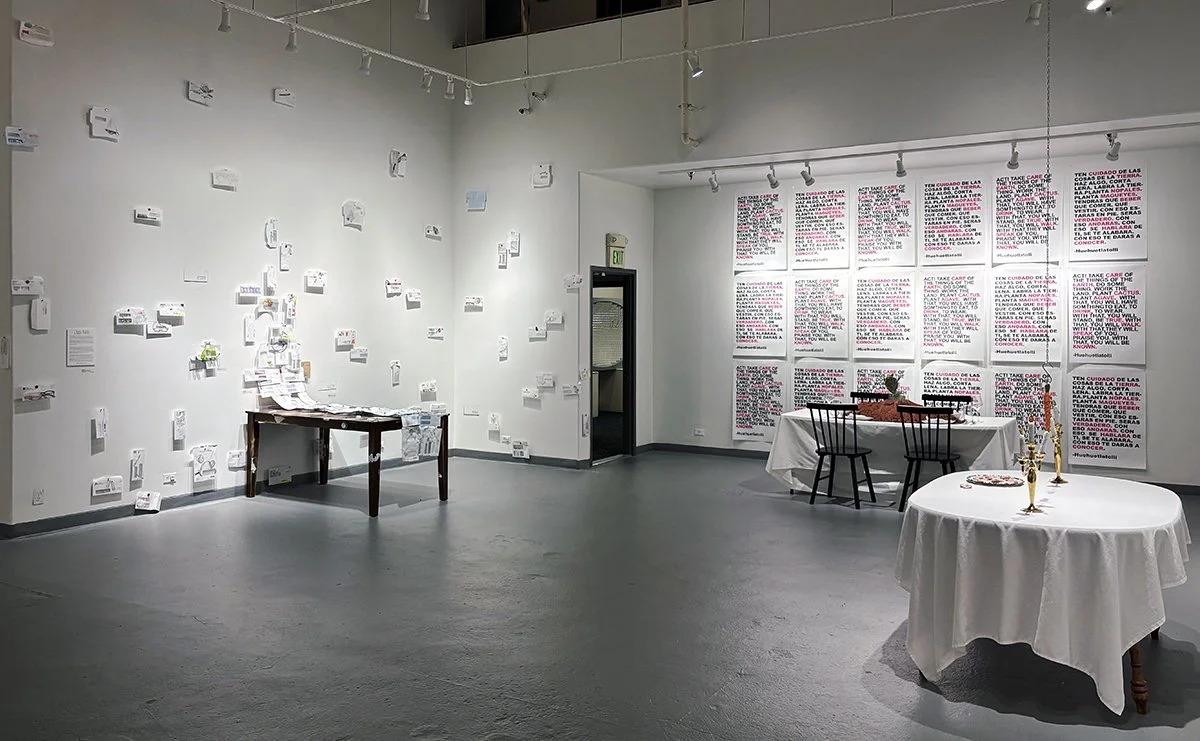
An installation view of the exhibition Set the Table: The Art of Nourishment at the Dairy Arts Center. From left to right: Clara Nulty, Please Excuse the Mess (come on in), 2026, dining table and mixed media, 60 x 36 x 30 inches, and Clara Nulty, Paperwork, varied edition 68, 2022–2026, privacy envelopes and mixed media, dimensions variable; Desert ArtLAB, unsetting the table, 2026, multimedia installation, dimensions variable, and Desert ArtLAB, Words of the Elders, 2026, wheat paste posters, dimensions variable; Carly Owens Weiss, You are here to be swallowed up, 2026, installation of embroidered soft sculpture. Image by DARIA.
Set the Table: The Art of Nourishment, currently on view at the Dairy Arts Center, adopts this same motif, “exploring the dinner table as a central site of cultural, ecological, and artistic discourse.” [1] The featured works unveil how food is tied to identity, history, environment, and social connection. They also portray the dinner table itself as both an object and a stage.
Bringing together more than nine artists and collectives, Set the Table invites viewers to come break bread together. It asks us to consider the phrase “you are what you eat,” not as an individual judgment but as an opening inquiry to look at how food systems, social systems, and interpersonal systems affect us every time we take a seat.
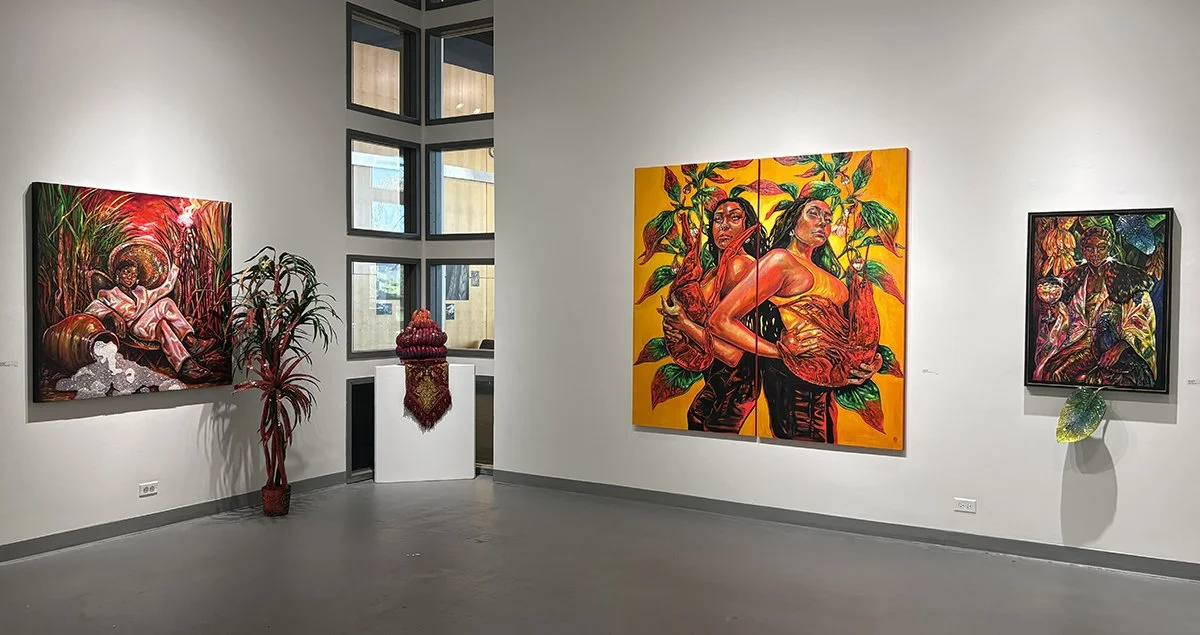
An installation view of works by Jazz Holmes in Set the Table: The Art of Nourishment at the Dairy Arts Center. Image by DARIA.
Set the Table spans nearly all of the Dairy Art Center's galleries. The McMahon Gallery primarily houses the paintings and installation-based works in the show. It is a room filled with several different types of tables and tableaus. Jazz Holmes’s jewel-toned canvases and glimmering sculptures are immediately striking. Her style is instantly recognizable, especially with several recent exhibitions placing her work at the forefront of the regional art scene. With the central visual and thematic role that food and culinary practices take on in her creative practice, Holmes seems like a natural and necessary member of this cohort of artists exploring the concept of nourishment.
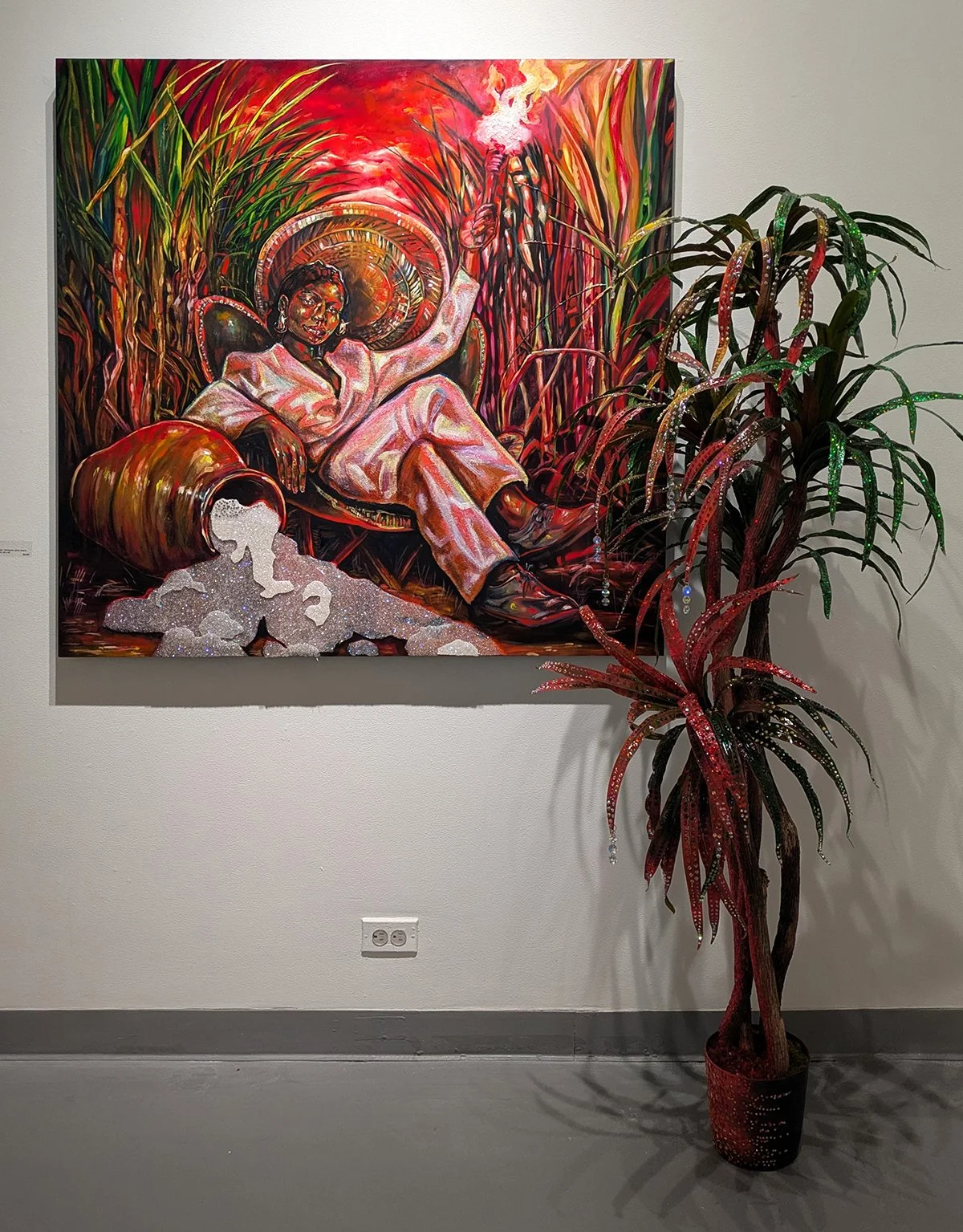
Jazz Holmes, Brûlée, 2026, oil, bagasse paper, rhinestones, glass beads, and faux plant, 48 x 48 inches. Image by Maggie Sava.
Each of Holmes's paintings feature colorful, dynamic portraits of Black women with strong presences, surrounded by botanical and food-based imagery. In Brûlée, a woman casually reclines in a wicker chair sporting a pink pantsuit, holding up a lit torch towards the sky. She is seated in a field of sugar cane, suggested by the name of the painting and the overturned jar at the bottom left of the image, spilling out white, glittering sugar. She has a relaxed and confident expression as she looks directly out at the viewer. Next to the canvas is a sculptural plant covered in rhinestones.
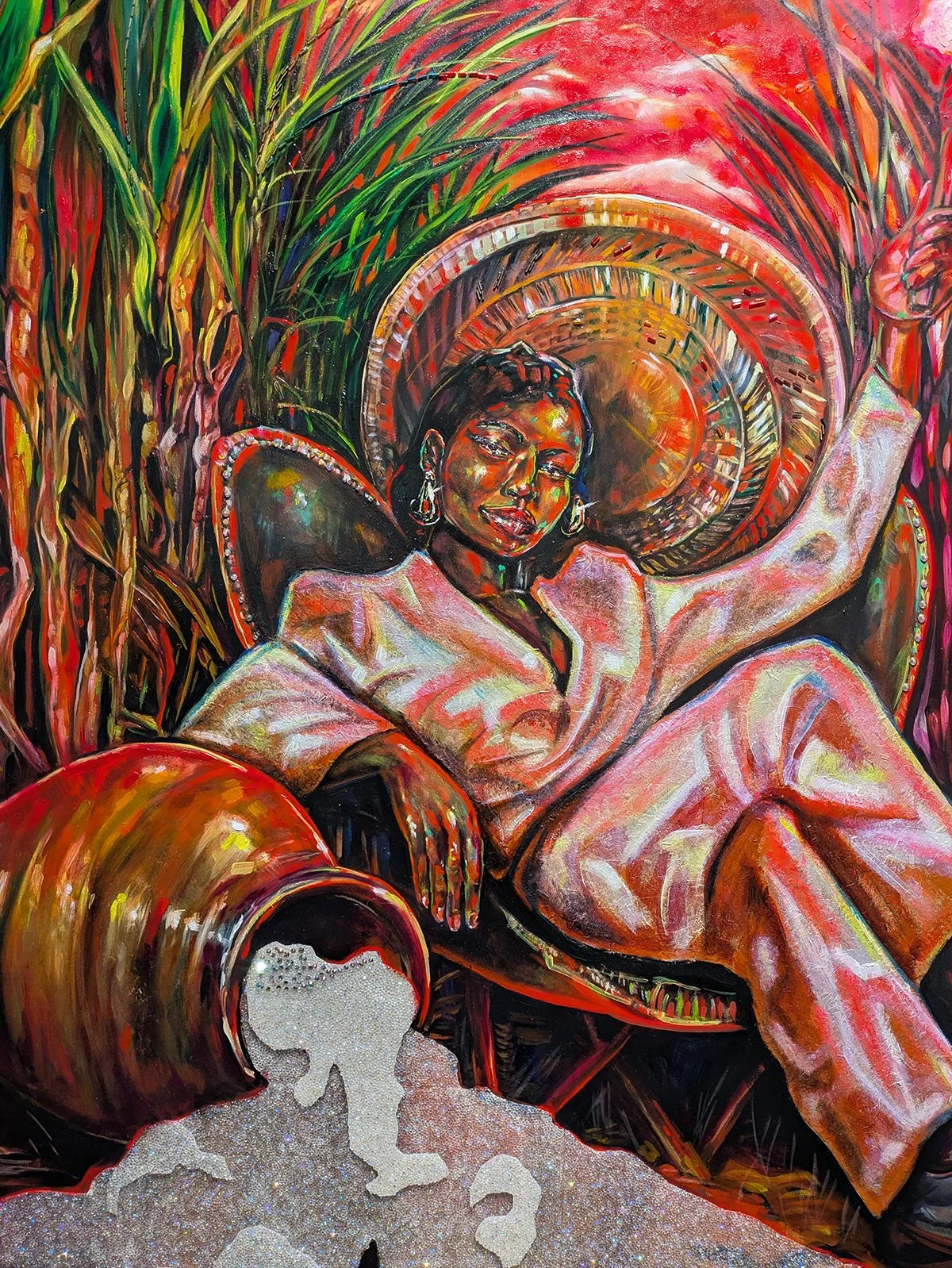
A detail view of Jazz Holmes’s Brûlée, 2026, oil, bagasse paper, rhinestones, and glass beads on birch, 48 x 48 inches. Image by Maggie Sava.
Food in Holmes's works serves as “both material and metaphor-carrying legacies of resilience, creativity, and survival,” acknowledging the rich cultural traditions, agricultural stewardship, and culinary practices established and nurtured by Black families throughout generations. [2] By focusing on sugar, an ingredient that finds its way into so much of our food today, Brûlée peels back the layers of history to remind viewers that the mass production of sugar was carried out using the labor of enslaved people in the Caribbean.
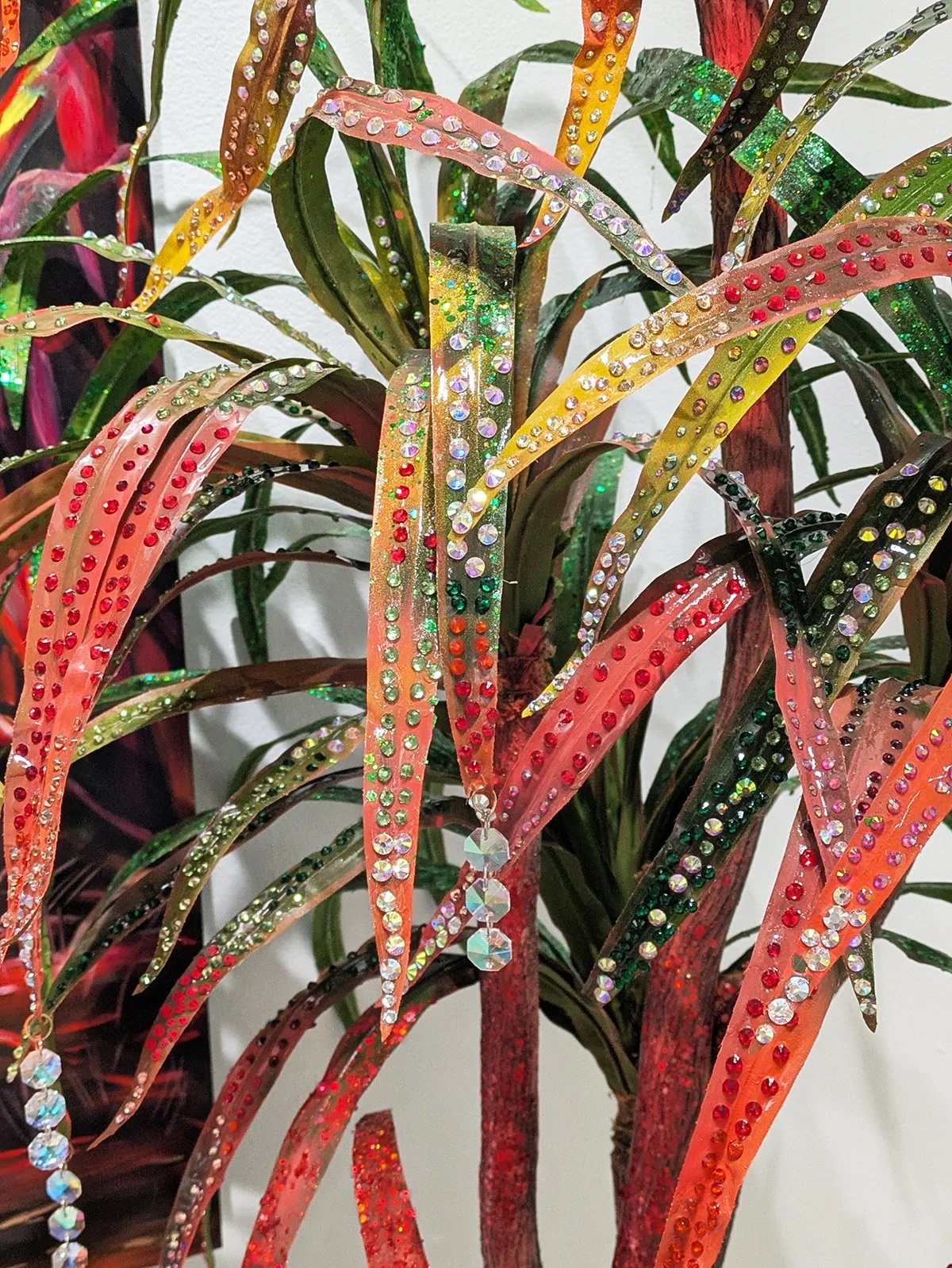
A detail view of the sculpture that is part of Jazz Holmes’s Brûlée, 2026, which features a faux plant festooned with oil paint, rhinestones, glitter, and glass beads. Image by Maggie Sava.
At the same time, Holmes conveys the power of Black communities who have developed and maintained vibrant traditions, many passed down through the sharing of beloved dishes like brûlée, despite histories of violence, disenfranchisement, and cultural theft. Her paintings are bright celebrations—visual feasts made of deep colors and sparkly gems.
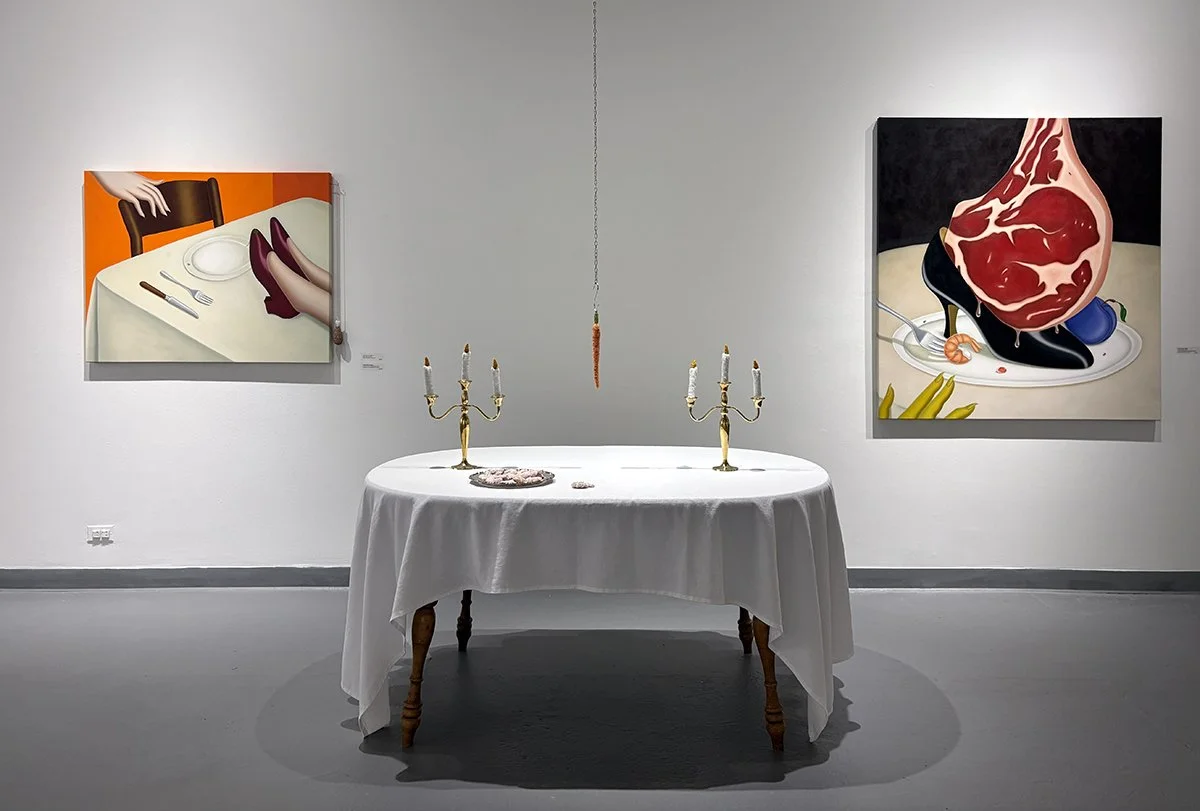
An installation view of works by Carly Owens Weiss in Set the Table: The Art of Nourishment at the Dairy Arts Center. Image by DARIA.
Just to the left, Carly Owens Weiss’s bedazzled meal You are here to be swallowed up, as well as her paired canvases, parallel Holmes’s work in medium and arrangement while creating thematic contrast. Whereas Holmes celebrates Black femininity and culture through food, and her canvases and sculptural work often carry a clear sincerity around those themes, Weiss’ drama-infused, stage-like scenes expose the performative aspects of womanhood in relation to the scaffolded contexts of the dinner table. [3]
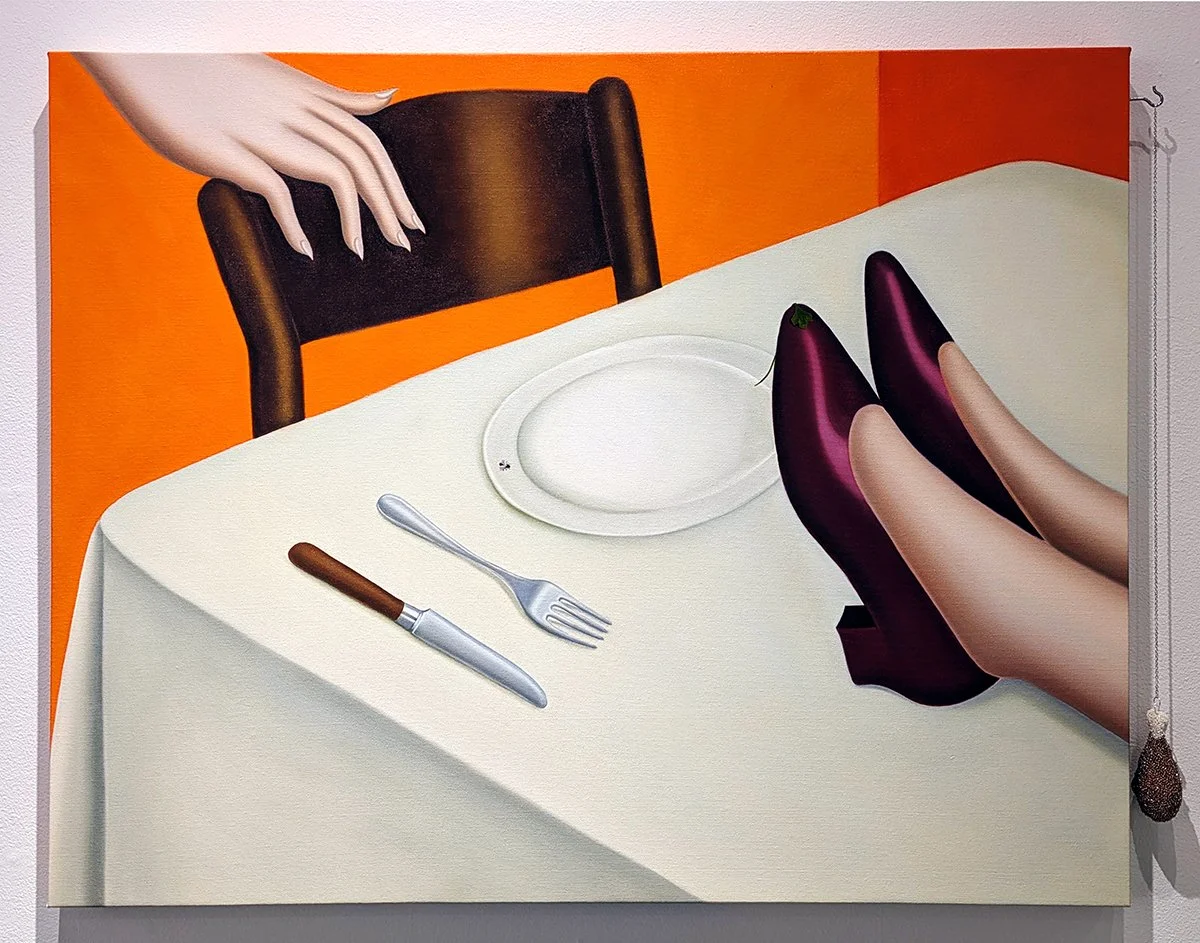
Carly Owens Weiss, If the Shoe Fits, 2026, oil on canvas with beaded sculpture, 50 x 54 x 1.5 inches. Image by Maggie Sava.
In If the Shoe Fits, Weiss features a disembodied hand pulling out a chair placed at a table that is set with a white tablecloth, a plate, and silverware. Across from the hand, a pair of feet in high heels rest on the table, cut off from the suggested body by the edge of the canvas. The characters in this composition are anonymous, only vaguely identifiable through the shoes and the finger’s long, sharp nails. Is the person attached to the shoes being presented on the table as part of the meal, to be consumed by our gaze? Or is the table perhaps part of the women’s body, itself the main character of the painting?
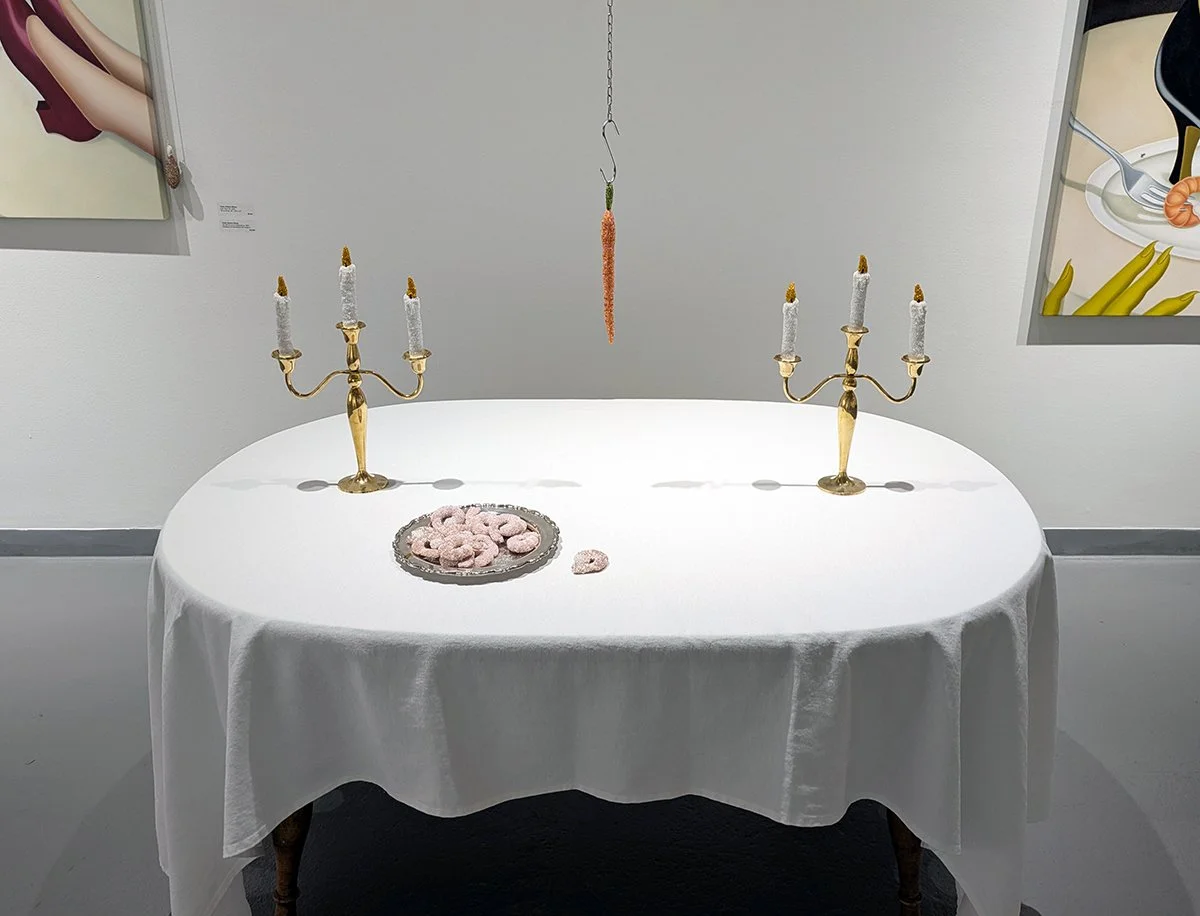
Carly Owens Weiss, You are here to be swallowed up, 2026, installation with embroidered soft sculpture. Image by Maggie Sava.
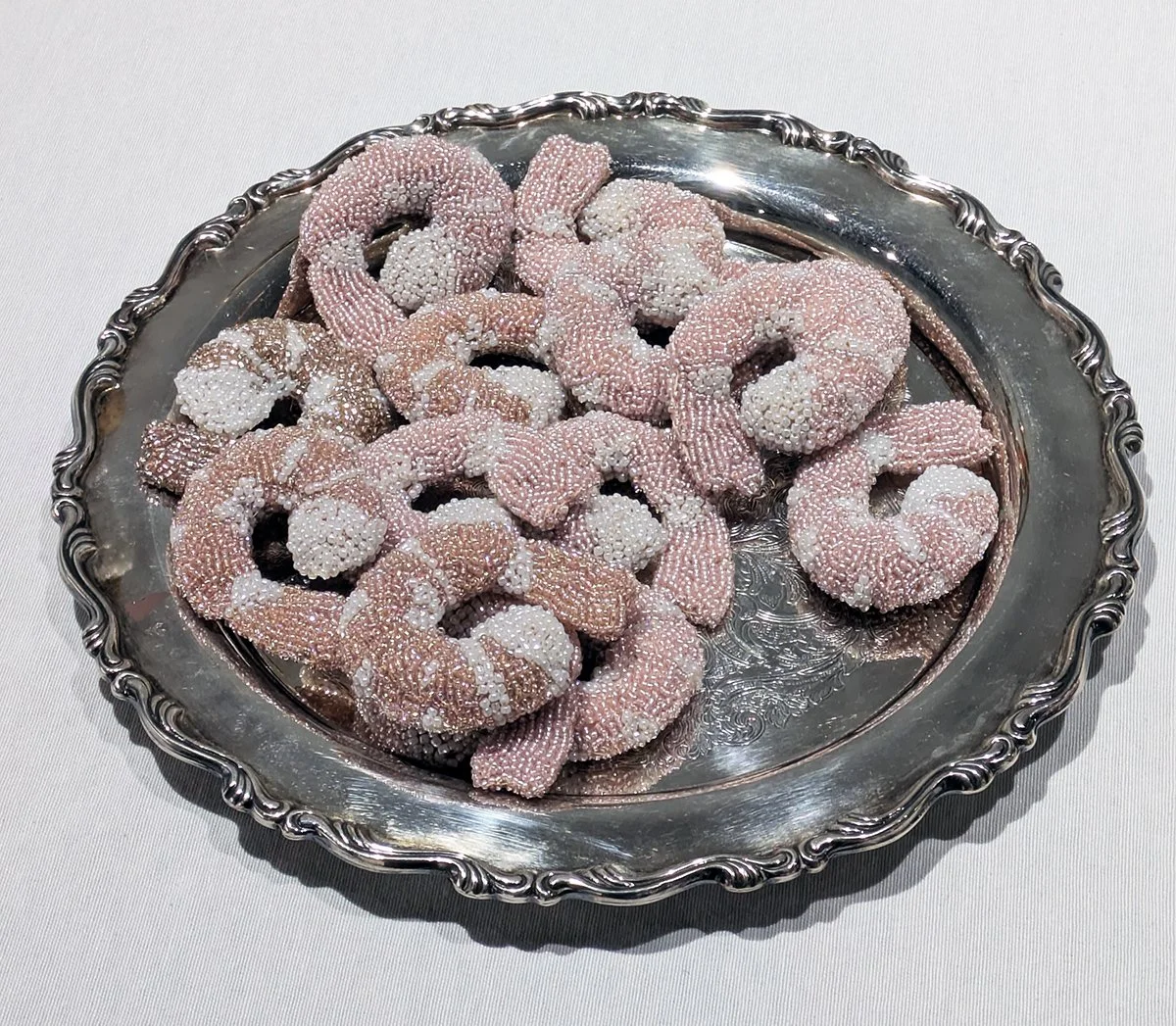
A detail view of of the embroidered and beaded shrimp sculptures served on a platter in Carly Owens Weiss’s You are here to be swallowed up, 2026. Image by Maggie Sava.
The installation You are here to be swallowed up serves up a similarly off-putting scene: a rather austere dinner arrangement that also looks like a ritualistic altar, particularly due to the symmetrical candelabras. Is the sparking carrot hung from a hook in the center a sacrifice or our bait? Even the plated, bedazzled shrimp seem off. Why is the only plate on the table placed off-center? Why has just one shrimp fallen onto the table? We are drawn in, but also deterred, by this strange table in the middle of the gallery. While we may not be tempted to sit down and join this meal, Weiss offers no chairs if we were. We are cast as a perpetual audience, not participants.
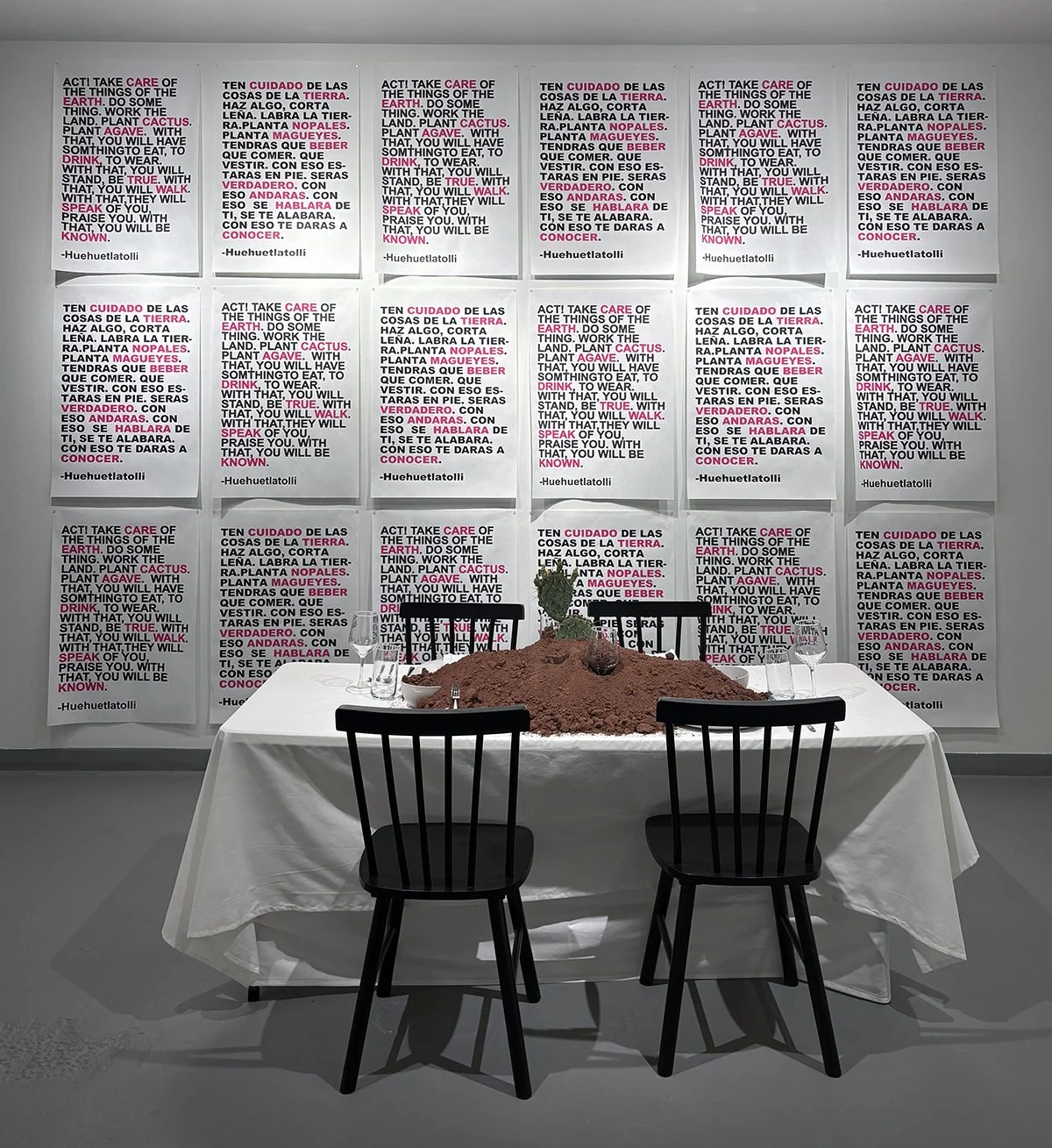
Desert ArtLAB, unsetting the table, 2026, multimedia installation, dimensions variable, and Desert ArtLAB, Words of the Elders, 2026, wheat paste posters, dimensions variable. Image by DARIA.
Desert ArtLAB’s unsetting the table maintains continuity in the gallery space by presenting another dinner table installation. However, this table is a site of activism, making a statement about how environmental justice intersects with food systems, and thus is a part of every meal we eat. Desert ArtLAB is an art collective making ecologically focused work based in Indigenous knowledge and teachings, which inform their work in Set the Table.
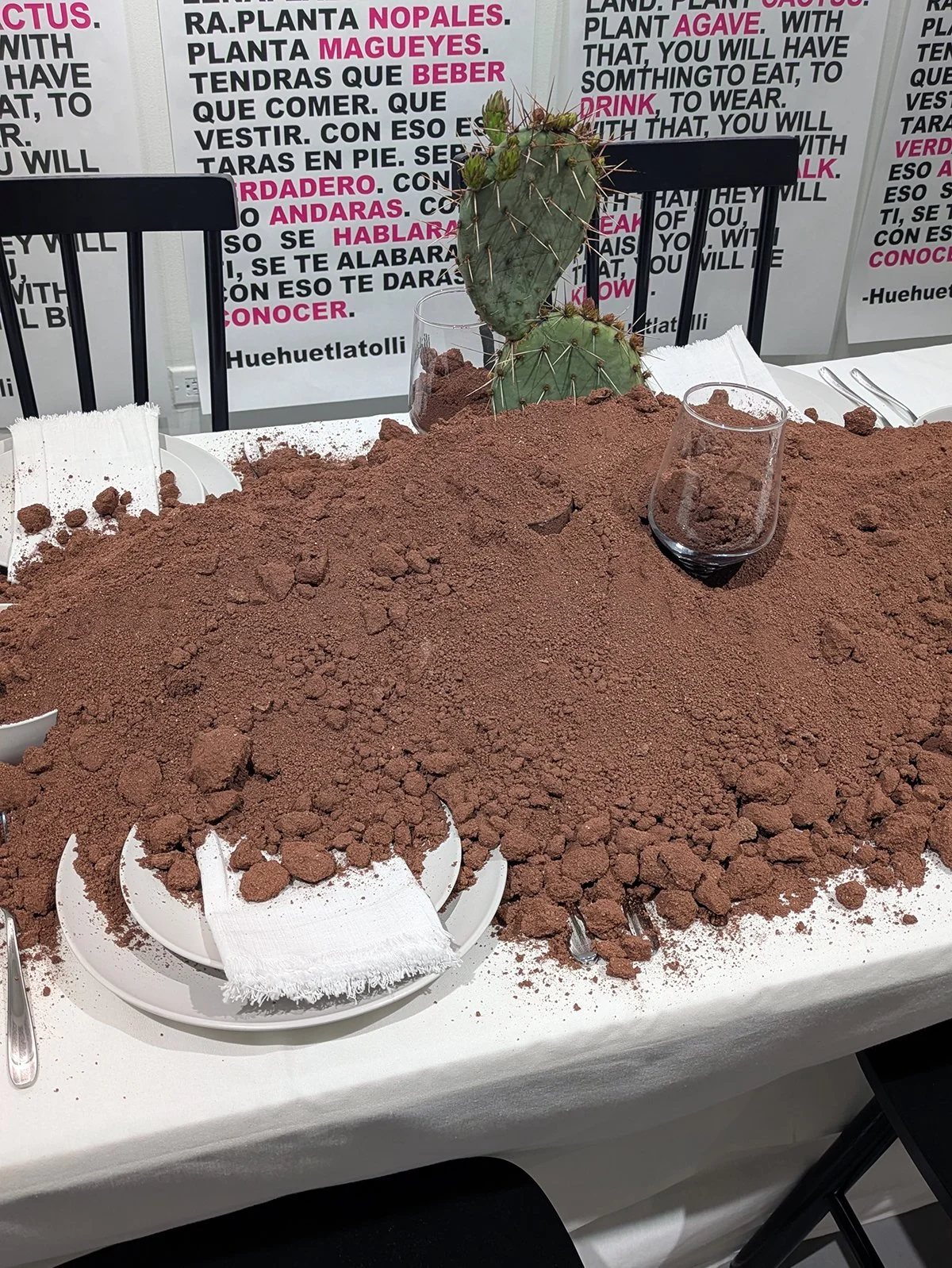
A detail view of Desert ArtLAB’s unsetting the table, 2026, multimedia installation, dimensions variable. Image by Maggie Sava.
In unsetting the table, plates, silverware, and napkins are covered in a mound of dirt, with a cactus at the center. It reverse-engineers the food that would normally be displayed to its sources. Desert ArtLAB gives earth a very real seat at the table, making its place in our meals impossible to overlook. By inviting the actual soil in which plants are grown to the dinner party, the art collective asks viewers how we might live and eat sustainably in relationship to our environment, positioning it as a companion and community member.
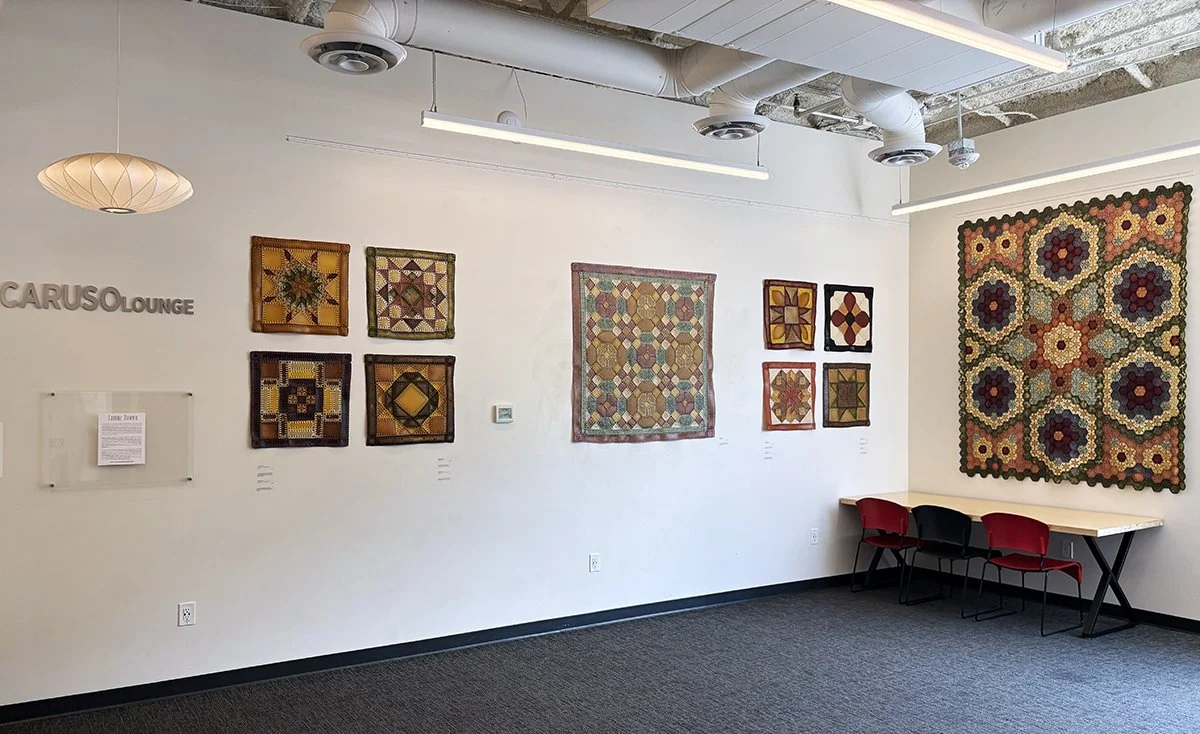
An installation view of works by Janine Brown in Set the Table: The Art of Nourishment at the Dairy Arts Center. Image by DARIA.
In the Caruso Gallery, viewers are met with a smaller room filled with Janine Brown’s bioplastic quilts. A sign warns of the art's distinctive smell, which comes from the fact that they are bioplastic pieces composed of literal food products. For example, the fabric of Easter Dinner Crown of Thorns, which resembles a traditional quilted patchwork star pattern, is made up of Easter meal components like roast lamb, green bean casserole, and potatoes au gratin. Brown’s textiles do not just invoke the memory of family meals; they literally archive them.
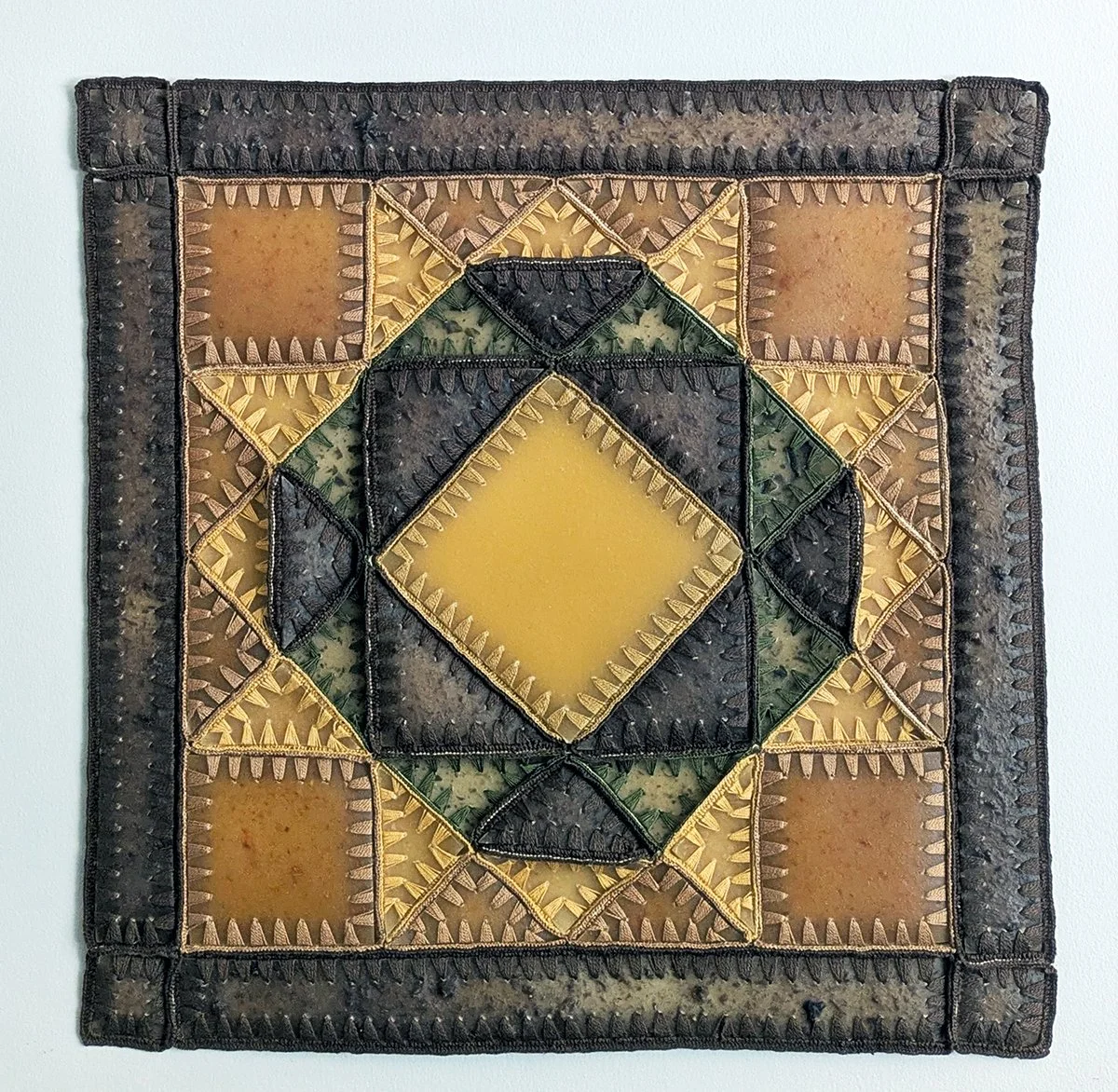
Janine Brown, Easter Dinner Crown of Thorns, 2026, home-cooked bioplastic, roast lamb, deviled eggs, potatoes au gratin, green bean casserole, and carrot cake, hand-stitched with crochet thread and pearl cotton, 22.5 x 22 inches. Image by Maggie Sava.
The artist captures a sense of hominess through her quilting practice, heightened by her references to both private moments of eating and shared dining experiences, to “examine the invisible labor, social expectations, and capitalistic pressures surrounding women, marriage, motherhood, and domestic life.” Quilting, like cooking, is domestic work historically assigned to women in the home as part of the reproductive and care labor that is expected but not given appropriate value in a capitalistic market system. It is unpaid, and yet it is ubiquitous. By making “meals” through a different type of practice, Brown seems to be redirecting our attention to the effort and time it takes to prepare food for consumption, whether it be through cooking so that it can be eaten or by crafting so that it can be visually consumed.
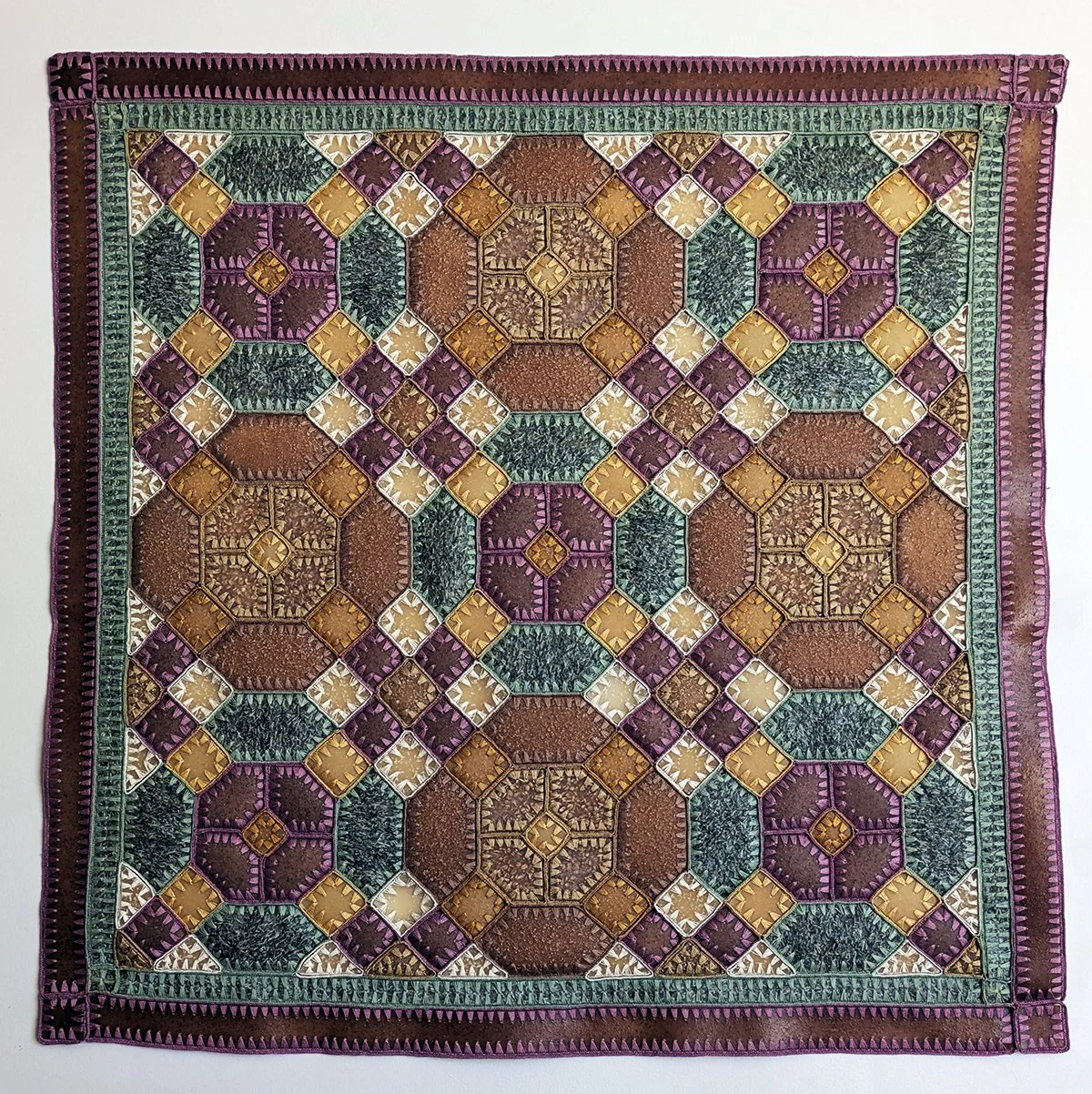
Janine Brown, Farmer’s Fields, 2025, home-cooked bioplastic, golden corn masa, blue corn masa, soybeans, barley, red wheat, white rice, oats, and shredded U.S. currency, hand-stitched with crochet thread and pearl cotton, 49.5 x 49.5 inches. Image by Maggie Sava.
Farmer’s Fields, a larger-sized quilt work, highlights another sphere of production, this time agricultural. Assembled with food items that you might find growing in fields, such as masa, soybeans, and rice, alongside shredded currency, this tapestry points towards food systems and the role of food as commodity in industrial agriculture.
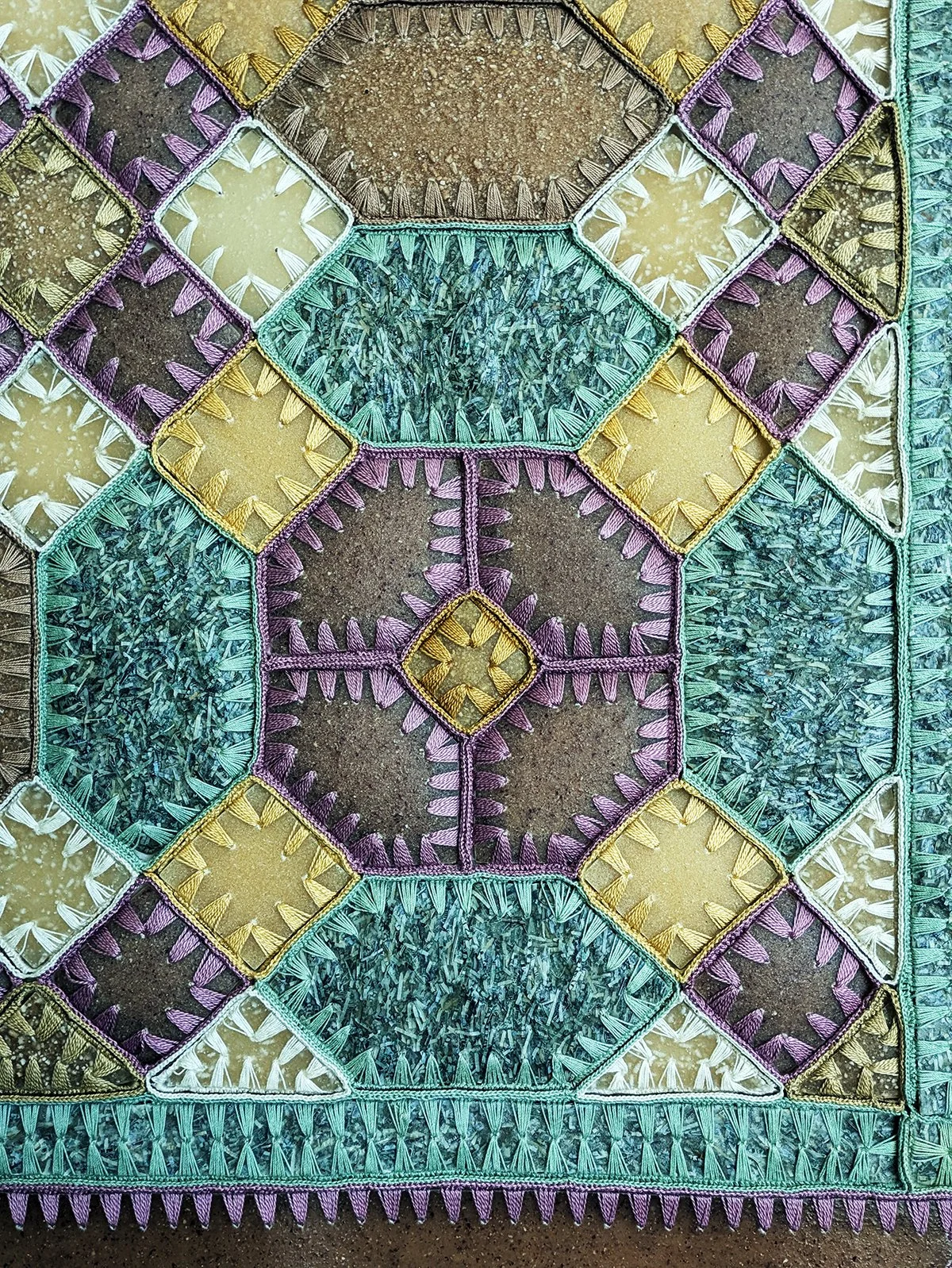
A detail view of Janine Brown’s Farmer’s Fields, 2025, home-cooked bioplastic, golden corn masa, blue corn masa, soybeans, barley, red wheat, white rice, oats, and shredded U.S. currency, hand-stitched with crochet thread and pearl cotton, 49.5 x 49.5 inches. Image by Maggie Sava.
Farming and harvesting can also be an invisible but necessary system behind the meals that we eat, and the labor, specifically that being carried out by immigrant communities, is typically undervalued and underrecognized. Simultaneously, Brown’s use of bioplastics, a more sustainable alternative to typical plastic products, adds layered context to the idea of environmental impact and sustainability. These are important questions to pose with the escalating emergency of climate change and food production’s position in that conversation.
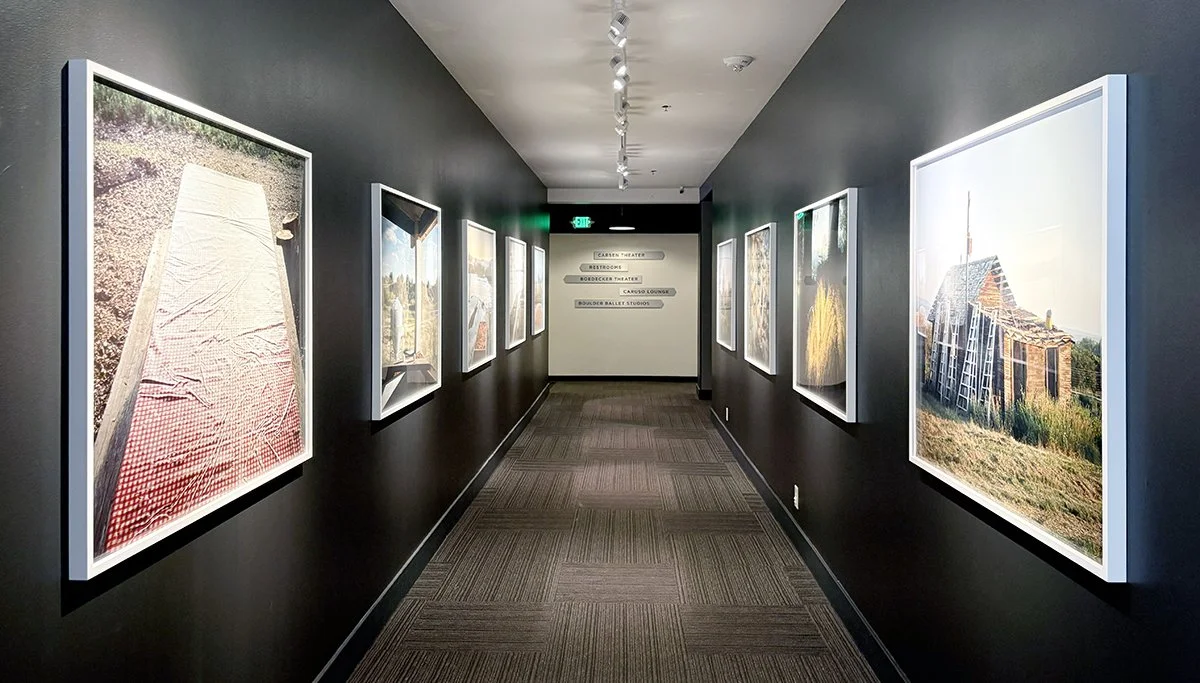
An installation view of works by Trent Davis Bailey in Set the Table: The Art of Nourishment at the Dairy Arts Center. Image by DARIA.
The Hand Rudy Gallery showcases Trent Davis Bailey’s documentary-style photographs. Bringing together the threads of agriculture and foodways, family and foraging, Bailey’s images are “weaving together stories of kinship, labor, food, and environment.” [4] Some are non-traditional portraits showing people without revealing their faces, such as Lilly (Picking Apricots). In this photograph, Lilly is almost totally obscured by the drooping branches of the apricot tree, except for her arms which are posed mid-picking.
Here, Bailey’s aesthetic sensibility merges the candid and the dramatic, seemingly capturing a paused action, yet with the added emphasis of contrasting lighting and intentional compositional choices. Importantly, each image is imbued with specificity and memory, being connected to place and a moment in time, as conveyed in the titles of the photographs that list the location where Bailey took the photograph.
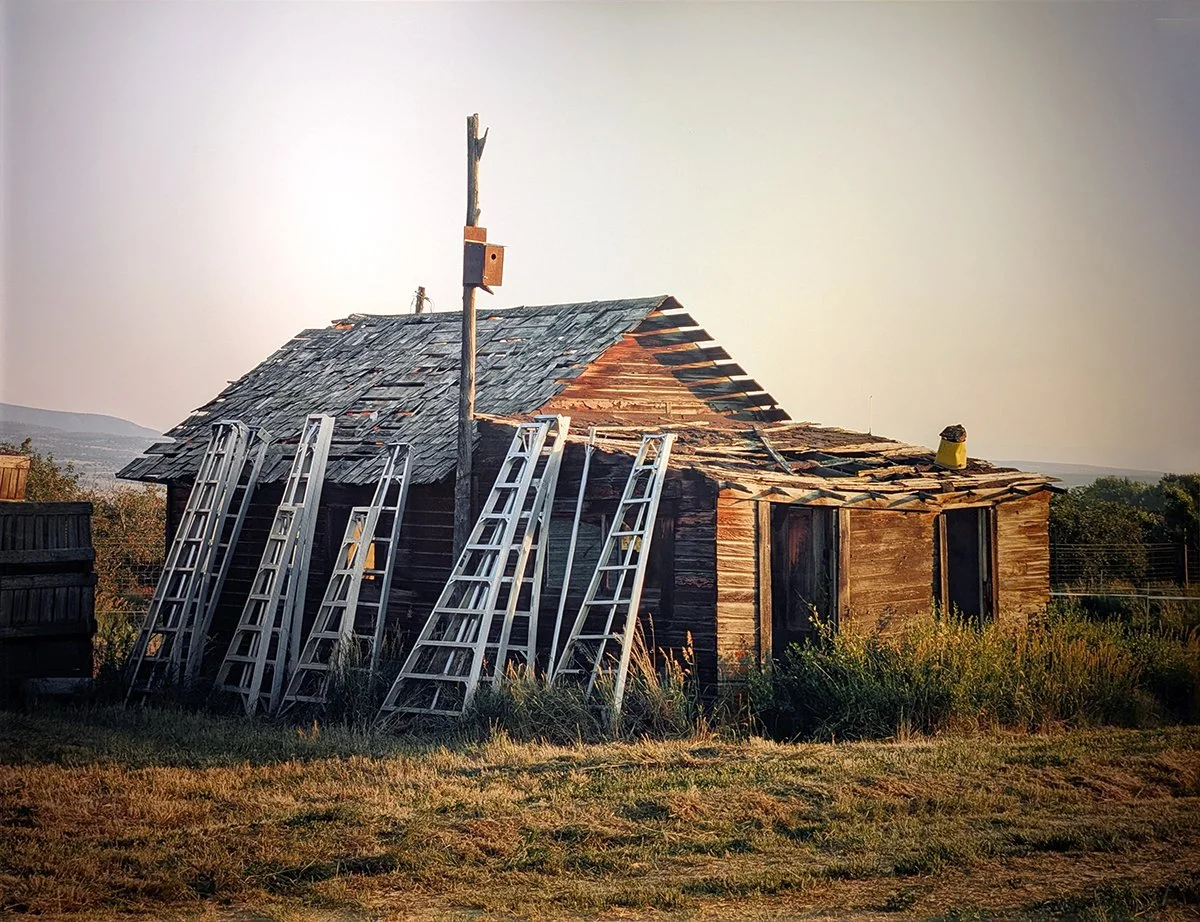
Trent Davis Bailey, Fruit-picking Ladders, Hotchkiss, Colorado, 2017, archival pigment print, 40 x 50 inches. Image by Maggie Sava.
In some images, Bailey suggests subjects through staging. Fruit-picking Ladders, Hotchkiss, Colorado depicts a row of ladders propped against a wooden structure. The lighting, position of the sun, and color in the sky suggest it is either daybreak or dusk, giving the ladders the kinetic energy of objects about to be used for the day or of tools laid to rest for the night, only to be set back up tomorrow. While there are no people in this photograph, the former or impending presence of fruit-pickers is implied, just as it is every time you pick up a piece of fruit at the store or in your home. This image is both specific, capturing a passing moment in one day of fruit-picking, but also part of a large rhythm that occurs cyclically throughout each harvest season.
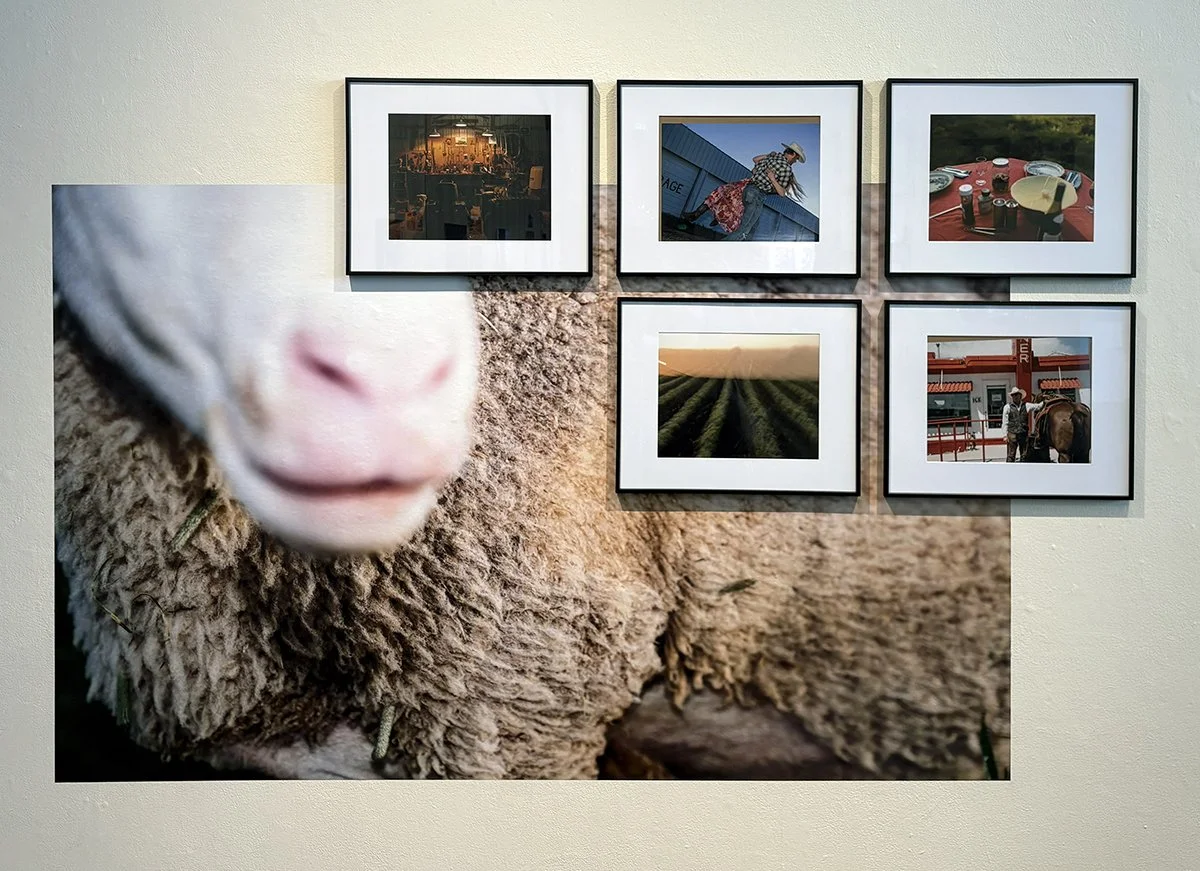
An installation view of works by Mad Agriculture in Set the Table: The Art of Nourishment at the Dairy Arts Center. Image by DARIA.
Bailey’s photographs offer an effective transition to the Mad Agriculture display installed in the Dairy Arts Lobby. A nonprofit, “working to create a regenerative revolution in agriculture,” Mad Agriculture assembles work by multiple photographers and from the organization’s archive to showcase farmers who have integrated regenerative practices into their farms. [5] These photographs include images of crops, animals, and the equipment involved in this work. They also feature candid portraits of the farmers themselves, tapping into the human element of farming to acknowledge that agriculture can be both a livelihood and lifestyle.
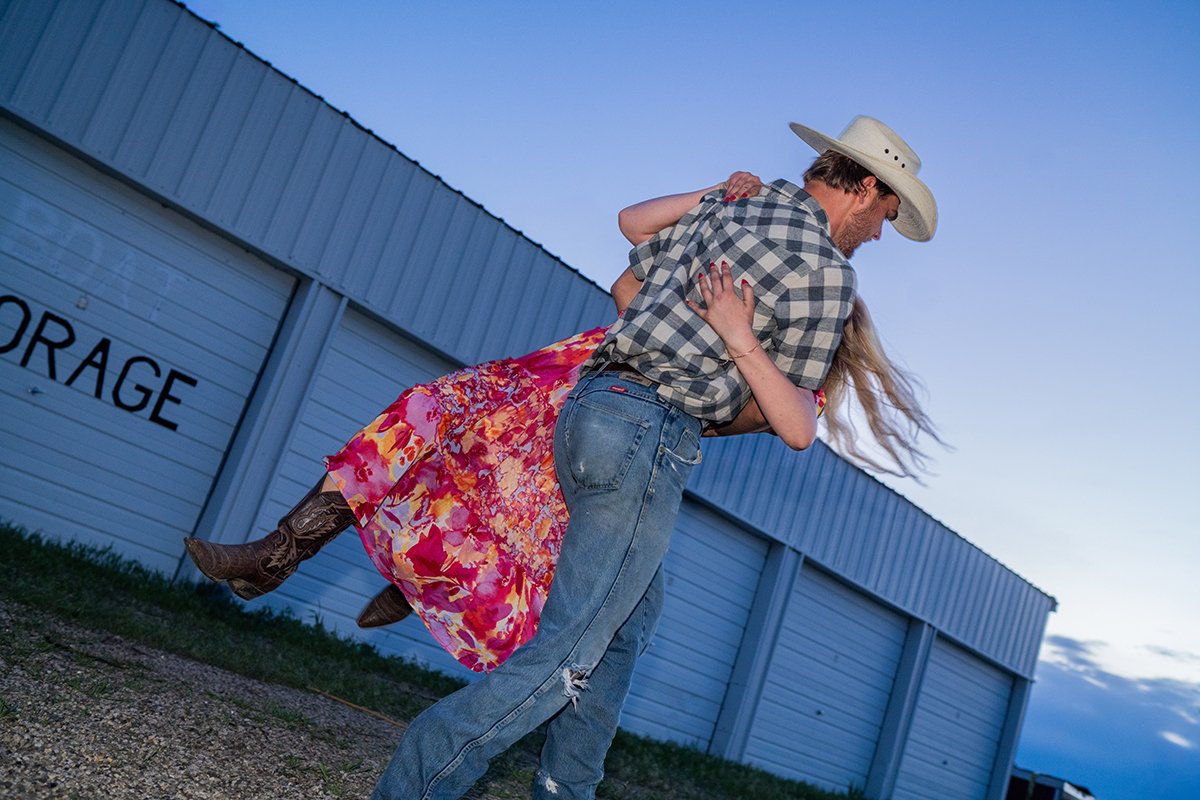
Brendan Davies for Mad Agriculture, Arrow J Acres (Fort Pier, SD), 2023, photograph, 11 x 14 inches. Image courtesy of Mad Agriculture.
Brendan Davies’s Arrow J Acres (Fort Pier, SD) depicts a man in a cowboy hat, plaid shirt, and denim jeans, swinging a woman in a long skirt and cowboy boots around mid-dance, showing a specifically joyful moment after a day’s work has been completed, most likely.
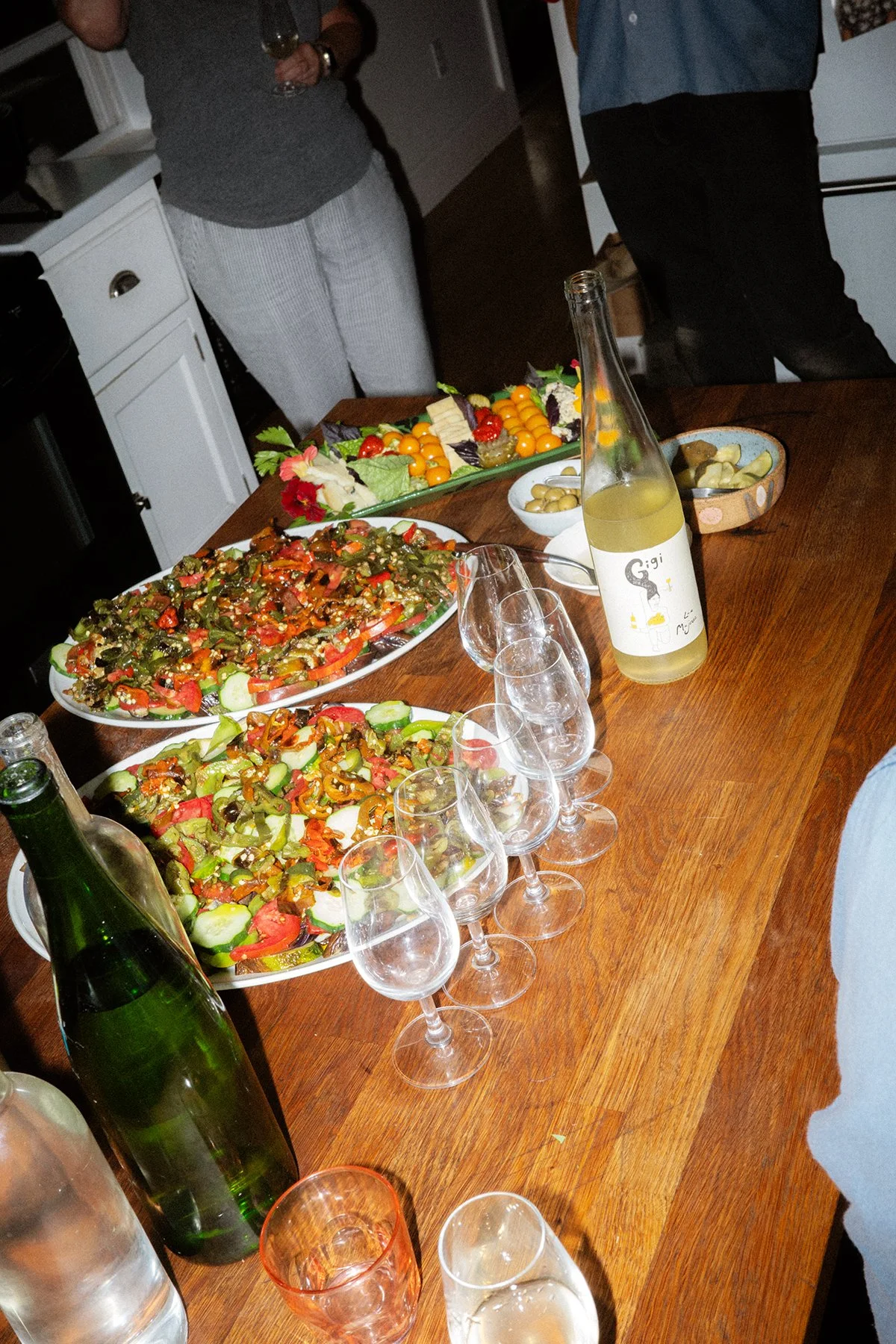
Mad Agriculture, Las Mujeres Farm and Winery, Readstown, WI, photograph. Image courtesy of Mad Agriculture.
Las Mujeres Farm and Winery, Readstown, WI, shows the full circle of food production by capturing a particularly inviting, and vegetable-heavy, meal that is presumably made from the farm’s produce, complemented by a bottle of white wine. The table is set, and the food is ready to be shared. By delving into the personal, Mad Agriculture sets out to show that regenerative agriculture is possible because it is already happening, being implemented everyday by real practitioners who you might identify with as you see them laughing, dancing, and working.
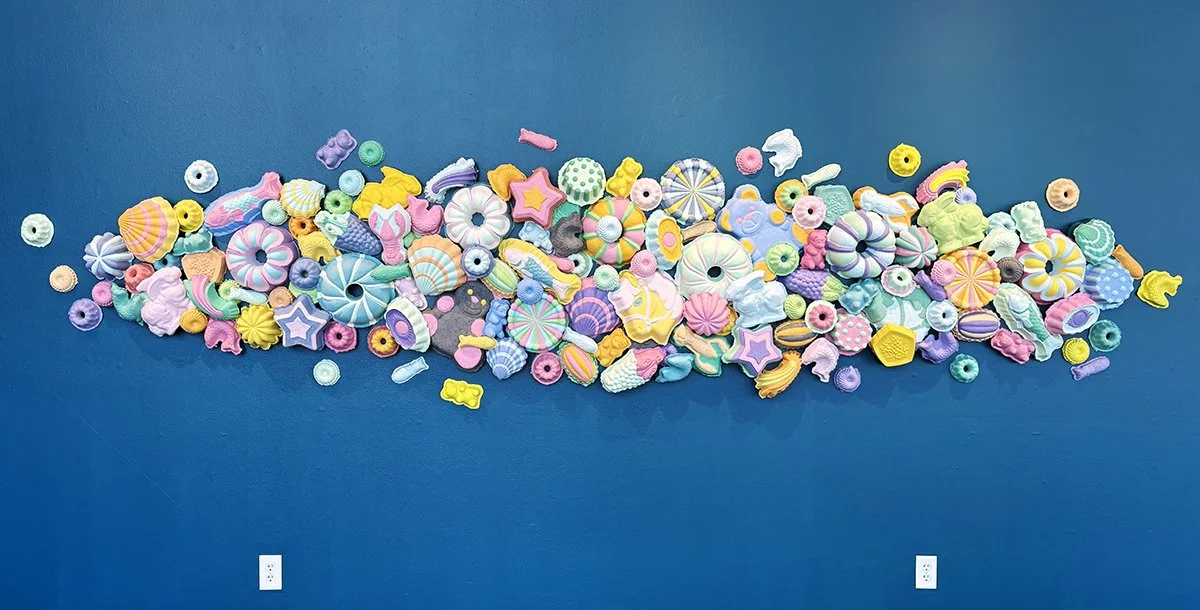
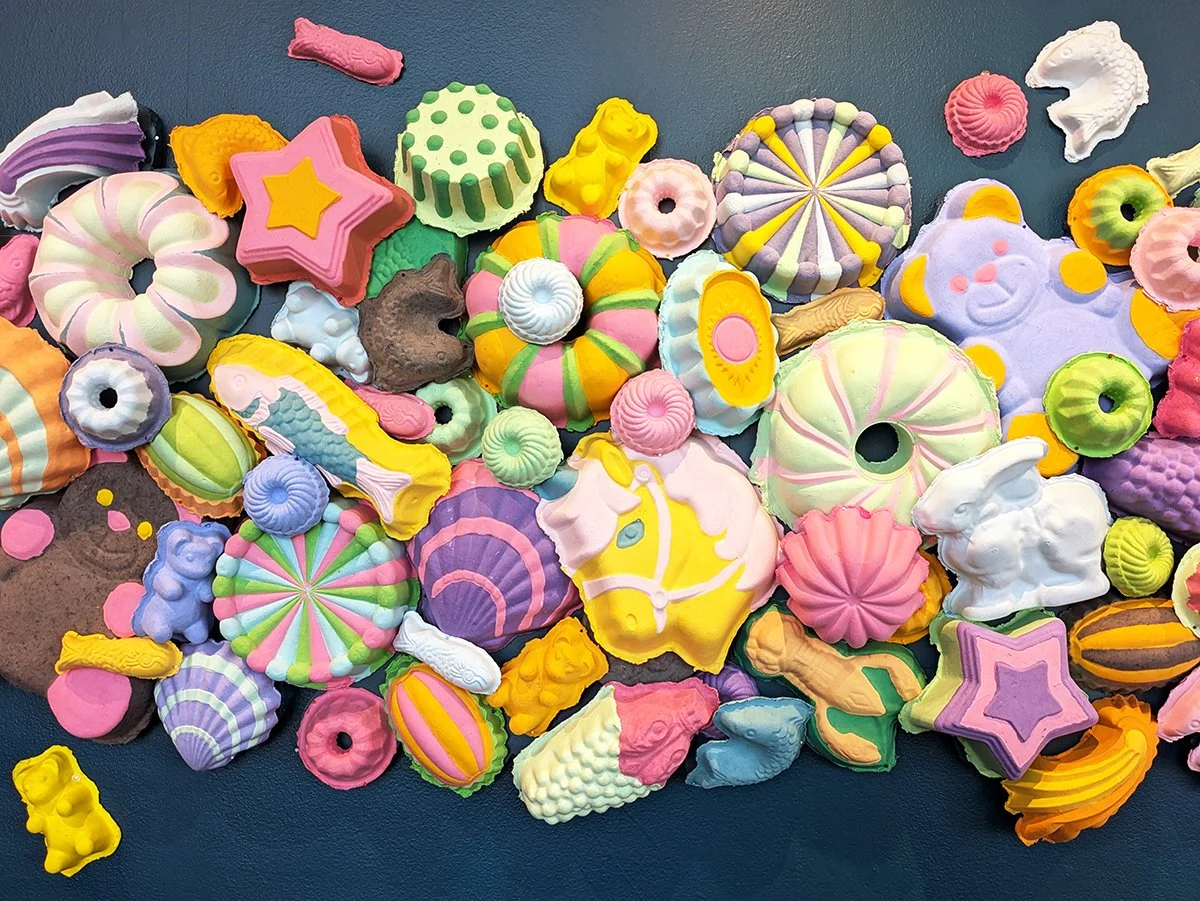
Brandy Coons, Memory Party, 2026, cast paper and 100% cotton, 36 x 156 inches. Image by DARIA.
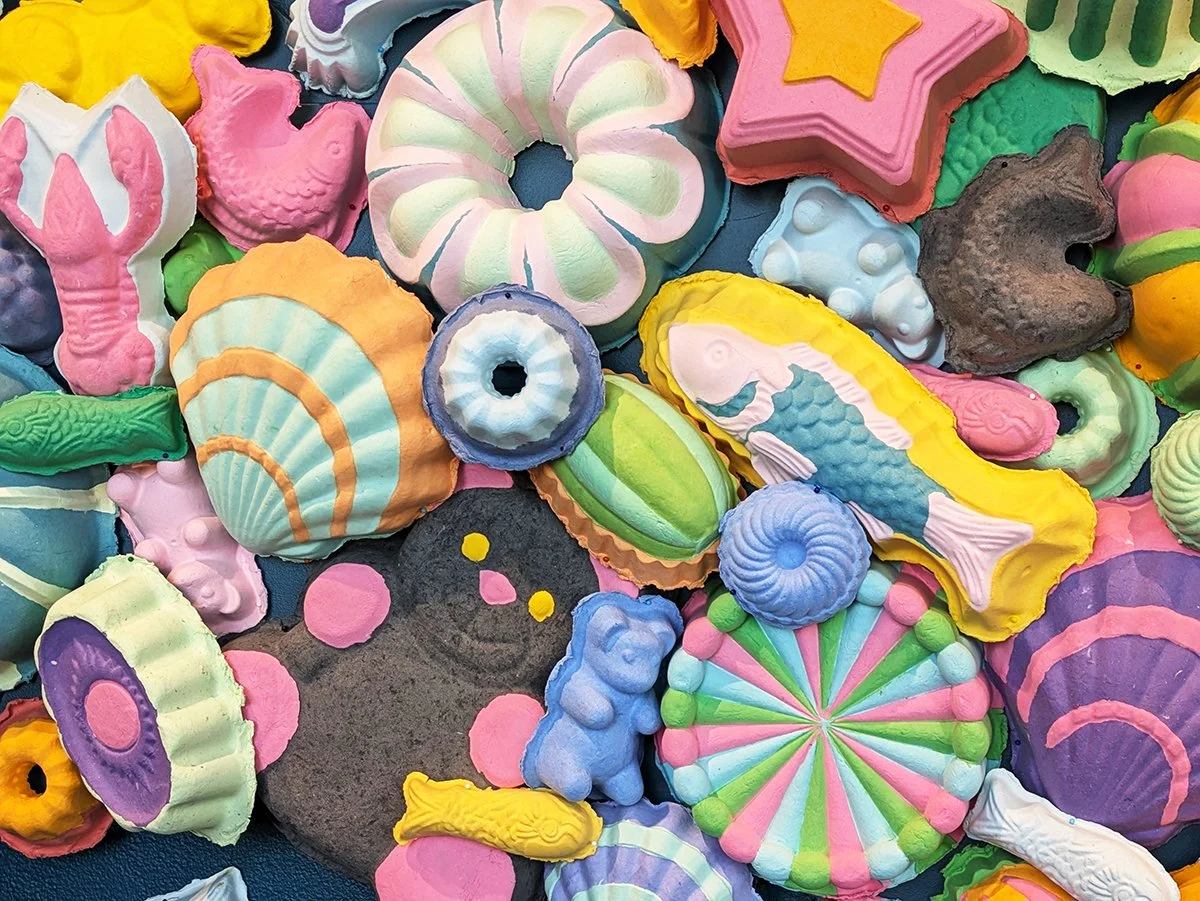
A detail view of Brandy Coons’s Memory Party, 2026, cast paper and 100% cotton, 36 x 156 inches. Image by Maggie Sava.
In the lobby we find Brandy Coons’s Memory Party. This playful installation, made from paper cast in old jello and baking molds, fills the Polly Addison Gallery. With colorful fish, unicorns, teddy bears, and round cake shapes, Memory Party looks like it just spilled out of a candy jar or toy box. It is scrumptious, sweet, and nostalgic. As Coons describes it, this artwork is archival, capturing the shape and texture of these vintage baking implements, and also impermanent, made of paper that will break down over time. Much like actual food, it carries the imprint of tradition and memory in temporary, time-bound vessels.
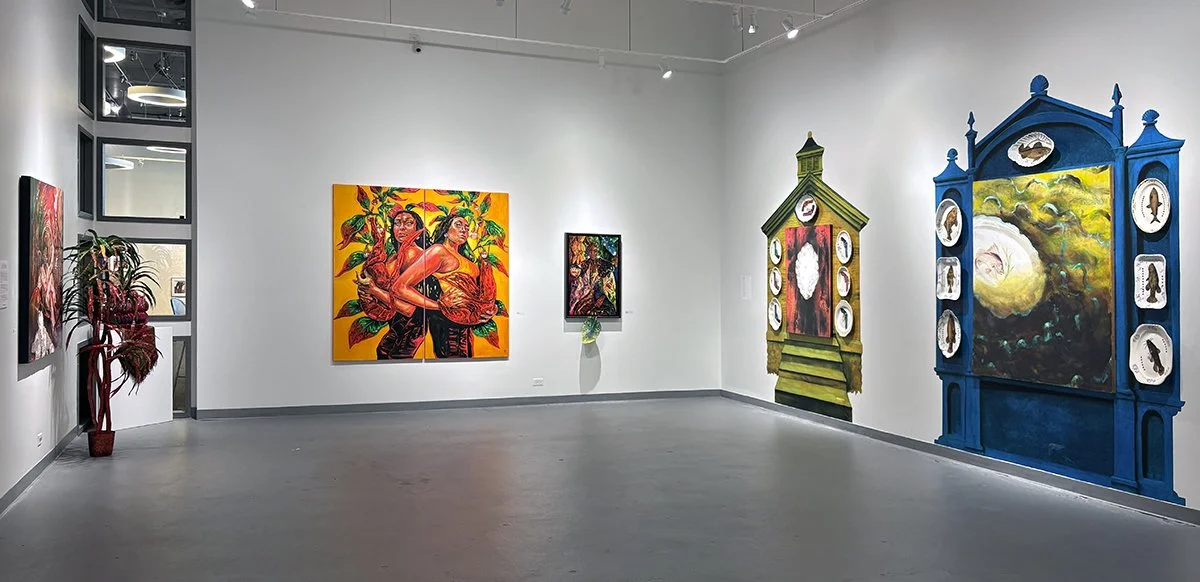
An installation view of the exhibition Set the Table: The Art of Nourishment at the Dairy Arts Center. Image by DARIA.
Set the Table is a meaty exhibition. It is large, complex, and diverse in aesthetics, theme, materials, and approach. The organization of the show throughout the building’s gallery prevents it from becoming unwieldy, dividing the artwork into more digestible and coherent segments. It is an exhibition that should be seen start to finish and savored at all stops along the way.
Maggie Sava (she/her) is an art historian and writer based in Denver. She holds a BA in art history and English, creative writing from the University of Denver and an MA in contemporary art theory from Goldsmiths, University of London.
[1] Exhibition statement, Set the Table: The Art of Nourishment at the Dairy Arts Center, Boulder, Colorado, May May 15–August 2, 2026.
[2] Jazz Holmes, artist statement, Set the Table: The Art of Nourishment.
[3] Carly Owens Weiss, artist statement, Set the Table: The Art of Nourishment.
[4] Trent Davis Bailey, artist statement, Set the Table: The Art of Nourishment.
[5] Mad Agriculture, artist statement, Set the Table: The Art of Nourishment.