
Printed Page V
Printed Page V
Anderson Academic Commons, University of Denver
2150 E. Evans Avenue, Denver, CO 80210
January 5–April 26, 2026
Admission: free
Review by Maggie Sava
It is not hard for me to recall flipping through picture books, pop-up books, and activity books as a child. The line between the printed word and tactile experience blurred for me back then. Illustrations leapt (sometimes literally) off the page, making reading also a visual art experience. As I got older, the content of the books I encountered may have become more challenging, but the physical form became increasingly standardized and simplified.
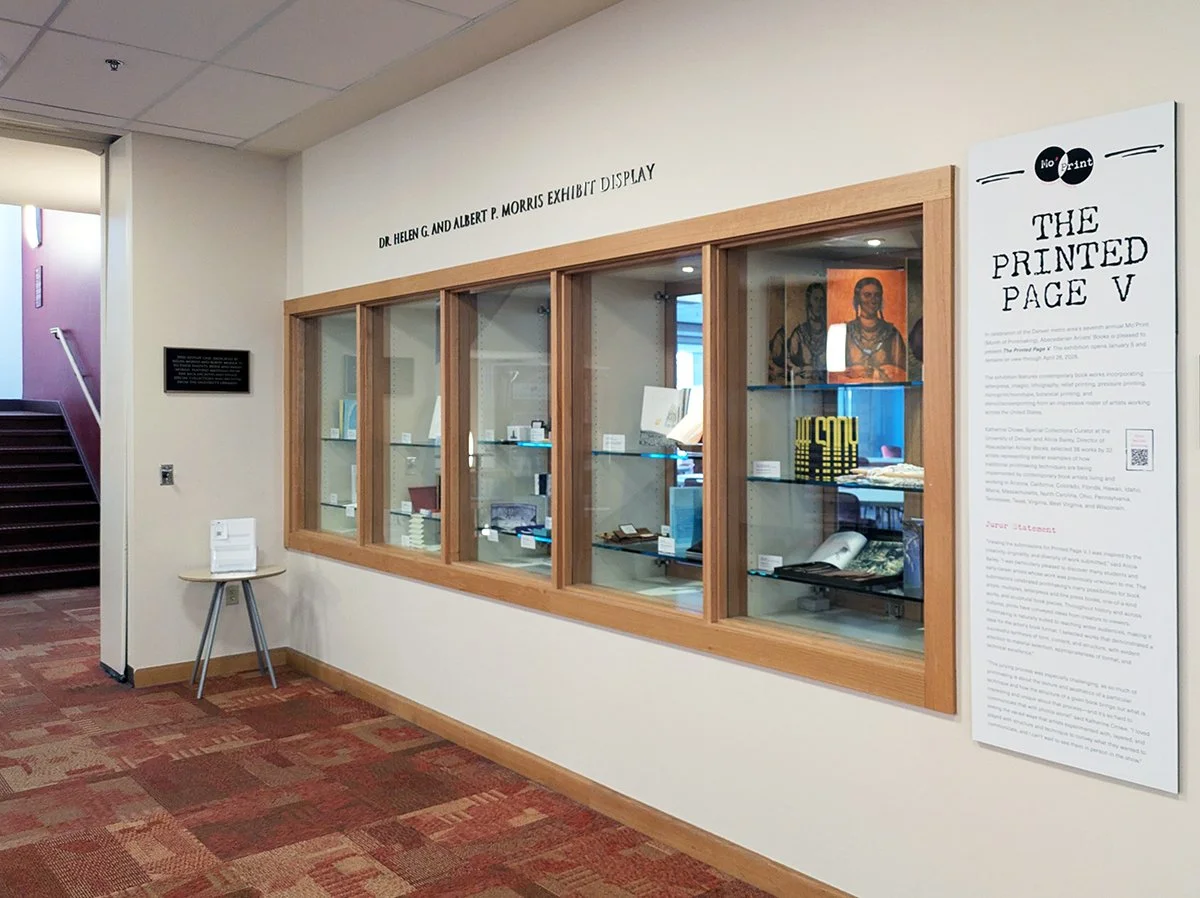
An installation view of Printed Page V at the University of Denver’s Anderson Academic Commons. Image by Maggie Sava.
That shift was most stark in my academic life, especially as an undergraduate student pouring over books for hours at the University of Denver library while researching. It is perhaps a little on the nose to view Printed Page V, an exhibition that reminds viewers of the magic of books as art objects as well as multifaceted vehicles for images and words, on display in DU’s Anderson Academic Commons, the home of the very same library I studied in while attending my alma mater.
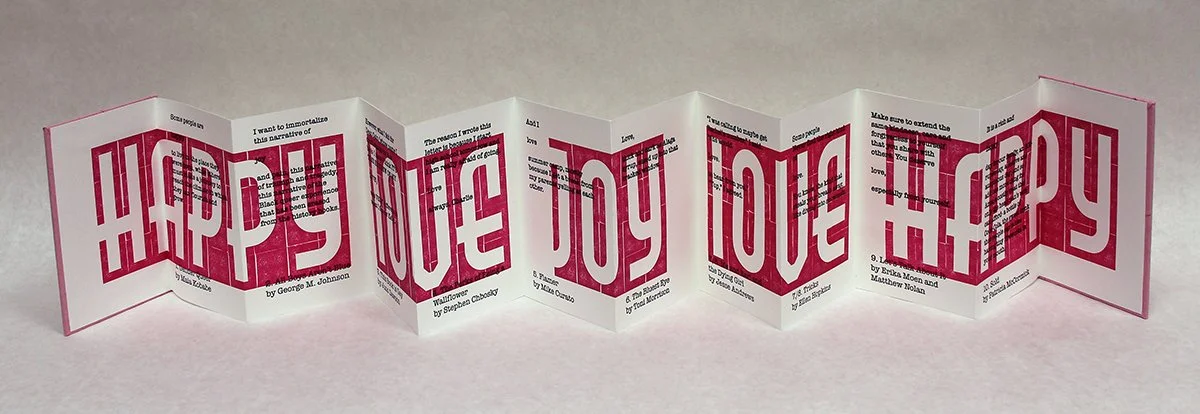
Naomi S. Velasquez, Challenged, 2025, paper, thread, davey board, and adhesives, dimensions (closed): 6 x 4.25 x 5 inches, © edition of 10. Image courtesy of the artist.
A continuation of Abecedarian Artists’ Books’ participation in the biennial Colorado Mo’Print, or Month of Printmaking, Printed Page V explores how books are an essential component of the legacy and continuing expansion of printmaking. Jurors Katherine Crowe, Special Collections Curator at the University of Denver, and Alicia Bailey, Director of Abecedarian Artists’ Books, have brought together thirty-eight works by thirty-two U.S. artists, unified by their use of traditional techniques ranging from letterpress to botanical printing.
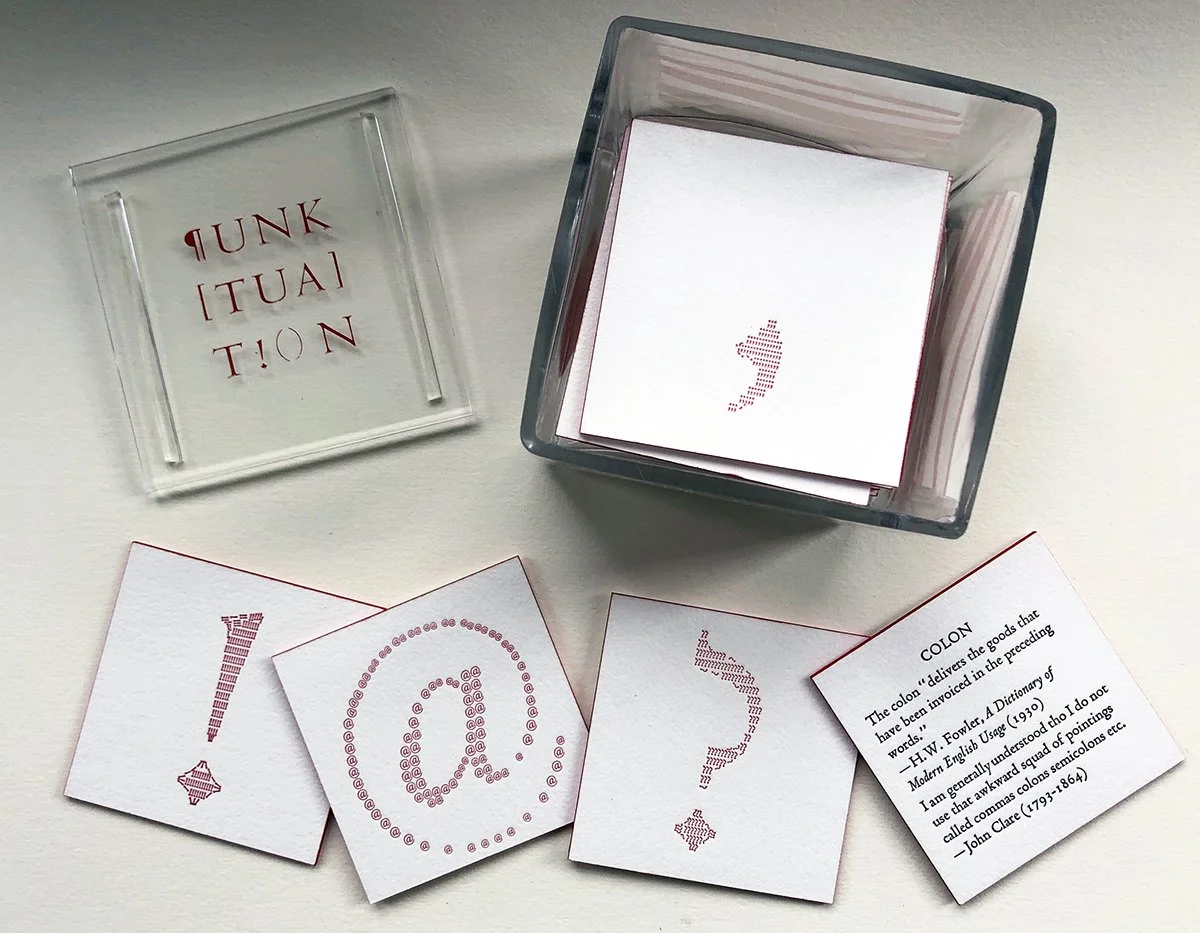
Lisa Rappoport, Punktuation, 2024, paper, ink, and glass, dimensions (closed): 4 x 4 x 4 inches, © edition of 26. Image courtesy of the artist.
Some of the books, like Lisa Rappoport’s Punktuation, draw attention not just to the unique construction of books, but that of grammar and language itself. Made up of cards featuring different punctuation marks on one side and related text on the other, Punktuation seems to more closely resemble a deck than the books we commonly see. The departure from the traditional bound book parallels the dissection of the binding work that punctuation does in written language.
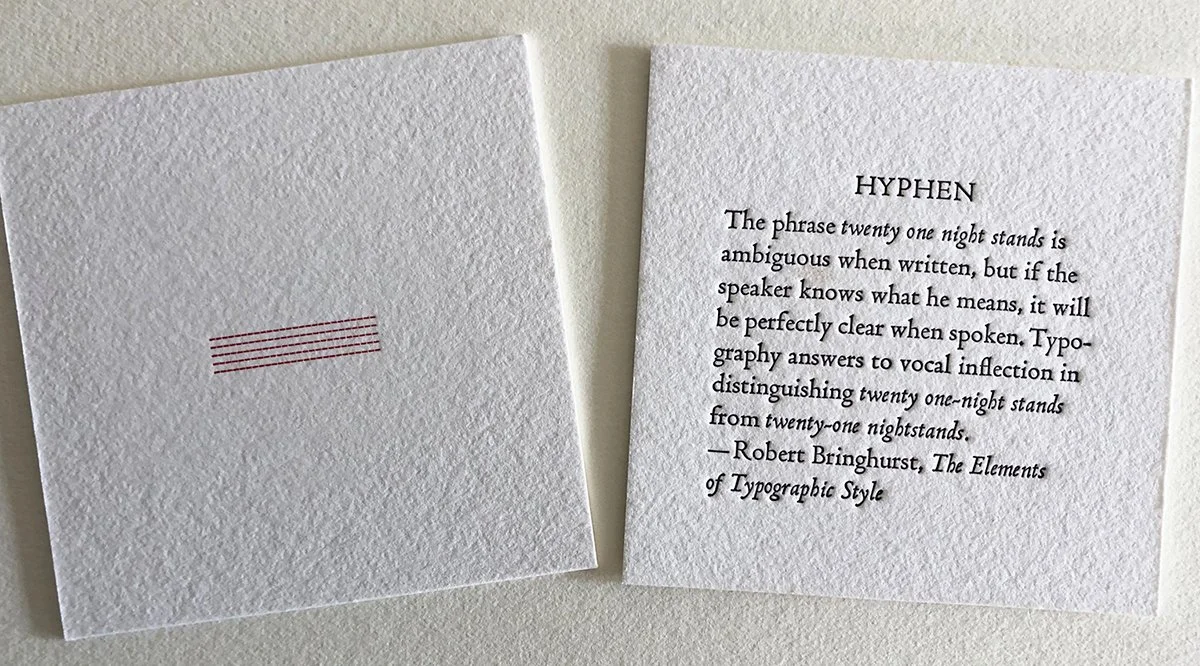
A detail view of cards from Lisa Rappoport’s Punktuation, 2024, paper, ink, and glass, dimensions (closed): 4 x 4 x 4 inches, © edition of 26. Image courtesy of the artist.
These cards call the viewer’s attention to the aesthetic role and function of semicolons, question marks, paragraph marks, and more, drawing a magnifying glass to how sentences in books are laid out through the art of typography and questioning when punctuation is superfluous to or necessary for clarity and understanding.
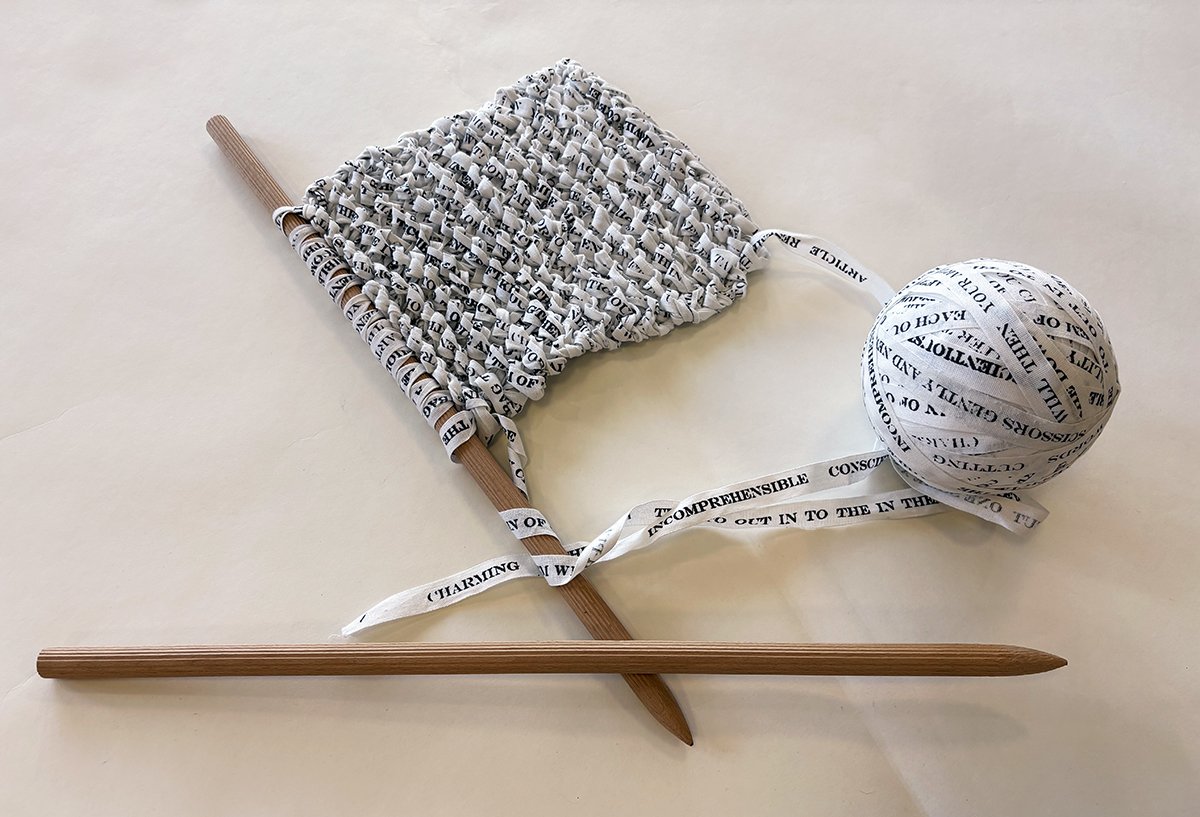
Joanna Kidd, Knots, 2007, wood, fabric, and Styrofoam, dimensions (closed): 6 x 14 x 2 inches, © edition of 5. Image by DARIA.
Joanna Kidd’s Knots similarly unwinds language into both literal and metaphorical threads, comparing the use of language with the act of knitting. In her sculptural text, Kidd constructs a ball of yarn out of strips of white fabric with text printed on it in black ink, which reveals more phrases as it unspools.
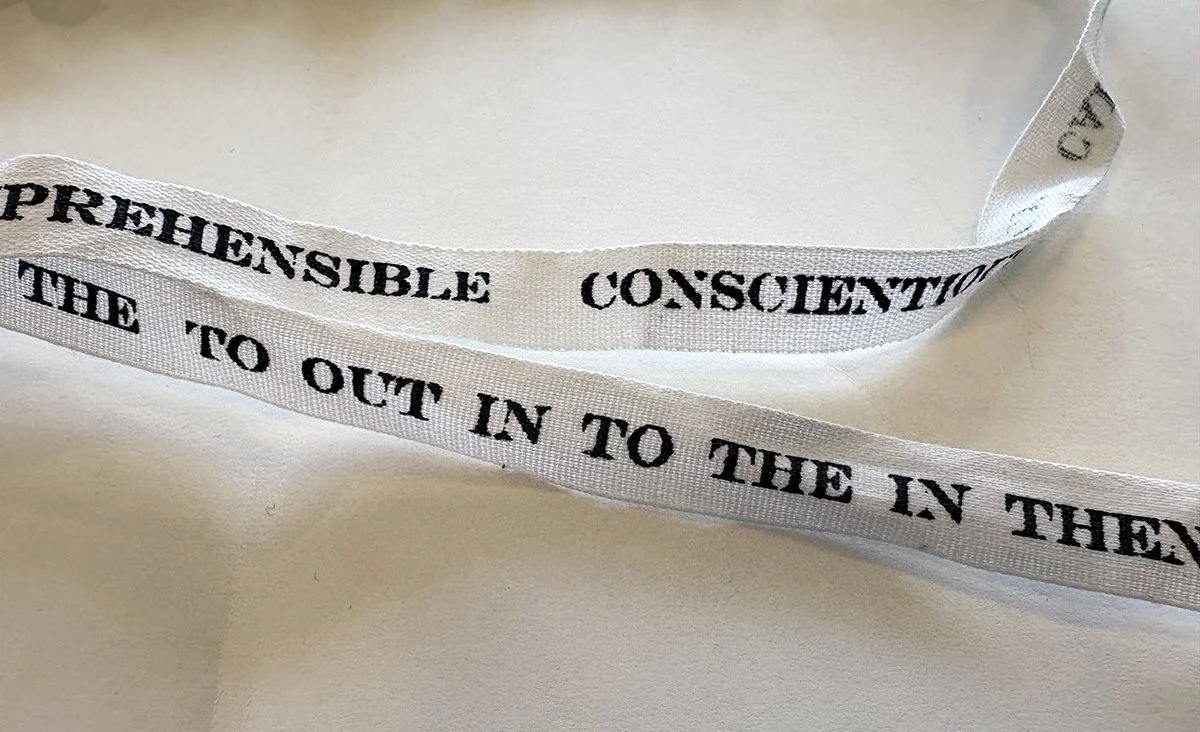
A detail view of Joanna Kidd’s Knots, 2007, wood, fabric, and Styrofoam, dimensions (closed): 6 x 14 x 2 inches, © edition of 5. Image by DARIA.
When woven together with the large wooden knitting needles, the individual words, like “incomprehensible,” “words cutting,” and “scissors gently,” have the potential to form new meanings in unique arrangements made by the stitches, much like the act of writing sentences to create paragraphs, which then form chapters, and so on and so forth. However, as they weave together, they appear to become obfuscated and harder to read, suggesting the always possible failure of language and the space for miscommunication.
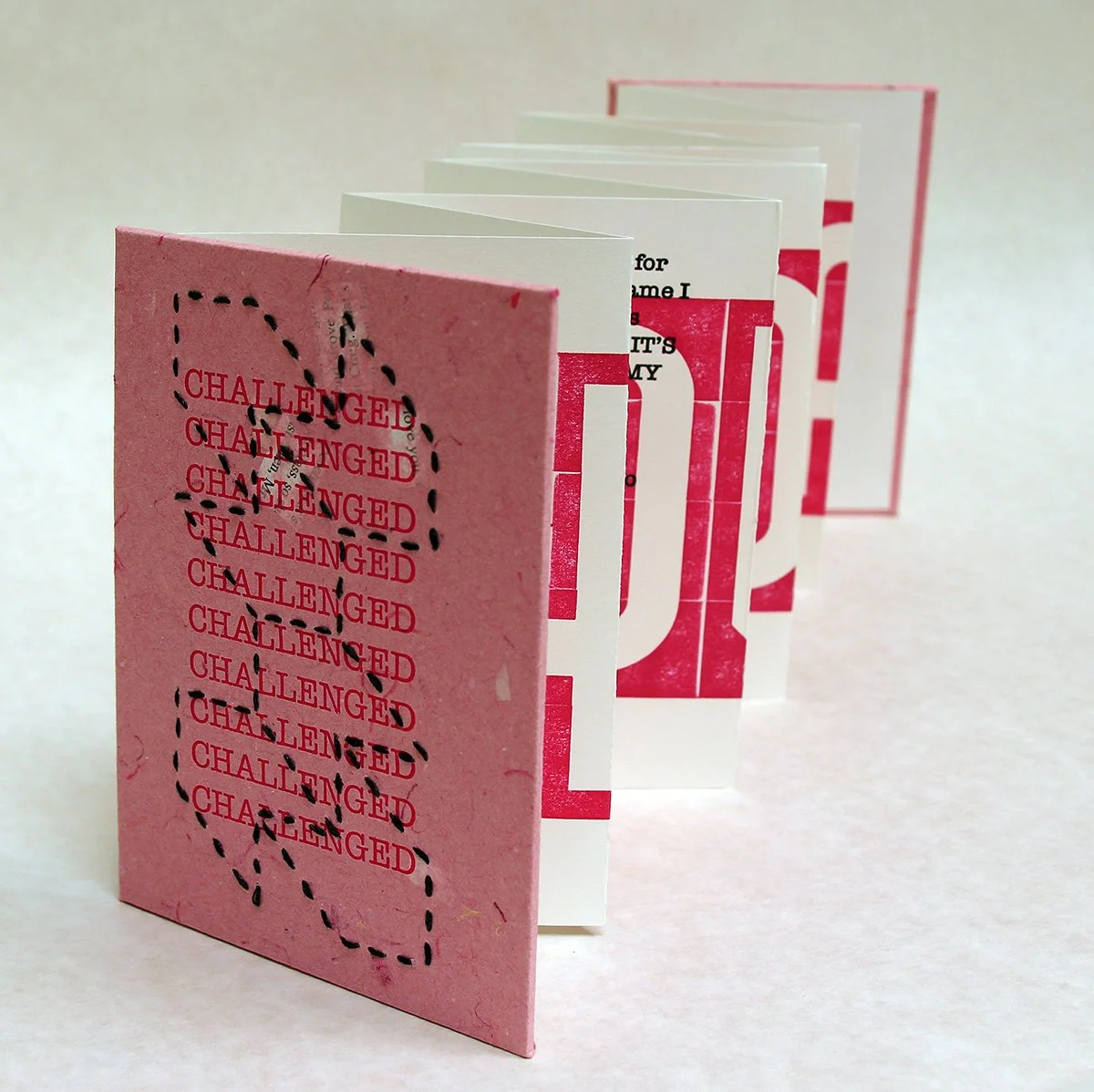
Naomi S. Velasquez, Challenged, 2025, paper, thread, davey board, and adhesives, dimensions (closed): 6 x 4.25 x 5 inches, © edition of 10. Image courtesy of the artist.
The deconstruction of books continues in Naomi S. Velasquez’s Challenged, where she physically takes apart a banned book and uses it as part of the handmade paper on which she prints. [1] Featuring quotes from the most challenged books of 2023 with the words “happy,” “joy,” and “love” printed over them, Velasquez recontextualizes these vilified texts to show how many of them tell essential stories from underrepresented perspectives that are selectively censored due to political pressures.
Several of the books specifically discuss queer identity and experience, including the first quote from Gender Queer by Maia Kobabe that reads: “Some people are happy to live in the place they were born, while others must make a journey to reach the climate in which they can flourish and grow.”
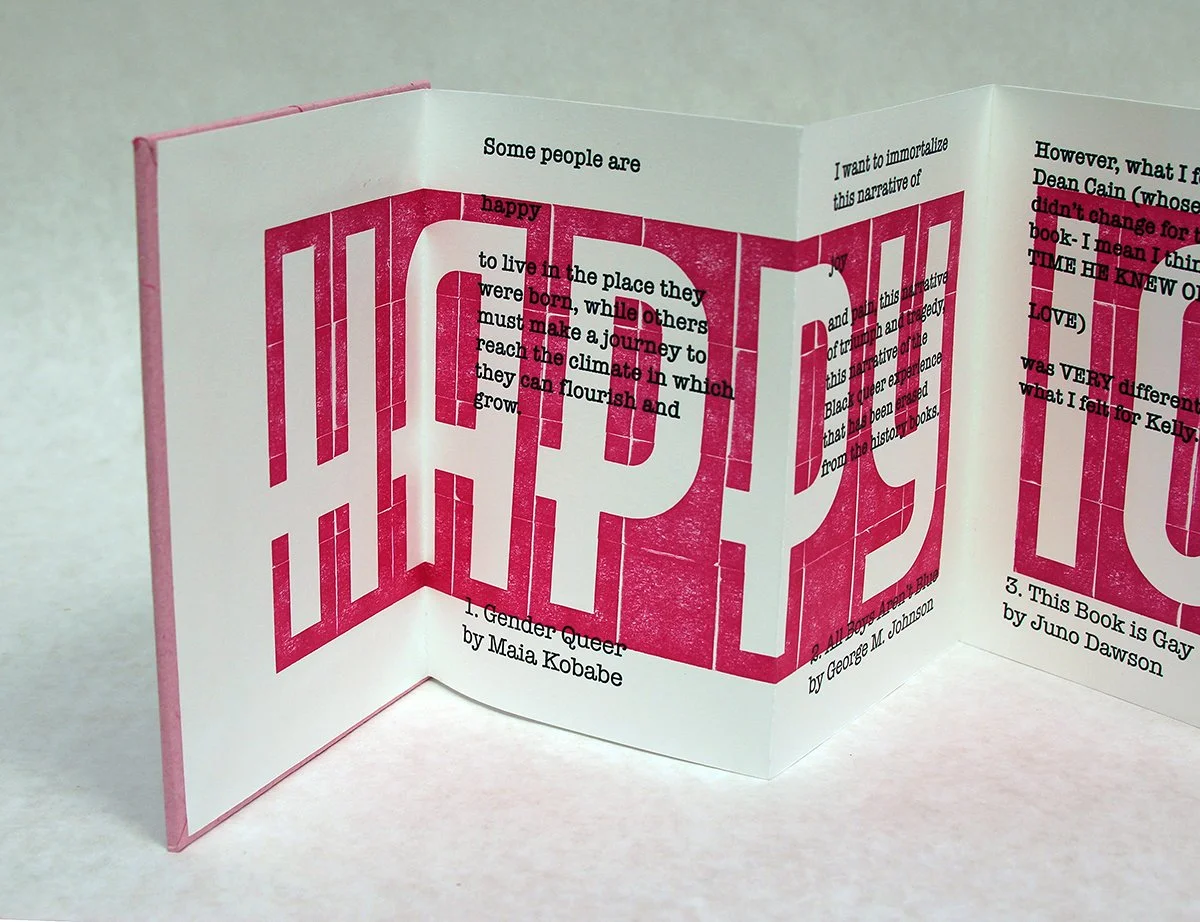
A detail view of Naomi S. Velasquez’s Challenged, 2025, paper, thread, davey board, and adhesives, dimensions (closed): 6 x 4.25 x 5 inches, © edition of 10. Image courtesy of the artist.
Challenged draws attention to the very real issue of erasure through the politicization of books at a time when dissent from the current administration is punished, and marginalized identities, including queer identities, are not just judged but criminalized. In doing so, it demonstrates that we cannot take the existence of books for granted or continue on as readers without questioning who decides what books are available and how they are presented to the public.
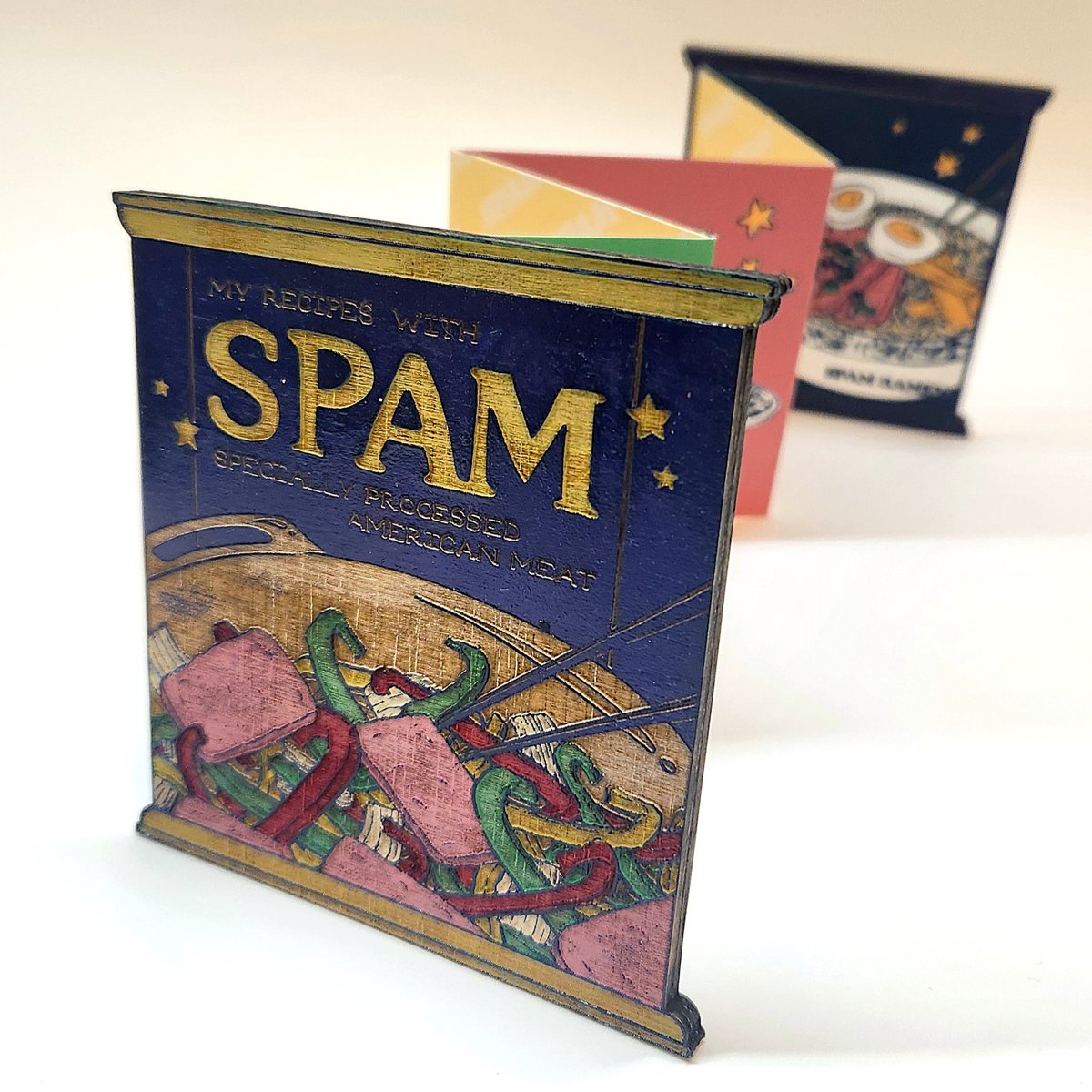
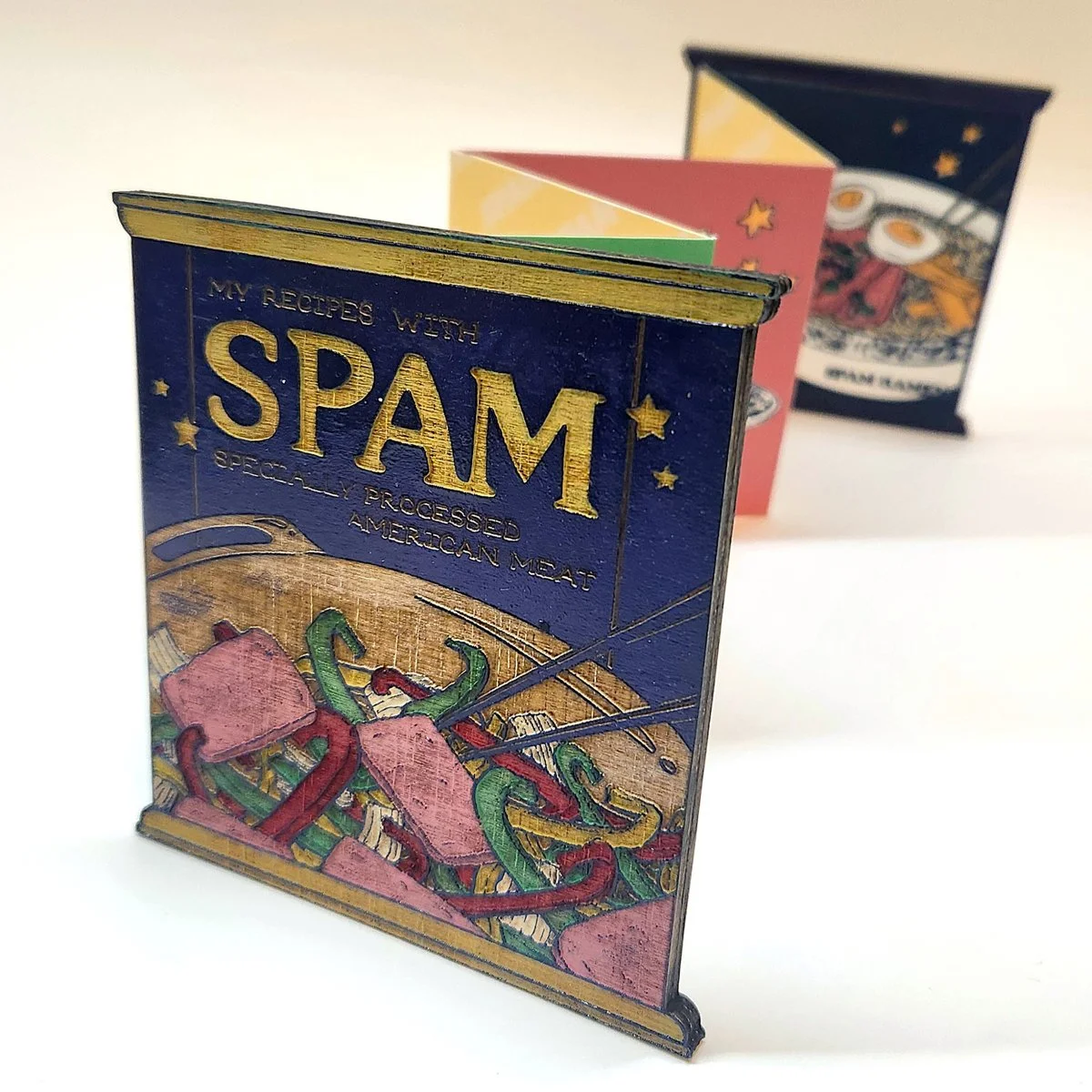
Paige Nguyen, Specially Processed American Meat, 2024, ink, paper, and wood, dimensions (closed): 4 x 4 x .75 inches, © edition of 5. Image courtesy of the artist.
While some artists focus on breaking down the form of the book, other artists like Paige Nguyen play with it to create visual feasts. Both of Nguyen’s works included in Printed Page V, Specially Processed American Meat and Bánh Xèo, recreate food products that hold cultural and familial significance for the artist through intricate and skillful printmaking that showcases bright, graphic colors and bold shapes.
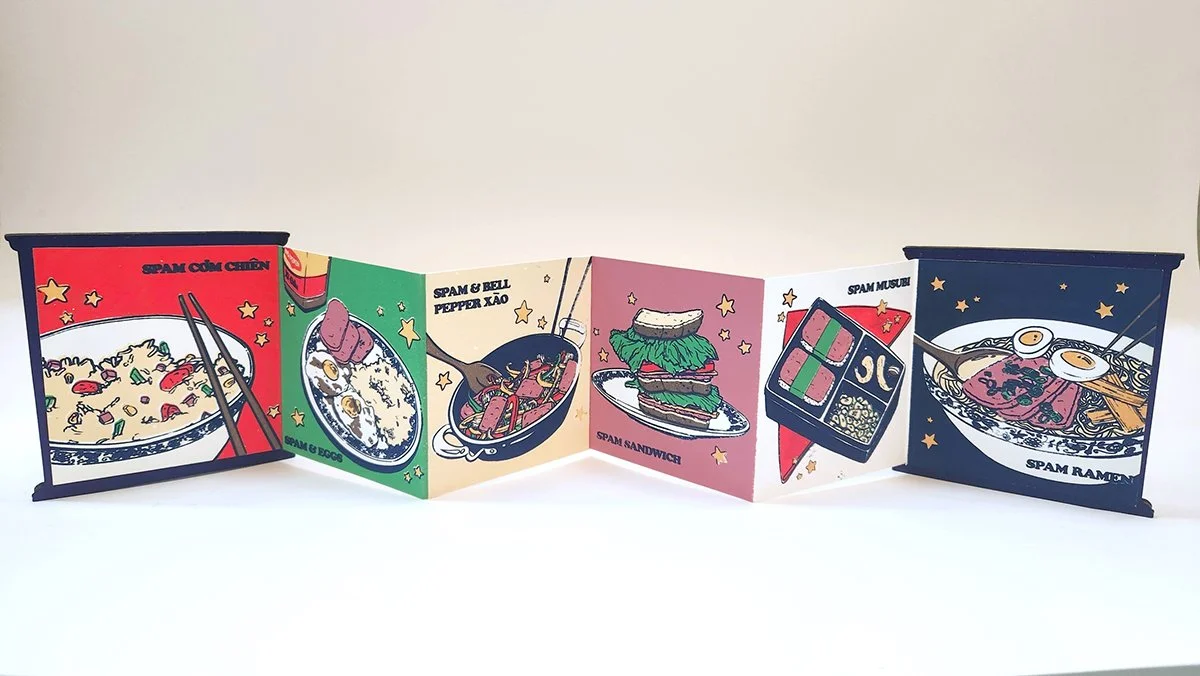
Paige Nguyen, Specially Processed American Meat, 2024, ink, paper, and wood, dimensions (closed): 4 x 4 x .75 inches, © edition of 5. Image courtesy of the artist.
Taking the form of a SPAM® can with a wooden cover that bears the famous branding, Specially Processed American Meat folds out into accordion-style pages, each featuring common recipes made by Asian families using the canned meat. The pages include bright colors and illustrations of the dishes surrounded by cartoon stars.
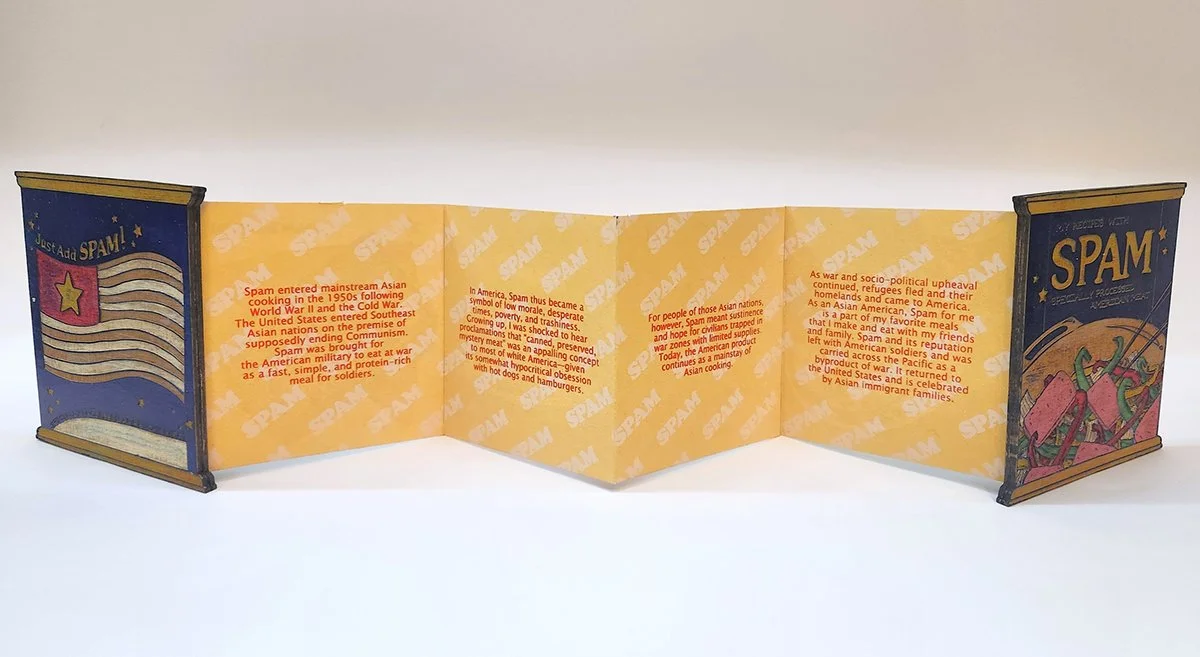
Paige Nguyen, Specially Processed American Meat, 2024, ink, paper, and wood, dimensions (closed): 4 x 4 x .75 inches, © edition of 5. Image courtesy of the artist.
The cute stylization of the prints in Nguyen’s book recasts the polarizing meat product as an important component of cuisine. It acknowledges SPAM’s significance for Asian families and follows its history as a common American army ration for soldiers fighting in countries like Japan and the Philippines in World War II and Vietnam and Korea during the Cold War. [2]
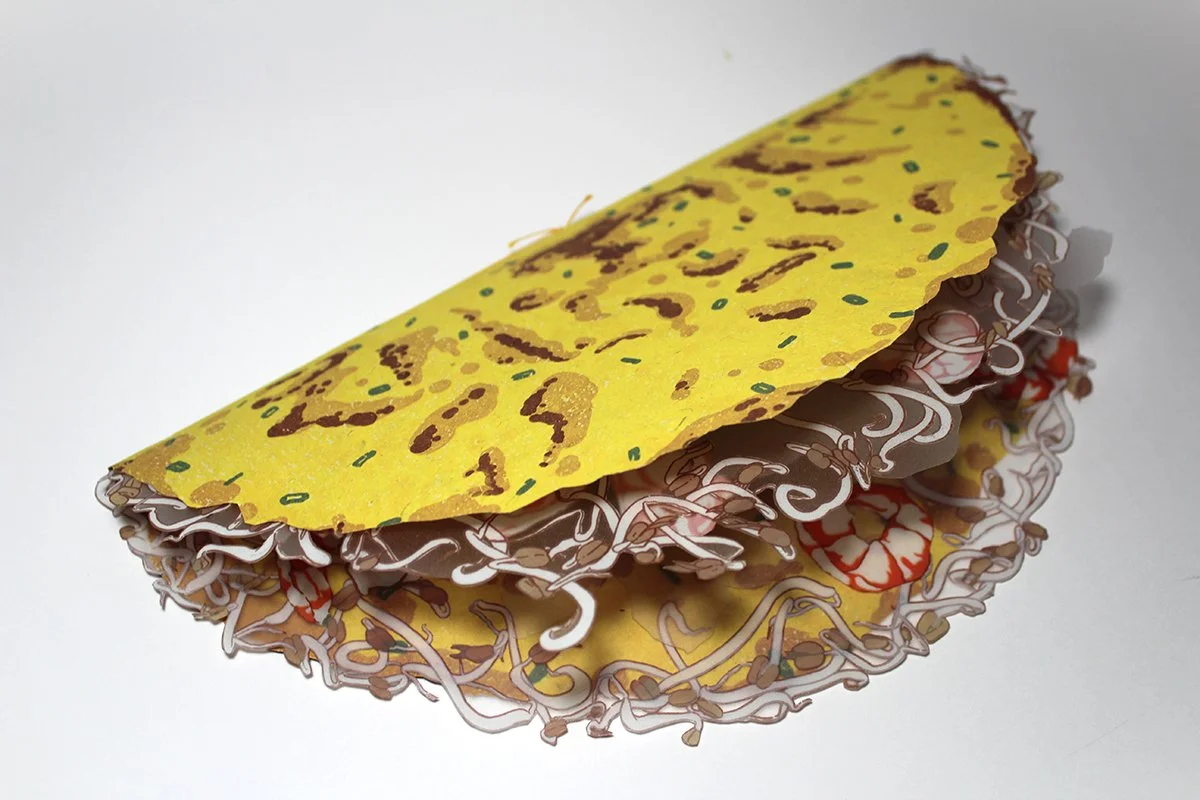
Paige Nguyen, Bánh Xèo, 2025, ink, paper, and thread, dimensions (closed): 12 x 6 inches, © edition of 2. Image courtesy of the artist.
Similarly, Nguyen’s Bánh Xèo resembles the Vietnamese crepe of the same name. The book opens up to reveal interior pages framed by images of shrimp and bean sprouts. Peppered in at the center are leaves with text, one of which reads, “with the sole connection to our culture being at the table with us.” As the words convey, Nguyen is examining the essential role that food plays in passing down culture through families and different generations. The center fold of Bánh Xèo shows an illustration of a woman sitting alone at a table covered in plates of food. The text on the top left reads: “but as I age, the table empties.”
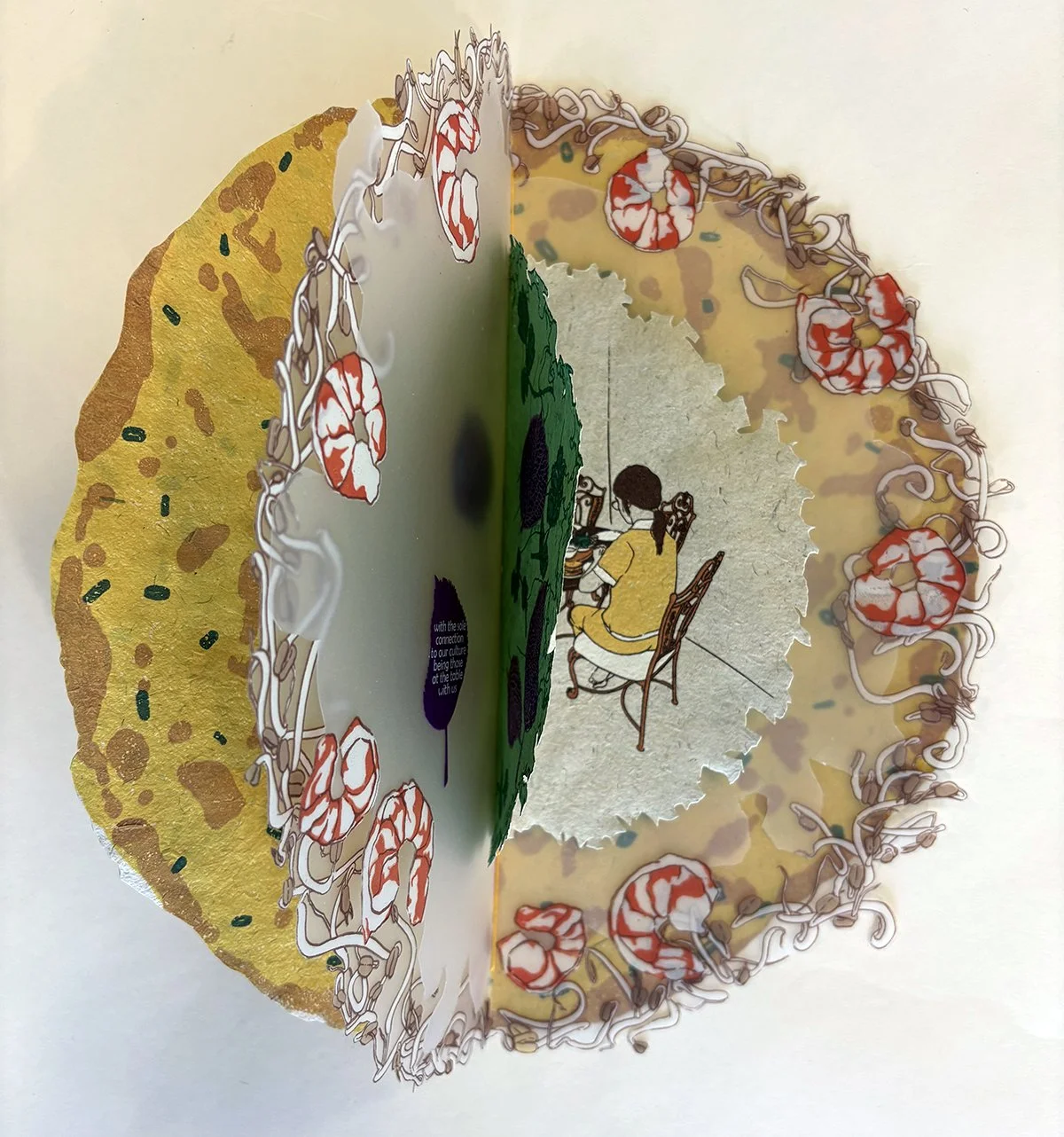
Paige Nguyen, Bánh Xèo, 2025, ink, paper, and thread, dimensions (closed): 12 x 6 inches, © edition of 2. Image by DARIA.
The somber revelation of this central image, and central conflict, shows that time threatens disconnection with tradition and heritage as the pressure to adhere to mainstream culture intensifies. Nguyen writes that “this book details the desire to reject cultural elements in order to assimilate in my youth, and consequently, the longing to relearn and embrace them as I age.” [3]
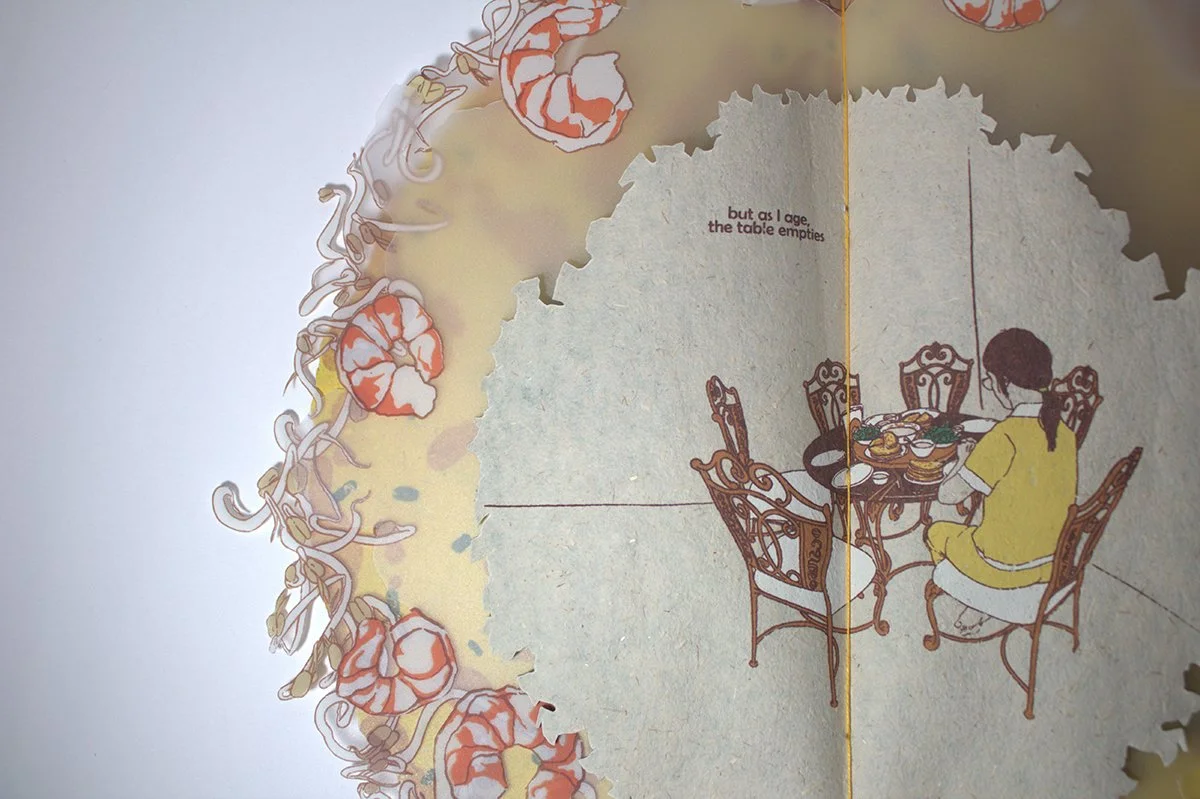
A page from Paige Nguyen’s Bánh Xèo, 2025, ink, paper, and thread, dimensions (closed): 12 x 6 inches, © edition of 2. Image courtesy of the artist.
She pulls in the playful and whimsical representations of food like that in Specially Processed American Meat, balancing it with the emotional, evocative image of a woman surrounded by empty chairs, and uses the visual tools of printmaking to convey a complicated relationship to her identity as a Vietnamese-American artist.
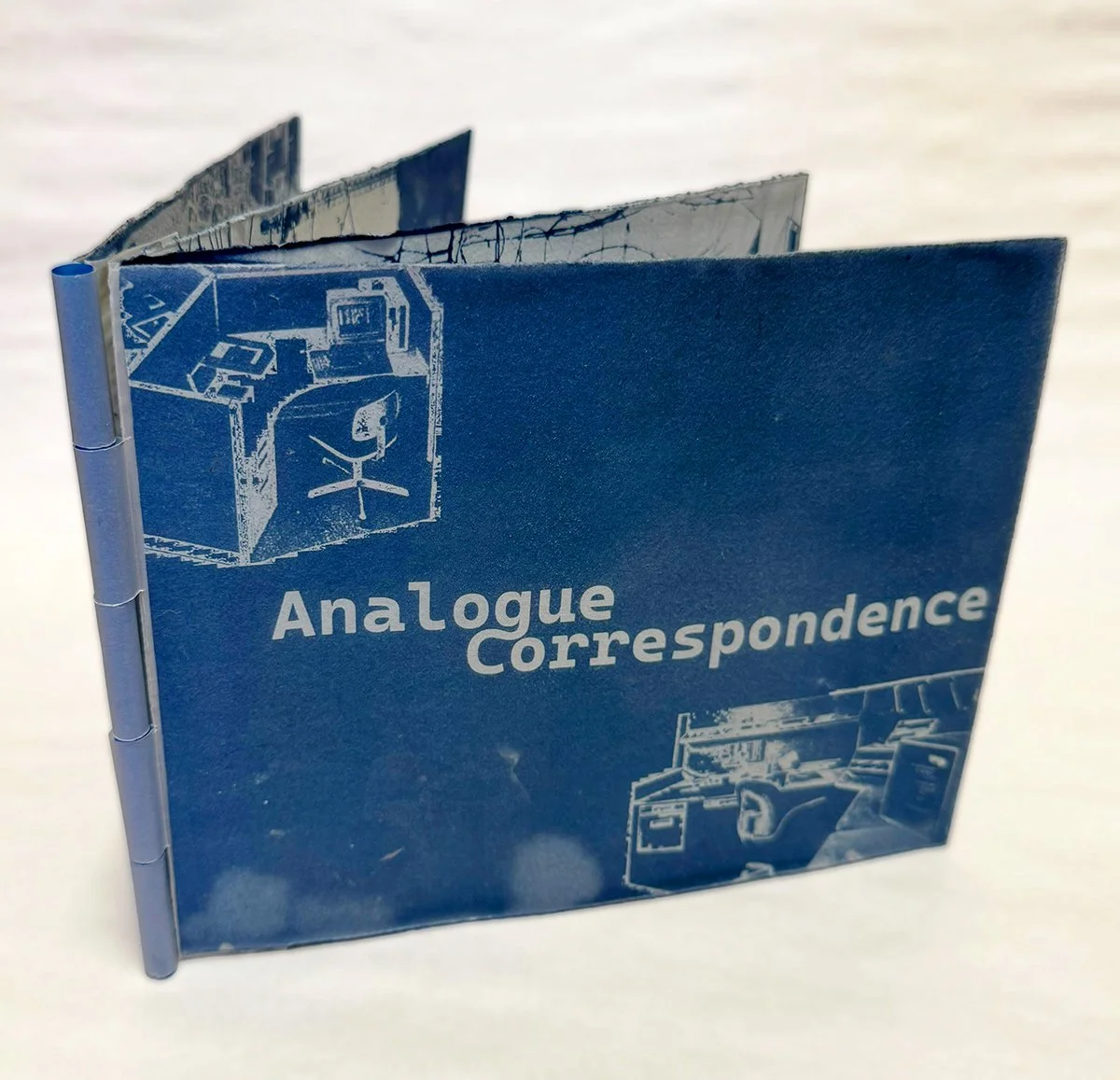
Bug Karplus, Analogue Correspondence, 2025, paper and ink, dimensions (closed): 6.5 x 8.25 x .25 inches, © edition of 3. Image courtesy of the artist.
The process of communication, connection across time and space, and the tensions between analog versus digital and physical versus virtual converge to form the basis of Bug Karplus’s Analogue Correspondence. This book captures the ongoing email conversations between Karplus and Anna Kovacs, a poet and photographer based in Hungary. There is no question that Karplus and Kovacs prefer analog communication—this online format was born out of necessity when a postal ban between the U.S. and Hungary prevented them from sending paper mail back and forth.
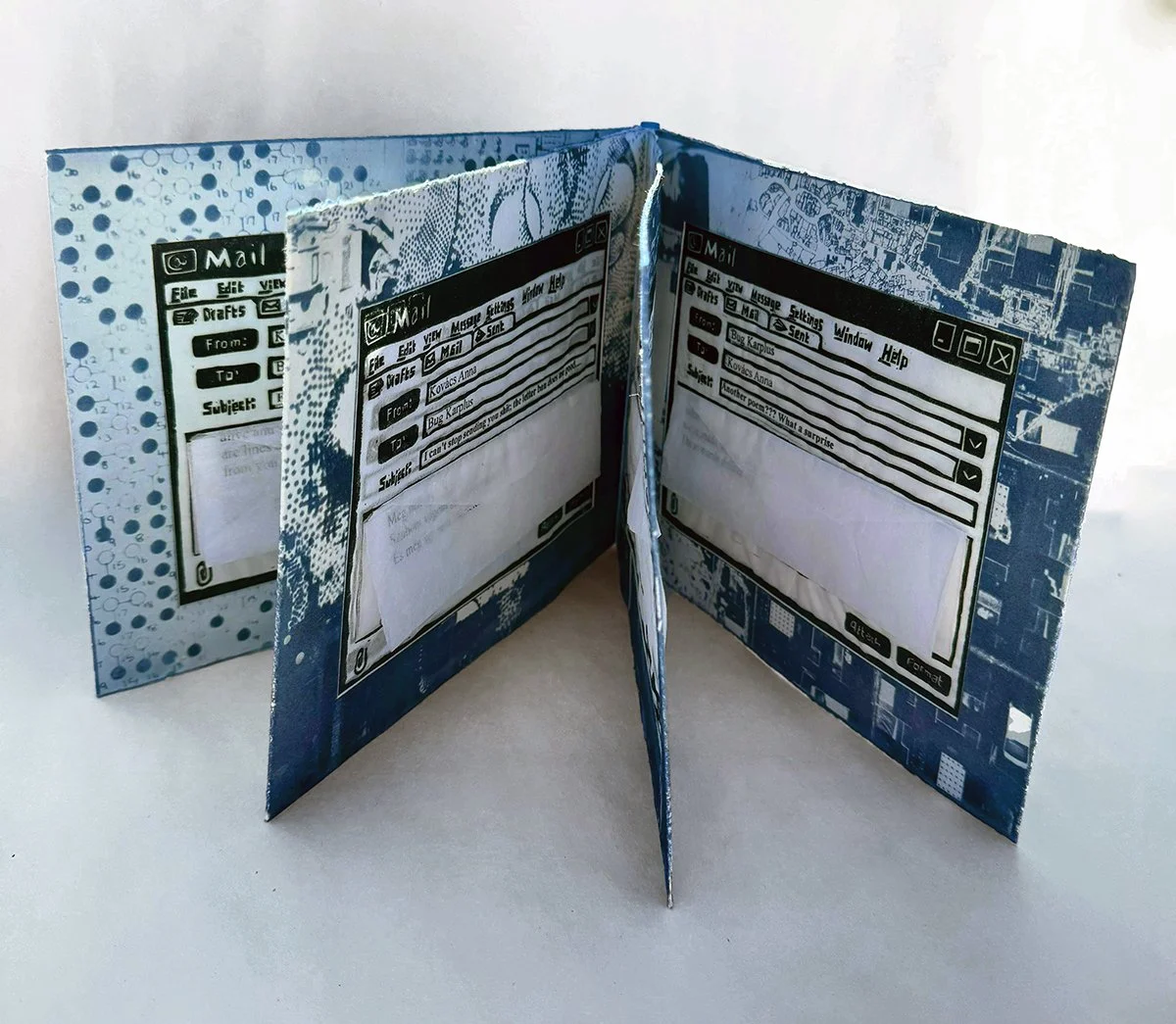
Bug Karplus, Analogue Correspondence, 2025, paper and ink, dimensions (closed): 6.5 x 8.25 x .25 inches, © edition of 3. Image courtesy of the artist.
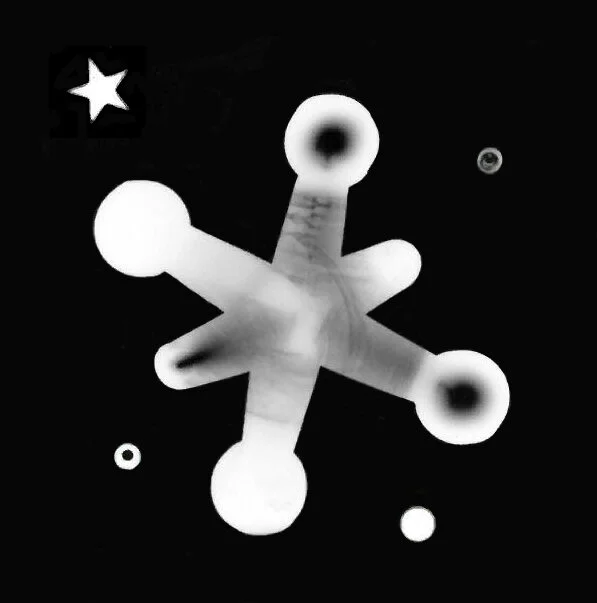
The pages of the book show relief prints that recreate the email interface through which they would speak, laid over cyanotype backgrounds featuring patterns of lines, numbered dots, houses, and images that appear to be microchips. The necessity to operate through email is an obvious sore point for Karplus and Kovacs, who reference their frustration in subject lines that emphasize, “the letter ban has done no good” and “inspiration is through paper and pen.”
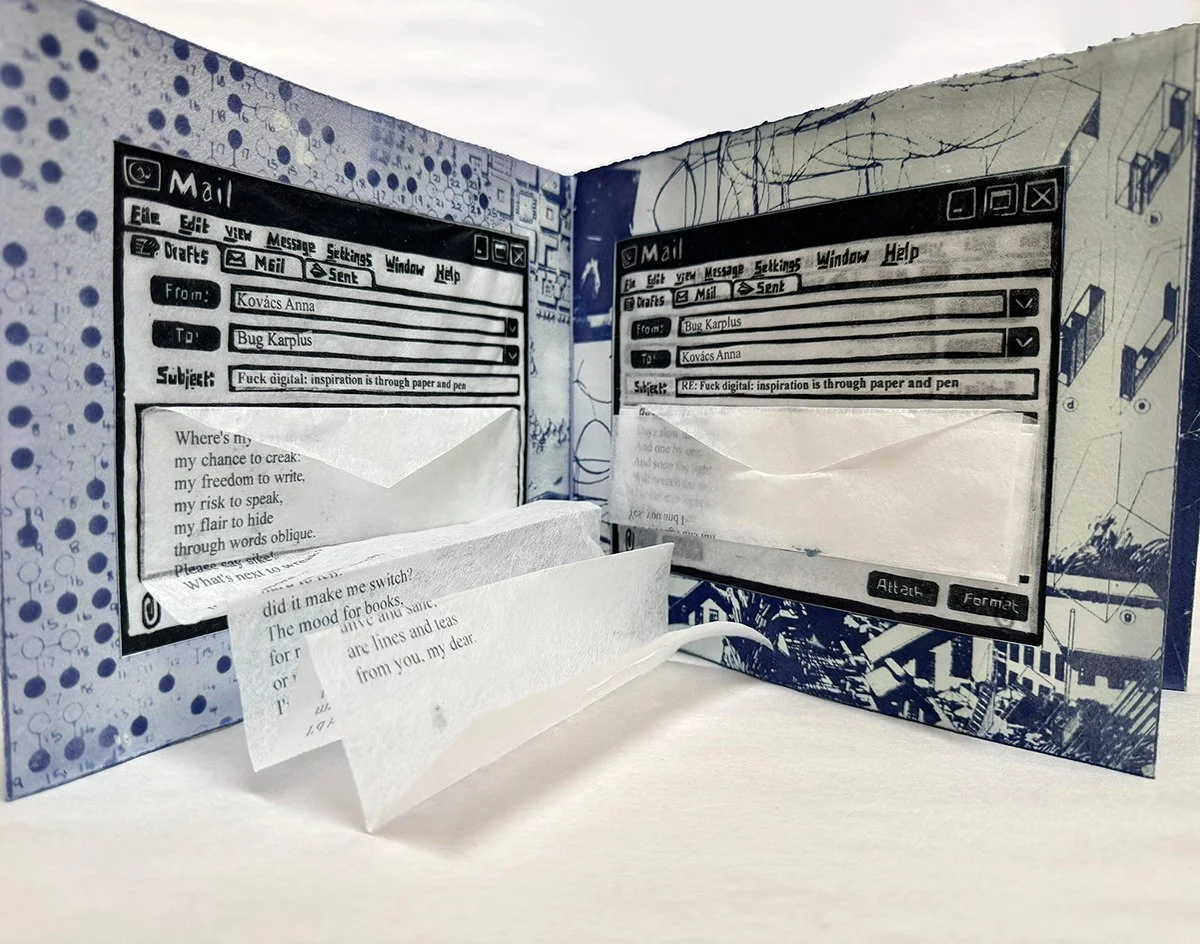
Bug Karplus, Analogue Correspondence, 2025, paper and ink, dimensions (closed): 6.5 x 8.25 x .25 inches, © edition of 3. Image courtesy of the artist.
The messages, which contain exchanged poems, fold out—off the page—on thin, translucent paper. By turning the emails back into a paper-based object, Karplus conducts a transformation that underscores the various types of translations that occur through any form of language-based conveyance. These translations are not just between languages; they happen through changes in mediums, interpretations, retellings, visual illustration, and more.
Through the form of a book, a major development in the mass transmission of information around the world, and also that of emails, another history-altering development in communication, Karplus plays with scales of connection ranging from the personal to the global and all that the tools of correspondence make possible in the process.
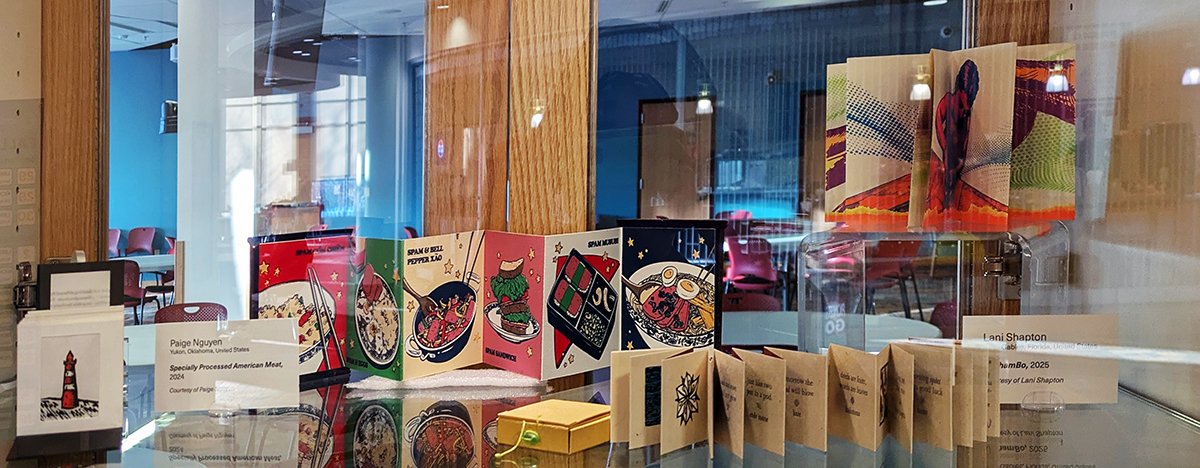
An installation view of Printed Page V at the University of Denver’s Anderson Academic Commons. Image by Maggie Sava.
Printed Page V asks viewers (and readers) to thoughtfully engage not just with stories being told, but also with how they are being told. Communication occurs both in words themselves and in how they find their way onto the page. In the same vein, the featured books expand on the potential of printmaking, showing that it is not just a vehicle for illustration but a cornerstone in the entire construction of a book. Prints, text-based or image-based, are not just meant to be seen in a flat format, but to be experienced as spatial, dynamic storytelling mechanisms.
Maggie Sava (she/her) is an art historian and writer based in Denver. She holds a BA in art history and English, creative writing from the University of Denver and an MA in contemporary art theory from Goldsmiths, University of London.
[1] Naomi S. Velasquez, artist’s statement. Printed Page V, Anderson Academic Commons, University of Denver, Denver, Colorado.
[2] Paige Nguyen, artist’s statement. Printed Page V, Anderson Academic Commons, University of Denver, Denver, Colorado.
[3] Ibid.