
Dark Matter | The Stars Watch From Long Ago | And All the Meadows Wide
Kahn + Selesnick: Dark Matter
Stacey Steers: The Stars Watch From Long Ago
Kim Dickey: And All the Meadows Wide
Robischon Gallery
1740 Wazee Street, Denver, CO 80202
April 9–May 30, 2026
Admission: free
Review by Madeleine Boyson
“‘I believe good poets borrow, great poets steal,’ wrote Meg Kearney in her poem ‘Creed’.” [1] I know because I stole this reference and that sentence from Pádraig Ó Tuama’s book In the Shelter, in which the author traces creative thiefdom from Kearney through T.S. Eliot to W. H. Davenport Adams, who expressed that “great poets imitate and improve, whereas small ones steal and spoil.” [2] On some level, intentionally or not, we are always filching from each other.
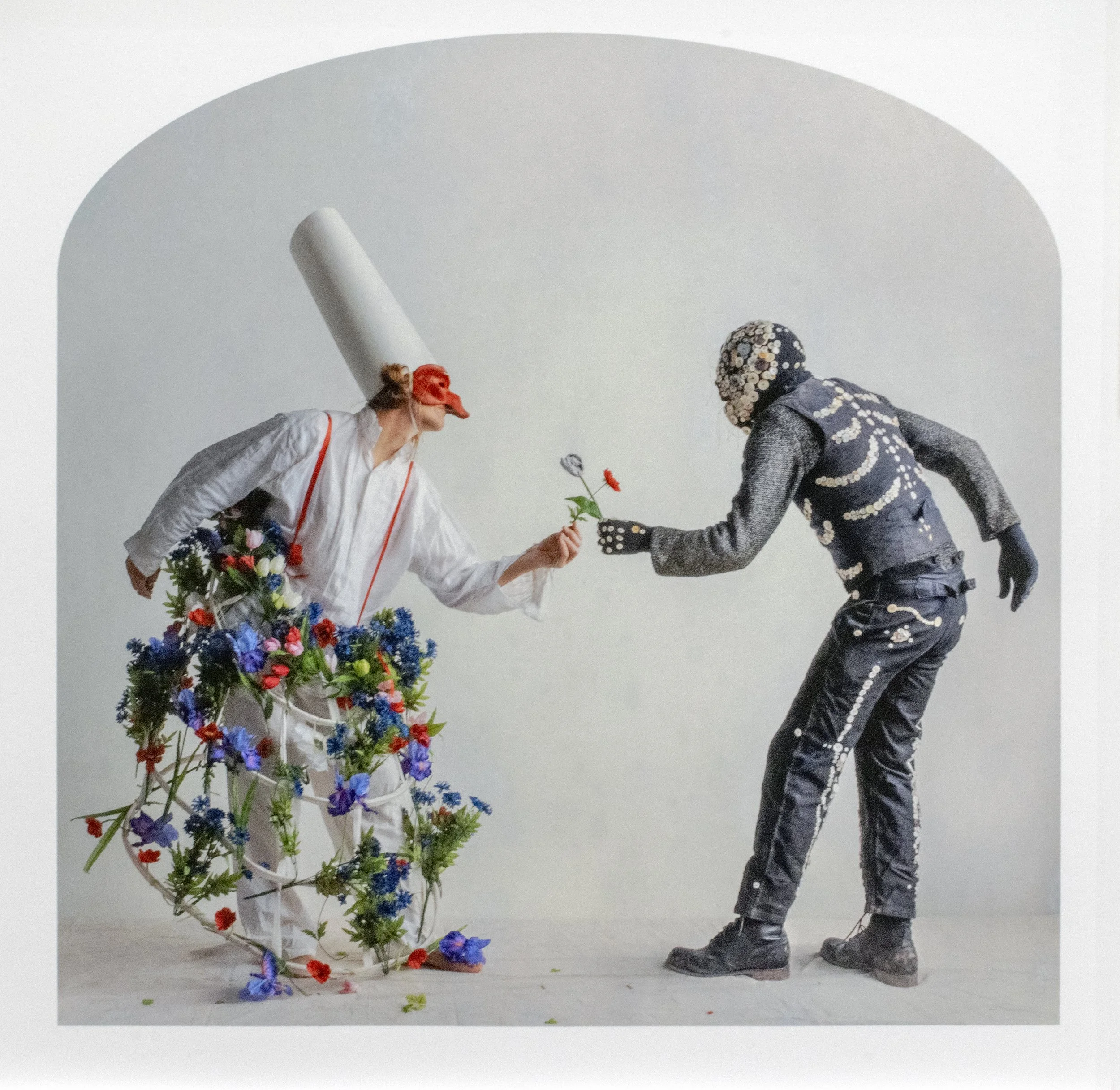
Kahn + Selesnick, The Columbarium of Mr. Buttons, 2026, archival pigment print, 16.5 x 16.5 inches. Image courtesy of Robischon Gallery.
This is not to say that artists lack originality. Canon painters have copied one another for centuries. An art teacher once bid me to see the German Expressionists because I could not try colorwork until I understood “what made great artists great.” Like Kearney, it is possible to take something original and make it original to you. But originality and purity are not synonyms. And as Nicholas Kahn and Richard Selesnick’s Dark Matter, Stacey Steers’ The Stars Watch From Long Ago, and Kim Dickey’s And All the Meadows Wide at Robischon Gallery attest, the subtleties between cherishing source material and overwhelming it can be the difference between breathing life into work or sucking the air out of it.
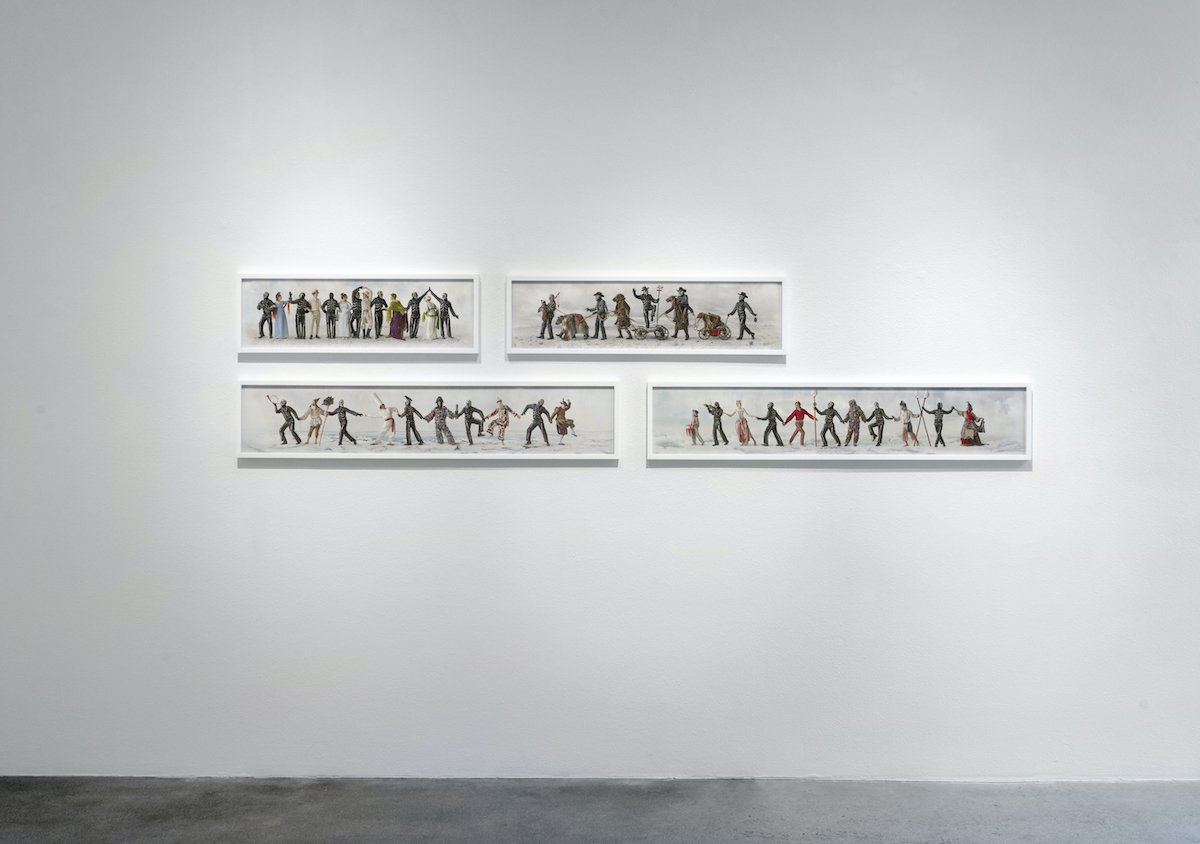
An installation view of Kahn + Selesnick’s Danse Macabre series at Robischon Gallery, 2026, archival pigment prints. Image courtesy of Robischon Gallery.
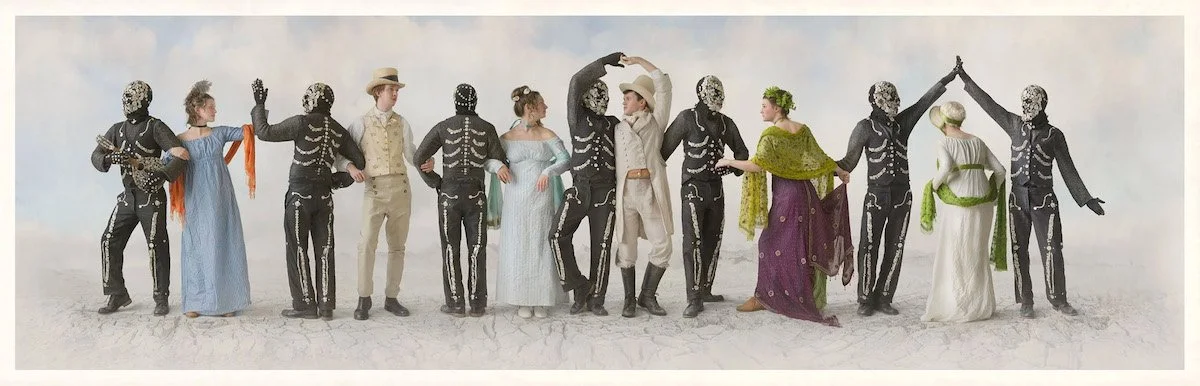
A detail view of Kahn + Selesnick’s Danse Macabre series at Robischon Gallery, 2026, archival pigment print. Image courtesy of Robischon Gallery.
Visitors are greeted by Kahn and Selesnick’s exhibition Dark Matter, comprised of four operatic series. Danse Macabre (2026) features the fictitious Truppe Fledermaus (launched by the duo in 2012) on a Bakhtinian dance toward the grave. The central figure of Mr. Buttons appears as both a beneficent Pearly King and sinister Charon, a harbinger of death that brings mankind to a carnival Underworld. [3] Drawing on allegories from the thirteenth through twentieth centuries, Kahn and Selesnick’s troupe guides players of all stripes, creeds, and costumes through a pallid desert—a psychologically and eschatologically pristine consideration of the subconscious realm we weave in and out of on our march toward nothingness.
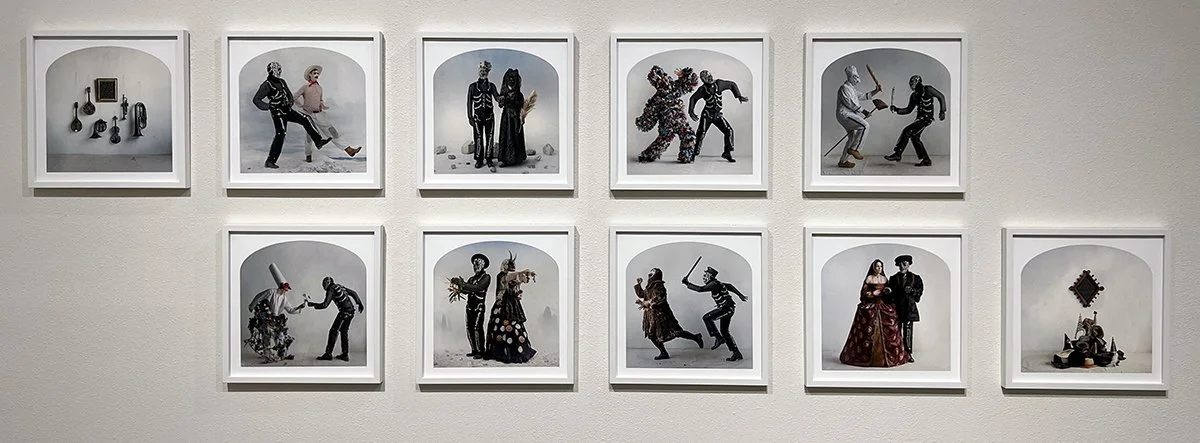
An installation view of Kahn + Selesnick, The Columbarium of Mr. Buttons, 2026, archival pigment print, 16.5 x 16.5 inches. Image by Madeleine Boyson.
Around the corner, the artists celebrate psychopomp fare in The Columbarium of Mr. Buttons (2026), a photographic cinerarium that evidences Charon’s witting victims mid-dance, mid-fight, mid-flee, and mid-portrait. These deliciously theatrical photographs are true to Kahn and Selesnick’s oeuvre and draw on manifold sources: Breton, Egyptian, Greek, Cornish, Roman, and so on.
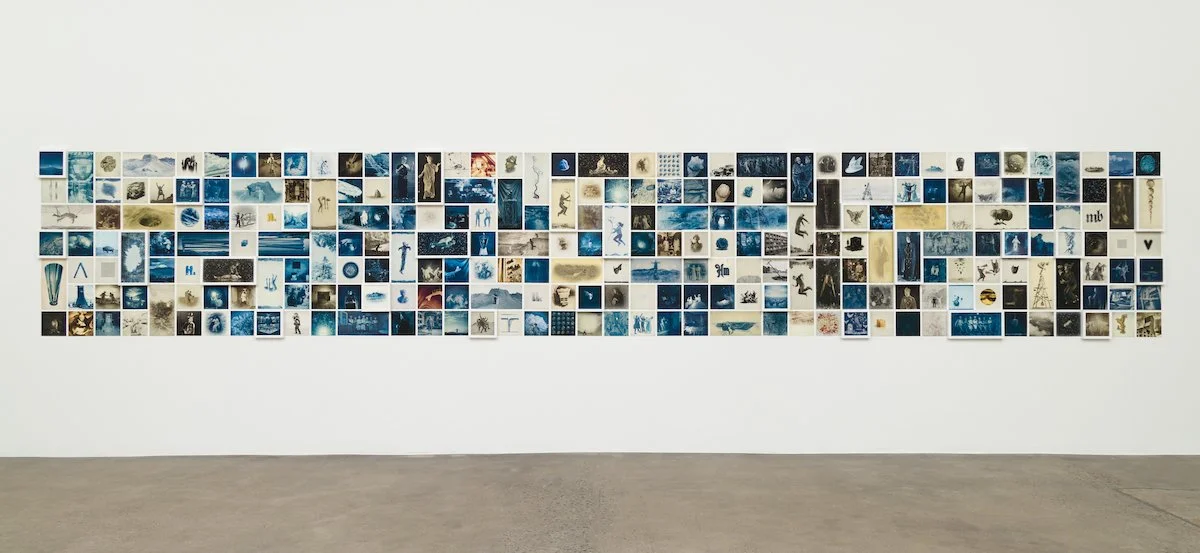
Kahn + Selesnick, Materia Obscura: Dark Matter and the World Beneath, all 2026, archival pigment prints, 52 x 315 inches. Image by Wes Magyar, courtesy of Robischon Gallery.
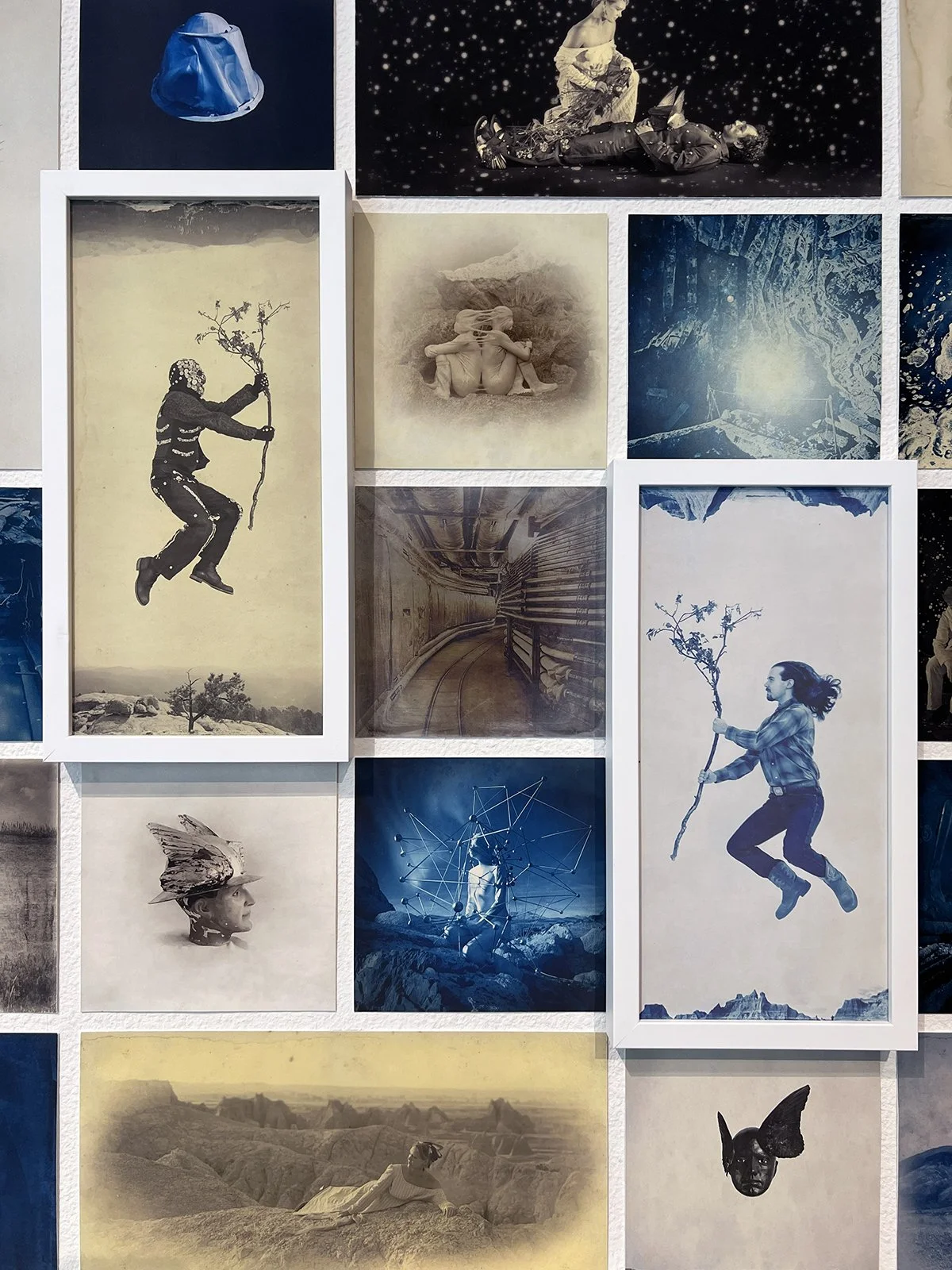
A detail view of Kahn + Selesnick, Materia Obscura: Dark Matter and the World Beneath, all 2026, archival pigment prints, 52 x 315 inches. Image by Madeleine Boyson.
Across Robischon’s front room, Kahn and Selesnick exhibit the titular Materia Obscura: Dark Matter & the World Beneath and Monumental Arch. The former combines hundreds of photographs in a “single artwork of scale” featuring ephemera of the Truppe as they perform a feat of unrealized proportions, traversing under South Dakota for a “high-energy physics and performative geology.” Cyanotype, gold, and black-and-white digital art offers something akin to narrative in the cinematic unfolding of untruth.
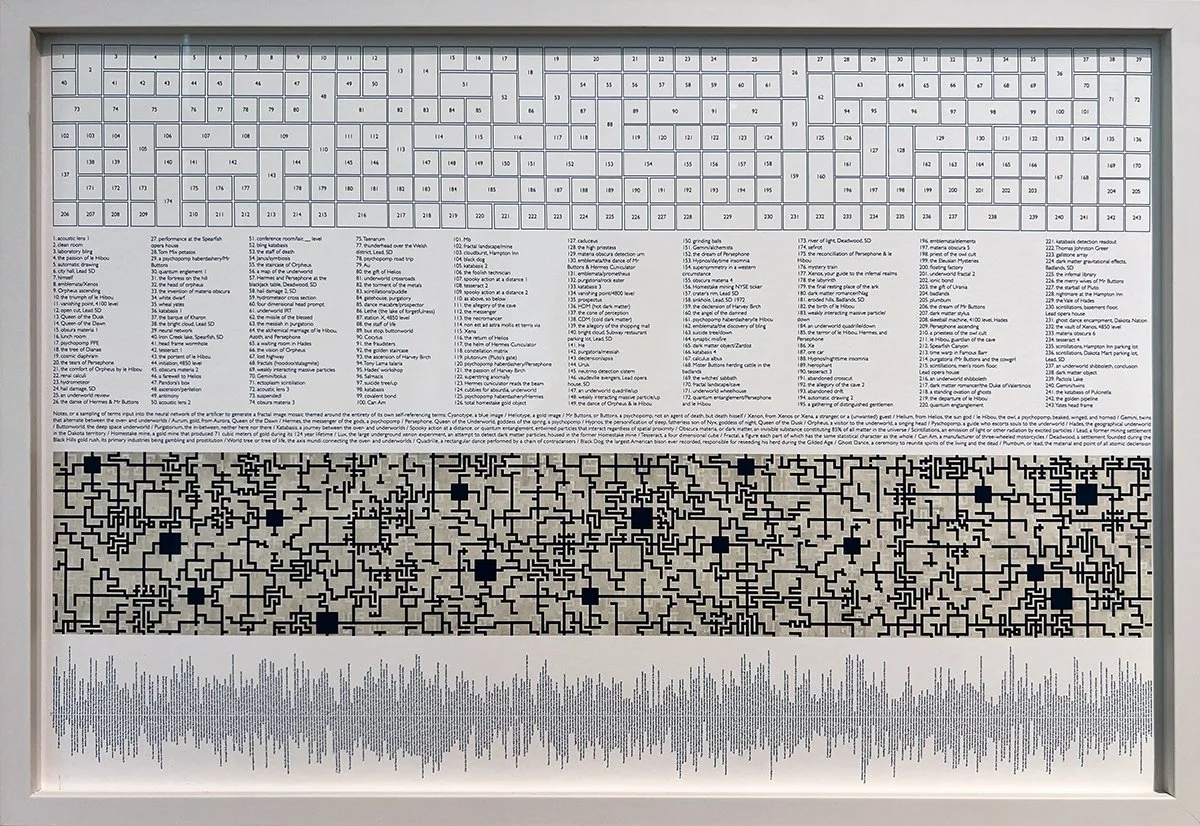
Kahn + Selesnick, Key to Materia Obscura: Dark Matter & the World Beneath, 2026. Image by Madeleine Boyson.
Yet Kahn and Selesnick’s latter two series bewilderingly utilize artificial intelligence. Digital photography reasonably involves manipulation, though Danse and Columbarium show that Kahn and Selesnick do not rely solely on artificiality for productive output. In spite of this, Materia Obscura provides a list of “terms input into the neural network of the artificer” that reads, if nothing else, like a bizarre key to a bad ChatGPT prompt. How much of Materia Obscura is not “man-made”? I would desperately like to know.
Kahn + Selesnick, Monumental Arch, 2026, excerpt installation of an 80-print suite. Image by Madeleine Boyson.
A detail view of Kahn + Selesnick, Monumental Arch, 2026, two works from an 80-print suite. Image by Madeleine Boyson.
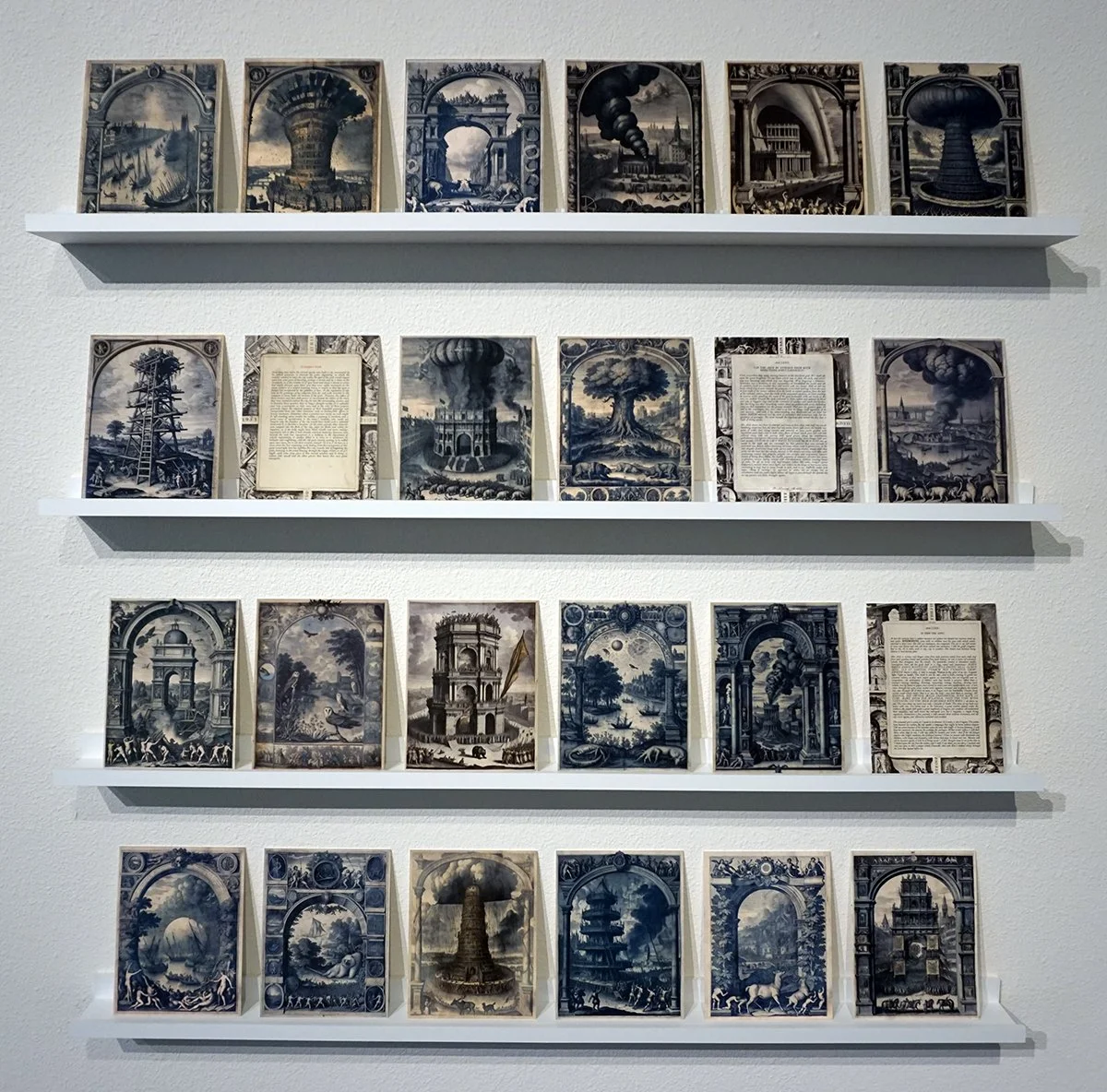
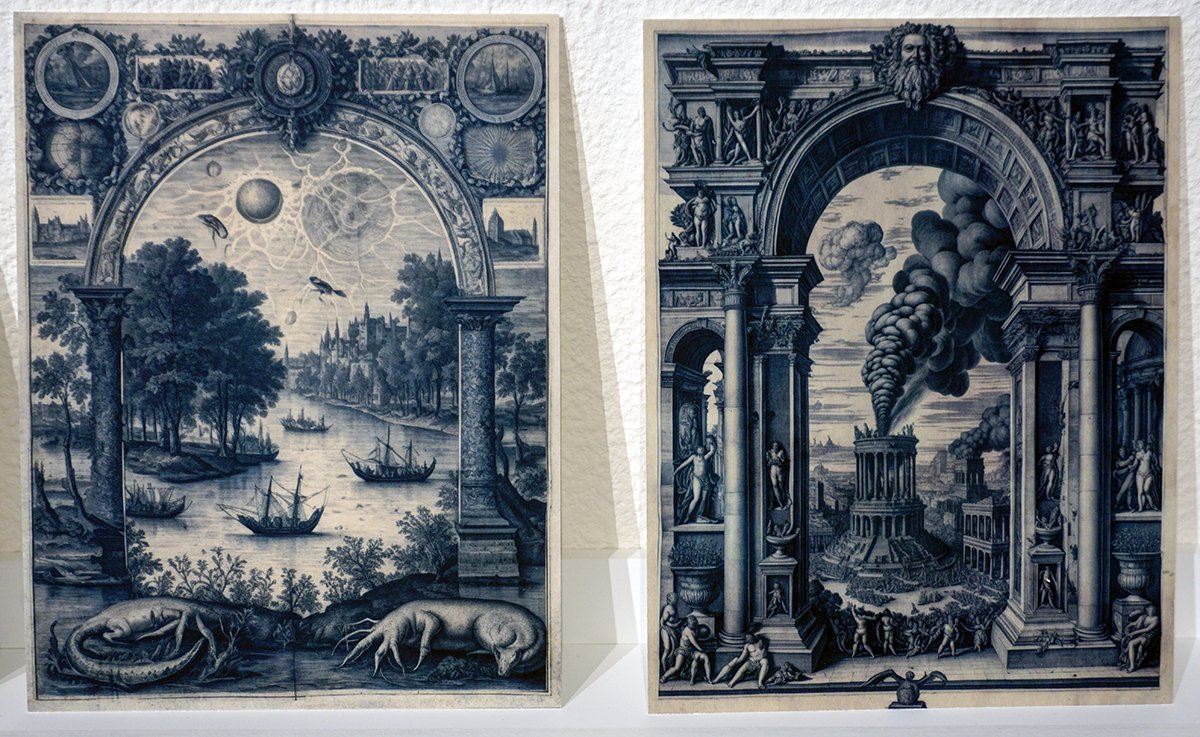
The artists freely admit to using A.I. in Monumental Arch. Presented as though prompted by the Truppe, twenty-four travel cards offer poorly rendered images that bleed inputs like a bad Albrecht Dürer dream. I have been assured that the artists used only centuries-old prompts for the A.I. so as not to steal from living artists. But where Mr. Buttons—conductor in the symphony of the afterlife—carries with him inexorable life, Monumental Arch feels hollow, like biting into a chocolate egg to find not salted caramel, but dead air.
An installation view of Stacey Steers exhibition The Stars Watch from Long Ago at Robischon Gallery. Image courtesy of Robischon Gallery.
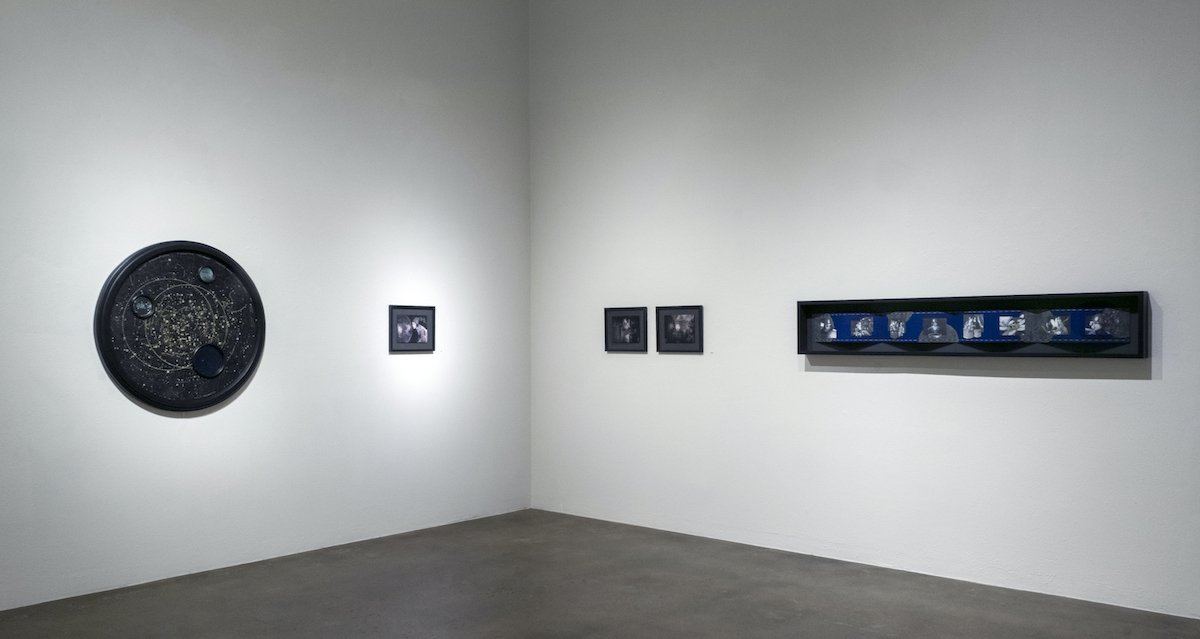
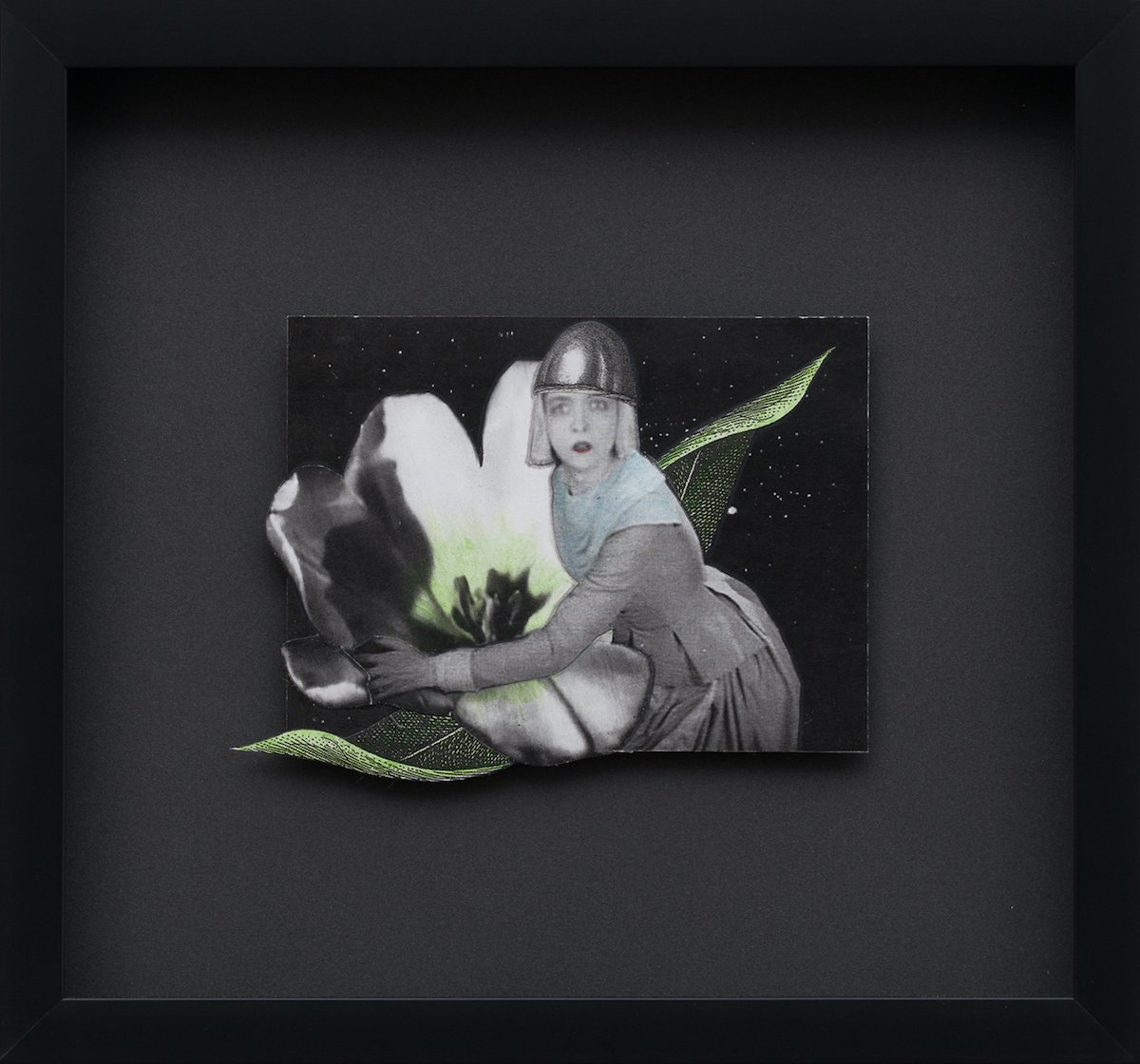
Still, a strong curatorial stripe is maintained in Stacey Steers’ elaborate The Stars Watch from Long Ago. Here, the artist similarly “steals” from existing visual source material, but rather than manipulate it digitally, Steers hand-cuts, colors, and collages film stills from the pre-code era and nineteenth-century illustrations to tender thoughtful animations of a drenched and burning planet.
Stacey Steers, The Stars Watch from Long Ago, 2026, hand-colored, hand-cut film still, 9.5 x 10.5 inches. Image by Wes Magyar, courtesy of Robischon Gallery.
The exhibition takes its theme from the titular W. S. Merwin poem “The Stars Watch from Long Ago.” The poem’s narrator yearns for a certainty to connect ancient past with distant future and a moment of exquisite grief in between. With this throughline, Steers offers a 22-minute animation created in concert with John Romano and Udit Duseja that both conceals and reveals a dreamscape replete with the lingering glances, slowed gestures, and layered symbolism of silent film actors like Lillian Gish, Janet Gaynor, and Ana Torrent. While it would be reductive to relay the worlds inside Steers’ film, it will suffice to say that the work is gray and green and poetic and peculiar, and lands best when viewed from start to finish.
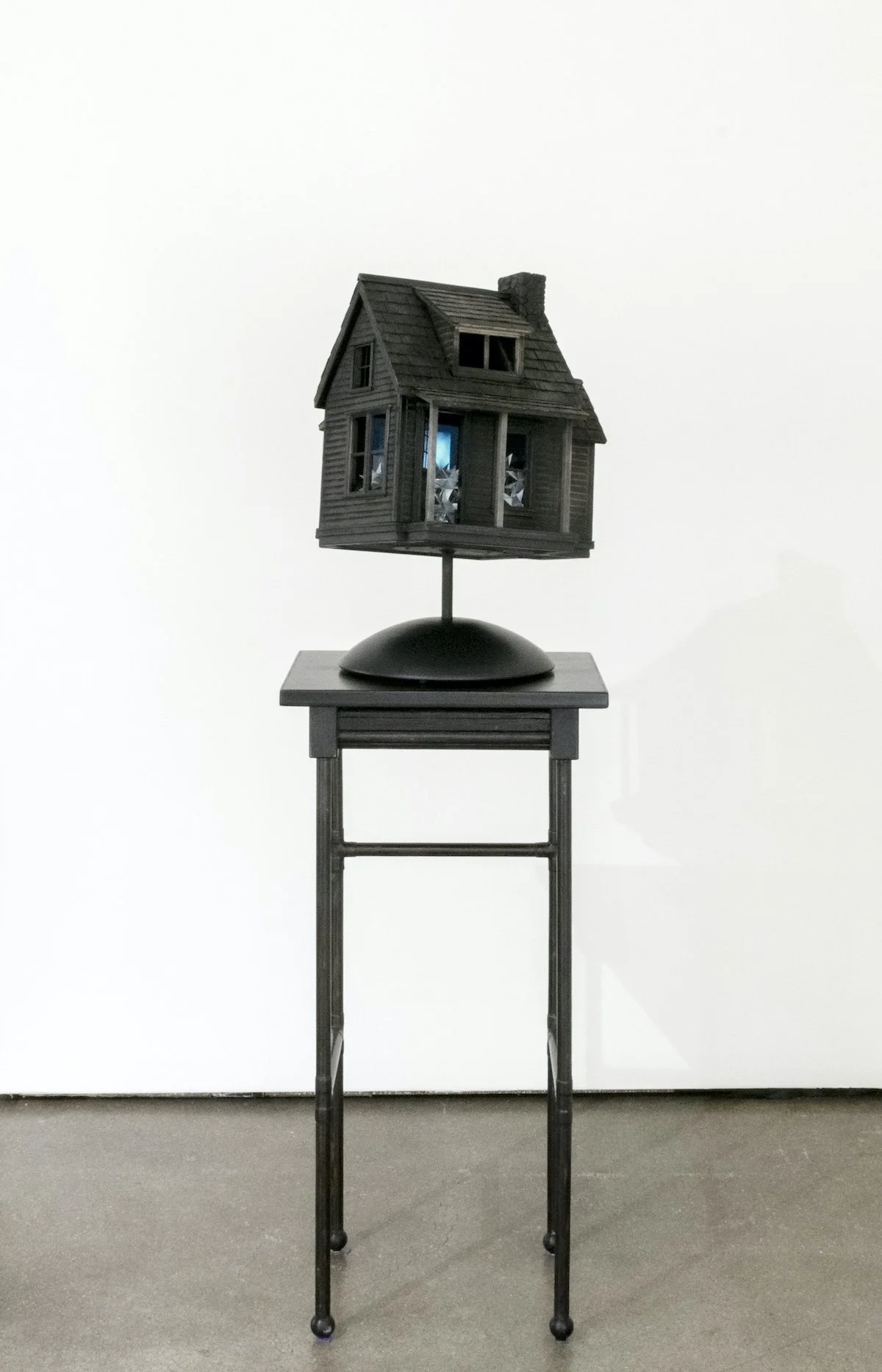
Stacey Steers, Star House, 2026, video, wood, lights, and mixed media, 24 x 16 x 16 inches. Image courtesy of Robischon Gallery.
Elsewhere in the galleries, Steers offers GIF-like blurbs of her animation set into wooden star charts built by Michael Schliske (Steamboat Woodworks), prints from the film, hand-cut and colored collages, and even a mixed media Star House (2026) that shrinks the film’s celestialities into one 24-by-16-by-16 inch sculpture. Each work feels like a whisper and a chorus, with a muted tone offering more subtleties than can be absorbed in a single viewing.
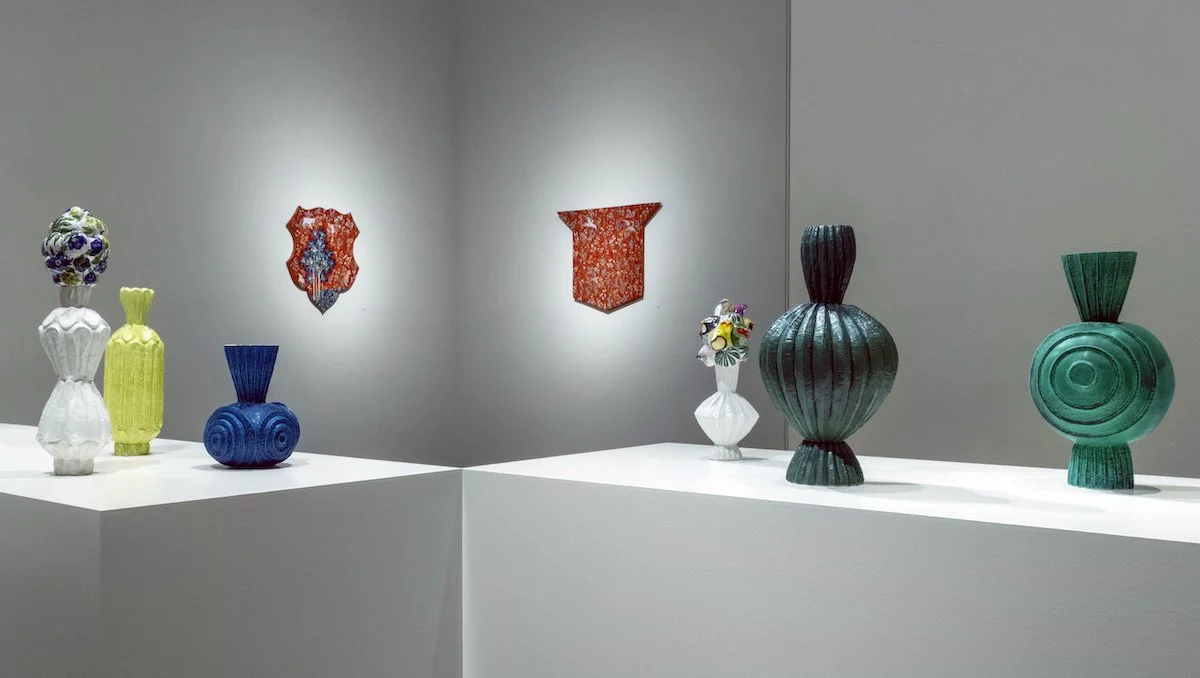
An installation view of Kim Dickey’s solo exhibition And all the meadows wide at Robischon Gallery. Image courtesy of Robischon Gallery.
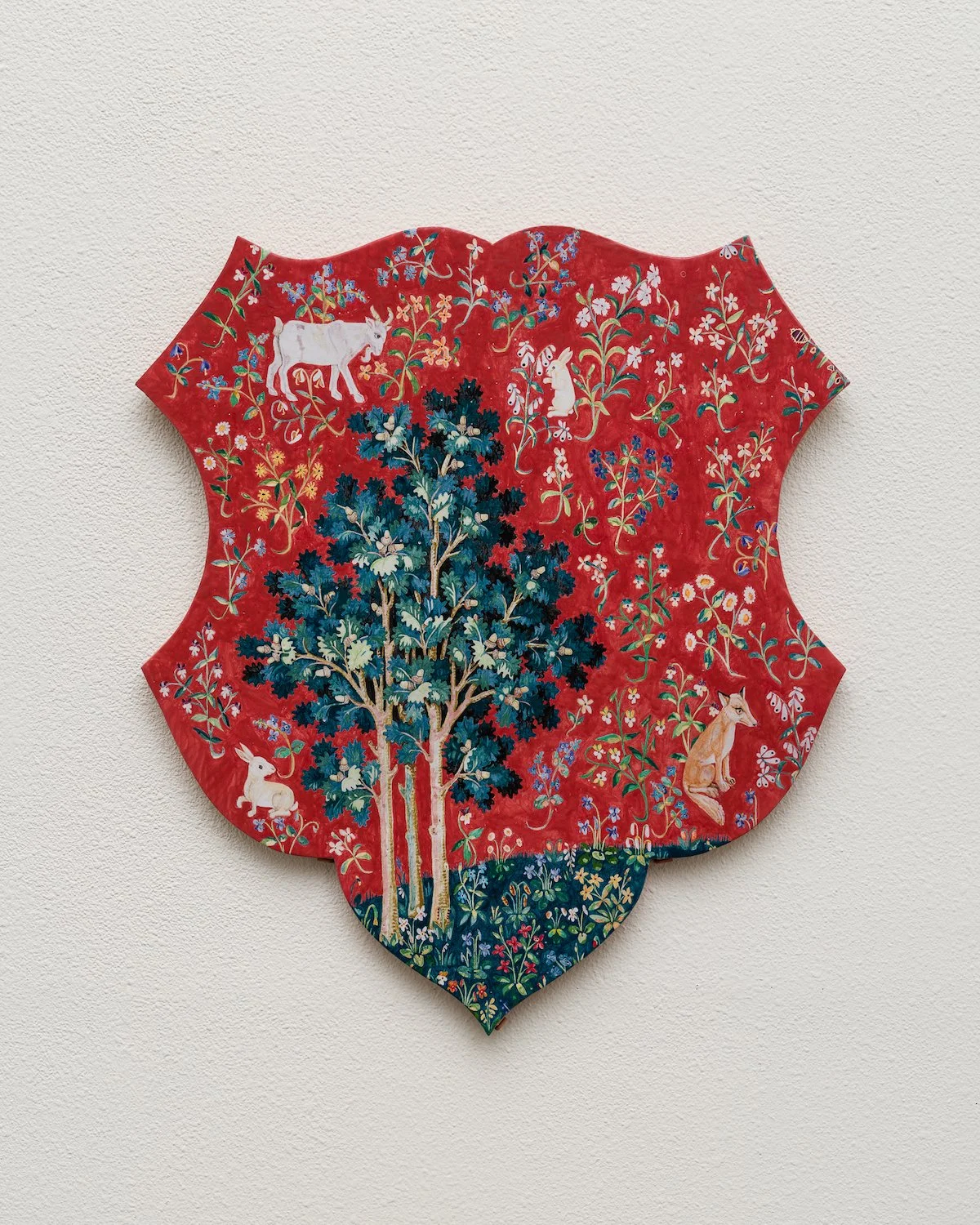
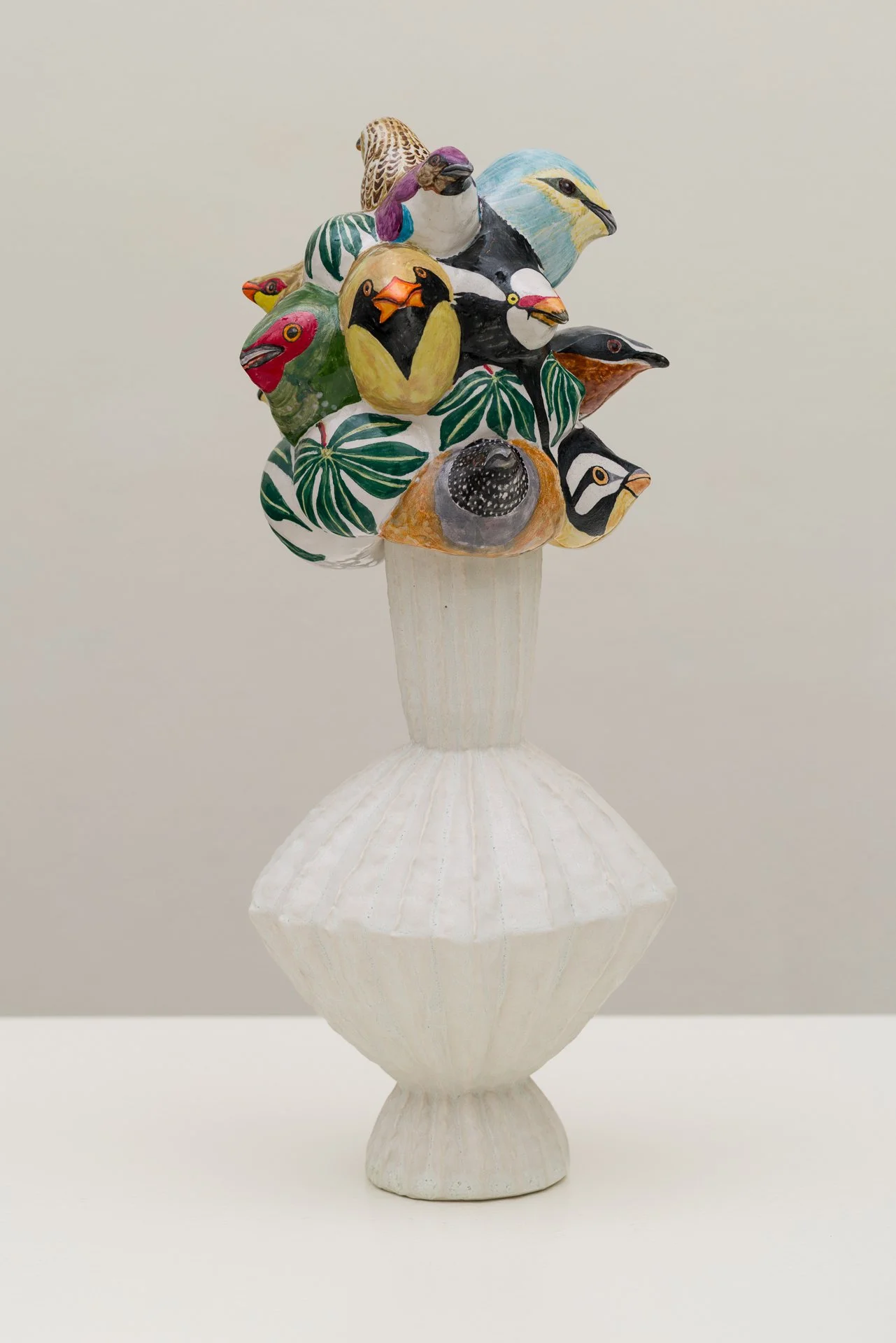
Kim Dickey, Baroque Eclogue, 2026, glazed terracotta, 26 x 22.5 x 0.75 inches. Image by Wes Magyar, courtesy of Robischon Gallery.
Similarly slow in pace (especially when compared with Kahn and Selesnick’s works up front which feel, if not frantic, then frenetic) are Kim Dickey’s glazed porcelain sculptures. Tethered to one room but not one influence, Dickey’s vases and terracotta heraldry offer the “deep pleasure of slowing down” in response to medieval millefleur tapestry and birds of paradise. [4] Viewing Dickey’s shields feels like remembering—they even are the act of remembering, if one knows the Unicorn Tapestries displayed at the Met Cloisters in New York City.
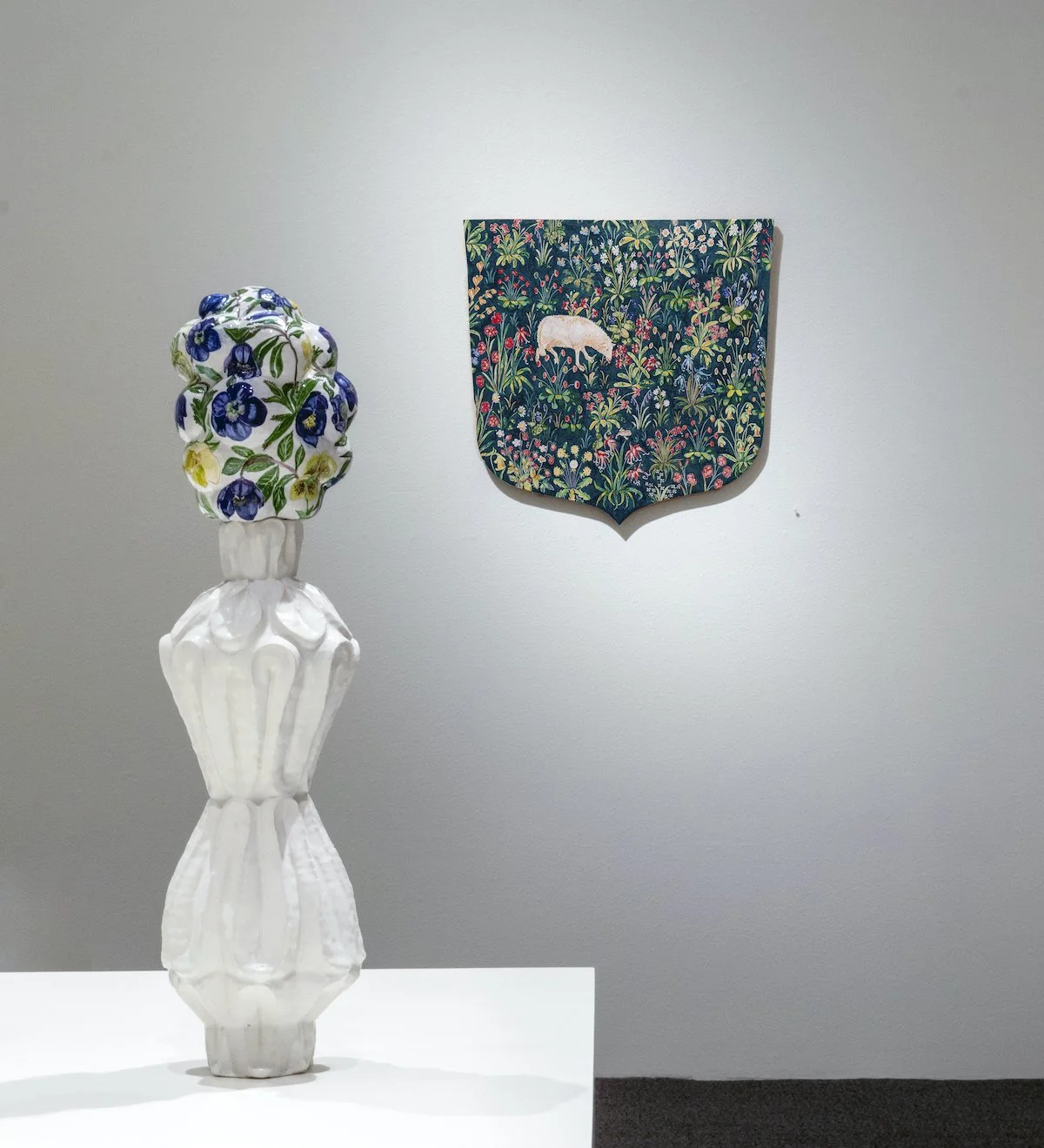
Left: Kim Dickey, A Color Stands Abroad, 2026, glazed porcelain, 24 x 6 x 6 inches. Right: Kim Dickey, On Solitary Fields, 2026, glazed terracotta, 25.75 x 25 x 0.625 inches. Image courtesy of Robischon Gallery.
On view through May 30, 2026, Dark Matter, The Stars Watch From Long Ago, and And All the Meadows Wide take their cues and their content from historical sources while handling both in distinct ways. Dickey, like Steers, cherishes the inevitable imprint of her handiwork on the finished product, while Kahn and Selesnick toy with the strength of their digital fingerprints. The exhibitions do not comment on the integrity of either approach. And anyway, there is no objective way to make such a claim. But Robischon offers a useful commentary on an ancient and deeply human quandary: if an artist really knows their source material.
Madeleine Boyson (she/her) is an Editorial Coordinator at DARIA and a Denver-based writer, poet, and artist. She holds a BA in art history and history from the University of Denver.
[1] Meg Kearny, “Creed,” https://www.wenaus.org/poetry/creed.html.
[2] “And she’d know, too, because she stole the line from T. S. Eliot, who said that ‘one of the surest of tests is the way in which a poet borrows. Immature poets imitate; mature poets steal’.” From Pádraig Ó Tuama, In the Shelter: Finding A Home in the World (Broadleaf Books, 2015), 43.
[3] Pearly Kings and Queens wear suits covered in mother-of-pearl buttons as part of a charitable Cockney tradition dating to the Victorian Era.
[4] All quotes, unless otherwise indicated, come from the artist and gallery statements in Robischon Gallery’s exhibition handout.