Flourish | Natural Reverie
Julie Maren: Flourish
Natural Reverie: Laura Guese, Rob Mellor, Jane Fulton Alt, and Norman Epp
Walker Fine Art
300 W. 11th Avenue, Unit A, Denver, CO 80204
August 28–November 7, 2026
Admission: free
Review by Nina Peterson
Flourish and Natural Reverie, two exhibitions on view at Walker Fine Art, raise questions about the nature of perception and the perception of nature. Both exhibitions remind us that humans are part of nature, and that human perception is shaped by nature, including, for example, biological structures and environmental conditions. Human perception is not a tool to be wielded in pursuit of the domination of nature; nor is it something to be augmented in defiance of natural phenomena. Perception is co-creative with nature.
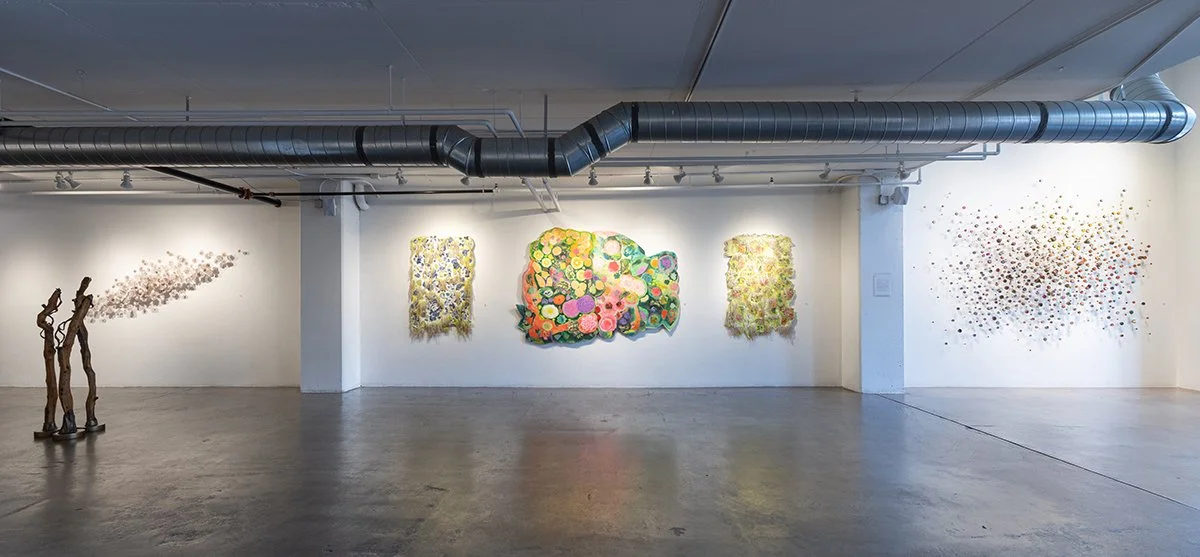
An installation view of the exhibition Flourish at Walker Fine Art. Image courtesy of Walker Fine Art.
Perception is making sense of sensory input. It involves the reception of visual and physical stimulation, and it is also shaped by an individual’s memories and experiences. Flourish, an exhibition of Julie Maren’s artworks, proposes collage as a method of engaging in this process.
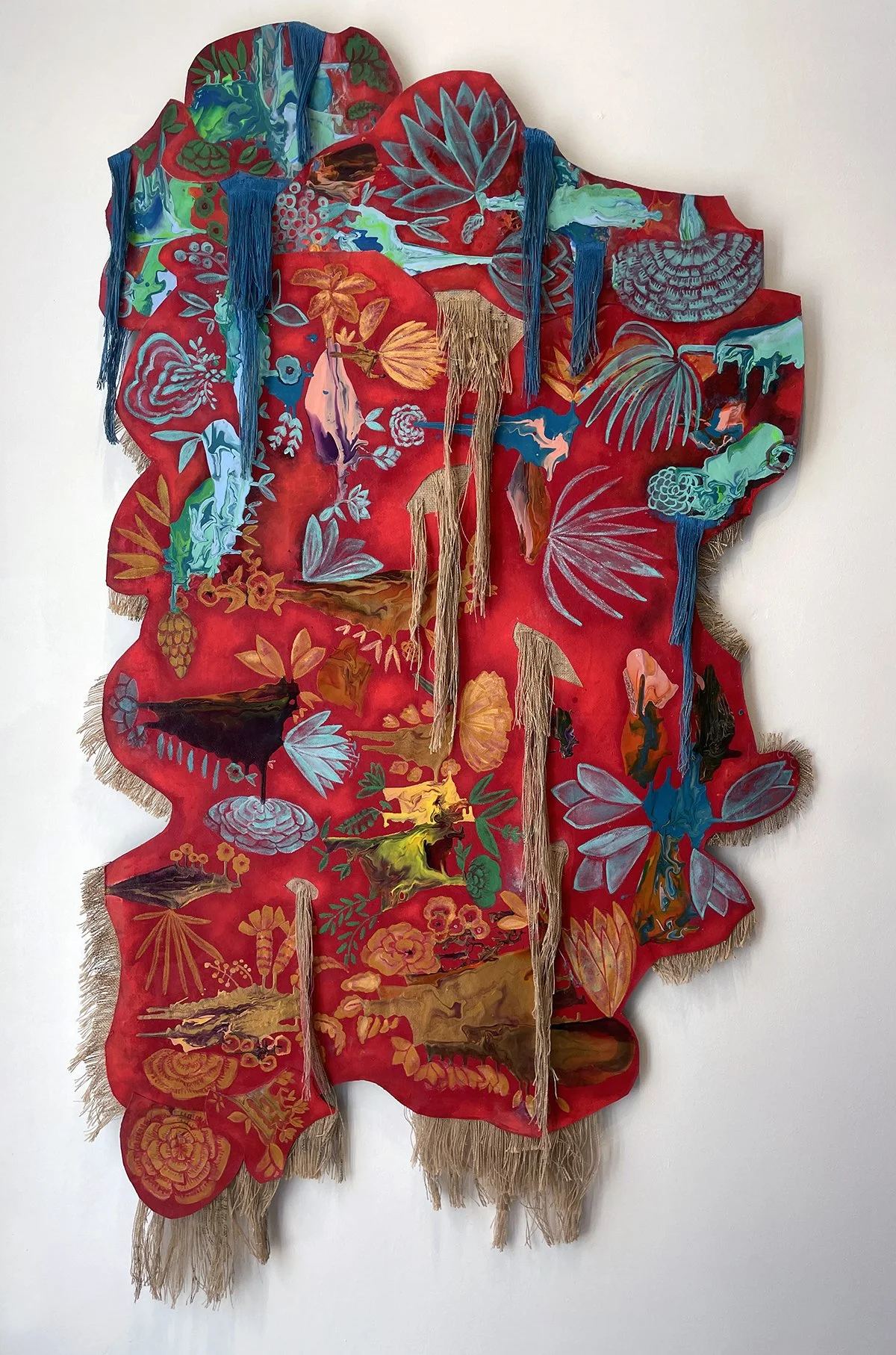
Julie Maren, Mirage, acrylic and sisal on canvas, 45 x 82 inches. Image by Nina Peterson.
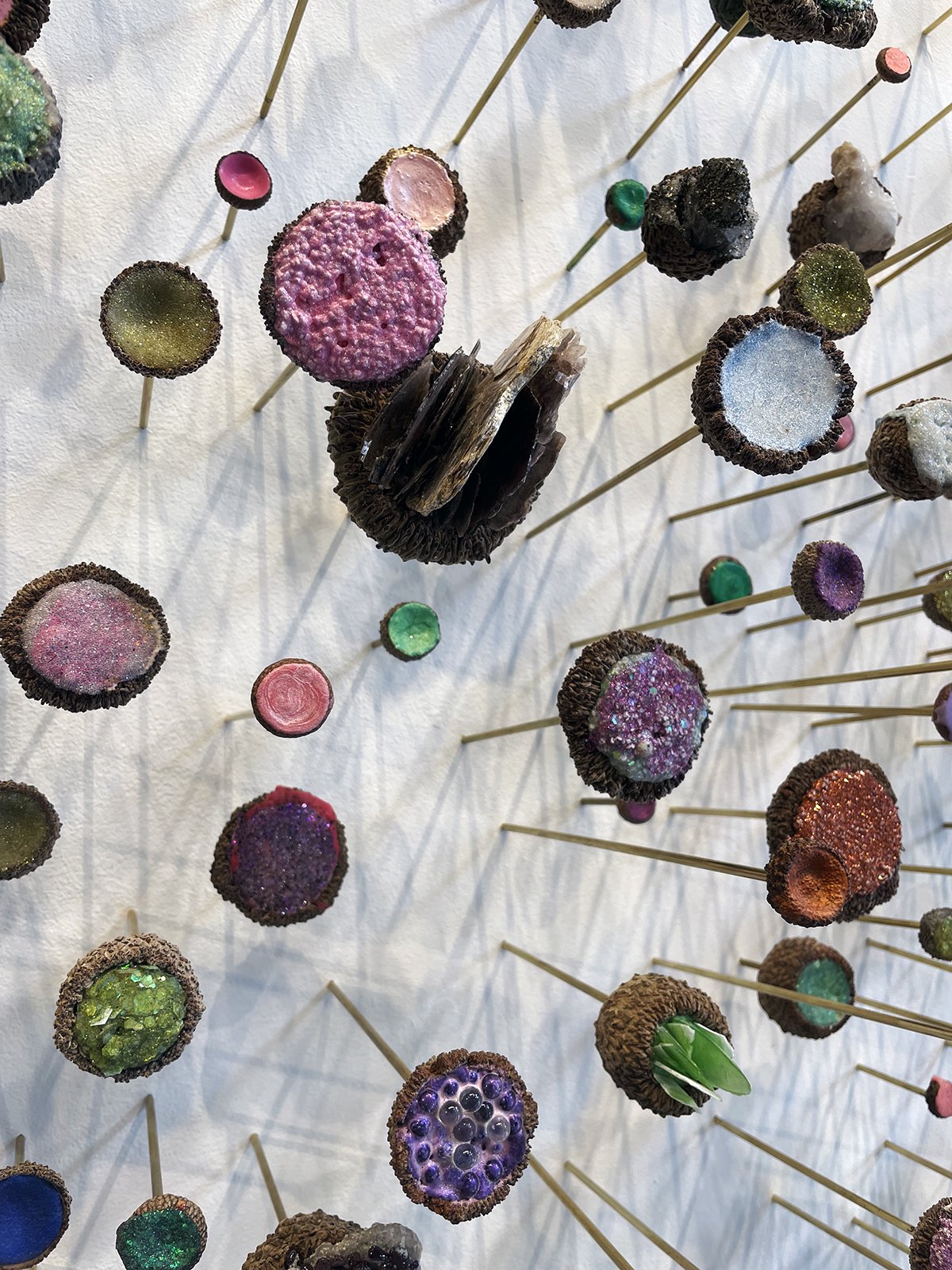
Maren’s Mirage appears to depict an otherworldly crimson vision of terrestrial blooms and underwater polyps proliferating in an ambiguous atmospheric state. From a distance, the work looks like a sumptuous brocade tapestry, with the fringe that springs from the edges of the canvas evoking the process of weaving: weft threads shuttled up-and-down across the warps, an in-process weaving with those yarns left yet-to-be-incorporated into the dense, raised pattern.
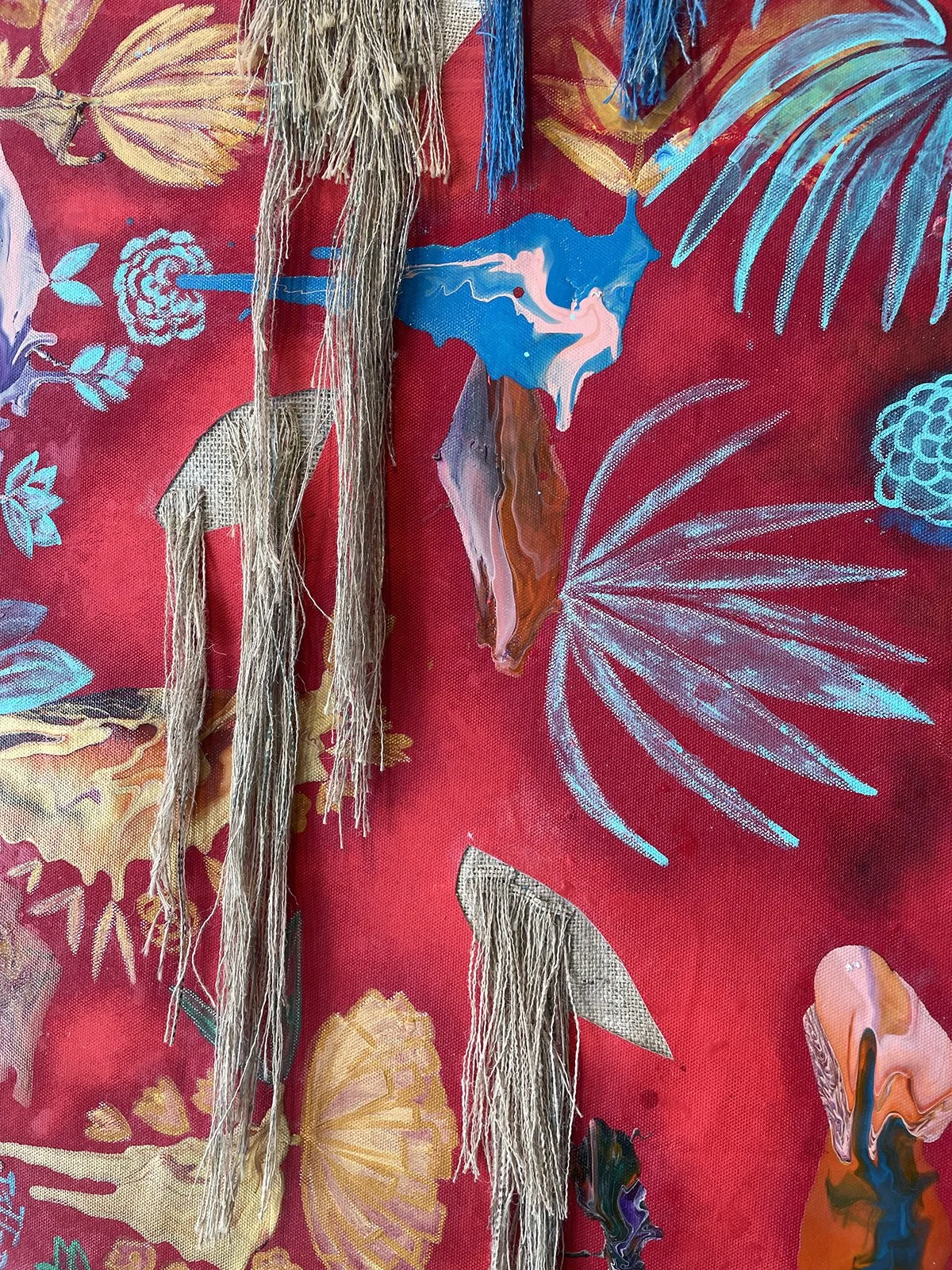
A detail of view of Julie Maren’s Mirage, acrylic and sisal on canvas, 45 x 82 inches. Image by Nina Peterson.
Upon closer inspection, Mirage reveals the artist’s collage process: sisal tufts and tassels burst from holes cut out of the canvas substrate, and the ocean and earthly flora are painted with acrylic. The work’s title refers to an optical phenomenon in which refracted light creates the appearance of something that is not there in reality. However, the mirage—the image of that which appears to exist—is not universal. Rather, the appearing thing is contingent upon the seer’s interpretation of what the refracted light shows.
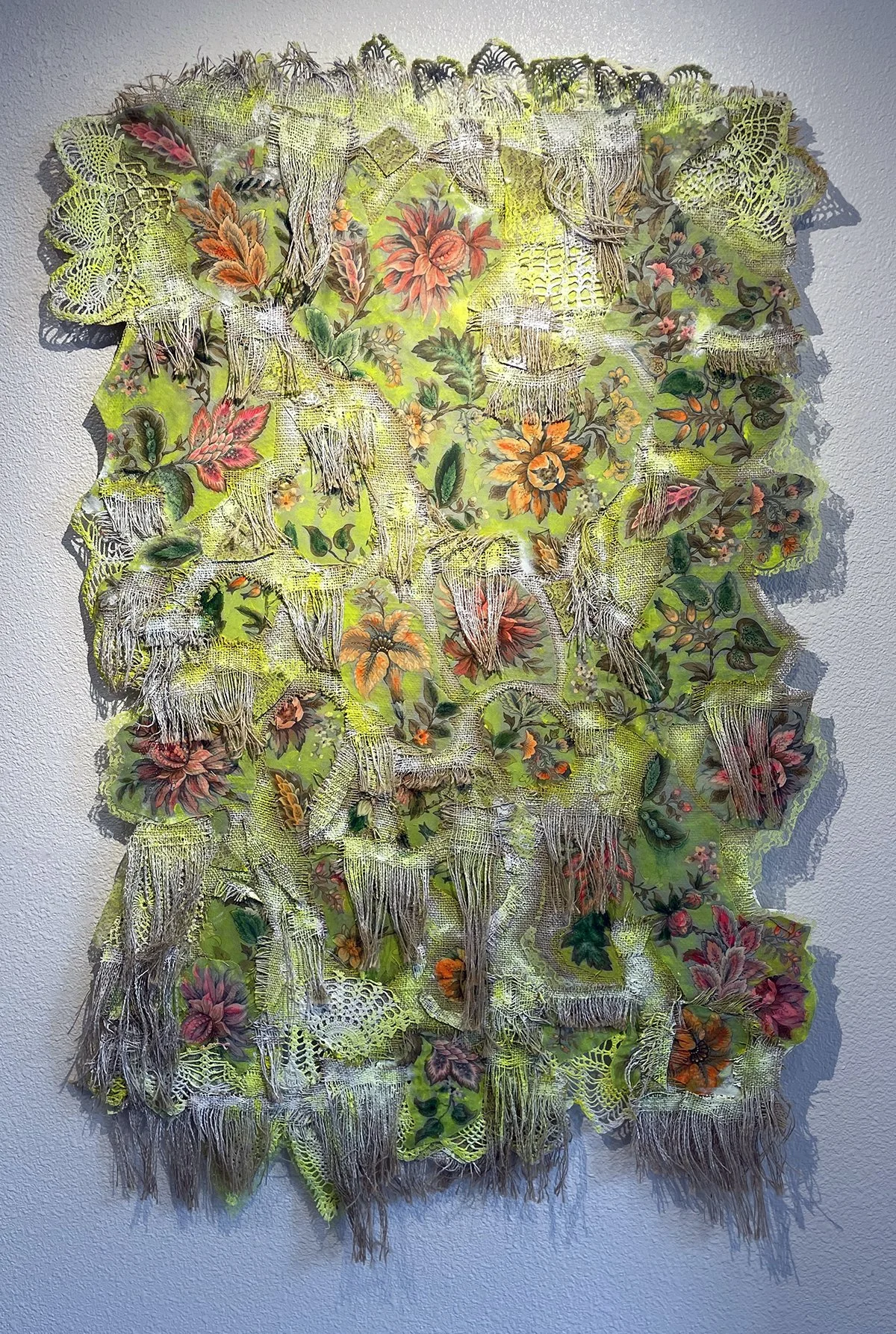
Julie Maren, Decadence, acrylic and sisal on fabric, 35 x 60 inches. Image by Nina Peterson.
In Maren’s artist statement, she explains, “Rather than depicting nature, I reinterpret it through exuberant color, layered materiality, and organically shaped forms, creating immersive environments that celebrate growth, abundance, and interconnectedness.” [1] This reinterpretation is an active process that creates and honors human relationships with nature and humans as a part of nature.
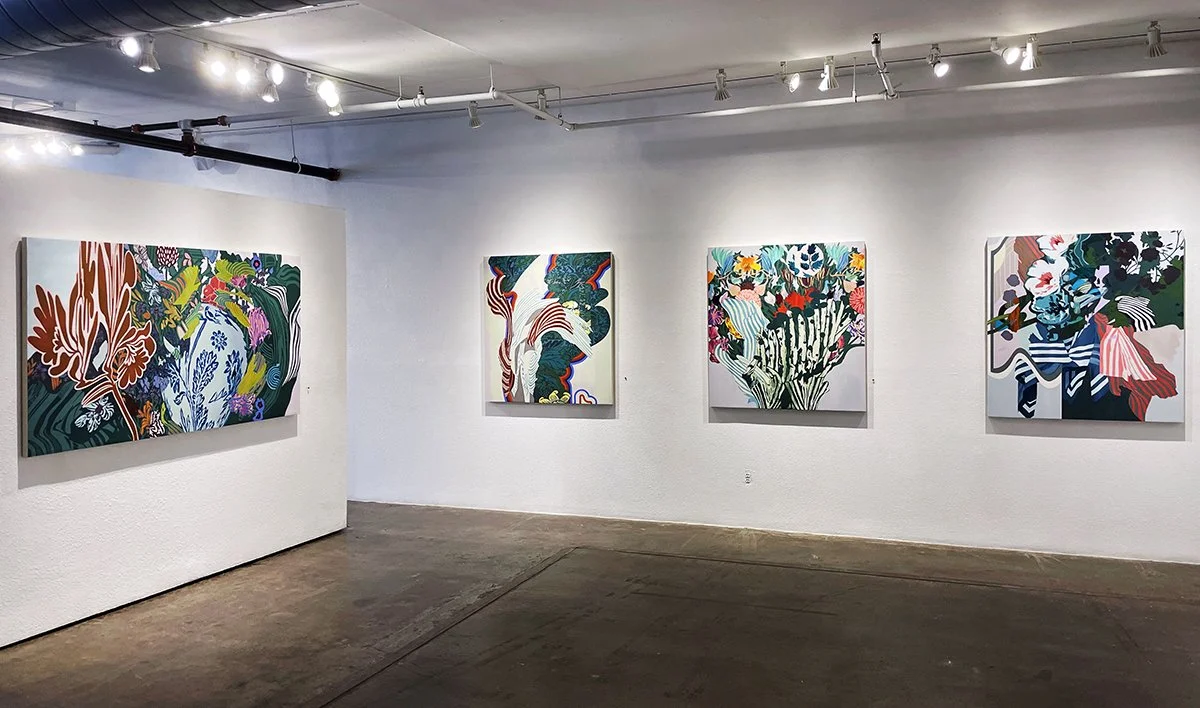
An installation view of Rob Mellor’s paintings in the exhibition Natural Reverie at Walker Fine Art. Image by Nina Peterson.
Likewise, according to the gallery text, the exhibition Natural Reverie “invites you to linger in the space between observation and imagination, where the natural world becomes a source of reflection, wonder, and renewal.” This invitation can be refreshing as well as challenging or puzzling, as Rob Mellor’s works playfully attest. Mellor asserts his paintings are “propositions for visual enactment by the viewer,” elaborating that the dense layering and juxtapositions in the works “compel viewers to re-enact the process of composition.” [2] The artist begins each work by layering and arranging print materials and digitizing the resultant collages, references from which Mellor creates the final paintings.
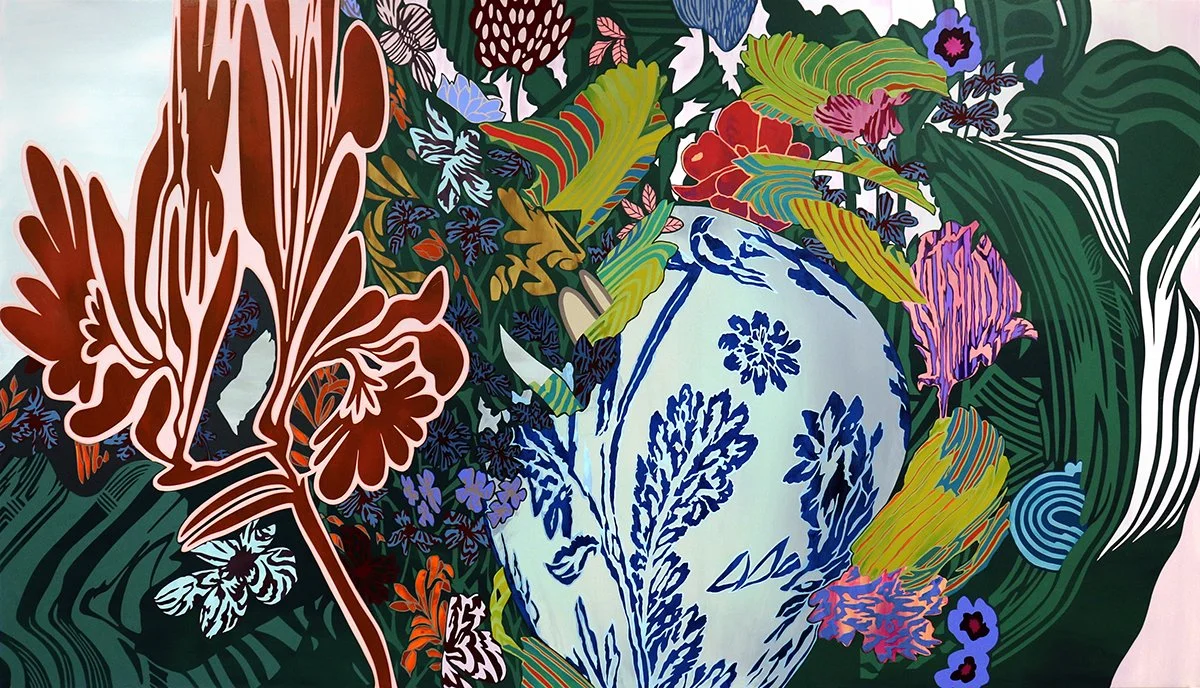
Rob Mellor, Gathered, acrylic on canvas, 78 x 44 inches. Image courtesy of Walker Fine Art.
Such reenactment is perhaps less straightforward than it sounds, as Mellor’s paintings are replete with naturalistic renderings of standard still life elements that slide into abstraction. Hard geometry and organic forms converge. Gathered features a bulbous white shape, modulated with a subtle shadow and decorated with indigo floral patterns and the deft outline of birds. Stretched and pulled towards the top of the composition, a peach-outlined, terracotta-colored floral pattern takes up the left third of the work. Gathered could depict a blue and white porcelain vessel set against a bouquet or patterned drapery, but the vision is distorted, as if parts of the scene are presented through a wide-angle or fisheye lens or digitally manipulated.
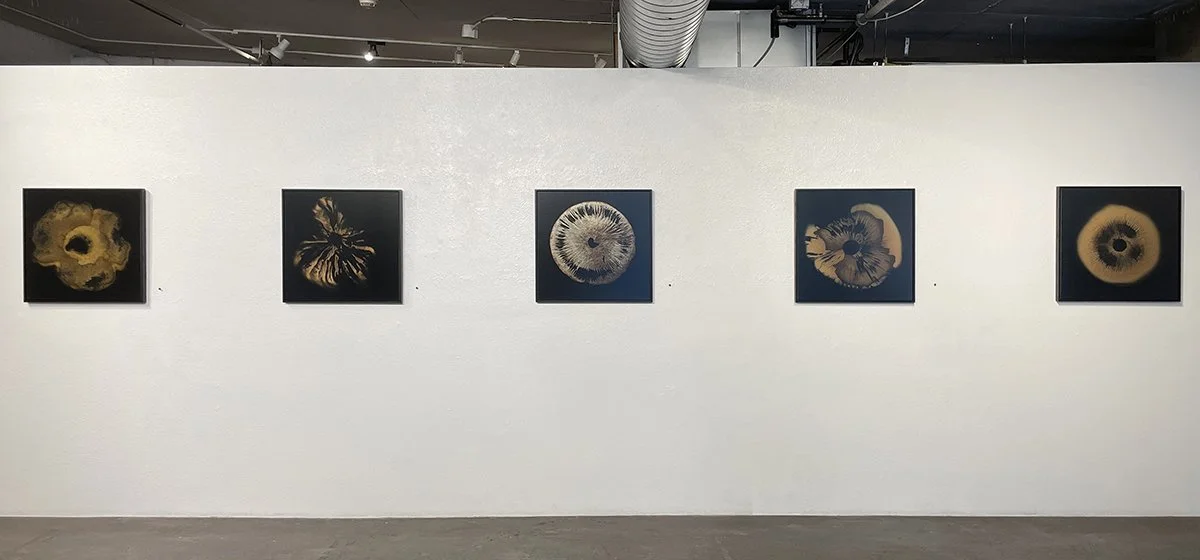
An installation view of Jane Fulton Alt’s archival pigment prints in Natural Reverie at Walker Fine Art. Image by Nina Peterson.
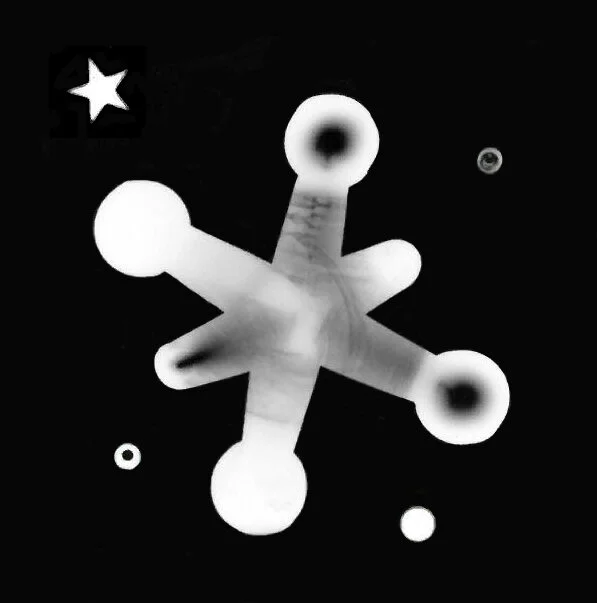
The play between photographic vision and perception is also at work in Jane Fulton Alt’s series of archival pigment prints installed on the gallery’s back wall. Actually images of “delicate patterns created by the dispersion of wild fungi spores,” these prints look like close-up photographs of a human iris. [3] Here, there’s a visual rhyme between the way the pupil regulates the amount of light that enters the eye and how the camera’s shutter regulates the light that reaches film.
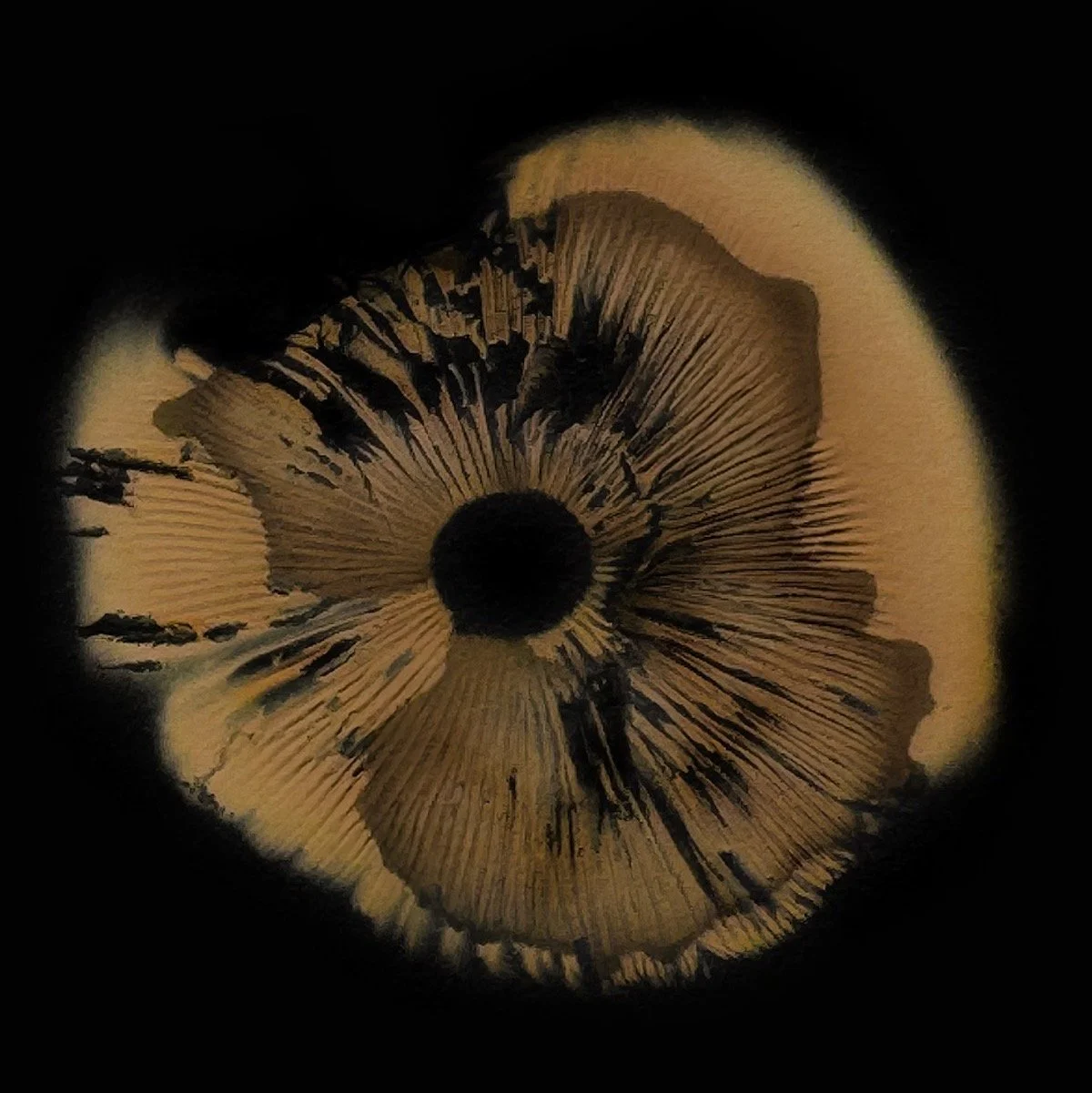
Jane Fulton Alt, Untitled II, archival pigment print, 25 x 25 inches. Image courtesy of Walker Fine Art.
Fulton Alt’s images also point to the limitations of human and photographic sight. Fungal reproduction involves launching spores from mushroom gills at speeds so fast, the launch is visually indiscernible. [4] These works prompt contemplation of how human-made technologies shape, borrow from, and facilitate the study of nature, and how the complexity of natural processes exceeds attempts to confine or fully know it in intellectual terms.
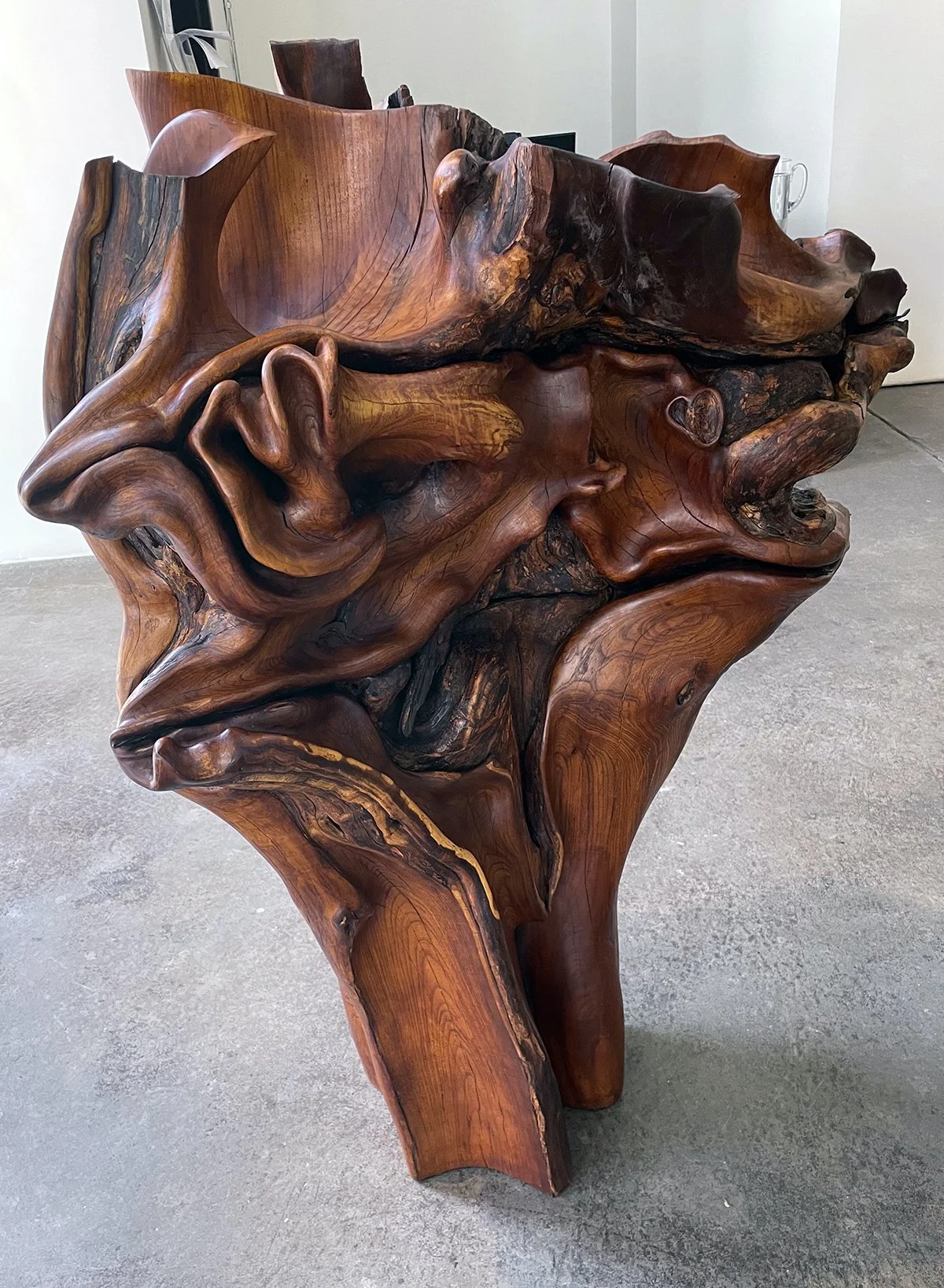
Norman Epp, Mother Tree Fenceline Conversation, Osage orange and steel ores, 55 x 41 x 28 inches. Image by Nina Peterson.
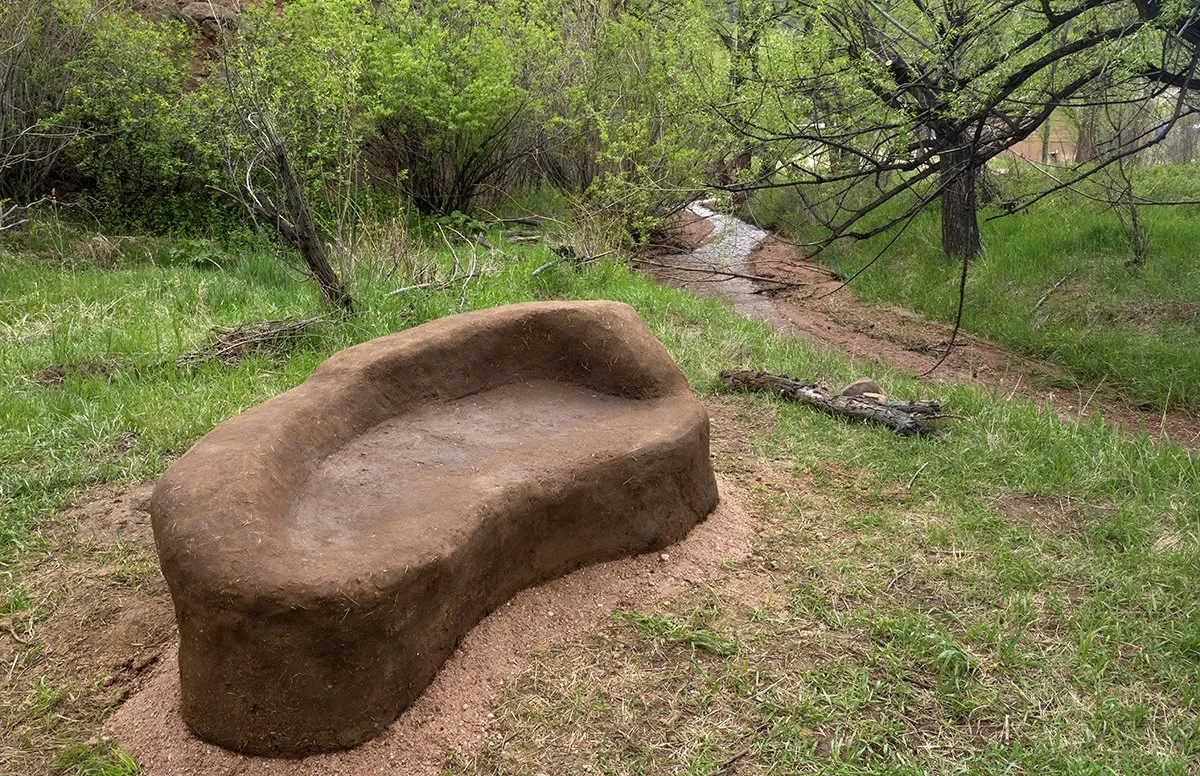
Norman Epp’s work makes us think about the nature of embodied knowledge and perception—that is, how, as an agent of and participant in nature, an organism discerns and makes meaning through gestures and practices enacted and sensed by the body, both human and non-human. In Mother Tree Fenceline Conversation, carved forms merge seamlessly with the organic texture of the tree, ripples hewn by hand coalescing with scaly bark shaped by cellular division and hardened by weather.
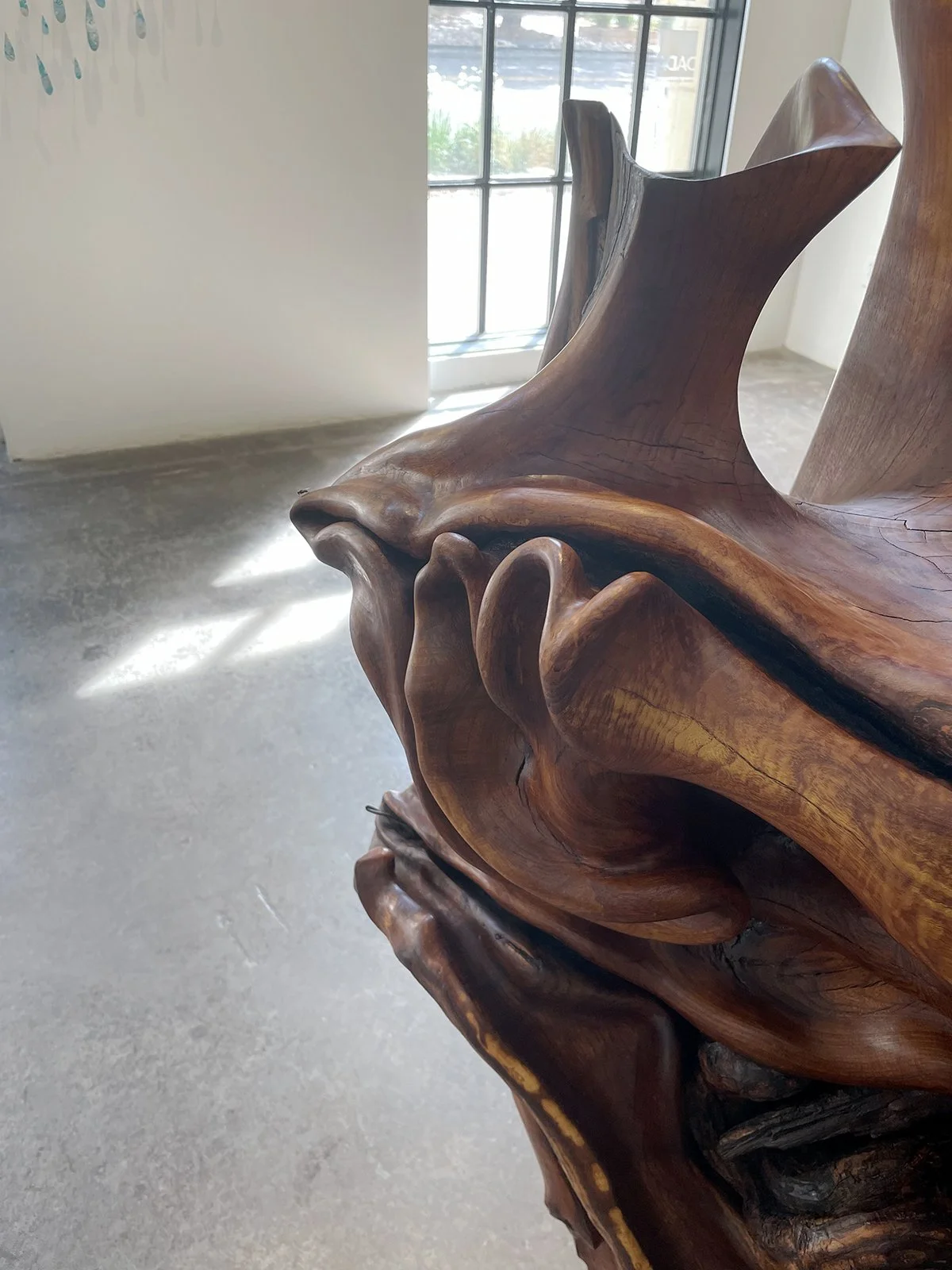
A detail view of Norman Epp’s Mother Tree Fenceline Conversation, Osage orange and steel ores, 55 x 41 x 28 inches. Image by Nina Peterson.
The wood of the Osage orange tree is known for its heft, strength, and durability, and in Epp’s sculpture it gleams as a result of the artist’s polishing. The work combines tree-knowledge and human-craft in sensory collaboration.
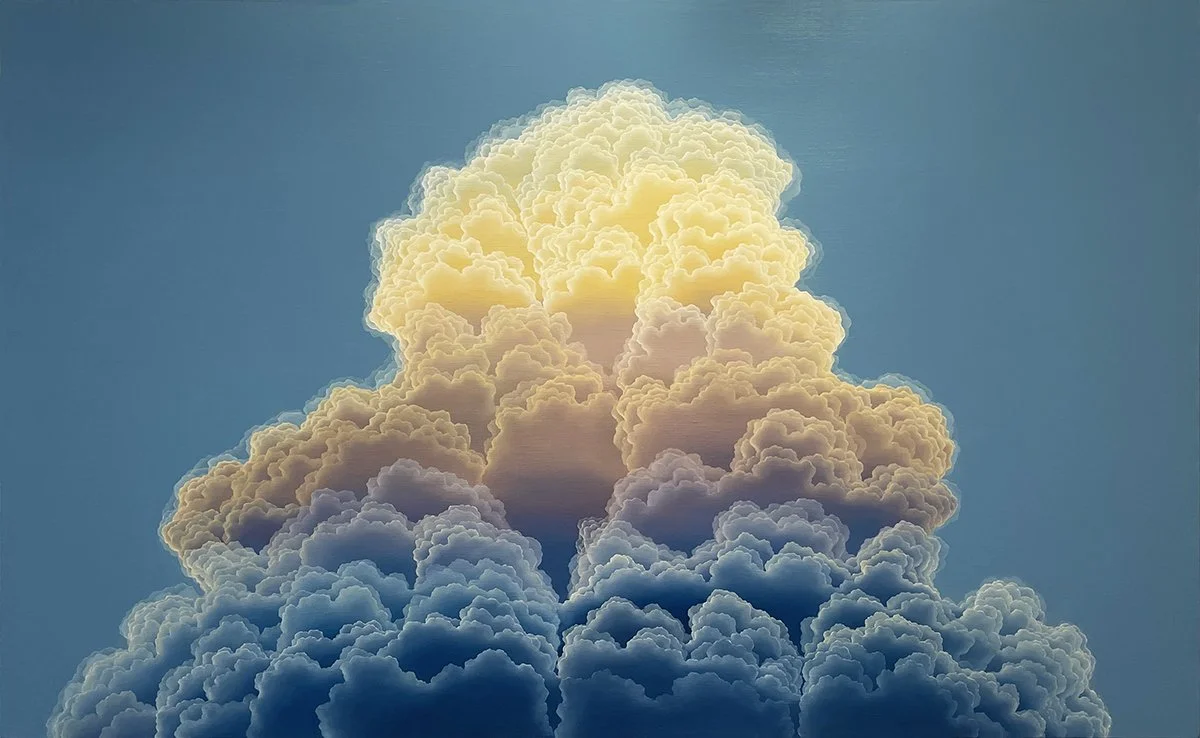
Laura Guese, Billowing Serenity, oil on canvas, 39 x 63 inches. Image by Nina Peterson.
The exhibition title Natural Reverie posits that the observation of and interaction with natural surroundings might innately induce a state of daydreaming. Laura Guese’s paintings promote daydreaming as a way that perceivers might actively shape the meaningful outcome of processing sensory reception.
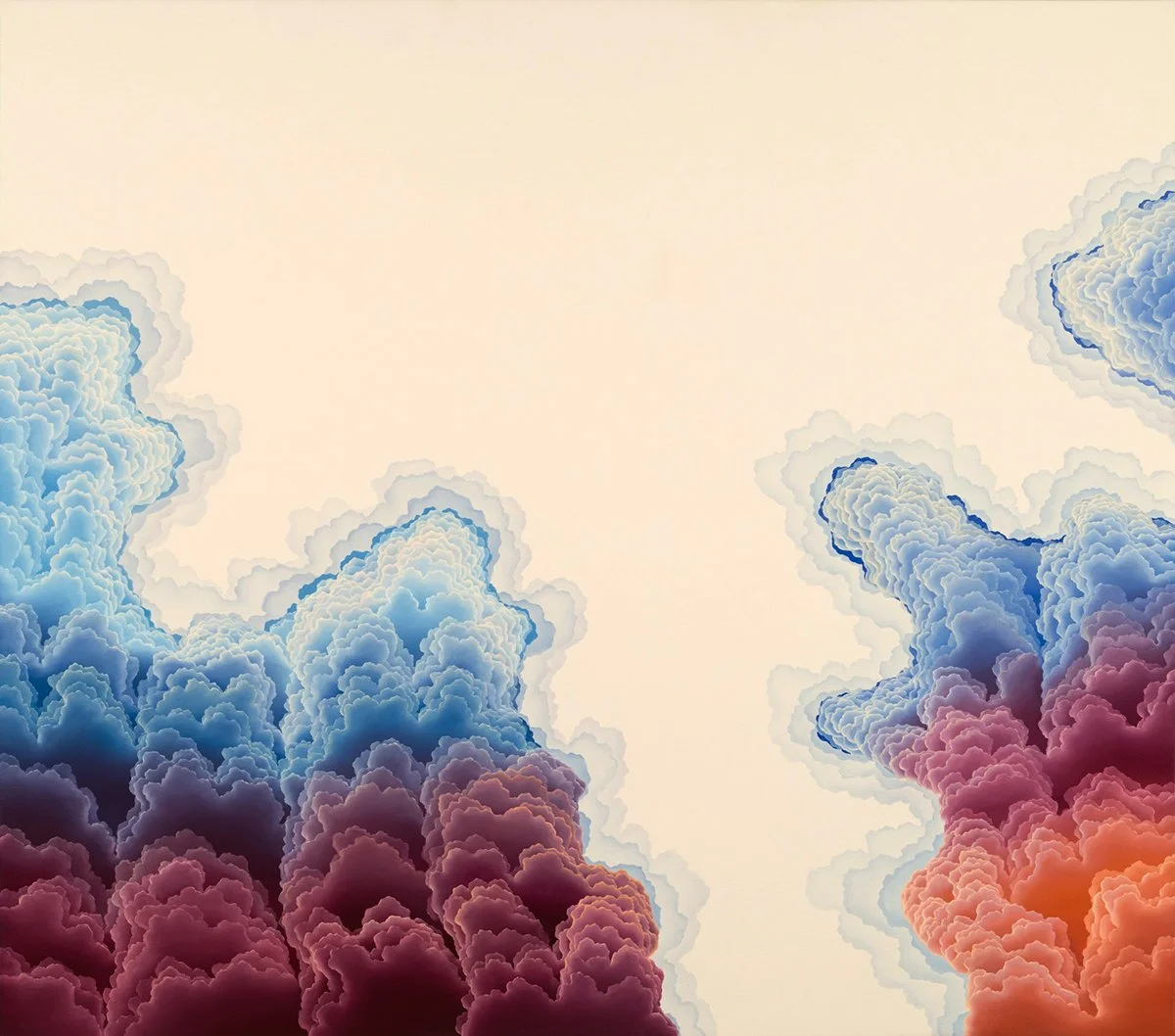
Laura Guese, Break into the Clouds, oil on canvas, 44 x 50 inches. Image courtesy of Walker Fine Art.
The artist describes the works as “places of imagination,” and they show “building thunderheads viewed at higher atmospheric levels.” [5] Muted rainbow—violet turned burgundy, orange made red ochre, blue now slate—is the color palette of Break into the Clouds, a work that anticipates the calm after a storm. The layered striations used to render the billowing and accumulation of water droplets suggest progressive growth and movement. The artist’s abstracted rendering of these nimbi also invites other interpretations: ice crystals forming on a pane of glass, an aerial view of the spread of an algal bloom, or microbial cultivation seen in a Petri dish.
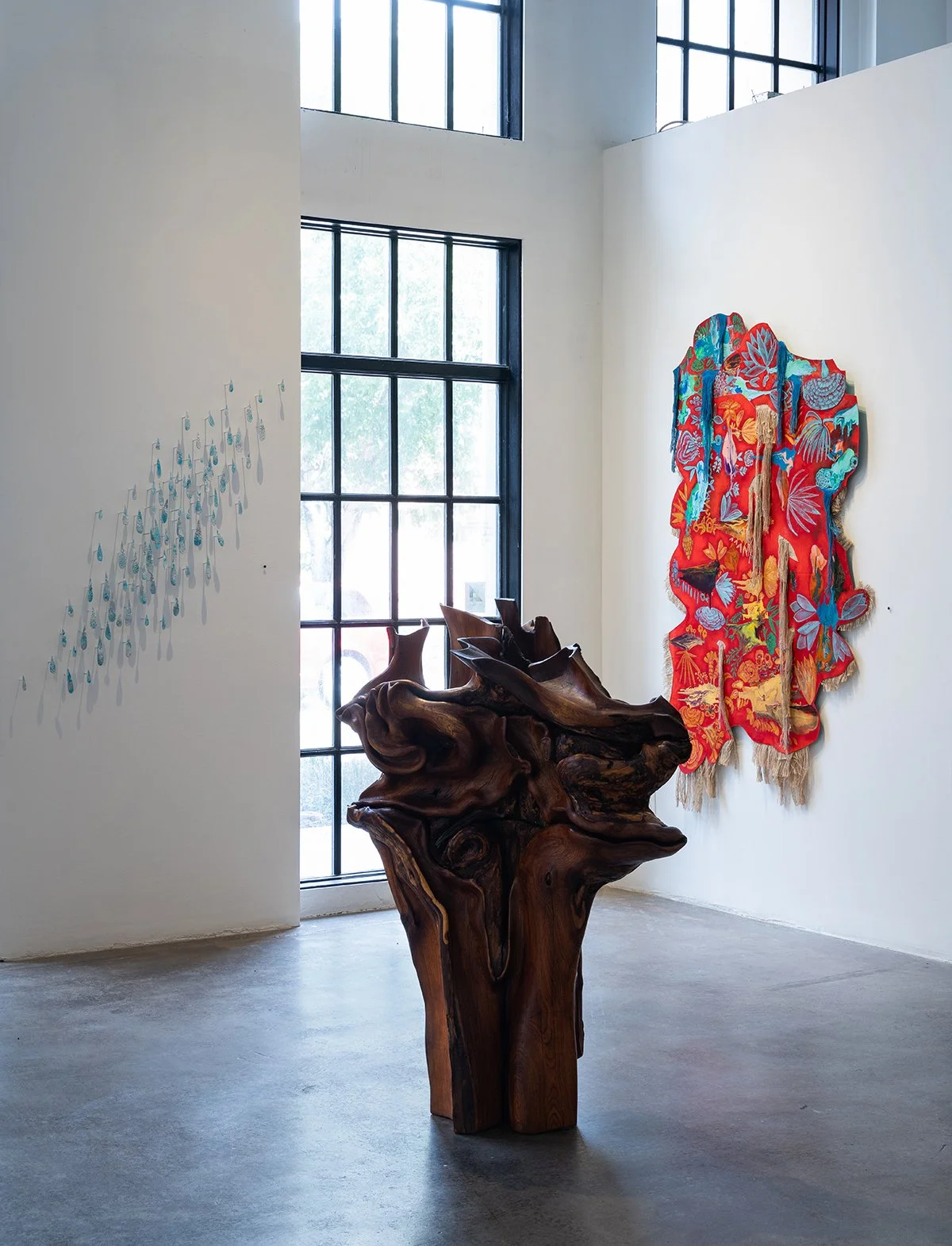
An installation view of the exhibitions Flourish and Natural Reverie at Walker Fine Art. Image courtesy of Walker Fine Art.
Flourish and Natural Reverie are rejoinders to the hubris of those who imagine themselves as separate from and superior to nature. Indeed, the exhibitions remind us that humans are a part of nature, and our ability to perceive is one such function of nature. It is what humans make of perception that matters.
Nina Peterson (she/her) is a PhD candidate in art history at the University of Minnesota. Currently based in Denver, she researches histories of photography, film, and performance in the twentieth and twenty-first centuries.
[1] See Julie Maren’s artist statement in the exhibition and also available on the Walker Fine Art website: “Flourish,” Walker Fine Art, accessed September 14, 2026, https://www.walkerfineart.com/flourish.
[2] From Rob Mellor’s artist statement on the artist’s personal website, accessed September 12, 2026, https://robertmellor.art/about. See also the artist’s statement on the Walker Fine Art website: “Natural Reverie,” Walker Fine Art, accessed September 14, 2026, https://www.walkerfineart.com/natural-reverie.
[3] See the description of Jane Fulton Alt’s works on the Walker Fine Art website: “Natural Reverie,” Walker Fine Art, accessed September 14, 2026, https://www.walkerfineart.com/natural-reverie.
[4] In order to understand how mushrooms launch spores, scientists “turned to ultra high-speed video cameras, capturing 100,000 frames a second, to fill in some of the blanks. Even that was not quite fast enough to capture all of the details of what was going on.” For an explanation of the physics of ballistospheres launching (that is, the projection of spores from a mushroom), see Kenneth Chang, “Fungi Physics: How Those Spores Launch Just Right,” New York Times, July 27, 2017, accessed September 15, 2026, https://www.nytimes.com/2017/07/27/science/fungi-mushrooms-spores.html.
[5] See Laura Guese’s artist statement in the exhibition and also available on the Walker Fine Art website: “Natural Reverie,” Walker Fine Art, accessed September 14, 2026, https://www.walkerfineart.com/natural-reverie.