
50: Half a Century of Art
50: Half a Century of Art—Celebrating a Legacy of Creativity
Arvada Center for the Arts and Humanities
6901 Wadsworth Boulevard, Arvada, CO 80003
January 15–December 31, 2026
Admission: free
Review by Kamden Hilliard
The Arvada Center for the Arts and Humanities boasts three theater spaces (including an amphitheater), 10,000 square feet of exhibition space, another 10,000 square feet of classrooms and dance studios and, outside, a Sculpture Field. Originally founded by the City of Arvada in 1976, the Center declared nonprofit status in 2016. It now celebrates its fiftieth anniversary with 50: A Half-Century of Art—Celebrating a Legacy of Creativity in the Theatre Gallery. The show is a hybrid retrospective and celebration of the Arvada Center itself, which suggests that art spaces should be community spaces.
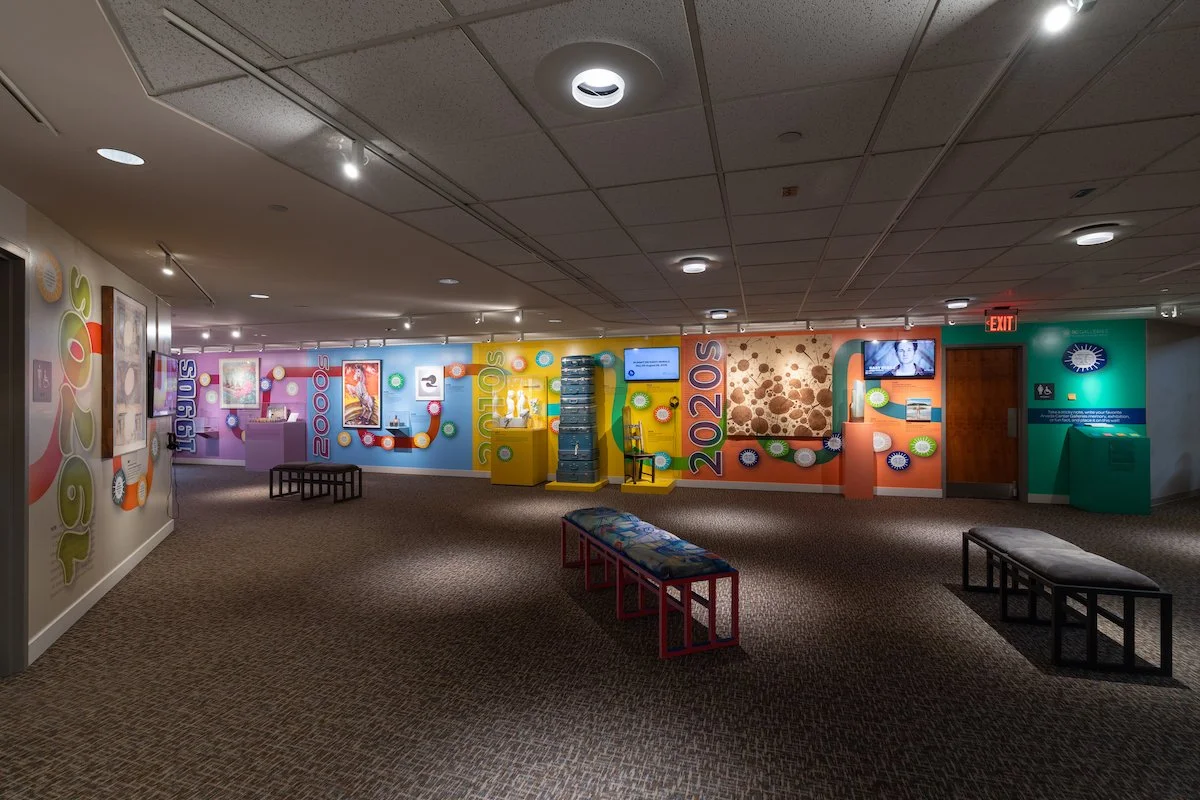
An installation view of 50: A Half-Century of Art—Celebrating a Legacy of Creativity at The Arvada Center in Arvada. Image courtesy of The Arvada Center.
Of the Center's three gallery spaces, the Theatre Gallery is perhaps the most accessible; it has bathrooms and a bench and can be accessed by stairs or elevator from the main entry. Accessibility permeates the show as well. While galleries and museums often offer viewers a white-walled, contemplative experience, the bright walls with informative signage in this exhibition speak to the rich collaboration and inclusion that remains a hallmark of the Arvada Center. Divided in sections that represent each of the five decades with examples of art, graphics, and text, this show aims to help viewers understand the engaging, complex, and often community-oriented works that comprise the Center's fifty-year history.
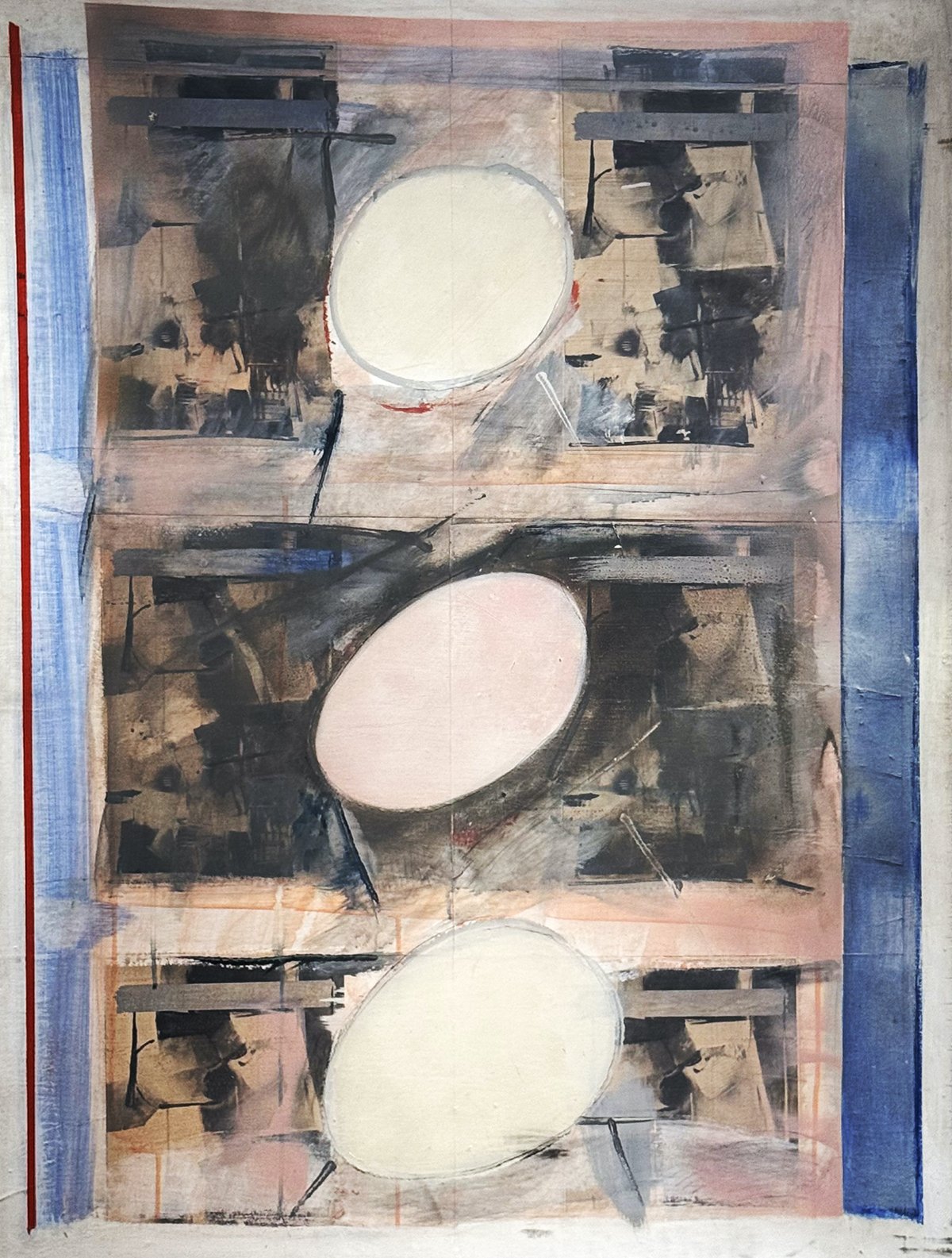
John David Rigsby, The Ascension of the Egg in Popular Media, 1977, acrylic collage on panel, 48.75 x 36.75 inches. Image by Kamden Hilliard.
In the 1970s section, John David Rigsby's The Ascension of the Egg in Popular Media (1977) depicts three equally spaced eggs “ascending” as if captured by a tractor beam. Each egg is contained in a roughly similar pink and grey rectangle with two thin columns of blue on either side. The symmetry is disrupted by a thin vertical red line on the left-hand side, which so delicately acknowledges red tones in the uppermost egg. The pale pinks and off-whites of the eggs pick up on the other pastels, forming a soft, somnolent color story. But then there's that red—that percussive, staccato, vaguely threatening rupture in what is otherwise a kind of joy or peace.
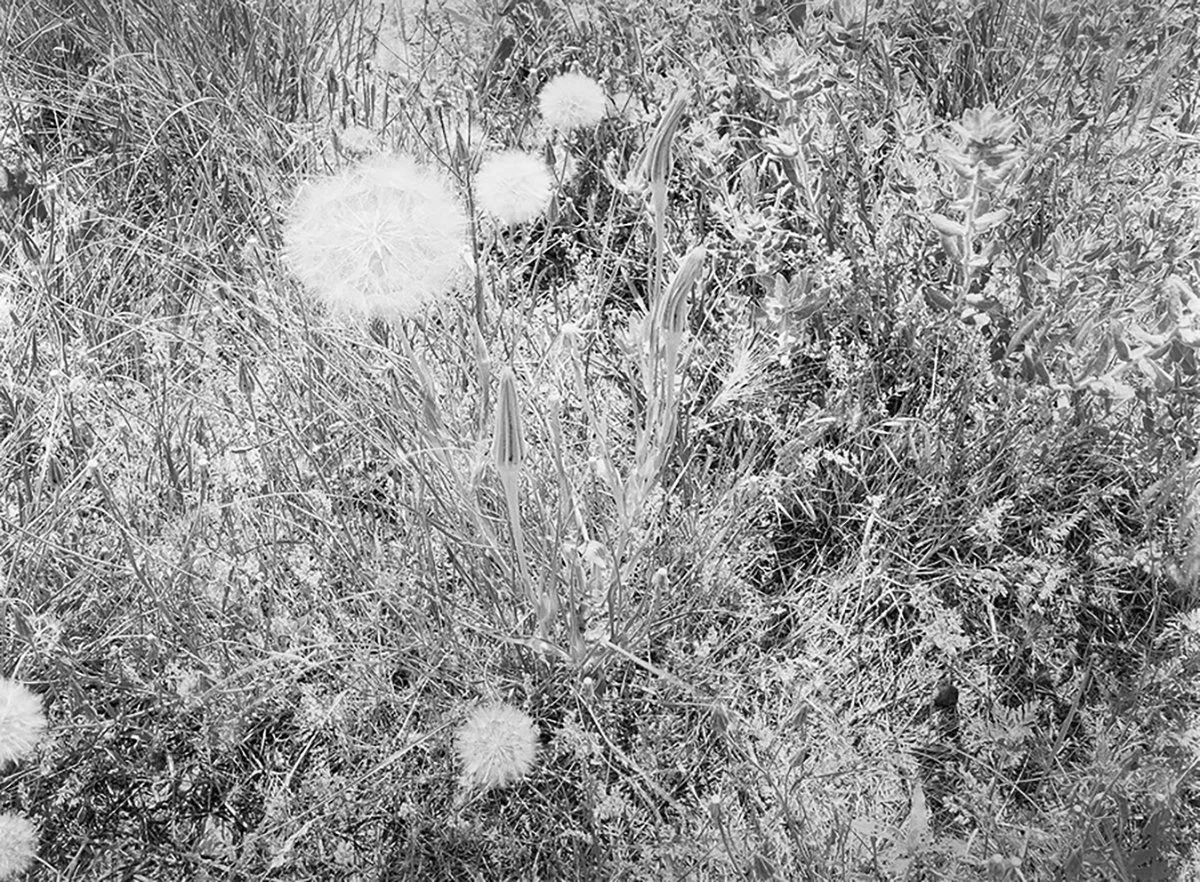
WS Sutton, I Want Clean Air and No Bombs #2, 1981, black and white photograph, 24 x 30 inches. Image courtesy of the artist.
W.S. Sutton's I Want Clean Air and No Bombs #2 (1981), in the 1980s segment, leaves the viewer in no doubt about its concerns. This black-and-white photograph captures Colorado's brushlands in full detail: brambles, leaves, dandelions, and more shout for a bit more sun. This beauty, Sutton asserts, is more than enough cause for humanity to never harm the Earth again; to live with and be satiated by the pre-industrial earth. Sutton's photo suggests a future that is for each other, and that the “each other” is more inclusive than one might first think.
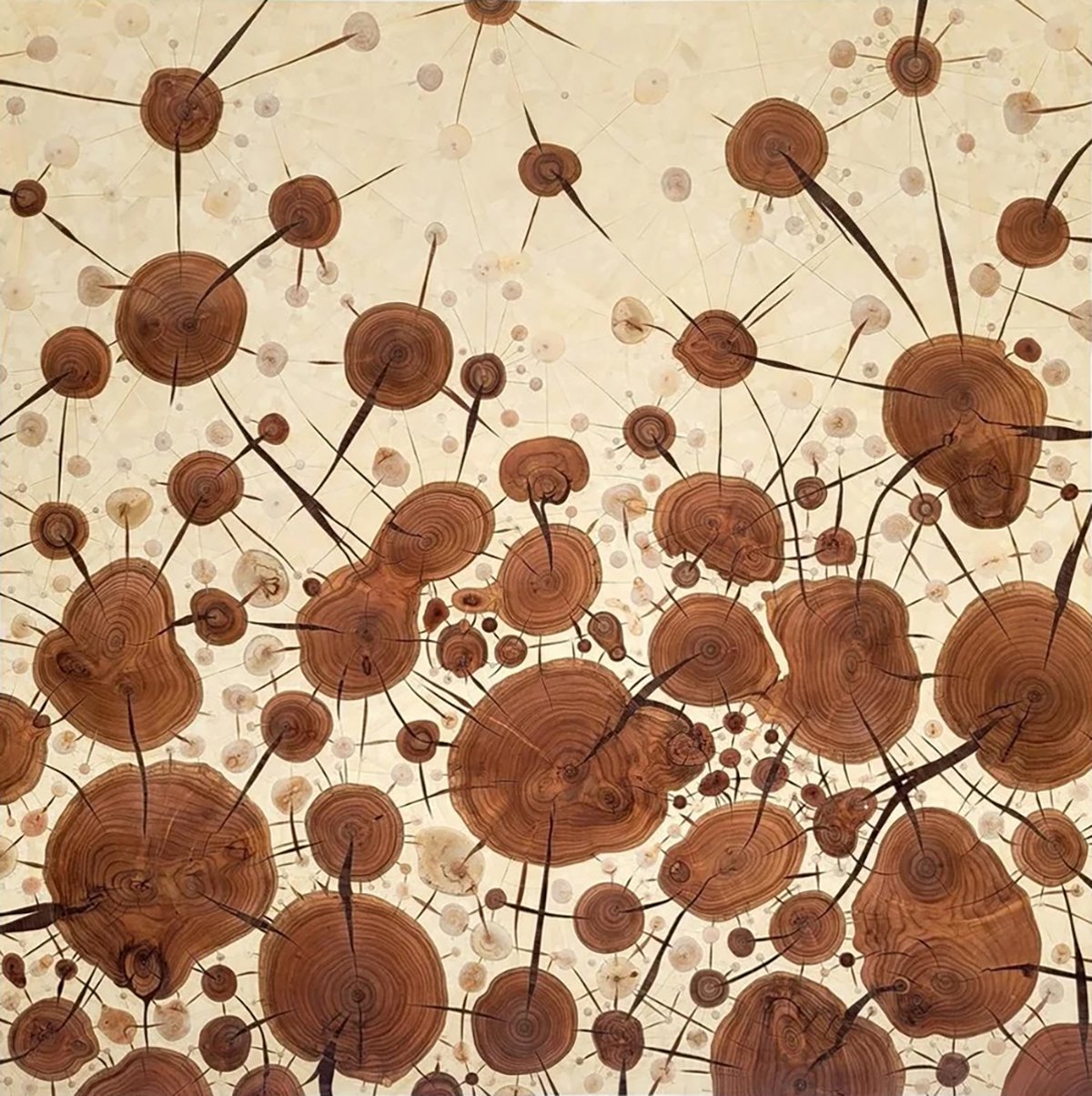
Chris Deknikker, Reunion, 2022, foraged wood sculpture, 60 x 60 x 2 inches. Image courtesy of the artist.
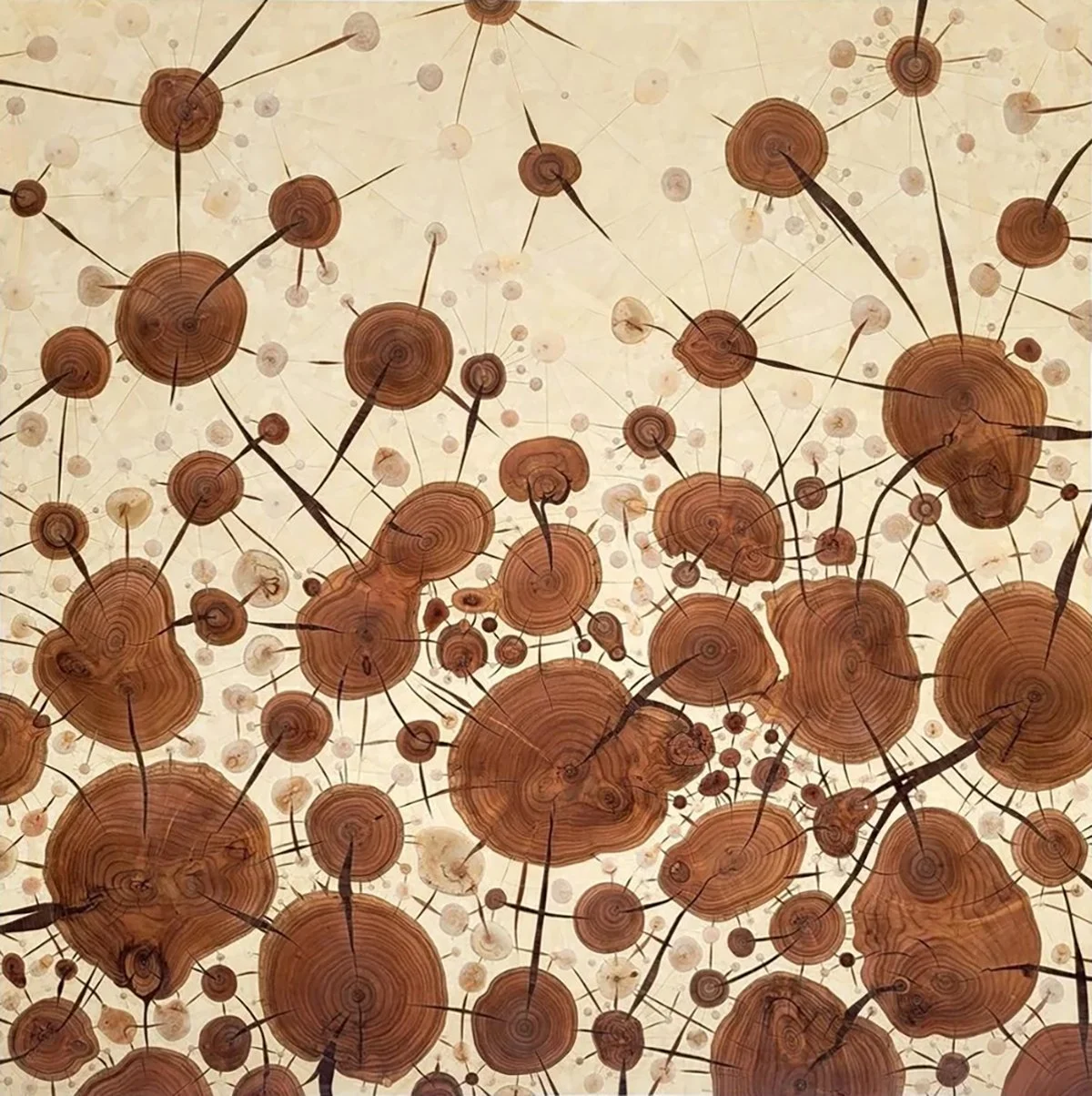
Questions of environment are also addressed by Chris DeKnikker's Reunion (2022), a wall-mounted wooden sculpture made of foraged wood displayed in the 2020s portion of the show. Reunion won the "Best in Show" prize in the 2022 Art of the State exhibition hosted by The Arvada Center, and it is not difficult to see why. Aside from the obvious technical skill and force required to produce this sculpture, there is such earnestness afoot, as well.
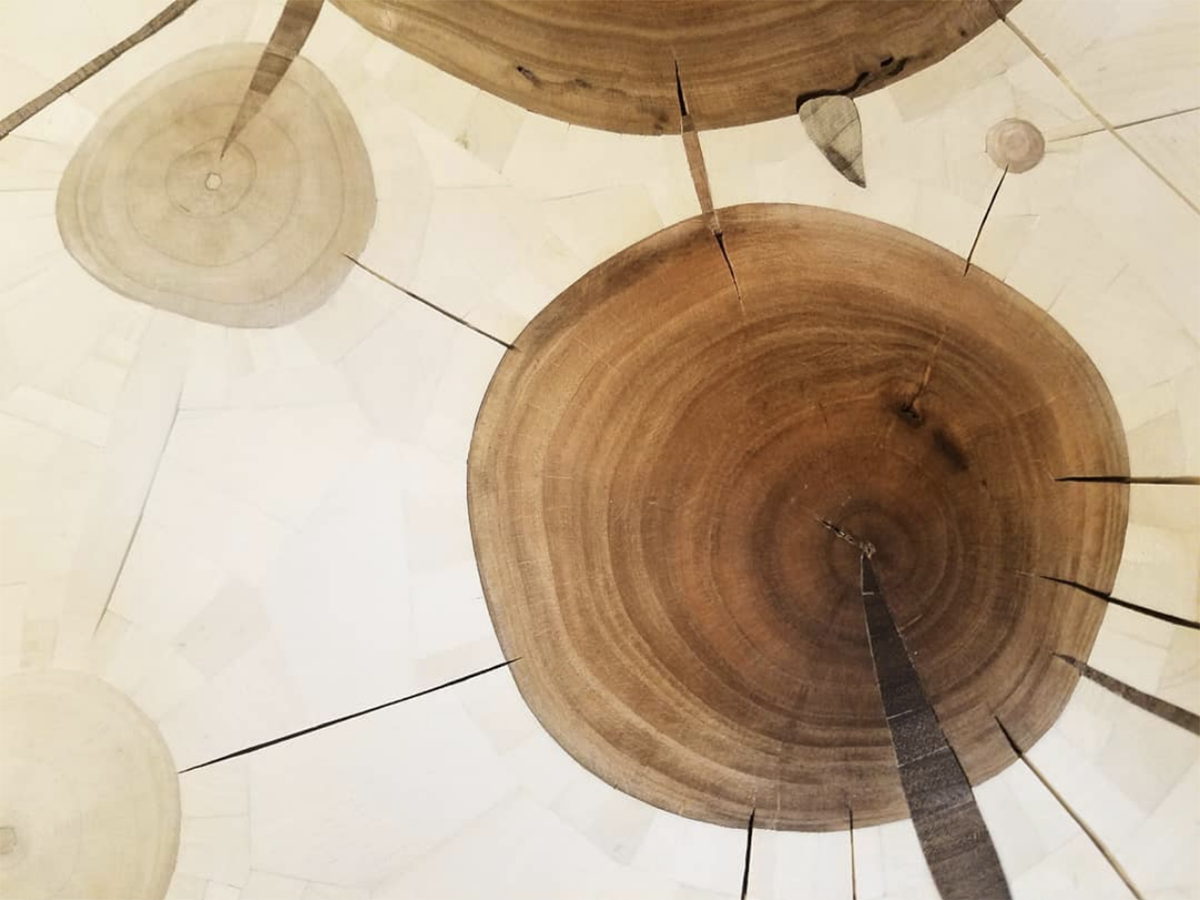
A detail view of Chris Deknikker's Reunion, 2022, foraged wood sculpture, 60 x 60 x 2 inches. Image by Kamden Hilliard.
The title invokes the pleasure of return, the story of the prodigal son, or those intimate reunions hoped for by all. Dark shards of wood emanating from each large tree trunk section look as if they're holding hands, tickling each other. This visual reunion is mirrored in the sculpture's material. By foraging for the wood, DeKnikker produces a literal reunion of plant life. It is here that DeKnikker seems to be asking the viewer to attempt the ritual of reunion––of rejoining what one forgets they belong to.
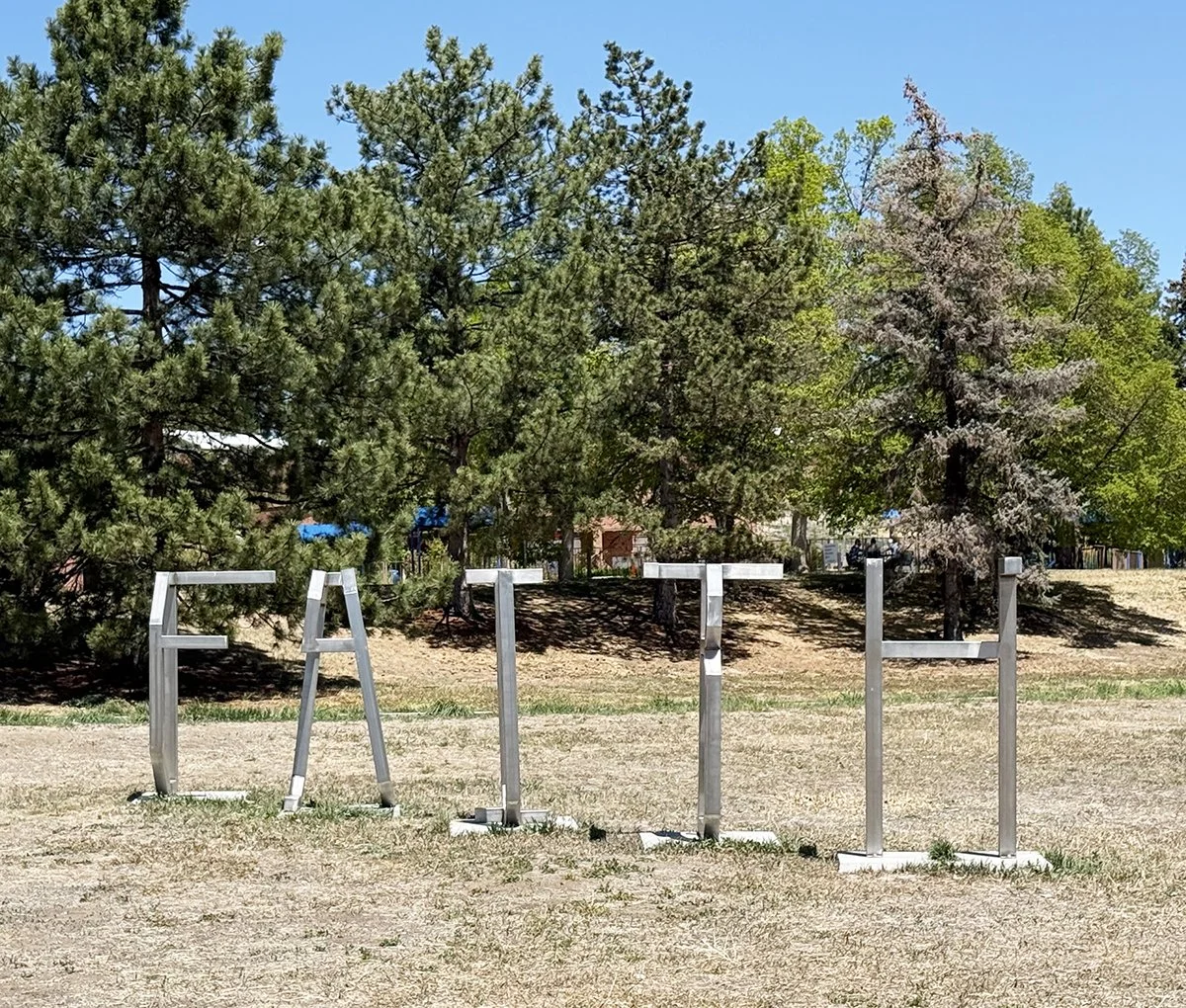
Joe Norman, Faith / Doubt, 2020, stainless steel sculpture, 6 feet tall. Image by Kamden Hilliard.
In the Sculpture Field, an outdoor exhibition space, Joe Norman reminds the viewer that apparently divergent concepts are often two sides of the same coin in his Faith/Doubt. This six-foot tall, stainless-steel sculpture forms the word "Faith" from one direction and "Doubt" from the other. Visible weld beads speak to the physical labor required to experience either concept. Whether doubtful or faithful, there is always work to do in response to the condition.
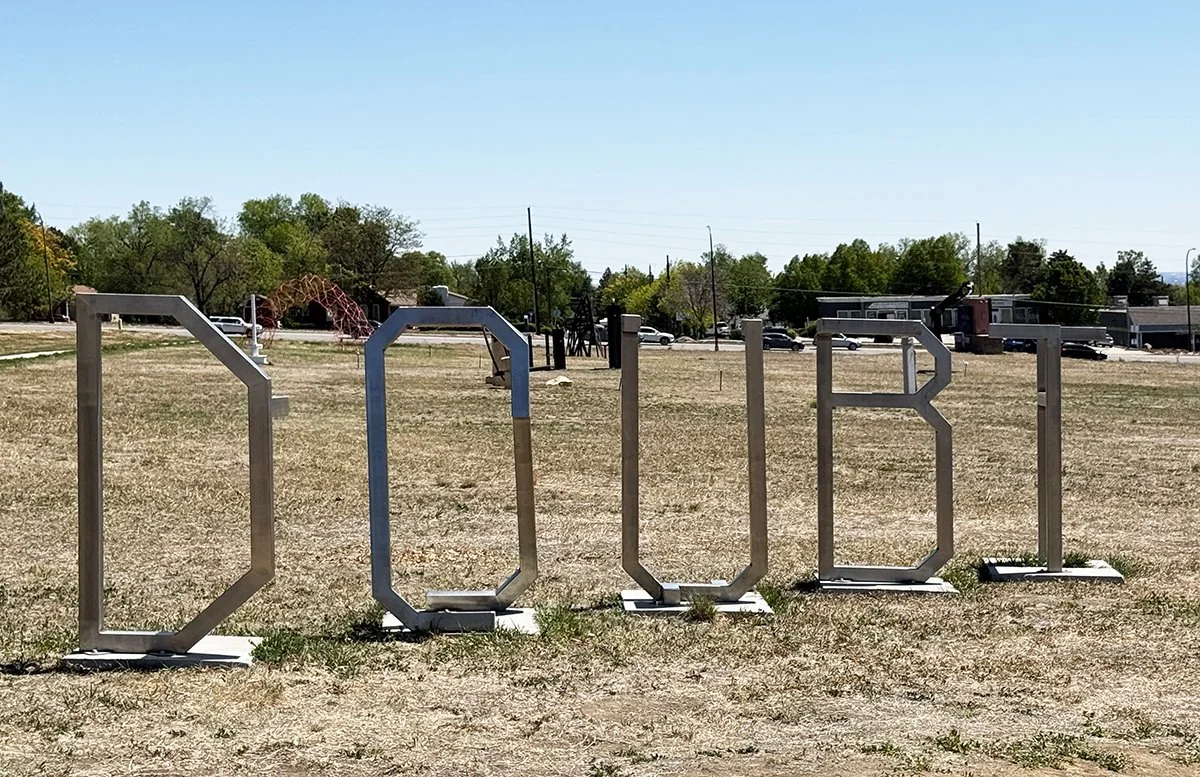
Joe Norman, Faith / Doubt, 2020, stainless steel sculpture, 6 feet tall. Image by Kamden Hilliard.
Similarly, the circling around required to access the two words of this sculpture reminds the viewer that perspective is something changed through action; through movement toward and commitment to a new position. These words so often answer one another: doubt cured by faith, faith felled into doubt, and sometimes they produce novel collaborations, which illustrate the necessity, twinness, and deep connection between what we perceive as opposites.
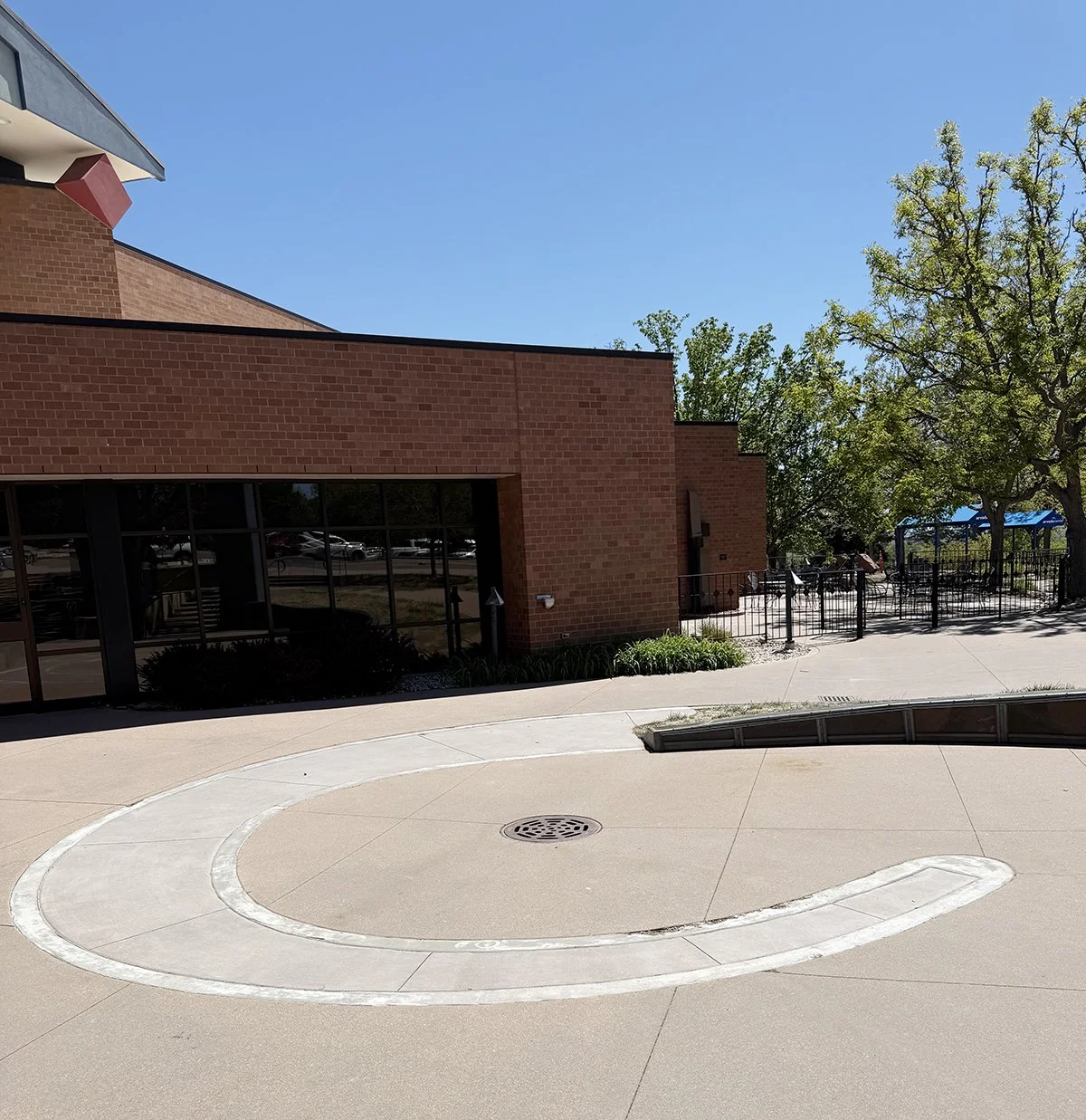
An outdoor view of Vito Aconcci’s Dirt Wall, 1994, sediment enclosed in glass panels, 352 feet in length. Image by Kamden Hilliard.
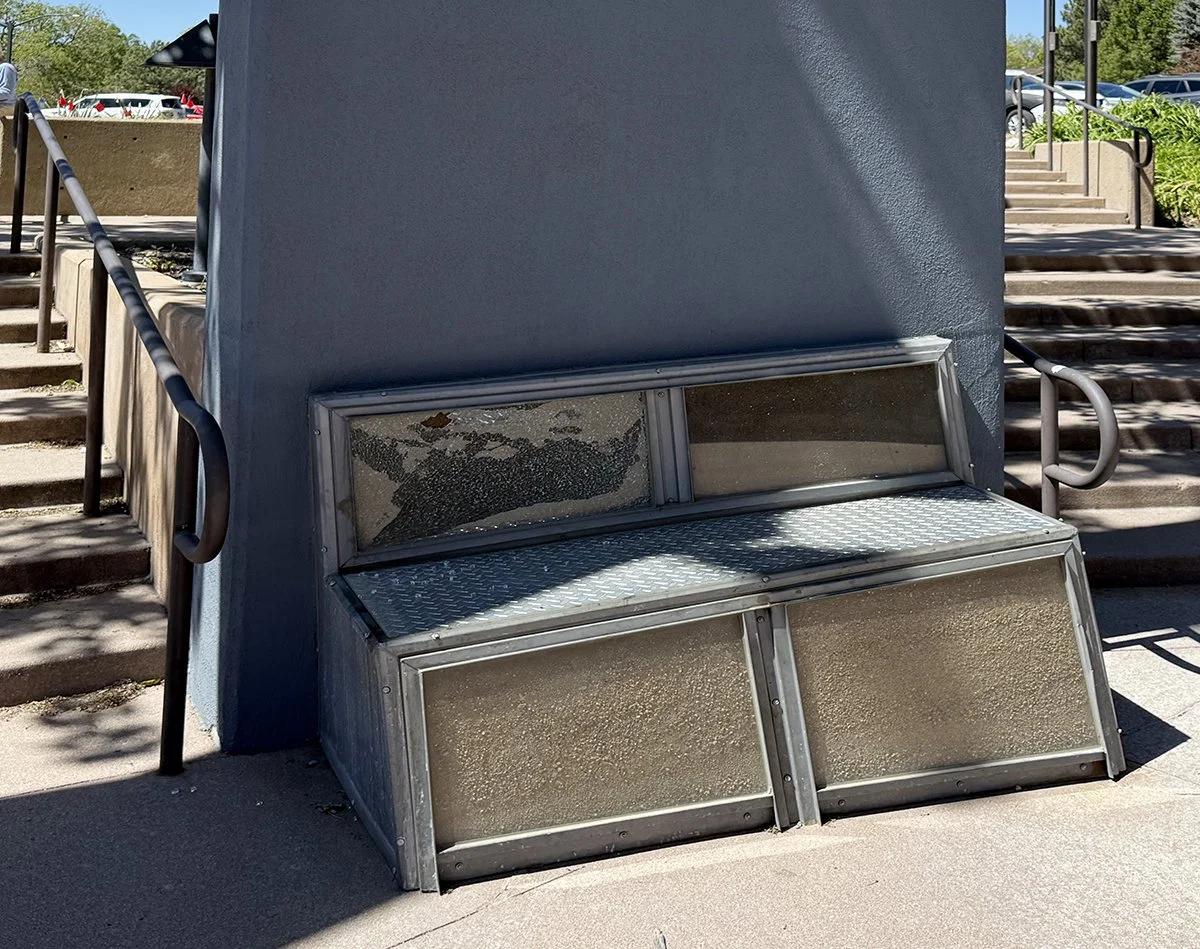
An outdoor view of Vito Aconcci's Dirt Wall, sediment enclosed in glass panels. Image by Kamden Hilliard.
Vito Acconci's Dirt Wall begins in the Arvada Center's courtyard. It is "a 352-foot-long, ribbon-shaped wall of glass-enclosed panels of Colorado soil." [1] The piece was erected during the 1994 renovation of the Arvada Center and does the thoughtful work of bringing what is beneath us, above us, and what was outside, inside. Inside, Dirt Wall crests in terracotta/coffee-colored waves that look like a dollhouse view of the earth's crust. It evokes questions of ownership and property that The Arvada Center seems ready to discuss, based on their land acknowledgment.
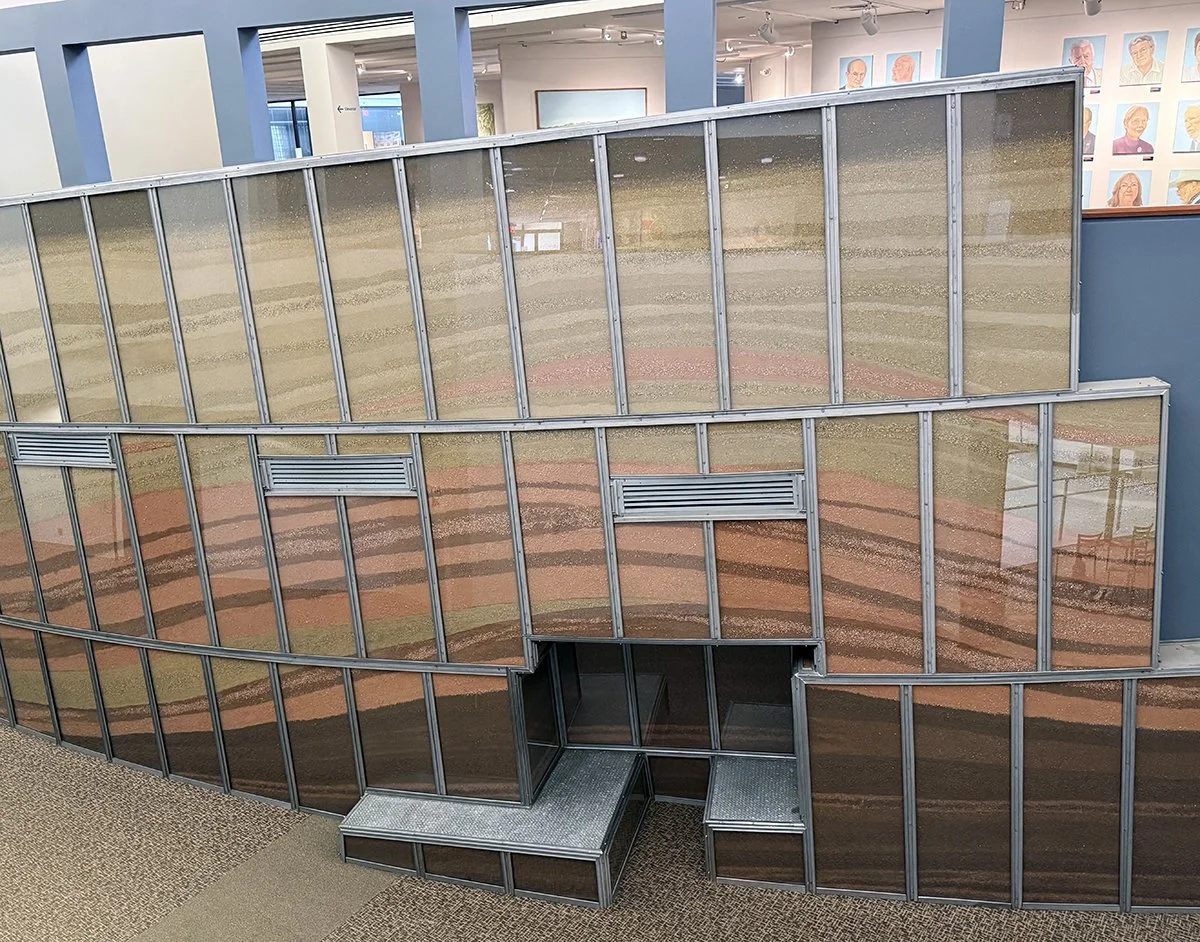
An indoor view of Vito Aconcci’s Dirt Wall, 1994, sediment enclosed in glass panels, 352 feet in length. Image by Kamden Hilliard.
In beautiful, rich layers of earth, Acconci's wall does not divide or separate but integrates the Center with the outside, keeping things together and, in many ways, combining what can be imagined as opposites. In fact, the Arvada Center, as an institution, has integrated what can feel oppositional to the "art world:" the Center is free to enter, open to the public, and accessible. Parking is free. There are tables, chairs, and benches throughout the space. Helpful and passionate staff members actively engage patrons alongside a stream of children attending dance classes on site. It is a clean, well-lit mash-up of a children's museum, community center, playground, and art museum. There is no "high" or "low" brow; there is space for fun and reflection. And their 50th-anniversary show offers a model for an institution that dreams about art for everyone; a public where everyone is for art.
Kamden Hilliard (they/them) is a trans poet, educator, and fish keeper based in Colorado. You can find them online at kamdenihilliard.com.
[1] Quoted from the Smithsonian Art Inventories Catalog entry for this work: https://siris-artinventories.si.edu/ipac20/ipac.jsp?session=SFA2003789946.130182&profile=ariall&uri=full%3D3100001%7E%21315252%7E%211&booklistformat=.