
Space Is the Place
Space Is the Place: Art & Design in the Atomic Age
The Kirkland at the Denver Art Museum
1201 Bannock Street, Denver, CO 80204
March 1, 2026–February 21, 2027
Curated by: Becca Goodrum, Assistant Curator for The Kirkland at the Denver Art Museum
Admission: $22-$25 for adult residents of Colorado, $19 or $22 for seniors, students, teachers, and military, free for youth 18 and younger and members
Review by Laura I. Miller
“For every American, this has to be the proudest day of our lives,” said Richard Nixon over the phone to Neil Armstrong and Buzz Aldrin as they stepped onto the surface of the moon. In many ways, Nixon was right, for in the decade before and after the infamous 1969 Apollo 11 moon landing, artists, designers, and people worldwide became fascinated, obsessed even, with the idea of humans traversing outer space.
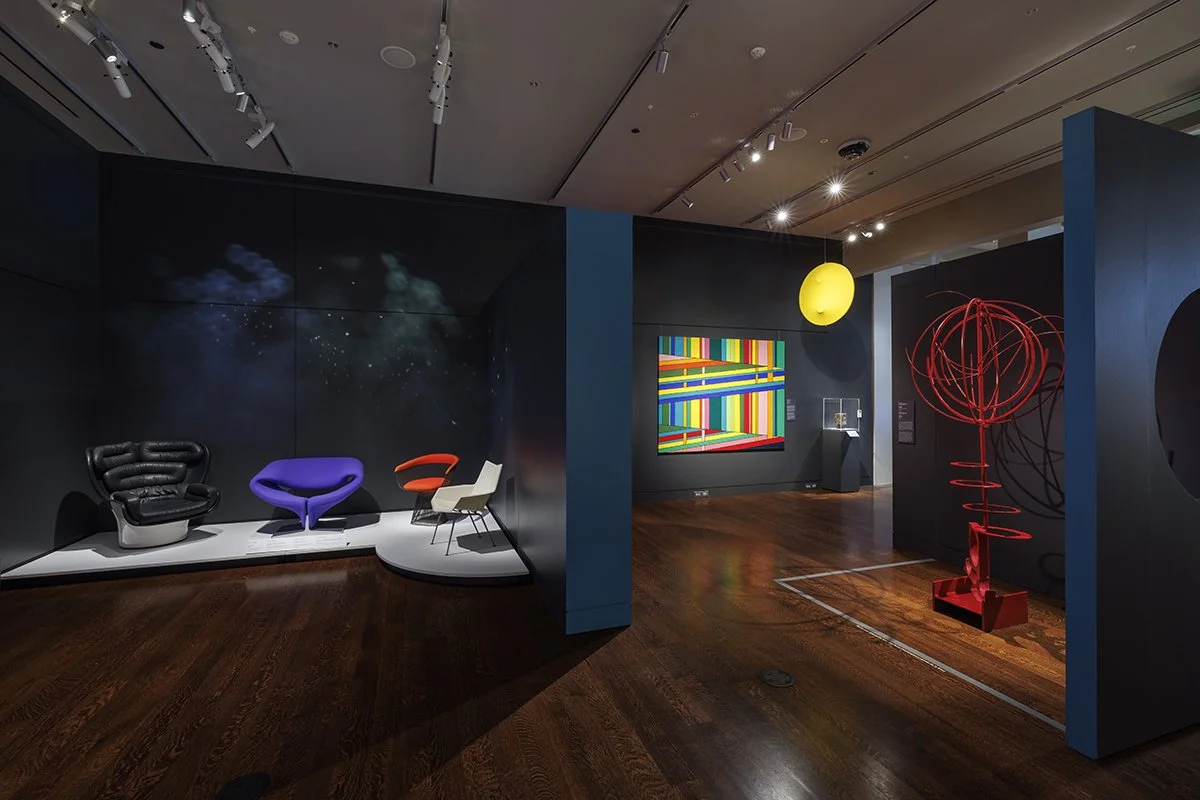
An installation view of the exhibition Space Is the Place at The Kirkland at the Denver Art Museum. Image courtesy of The Kirkland at the Denver Art Museum.
The audio transcript from the moon landing kicks off Space Is the Place: Art & Design in the Atomic Age at the Kirkland Museum, on view through February 21, 2027. The exhibition offers viewers a time capsule of the Atomic Age and the Space Age—the overlapping periods of postwar scientific acceleration stretching roughly from 1945 to 1973—reflected in objects and images that capture the time’s shared optimism for invention.
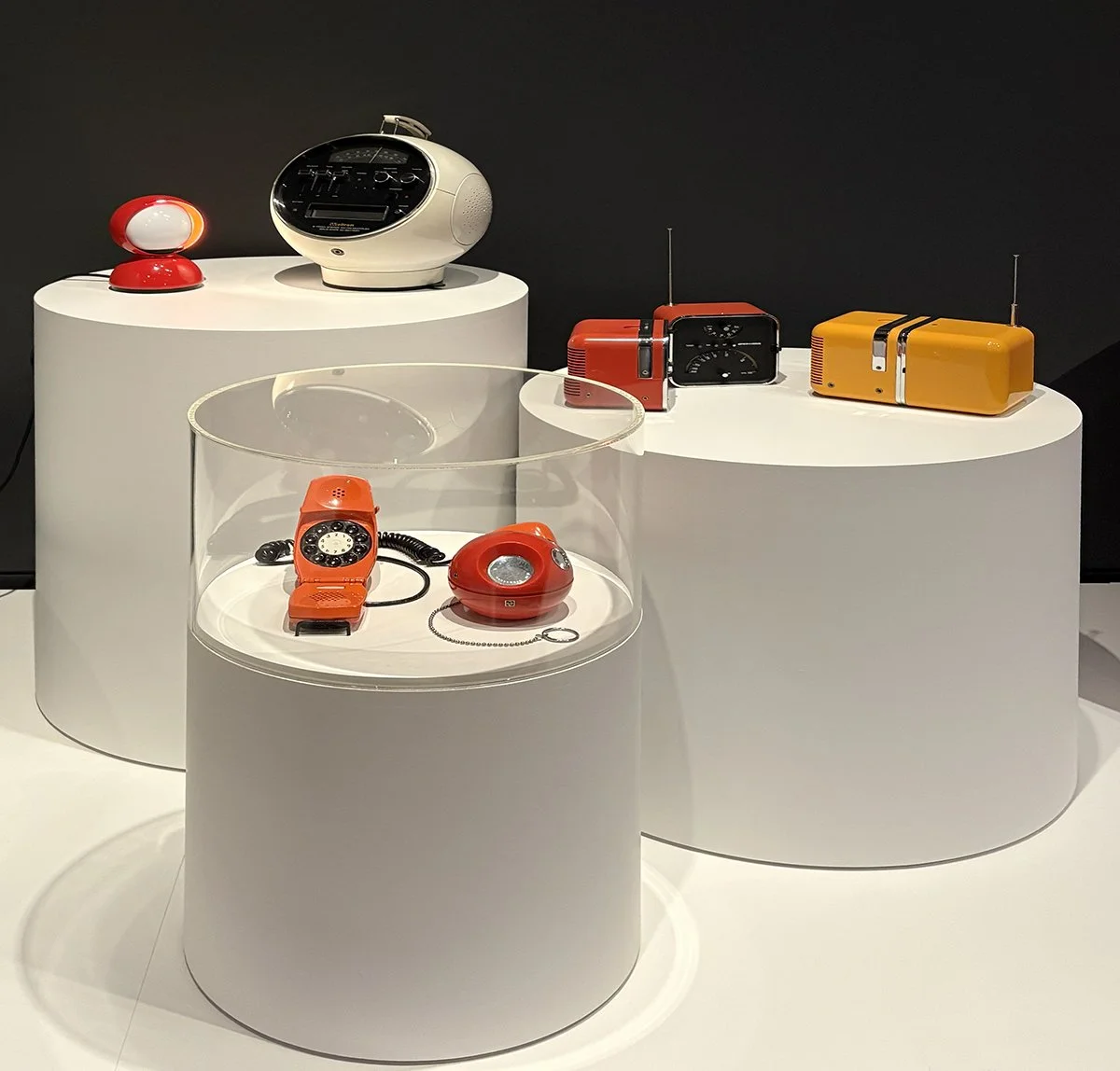
An installation view of the Space Is the Place exhibition at The Kirkland at the Denver Art Museum. Image by Laura I. Miller.
The exhibition arrives at a moment when contemporary culture again oscillates between fascination and anxiety around technological progress. Today’s conversations surrounding artificial intelligence echo, in many ways, the ambivalence that once surrounded atomic science and the race to space: immense possibility underscored by fear.
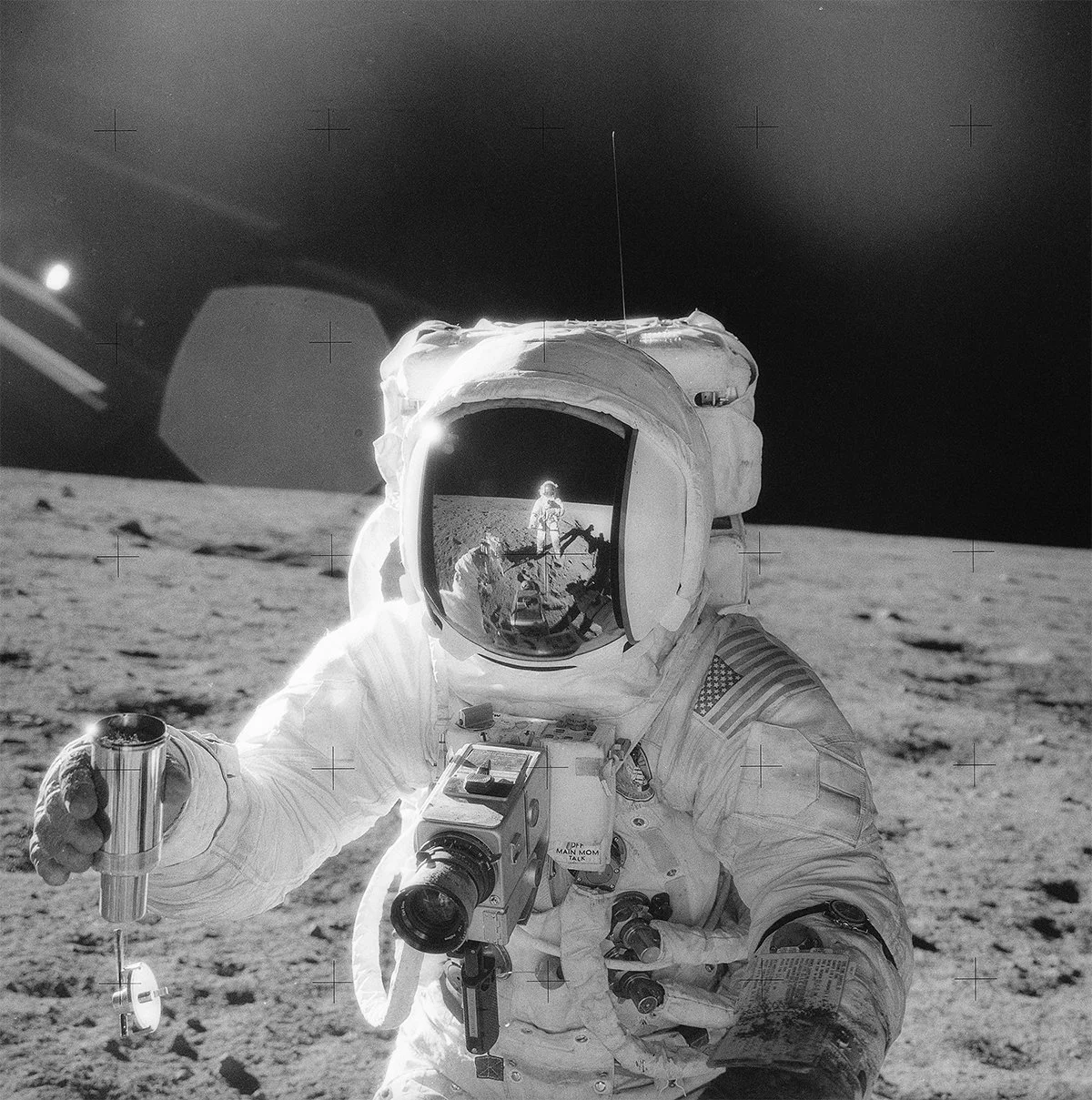
Saturn Apollo Program, Apollo 12 Astronauts on the Moon, 1969, photo by NASA astronauts. Image courtesy of The Kirkland at the Denver Art Museum.
Yet what distinguishes the era explored here is how ubiquitous futurism became. The launch of Sputnik in 1957 and the Apollo moon landing in 1969 generated an aesthetic that seeped into domestic life. Chairs curved like planetary bodies. Clocks played with atomic structure. Paintings scattered orbs and particles across cosmic fields. It entered kitchens, living rooms, department stores, and movie sets. The future became a household fixture.
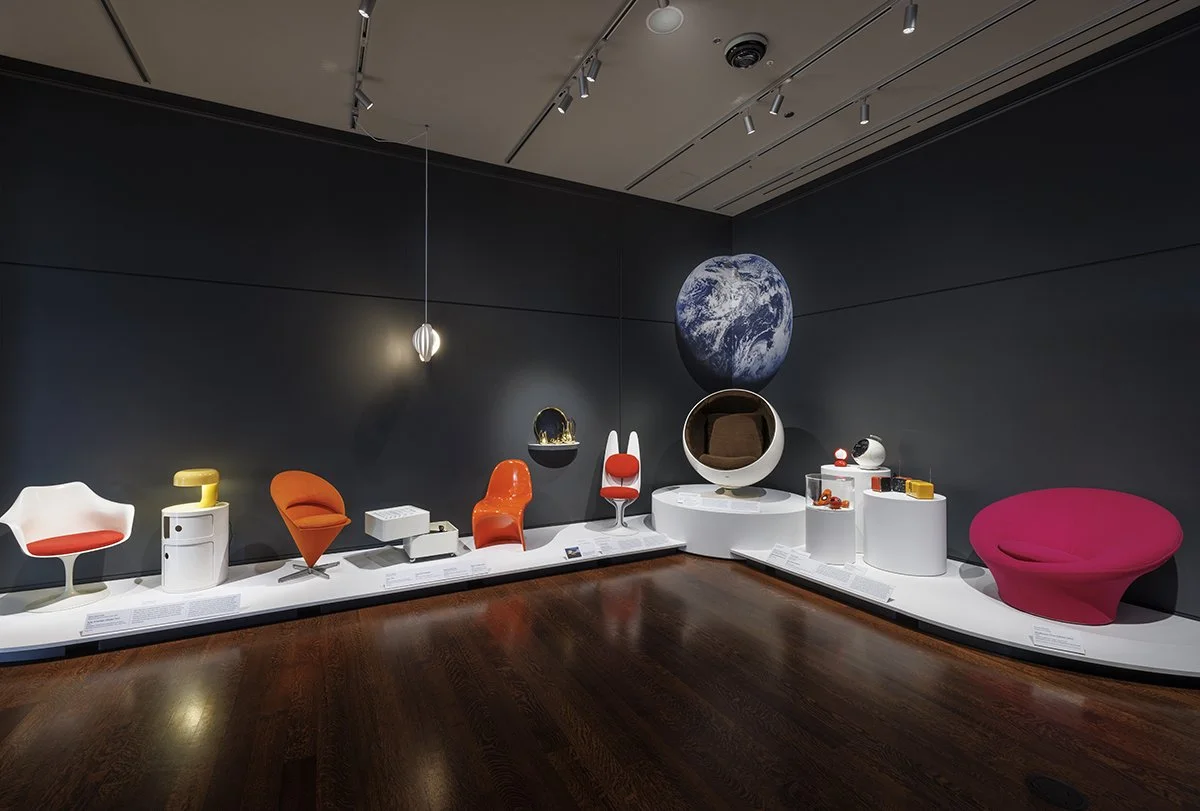
An installation view of the Space Is the Place exhibition at The Kirkland at the Denver Art Museum. Image courtesy of The Kirkland at the Denver Art Museum.
The exhibition’s curator Becca Goodrum traces this diffusion through clocks, furniture, glassware, paintings, radios, and sculpture, assembling a landscape of spheres and experiments. The forms themselves appear liberated from gravity. Eero Saarinen’s Tulip Armchair (1956) narrows to a single pedestal base as though refusing the burden of four legs, while Eero Aarnio’s Ball Chair (1963) encloses the sitter within a glossy sphere resembling both astronaut helmet and orbital moon. Joe Colombo’s Elda Chair (1963), recognizable from its appearance in the Star Trek TV series, performs futurity with theatrical confidence, using oversized leather to create a sensual cocoon. These works remain startling because they insisted so wholeheartedly on the possibility of reinvention.
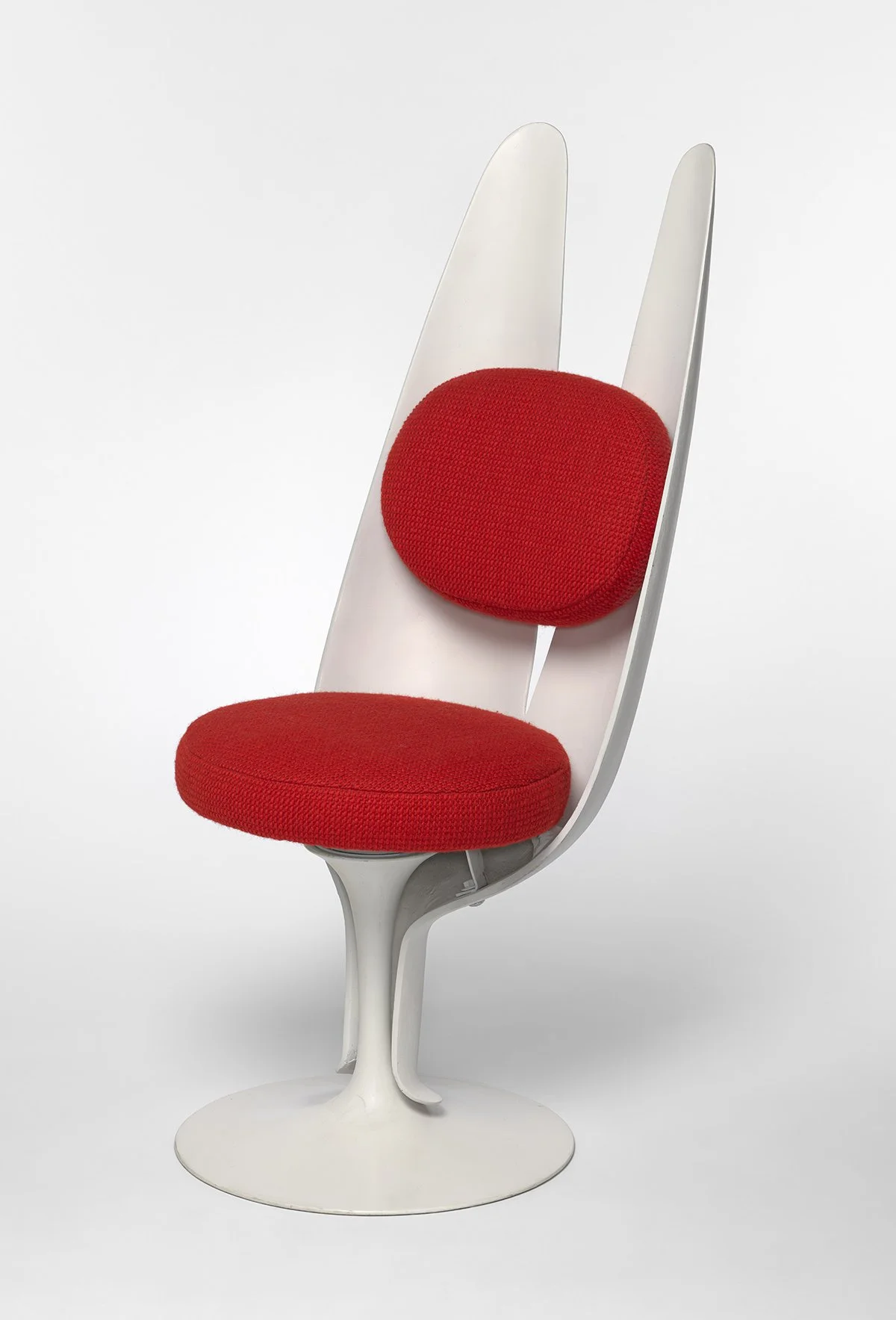
Charles Deaton, Antennae Chair, early 1960s, assembled 1999, metal, plastic, and upholstery. Image courtesy of The Kirkland at the Denver Art Museum.
Throughout the exhibition, materials themselves embody this obsession with technology. Molded plastics, fiberglass, acrylic, and polyurethane foam enabled designers to abandon conventions in favor of forms that feel at once biological and alien. Charles Deaton’s Antennae Chair (early 1960s) stretches out like a signal seeking contact, while Verner Panton’s Cone Chair (1958), a collection of crescents and orbs, asks: What’s the furthest limit this object can reach?
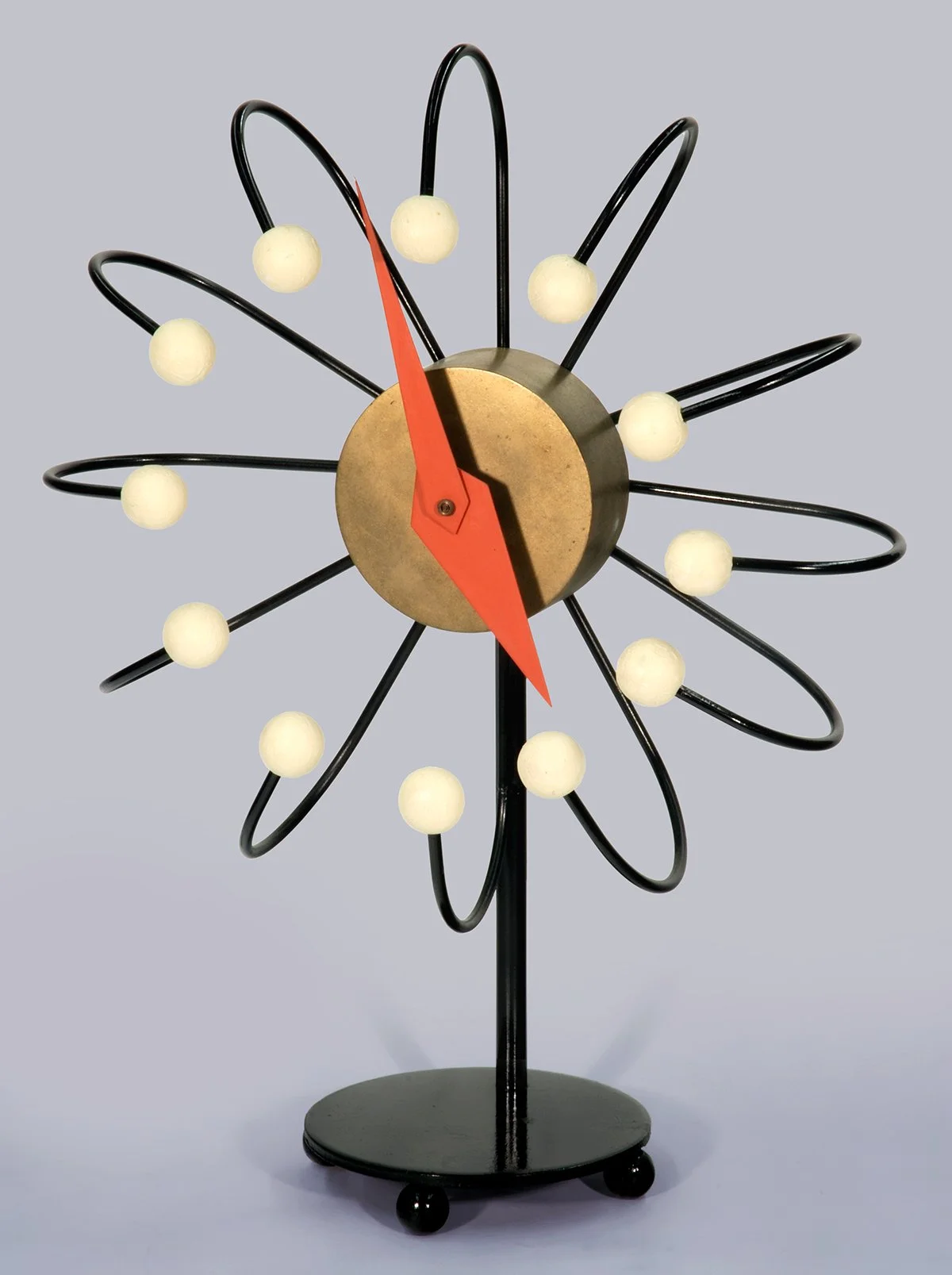
Frederic Weinberg, Atomic Desk Clock, about 1957, enameled steel, lacquered wood, and brass. Image courtesy of The Kirkland at the Denver Art Museum.
Even utilitarian objects participate in this fanaticism. Frederic Weinberg’s Atomic Desk Clock (about 1957) literalizes atomic symbolism through orbiting wooden spheres, rendering nuclear imagery decorative and oddly cheerful. Nearby, the Weltron Space Helmet Radio and 8-Track Player from 1970 resembles less an appliance than a prop salvaged from speculative fiction.
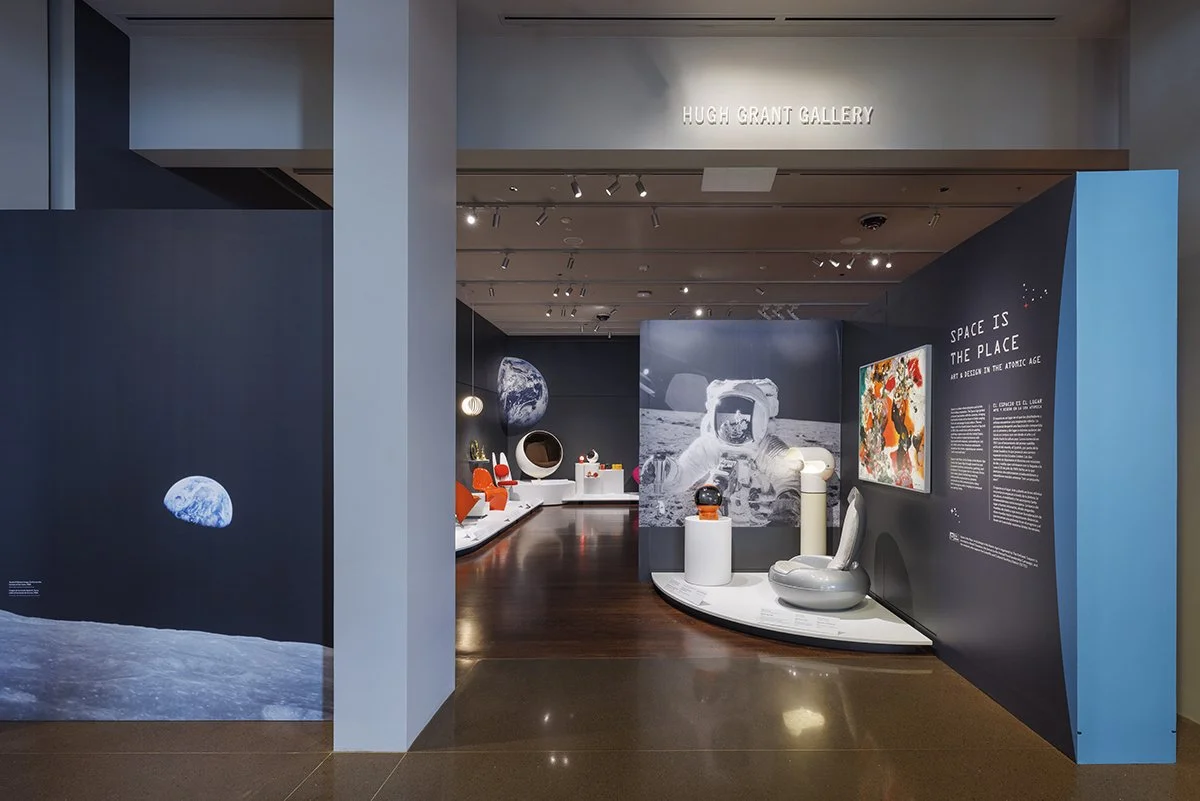
An installation view of the Space Is the Place exhibition at The Kirkland at the Denver Art Museum. Image courtesy of The Kirkland at the Denver Art Museum.
The exhibition’s strongest moments emerge where optimism brushes against vulnerability. Positioned near the center is the now-iconic “Earthrise” photograph captured during the Apollo 8 mission in 1968, an image that fundamentally altered humanity’s perception of itself. The Earth appears suddenly finite. Rather than reinforcing conquest narratives, the photograph destabilizes them. Space exploration, the exhibition suggests, simultaneously inspired fantasies of expansion and forced a confrontation with our own insignificance.
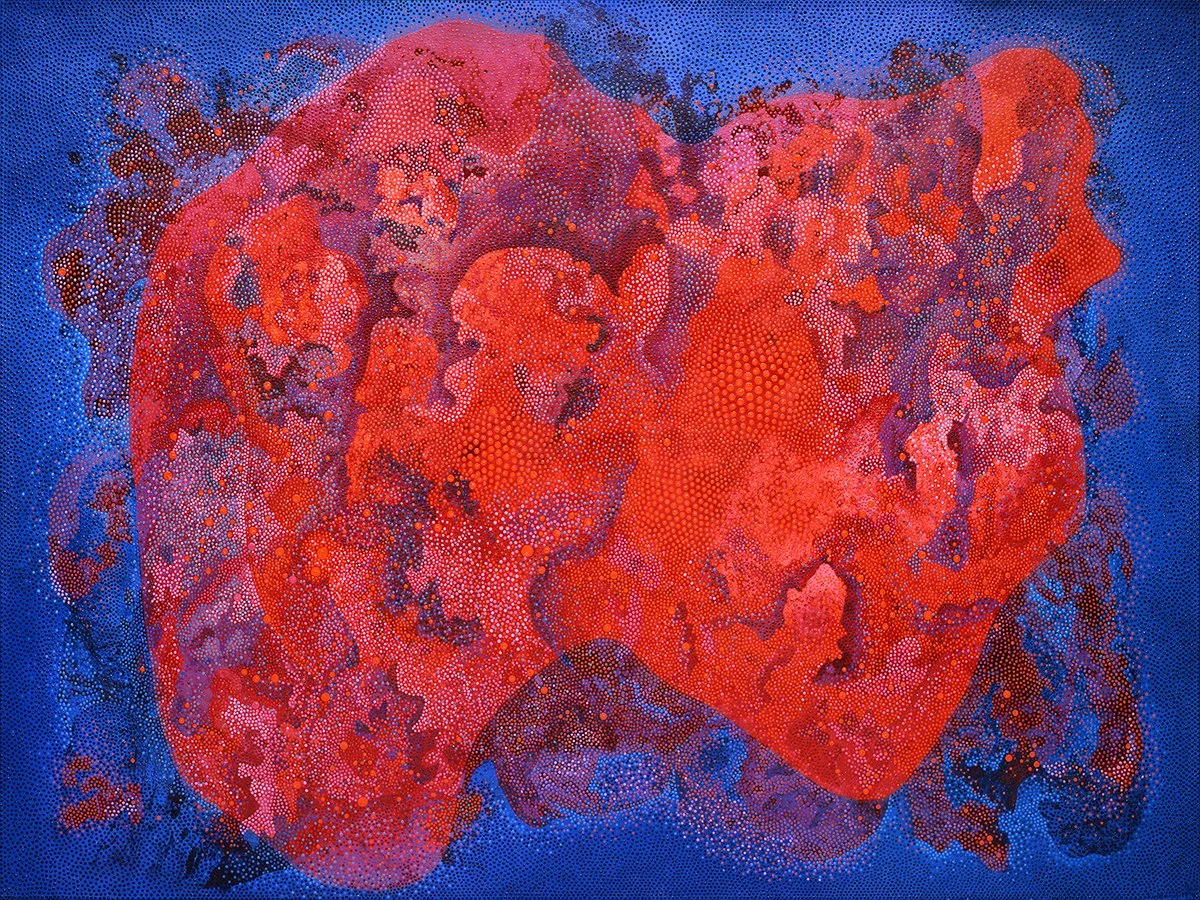
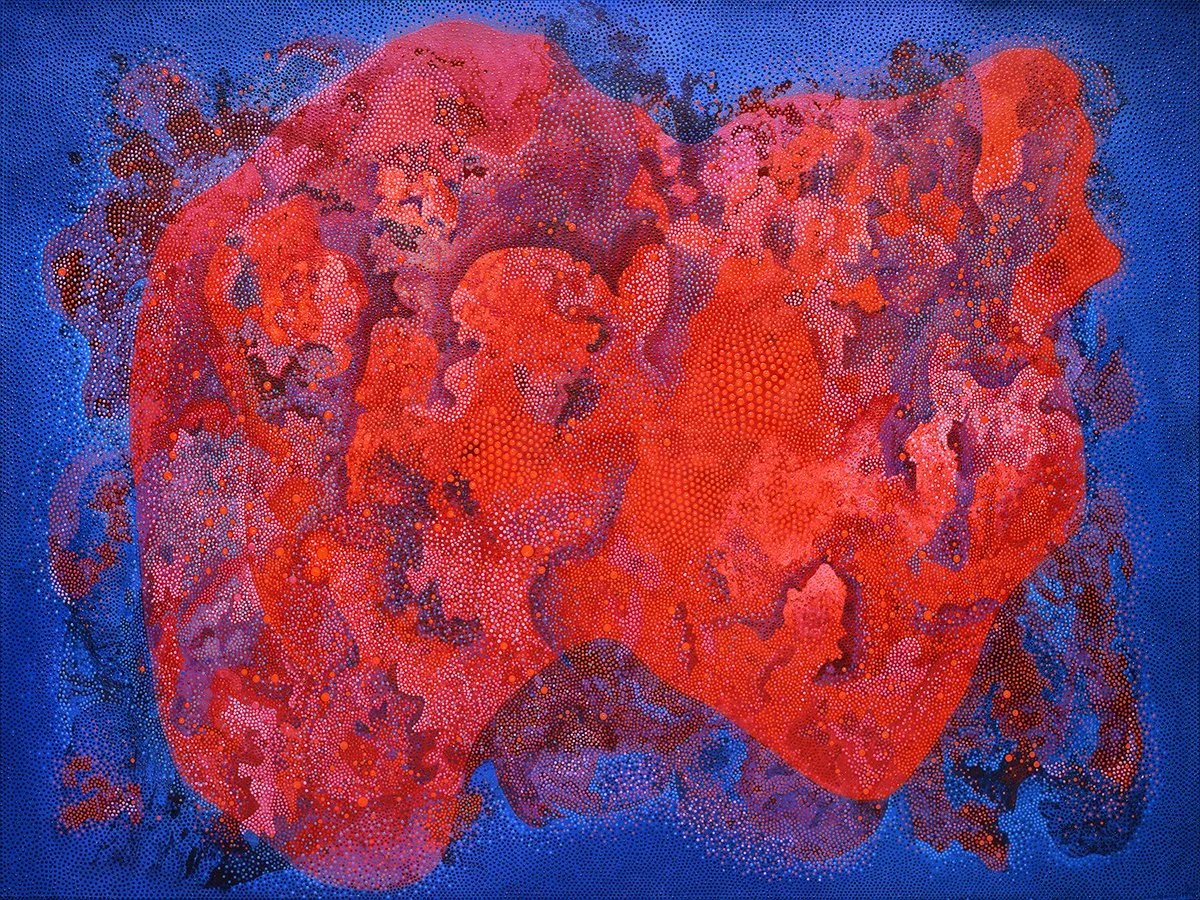
Vance Kirkland, Recent Dream of Space, 1974, oil paint and water on linen. Image courtesy of The Kirkland at the Denver Art Museum.
That tension reverberates most powerfully through the paintings of Colorado artist Vance Kirkland, whose cosmic abstractions anchor the exhibition emotionally as much as historically. In works such as Mysteries of the Future (1959), Four Suns in Space (1971), and Recent Dream of Space (1974), Kirkland disperses dots, orbs, and chromatic atmospheres across immense spatial voids. His surfaces shimmer with movement, less depicting outer space than attempting to feel its energy. Space becomes a condition—an infinite field of uncertainty and possibility.
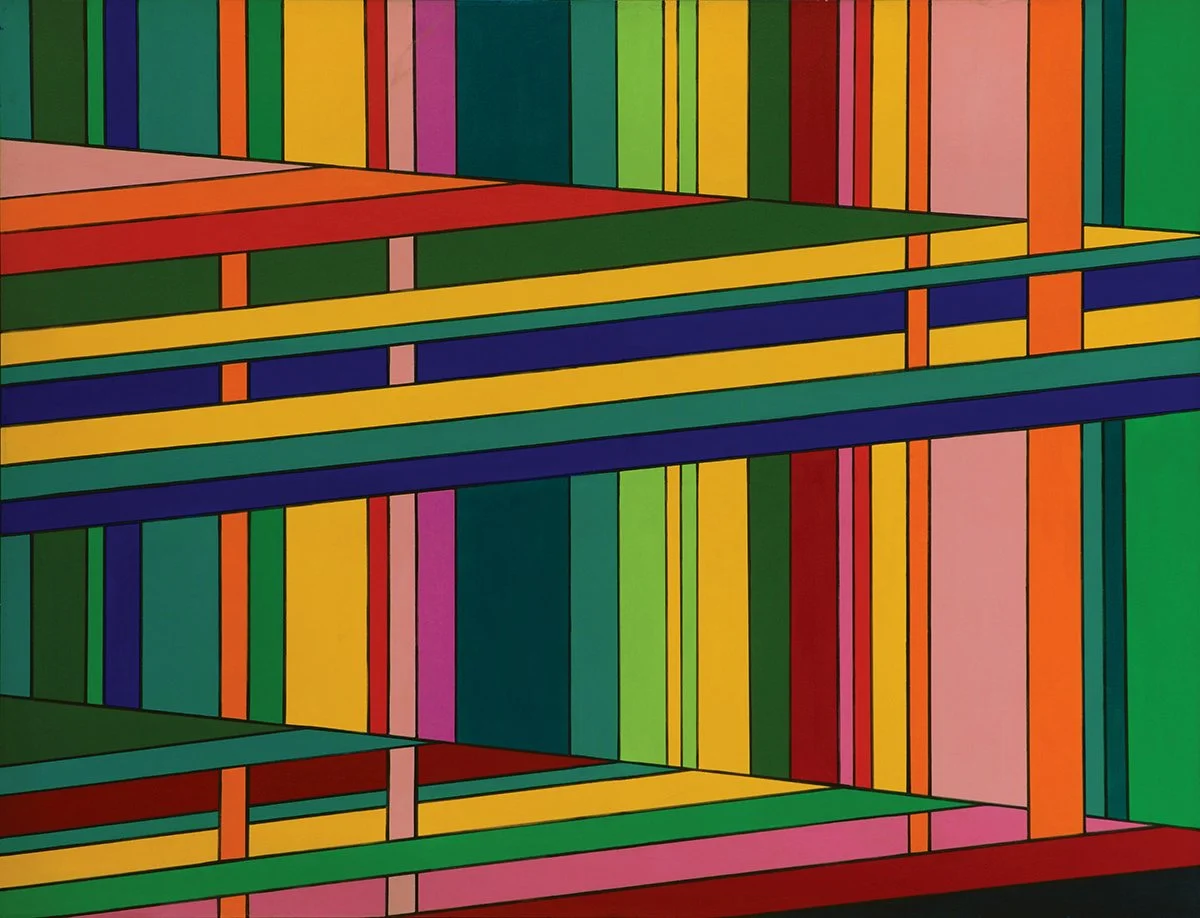
Beverly Rosen, Collimation, 1972, acrylic paint on canvas. Image courtesy of The Kirkland at the Denver Art Museum.
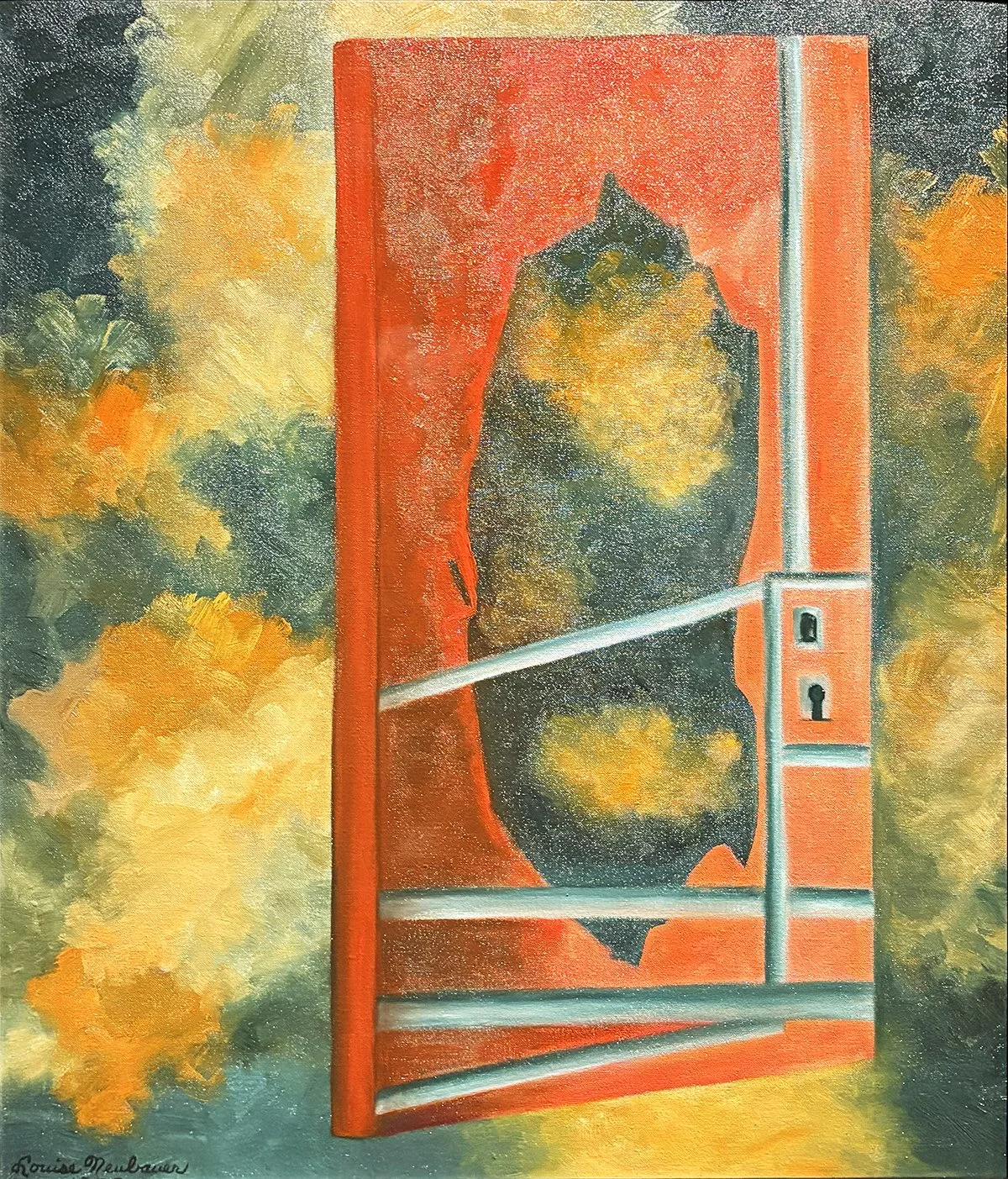
Louise Neubauer, Doorway to Outer Space, 1958, oil paint on canvas board. Image by Laura I. Miller.
Other artists extend this vocabulary in quieter but compelling ways. Beverly Rosen’s Collimation (1972) channels beams of light into rhythmic bands of color. Louise Neubauer’s Doorway to Outer Space (1958) transforms abstraction into threshold, suggesting that cosmic exploration is as psychological as technological.
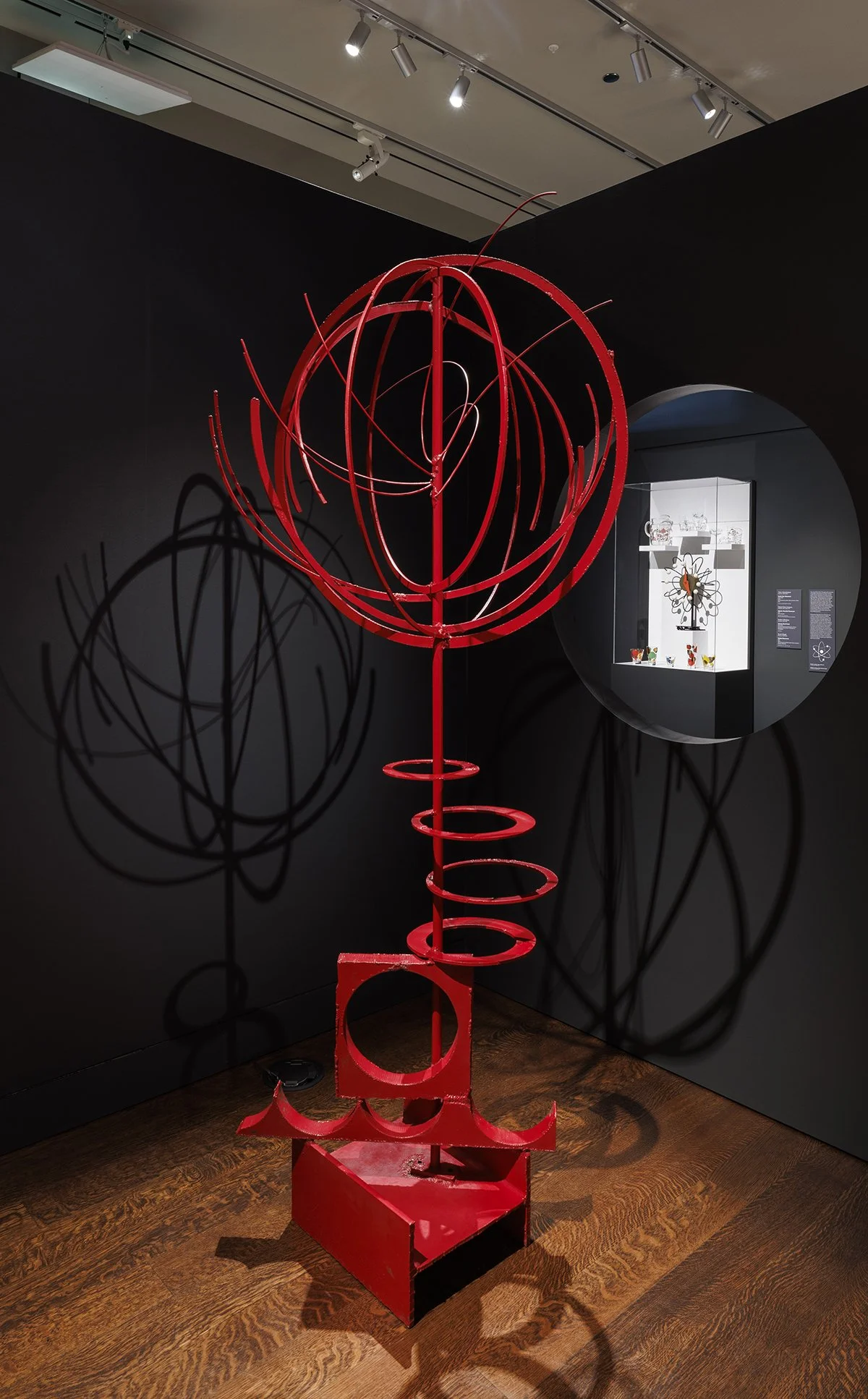
Angelo di Benedetto, Untitled, early 1960s, metal. Image courtesy of The Kirkland at the Denver Art Museum.
Angelo di Benedetto’s Untitled satellite-inspired sculpture (early 1960s) and Dave Yust’s Circular Composition #60 (1973) echo the exhibition’s recurring fascination with orbit, repetition, and motion.
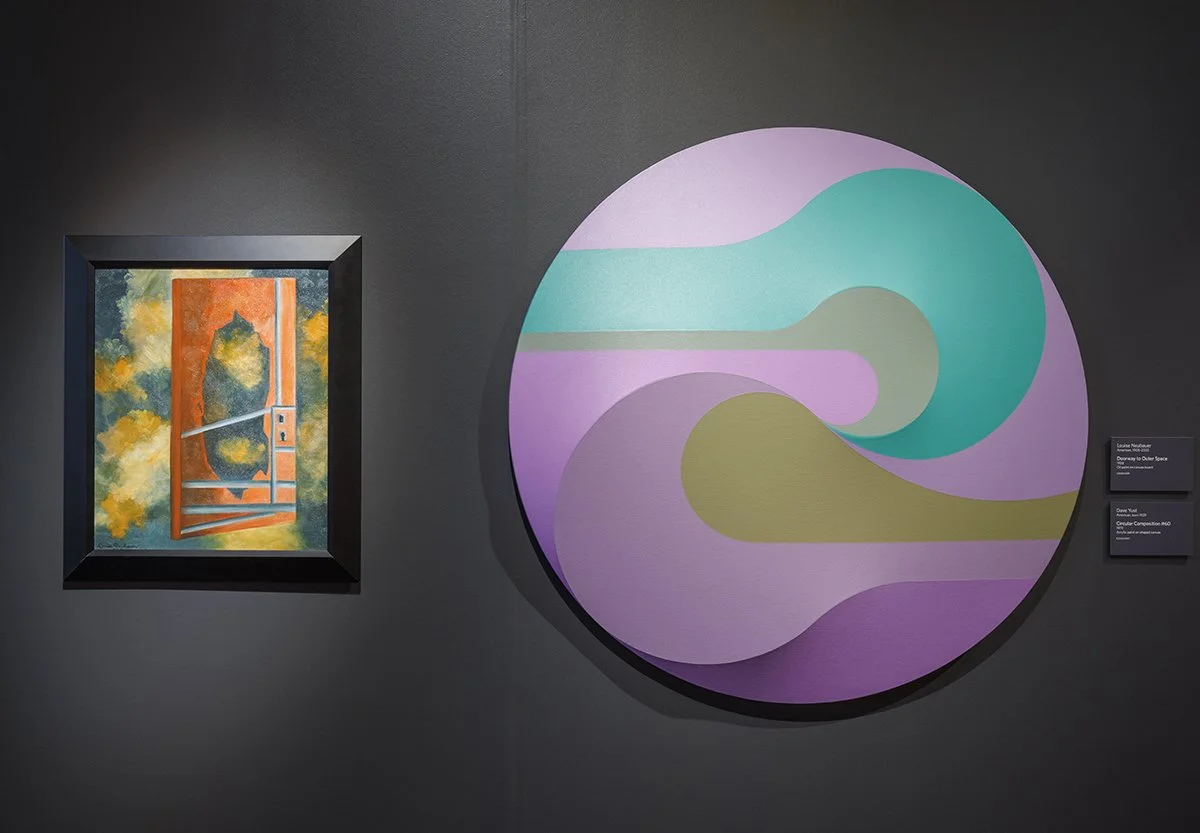
Left: Louise Neubauer, Doorway to Outer Space, 1958, oil paint on canvas board. Right: Dave Yust, Circular Composition #60, 1973, acrylic paint on shaped canvas. Image courtesy of The Kirkland at the Denver Art Museum.
What makes Space Is the Place particularly resonant is its attention to the manifestation of collective imagination. The exhibition reveals how deeply intertwined design and culture were during the Space Age. Hollywood borrowed avant-garde furniture to stage futuristic worlds in Star Trek, while manufacturers translated scientific aspiration into domestic commodities for ordinary households. The result was a democratized futurism, one that encouraged people to inhabit the future physically, even if only through a chair, lamp, or radio.
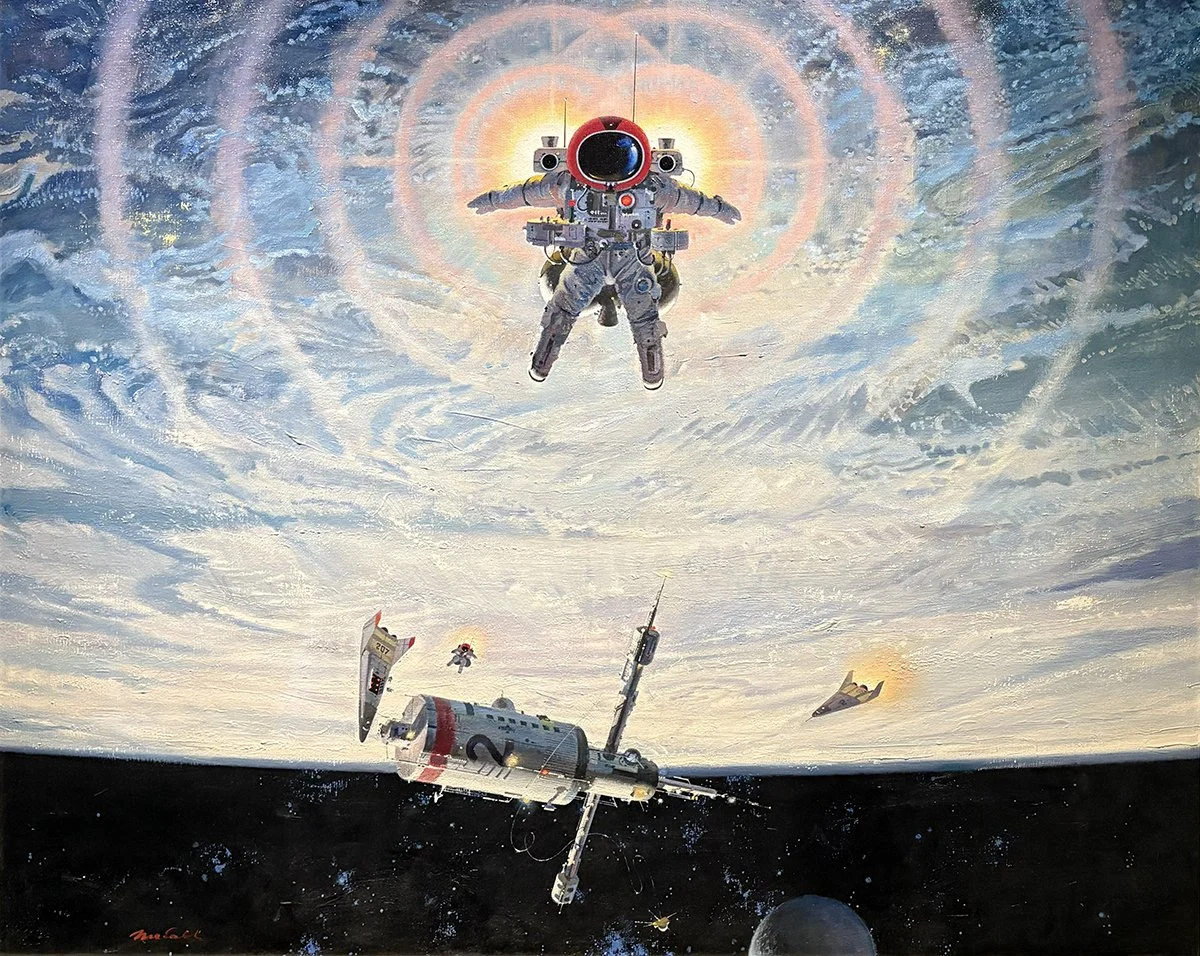
Robert McCall, Space Flight, 1974, oil paint on linen. Image by Laura I. Miller.
Viewed from the present, many of these futures remain suspended—half realized, half abandoned. Still, Space Is the Place resists cynicism. Instead, it asks what it means for a society to imagine collectively at such scale and whether contemporary culture has lost some of its capacity for shared wonder. In an era increasingly defined by fragmentation and suspicion, the exhibition reminds us that design once functioned as a language through which people rehearsed new ways of living, dreaming, and belonging within the cosmos.
Laura I. Miller (she/her) is a writer and editor whose articles, reviews, and short stories appear widely. She received an MFA in creative writing from the University of Arizona and is the director of editorial strategy at MSU Denver.